7 962 résultats
18632488New York: Wm. C. Bryant & Co Printers 1863. First edition. Very Good . Original paper wraps. 23 pages. Number 10 in a series of 17 pamphlets addressing the causes and outcomes of the Civil War. One of two variant printings with no priority assigned this with page 23 beginning "attempt at corrupting." Some separation to the foot of spine with text block holding well. Soiling and edgewear to front wrap; rusted imprint of paperclip affecting top of pages 13-15. Small blot to text of page 13. Else a solid copy of this important work which suggests that all women who have survived the Civil War deserve credit for their strength and sacrifice. <br/><br/>While at its release A Few Words was anonymous an 1865 publication by the Loyal Publication Society attributes the work to Caroline Kirkland Mrs. C. M. Kirkland. Kirkland a writer educator and abolitionist brought a unique perspective to the debate on women's roles in the Civil War. A Northerner by birth she spend the years leading up to the war living with her husband on a homestead in Michigan. Her experience living in the North and West and traversing the South informs her response to the accusation being made by men on both sides: that the strength of Southern women and the apathy of Northern women had contributed to seccession and the duration of the conflict. According to Kirkland's argument women on both sides nursed sick soldiers rationed and experienced the losses of husbands brothers and fathers. Yet Kirkland argues that women of the South are implicated in the evils of slavery. "They having seen slavery felt it known its horrors suffered under its attendant evils and learned.its incompatibility with God's benign law of love have deliberately lent themselves.to the perpetuation of so awful an evil." As an abolitionist and a women's rights activist Kirkland highlights the cognitive dissonance involved in promoting the strength of women who refuse to recognize that their fight for equality is tied to that of all oppressed Americans. She concludes with hope from the West where she comments that strong-minded women have rejected courtships and shunned deserters who refuse to stand their ground. A rare and interesting work documenting a Union woman's perspective on American women's responsibilities in wartime.<br/><br/>History of American Women. Very Good . Wm. C. Bryant & Co Printers unknown books
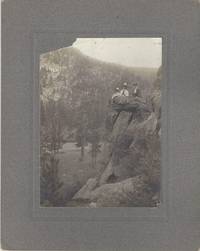
19001968Estes Park CO 1900. Large format gelatin silver photograph 17 cm x 12 cm on a plain gray mount 25 cm x 20 cm view chipped at upper left corner and coming up from mount on the left side. Image of two women and a boy in jaunty hats sitting atop of a rock ledge with a forested canyon beneath them.<br/><br/>Manuscript note on the reverse "Hat rock above McLeod cabin at Shenstone 19 Keith McLeod Bertha McLeod Aunt Florence Stewart. unknown books
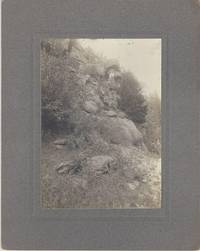
19001967Estes Park CO 1900. Large format gelatin silver photograph 17 cm x 12 cm on a plain gray mount 25 cm x 20 cm Very good. Image of two women and a boy standing among and atop of rocks in a canyon.<br/><br/>Manuscript note on the reverse "Rocks back of McLeod Cabin Shenstone - Big Thompson Canon - 'Perfect Tree' Aunt Florence Stewart Bertha McLeod Keith McLeod. unknown books
17000Original WW II Poster from 1942 reads "Women in the War We Can't Win Without Them" Extra large size poster 29" x 41" in. Shows a woman factory worker wearing overalls or apron riveting with both hands a weapon that looks like a torpedo. This highly visual poster was promoting women in the wartime workforce it was produced in 1942 by the War Manpower Commission. At the time "Women in the War" was one of the most widely distributed images of a woman laboring in war production. The poster is in red blue and black poster. Publisher was the United States. Government Printing Office. Place of Publication: "Washington D.C." By 1943 when the labor shortage was most acute the two agencies worked together in concerted campaigns targeting employers to hire women and women to become 'production soldiers'" Yellin Our Mothers' War p. 44. Women laboring in factories even in the service of the war effort was controversial. "Despite the tide of public opinion against working wives War Manpower Commission director Paul McNutt concentrated on on patriotism. The campaigns glamorized war work always showing that women could maintain their femininity and still be useful" Yellin pp. 45-46. Examples of this important poster are held at numerous institutions including the Library of Congress and MOMA. At lower left corner of sheet: "War Manpower Commission Washington D.C." Copies in very good condition like this one are uncommon. unknown books
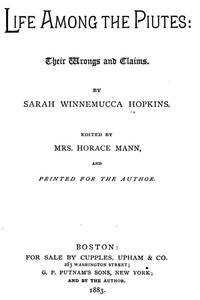
19963406V.p. 1996. A collection of 410 titles concerning Women in the West. Condition Statement: Overall most of the books in the collection are in "good" or "good" condition which typically describes a book that is sufficiently worn the binding soiled scuffed stained or spotted and may have loose joints hinges pages etc. To a lesser extent there are books in "fair" condition namely a well-worn book that has complete text pages including those with maps or plates but may lack endpapers half-title etc. The binding and/or jacket may also be worn. Women in the American West: Books and Ephemera from the Collection of Dorothy Sloan. SEE DETAILED FINDING AID on our website. <br/><br/>Dorothy Sloan b. 1943 is justly considered to be one of great scholar-booksellers of Western Americana Texana and Latin Americana. Dorothy Sloan Rare Books auction catalogues are recognized as models of their kind and feature an unusually broad array of printed books maps manuscripts and ephemera and are particularly strong in 19th-century materials. In many instances Sloan's bibliographic descriptions have become the description of record.<br/>She began her career at John Howell in San Francisco and thence to Jenkins Company in Austin. She issued her first rare book catalogue in 1984 and her first auction catalogue in 1994. Suffice it to say that as a woman she was literally a pioneer in such an endeavor. <br/><br/>Over the years she built a collection of Women in the West which is described in the 29-page Inventory below. Here is a collection of both women authors and women as the subject of historical and literary narrative. Most of the collection was kept in storage for the last twenty-eight years awaiting cataloguing and eventual sale. As we all know "Life" often interferes with our plans particularly as we grow older. <br/><br/>When Dorothy retired last year we acquired the collection of Women in the West. We are pleased to offer it en bloc for the price of $8200 which includes free shipping in the Continental United States. <br/><br/>Of the 410 titles in the collection nearly 25% are more than a century old. The earliest book in the collection is Sally Hastings' Poems on different subjects. To which is added a descriptive account of a family tour to the West. Lancaster 1808. The author describes her travels from Lancaster County to Washington PA. through the Alleghenies and gives an account of the Ohio River at Pittsburgh.<br/><br/>Only a handful of titles in the collection were published in the last 30 years the "newest" one dated 1996 namely: Anne Butler and Ona Siporin Uncommon common women. which contains culturally and ethnically diverse accounts of women who lived in the American West.<br/><br/>The physical size of the collection is considerable. Without any packing material it would encompass 15 large boxes. There are photographs gum cards engravings various inscribed books plays of the California Gold Rush memoirs and captivity narratives travelogues captivity narratives autobiographies Western novels pamphlets private press material a few 'zines journals catalogues and magazines. It is the culmination of decades of labor spanning all genres in the Western Americana tradition. The collection represents women's voices of a myriad of ethnicities including various Native American tribes African and African-American women Hispanic women prostitutes madams cowgirls ranchers pioneers and their struggles in the face of physical social and cultural adversity. <br/><br/>We are reluctant to mention "highlights" as it would suggest that "lowlights" do not merit attention from scholars and bibliophiles alike. We invite readers to peruse the Inventory of the collection capably prepared by Hunter Corb to allow readers to make that determination for themselves. <br/><br/>Included is the first edition of Miriam Colt's autobiography which describes her ill-fated expedition to Kansas Went to Kansas 1862 in which she traveled more than 1300 miles to establish a communal vegetarian colony. Colt provides vivid and frightening details of a family's ordeals on the frontier landscape including severe illness and encounters with lawless gangs. Defrauded of their investment in the Vegetarian Settlement Company the Colts left Kansas in the fall of 1856. Colt's husband and son died en route leaving only mother and daughter to return to New York. <br/><br/>Another work of interest is Sarah Hopkins's Life Among the Piutes an autobiography written at the encouragement of Ralph Waldo Emerson. This is considered to be the first book written and published in English by a Native American woman. It provides "extensive information about pre-White northern Paiute culture the types of foods marriage and other social practices as well as political leadership" Paher while simultaneously increasing awareness and sympathy for the plight of Native Americans. <br/><br/>Melinda Rankin's Twenty Years Among the Mexicans describes her missionary labor in south Texas and Mexico. Herein are depicted the experiences of the first Protestant woman missionary in Latin America. Although laws in Mexico at the time forbade the introduction of any form of Protestantism into the country Rankin traveled there in 1852 and established the first Protestant mission in Northern Mexico continuing her work there for a few decades before returning to the United States due to health problems. This narrative describes not just Rankin's missionary labors but also many dramatic events in Texas and Mexico including revolutionary turmoil the American Civil War and her capture by the notorious military leader rancher and outlaw Juan Cortina.<br/><br/>From early settlers of the West during and shortly after the American Revolution; to ranchers and pioneering women in the early days of the Republic of Texas and the fight for independence; to overland travels in covered wagons on the famed Oregon Trail at the outset of the American Civil War; to excursions into Mexico and Latin America at the end of the 19th and into the 20th centuries. Over two hundred years of women's experiences can be found within this collection and as such there is something for every student and subject matter.<br/><br/>SEE DETAILED FINDING AID ON OUR WEBSITE which enumerates each and every one of the 410 titles:<br/><br/>https://www.michaellaird.com/cat.phpid=307. unknown books
1994KOS02300889Iwanami book store 1994. Soft Cover. Fine. KOS02300889 Iwanami book store paperback
0684142570.Gpaperback. Good. Access codes and supplements are not guaranteed with used items. May be an ex-library book. paperback
1975213728Scribner's Sons. Fair. 1975. Cover Torn. Soft Cover. F282 . Scribner's Sons paperback
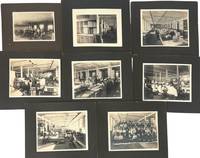
1918234351918. Women's industrial labor in an American textile finishing mill photographed likely between 1918 to 1922 documenting the inspection folding hemming and stamping of finished blankets and sheeting in the years around the First World War. The work shown belonged overwhelmingly to women who by 1920 made up about a fifth of the American labor force and were concentrated in exactly this kind of semiskilled textile work. The wartime labor shortage had pulled women deeper into industrial production and these images catch that expanded workforce on the floor before the 1919 recession and returning soldiers pushed women's share of factory labor back down. The conical galvanized fire buckets stenciled "Fire" mounted on posts in several frames date the images and tie them to the workplace fire safety reckoning that followed the 1911 Triangle Shirtwaist fire in which 146 workers most of them young women died.<br /> Photo archive of eight silver gelatin photographs approximately 6.5 x 8 inches mounted to card stock each measuring 12 x 10 inches with one smaller image American textile mill circa 1918 to 1922. Seven photographs show the mill interior: long finishing floors lined with cast iron columns and overhead pipe runs electric pendant lamps and tables stacked with uniform folded and rolled white goods tied with string. Women predominate at every station. They sit at inspection benches turning over folded cloth stand at long tables rolling and bundling sheeting and run a row of treadle and electric sewing machines hemming finished pieces with thread spools and machine heads sharp in the foreground. One worker operates a rack of hand stamps the date and numbering stamps used to mark finished goods before shipment. A few older men in vests dark suits and detachable collars stand among them as foremen and supervisors. One frame shows the shipping area with finished goods crated in wooden boxes stenciled for transport. The classroom image stands apart from the mill series: teenage students seated at ornate cast iron school desks a wall clock and a chalkboard covered in arithmetic. The eighth and largest subject is a full staff group portrait of roughly eighty workers overwhelmingly women posed on the production floor against stacked bundles of finished cloth with a length of white sheeting unrolled across the floor at their feet.<br /> The years these images were made were among the most volatile in American labor history. In 1919 more workers went on strike than in any year before some four million people twenty-two percent of the workforce and in June 1920 Congress created the Women's Bureau within the Department of Labor by Public Law 66-259 the first permanent federal agency charged with the welfare of wage-earning women which began studying the eight-hour day for women in 1921. The textile finishing trade these women worked in had been built on female labor since the start of the industrial revolution and the staff portrait records the scale and the gender composition of one such workforce directly. These photographs showing women's industrial work the fire buckets the stamping rack the sewing line the crated shipment ties the archive to specific developments in labor safety and women's employment law. Overall in very good condition with the mounts showing minor edge wear and some en verso pencil markings. unknown
1900231291900. Women's History Women's labor photo archive documenting women at work across millinery laundry commercial kitchen precision bench and wartime relief settings preserving a concentrated visual record of how female labor was publicly pictured in the years immediately preceding and overlapping World War I. Several photographs bear Brown Bros. New York stamps placing part of the group within the sphere of press photography while the verso inscription "Russian Women Filling Bandages for the front" situates one image within the culture of wartime female service and aid production. The photographs show women's work as a visible and varied part of early twentieth-century public life where skill repetition discipline and service shaped how female labor was pictured.<br /> <br /> Photo archive of 8 photographs 7 silver gelatin and one mounted sepia photograph ranging from 6 x 4 to 9.5 x 7 inches including New York and other unidentified locations circa 1900-1915. One Brown Bros. photograph shows a seated woman trimming or assembling hats at a worktable crowded with millinery forms and materials framing decorative labor as skilled commercial production rather than private handiwork. Another image shows four women and one man gathered around tables stacked with folded cloth corresponding to the handwritten verso note "Russian Women Filling Bandages for the front." A larger photograph inscribed on the verso "women workers / compass making" shows a woman seated at a bench adjusting a circular instrument with tools and components arranged before her. Another workplace view pictures a woman handling a metal object beside machinery and a crate with partial printed text ending in ".products. Cleveland." The photograph inscribed "women in Laundry" shows several women bent over long tables in a bright workroom lined with tall windows while the mounted sepia image depicts six apron-clad women at long counters beneath a large hooded vent in a commercial kitchen. Across the group aprons work dresses caps tables tools and stacked materials recur giving the photographs a shared emphasis on feminine labor as organized visible and socially legible.<br /> <br /> The archive belongs to a period when women's wage labor was expanding in both scale and visibility and when photography increasingly circulated images of female work as part of modern urban and wartime culture. Its strength lies in the range of roles pictured: decorative trade work industrial handling laundry labor food preparation and aid work directed toward the front all of which show how women's labor was understood through service dexterity endurance and collective effort. The bandage-making image is especially important because it connects ordinary workplace culture to the wartime recasting of women's labor as patriotic and humanitarian duty. Light surface wear scattered creasing minor silvering and fading and general handling wear; mounted sepia photograph with heavier toning. Overall good condition. A compact and pointed visual record of the cultural meaning of women's work at the point where everyday labor and wartime service converged. unknown
16190Women's Education. Photograph: High School Girls Conducting Electricity Experiments 1905. Large sepia press photo. 8.5" x 7". Handwritten note on verso states the photograph is for an article on public schools. Creasing on upper right and left hand corners tiny tears and nicks along the top and bottom of the image. Very good condition overall. Approximately eighteen girls conducting experiments on electricity using conducting boxes at an unspecified public high school in New York. They sit on tall stools around long tables wearing expressions that vary from concentration to vexation. High school gave girls the opportunity to advance beyond a rudimentary education and become versed in subjects such as history their rights as citizens and advanced science. The US was the first nation to provide the general public with secondary education and in 1900 there were 6000 public schools. Only a fraction of those however were open to women. These girls were part of the first generation taught science a right denied to their mothers and grandmothers. unknown books
3291New York and London: D. Appleton and Company 1927. . 8vo full maroon cloth front gilt with vignette of lake in foreground with mountains in the rear; very bright copy with slight wear to the foot of the spine INSCRIBED BY BOTH AUTHORS on the front free endpaper to Eliza Brush Prisson the widow of the great Yale geologist Louis Valentine Prisson. LeVene collaborated with Schuchert on several scientific works. The present book's "drawings of geologic features and of ancient forms of life are the work of Miss M. Alice Hubbard Mrs. Louise Nash and Miss Lisbeth B. Kraus." A interesting joint effort by four women with scientific training at a time when this field was dominated by men. New York and London: D. Appleton and Company, 1927. hardcover books
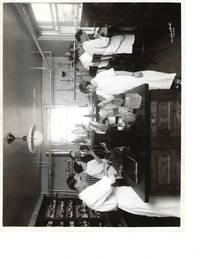
16667Women in Science Original Photo of Two women and four men work in a laboratory. Photo portrays women research staff work in a tuberculosis laboratory. c. 1920s. 8 x 10 in. Verso handwriting reads: "Dr. Philip Hillkouritz in background presd. of J.C.R.S. directs the research staff of organization in the fully-equipped laboratory." The Jewish Consumptive Relief Society JCRS was founded in Denver Colorado in 1904 as a non-sectarian sanatorium to treat tuberculosis patients in all stages of the disease. For decades patients flocket to Dever from all over North America and were admitted free of charge. In the early years the sanatorium was headed by Phillip Hillkowitz as president 1904-1948. In 1954 the institution changed its mission to cancer research becoming the American Medical Center. unknown books
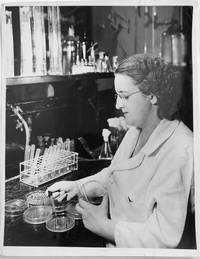
17112Woman Microbiologist at Rutgers Tests for Antibiotic. Original silver gelatin print press photograph. 8 x 10 in. No date but 1940's-1950'. Typed press caption pasted on back: "Streptomycin-Life-Saving Drug: Testing for Streptomycin the antibiotic substance whose microorganism is obtained from soil. A member of the Research Staff in Microbiology adding solution being tested to steel cylinders on an agar medium." Streptomycin was discovered in 1943 at Rutgers University; it found extensive application in the treatment of numerous infectious diseases and was the first antibiotic cure for tuberculosis TB. In 1952 Waksman was the recipient of the Nobel Prize in Physiology or Medicine in recognition "for his discovery of streptomycin the first antibiotic active against tuberculosis." It is on the World Health Organization's List of Essential Medicines. The World Health Organization classifies it as critically important for human medicine. Original press caption pasted to verso filing stamps and pencil annotations on verso. Light handling dents. In very good condition. unknown books
16203Education. Photograph Female Students in High School Science Laboratory 1900s. Gelatin silver print Black and white photograph of eight high school students conducting experiments in a science laboratory. 3.25 x 4.75 in. Overall good condition with clean crisp image with black ink stamp from Culver Pictures Inc. center verso and some adhesive residue along verso bottom edge. Small ¼ in. tear in bottom left corner. Girls at the time were discouraged from pursuing a scientific education and those who did found their contributions minimized. Despite the obstacles these original period photos reveal the true existence of women in the sciences in the beginning of the 20th century. unknown books
16226Medicine/Science. Press Photograph: Squibbs Lab Early Production of Penicillin 1944. Press photo of science work done by women to further the WWII effort. Silver gelatin prints. 7.25 x 9 in. Verso photos contain byline "Squibbs Lab Early production of penicillin" along with stamp "REF. DEPT. 3-15 '44 N.E.A." Very good condition. Creases in bottom left and top right corners and small dents throughout. A woman wearing a white laboratory coat uses a pipette to transfer liquid into large glass bottles. In 1944 Squibb Laboratory was the world's largest production plant for penicillin and the antibiotic was credited for saving countless lives during World War II. This photo shows one important role that women scientists took up to support the war effort. unknown books
16204Education. Photograph Woman Student in Laboratory 1900. Photo of nearly all male laboratory with one female science student present 20 years before women's suffrage in the United States. Silver gelatin print. 5"x7" photo mounted on 8"x10" card. This photograph shows a 1900 pharmacological laboratory with one woman and ten men. Photo in good condition with some slight surface abrasions and a small puncture in the center. A demonstration is happening at the front of the classroom yet the lone woman in the lab directs her piercing gaze at the viewer. Girls at the time were discouraged from pursuing a scientific education and those who did found their contributions minimized. Despite the obstacles this photo shows a young woman eager to obtain a scientific education. unknown books
16671Women in Science Original photograph of a Woman scientist works at laboratory table next to male colleague. Test tubes beakers petri dishes and various pieces of equipment cover the work table. 3.25 x 4.5 in. Dated in pencil verso 10/2/23. The man is smoking a pipe while working with pipette; the woman is organizing specimen vials. Hand of a third figures can be seen handing laboratory equipment along center left edge. Handwritten press information in a Nordic language on verso stating this is a bacteriological laboratory. The latter part of the 19th century saw a rise in educational opportunities for women and by the early 20th century women worked in many different fields related to science and medicine. Very good condition. unknown books
16669Women Education Science Original photograph of Female students conduct experiment in chemistry lab at Northwestern University. Three women students and their instructor cook an egg through chemical reaction of liquid oxygen and ice. 8 x 10 in. Original press caption pasted to verso: "Frying And sic Egg Over Burning Ice. Using liquid oxygen for fuel and the hollow of a block of ice for a container Miss Virginia Trelease Chemistry student at Northwestern University Evanston Ill. is here pictured frying an egg over the unique stove. A cupful of liquid oxygen made in a Heylandt liquefier which has been used for the first time in America by Northwestern permits the manufacture of liquid oxygen right in the classroom in full sight of the students sic." Northwestern University first admitted women students in 1869 educated hundreds of women in their college and the affiliated Women's Medical College. Very good condition. unknown books
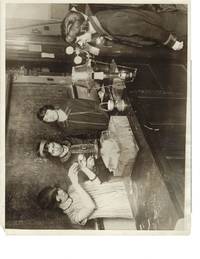
16668Women in Science Original photograph of a laboratory scene with one woman and three men. c. 1917. Four figures at work in a small laboratory. 3.5 x 5 in. Two wear white aprons the woman technician's apron is noticeably stained with dark liquid while another wears a work jumpsuit and the oldest gentleman wears a suit. Several pieces of glass laboratory equipment are also in frame with visible pressure or temperature gauges. The latter part of the 19th century saw a rise in educational opportunities for women and by the early 20th century women worked in many different fields related to science and medicine. Very good condition. unknown books
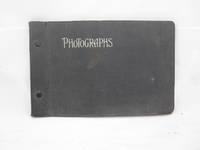
16119Marine Biologist Hope Hibbard. 1917 photo album of scientist Hope Hibbard during her marine biological studies at Woods Hole; an impressive and uncommon relic of an early female scientist working before American women's suffrage. <br/><br/>An album of biologist Hope Hibbard while on a research study program at Woods Hole Massachusetts in 1917. Containing 29 photos the majority of which focus on her study program. Hibbard was an acclaimed scientist specializing in biology cytology zoology and histology. She received numerous academic merits as well as renown for her dedication to promoting women in the scientific sphere and her involvement in associations that forwarded female roles in science and research such as the American Association of University Women AAUW. During her long academic career Hibbard taught at illustrious women's colleges Bryn Mawr and Elmira as well as the forerunner of coeducational colleges Oberlin. In this rare album annotated in white ink by Hibbard we see her as a young student conducting marine biological research from a floating biological laboratory. Hibbard's photos include according to her white ink annotation "Laboratory Launch at Woods Hole" which shows their floating laboratory departing from the harbor "Whitman Cottage where I lived" with other female students during the program her class dredging the ocean floor for samples "on a field trip" a rare photo of a young Hibbard in her college sweater and several labeled photos of Woods Hole locales which would have played a part in her studies including the Great Harbor Little Harbor Marine Biological Laboratory and the U.S. Fish Commission Buildings. Several photos also show Hope and her classmates on day trips and enjoying lobster or the bathing beach. A few photos at the beginning and end of the album show her family. Hibbard is viewed as a crusader for women in the scientific sphere. She held strong opinions about the untapped abilities of women due to both perpetuated stereotypes initialized by men and additional self-deprecating tendencies and she utilized her membership in several academic assemblies to express her viewpoints. Hibbard served as an avid member of the AAUW and the American Association for the Advancement of Science among others and wrote several discourses in which she urged women to integrate marriage and professional endeavors within science rather than abandoning one from the other. Examples of Hibbard's papers include "Vocations for Women and How College Can Prepare Them" 1935 "The Life of Oberlin Women Today" 1937 and "Women in Research." In these multiple dialogues Hibbard communicated her desire for women to overcome social boundaries concerning their position in science. She worked to encourage women to forge their paths independent of discouraging social views and to mold their own journey as both intellectuals and spouses as opposed to exclusively one of the two. Hibbard additionally spearheaded the Oberlin chapter of League of Women Voters while a professor at the institution. Photos and album are in very good condition. Silver gelatin prints lightly toned approximately 2" x 3" inches each. Pages and ink annotation clear and bright. 5" x 8" inch album with black leatherette cover and gold printed title "Photographs". Rubbed at top and bottom but over in very good condition. This is the only early relic we have seen from the life of an important early ambassador of Women in STEM. unknown books
16672Women in Science Medicine Original Gelatin silver print photograph of a Rustic pharmacological laboratory with female technician c. 1910. Three individuals pose amongst dozens of glass vials containing medical powders and remedies. 3.5 x 5 in. Original black and white photograph. Two figures wear white aprons or smocks indicating their important role in mixing and measuring different medicines. The first university Pharmacology department was established in 1847 and thus began the formalization of this field of scientific research as the 20th century witnessed a steady increase in the number of new drugs that would improve the human condition tremendously. Verso inscription in pencil and pen in European language. Very good condition. unknown books
16877Women in Science Two photos of women working with scientific laboratory equipment. Silver gelatin print photographs from 1930 and 1946. Image sizes 3.5 x 5.25" and 3 x 4". In both photographs women scientists work with glass test tubes pipettes and graduated beakers. One photo depicts two women in lab coats working with a series of test tubes standing outside c. 1930; this setting indicates this could possibly be part of an ecology or other environmental science lab. Second photo 1946 shows two women holding pipettes and smiling into the camera. The both wear white uniforms and their names are handwritten in pencil on image verso. During WWII women took up jobs in many sectors to support the country including science research and laboratory work. These women were essential in producing important medicines such as penicillin that were needed during wartime; this work helped pave the way for younger women scientists such as those pictured to have professional opportunities in the postwar period. These women may be in a specialized training program as they both wear all white uniforms. Both very good condition. unknown books
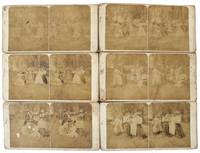
1900188011900. Women SPORTS Six action shots of a women's fencing dual in the early 1900s. 4" x 6" each. Stereoview on cardboard mount. N.p. Captioned "Le Duel" with each photograph numbered. Historically fencing has been primarily a men's sport and though women have been fencing for hundreds of years there was still heavy stigma against women taking up any sport. After WWI many French fencing schools opened up classes for women to grow their economy. This act opened up the doors for women to eventually be allowed to fence in the Olympics in 1924. This set of six stereoviews showcase two women fencers with a female referee and a group of female viewers. Each stereoview is numbered in the order of the duel; the first shows the two women facing each other with their swords down the second and third show the women mid duel and the last three show the victor heralding over the defeated opponent with two women side by side helping her recover. Minor wear to edges some sunning and wear to photos. Overall only good condition. unknown
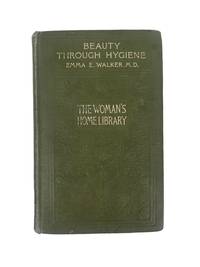
1905206671905. Women in Science Walker Emma E. Beauty Through Hygiene: Common Sense Ways to Health for Girls. New York: A.S. Barnes & Company. First edition second printing 1905. Part of the Woman's Home Library. Edited by Margaret Sangster. Illustrated throughout. 8vo 306 pages. Original green cloth boards with embossed ornamentation and cream font on the cover and spine. Written by Emma E. Walker M.D. a female physician and member of the New York Academy of Medicine who published several women and girl's health guides. Beauty Through Hygiene is a guide to health and hygiene for girls discussing sports and exercise including exercises in housework weight complexion care of skin and hair care during menstruation remedies and for common ailments and illnesses. <br /> <br /> Emma Elizabeth Walker received her A.B. from Smith College in 1887 and earned an M.D. from Johns Hopkins University in 1898. Later that year she opened her medical practice in New York City. Walker authored Beauty through Hygiene 1905 "Pretty Girl Questions" in Ladies Home Journal and many articles and pamphlets for both popular and medical audiences. She lectured widely on the topics of personal and social hygiene and was a member of numerous medical and professional organizations. Ex-library with spine label interior pastedown and pocket. Minor general fading and staining to the covers. Cloth scuffed and worn along the extremities and hinges. Walker's journals mainly focus on the ailments that primarily affect women where most male physicians had improperly diagnosed or treated making her guides a historically and contextually important field of study. unknown