669 résultats
185863526New York: Rudd & Carleton 310 Broadway 1858. 8vo. 256 pp. plus 12 pp. publisher’s illustrated ads. Gray-brown pebbled publisher’s cloth borders & insignia embossed in blind gilt lettering on spine minor chipping head of spine soiling some edgewear sunning still a G unsophisticated copy unusually bright clean interior former ownership pencil markings on endpapers. First edition of this “vivid and often critical memoir of the Vieles’ Texas years. Her account of life at Ringgold Barracks comments on everything from travel and landscape flora and fauna and food flavored with red ants that tasted something like caraway seed to Mexican neighbors Comanche Raiders Jose Maria Jesus Carbajal and the Merchants War. Griffin Viele 1831-1906 was a precocious and determined young woman dubbed “cette terrible Teresa†by family and friends married to Egbert Ludovicus Viele later Brigadier General during the Civil War. She later presided over a literary salon in Paris and oversaw the education and career of her son Francis Viele-Griffin who became a leading poet and writer of the French symbolist school. See: Howes V92; Sandra Myres Teresa Griffin Viele: Life and Literary Contributions Handbook of Texas August 12 2020. Rudd & Carleton, 310 Broadway, hardcover
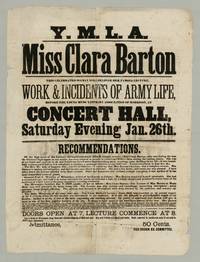
186713090Morrison WI 1867. Broadside 26.75 x 20.25 inches printed on thin paper. Old folds some creasing edges occasionally a bit frayed with a few small nicks or tears a couple of minor losses along folds. Overall very good condition. A striking and seemingly unique surviving broadside advertising a January 26 1867 lecture by Clara Barton entitled "War & Incidents of Army Life" part of a popular post-Civil War lecture series she delivered across the United States. Barton spent two years touring and recounting her battlefield experiences which helped popularize her and fund her subsequent efforts to locate missing soldiers. The present lecture was delivered to the Young Men's Literary Association of Morrison Wisconsin at the local Concert Hall. In addition to the bold title containing the relevant information on the lecture and the information on obtaining tickets at the bottom much of the lower portion of the broadside prints several laudatory "Recommendations" from various entities in Indiana and other locations in Wisconsin including a January 7 1867 review from The Milwaukee Sentinel. Noted temperance lecturer John B. Gough also praises Barton's lecture stating that "I never heard anything more touching more thrilling in my life."<br /> <br /> Typographically the broadside is interesting for employing several sizes of fonts likely wooden type especially near the bottom of the Recommendations section where the printers needed to reduce the size of the font to fit in the entirety of a quote from The Daily Wisconsin as well as a line in the smallest font from the Concert Hall promoter noting that the foregoing group of recommendations is "enough" and praising Barton for her "noble character which she has won by her efforts to ameliorate the sufferings of our sick and disabled soldiers."<br /> <br /> Clara Barton 1821-1912 was a noted educator and humanitarian who helped distribute needed supplies to the Union Army during the Civil War and later founded the American Red Cross. Barton garnered nationwide recognition for her efforts during the war and quickly became known as the "Angel of the Battlefield." After the war Barton's lecture tour brought her in contact with other notables of the day including Susan B. Anthony and Elizabeth Cady Stanton and also Frederick Douglass who involved her in the suffrage and civil rights movements respectively. In the Fall of 1866 Barton began to lecture on her Civil War experiences in lyceum halls churches town halls and schools. Though she never felt comfortable in front of an audience wherever she spoke Barton was well received. Her contemporary biographer Percy Epler wrote that "a tear-stained multitude thronged everywhere to hear her" as she had made it her mission to show not "the glories of conquering armies but the mischief and misery they strew in their tracks; and how while they march on.some one must follow closely in their steps crouching to the earth faces bathed in tears and hands in blood. This is the side which history never shows."<br /> <br /> From 1866 through 1868 Barton delivered over 200 lectures throughout the northeast and midwest regarding her Civil War experiences. She shared platforms with other prominent figures including the aforementioned Douglass as well as Ralph Waldo Emerson William Lloyd Garrison and Mark Twain. She often earned $75 to $100 per lecture. Original broadsides advertising her lectures especially of this size are exceedingly rare to say the least. We could locate just a single result in auction records of a much smaller example and OCLC reports just one institutional holding of any Barton lecture broadside again much smaller for an 1867 event in New Haven located at the Library of Congress. unknown
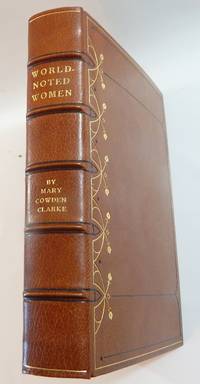
185818363New York: D. Appleton and Company 1858. First edition. Hardcover. Near fine. LArge 4to. 407pp. Illustrated with full page engraved portraits of Sappho Lucretia Aspasia Cleopatra St. Cecilia Heloise Laura Valentine de Milan Joan d'Arc Margaret of Anjou Isabella of Castile Lady Jane Grey Pocahontas La Valliere Maria Theresa Catherine II Florence NIghtingale.<br /> <p><br /> A lovely Arts and Crafts binding in full Niger Morocco in a medium brown color. Spine in six compartments with nicely spaced gilt titles in two. Blind tooling along the bands and onto the boards in a suggestion of clasps. The boards both upper and lower with gilt and blind rules in a pleasing rectangular design interrupted by a "Noveau-style" design on the binding side with gilt curves ending in gilt leaves and dots. Simple parallel gilt line inner dentelles with box-shapes and blind dots at the corners of the inner line peach water-color endpapers all edges gilt. A sumptuous binding. The pastedowns have been nicely repaired occasional trace of foxing not affecting the images else this is in fine condition.<br /> <p><br /> Unsigned binding though almost certainly the work of the Guild of Women Bookbinders based on the design and the tools used. <br /> <p>. D. Appleton and Company hardcover
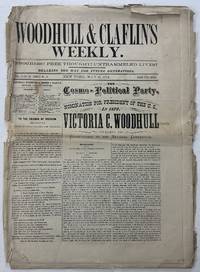
187112986New York: May 13 1871. 16pp. printed in three columns on folio newsprint. Some dust soiling chipping and wrinkling to edges of outer leaves especially along spine costing a handful of letters and words on the front page adhesive remnant in contents section costing or obscuring a few words top of spine on last few leaves chipped just touching a few words. Internally quite clean. Good condition overall. A rare early and impactful issue of Woodhull & Claflin's Weekly the newspaper owned and edited by the most famous American suffragist siblings of the 19th century Victoria Woodhull and Tennie C. Claflin. This issue is particularly interesting for an endorsement printed across the top of the second and third columns on the front page reading: "The Cosmo-Political Party. Nomination for President of the U.S. In 1872. VICTORIA C. WOODHULL. Subject to Ratification by the National Convention." Woodhull's nomination would indeed be ratified by the Cosmo-Political Party after being renamed the Equal Rights Party about a year after the present issue was published on May 10 1872 signaling a singular moment in American politics. Though she was technically too young to assume the office had she won Woodhull became the first woman ever nominated for President of the United States. Interestingly she chose as her running mate the esteemed Frederick Douglass but he refused to acknowledge or participate in the campaign.<br /> <br /> Still Victoria Claflin Woodhull 1838-1927 was a force of nature in 19th-century American politics journalism finance and society. In addition to her landmark nomination for the White House Woodhull was the first woman to testify in front of a Congressional committee arguing that the 14th and 15th Amendments already entitled women to vote and the first woman to head a Wall Street brokerage firm after befriending and then learning investing from the feet of Cornelius Vanderbilt. The newspaper she owned and operated with her sister was one of her most important contributions to American life. In it they printed articles in favor of women's suffrage spiritualism communism the weekly published the first English-language edition of Karl Marx's The Communist Manifesto free love equal rights and other important progressive issues. Though Woodhull's popularity would decline in the late-1870s due to the radical nature of her views and an obscenity charge stemming from publication of a story about an affair between Henry Ward Beecher and one of his congregants she continued to work in support of women's suffrage and publish periodicals even after relocating to England. She lived out her elderly years in the English countryside where she died in 1927.<br /> <br /> This front page presidential endorsement appears on a handful of issues of Woodhull & Claflin's Weekly from March through May 1871 but this seems to have ceased in the summer of 1871 when the newspaper changed to a four-column format. The present issue also includes articles on motherhood suffrage "The Marriage Question" "Moral Journalism" the Cosmo-Political Party itself and more. May 13 unknown
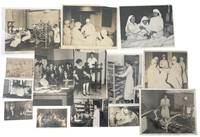
1900231291900. Women's History Women's labor photo archive documenting women at work across millinery laundry commercial kitchen precision bench and wartime relief settings preserving a concentrated visual record of how female labor was publicly pictured in the years immediately preceding and overlapping World War I. Several photographs bear Brown Bros. New York stamps placing part of the group within the sphere of press photography while the verso inscription "Russian Women Filling Bandages for the front" situates one image within the culture of wartime female service and aid production. The photographs show women's work as a visible and varied part of early twentieth-century public life where skill repetition discipline and service shaped how female labor was pictured.<br /> <br /> Photo archive of 8 photographs 7 silver gelatin and one mounted sepia photograph ranging from 6 x 4 to 9.5 x 7 inches including New York and other unidentified locations circa 1900-1915. One Brown Bros. photograph shows a seated woman trimming or assembling hats at a worktable crowded with millinery forms and materials framing decorative labor as skilled commercial production rather than private handiwork. Another image shows four women and one man gathered around tables stacked with folded cloth corresponding to the handwritten verso note "Russian Women Filling Bandages for the front." A larger photograph inscribed on the verso "women workers / compass making" shows a woman seated at a bench adjusting a circular instrument with tools and components arranged before her. Another workplace view pictures a woman handling a metal object beside machinery and a crate with partial printed text ending in ".products. Cleveland." The photograph inscribed "women in Laundry" shows several women bent over long tables in a bright workroom lined with tall windows while the mounted sepia image depicts six apron-clad women at long counters beneath a large hooded vent in a commercial kitchen. Across the group aprons work dresses caps tables tools and stacked materials recur giving the photographs a shared emphasis on feminine labor as organized visible and socially legible.<br /> <br /> The archive belongs to a period when women's wage labor was expanding in both scale and visibility and when photography increasingly circulated images of female work as part of modern urban and wartime culture. Its strength lies in the range of roles pictured: decorative trade work industrial handling laundry labor food preparation and aid work directed toward the front all of which show how women's labor was understood through service dexterity endurance and collective effort. The bandage-making image is especially important because it connects ordinary workplace culture to the wartime recasting of women's labor as patriotic and humanitarian duty. Light surface wear scattered creasing minor silvering and fading and general handling wear; mounted sepia photograph with heavier toning. Overall good condition. A compact and pointed visual record of the cultural meaning of women's work at the point where everyday labor and wartime service converged. unknown
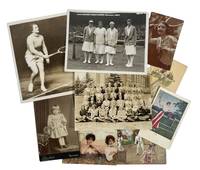
1900200841900. Women's tennis archive early 1900s to late 1930s documents female athletic participation across childhood portraiture illustrated popular culture press coverage and competitive play. The group is important for the history of women's sports because it records how women and girls were pictured entering a game that moved from elite recreation into organized competition during the late nineteenth and early twentieth centuries. The official history of Wimbledon notes that the Championships added Ladies' Singles in 1884 establishing one of the most visible formal venues for women's tennis and this archive preserves the visual culture that developed in the decades after that institutional change.<br /> <br /> The archive consists of ten visual items dated from the early 1900s to the late 1930s: three silver gelatin photographs one albumen cabinet card five brightly illustrated postcards and one real photo postcard with sizes ranging from approximately 1.75 x 2.75 inches to 6.5 x 8.5 inches. The largest press photograph dated 1933 shows Helen Jacobs in action and identifies her in the attached release as America's "outstanding woman athlete." Another press image shows four female champions standing side by side before a packed Wimbledon stadium with a newspaper article taped to the verso noting their scores. The earliest image an albumen cabinet card shows a little girl holding a small tennis racket while one illustrated postcard presents a co-ed trio on a tennis court in the early twentieth century. The remaining postcards and photographs extend the archive's range from playful and decorative representations of tennis to more direct evidence of women's organized competition. Half of the postcards bear handwritten inscriptions on the verso and two of the three press photographs retain original article clippings taped to the back.<br /> <br /> Taken together the group shows the changing public image of women's tennis from carefully posed early depictions shaped by restrictive dress codes to 1930s press photography centered on speed competition and celebrity. The official Wimbledon history also notes that equal prize money for men and women was not adopted there until 2007 a reminder that the athletic visibility seen in these images long preceded full institutional parity. Light handling wear overall with typical age toning and minor surface wear; inscriptions and verso attachments remain present; overall very good. Varied and visually engaging archive for the study of women's athletics press representation and the long development of competitive tennis culture. unknown
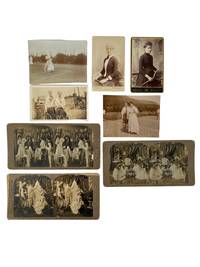
1880206021880. Unidentified photographers female tennis player photograph archive ca. 1880s-1910s documents women's participation in organized sport and recreational culture during the late nineteenth and early twentieth centuries supporting research into gender roles physical activity and educational environments for women in the Victorian and Edwardian periods. The group captures tennis as one of the few socially sanctioned athletic pursuits for women showing both formal portraiture and active play. The inclusion of seminary-based stereoviews alongside studio cartes-de-visite and outdoor scenes establishes a transatlantic visual record of how tennis intersected with women's education leisure and identity formation during a period of restricted physical and social mobility.<br /> <br /> Eight original photographs including five albumen prints and three stereoviews sepia toned ranging from approximately 2.5 x 4 inches to 3 x 4.5 inches. Two cartes-de-visite depict waist-length portraits of women holding tennis rackets dressed in late nineteenth-century attire including fitted bodices and high collars; versos bear photographer imprints for Hellis & Sons of London and George Goodman of Margate. Additional images show women engaged in doubles matches on grass courts including one action-oriented scene with players mid-swing wearing wide-brimmed hats and layered dresses. One photograph shows two young women in matching outfits possibly school uniforms standing in a yard holding rackets. The three stereoviews dated 1905 and issued by C.H. Graves of Philadelphia are captioned "A Masquerade at the Seminary Confidences" "Trying on the Costumes" and "Planning to Scare the Freshies" each depicting groups of young women in a dormitory interior; tennis rackets are visible mounted on the wall in the background linking athletic culture to residential school life. Based on the photographer and setting the images may relate to a women's seminary such as Darlington Seminary in West Chester Pennsylvania.<br /> <br /> Produced during the decades following the introduction of lawn tennis to the United States in 1874 the archive situates women's participation in sport within broader developments in leisure education and shifting norms of female physicality. The imagery documents the persistence of restrictive dress including corseted garments and long skirts even in athletic contexts underscoring the negotiation between mobility and propriety. Minor surface wear consistent with age with strong image clarity and tonal stability across prints. Overall in very good condition. unknown
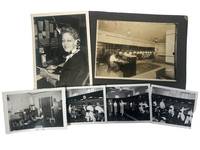
1900200911900. Telephone operator photo archive circa 1900 to 1958 documents women's labor within telephone exchange systems showing how urban communications depended on trained female operators seated at switchboards connecting calls handling information and maintaining the human infrastructure behind early and mid twentieth century telephone service. The material documents telephone communication labor through photographs of switchboard rooms operators wearing headsets plug boards supervisory presence and grouped clerical activity revealing how connection work operated in practice before automated dialing fully displaced manual exchange work. The archive supports research into women's wage labor communications history gendered office work New York telephone service and the disciplined workplace culture that positioned young women as the public voice and operational center of the telephone network.<br /> The archive consists of six black-and-white photographs including five silver gelatin photographs and one early albumen photograph with images measuring from approximately 3.5 x 4.25 inches to 7 x 9 inches. The date range appears to extend from the early twentieth century to 1958 based on the later dated images. Several photographs show women seated in tight rows facing large switchboards wearing heavy headsets with horn mouthpieces and working among dense arrangements of cords and plugs. The early albumen photograph shows a row of women facing the switchboards while a female supervisor watches over the room indicating both the gendered hierarchy and procedural discipline of the exchange floor. One image shows an operator turning toward the camera with a plug in hand smiling while gesturing toward the board. Four smaller photographs dated 1958 show teams of women moving between boards and a small group with paperwork behind the operating area; pencil inscriptions on the versos identify the location as New York.<br /> The photographs are valuable because they make visible the labor system behind telephone service: rows of operators standardized equipment supervisors paperwork and the coordinated manual routing of calls. They also record the gendered character of communications work in which women's voices posture speed and manner were made part of the service itself. Light handling wear minor edge wear and expected age toning; images remain crisp with equipment and personnel details clearly visible; overall very good. Strong women's labor and communications history archive documenting the human operation of telephone exchange systems across the first half of the twentieth century and into the postwar period. unknown
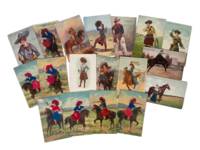
1880194351880. Cowgirl imagery in late nineteenth and early twentieth century American visual culture documents the public fascination with women performers and riders associated with rodeo culture Wild West exhibitions and frontier mythology. Eighteen postcards dating from approximately the 1880s through the early 1920s depict cowgirls mounted on horseback performing actions associated with Western riding culture including firing revolvers and rifles galloping across open terrain and lassoing livestock. The images correspond to a period when female riders and sharpshooters gained national attention through rodeo competitions traveling Wild West shows and early popular media representations of the American frontier. Several postcards depict identifiable rodeo performers including Gene Fisher and Mildred Douglas whose participation reflects the visibility of women riders in Western entertainment and exhibition culture.<br /> <br /> Eighteen postcards dating from approximately the 1880s to about 1920 depicting cowgirls in action poses across Western landscapes. The archive includes both real photo postcards and printed postcards produced using color lithography and chromolithography several of which feature embossed design elements. Each postcard measures approximately 5.5 x 3.5 inches. The scenes portray women riders equipped with bandoliers pistols and rifles while mounted on horseback amid rugged Western environments populated by wild horses and cattle. One image shows a rider firing a revolver with visible muzzle flash as the horse rears back while another depicts a cowgirl swinging a lasso above her head. A real photo postcard shows rodeo rider Gene Fisher mounted on horseback and another image depicts female rodeo cowgirl Mildred Douglas riding a bucking steer. Several postcards contain handwritten messages referencing Western towns and travel including one reading "Dear Uncle Brainard is quite a town and plenty of saloons here."<br /> <br /> Visual representations of cowgirls became an established element of American frontier mythology during the late nineteenth and early twentieth centuries shaped by traveling Wild West shows rodeo exhibitions and early illustrated postcards circulated as souvenirs of Western identity. Performers such as female sharpshooters and rodeo riders appeared alongside male counterparts in popular entertainment challenging conventional gender expectations by presenting women as skilled riders marksmen and performers in public spectacles of frontier life. These postcards reflect the intersection of popular print culture and the romanticized imagery of the American West during the decades when rodeos and frontier reenactments were widely promoted as symbols of national heritage. Eighteen postcards measuring approximately 5.5 x 3.5 inches. Colors remain bright on the printed examples and the photographic postcards retain clear contrast. Minor handling wear typical of early twentieth century postcards. Overall condition very good. unknown
1861174981861. Women's in Sciences Sepia photograph circa 1860-1880 identified in manuscript at the upper left "State Eclectic Medical Society at Worthington" depicting approximately twenty five women alongside male practitioners in Worthington Ohio an early center of Eclectic medical organization just north of Columbus Ohio. The image documents a rare mixed gender professional gathering at a moment when women's participation in formal medical education remained severely restricted under prevailing institutional norms. Within the dominant nineteenth century medical establishment women were largely excluded from training and professional societies; however the State Eclectic Medical Society of Ohio and the broader Eclectic movement created alternative pathways into medical study. These networks were closely tied to reformist traditions that challenged orthodox practice and opened limited but meaningful access to women prior to the broader professionalization of female physicians following mid century breakthroughs such as the graduation of Elizabeth Blackwell in 1849.<br /> <br /> Original Photograph. C. 1860-1880. Sepia. Approximately 6" x 9" Inches. Written in black ink in the upper left corner "State Eclectic Medical Society at Worthington". Photo shows about 25 women along with their male peers. The the first woman graduated medical school in the 1850s. The Eclectic Medical Society was notable for accepting female students before most women were allowed to study medicine.<br /> <br /> The photograph reflects the intellectual and institutional culture of Eclectic medicine a distinctly American medical movement that drew on botanical therapies Native American knowledge systems and the herbal tradition associated with Samuel Thomson. In contrast to orthodox allopathic medicine Eclectic practitioners emphasized plant based remedies and a more flexible therapeutic philosophy which correlated with a greater willingness to admit women into study and practice. The presence of a substantial number of women within this group suggests not only participation but active integration within the society's professional sphere offering visual evidence of gender inclusion within an otherwise exclusionary nineteenth century medical landscape. As a primary source the photograph provides direct documentation of women's early entry into organized medical communities in the United States capturing both the social composition and institutional networks that facilitated their participation. It is particularly valuable for research in women's medical history alternative medical movements and the development of professional education outside orthodox channels illustrating how reformist medical systems functioned as critical entry points for women prior to broader legal and institutional change. Some creasing present; otherwise in good condition overall. unknown
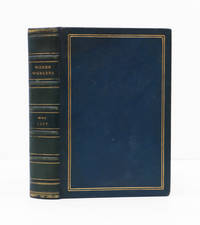
1896101854Montreal: John Lovell & Son 1896. Hardcover. very good. 1st printing. xv617pp. Octavo in full blue morocco all edges gilt marbled endpapers some minor wear to edges. Not illustrated. Very scarce. very good Proceedings of the Third Annual Meeting and Conference of the National Council of Women of Canada with an Appendix. Being the Reports and Discussions on the Laws for the Protection of Women and Children and on Pernicious Literature. 1896 John Lovell & Son hardcover
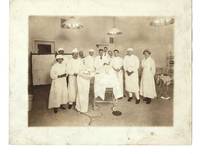
1900162081900. Women in Sciences. Original vintage photograph of operating room and surgery team. Photograph shows eleven figures dressed all in white standing around a patient in an early operating room. While most of the medical workers are men two women stand at the edges of the group and the woman standing on the left is shown wearing an operating apron and rubber gloves. 8 x 10 in. sepia photo. Photo is in good condition with light scuffing to photo surface two water marks in bottom left quadrant and some dirt and stains to the image border. Light crease in top left corner and small tear on lower right edge. Image remains crisp and clear. An important photograph that shows women's involvement in the medical field and the development of surgical technology throughout the 20th century. unknown
1871165651871. Women Employment Labor To the Right Honorable Richard Assheton Cross M.P. Secretary of Sate for the Home Department. 1871. 4 pages. 8 x 5 in. In this document women workers express fears regarding proposed labor regulations that would limit their ability to earn and would "restrict the paid labour of all women.or even make all married women half-timers." They claim it is unjust treatment that would harm women workers and pit their marriages at odds with their ability to work: "Your Memorialists assert that it is unjust to place restriction son the labour of unmarried women for the presumed protection of married women or mothers and further that any special restrictions upon the labour of married women is practically a penalty imposed on marriage as regards to the woman." Document that reveals the competing priorities for women factory workers between workplace safety and their earning power. Chipping with small losses along top and right edge. Repairs to two tears on page 2. Top left corner missing. Good only. unknown
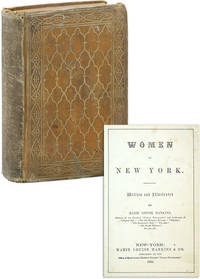
186145689New-York: Marie Louise Hankins & Co 1861. First Edition. Octavo 19cm.; publisher's decorative orange cloth stamped in gilt all edges gilt yellow glazed endpapers; x11-354pp.; 34 leaves of portraits printed on green stock text illus. throughout. Boards quite rubbed and worn at extremities the whole rather soiled and toned textblock a bit foxed throughout; a Good only copy in the gift binding the plates remaining in fine condition. Collection of short stories portraying various New York "types" including Ruth Martin "The Spiritual Medium"; Lizzie Blair "The Little Hunchback"; and Priscilla Wiggins "The Man-Hater." Hankins was herself an interprising woman of New York billing her "Family Newspaper" as "the first and only successful paper ever published by a lady." "SABIN 30228 calling for 36 plates; WRIGHT II 1092. Marie Louise Hankins & Co unknown books
189472955London, Richard Bentley & Son., 1894. 2 Original-Leinenbände, 8°, 354/344 Seiten. Mit jeweils einen gestochenen Frontispiz.
1900231121900. Women in Medicine Women's Employment Photo archive documenting women's participation in medicine nursing surgery laboratory science and public health from approximately 1900 through 1946 providing primary-source evidence of women working within institutional medicine during the decades in which their access to formal medical training and professional authority remained limited and uneven. The images document women in operating rooms clinical instruction environments laboratory settings and patient care contexts establishing record of how women functioned within medical institutions as practitioners trainees and technical specialists.<br /> <br /> Archive of fourteen silver gelatin photographs press prints and real photo postcards dating from c. 1900 to 1946 varying in size and format from 3.5" x 5" to 8" x10" with multiple examples retaining original verso captions typed press slips and annotations identifying subjects and contexts. The archive includes a estimated 1900 surgical preparation scene with women in operating attire working alongside male colleagues; a 1925 press photograph identifying "Kuniko" a Japanese woman working in the medical and chemical research field with the caption noting her public commitment to remain unmarried in order to pursue scientific work; a 1925 image of a women's medical board representing multiple organizations; a 1926 University of Cincinnati Medical College photograph documenting nurse Miss Mabel Miller participating in a nationally broadcast demonstration of human heartbeats; a 1931 image of Simmons College nursing students conducting a basal metabolism test with detailed clinical procedure noted in the caption; a 1932 press photograph of Spanish nursing students studying American medical methods; laboratory scenes from the 1920s showing women conducting chemical work; a 1935 clinical interior with a woman retrieving medical supplies; a real photo postcard depicting a surgical demonstration observed by suited male spectators with women among the surgical team; a Latvian postcard showing a nurse weighing schoolchildren in a public health context; and a 1946 anatomy class photograph documenting a predominantly female cohort performing cadaver dissection with student signatures preserved on the verso.<br /> <br /> The archive's geographic and chronological range corresponds to major developments in the history of women in medicine including the expansion of formal nursing education the gradual admission of women into medical training programs and the increasing specialization of laboratory and clinical work in the interwar and postwar periods.The University of Cincinnati broadcast photograph situates a named nurse within early intersections of clinical medicine and mass communication while the Simmons College image documents technical clinical training at a women's institution. The Kuniko press photograph documents a Japanese woman publicly identified as a professional scientific researcher underscoring the visibility of women in medical and laboratory fields across national contexts. The 1946 dissection photograph records a moment of postwar expansion in women's medical education preserving the identities of participants in a cohort entering a rapidly changing profession. Light silvering and minor edge wear to several prints; press photographs retain captions and stamps; postcards show age toning. Overall in good condition. A cohesive and internationally scoped documentary archive of women's medical training professionalization and clinical labor in the first half of the twentieth century. unknown
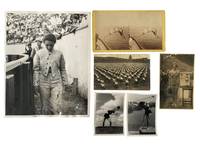
1900224351900. Sports and HobbiesWomen's History Archive of six original photographs depicting women in sports and physical culture ca. 1900s-1950s. A striking group of five silver gelatin photographs and one stereoview documenting early and mid-20th century women's athletics across a range of sports including bullfighting competitive swimming mass calisthenics and weight training. The archive is anchored by a powerful press photograph of Bertha Trujillo a Colombian woman bullfighter shown bloodstained and exhausted yet defiant after leaving the ring as documented by a Hamilton Wright press caption on verso dated May 7 1956. The image captures the rare spectacle of a woman operating within a hypermasculine and violently gendered tradition underlining her transgressive presence in the public arena of the corrida. Trujillo's visibility as a "girl bullfighter" not only subverts gendered codes of spectacle and aggression but also underscores the fraught place of women in national rituals of machismo.<br /> <br /> Also included is an early gelatin silver stereoview of a woman mid-dive from a boat into open water ca. 1900s her long dress captured in graceful suspension. A vintage sepia-toned postcard shows a massive synchronized physical training display by women in uniform skirts likely in a European stadium setting. A third photograph features a smiling young woman swimmer in a tight one-piece suit standing beside a trophy likely ca. 1920s-30s exuding post-competition confidence and the growing visibility of women in elite amateur sport. Two additional gelatin silver prints ca. 1930s-40s show women engaged in solitary strength and flexibility exercises: one throwing a medicine ball under clouded sky the other stretching a resistance band at the edge of a pond. Each of these images gestures toward evolving conceptions of female strength embodiment and public physicality across the 20th century. The photographs collectively trace a visual history of women's contested access to spaces of physical prowess and public acclaim. Minor edge wear and surface rubbing to a few prints. Overall very good condition. A varied archive showcasing women's athleticism in the early 20th century. unknown
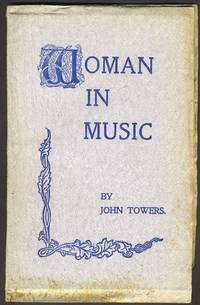
189726346Winchester VA: John Towers 1897. Paperback. Very good condition. Mr. Towers speak forcefully for the contribution of women as musicians and composers in his article in "The Musician" of April May and June 1897. Following the article is an alphabetical list of women musicians. He also apologizes to the "hundreds of Women who have done and are still doing excellent work in the field of music all the world over whose names are absent from the following list." This pamphlet memorializes the article and is dedicated to Florence Sutro a gifted musician artist and lawyer in New York City Society. She created the National Federation of Women's Music Clubs and was president of the Woman's department of the Music Teachers National Association. She and her husband Theodore were advocates for women's suffrage. <br /> <br /> Sml. 8vo 30pp printed photo of Florence Sutro. Publishers printed blue paper wrappers title in blue on cover and advertisement for the Estey Piano Rooms on verso. Tipped in at the rear is a one page testimonial of Estey Piano Co by Mrs Sutro. Printed on the last page of text is "By way of proof of the onward march of women in the elysian field of music." and goes on to praise the works of Florence Sutro the president of the newly created Woman's Department of the Music Teachers National Association. Light brown marking on lower edge of cover and first few pages and foredge of wrappers o/w very good condition. OCLC: 14545194. John Towers paperback
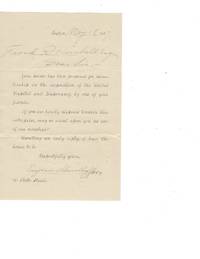
1887164541887. Women in Sciences United Hospital and Dispensary Baldwin Place Boston. Typed signed letter inviting to joining hospital advisory board and information sheet about the board. Letter dated May 18 1887. Notable for the time the membership board for United Hospital and Dispensary lists several woman doctors and emphasizes that here "women may be treated by competent female physicians exclusively if they so desire." It also lists Mary Livermore a famous journalist and advocate of women's rights. Very good. unknown
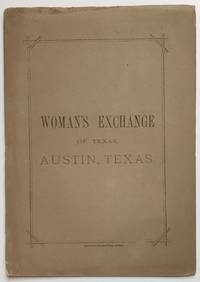
1880931Austin: Statesman Steam Print 1880. Very good. 8pp. Original tan printed wrappers. Minor soiling and wear. A rebranding of the "Woman's Art Exchange" of Texas removing the mistaken emphasis on art to encourage wider participation. "It was never intended to devote our energies to Art alone but to the encouragement of woman's handiwork of all kinds such as paintings; needle-work fancy and plain; preserves; pickles; sauces; bread and cake." Includes the association's articles of incorporation as well as the by-laws. "We now call upon the ladies of Texas to show what they can do." A handful of copies in OCLC. Statesman Steam Print unknown books
185510174501855. 120 S. Ppbd d. Zeit (stärker braunfl., St. a. d. T.)
187058998London: T. Nelson and Sons Pternoster Row 1870. 12mo. viii 9-160 pp. Woodcut-engraved vignette on title woodcut engraved frontisp. woodcut engraved illustrations throughout some as borders plates text illustrations. Publisher’s decorated red cloth over beveled boards gilt & black ornamental borders & lettering blue-tinted plate mounted front cover brown clay-sized endpapers a.e.g. very minor edgewear to lower corners slight bumping to rear corner still VG bright copy w/ former ownership markings on 2nd flyleaf. First edition of this second title in the “Walter†series by the author of the “Walter at the Sea-side†a popular work on marine zoology for young people. This volume explores the arboreal residents of Southern England’s New Forest first proclaimed a Royal Forest in 1079 at the time 150 acres of protected hunting lands. Inter-weaved are poetry and anecdotes of oaks chestnuts elms birches conifers cypress â€Graveyard Trees†and even describes the California Sequoia and its attributes. Mary Greg 1809-1895 worked with her husband in establishing “The Mount†where she assisted her husband Samuel Greg II 1804-1876 British industrialist and Unitarian philanthropist and lecturer on scientfic subjects to the workers of Macclesfield. She was a close friend of the poet and author Elizabeth Gaskell who often stayed with the family and was a frequent correspondent while Mary Greg wrote on natural history and religious topics. See: Marie Moss Travelling the Literary Trail The Gaskell Society Newsletter Aug. 2000 pp. 8-10. T. Nelson and Sons, Pternoster Row, hardcover
18220007721Paris: Chez Bechet 1822. First French Language edition. Original Boards. Good. 8vo xiv 351; vi 359 pages untrimmed in contemporary boards. Very scarce. <br/><br/>Attracted by the ideals of the "Declaration of Independence" Fanny Wright traveled extensively through the U.S.A. tracking how those ideals were being realized. In France who became almost like a daughter to Gen. Lafayette. She and her sister returned to America and with Lafayette were guests of Jefferson at Monticello. Later as a U.S. citizen she founded the Nashoba commune in Tennessee in anticipation of emancipation. She visited New York and Philadelphia West Point Niagara Falls Lake Errie and on to Lower Canada Montreal Lake Champlain Burlington Vermont Washington D.C. to Virginia with many observations along the way. This edition has a dedication to Lafayette by the translator who also supplied a new translation. Vol. 1 ends with remarks upon Morris Birkbeck's letters about the Illinois country. All in all Fanny Wright became one of the most remarkable women of the first half of the 19th century: among other accomplishments being the first woman to write this work the first travelogue by a woman. Howes D74; Sabin 18642; Clark Old South 16; Buck 137. Chez Bechet hardcover
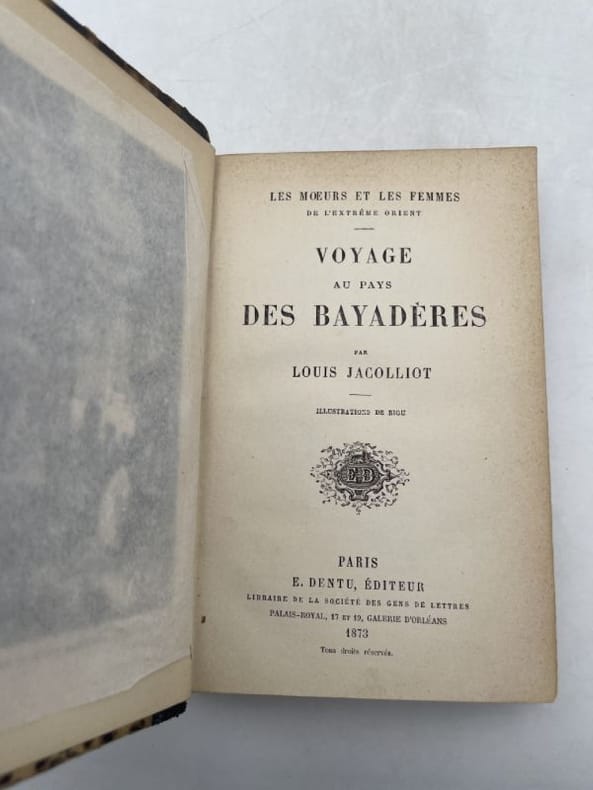
1873186607E Dentu Paris, E Dentu, 1873. In-12 relié demi-basane noire, dos à faux-nerfs, titre doré. Reliure très frottée. 373 pages; Un frontispice;
1835004378London: H. Fisher R. Fisher & P. Jackson 1835. Hardcover. Very Good. 2 volumes in 1: 68 64 p. 64 leaves of steel-engraved plates including 2 frontispieces 1 a color frontispiece engraved and printed by G. Baxter and 2 added engraved title pages with imprint: Fisher Son & Co. London 1835; 29 cm. Contemporary full polished maroon calf with five spine compartments between wide raised bands. Gilt-tooled title in second compartment; gilt-tooled decoration on wide raised bands and blind-tooled decoration on remaining compartments. Triple gilt-ruled borders with elaborate blind-tooled borders within on both boards. Gilt-rolled edges and turn-ins. All page edges gilt. Marbled endpapers. Emma Roberts 1794-1840 was an English travel writer and poet who lived in India for several years. Her text accompanies the beautiful engravings based on drawings by Commander Robert James Elliot who travelled from 1822 to 1824 in India Canton Guangzhou and the Red Sea area. Inscription on front free endpaper verso indicating that the book was given by Samuel Fennell on his engagement to Anabella Groom about 1837; she was the granddaughter of Hannah Lightfoot; later Anabella gave it to her friend Henry Plumptre Ramsden "lest it should in her own words fall into unworthy hands"; she died in 1882 and was buried in Trumpington Churchyard near Cambridge. The Rev. Henry Plumptre Ramsden 1848-1901 was the rector at Cottingham Yorkshire Eng. In Very Good Condition: edges somewhat rubbed; front board partially detached; occasional foxing generally light and in margins of plates; otherwise clean and bright. Because of the weight for international shipping it will have to be sent by international priority. H. Fisher, R. Fisher & P. Jackson hardcover