431 résultats
140949009West Kingston RI & Hampton Falls NH: Donald M. Grant 2012. Signed Limited Edition; Publisher's Copies. Fine/Fine. Publisher's Copies. A signed limited deluxe edition set of Stephen King's The Dark Tower series all matching and uniformly marked Publisher's Copy PC. All signed by the author and each volume’s illustrators respectively: Michael Whelan Phil Hale Ned Dameron Bernie Wrightson Darrel Anderson and Jae Lee. The Gunslinger is additionally signed by its publisher Donald Grant. Two copies of The Little Sisters of Eluria are included; one from the limited edition signed by both King and Whelan and the second from the Artist's Edition signed by Whelan only. All Fine in Fine dust jackets. Slipcases with light wear traycases close very slightly misaligned. Brooks A18.1b A34.1b A43.2b A61.2 A88.3 A89.2 A90.2.<br /> <p>An extreme rarity as the maximum of only 12 possible sets of matching publisher’s copies could ever exist. <br /> <p>The Dark Tower series is not tethered to any specific genre instead fusing together a complex meta-textual universe of dark fantasy western sci-fi and horror. Equally inspired by Sergio Leone's Spaghetti Westerns King modeled his anti-hero Roland Deschain on Clint Eastwood's character in Man with No Name and incorporated slow-burn sparse dialogue from The Good the Bad and the Ugly. Donald M. Grant unknown
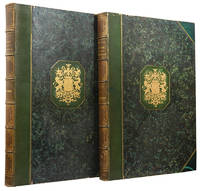
111330Paris Gihaut Frères & Ernest Bourdin 1838-1848 & 1842 . Folio 52.8 x 34.5 c 2 vols; vol. I La Russie Meridionale 100 lithographed plates after Raffet a few plates with cropped margins; vol. II Voyage Pittoresque tinted lithographed title-page and 100 lithographed plates faint water stain to lower margin; both volumes bound in contemporary half green morocco over marbled boards spines in parts with gilt tooling large gilt Rothschild coat of arms on green morocco label in centre of upper boards some minor repairs and wear very good examples.<br /> A fine set of Demidoff's most sought-after illustrated books bound for Baron James de Rothschild. <br /><br />The rich industrialist Count Anatoliy Nikolaevich Demidov Prince of San Donato 1813-70 became a famous Russian art collector who assembled at his Villa di San Donato a large collection of Dutch Flemish and Romantic masterpieces as well as an impressive library.<br /><br />Before his short and stormy marriage to Princess Mathilde-Létizia Bonaparte he financed two scientific and artistic expeditions in Russia: the first in 1837-38 in Southern Russia and the second in 1839 in Northern Europe and European Russia. Although the account of the first one is significantly more common the views published in the present second album are the most famous since they included beautiful lithographs of the largest Russian towns and their celebrated places such as the Winter Palace and the Alexandrine column in St. Petersburg the banks of the Volga in Nizhniy-Novgorod the Kremlins of Kasan and Moscow.<br /> Brunet II col. 583-584 ; Carteret III p. 197 ; Vicaire III col. 167-168. Paris, Gihaut Frères & Ernest Bourdin, [1838-1848] & [1842], hardcover
1843140947309London: Chapman & Hall / Bradbury & Evans 1843. First Edition. Near Fine. 1843 1845 1846 1846 1848. First editions of all five of Charles Dickens' Christmas Books Smith II.4-6 II.8-9. A Christmas Carol is the first issue with title page printed in red and blue dated 1843 in Roman numerals; half title and verso of title page printed in blue; "Stave I" on page 1. The Chimes first edition second issue with the publisher's name below the plate on the vignette title page. The Cricket on the Hearth first edition second issue with 2pp. ads. The Battle of Life first edition Todd's fifth state of the engraved title page with "A Love Story" in a scroll held by a cupid; terminal ads announce the publication in parts of Dombey and Son and the bound volume of Oliver Twist. The Haunted Man first edition first and only issue.<p>All five volumes bound in full polished calf with elaborate gilt seasonal stamping unique to each book. Morocco title labels to ribbed spines gilt dentelles all edges gilt. Sangorski & Sutcliffe stamp in gilt to front turn-in of each volume. Original cloth covers and spines bound in rear of all volumes but the last. Housed in an open-ended slipcase moderately rubbed and toned covered in the same floral gilt-embellished paper used for endpapers. Near Fine with slightly rubbed spines. Light edge toning to interiors occasional thumbing and staining and spots of foxing. <p>No writer is more closely associated with Christmas than Charles Dickens who began with the immortal A Christmas Carol in November 1843. It was published on December 19 and sold so well there were seven editions by the following May. The Chimes followed in December 1844 and three more books appeared in 1845 1846 and 1848 two of the title page dates follow the then-common practice of dating a book published in November or December with the coming year.<br /> <p>The enduring appeal of Dickens’ Christmas stories lies in his unmatched ability to combine sentimentality with melancholy or righteous fury a balancing act of light and dark. A Christmas Carol composed as Dickens walked weeping through the dark London streets was intended to draw attention to the plight of the working poor in London. The Chimes attacks the cruelty and hypocrisy of the rich and the protagonist of The Cricket on the Hearth contemplates murder. The Haunted Man the last novella emphasizes the need to remember past sorrows and hardships.<br /> <br /> <p>Dickens wanted his Christmas books to be pretty – his specifications for the first cut severely into his profits – and it is appropriate that these copies have been given jewel-like bindings by Sangorski & Sutcliffe one of the most famous fine binderies in the English-speaking world. A beautiful set of beautiful stories illustrated by the leading artists of the day. Chapman & Hall / Bradbury & Evans unknown
98401Paris Javal & Bourdeaux 1930. . Unique extra-illustrated example limited edition printed hors-commerce on japon imperial for Monsieur Dumouchel from a total edition of 525; 3 vols; 4to; illustrated with 25 monochrome etchings of which 22 are hors-texte by Charles Huard and with two original copper plates by Huard colour drawings throughout the text by Theodore van Elsen signed and dated 1933 also loose are 9 wash drawings and 4 watercolours signed by Huard and a set of prospectus; vol II contains a suite of 30 colour drawings to illustrate the work loose in an illustrated wrapper by van Elsen with each drawing with tissue guards and mounted on blue paper a suite of 20 original watercolours also to illustrate the work signed and captioned in pencil by Louis Ibels loose in an illustrated wrapper dated 1933; vol.3 contains over 100 original drawings signed by Carlo Farneti to illustrate the work 4 original watercolours by Louise Ibels and 2 signed watercolours by Leon Courbouleix; all house in modern maroon morocco boxes with gilt detail and lettering; a fine copy.<br /> A unique example extra-illustrated by Charles Huard with two copper plates and numerous original drawings by multiple artists. <br /><br />A large collection from the publisher's Javal and Bordeaux of illustrations for Flaubert's novel. <br /><br />Flaubert's first published novel. 'Madame Bovary the story of the adulteries and suicide of a doctor's wife in provincial Normandy is notable for its rigorous psychological development and manifests the qualities that mark all his mature work: authenticity of detail an impersonal narrative method a precise and harmonious style. Certain passages having been judged to be offensive to public morals Flaubert his publisher and his printer were tried but acquitted' Drabble.<br /> Paris, Javal & Bourdeaux, 1930. unknown
186935984Boston: Bradlee Whidden 1869. Folio. 15 chromolithographic plates after Frederic Remington A.B. Frost Fred Cozzens R.F. Zogbaum Henry Sandham and others. 32 ff. letterpress. Expertly bound to style in full dark purple straight grained morocco.<br/> <br/> A rare large-format work on sport in late 19th-century America including Frederic Remington's first two published prints in color a rare A.B.Frost image of deer-hunting and images from Fred. S.Cozzens and other top illustrators of the day.<br/> <br/> The present work includes six angling plates three of fly-fishing four plates of game-bird hunting and five of hunting larger game. Each of the fifteen subjects is first described in general terms on a single leaf of text followed by a second leaf giving a first-hand account of catching or shooting the subject followed by a chromolithograph illustrating the first-hand account. According to Gould's preface the plates are all from water-colours especially commissioned for the work which were subjected to the critical scrutiny of a group of anglers/sportsmen who judged them for technical accuracy. The plates are as follows: 1. Killing the Salmon. Henry Sandham. 2. A Moose hunt. Henry Sandham. 3. Trout fishing. Henry Sandham. 4. Fly-fishing for Black Bass. S.F. Denton. 5. Hunting Antelope i.e. Prong-horn. Frederic Remington. 6. Catching a Tarpon. Fred. S. Cozzens. 7. Mallard shooting. S.F. Denton. 8. Catching a Mascalonge. Frank H. Taylor. 9. A Wild Turkey hunt. R.J. Zogbaum. 10. Sailing for Bluefish. Fred S.Cozzens. 11. Hunting the Virginia Deer. A.B. Frost. 12. A day with the Prairie Chickens. R.F. Zogbaum. 13. A hunt above the timber-line Big-horn. Edward Knobel. 14. Canada Goose shooting. Frederic Remington. 15. Stalking the Wapiti. Henry Sandham. The two plates by Frederic Remington Hunting Antelope Hassrick & Webster 434 and Goose Shooting Hassrick & Webster 435 are also listed by Peggy and Harold Samuels Remington The Complete Prints New York 1990 pp.152-3 with the comment that they are the first and second Remington prints to appear in color. They were preceded only by a series of four monochrome photogravures for John Muir's Picturesque California 1888 and two other individual prints both black and white. Arthur Burdett Frost is now perhaps best known for his sporting pictures and prints but an aversion to deer-hunting meant that he rarely pictured shooting scenes that featured anything other than small game. His image Hunting the Deer is recorded and illustrated in Henry M.Reed's The A.B.Frost Book Charleston 1993 pp.101 104-5 but the author was apparently unaware that it was issued as part of the present work which is not included in the extensive appendix of books illustrated by Frost.<br/> <br/> Phillips p. 141; Wetzel p. 146; Sherwin sale 1946 lot 238; Bruns G120; Heller 1:502; Bennett p.48; Tyler Prints of the West pp.127 & 174; not in Reese Stamped with a National Character. Bradlee Whidden unknown
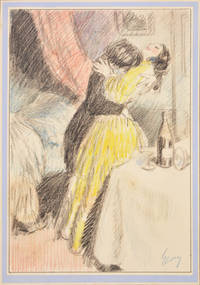
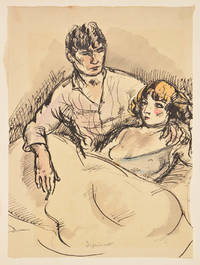
98399Paris Javal & Bourdeaux 1928. . Limited edition one of 50 copies on japon impérial with with an extra suite and a copper plate by Courbouleix and extra volume of original drawings by Carlo Farneti and Andre Dignimont; 4to 35 x 28 cm; text illustrated with 30 in-text colour etchings a la poupée and a suite with four additional states first state sans remarque avec remarque en noir and avec remarque en sanguine both with the original publisher's wrappers vol. II with 90 signed colour drawings avec remarque by Carlo Farnetti to illustrate an unpublished edition of the work 6 watercolours on thick paper signed by Dignimont 27 drawings mostly signed some hand-coloured by the same and over 100 proof sheets in colour and black and white after Dignimont also to illustrate a previously published edition of the work; both housed in modern maroon morocco boxes.<br /> One of 50 copies with an extra suite of plates and a copper plate. This copy also includes a collection of original drawings from two other artists<br /><br />Written by Jean Lorrain born Paul Duval and originally published in 1904 La Maison Philibert revolves around a Parisian brothel of the belle epoque. Although prostitution and debauchery was not an uncommon theme in fin de siecle literature Lorrain had his own reputation for being particularly outrageous in both his writings and his real life escapades. The erotic novel is here illustrated with 30 etchings with a suite of additional four states by Courbouleix. <br /><br />The second volume contains a large collection of drawings to illustrate the same work by two other artists. Carlo Farnetti 1892-1961 Neapolitan by birth moved to Paris where he illustrated works by Zola Baudelaire and Poe. He was later comissioned by Javal & Bordeaux to illustrate Les Cent Nouvelles but his drawings for La Maison Philibert were never published - making this collection of original drawings accordingly rare. <br /><br />André Dignimont a 'figure notable de Montmatre' was celebrated for perfectly capturing feminine beauty. The present volume contains a vast amount of proofs and signed drawings by Dignimont to illustrate an edition of La Maison Philibert that was published in 1925 by Collection des Arts.<br /> Paris, Javal & Bourdeaux, 1928. unknown
51-0523Paris: Alphonse Lemerre Editeur 1869. 10.5 x 14.5 inches. width x height 270 x 370 cm. Bound in contemporary red cloth. Original wrappers bound in. One of 350 copies this one certified by the printer of the text J.Claye and of the etchings A. Salmon. The editor who selected the poets and artists was Philippe Burty. This is considered the first livre de peintre with text by the major poets of the period and accompanying full page etchings by the major French artists of the mid Nineteenth century. There are 42 etchings. This one includes a second copy of the etching by 10 artists .VICAIRE.MANUEL DE L'AMATEUR de Livres du xixe siècle1801-1893579SONNETS et eaux-fortes. MDCCCLXIX. Alphonse Lemrerre éditeur Paris Impr. J. Claye in-fol. couv. impr.1 f. faux-titre; au v° justification du tirage ; 1 f. titre rouge et noir orné d'un dessin de E. Renard gravé sur boispar A. Prunaire; x f. « Aux poëtes et aux artistes qui ont collaboré à cette OEuvre à M. Philippe Burty qui en adirigé l'illustration. L’éditeur reconnaissant A. Lemerre » ; 42 ff. sonnets; 1 f. n. ch. table; et 1 f. n. ch. achevéd'imprimer.45 42 in fact eaux-fortes et 1 dessin hors texte savoir1° La Mer sonnet de Jean Aicard eau-forte de Léon Gaucherel.2° Le Masque sonnet de Joseph Autran eau-forte d'Emile Lévy.3° Promenade galante sonnet de Théodore de Banville eau-forte d'Edmond Morin.4° To Kalon sonnet d'Auguste Barbier eau-forte de Giacomotti.5° Le Sang des géants sonnet de Louis Bouilhet eau-forte de Célestin Nanteuil.6° Le Sphinx sonnet d'Henri Cazalis eau-forte de Queyroy.7° Le Lion sonnet de Léon Cladel eau-forte de Gustave Doré.8° Le Fils de Louis XI sonnet de François Coppée eau-forte de Charles Courtry.9° Supplice de Judas sonnet d'Antoni Deschamps eau-forte de Veyrassat.10° Dernier mirage; sonnet d'Émile Deschamps eau-forte de Ranvier.11° Révolte sonnet de Léon Dierx eau-forte de G. Howard.12° Les Incroyables sonnet d'Emmanuel des Essarts eau-forte de Jundt.13° Un Sénateur romain sonnet d'Anatole France eau-forte de Gérôme.14° Promenade hors des murs sonnet de Théophile Gautier eau-forte de Leys.15° Le Roman comique sonnet d'Albert Glatigny eau-forte de Félix Régamcy.16° La Salina sonnet d'Edouard Grenier eau-forte d'E. Edwards.17° Les Conquérants sonnet de José-Maria de Heredia eau-forte de Claudius Popelin.18° La Rookery sonnet d'Ernest d'Hervilly eau-forte de Seymour Haden.19° Le Pays inconnu sonnet d’Arsène Houssaye eau-forte de Tancrède Abraham.20° La Fontaine sonnet de Georges Lafenestre eau-forte de Lansyer.21° Au bord du puits sonnet de Victor de Laprade eau-forte de Francais.22° Réverie sonnet de Laurent-Pichat eau-forte de Jules Héreau.23° Le Combat homérique sonnet de Leconte de Lisle eau-forte de Léopold Flameng.24° Paysage normand sonnet d'André Lemoyne eau-forte de Corot.25° Batavia sonnet de Robert Luzarche eau-forte de Jongkindt Jongkind.26° Le Verger sonnet de Gabriel Marc eau-forte de Daubigny.27° La Pivoine sonnet de Judith Mendès eau-forte de Jacquemart.28° Théodora sonnet de Catulle Mendès eau-forte d'Ingomar Frankel.29° Sur une composition de F. Millet sonnet d'Albert Mérat eau-forte de F. Millet.30° L'Eclair sonnet de Paul Meurice dessin de Victor Hugo.31° Le Dernier amour de Charlemagne sonnet de Claudius Popelin eau-forte d'Ehrmann.32° Fleur exotique sonnet d'Armand Renaud eau-forte de Manet.33° Théroigne de Méricourt sonnet de Louis Xavier de Ricard eau-forte de Victor Giraud.34° Le Pont des Arts sonnet de Sainte-Beuve eau-forte de Maxime Lalanne.35° Une grande douleur sonnet de Joséphin Soulary eau-forte de Ribot.36° Silence et nuit des bois sonnet de Sully Prudhomme eau-forte d'Hédouin.37° Nénuphars sonnet d'Armand Silvestre eau-forte de Feyen-Perrin.38° Souvenir du Bas-Bréau sonnet d'André Theuriet eau-forte de Michelin.39° L'Éclipse sonnet d'Auguste Vacquerie eau-forte de Bracquemond.40° La Chute sonnet de Léon Valade eau-forte de Solon.41° Le Pitre sonnet de Paul Verlaine eau-forte de Rajon.42° Après la harangue sonnet de Jean Vireton eau-forte de Boilvin. Paris: Alphonse Lemerre Editeur, 1869. hardcover
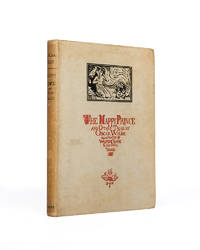
122321London David Nutt 1888. . First edition one of 1000 copies; large 8vo 230 x 175 mm; half-title frontispiece and 2 plates by Walter Crane decorative head- and tail-pieces occasional spotting heaviest to half-title tissue guard to frontispiece short closed tear to front free endpaper small loss to upper margin of p. 51 not affecting text auctioneers slip laid in; publisher's Japanese vellum boards spine lettered in black and lightly rubbed upper cover printed in red and black with illustration by Jacomb Hood boards toned a few small marks on lower cover corners gently bumped some edges unopened in a chemise and green morocco-backed slipcase; x 116 2pp.<br /> A particularly good copy of the first appearance of five of Wilde's classic fairy tales for children comprising: The Happy Prince The Nightingale and the Rose The Selfish Giant The Devoted Friend and The Remarkable Rocket.<br /> Mason 313. London, David Nutt, 1888. hardcover
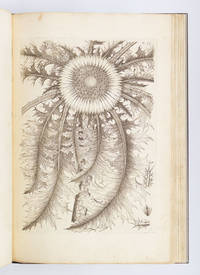
1785ST18172Turin: Michael Briolus 1785. FIRST EDITION. 410 x 270 mm. 16 1/8 x 10 5/8". Volume II with pp. 3-4 bound before pp. 1-2 but complete. Three volumes. <br/> INVENTIVE AND ELEGANT BROWN CRUSHED MOROCCO BY ANNIE BOIGE stamp-signed "A. Boige" on front pastedown and dated 1996 on rear pastedown upper covers cleverly encrusted with botanical specimens leaves or branches smooth spines with silver titling leather hinges watermarked light gray endpapers. Housed together in the original suede-lined brown cloth drop-back box suede-covered separators preventing contact between volumes. WITH engraved frontispiece portrait of the king of Sardinia in volume I engraved allegorical vignette on title pages and 92 FINE ENGRAVED PLATES ILLUSTRATING 237 BOTANICAL SPECIES. A Large Paper Copy. Cleveland Collections 557; Dunthorne 6; Sitwell "Great Flower Books" p. 67 69; Nissen BBI 18. ◆One plate with minor repair to fore-edge margin another with tiny rust hole not touching image half a dozen plates with insignificant smudges made during the printing process other trivial imperfections but A VERY FINE COPY clean fresh and wide-margined in a flawless binding.<br/> <br/> This is a major work of 18th century botany describing more than 2800 species of plants found in Italy's Piedmont region illustrating 237 previously unknown specimens and--crucially--classifying them all according to the new Linnean system becoming one of the first regional botanicals to use that taxonomy; as a bonus our copy comes in a particularly appropriate and charming binding with prominent botanical design elements. "Flora Pedemontana" was the chief work of Italian physician Carlo Allioni 1728-1804 professor of botany at the University of Turin and director of its natural history cabinet and botanical garden. The illustrations were drawn and engraved by the botanical garden's resident artist Francesco Peyroleri and his son Pietro. Our flora is also an important source of information on Alpine flowers. The modern binding is by an artisan who was proclaimed the "Grande Dame of French bookbinding" by the journal "Art & Métiers du Livre." Annie Boige trained at the Estienne School and at the Vésinet Applied Art Workshop before establishing her atelier in 1985. An art bookbinder she is noted for her monochrome color schemes and her use of beautiful leathers and vegetal materials a felicitous choice here. Michael Briolus unknown
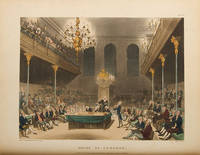
119876London R. Ackermann 1808-10. . First edition early issue with ALS loosely tipped to first blank; 3 vols large 4to 34 x 28 cm; letter from Augustus Welby Pugin to T. Bury dated 1839 restored and laid on linen wood-engraved titles engraved dedications 104 hand-coloured aquatint plates by Bluck Stadler and others after Pugin and Rowlandson watermarks 1806-1808 bookplate to pastedown; twentieth-century half crushed morocco by Zaehnsdorf gilt ruled cloth boards spine lettered in gilt in six gilt compartments all edges gilt marbled endpapers a fine set.<br /> This is a splendid work with the preferred pre-publication watermarks exhibiting a depth and richness of colouring. The Microcosm offers an incomparable panorama of Regency London both high and low from sedate drawing rooms to the brawling and boozing street life of the metropolis captured in matchless hand-coloured aquatint by the inspired pairing of Pugin and Rowlandson. Most of the plates are in their first or second state with plate 12 and 39 in the rare first state.<br /><br />With an autograph letter by Augustus Welby Pugin 1812-1852 pioneer of the Gothic Revival architecture movement to probably Thomas Talbot Bury 1809-1877 his long time friend and collaborator dated 1839. The letter describes a drawing Pugin made of Macclesfield Church St Michael and All Angels including directions to Bury for his engraving of the image and is adorned with small sketches of the altar candles and statues. It was Augustus Welby's father Augustus Charles who produced the architectural drawings of this work and was the reason Augustus Welby and Bury were so intimate having apprenticed his son and Bury together.<br /><br />'Ackermann's The Microcosm of London. is a book of major importance. The architectural drawings were by Augustus Charles Pugin a French refugee who came to London in about 1798 "driven from his country either by the horrors of the French Revolution or by private reasons connected with a duel" . His lasting fame rests on his consummate ability as an architectural draughtsman. By a stroke of genius Ackermann engaged Thomas Rowlandson to add human figures to the drawings that Pugin made for The Microcosm so that the stately accurate and dignified qualities of that artist are enlivened by the vitality and charm of Regency life as depicted by one of the most vigorous draughtsmen of all time. To turn the leaves of The Microcosm is to take a walk though London at a singularly fortunate moment observing as we never can in real life the scenes of many celebrated incidents in English literature and history: the India House of Charles Lamb the King's Bench Prison of Dickens the Foundling Hospital of Captain Coram and Hogarth the Guildhall bombed by the Luftwaffe the Newgate of Harrison Ainsworth the Carlton House of the Prince Regent and so forth.' Thomas Great Books and Book Collectors 1975 p. 155<br /> Abbey Scenery 212; Tooley 7; Prideaux pp121-4. Franklin 49-54. London, R. Ackermann, [1808-10]. hardcover
194538405Angers: Editions Jacques-Petit 1945. WITH TWO IMPRESSIONS IN FIRST AND SECOND STATES OF ONE OF KIYOSHI HASEGAWA'S MOST IMPORTANT PRINTS. Etched half-title 16 pp. plus 12 loose engravings. A monograph on engraving followed by short biographies of each of the six artists accompanied by a suite of large engravings by Cami Cottet Decaris Jeannisson Hasegawa and Lemagny. From a total edition of 320 copies all printed on fine Marais wove paper this is ONE OF ONLY 60 SETS WITH THE ENGRAVINGS IN TWO STATES: THE FIRST STATE ON RIVES WOVE PAPER SIGNED IN PENCIL AND THE SECOND STATE ON MARAIS WOVE PAPER. Hasegawa's engraving "Anemones et fleurs de champs dans un verre a facettes" Kyoto 368 also known as "Bouquet sur fond de dentelle" is considered one of his masterpieces. Folio 38 x 28 cm. Loose as issued in the original folding case. Folding case lightly worn and spotted. CONTENTS FINE AND BRIGHT. ALL OF THE PRINTS IN BRILLIANT CONDITION. <br/><br/> Editions Jacques-Petit unknown
2324Paris: Dufart 1806. ALL PUBLISHED of this abortive yet spectacular attempt at a comprehensive survey of natural history THE FIRST BOOK ON ZOOLOGY WITH COLOR-PRINTED as opposed to hand-colored PLATES. Comprises a general preface describing the entire project by Dufart an introduction to this volume by Manuel 101 GORGEOUS FULL-PAGE COLOR-PRINTED STIPPLE-ENGRAVED PLATES OF MAMMALS IN EXOTIC LANDSCAPES usually two scenes per plate after Deseve and other artists and descriptive notes on each mammal depicted by Manuel. 30 pp. 101 plates 60 pp. Dedicated to Napoleon. Text printed on fine wove paper plates on very fine thick wove paper. After the appearance of this volume the project was suspended because the publishers could not find enough subscribers there is a list of the 24 who subscribed to this first volume on the back of the half-title. The reasons for this failure are obvious: each volume cost a staggering 60 francs not including the binding and the images of the animals although bright beautiful and charming are not particularly accurate. Large thick 8vo. BOUND IN CONTEMPORARY FULL CRIMSON MOROCCO WITH ELEGANT GILT DECORATION ON COVERS AND SPINE. All edges gilt. Light wear to extremities of binding but still very attractive. Internally bright. Two copies in NUC. Quérard La France littéraire V 497 doubts the very existence of this work: ".ne paraît avoir été que projeté car on n'en trouve mention nulle autre part que dans le vol. de M. Debray." An extremely rare unusual and altogether stunning book. <br/><br/> Paris: Dufart, 1806 unknown
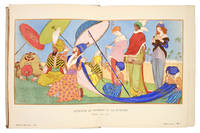
95553Paris Lucien Vogel 1914. . First edition. 4to. 6 original parts comprising January to June 1914 the second year of this periodical 61 hand-coloured lithograph plates en pochoir by Barbier and others later cream cloth lightly soiled.<br /> It may have been short-lived but the Gazette du Bon Ton was hugely influential reflecting all the latest developments in fashion and lifestyle at the beginning of the twentieth century at a time when styles changed dramatically in the space of a few years. The magazine was only available to subscribers at a price which equals $425 per year in today's money thereby creating a very exclusive image. Lucien Vogel the editor aimed to establish fashion as an art form and also to create 'good taste' for the Parisian elite. Publication was suspended in 1915 due to World War I and resumed in 1920 continuing through 1925. <br /><br />Contributing artists included all the greatest names of the day such as Dufy Bakst Barbier and Brunelleschi etc and these artists would depict the haute couture in a narrative and dramatic style using vivid colours and the pochoir technique on special handmade paper. Many of the designs were idealistic leisure scenes of the well-to-do illustrating the latest creations of Paris vintage fashion houses such as Worth Lanvin Doucet Poiret Callot Soeurs Paquin and Beers often without explanatory text. The literary content was also of the highest quality with essays by well known art historians playwrights and novelists of the day.<br /> Ray Art deco Book in France pp.29-30. Paris, Lucien Vogel, 1914. hardcover
1817007975London: Henry Colburn 1817. First edition. Three Quarters Morocco. Marbled pastedown on boards. Near Fine. 4to. 30.5 by 27 cm. xviii 2 368 pp. 28 hand-colored aquatint plates of which one is a half-title page another is a double paged and folding panorama plate of The Battle of Waterloo; plus two folding maps. The plate count given in the book's plate description is 30 and this includes the maps. Tooley 336. Abbey Life 372. Cohn Cruikshank 580. Missing as typical View of Brussels but with "Flight of Bonaparte". Rouse was responsible for almost all of the plates with Cruikshank the artist for the large folding plate depicting the Battle of Waterloo and the frontis plate which contains portraits of the leading generals. Rouse though had a hand in the printing of these as well. Condition: Rubbing along the joints on the cover with a touch of rawness in the very upper reach of the front hinge but overall a highly attractive three quarter red morocco binding with raised bands gilt lettering and ruled and dotted decoration on the spine. Scattered light soiling within and the typical quotient of offsetting but mostly clean. The Cruikshank Waterloo plate has smudgy margins but a good amount of this can be removed with a simple eraser if one wishes to make the effort -- we did test this. The large folding map has fold tears with one irregularly bordered tear. The whole map we would note is present. Henry Colburn unknown
70010London: Collins 1974. Ornithology SIGNED PRESENTATION COPY. Fourth printing. Octavo 20 x 14cm pp.256. With colour plate illustrations and line drawings. Publisher's mid-blue cloth titled and decorated in gilt to spine cartographic endpapers. With author's inscription to the title page; To Dick Sargent / James Bond. With occasional pencil and ink annotations by Sargent together with a note confirming the signed book was presented to him by Bond's colleague Lisa Salmon. A near fine copy without wrapper. The acclaimed work by the ornithologist James Bond whose name was famously appropriated for spy fiction's most celebrated hero. A rare signature in full as here the author usually signing as 'Jim Bond'. The recipient Dick Sargent was president and CEO of the Chubb Institute A dedicated conservationist he served as a trustee on the board of The Land Conservancy of New Jersey. Lisa Salmon founded the Rocklands Bird Sanctuary near Montego Bay in 1958. Laid in is a tri-fold checklist compiled by Salmon identifying birds to be observed at Rockland Feeding Station. Later part of the collection of Ian Fleming bibliographer Jon Gilbert. Gilbert page 616. London: Collins, 1974 unknown
1912ST17640-391New York: Dodge Publishing Company 1912. 265 x 195 mm. 10 1/4 x 8". Title page and 52 unnumbered leaves printed on recto only. Translated by Edward FitzGerald. <br/> EXCELLENT TEAL CRUSHED MOROCCO GILT BY THE HARCOURT BINDERY stamp-signed on verso of front free endpaper covers framed by multiple plain and dotted rules enclosing a twining grapevine central panel with palmette and floral cornerpieces raised bands spine compartments densely gilt LOVELY CITRON MOROCCO DOUBLURES EACH with large oval medallion at center CONTAINING ONE OF THE COLOR ILLUSTRATIONS BY HANSCOM & CUMMINGS enclosed by a graceful gilt frame corners with intricate gilt vines bearing clusters of onlaid burgundy morocco grapes fawn-colored moiré silk endleaves top edge gilt other edges untrimmed joints expertly repaired. In an early original blue cloth dust jacket. With 26 of 28 two having been used for the doublures memorably intriguing tipped-on color plates by Adelaide Hanscom and Blanche Cummings all with tissue guards and the text with Orientalist decorations those on the title and opening pages hand-colored and highlighted with gilt. Paas 1513. Spine evenly darkened title page with small tears at inner margin lower corner of one plate torn at tip image unaffected other trivial imperfections but still quite an attractive copy--clean fresh and bright the leaves with vast margins and the heavily-gilt binding lustrous.<br/> <br/> This is an especially appealing copy of a ground-breaking illustrated edition of the Rubaiyat in an elaborate binding with splendid doublures created by a prominent American workshop using images from two of the color plates in the work. One of the early women pioneers in the field San Francisco photographer Adelaide Hanscom 1875-1931 began working on photographs to illustrate the Rubaiyat in 1903 and called on members of the Bay Area's bohemian literary and artistic community to serve as models among them "Poet of the Sierras" Joaquin Miller the white-bearded sage in our illustrations Charles Sterling George Wharton James and Charles Keeler. Hanscom was already making a name for herself as a portrait photographer and as a member of the Pictorialism movement defined by Britannica as "an approach to photography that emphasizes beauty of subject matter tonality and composition rather than the documentation of reality." Those characteristics are on prominent display in her Rubaiyat images first published as sepia-toned photogravures in 1905. This work caused a sensation and won Hanscom international attention including a silver medal at the Liverpool Exposition in England. Perhaps more meaningful to Hanscom was the notice of the great Alfred Stieglitz who made her an Associate Member of his Photo-Secession and included two of her prints in an exhibition at the Little Galleries of the Photo-Secession later known as "219" in New York. The San Francisco earthquake of 1906 destroyed the studio of Hanscom and her partner Cumming including all the negatives of the Rubaiyat plates. The photographs copyrighted by Dodge Publishing were all that remained. The Getty Center which owns a copy of this work suggests that Hanscom and Cumming created the plates here by hand-coloring the photographs and the title of our edition implies those "Life Studies" were then photographed for this work. The memorable binding is by Boston's Harcourt Bindery founded in 1900 to provide hand bookbinding services for the publications of the burgeoning number of private presses created by the Arts & Crafts Movement in New England. The binders took two of the color plates from the work--the frontispiece and the final image from the 1905 edition--to create centerpieces for the doublures adding a gilt and onlaid grape arbor that evokes imagery from the poem. The Harcourt Bindery remains the largest bindery in the United States exclusively devoted to fine bookbinding by hand. Dodge Publishing Company unknown
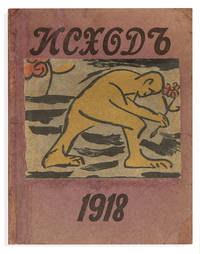
117139Moscow & St Petersburg but printed in Penza lzd. Khudozhestvennyi Klub 1918. . First only edition 8vo 23 x 17.5 cm; lithographed title 6 linocuts of which 4 are in colour ownership inscription in pencil to p1; original purple printed wrappers with mounted illustration by Usenko reapirs to spine covers faded else a very good copy.<br /> The first collection of poems from the Imagists printed in a tiny edition in the Penza provincial printing house. 'Exodus' refers to leaving Penza where Mariengof lived as a student. In the spring of 1918 the poet's father died from a stray bullet during the rebellion of the Czech legionnaires. After this tragic event Mariengof left Penza forever and moved to Moscow where he organised a group of four poet friends: Esenin Mariengof Shershenevich and Ivnev which became the backbone of a new literary movement. Mariengof later said 'Imagism was born in the city of Penza on Kazanskaya Street'. <br /><br />The collection of poetry also includes the notable first appearance of Osip Mandel'shtam's Dekabrist' from 1917 a striking anomaly it would be first published officially in Tristia in 1922. Not much is known about the artist Vitaliy Usenko but his illustrations are incredibly striking.<br /> Moscow & St Petersburg (but printed in Penza), lzd. Khudozhestvennyi Klub, 1918. unknown
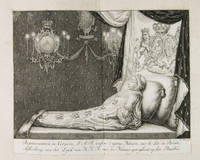
175918779The Hague 1759. Large folio ca. 50 x 36 cm. Pierre Gosse junior 19th-century half green morocco a red morocco label on the spine with the title in French lettered in gold marbled endpapers. With 20 engravings each mounted on a double-leaf of heavy paper the text is printed in Dutch and French with a separate title page for each language the engraved coat of arms of Princess Anna on each and 4 decorated woodcut initials. 2 parts in 1 volume. 4 4; 4 27 pp. First edition of two works with illustrations and descriptions of the funeral ceremonies for Princess Anna of Hannover 1709-1759 who was then regent for her son William V Stadtholder of the Dutch Republic. The first work shows the ceremonial mourning chamber with Princess Anna on her death bed. The plates were drawn by Pieter de Swart 1709-1772 one of the most important Dutch architects of the 18th century and engraved by Simon Fokke 1712-1784. The second work shows the funeral procession which took place in Delft on the 23rd of February in 1759 with detailed illustrations of all the heralds riflemen guards etc. that took part in the ceremony. The plates for this work were drawn by artist Paulus Constantijn la Fargue 1729-1782 and also engraved by Fokke. The creators apparently suspected that counterfeit editions of the work might appear as the text at the end of the first work states that only copies signed by the bookseller would be considered real. The present copy is signed.Princess Anna of Hannover duchess of Brunswick-Luneburg was the eldest daughter of George II August later King of England as George II and Wilhelmina Charlotte of Brandenburg-Ansbach. In 1734 she married the Dutch Willem Karel Hendrik Friso 1711-1751 Prince of Orange and Stadtholder of Friesland. When in 1747 her husband became Stadtholder of the Dutch Republic as Willem IV the couple moved from Leeuwarden to The Hague and Anna became highly involved in politics. After the death of Willem IV in 1751 she became regent for her three-year old son the later Stadtholder Willem V. In this position she played a prominent part in the political life of the Republic defending the position of the House of Orange against the republicans.The edges and corners of the boards are somewhat scuffed the boards are slightly rubbed the spine is somewhat discoloured. Otherwise a beautiful copy on heavy large paper with the plates in their original fresh impressions.l Ad 1: Landwehr Splendid ceremonies 233; Lipperheide 2675; Muller 4095; STCN 23024453X 7 copies; Vinet 756; Ad 2: Landwehr Splendid ceremonies 234; Lipperheide 2676; Muller 4097; STCN 230244394 7 copies; Vinet 756bis. ABE CAT Costumes & Uniforms hardcover
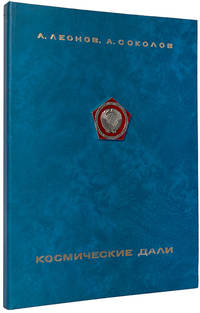
114998Moscow Izobrazitel'noe iskusstvo 1972. . First edition presentation copy signed by A. Sokolov on the verso of the upper portfolio board folio 38 x 28.5 cm; complete with 34 plates of which 16 are double page each with descriptive text on the verso 36pp. of text by Denisov and Alimov in a separate booklet also with an introduction by Yuriy Gagarin; housed together in the original blue leatherette portfolio enamel and metal USSR medallion to upper cover and title in silver a very good copy.<br /> Presentation copy of the first edition inscribed by the space fantasy artist Andrei Sokolov to Fuad Borisovich Yakubovskiy Soviet minister for 'special construction projects'.<br /><br />A striking portfolio of Soviet space art with thirty four plates depicting imaginary spacewalks satellite constructions curious spacecraft dreamy constellations and unexplored planets and moons. One of the artists A. Leonov was the pioneering cosmonaut who made the first spacewalk exiting the capsule during the Voskhod 2 mission. Art however was his first love and he was the first person to sketch earth from space. He often collaborated with his close friend Andrei Sokolov who unlike Leonov did not have first hand experience of space and instead chose to paint a more fantastical picture. <br /><br />The album was published to mark the 15th anniversary of the launch of Sputnik and is a glorious example of ambitious propaganda. It was clearly designed to make an impact with the elaborate portfolio case and wonderful illustrations which are often highlighted with silver. The inclusion of real life space missions alongside imagined realities of the future is an assertion of the potential for Soviet cosmonauts.<br /> Moscow, Izobrazitel'noe iskusstvo, 1972. hardcover
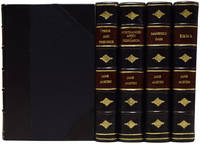
68272London: Macmillan and Co. 1895-1897. Classic English Literature FIRST EDITIONS THUS each being the first edition illustrated by either Brock or Thomson. Complete in five volumes. Octavo 20 x 14 x 18cm. With an introduction by Austin Dobson to each volume profusely illustrated throughout by Charles Brock for Pride and Prejudice and Hugh Thomson for the all the other titles. Recently bound in navy half calf with raised bands gilt titles to burgundy labels further gilt tooling to spines and matching cloth over boards. All edges untrimmed. Nice clean copies gently toned throughout. Presented in attractive new leather bindings. Book Collector No.271 'The Great Illustrators'. London: Macmillan and Co., 1895-1897 unknown
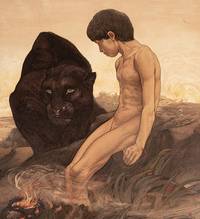
06188London: Macmillan & Co. Limited 1903. Beauty That Hath Terror in It"<br /> The Detmold Brothers' Sublime and Unsettling Vision of The Jungle Book<br /> <br /> KIPLING Rudyard. DETMOLD Maurice & Edward J. illustrators. Sixteen Illustrations of Subjects from Kipling's "Jungle Book" by Messrs. Maurice & Edward Detmold. London: Macmillan & Co. Limited 1903.<br /> <br /> First edition. Folio 21 3/8 x 15 1/2 inches; 543 x 394 mm. Title page contents leaf and sixteen fine colored prints tipped onto white board with gray window mounts each with a cover sheet providing the title and a short extract from the text. Title-page and list of illustrations expertly repaired at fold second plate description with short marginal tear some light foxing to text and mounts only - the plates clean and fresh.<br /> <br /> Housed in the publisher's green cloth portfolio front cover lettered and with illustration in gilt one of two original green silk ties. An excellent example of the Detmold's finest work.<br /> <br /> Rendered in the rich colors characteristic of the Detmolds' artwork the plates in this portfolio far surpass the later small book edition published five years later whose reproductions appear comparatively muted. Considered among the finest book illustrations of all time R. Dalby notes: "These paintings were praised for their realistic detail and decorative arrangement" while Diana Johnson intriguingly observes: "The end result of this incongruous joining together of the quasi-scientific and the ornamental is an image which is both fanciful and often rather disturbing." <br /> <br /> Published when the Detmold twins were only twenty years old this portfolio was their final collaboration before Maurice's tragic suicide in 1908. Because the illustrations closely resemble original artwork when framed many individual plates were separated from their sets making a complete portfolio a rare find today.<br /> <br /> The sixteen plates in Sixteen Illustrations of Subjects from Kipling's Jungle Book represent the Detmold brothers at the absolute height of their early powers combining natural history accuracy with a highly personal imaginative symbolism. Executed when Maurice Detmold and Edward J. Detmold were only twenty the images reveal an astonishing maturity of design color harmony and psychological insight.<br /> <br /> Across the series animals are rendered with an almost zoological precision - musculature fur scale and movement observed with scientific care - yet the compositions are unmistakably poetic and stylized. Wolves stand with hieratic gravity; panthers and tigers possess an elegance that borders on the mythic; serpents coil with hypnotic inevitability. <br /> <br /> These are not merely illustrations of stories by Rudyard Kipling but visual interpretations that deepen and at times darken the emotional tenor of the text.<br /> <br /> Several plates focus on Mowgli himself depicted as a lithe vulnerable yet resolute figure often isolated against vast spare landscapes. His nudity is treated without sentimentality: the Detmolds emphasize his animal belonging rather than childhood innocence reinforcing the central tension of The Jungle Book - the precarious boundary between human and beast. In scenes with Bagheera Baloo and Akela the animals are endowed with a quiet authority their gazes expressive and morally charged suggesting intellect and memory rather than simple instinct.<br /> <br /> The Monkey People shown amid cold stone lairs and architectural fragments are among the most unsettling inventions in the set: simian forms twisted into almost grotesque attitudes animated by restless purposeless energy. By contrast the great predators - Shere Khan especially - are portrayed with a terrible beauty: powerful controlled and ominously calm embodying what the Manchester Guardian aptly described as "that beauty which hath terror in it."<br /> <br /> Color plays a central role throughout. The Detmolds employ a restrained but sumptuous palette - burnished browns smoky grays deep greens and muted ochres - heightened by subtle tonal transitions rather than overt brilliance. This lends the plates a painterly richness and a unity of mood that far surpasses the later reduced-format book edition whose reproductions inevitably dull these effects.<br /> <br /> Decorative framing carefully balanced negative space and rhythmic patterning of foliage fur and stone give each composition an architectural coherence. The result is a body of work that stands apart from conventional Edwardian illustration: neither merely narrative nor purely ornamental but a rare fusion of naturalism symbolism and psychological depth.<br /> <br /> Taken as a whole the portfolio reads as a visual cycle - grave hypnotic and occasionally disturbing -confirming the contemporary judgment that the Detmolds "prevent their work from ever sinking to the level of mere illustration." <br /> <br /> Complete portfolios are now scarce as many plates were long ago removed for framing making intact examples such as this especially prized.<br /> <br /> A report on the publication in the New York Times for 5 December 1903 stated that "the edition is strictly limited to 500 copies for England and America". This portfolio is a magnificent presentation of the Detmold brothers' celebrated book illustrations. Reviewing the London exhibition of the original artwork the Manchester Guardian commented that the Detmolds "are able to prevent their work from ever sinking to the level of mere illustration". The reviewer enthused that "the drawing of the Monkey People in the Cold Lairs who 'were not thinking of Mowgli's friends at all' is full of character subtle observation and invention. The figure of Bagheera in 'Mowgli and the Red Flower' has something of that beauty which hath terror in it. Baloo and Nag Kaa and Akela the lone wolf are brought before our eyes in a singularly convincing and engaging form". Manchester Guardian 5 November 1903. London: Macmillan & Co., Limited, 1903 unknown
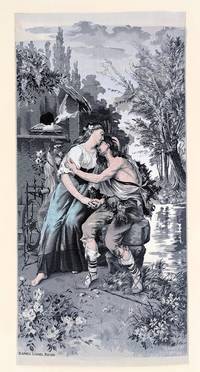
19032253<p>26 illustrated silk leaves including title sizes from 140 x 170 m to 400 x 180 mm mounted within blind embossed frames on 22 white cardboards. The illustrations woven color images are after various French Fin de Siècle and Art Noveau artists like Alphonse Mucha 6 including a series of 4 leaves illustrating the seasons Ernest Meissonier Lionel Royer Achille Fould P. A. Cot and others. Loosely contained in cont. green half morocco portfolio with gilt title on front cover <em>La section Stéphanoise de la société de géographie commerciale de Paris. A son secrétaire perpétuel M. Charles Gauthiot Décembre 1903. </em>Doublures. Paste-downs with watered silk covering framed by richly gilt green morocco borders. Folio 540 x 335 mm. Ties lacking front cover rubbed extremeties slightly worn.</p><p>Charles Gauthiot 1832-1905 was a French journalist and secretary-general of the Société de Geographie Commerciale de Paris founded in 1873 by M. Meurand E. Levasseur C. Gauthiot M. Tourasse B. Garnier M. Dietz-Mounin E. Berge F. de Lesseps M. Peghoux. No other copy found unique a fine specimen of the French craftsmanship of silk weaving with only minor traces of use. Title-leaf with a yellowish spot in lower right corner probably due to the adhesive used.</p> Société de géographie commerciale de Paris
75101Boson MA and New York NY: The C.T. Brainard Publishing Co. 1909. Literature LEATHER-BOUND ILLUSTRATED SET Edition De Luxe. Complete in 15 volumes. Octavo 20 x 13 x 56cm. Each volume with between three and seven black and white illustrated plates including a frontispiece by various illustrators. An out-of-series copy from an edition of 1000 numbered copies. Recently bound in blue half morocco with raised bands gilt titles to twin red labels and matching cloth over boards. Top edges gilt and others lightly trimmed. A crisp clean set in an attractive new leather binding. Boson, MA, and New York, NY: The C.T. Brainard Publishing Co., 1909 unknown
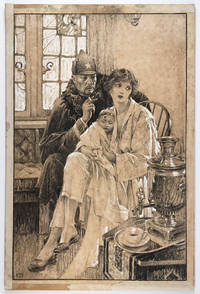
5233New York 1920s. 6 illustrations in ink wash and gouache 39 x 37.5 cm to 41 x 62.5 cm plus margins; 3 signed "Von"; 1 signed "Harold von Schmidt"; 1 signed "C.P.C."; 1 signed "John W. Thomason Jr." Some ms. production notes captions etc. on versos and rectos some indicating the pages and sections of the serialized novel to which the illustrations relate. 1 small reproduction of a larger illus. pasted on its recto 7.5 x 10.5 cm. <p>Six original illustrations for Liberty magazine's serialized publication of the novel The Red Napoleon 1929 an early fictional account of a full-scale Soviet invasion and attempted conquest of the world.</p> <br/><br/><p>The acclaimed war correspondent journalist and novelist Floyd Gibbons 1887-1939 first published The Red Napoleon in Liberty magazine which commissioned Harold von Schmidt 1893-1982 among others to illustrate the serialized publication. The first installment appeared in Liberty on 6 April 1929. In The Red Napoleon the Red Army attempts to usher in a world of racial equality and usurp the supremacy of the white race. Novelist John Gardner 1933-1982 has described The Red Napoleon as an "ironic satire of capitalist America's greed and foolhardy racism":<br/><br/><p style="padding-left: 2em;">What Gibbons is saying from behind the fortress-wall of his trash-writer gimmicks is serious and convincing: white superiority on this planet is finished and worse if we refuse to meet the Third World halfway-refuse to shuck off the racial prejudice that has been a standard feature of our character from the beginning-we face virtual extermination . Gibbons found himself in a curious position .Everything he believed most profoundly-and believed to be a matter of life and death-would be anathema to his readers. Not only would the vast majority of his readership find his visionary slogan ridiculous-"We recognize but one race-the HUMAN RACE"-they would find it grossly evil.<br/><br/><p>Gibbons' novel centers on Karakhan of Kazan-the 'Red Napoleon'-who serves as chief military commander of the USSR under Stalin until the dictator is assassinated in 1932. In turn Karakhan becomes the new Soviet leader and uses his military influence to take control of the country-and then proceeds to attempt to conquer the world. Karakhan espouses a policy of "Conquer and Breed." Believing the antidote to Caucasian hegemony to be miscegenation Karakhan marries and has a child with an American radical leftist. Gibbons writes on p. 1: "Karakhan's defiant pride in his coloured skin struggling against an instinctive inferiority complex originating from impacts with white dominance fired him with the ambition to fuse all races-white yellow black brown and red-into one human race the only one he acknowledged." Before the novel's dramatic climax in which Karakhan's army is defeated by American forces the Red Army ravages Europe-slaying Mussolini preempting Hitler's rise bringing Winston Churchill and Britain to their knees etc.-and conquers Australia where he massacres six million whites.</p><br/><br/><p>The most remarkable of the six illustrations offered here initialed at the lower left "C.P.C." depicts a domestic scene showing Karakhan smoking a cigarette and gazing at his white wife who holds their mixed-race offspring in her arms. A caption appears on the verso-"He's gone completely crazy on the idea of having children with white women." The most notable illustration by von Schmidt features a menacing Soviet perhaps Karakhan again wearing an ushanka hat and fur with binoculars hanging around his neck. This too has a caption on the verso: "Short cut black hair that fitted his head like a skull cap. His thin body high shoulders yellow face close cropped head." Two other illustrations show the Soviet Army marching past a pagoda in Peking and through a Mexican village. In the latter a slain Mexican lies in the streets amidst the Red Army and vanquished local Mexicans. Vultures perch and hover above and in the background a Soviet flag hangs from a building. This particular illustration is by John W. Thomason Jr. 1893-1944 an author and illustrator of several books and magazine stories who served as a lieutenant colonel in the U.S. Marine Corps.</p><br/><br/><p>At the novel's end the narrator-a journalist who resembles Gibbons himself- interviews the imprisoned Red Napoleon after the Red Army's defeat. Karakhan defends his policy of intermixing the world's races to the journalist claiming it must be the way of the future-which has become true in the novel: white people now face a thoroughly miscegenated world. Karakhan is punished by being sent to exile not in Siberia but Bermuda.</p> <br/><br/><p>Von Schmidt's illustrations also appeared in magazines such as Collier's Weekly Cosmopolitan and Saturday Evening Post; he would also contribute sixty illustrations for a deluxe edition of Willa Cather's Death Comes for the Archbishop.</p><br/><br/><p>A striking group of illustrations for the serial publication of Red Napoleon.</p><br/><br/><p>REFERENCES: Gallicchio Marc. The African American Encounter with Japan and China Chapel Hill North Carolina: University of North Carolina Press 2000 Chapter 2; Gibbons Floyd. The Red Napoleon New York: Grosset & Dunlap 1929; Harold von Schmidt at illustrationhistory.org.</p><br/><br/><p>CONDITION: Moderate damp-staining along edges of 2 of the less appealing illustrations; the 4 other illustrations very good with minor wear.</p> [New York, 1920s.] unknown
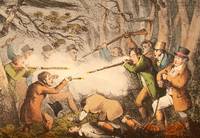
06228London: Printed by W. Lewis. for Thomas McLean 1822. First and only edition of a rare and valuable magazine" Schwerdt<br /> <br /> ALKEN Henry and BARENGER James illustrators. The Sporting Repository containing Horse-Racing Hunting Coursing Shooting Archery Trotting and Tandem Matches Cocking Pedestrianism and Pugilism. anecdotes on sporting subjects interspersed with essays tales and a great variety of miscellaneous articles. London: Printed by W. Lewis. for Thomas McLean 15 January-15 June 1822. <br /> <br /> First and only edition. Octavo 9 1/8 x 5 3/4 inches; 233 x 146 mm. viii 1-80; 81-176; 177-268; 269-356; 357-448; 449-540 pp. Hand-colored aquatint frontispiece and eighteen hand-colored aquatint plates after H. Alken and J. Barenger engraved by G. and T. Hunt. All plates with tissue guards.<br /> <br /> Handsomely bound by Rivière & Son ca. 1920. Full red morocco covers decoratively ruled in gilt spine with five raised bands elaborately tooled and lettered in gilt gilt board edges & turn-ins dark green silk liners and endleaves all edges gilt. A spectacular example the hand-colored plates bright and fresh. Loosely inserted at end are the original front and rear wrappers for part II "15th of February 1822".<br /> <br /> This publication stands out for its vivid illustrations some of the finest sporting aquatints of the period and for its documentation of early 19th-century British sporting culture. Though it was planned as a continuing series only six monthly parts were published making complete sets rare.<br /> <br /> Published in six monthly parts from January to June this is the "First and only edition of a rare and valuable magazine." Schwerdt.<br /> <br /> The Sporting Repository contains anecdotes and illustrations on many sporting subjects including 'Horse Racing Hunting Coursing Shooting Archery Trotting and Tandem Matches Cocking Pedestrianism and Pugilism'. <br /> <br /> This 'rare and valuable magazine' is an unashamed celebration of popular sports and a mine of interesting information. <br /> <br /> Mellon/Podeschi A13. Schwerdt II p. 212. Tooley 467. London: Printed by W. Lewis... for Thomas McLean, 1822 unknown