108 résultats
1734D4425Paris: Par La Compagnie des Libraires 1734. Hardcover. Very Good. Three volumes comprising Vol. III parts I to III of Memoires de lAcadémie Royale des Sciences depuis 1666 jusquà 1699. Paris: Par La Compagnie des Libraires 1733-1734. Part I: 231pp.; Part II: 294pp.; Part III: 215pp. 97 engraved folding plates depicting animals and skeletal diagrams. Engraved portrait frontispiece of Claude Perrault in first volume. Contemporary French calf spines gilt edges red; some occasional browning; repairs to joints some rubbing. Unidentified armorial bookplate to front pastedown beneath monogrammed bookplate D.P. with chipmunk and two mice. A later reduced format edition of Perraults Memoires of 1671-1676 Perraults study of this nature was first published in 1669 with the results of investigations of five animals and later expanded with studies of over forty animals. Prior to 1670 most descriptions of animals paid little attention to their internal structure and there were very few images in natural history encyclopedias that depicted skeletons or muscles. That changed with the establishment of the Académie des Sciences in Paris in 1666 by Jean-Baptiste Colbert with the approval of King Louis XIV. The Academy functioned with neither statutes nor regulations until 1699. At that time the Academy used the term mathématique to encompass the fields that are now called astronomy mathematics and physics and the term physique to encompass the fields that are now called anatomy botany zoology and chemistry. In January 1699 Louis reorganized the Academy giving it first regulations. The effect was to give the King more control over their activities in exchange for becoming an official institution under his protection with the new name Académie Royale des Sciences. One of the original academicians the physician Claude Perrault organized regular sessions at which participants could dissect deceased animals from Louis XIVs royal menagerie and record all they observed. Lions chameleons bears gazelles wolves ostriches crocodiles monkeys eagles tigers porcupines and salamanders among some were all laid open by the academics scalpels. These superb folding plates record in great detail the pioneering work at the Academy. These three volumes in three parts focus on the transformative and foundational years of the French Royal Academy of Sciences and Claude Perraults efforts which had made comparative anatomy a vital tool for the classifying naturalist. <br/><br/> Par La Compagnie des Libraires hardcover books
1717E01353559index pages 36 of 37 maps and copper cuts of the coasts harbor cities plants and other curiosities comprising: 14 plates 3 folding 22 maps charts or plans 14 folding. title page printed in red and black. Printed from the author's original plates inserted in the Paris edition. Lacks the frontispiece map. Royal octavo 9 3/4" x 7 3/4" bound in leather with raised spine bands and red label with gilt lettering. Postscript by Dr Edmund Halley and an account of the settlement commerce and riches of the Jesuits in Paraguay. Palau 94965 Sabin 25926 Nissen ZBI 1433 Hill p117 First English edition.<br /><br />Frézier was educated in Paris and served as lieutenant of infantry from 1702 til 1707 when he entered the engineer corps. In 1712 the government sent him to examine the condition of the Spanish colonies in America. After visiting the principal points in Peru Chili and Brazil he returned to Marseilles. He pointed out several mistakes in the "Relation" of Father Feuille and this led to a bitter controversy between the two travelers. Frézier introduced the large Chili strawberry into France. First published in France in 1714. The first edition into English is preferable to the French original "because it contains Halley's. postscript which corrects certain geographical errors made by Frézier" Hill. "The first part of this book gives an interesting account of the voyage from France around Cape Horn. The second part relates to the voyage along the coasts of Chile and Peru describing the chief towns and cities. Frézier a man of observation brought back information of considerable geographical and scientific value. Much data is included about the native inhabitants.<br /><br />Condition:<br /><br /> Rebacked with original spine label laid down; lacking frontispiece map and binder's leaf free endpapers renewed intermittent foxing else a very nice copy. Jonah Bowyer hardcover books
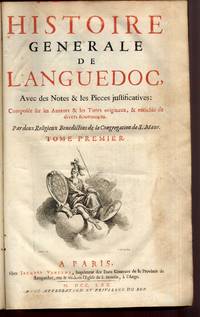
1730043619Paris: Jacques Vincent 1730. First Edition. Hardcover Full Leather. Good Condition. 5 volumes in contemporary gilt calf worn dry hinges and joints split boards attached but precariously in a few cases. Scattered browning internally and occasional creased pages spine labels bookplates and old embossed theological library stamps to title but generally clean and unmarked otherwise. 36 plates many folding and 4 maps hand colored in outline. Published 1730-1745. Size: Folio. 5-volume set complete. Quantity Available: 1. Shipped Weight: Over 3 kilos. Category: History; Antiquarian & Rare. Inventory No: 043619. <br/><br/> Jacques Vincent hardcover books
1709CA1100viii24412 pages with engraved map folding plan and four engraved illustrations in text and index. Quarto 9 ¾" x 7½" bound in period calf with modern rebacking original gilt spine leather laid down and ruled gilt edges to cover. Translated by Joh Stevens. First English Edition.<br /><br />This is a highly regarded chronicle of the conquest and colonization of Peru by Spaniards in the latter part of the 16th century and is lauded for its at the time objectivity. Cieza de Leon's Chronica was to appear in 4 sections this translation being the first part only all that was available of the history until the latter part of the 19th century.<br /><br />Pedro Cieza de León was a Spanish conquistador and chronicler of Peru. He is known primarily for his history and description of Peru Crónicas del Perú. He wrote this book in four parts but only the first was published during his lifetime; the remaining sections were not published until the 19th and 20th centuries. Cieza de León was born to a family of Jewish conversos1 around 1520 in Llerena a town in southeastern Extremadura less than 60 mi from Portugal. Although recently converted from Judaism to Catholicism the family enjoyed good social standing in the region because of their networks and business dealings. His father Lope de León was a shopkeeper in the town and his mother Leonor de Cazalla was a native of Llerena. There is scant documentary evidence of the young Cieza de León’s childhood and little is known of his early life before his voyage to the Americas. Given the fact that he left home at 13 it is unlikely that Cieza de León received more than a rudimentary education. In 1536 in Córdoba at 16 Cieza de León was greatly surprised to learn of the discovery of the land of the Incas and so decided to go to Seville to embark on his journey to South America to see for himself the artifacts of precious metals which had been brought to Spain from Cajamarca. In light of the prohibition of entry into the Spanish colonies for Jews and Jewish converts to Catholicism Alonso López and Luis de Torres attested for Cieza de León that he was not prohibited. Jewish converso Pedro López de Cazalla secretary of Spanish conquistador Francisco Pizarro conqueror of the Incan Empire was also his first cousin. He returned to Seville Spain in 1551 and married a woman named Isabel López de Abreu. Here he published in 1553 the first part of the chronicles of Peru Primera Parte. He died the following year leaving the rest of his work unpublished. His Second Part of Chronicles of Peru describing the Incas was translated by Clements Markham and published in 1871 for the Hakluyt Society. In 1909 the fourth part of his chronicle focusing on the civil wars among the Spanish conquerors was published under the title Third Book of the Peruvian Civil Wars. The third part of Cieza de León's Crónicas del Perú which examined the discovery and conquest of Peru by the Spaniards was considered by historians to be lost. The document eventually turned up in a Vatican library and historian Francesca Cantù published a Spanish version of the text in 1979. Though his works are historical and narrate the events of the Spanish conquest of Peru and the civil wars among the Spaniards much of their importance lies in his detailed descriptions of geography ethnography flora and fauna. He was the first European to describe some native Peruvian animal species and vegetables.<br /><br />Condition:<br /><br />Expertly rebacked some light rubbing to extremities foxing old book plate on front pastedown else very good. unknown hardcover books
1790E00534 of 6 volumes. Volume 1: i-ix-372 pages with 23 plates including frontispiece plate of Cook and 4 folding maps; Volume II lacking; Volume 3: 793-1184 pages with 11 plates including frontispiece of Possession Bay and 5 fold out maps; Volume IV: 1185-1546 pages with 26 plates including frontispiece of Woman Child and Man of Van Diemen's Land and 6 folding maps; Volume V: 1547-1938 pages with 30 plates including frontispiece of A View of Huaheine and 8 folding maps; Volume VI lacking. Octavo 8 1/2" x 5 1/2" bound in original full leather with red labels to spine with gilt lettering. Abridged by George William Anderson. An earlier Large folio edition by Anderson was published earlier. This edition originally issued in 80 weekly parts and also called the Large octavo edition. M K Beddie: 39 First edition of the bound edition.<br /><br />Captain James Cook RN was a British explorer navigator and cartographer ultimately rising to the rank of Captain in the Royal Navy. Cook made detailed maps of Newfoundland prior to making three voyages to the Pacific Ocean during which he achieved the first European contact with the eastern coastline of Australia and the Hawaiian Islands as well as the first recorded circumnavigation of New Zealand. Cook joined the British merchant navy as a teenager and joined the Royal Navy in 1755. He saw action in the Seven Years' War and subsequently surveyed and mapped much of the entrance to the Saint Lawrence River during the siege of Quebec. This helped bring Cook to the attention of the Admiralty and Royal Society. This notice came at a crucial moment both in his personal career and in the direction of British overseas exploration and led to his commission in 1766 as commander of HM Bark Endeavour for the first of three Pacific voyages. Cook charted many areas and recorded several islands and coastlines on European maps for the first time. His achievements can be attributed to a combination of seamanship superior surveying and cartographic skills courage in exploring dangerous locations to confirm the facts for example dipping into the Antarctic Circle repeatedly and exploring around the Great Barrier Reef an ability to lead men in adverse conditions and boldness both with regard to the extent of his explorations and his willingness to exceed the instructions given to him by the Admiralty. Cook was killed in Hawaii in a fight with Hawaiians during his third exploratory voyage in the Pacific in 1779.<br /><br />Condition:<br /><br />Lacks volume II and VI. First signature of volume one loose inner hinges cracked some interior soiling spine ends and corners of leather rubbed some scuffing to leather else a good set. Printed for A Millar, W Law, and R Cater hardcover books
1795E0029<b>Samuel Hearne was the first European to make an overland excursion across northern Canada to the Arctic Ocean</b><br /><br />xliv458 pages with two of four engraved plates after drawings by the author both folding and four of five folding engraved maps. Quarto 11 3/4" x 9 3/4" bound in full leather with raised spine bands and gilt lettering to spine. HillI page 141. Sabin 31181 First edition.<br /><br />Manuscript journal was found by La Pérouse when he captured Fort Albany; later one of his conditions of surrender was that it be published. Samuel Hearne 1745 – November 1792 was an explorer fur-trader author and naturalist. He was the first European to make an overland excursion across northern Canada to the Arctic Ocean In 1774 Hearne built Cumberland House for the Hudson's Bay Company its first interior trading post and the first permanent settlement in present Saskatchewan. From 1769 to 1772 Hearne was employed in north-western discovery searching especially for certain copper mines described by Indians as "Far-Away-Metal River". These copper mines were found in the Barren Lands where the ground is permanently frozen to within a few inches of the surface creating in many areas vast stretches of mosquito- and fly-infested swamp during the summer thaw. For this reason it was decided that travel in winter was preferable. His first attempt began on 6 November 1769. The large size of the expedition and too much European equipment being carried led to the desertion of his Indian guides and the failure of the expedition. His second commencing 23 February 1770 failed because his quadrant was broken and much of his equipment was stolen. Learning from the mistakes of the first two expeditions Hearne contrived to travel as the only European with a group of Indians led by the great chief Matonabbee. The group also included eight of Matonabbee's wives to act as beasts of burden in the sledge traces camp servants and cooks. This third expedition set out in December 1770 in order to reach the Coppermine River in summer by which he could descend to the Arctic in canoes. Matonabbee kept a fast pace so fast they reached the great caribou traverse before provisions dwindled and in time for the spring hunt. Here all the Indian hunters of the north gathered to hunt the vast herds of caribou migrating north for summer. A store of meat was laid up for Hearne's voyage and a band of warriors joined the expedition. Matonabbee ordered the women to wait for his return in the Athabasca country to the west. The Chipewyans were generally a mild and peaceful people however they were in a state of conflict with the Inuit. A great number of Indians joined Hearne's party to accompany them to the Coppermine River with intent to murder Inuit who were understood to frequent that river in considerable numbers.2 On July 14 1771 they reached the Coppermine River a small stream flowing over a rocky bed in the "Barren Lands of the Little Sticks". A few miles down the river just above a cataract were the domed wigwams of an Eskimo camp. At 1am on July 17 1771 Matonabbee and the other Indians fell upon the sleeping Eskimo in a ruthless massacre. Approximately twenty men women and children were killed; this would be known as the Massacre at Bloody Falls. A few days later Hearne was the first European to reach the shore of the Arctic Ocean by an overland route. By tracing the Coppermine River to the Arctic Ocean he had established there was no northwest passage through the continent at lower latitudes. This expedition also proved successful in its primary goal by discovering copper in the Coppermine River basin. However an intensive search of the area yielded only one four-pound lump of copper and commercial mining was not considered viable. Matonabbee led Hearne back to Churchill by a wide westward circle past Bear Lake in Athabasca Country. In midwinter he became the first European to see and cross Great Slave Lake. Hearne returned to Fort Prince of Wales on 30 June 1772 having walked some 5000 miles and explored more than 250000 square miles.<br /><br />Condition:<br /><br />Rebound in attractive leather with raised spine bands. Lacks frontispiece map and two plates. Plate I A North West View of Prince of Wales's Fort and Plate IV A Winter view of the Athapuscow Lake. Some internal spotting. Small repair to title page and verso and front free end paper edge else a better than very good copy. Printed for A Strahan and T Cadell hardcover books
1728BOOKS00671225144 contents and errata2 pages with 2 folding maps lacks frontispiece. Small Quarto 10" x 7 3/4". Rebacked in the 19th century leather retaining the original spine with raised bands and gilt decorative stamping and lettering to spine. Translated from the original Portuguese manuscripts by Jackim le Grande. First edition.<br /><br />Born in Lisbon he entered the Order of Jesus at the age of sixteen. In 1621 he was ordered as a missionary to India and in 1622 he arrived at Goa. With the intention of proceeding to Abyssinia whose Negus emperor Segued had been converted to Roman Catholicism by Pedro Páez he left India in 1624. He disembarked on the coast of Mombasa and attempted to reach his destination through the Galla country but was forced to return. In 1625 he set out again accompanied by Mendez the patriarch of Ethiopia and eight missionaries. The party landed on the coast of the Red Sea and Lobo settled in Abyssinia as superintendent of the missions in Tigre. He remained there until death deprived the Catholics of their protector the emperor Segued. Forced by persecution to leave the kingdom in 1634 Lobo and his companions fell into the hands of the Turks at Massawa who sent him to India to procure a ransom for his imprisoned fellow-missionaries. In this he was successful but could not induce the Portuguese viceroy to send an armament against Abyssinia. Intent upon accomplishing this cherished project he embarked for Portugal and after he had been shipwrecked on the coast of Natal and captured by pirates arrived at Lisbon. Neither at this city however nor at Madrid and Rome was any countenance given to Lobo's plan. He accordingly returned to India in 1640 and was elected rector and afterwards provincial of the Jesuits at Goa. After some years he returned to his native city and died there January 29 1678.<br /><br />Lobo wrote an account of his travels in Portuguese which appears never to have been printed but is deposited in the monastery of St. Roque Lisbon. Balthazar Telles made large use of the information therein in his Historia geral da Ethiopia a Alta Coimbra 1660 often erroneously attributed to Lobo see Machado's Bibliotheca Lusitana. Lobo's own narrative was translated from a manuscript copy into French in 1728 by the Abbe Joachim le Grand under the title of Voyage historique d'Abissinie. In 1669 a translation by Sir Peter Wyche of several passages from a manuscript account of Lobo's travels was published by the Royal Society translated in Melchisédech Thévenot<i>Relation des voyages</i> in 1673. An English abridgment of Le Grand's edition by Dr. Johnson was published in 1735 reprinted 1789. In a <i>Mémoire justificatif en réhabilitation des pères. Pierre Paëz et Jérôme Lobo</i> Dr. C. T. Beke maintains against Bruce the accuracy of Lobo's statements as to the source of the Abai branch of the Nile. See A. de Backer <i>Bibliothèque de la Compagnie de Jésus</i> edited by C. Sommervogel iv. 1893.<br /><br /><b>Condition:</b><br /><br />Old stamp and inscription on title page first folding map conspicuously restored second map tear restored else a very good copy notes to front end paper in period pen else about very good. La Veuve d'Antoine-Urbain Co hardcover books
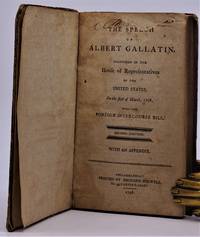
1793008946Philadelphia New York and London : Various 1793. Five works in all each bound without original wrappers in order of binding: The Speech of Albert Gallatin delivered in the House of Representatives of the United States on the first of March 1798 upon the Foreign Intercourse Bill 2nd Edition with an Appendix Philadelphia Printed by Richard Folwell 1798 48 p. Sabin 26996. shallow chip and prior owner name in ink top edge of title page evenly browned WITH The Political Censor for Nov. 1796 Remarks on Citizen Adet's notes to the Secretary of State no place Philadelphia no authorPeter Porcupine no publisher William Cobbett 1796 5 - 78 p. Evans 30226. pages 73-78 with top and bottom fore corner chips not affecting text a few widely scattered spots of browning. WITH A New Year's Gift to the Democrats; or Observations on a Pamphlet entitled "A Vindication of Mr. Randolph's Resignation" Second Edition Philadelphia Published by Thomas Bradford Printer by Peter Porcupine William Cobbett 71 p. shallow chip fore edge of title page early writing top edge of title page evenly browned. WITH Persecution The Case of Charles Pigott; contained in the Defence He Had Prepared and Which Would Have Been Delivered by Him on His Trial if the Grand Jury had not thrown out the bill preferred against him London Printed for D. I. Eaton 1793 by Charles Pigott vi 52 p. lacking the half-title slight toning else clean and lovely. WITH A Dissertation Concerning Political Equality and the Corporation of New-YorkNew York Printed by D. Denniston by James Cheetham 1800 50 p.Shaw & Shoemaker 37171. evenly toned. Overal Very Good bound in contemporary quarter calf over marbled boards spine label titled "Pamphlets" in gilt on darker brown calf the binding rubbed and worn at the corners yet solid. Gallatin's Speech last seen at auction 1961 not found in current commerce. The Case of Charles Pigott not found in current commerce one in dealer's catalogue in 2020 no auction record at RBH. Cheetham's Dissertation on Political Equality last seen at auction 1946 none in current commerce. . Quarter Calf. Very Good. 8vo - over 7¾" - 9¾" tall. Various Hardcover books
1733E05532 volumes. 8xxiv616471 pages with 4 maps ad view one folding and 3 plates one folding; 2693892 pages with 1 map and 6 plates. Quarto 10 1/4" x 10 1/4" bound in half leather with raised spine bands and gilt lettering to spine over marbled boards. Borba de Moraes page I:453; European Americana 733/146; Sabin 38591 First edition.<br /><br />Joseph-François Lafitau was a French Jesuit missionary ethnologist and naturalist. He is best known for his use of the comparative method in the field of scientific anthropology the discovery of ginseng and his writings on the Iroquois. Lafitau was the first of the Jesuit missionaries in Canada to have a scientific point of view. Lafitau is considered the first of the modern ethnographers and a precursor of scientific ethnology for his work on the Iroquois. He developed a model of studying peoples that involved describing existing cultures on their own terms—not in comparison to European society. He distinguished generic and specific traits transforming the "generic savage" into specific tribal groups. He explained that "only from specific identities can genetic relations be inferred."5 Furthermore he was the first to declare "contemporary primitive cultures throw light upon the culture of ancient people and vice versa. Lafitau is remembered for applying the comparative method with a greater level of competency than any of his contemporaries. Through original field observations he was able to critique the works of earlier writers on Primitive peoples. By using the Comparative Method Lafitau rejected all theories of social and cultural change and instead used his study to demonstrate the similarities in customs practices and usages of the Native North Americans with diverse peoples from different continents and centuries. He consistently relied on the doctrine of degeneration: all men originally shared one religion with one God but over time as people migrated to separate margins of the earth where they then lost touch with the values and traditions of this one true religion and culture. Therefore Lafitau believed in the "psychic unity of mankind" and the doctrine of primitive monotheism. His major work written in French was first published in 1724 in Paris. It is entitled <i>Customs of the American Indians Compared with the Customs of Primitive Times</i> <i>Moeurs des Sauvages Amériquains Comparées aux Moeurs des Premiers Temps</i> and is 1100 pages in total. In 1974 William Fenton and Elizabeth Moore made the first translation into English available. Lafitau published two other works. One <i>Histoire de Jean de Brienne Roy de Jérusalem et Empereur de Constantinople</i> Paris 1727 was released before he returned to Canada; it is little known and seldom seen. A two-volume <i>Histoire des découvertes et conquestes des Portugais dons le Nouveau Monde . . .</i> 1733 appeared after he came home to France. Frequently found in libraries it is not just a compilation of original sources but an attempt to make available to French readers a story of exploration and adventure otherwise denied to them; in the chronicles he sees a long development of customs hitherto unnoticed such as he had reported in the <i>Mœurs</i>; from them understood only he says in the original languages of the people who practice them he builds his "system" or philosophy of history and once more he is concerned too with the relation between custom and natural history or ecology.<br /><br /><b>Condition:</b><br /><br />Beautifully rebound in half leather. Faint dampening to second volume; early owner's signatures on title pages inked stamps of St Charles Borromeo Seminary on front paste-downs and first title page lacks frontispiece else a very good to fine set.<br /> Chez Saugrain pere, quai des Augustins, au coin de la rue Chez Saugrain pere, quai des Augustins, au coin de la rue Pavee, a la hardcover books
1799biblio160<b>First French edition of Bartram's</b><b> Travels which chronicled his explorations of the southern British colonies in North America from 1773–1777</b><br /><br />2 volumes. 457 pages with frontispiece engraved portrait by Bovinet Mico Chlucco Grana King of the Seminoles and one folding plate; 436 pages without title with large folding map by J.B. Poirson engraved by Alexandre Blondeau and folding plate. Octavo 8 1/4" x 5 1/4" bound in half leather with six spine compartments with red and black labels in gilt over original marbled boards. Translated by Pierre Vincent Benoist. Sabin 3871; Palau 251346; Howes B223; Field 94 First French edition.<br /><br />William Bartram was an American naturalist. The son of the naturalist John Bartram. As a boy he accompanied his father on many of his travels to the Catskill Mountains the New Jersey Pine Barrens New England and Florida. In 1773 he embarked upon a four-year journey through eight southern colonies. Bartram made many drawings and took notes on the native flora and fauna and the native American Indians. In 1774 he explored the St. Johns River where he had memorable encounters with aggressive alligators and also visited a principal Seminole village at Cuscowilla where his arrival was celebrated with a great feast. He met Ahaya the Cowkeeper chief of the Alachua band of the Seminole tribe. When Bartram explained to the Cowkeeper that he was interested in studying the local plants and animals the chief was amused and began calling him Puc Puggy the flower hunter.2 Bartram continued his explorations of the Alachua Savannah or what is today Paynes Prairie. William Bartram wrote of his experiences exploring the Southeast in his book Travels through North & South Carolina East & West Florida the Cherokee Country the Extensive Territories of the Muscogulges or Creek Confederacy and the Country of the Chactaws Containing an Account of the Soil and Natural Productions of Those Regions Together with Observations on the Manners of the Indians published in 1791 and which is today simply known as Bartram's Travels. It was considered at the time one of the foremost books on American natural history. Many of Bartram's accounts of historical sites were the earliest records including the Georgia mound site of Ocmulgee. In addition to its contributions to scientific knowledge Travels is noted for its original descriptions of the American countryside. Bartram's writing influenced many of the Romantic writers of the day. William Wordsworth Samuel Taylor Coleridge and François René de Chateaubriand are known to have read the book and its influence can be seen in many of their works. Ephraim George Squier and Edwin Hamilton Davis in their book Ancient Monuments of the Mississippi Valley name Bartram as "the first naturalist who penetrated the dense tropical forests of Florida."<br /><br />Condition:<br /><br />Some rubbing to original boards page 143 of volume one has small burn mark affecting text half title bound upside down in back old water stain to plate of volume two. Fold-out map has repair to first fold internally pages are clean and free of toning and foxing else a very good copy. Chez Carteret et Brosson and Dogour Duran hardcover books
1725046782Dublin: Thomas Hume 1725. First Edition. Hardcover Full Leather. Very Good Condition. Contemporary calf rebacked one corner repaired leather a little dry but sound soiling to endpapers occasional slight foxing quite clean otherwise. Two volumes bound in one dated 1725 and 1724 respectively. 14 260pp i.e. 262pp 2 86 13pp. Extensive errata in preliminaries pages 5-6 numbered 4-4 with corresponding errors in pagination. ESTC T141098 Size: Folio. 2-volume set complete. Quantity Available: 1. Shipped Weight: 1-2 kilos. Category: History; Inventory No: 046782. Thomas Hume hardcover books
1753008634London: Printed by John Towers in Piccadilly 1753. First Edition published 1753-1756. Twenty books bound in ten volumes in late 19th- early 20th c. fine bindings of half polished calf over marbled boards backs gilt a quite lovely set and uncommon in such lovely bindings. Near Fine Volumes I & II lacking title pages light scattered toning. small rubs at a few of the corners. Guicciardini's masterpiece covering the years 1490-1534 originally published 1537-1540. . First Edition. Half Calf. Near Fine. 8vo - over 7¾" - 9¾" tall. Printed by John Towers, in Piccadilly Hardcover books
1711E0013iixxixvii1911blank 223 pages with 1 of 3 large fold out maps and 15 of 19 engraved fold out plates. Octavo 8" x 5" bound three quarter leather with raised spine bands and gilt lettering to spine over marbled boards. Edited by Sir Tancred Robinson. Second edition preferred over the first edition "because it has the chart of the western and southern oceans." Hill In 1699.<br /><br />First published in 1694 which contained only two maps The book is important because it contains one of the earliest English accounts of Abel Janszoon Tasman's famous voyage of 1642 from Batavia during which he discovered Tasmania and New Zealand and visited Tonga and Fiji Hill 1475.<br /><br />Rear Admiral Sir John Narborough RN was an English naval commander of the 17th century who served with distinction during the Anglo-Dutch Wars and against the Barbary Coast pirates. He was descended from an old Norfolk family. He received his commission in 1664 and in 1666 was promoted lieutenant for gallantry in the action with the Dutch fleet off the Downs in June of that year. After the peace he was chosen to conduct a voyage of exploration in the South Seas. He set sail from Deptford on November 26 1669 and entered the Straits of Magellan in October of the following year. In 1670 he visited Port Desire in Argentina and claimed the territory for the Kingdom of Great Britain but returned home in June 1671 without accomplishing his original purpose. A narrative of the expedition was published at London in 1694 under the title <i>An Account of several late Voyages and Discoveries to the South and North</i>. During the Third Anglo-Dutch War Narborough was second captain of the Lord High Admiral's ship the Prince and conducted himself with such conspicuous valor at the battle of Solebay Southwold Bay in May 1672 that he won special approbation and shortly afterwards was made rear-admiral and knighted. In 1675 he was sent to suppress the Tripoline piracies and by the bold expedient of dispatching gun-boats into the harbor of Tripoli at midnight and burning the ships he induced the them to agree to a treaty. Shortly after his return he undertook a similar expedition against the Algerians. In 1680 he was appointed commissioner of the Navy an office he held till his death. He was buried at Knowlton church Kent where a monument has been erected to his memory. The island of Fernadina the youngest and westernmost island of the Galapagos Archipelago was originally named 'Narborough Island' in his honor by the 17th century buccaneer William Ambrosia Cowley.<br /><br /><b>Condition:</b><br /><br />Marginal foxing soiling and damp staining through out paper fault across second C2 affecting one letter some rubbing hinges and corners else a better than good copy. Printed for D Brown hardcover books
1791045038Paris: Buisson 1791. First Edition. Hardcover Full Leather. Very Good Condition. 2 volumes bound in one in contemporary mottled calf; worn leather chipped at the head of the spine scattered mild foxing small stain to first title. Complete with the half titles reuniting the two parts of Paine's treatise on democracy and revolution that were published a year apart. There are two editions dated May 1791 on the title page with no clear priority between them. The first part was translated from the original English edition that was almost immediately edited and softened. Paine was a star in France an enlightenment philosopher of the first order and a frequent guest along with the likes of Franklin Jefferson and Adam Smith at the salon at the Hôtel de la Monnaie. "The government tried to suppress it but it circulated more briskly.Rights of Man can be seen for what it is: the textbook of radical thought and the clearest of all expositions of the basic principles of democracy." Printing and the Mind of Man xii 227pp; iv 16 224pp. Howe P-31 and 32 The English ed. PMM 241 the English ed. Size: Octavo 8vo. Previous owner's book-plate inside front cover. Quantity Available: 1. Shipped Weight: Under 1 kilo. Category: Philosophy; History. Inventory No: 045038. <br/><br/> Buisson hardcover books
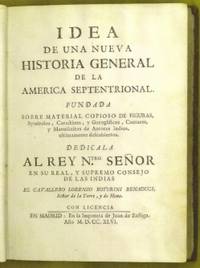
1746A0068xxxvi167viii96 pages. Octavo 8 1/4" x 6 1/4" bound in full leather with decorative gilt and lettering to spine. From the library of George M Foster. First edition.<br /><br />Lorenzo Boturini Benaducci born in Italy of noble parentage studied in Milan and lived in Trieste and Vienna. He was a knight of the Holy Roman Empire. Forced to flee Austria because of the war with Spain Boturini arrived in Spain via England and Portugal. In Madrid he met the Condesa de Santibáñez oldest daughter of the Condesa de Moctezuma. The mother authorized him to collect a pension due her as a descendant of the Aztec Emperor Moctezuma II from the royal treasury in New Spain. Boturini went to New Spain in 1736 where he remained eight years. During those years he assembled a vast collection of paintings maps manuscripts and native codices. He copied more than 500 pre-Columbian inscriptions and made his own drawings of monuments and sculptures and he investigated the history of the apparition of the Virgin of Guadalupe on the hill of Tepeyac. He traveled widely and on his travels brought together the largest collection of Mexican antiquities assembled to that time by a European. Not only did he intend to write the history of the Virgin of Guadalupe but he also had plans to crown her image with a gold crown. For that purpose he sought donations from the bishops and from the public. This brought him to the attention of the colonial government which was suspicious of the motives of a foreigner making this proposal. On June 2 1743 after an investigation the recently arrived viceroy Pedro Cebrián y AgustÃn had him imprisoned and impounded his collection. He was accused of entering New Spain without license from the Council of the Indies and of introducing papal documents without a royal permit. After eight months in prison Boturini was sent to Spain. He fell into the hands of pirates who eventually released him at Gibraltar. From there he traveled to Madrid in miserable conditions. In Madrid he met Mariano Fernández de EcheverrÃa y Veytia another passionate collector of Indian antiquities. Fernández de EcheverrÃa y Veytia offered Boturini a place to live and financial support and got the Council of the Indies to reconsider his case. Boturini was absolved. The king named him royal chronicler of the Indies ordered that his collection be returned to him and extended an invitation for him to return to New Spain. Boturini however declined to return to New Spain and his collection was never restored. It appears that he was granted recompense and a stipend to work on his projected history of the colony. In Madrid he wrote a history of ancient Mexico unpublished at the time of his death in 1753. The library at the BasÃlica de Nuestra Señora de Guadalupe is named for him. The Boturini Collection was formed between 1735 and 1743 to serve as the basis of a projected Historia de América Septentrional. It consisted of many valuable documents the majority of them of Indian provenance. Among these were hieroglyphic paintings that had belonged to Juan de Alva Ixtlilxochitl a descendant of the rulers of Texcoco. Ixtlilxotchitl bequeathed these documents to Carlos de Sigüenza y Góngora. The collection was confiscated by Viceroy Pedro Cebrián y AgustÃn at the time of Boturini's arrest in 1743. It was deposited in the office of the secretary of the viceroyalty. The documents were neglected there for years and suffered considerable pilferage. The subsequent viceroy Juan Francisco de Güemes 1st Count of Revillagigedo granted the historian and antiquary Fernández de EcheverrÃa y Veytia Boturini's friend from Madrid the paintings and documents he solicited for his own studies. On Fernández de EcheverrÃa y Veytia's death they passed to Antonio de León y Gama. He died in 1802 and the collection passed to his heirs. Shortly thereafter 16 paintings were obtained by Alexander von Humboldt during his visit to Mexico in 1802-03. He published them in Vues des cordillères et monuments des peuples indigènes d'Amérique. The originals of these are now in the Berlin State Library. Part of the remainder of the collection may have passed to Father José Pichardo an amateur antiquarian. Joseph Alexis Aubin beginning in 1827 or shortly thereafter obtained important parts of the collection from a variety of sources. He sold his collection to Eugène Goupil who was of French and Mexican descent. This part of the collection passed by donation or purchase to the National Library in Paris where it remains under the name Aubin-Goupil Collection.<br /><br />George McClelland Foster Jr born in Sioux Falls South Dakota on October 9 1913 died on May 18 2006 at his home in the hills above the campus of the University of California Berkeley where he served as a professor from 1953 to his retirement in 1979 when he became professor emeritus. His contributions to anthropological theory and practice still challenge us; in more than 300 publications his writings encompass a wide diversity of topics including acculturation long-term fieldwork peasant economies pottery making public health social structure symbolic systems technological change theories of illness and wellness humoral medicine in Latin America and worldview. The quantity quality and long-term value of his scholarly work led to his election to the National Academy of Sciences in 1976. Virtually all of his major publications have been reprinted and/or translated. Provenance from the executor of Foster's library laid in.<br /><br />Condition:<br /><br />Lacks frontispiece portrait. Lacks Foster's stamp or date of purchase. some damp stains to end papers neat old marginalia in Spanish to back end paper worm hole ant head and heal of spine going through spine extremities bumped and rubbed old owner's label to front paste down 1" chip at back head hinge and name to front end paper scuffed else a good copy of a rare item. En la Imprenta de Juan de Zuniga hardcover books
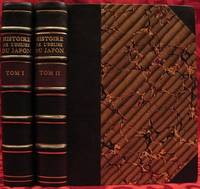
1717E05562 volumes. 2865911 pages with 4 plates and index; 106786 pages with 4 plates one folding and index. Quarto 10" x 8" bound in half leather with raised spine bands in gilt lettering to spine over marbled boards. Streit-Dindinger VI 1418. Second edition of a 1689 history of missions to Japan prefaced with a general account of the country.<br /><br />Jean Crasset was an ascetical writer born at Dieppe France 3 January 1618 and died at Paris 4 January 1692. He entered the Society of Jesus in 1638 became professor of humanities and philosophy was director for twenty-three years of a famous sodality of men connected with the professed house of the Jesuits in Paris and was also a successful preacher. Crasset is the author of many ascetical works among which are:Methode d'oraison; Considérationes chrétiennes pour tous les jours de l'année; La chrétienne in soli tude; Dissertation sur les oracles des Sibylles which was vigorously attacked; Entretiens pour la jeunesse. He also published in 1689 a Historie de l'église du japon which has been translated into several languages but which is considered inferior to that of Charlevoix. Crasset's history was scarcely original for it was drawn in great part from the work which Father Solier had issued in 1627; he merely retouched the style and continued the narrative from 1624 to 1658. The objection is made that the work lacks precision is heavy and is crowded with details. The author attributed the origin of the persecution of 1597 to the imprudence of the friars in making their religious ceremonies public. There is a posthumous work of his entitled La foy victorieuse de l'infidélite et du libertinage. On 9 September 1656 the Bishop of Orléans issued an interdict against him for having in one of his sermons charged several ecclesiastics with sustaining the propositions condemned by the Bull of Innocent X Cum occasione 31 May 1653. The interdict was removed in the following February.<br /><br />Condition:<br /><br />Nicely rebound in half leather. Contents toned and damp-stained St. Charles Borromeo Seminary stamp on titles else a very good set. François Montalant hardcover books
1786LD17850Paris 1786. Hardcover. Good. 4to 249x195 mm contemporary tree sheep recased endpapers renewed front joint chipped and repaired at top. 23 pamphlets bound together. Condition of contents generally very good or better through the first 14 pamphlets. Last nine with marginal dampstaining and occasional traces of mold. Overall an impressive sammelband of historical importance. The publications relate to the scandal at the court of Louis XVI in which the self-styled Comtesse de Valois manipulated the Cardinal de Rohan into purchasing a diamond necklace for Queen Marie Antoinette which the Comtesse and her husband then broke up and sold. Complete list of contents available upon request. <br/><br/> hardcover books
1782CA0094lii315 pages. Octavo 8" x 5 3/4" bound in full leather with gilt lettering to spine. Translated with notes by Pedro Varela y Ulloa. Palau 196692. First Spanish edition.<br /><br />A text that engaged the well-studied debates about the natural history of the Americas and Spain's colonial history. In 1780 in Venice Juan Nuix published Riflessioni imparziali supra l'umanita degli spagnuoli nell' Indie contro i pretersi filosofi e politici. Nuix a Catalan living in Italy since the expulsion of the Jesuits wrote the book to defend Spanish colonialism and historiography against the attacks of Robertson and Raynal. It sailed by the censors in the Council of the Indies and two separate translations appeared in succession one in 1782 edited by a member of the Royal Council Pedro Varela y Ulloa and another in 1783 by Joseph Nuix Juan's brother. The Spanish edition sponsored by the crown opened with an essay by Varela y Ulloa in which he first offered a searing Critique of traditional forms of colonialism not unlike that put forth by Raynal. After describing military campaigns in foreign lands from Alexander the Great to Genghis Kahn as butcheries Varela y Ulloa went on to claim that the Spanish colonialism was unique. The crimes attributed to Spain in the Indies had been committed by private individuals who did not represent the nation as a whole and who had acted as they did while surrounded by hungry cannibals. Moreover compared with the atrocities committed by other European colonial powers the actions of the Spaniards looked like misdemeanors. Varela y Ulloa's effort to portray Spanish colonialism as unique benign captured the essence of Nuix's thesis well. Nuix's defense of the record of Spanish colonialism opened with passages that sought to bolster his credibility by stressing that he was a Catalan and that Catalans had not really participated in the Spanish colonization of the Indies so that he could not be accused of being partisan. He then articulated a five-pronged defense of Castilian colonial behavior in America seeking to demonstrate the unreliability of the sources used by Robertson and Raynal and of their interpretations. Nuix First set out to prove that charges of Spanish cruelty to Amerindians were exaggerations originally put into circulation by writers such as Las Casas whose reports on the destruction of the Indies were at the root of most foreign criticisms of Spain. According to Nuix Las Casas was of Flemish origin which explained why he had sought to undermine Spain. Las Casas also often contradicted himself Nuix argued no impartial jury could trust such "an inept" witness. Foreign historians who had echoed Las Casas's allegations were not credible either not Robertson whose moderation had prompted him to dismiss Las Casas. Robertson had selected and reinterpreted the testimony of Spanish witnesses when recounting various colonial massacres. Instead of quoting them moreover Robertson had manipulated the testimony of witnesses to depict the Amerindians as passive victims of Spanish cruelty. History was not a matter of interpretation however but of faithfully presenting the testimony of witnesses and in that respect Robertson lacked credibility. In order to prove that Spaniards in America had not behaved like greedy barbarians Nuix argued that the alleged depopulation caused by the Conquest was the product of factors outside human control. The infantile susceptibility of the natives to disease for example was why epidemics had wiped them out. The barrenness of the Americas and the idleness of the originally small number of natives had moved the conquerors to create economies based on mining and large estates. Such economies along with the foreign monopoly on colonial trade not Spanish cruelty and greed Nuix contended were responsible for having slowed both markets and population growth.<br /><br />Condition:<br /><br />Provenance: Book plate of Alberto Parreño formerly president of the Cuban Chamber of Commerce in New York to front paste down. Spine head chipped rubbing to edges and corners very crisp internally else about a very good copy. Joachin Ibarra hardcover books
17781001488vo period calf rebacked with modern calf and new endpapers 3 202pp. Wear to covers; ink name to top of title page and some foxing and darkening within. Otherwise very good. The contents provide coverage of the important proceedings before the Declaration of Independence on July 4th 1776.This commentary reflects the efforts of the Second Continental Congress which was headed by John Hancock. A good portion of the contents focus on correspondence between Washington who had taken command of the Continental Army in May 1775 and Congress election of delegates form each of the Colonies and funding the war with Great Britain. Some remarks actually give insight into the pay that soldiers received privates got $5 per month. Also some information on printing of paper money and what denominations would be used. While the title page indicated this was a reprinted work Sabin only lists the London edition. Reprinted For J. Almon books
176936938Leipzig; Wien: Johan Paul Krauss 1769. First Edition. With 24 folding plates. xxv 436 12 index & errata; xl 524 18 index & errata. 1 vols. 8vo. Contemporary three quarter red morocco and marbled boards spine label. Exterior worn tear at foot of spine internally tight and clean. A very good copy. First Edition. With 24 folding plates. xxv 436 12 index & errata; xl 524 18 index & errata. 1 vols. 8vo. Includes notices of Berlin artists graphic arts engravers early woodcuts & woodcut books history of printing and account of a journey through Lower Saxony Westphalia & and Holland. Part Two with striking images from early printed books such as the "Eagle of John" from Ars Memorandi includes "a dissertation on the earliest forms of wood-cutting as applied to the illustration . Heinecken conjectures that Gutenberg took the idea of printing from the playing-card makers who are said to have been the first engravers of historical subjects intermingled with texts. . Heinecken is of opinion that their first productions were taken from wooden blocks." Bigmore & Wyman. Bigmore & Wyman p.320 Johan Paul Krauss unknown books
174036937La Haye: La Veuve Le Vier et Pierre Paupie 1740. First edition. Engraved allegorical frontispiece by Schley. 2 parts in one volumes. 1 vols. 4to. Contemporary French mottled calf gilt spine marbled endpapers. Upper joint starting at bottom and apart from some minor toning this is a lovely unsophisticated copy in contemporary dress. First edition. Engraved allegorical frontispiece by Schley. 2 parts in one volumes. 1 vols. 4to. Printed by Prosper Marchand a Huguenot publisher and journalist who fled France in 1709 the work appeared at the 300th anniversary of the invention of printing. Marchand writes that he produced the book "a la sollicitation de quelques amis qui ont cru que le troisième jubile ou la troisième année séculaire de l'imprimerie reveilleroit infailliblement la curiosité du publique touchant l'origine de ce bel art at the request of some friends who believed that the third jubilee or the tercentenary of printing would infallibly wake the public curiosity concerning the origin of this beautiful art." The allegorical frontspiece by J.V. Schley show Minerva and Mercury descending from Heaven granting the gift of printing to Germany who in turn gives it to England Holland France and Italy. Bigmore & Wyman II p. 22 La Veuve Le Vier et Pierre Paupie unknown books
1788008500London: Printed for A. Strahan and T. Caddell in the Strand 1788. The first ten volumes published 1788 volume 11 published 1795. Bound in contemporary tree calf the covers with gilt chain border interlinked with gilt flowers the backs with black title labels and green volume labels lettered in gilt and gilt decorations marbled end papers. Directions to binder at rear of vol. 10. Complete with the 5 maps and three plates all fold-outs. Volume I with fold-out frontispiece portrait of Henry. Very Good vol. 7 missing volume label backs dulled corners and edges rubbed vols 568911 with old dampstaining top edges of boards with some staining to leafs mostly in margins. Interiors clean all fold-outs Near Fine. Blindstamp of The Globe Sutton Surrey. Lacking volume 12 also published 1795. A handsome and still sturdy set in lovely contemporary binding. . Second Edition. Tree Calf. Very Good/No Jacket As Issued. 8vo - over 7¾" - 9¾" tall. Printed for A. Strahan and T. Caddell, in the Strand Hardcover books
1755008167Padova Padua: Presso Giuseppe Comino 1755. RARE edition. lxxx 343 3 pag. 344-669 pp. Text in columns parallel Italian and Latin. Finely bound in contemporary full vellum brown and black morocco labels on intricately gilt backs blue handmade paper end pages armorial bookplate and French bookseller bookplate Vol. I armorial bookplate Vol. II. Internally clean and bright Very Good Plus vellum soiled. A quite handsome set. . New Edition. Vellum. Very Good Plus/No Jacket As Issued. Tall 8vo. Presso Giuseppe Comino Hardcover books
1770008077London: Printed for J. and F. Rivington L. Davis L. Hawes W. Clark and R. Collins W. Johnston T. Longman T. Cadell J. Dodsley and Richardson and Richardson 1770. SCARCE Fourth Edition Corrected of the Gordon translation. Five volumes bound in contemporary full calf five raised bands with red leather labels gilt the armorial bookplates of Thomas Smith to paste downs. Very Good the calf lightly rubbed lettering dulled yet quite legible some early worm holes along bottom margins Vols. I-IV not affecting text. Interiors clean and bright. Cornelius Tacitus was a senator and a historian of the Roman Empire and is considered one of the greatest Roman historians. xvi 317 288 xxiii 359 356 384. pp. A heavy set please be advised added shipping charges will be requested for international orders. . Fourth Edition Corrected. Full Calf. Very Good/No Jacket As Issued. 12mo - over 6¾" - 7¾" tall. Printed for J. and F. Rivington, L. Davis, L. Hawes, W. Clark and R. Collins, W. Johnston, T. Longman, T. Cadell, J. Dodsley, a Hardcover books
1706CA013416555 pages. Octavo 8" x 6" bound in full leather with raised bands with red labels and gilt lettering to spine. Palau 32887 First edition.<br /><br />Antonio Maria Bonucci was a Jusuit priest and Antonio Vieira's secretary for the last ten years of his life. Since Bonucci was Vieira's secretary until his Vieira's death in 1697 and was well aware of the content of Vieira's work it is surprising that he wrote and managed to get a book published in 1706 in which eh seemingly follows some of Vieira's ideas regarding the succession of time. When one reads the first "book" of this work they have the impression that the content and structure are very much similar to some passages of Vieira's Clavis Prophetarum. A study of this book will provide further light on Vieira's interpretation of the succession of empires particularly when analyzing his chapter on "how the time of the Antichrist should be understood in the Fifth empire while Christ's empire would thus be counted as the sixth. Antonio Vieira was a Portuguese Jesuit philosopher and writer the "prince" of Catholic pulpit-orators of his time. He accompanied his parents to the colony of Brazil where his father had been posted as a registrar. He received his education at the Jesuit college at Bahia. In 1635 he entered the priesthood. He distinguished himself as an orator. He was one of the reformers during the inquisition and his enemies had him exiled to Coimbra. this work is a kind of universal history one of its interest is that the dedication was written in Bahia.<br /><br />Condition:<br /><br />Recased with renewed spine and labels and end papers corners rubbed leather boards scuffed and rubbed early signature to title minor dampstaining else a very good copy. Na Officina de Antonio Pedrozo Galram hardcover books