[JAPANESE WORLD WAR II BOARD GAME].Biblio.com
33 980 résultats
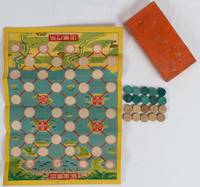
1940216804Japan. Circa 1940. Colour folding game sheet 36.5 x 26cm 10 wooden playing pieces each with embossed images in beige and blue complete original box 15.5 x 7.6 x 2.3cm considerably worn and soiled and corners reinforced the game itself is in very good bright condition. This is a two-player board game where air planes and war ships fight against each other. Fascinatingly the game sheet illustration shows the battle ground is in the Pacific where islands with palm tree are dotted. Consequently the game might be produced at the early stage of the Pacific War. The players attack each other after starting from a naval base and an air base. There are two islands each where they are safely protected from their enemies. The playing pieces are made out of paper with embossed images of war ships and air planes in beige air power and blue sea power colours. . unknown
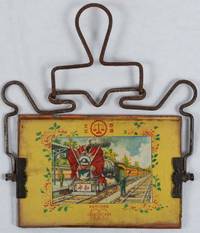
1940224121Shanghai.: 上海裝鏡工業第二联營所. Shanghai jinggongye di'er lianyingsuo. Circa1940s - 1950s. Mirror with attached coloured image on paper under glass on reverse 10.5 x 15cm metal handle 15.5 x 17.5cm. Mirror a little stained and clouded at edges image browned at edges hanger rusty but still very functional. An interesting piece of 1950s propaganda. This portable travel mirror is a useful and decorative example of the sort of mass produced consumer items made in the early 1950s in small local workshops that were organised into collectives. Travel mirrors could be hung up or propped up for use by a moveable handle. On the reverse is a colour socialist-realist illustration of a red flag-draped locomotive a symbol of modern progress patriotism and peace. The colourful image of the train with its 天平商标 logo could be displayed when not in use or replaced with a photo with the mirror behind it. <br> <br>In 1952 when China built its first domestically designed locomotive it was called the "Peace" series which we see written on the front of this engine with the image of a dove. China's involvement in the Korean War to 'resist US aggression and assist Korea' depended on strong logistical supply lines to the front. Trains therefore became symbolic of national unity strength and China's ability to protect regional peace. Many such travel mirrors were bought as gifts and given as morale boosting items to the Chinese troops who could insert family photographs under glass on the backs of their travel mirrors. . 上海裝鏡工業第二联營所. Shanghai jinggongye di'er lianyingsuo. unknown
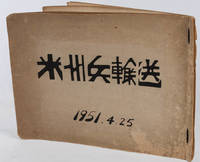
1951218840Japan. 1951. Eight black and white photographs 20.5 x 25.5cm each captioned in Japanese the handmade album is titled and dated in ink 23.5 x 32.8cm 9pp cord ties. One photograph has been removed card leaves and covers are browned surface of upper cover abraded in places some other minor wear but the photographs are in very good condition. A private album containing eight high-quality large-format photographs showing US forces being welcomed to the northern Japanese city of Muroran Hokkaido on 25 April 1951 - at the height of the Korean War. The first two photos show the US forces being welcomed by a local brass band. There is then a shot of US officers and Japanese officials standing under a large sign saying "Welcome Thunderbirds - Muroran City" indicating that the troops being welcomed are from the 45th Infantry Division nicknamed the Thunderbirds one of two US Army National Guard units engaged in the Korean War and recruited largely from the state of Oklahoma. <br> <br>The 45th Infantry Division received their initial training for combat in Korea in the US itself in 1950 and then sailed from New Orleans to Japan in early 1951 arriving at the ports of Otaru and Muroran in Hokkaido April of that year. From there they were sent for further training at Camp Crawford a US military base on the outskirts of the city of Sapporo and at a newly created camp south of Chitose before being transfered to Korea in December 1951. The album also contains two photos of the ships "General C.G. Morton" and "General William Weigel" which were built during World War II and used as a troop transport ship during the Korean War and were presumably among the ships which brought the 45th Infantry Division to Japan. Other images show local officials explaining the geography of the region to US officers as they peruse a large map and a Japanese woman beign presented with a badge by an American officer. <br> <br>Muroran was one of many Japanese ports whose life was transformed by the mass arrival of UN mostly American forces during the Korean War although the town's role in the war is less well documented than the roles of ports like Yokohama Kobe and Sasebo. These pictures give a vivid impression of the Korean war journeys of US troops and of Hokkaido during the Korean War. . unknown
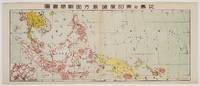
1942177492Japan. 1942. Colour map 21 x 50.5 cm centrefold as issued. Faint dampstain to upper edge centrefold a little browned. Good copy. Map of Southeast Asia including Borneo and the Philippines and New Guinea. Of particular interest is the small inset map of Singapore at lower left. The war situation of the Japanese army in 1941 and 1942 during the Pacific War is clearly shown with one sheet. Text in the inset plan of Singapore says "Occupation of Singapore in February 15 1942". . unknown
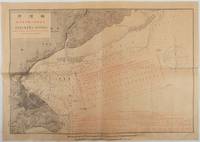
1905219989Japan.: 水路庁 Suirochō. Meiji 38 1905. Chart printed using black and red ink 37.7 x 53cm captions and charts in Japanese and English. A little minor creasing very good. This chart of the Yokohama offing records the positioning of warships during the fleet review held on 23 October 1905. Attended by the Meiji Emperor the review was staged by the Imperial Japanese Navy to celebrate Japan’s victory over the Russian Baltic Fleet at the Battle of Tsushima. It was one of the largest fleet reviews in Japanese history with more than 160 vessels taking part including several British ships. The chart incorporates diagrams and tables in both Japanese and English and clearly indicates the positions of the Emperor’s vessel alongside those of the participating warships. . 水路庁 [Suirochō]. unknown
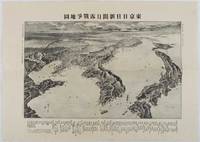
1904216054東京. Tokyo.: 東京日日新聞. Tōkyō Nichinichi Shinbun. Meiji 37 1904. Folding black and white bird's-eye view map 39 x 55cm a little worming. Good copy. This map of the Russo-Japanese War was published on 7 June 1904 by Tokyo Nichinichi Shinbun. The map featuring geographical elements is notably distorted to include Japan Korea China and distant Russia. Place names are visible in various locations and Japan appears disproportionately large in comparison with other regions. Around the time of publication the seizure of Port Arthur was underway depicted with numerous warships positioned outside the port. Distances from Port Arthur to other major cities as well as sea distances from Nagasaki to various locations are listed at the lower edge of the map. . 東京日日新聞. [Tōkyō Nichinichi Shinbun]. unknown
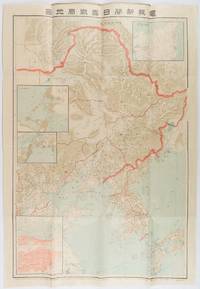
1904216818東京. Tokyo.: 電報新聞社. Denpō Tsūshinsha. Fifth Edition. Meiji 37 1904. Colour folding map with four inset maps 78.2 x 54.5cm folds into light card covers measuring 21 x 14cm. Very good copy. This the fifth edition of this map was published on 7th June 1904 reflecting the high level of public interest in receiving up-to-date information on the war particularly while the siege of Port Arthur continued without a decisive Japanese victory. The map includes four inset maps among them detailed views of Port Arthur and Vladivostok. It also records distances between key ports in Japan Korea and China. . 電報新聞社. [Denpō Tsūshinsha]. unknown
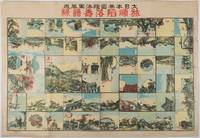
1904214704京都. Kyoto.: 打田平次郎. Uchida Heijirō. Meiji 37 1904. Colour folding sugoroku game sheet 54 x 79cm some mild wear and occasional spotting a prior owner's name and address on reverse good copy. This sugoroku game sheet on the fall of Port Arthur was published on 1 December 1904 before the actual fall took place clearly with an optimistic expectation of victory. The game begins with the Battle of Chemulpo Bay and follows the progress of the war across different locations. Although the illustrations depict both Japanese and Russian troops Japanese victories are frequently emphasised. The game had educational and propagandistic effects helping family members learn place names and battles. . 打田平次郎. [Uchida Heijirō]. unknown
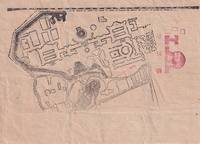
1910214342名古屋. Nagoya.: 澤田文精社. Sawada Bunseisha. 1910. Single sheet folded in two Japanese text and plan of the exhibition reverse blank 12 x 16.5cm light creasing few small closed tears at margins otherwise very good. This small brochure highlights the Port Arthur Sea Battle Exhibition Hall a pavilion featured at the 1910 Kansai Fuken Rengo Kyoshinkai 10th Kansai Prefectural Joint Exposition held at Tsurumai Park in Nagoya from March to June 1910. Attracting over 2.6 million visitors the exhibition showcased diorama models of the battle operated by newly imported electrical machines from the United States. The brochure emphasises the immersive experience suggesting spectators would feel transported to the heart of the conflict. Entrance fees are also listed. Notably Edogawa Ranpo the famed mystery writer visited the exhibition in his youth and was deeply impressed by the displays. . 澤田文精社. [Sawada Bunseisha]. unknown
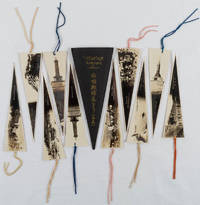
1910221129Japan. Circa 1910. Ten bookmarks with light cord ties each a silver gelatine photograph most showing scenes around Port Arthur but in one case captured Russian soldiers all captioned in Japanese.15.3 x 6.3cm. Presented in a black card envelope titled in gilt. A very good set. These ten book marks feature black and white photographic illustrations of battle grounds and war monuments in Port Arthur to commemorate the Japanese victory over Russia in the Russo-Japanese War. Some photographs show memorial towers for the dead Japanese soldiers. One of the photographs shows General Nogi and General Stossel at the time of surrender negotiation in January 1905. Each book mark has a Japanese caption printed. . unknown
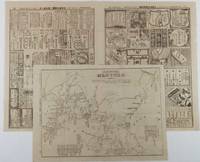
1904216797大阪. Osaka.: 大阪毎日新聞社. Ōsaka Mainichi Shinbunsha. Meiji 37 1904. Two black and white newspaper maps issued in the Ōsaka Mainichi Shinbunsha one pictorial with accompanying text and adverts printed on newsprint folded. 39.5 x 55cm Very good condition. This pictorial map of Port Arthur and Dalian was published on 4 July 1904 by the Osaka Mainichi Shinbun as a supplement. It shows Port Arthur encircled by Japanese naval vessels while Dalian is depicted as being occupied by Japanese troops. On the reverse there is an essay on the war accompanied by illustrations of Russian generals and a list of wounded soldiers who had been transported to the rear.<br><br>A second map detailing developments in the Russo-Japanese War was published by the same newspaper just days later on 8 August 1904. This map provides the dates of various battles along with a chronology of the movements of the Russian Vladivostok fleet and Japanese attacks on Port Arthur. These two maps are rare examples of the kind of information made available to the general public on a day-to-day basis during the war. . 大阪毎日新聞社. [Ōsaka Mainichi Shinbunsha]. unknown
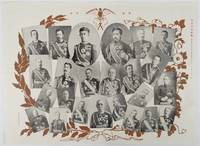
1906218805東京. Tokyo.: 東京日日新聞. Tokyo Nichinichi Shinbun. Meiji 39 1906. Black and white photographic illustrations 39.5 x 54.3cm light creasing where it has been folded very good. This collection of photographic portraits was published by Tokyo Nichinichi Newspaper on 1 January 1906 to commemorate the victory over Russia in the Russo-Japanese War. It features Meiji Emperor and his aristocratic members as well as major military commanders including Admiral Togo General Oyama and General Nogi. . 東京日日新聞. [Tokyo Nichinichi Shinbun]. unknown
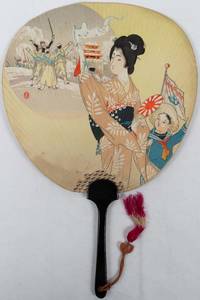
1921216196Japan. Taisho 10 1921. Colour printed paper fan print 23 x 24cm wooden handle 14.3 x 1.3cm with a colourful silk tassel. A little light wear visible on the reverse of the fan. A very good example. This fan depicts a celebratory scene: a woman in a kimono waves a scarf with a star design on it while in her other hand is a rising sun fan; her son clad in a sailor-style outfit holds a Navy flag. To the left behind them a victorious scene most likely from the Russo-Japanese War is depicted. On reverse there is text celebrating a long life of 95 years dated spring 1921. . unknown
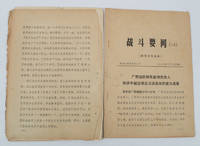
1979169136江西.Jiangxi.: 中共江西省办公厅.Zhong gong Jiangxi ban gong ting. 1979. Three editorials from Xinhua News Agency dated between 2 March and 6 March 1979 were published during the Sino-Vietnamese War. The issues were re-printed and distributed by the General Office of Jiangxi Provincial Government shortly after the editorials were published. Issues no. 9 and 10: single sheet printed on both sides pages numbered. Issue no. 14: two sheets printed on both side pages numbered. Staples removed leaving small pin holes edges torn a 5.5cm horizontal closed tear on lower section of Issue 9. Even foxing and some soiling. Text in Chinese. 26.5 x 19cm when folded. An Original upper cover with small pin holes attached to Issue no.9 showing the editorials were gathered and distributed to a mechanical company in Jiujiang District by the General Office of the Jiangxi Provincial Government. . 中共江西省办公厅.[Zhong gong Jiangxi ban gong ting]. unknown
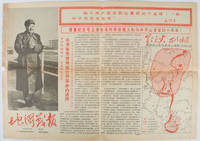
1967169746Beijing.: 地图戰報.Di tu zhan bao. September1967. Maps printed in red and black single sheet printed on both sides folded scale not given photographic image of Mao Zedong. Some light browning at edges with tears and losses on left edge still good. Text in Chinese. Sheet measures 26.5 x 38.4cm. Includes a map of Autumn Harvest Uprising and also shows the routes of the military advancing towards Jinggangshan between September and October 1927. On reverse left section a map shows the route along which Chairman Mao led the Fourth Army of the Chinese Red Army marching towards south of Anhui and Jiangxi Provinces in 1929. On reverse right section a map titled "The Long March of The Chinese Workers' and Peasants' Red Army October 1934-October 1935". Quotations of Chairman Mao about the Long March insert on corners of the map. <br> <br>Issue no. 6 of a series of maps with text issued by the Red Guards organisations in the form of Cultural Revolution tabloid-sized newspaper. This issue is designed to celebrate the 40th anniversary of the Autumn Harvest Uprising which was one of the earliest armed uprisings organised by the Chinese Communist Party. . 地图戰報.[Di tu zhan bao]. unknown
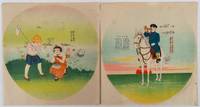
1940216176Japan. 1940. Two coloured fan prints 27.5 x 26cm. Occasional light marks a little light browning. Very good. These two propaganda prints were created to make children's paper fans each carrying patriotic messages and delicately rendered in bright colors.<br><br>The first sheet features a young boy on a white horse blowing a bugle. A Japanese warplane is seen flying in the sky with the rising sun in the background. The caption urges people not to disclose any military secrets even to close friends. Additionally the lyrics of the 1940 nationalistic song "Kokumin Shingunka" are printed on the sheet. <br><br>The second sheet depicts an idyllic scene of children playing by a lake catching dragonflies and fish. The boys are portrayed in more active roles while the girls hold a bucket or a cage. The message on this sheet reads "East Asia's Future is Bright and Children are Thriving." A warplane can be seen in the sky in the far distance subtly tying the peaceful scene to the wartime context. . unknown
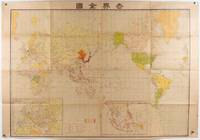
1942177779東京. Tokyo.: 盛文館. Seibunkan. Circa1942. Colour map 75 x 110cm folds to 28 x 19cm. Some light browning somewhat heavier along a few folds. A good copy. This map which was most likely published around 1942 or 1943 depicts the world during the global conflict. Japan is positioned in the centre and its territories are coloured in red. In Southeast Asia Japanese-occupied areas including Singapore the Philippines and the Dutch East Indies are marked with red. Two inset maps display Europe and the Japanese-occupied area to the south as the "Southern Co-Prosperity Sphere." The map is folded to 28 x 19 cm and its cover features the national flags of Japan Nazi Germany Italy the Soviet Union Britain and the United States arranged artistically. . 盛文館. [Seibunkan]. unknown
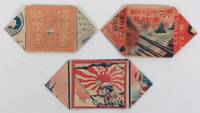
1942218445Japan. Circa 1942. Colour illustrations 3 origami "balloons" 15 x 7cm very good. The first balloon features bold illustrations of warships soldiers in combat and artillery pieces transforming a simple toy into a celebration of military might. The second displays award-winning slogans from a 1942 national propaganda competition including the infamous "欲しがりません勝つまでは" "We shall not ask for anything until victory is won"—a mantra of homefront sacrifice. Most chilling is the third balloon's juxtaposition: cheerful scenes of children playing with pigeons are undercut by ominous warnings like "spies are on the train and everywhere" revealing how paranoia infiltrated even innocent imagery. . unknown
1948148120Couverture souple. Broché. 318 pages.
19865960France-Empire, 1986, gr. in-8°, 231 pp, traduit de l'allemand par Wanda Vulliez, broché, couv. illustrée, bon état
199375938Fayard, 1993, in-8°, 382 pp, 9 cartes, documents, index, broché, couv. illustrée, bon état
194314624Londres, His Majesty’s Stationery Office, 1943, pt in-8°, 100 pp, 24 photos sur 16 pl. hors texte, un schéma et une photo sur les gardes, broché, couv. illustrée, état correct
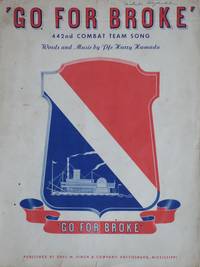
1944List2436Hattiesburg: Earl M. Finch 1944. Sheet music measuring 12 x 9 inches 4 pp. Signature of a Nabuko Hayashida on front cover. Slight tears at fold some toning two small pinholes very good overall quite attractive. Very Good. In Hawaii in May 1942 a battalion of Nisei volunteers was assembled for service in World War Two despite earlier failures of efforts to recruit Japanese-Americans due to the Army’s labeling of Nisei recruits as 4-C enemy aliens. Designated as the 100th Infantry Battalion they were deployed to North Africa in June 1943 integrating with the 34th Division in active combat. Their subsequent deployment to Italy in September 1943 exposed them to intense warfare earning them the moniker of the "Purple Heart Battalion" due to their notably high casualty rate.<br /> <br /> In January 1943 the U.S. War Department officially declared the establishment of the segregated 442nd Regimental Combat Team RCT which was comprised of Nisei volunteers originating from Hawaii and the mainland. The culmination of this initiative transpired in June 1944 when the 442nd RCT merged forces with the 100th Infantry Battalion in Europe subsequently absorbing the latter into its structure. The notable achievements of Nisei soldiers in combat operations prompted the reinstatement of the draft in January 1944 specifically targeting Nisei detainees to augment the ranks of the 442nd. Over time the 442nd RCT expanded to encompass the 2nd 3rd and 100th Battalions; the 522nd Field Artillery Battalion; the 232nd Engineering Company; the 206th Army Band; Anti-Tank Company; Cannon Company; and Service Company. <br /> <br /> Offered here is a very scarce piece of sheet music entitled “Go For Broke†which was written by the Hawaiian musician Harry Hamada reflecting the slogan of the 442nd and performed by Shelby and others during the war as part of efforts to boost morale. Hamada would feature in the 1951 movie “Go For Broke†as Masami alongside several other veterans of the 442nd. This publication of “Go For Broke†is from 1944 seven years before the movie’s release. The piece is dedicated to Colonel C.W. Pence. Hamada was a Hawaiian musician who performed with a band called the Shelby Hawaiians or the Shelby Serenaders. They performed as early as 1943. The Hattiesburg Mississippi merchant Earl M. Finch who ran an Army and Navy store close to Camp Shelby befriended Hamada and other members of the 442nd and acted as a sponsor for the group and eventually published this version despite his business being a dry goods merchant house and not a publishing house. The group with the support of Finch performed throughout the country to lift morale. At some point Hamada penned this composition likely in 1944 as we find no reference to it in 1943 articles and Finch published it - Hamada’s composition would become the theme song of the 442nd and Hamada would perform at the Halloran General Hospital in New York and the Walter Reed Hospital in Washington D.C. in 1944 likely performing this composition. Another composition called “Go For Broke†exists as well and it is unclear to what degree Hamada’s work caught on among the regiment. <br /> <br /> We find two records of Finch’s published version of the composition one listed as part of an online remembrance of the 442nd by the Smithsonian Institution https://americanhistory.si.edu/explore/stories/day-remembrance-70-years-after-executive-order-9066 which appears to have been on loan from the National Japanese American Historical Society and another copy held at Stanford though not listed in OCLC. Finch’s story is also interesting and is the subject of a remembrance on a 100th Battalion History page online https://www.100thbattalion.org/history/stories/earl-finch/. We find no copies listed in OCLC. Overall a very scarce piece of Japanese-American wartime history. Earl M. Finch unknown
19353289452München, 1935. 40 S. Mit 4 Skizzen. OKart.
19153304714Zürich, Orell Füssli, 1915. 47 S. OKart. (Namenszug auf Titel).