1 575 résultats
19001337915Washington: Government Printing Office 1900. January 1900. Softcover. Booklet 10x13; Fair/paperback; dark peach covers; black titles and lettering to front; front cover detached front binding as is; some chips to spine and edges; exterior has mild wear; text block has mild toning; illustrated; pp 73<br /> <br /> <p>NOTE: Shelved between 15's ephemera boxes 9 and 10 in Netdesk office. 1337915. FP New Rockville Stock. Government Printing Office unknown books
186114609Philadelphia: J.B. Lippincott & Co 1861. Decorative Cloth. Very Good . An exceptionally bright copy of the 1861 1st edition. Tight and VG in its bevelled dark-green cloth with crisp completely unflecked gilt-titling and insignia along the spine. Light foxing at the pastedowns and endsheets faint staining to the front inner hinge and continuing very lightly thru the preliminaries. 15 fold-out plates all intact and very clean except the frontispiece plate the left half of which has been neatly excised and 77 additional plates thruout the text. Thick 64mo 450 pgs. plus Lippincott's list of recent publications "McClellan's Bayonet Exercises" etc. at the rear. This copy bears the ownership blindstamp of William Buell Sprague 1795-1876 of Albany NY noted Congregational and Presbyterian clergyman and compiler of the 9 volume set "Annals of the American Pulpit" <br/><br/> J.B. Lippincott & Co hardcover books
1972008578Washington: Indochina Resour Ctr. 1972. First Edition. Paperback. Wraps 8« x 11' illustrated with photos and Lao refugee drawing fine with stamp. . Indochina Resour Ctr paperback books
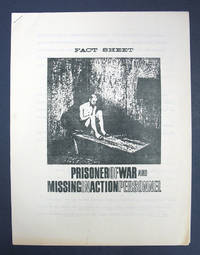
40019n. p.: Public Information Division SAFOI n. d. 1st printing presumed. Ca. 1969. White printer paper printed with black ink. Moderate wear to paper age-toning to edges. A VG example. 11 1 blank pp. B/w photographic image printed to title page. 10-1/2" x 8-1/8" <br/><br/>1 holding located on OCLC US Air Force. Rare in the trade. Public Information Division, SAFOI unknown books
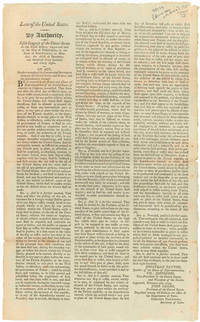
1799WRCAM48177Philadelphia 1799. Broadside 13 1/2 x 8 1/4 inches printed in three columns. Docketed in ink on verso. Three horizontal folds. Some light edge wear small separations at edges of folds not affecting text. Very good. Rare congressional act extending the suspension of trade with France during the so- called "Quasi-War" of the late 1790s and adding a provision allowing the U.S. Navy to inspect and seize American ships that are violating the embargo. This act was approved February 9 1799 and extends the provisions of the law first approved on June 13 1798. It is signed in type at the end by President Adams Vice President Jefferson and Speaker of the House Jonathan Dayton. The Quasi-War was an undeclared conflict between the United States and France during the Adams administration in the late 1790s manifested mostly in naval engagements between the two nations. The war was the outgrowth of deteriorating Franco-American relations which had been weakened earlier in the decade by the Genêt Affair and the XYZ Affair and it wreaked havoc on commerce between the two nations. One of the main weapons wielded by Adams was to ban American commerce from France and French dependencies accomplished by the congressional act of 1798 and extended by the present law. The law forbids American ships from trading with France or with French dependencies including in the West Indies and goes on to bar French commerce and French ships from American ports. Significantly this act goes beyond the provisions of the 1798 law by permitting United States Navy vessels to inspect and potentially seize American vessels that have traded with France or with French dependencies. <br> <br> This broadside format is unusual for the printing of a law and indicates that it was meant to be displayed in ports and customs officers for the attention of ships' masters who may have been unaware of the embargo law or willfully violating it. ESTC locates only three copies at Oxford the British National Archives and the American Antiquarian Society. Rare. EVANS 36522. ESTC W42364. OCLC 80514531. unknown books
3033Washington: Government Printing Office 1899. . 8vo buff wrappers front printed and nearly detached Washington: Government Printing Office, 1899. unknown books
ess4909Washington 1880. Stringbound 38 pp fold-out map. unknown books
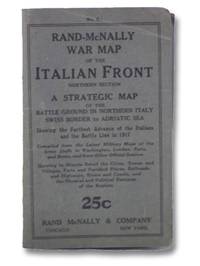
19172159327Rand McNally & Company 1917. Soft Cover. Very Good. Crease on front wrapper. 1917 Soft Cover. Large color fold-out map providing details of troop positions during World War I. The last in a series of five ostensibly published to bolster support for the war effort on the home front. Rand McNally & Company paperback books
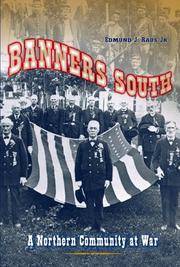
200533407Kent: Kent State University Press. Fine in Fine dust jacket. 2005. Hardcover. 0873388429 . First printing. Fine in a fine dust jacket. . Kent State University Press hardcover books
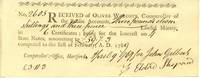
3809Revolutionary War Receipt from Comptroller's office of Oliver Walcott dated April 9 1789 Hartford Connecticut. The receipt is signed by Eldad Shepard a soldier in the American Revolution. This receipt was for the States Notes that were issued during the Revolutionary War and were then redeemed by the soldier. Shepard received three pounds eleven shillings and three pence. Signed "Eldad Shepard" in the lower right corner. Excellent conditionwith dark clear signatures and writing. unknown books
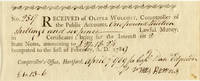
3811Revolutionary War Receipt from Comptroller's office of Oliver Walcott dated April 7 1789 Hartford Connecticut. The receipt is signed by William Benvour who was a soldier in the American Revolution. This receipt was for the States Notes that were issued during the Revolutionary War and were then redeemed by the soldier. Benvour received one pounds thirteen shillings and six pence. Signed "William Benvour in the lower right hand corner. Excellent condition with dark clear signatures and writing. unknown books
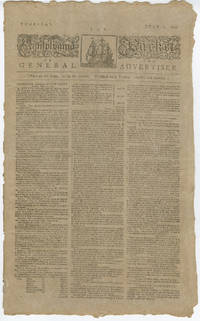
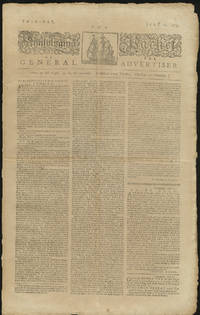
177921556.07Philadelphia PA 1779. No binding. Fine. Pennsylvania Packet or General Advertiser. Newspaper. Pennsylvania Packet or General Advertiser. John Dunlap Philadelphia Pa. July 1 1779. 4 pp. 10 1/2 x 17 untrimmed. Page 1-2 leads with extracts from the Journals of Congress regarding Indian Affairs and New Hampshire land disputes. Extensive content on the Revolutionary War medical department including a lengthy serialized ""Doctor Morgan's Vindication"" regarding the Continental Congress's dismissal of Dr. John Morgan who had great success managing military hospitals for Washington's Army without cause or explanation. Here he obtains testimony from General Nathanael Greene and even Washington himself to defend his reputation.Page 3 reports war news from Pennsylvania as well as a June 29 1779 act of the Continental Congress borrowing $20 million to maintain fiscal solvency.Page 4 includes advertisements for runaway slaves book auctions and stolen horses.Excerpt ""IN CONGRESS June 29 1779.AS Congress are bound by every motive of policy and of public & private justice to maintain the credit of the paper money emitted by their authority on the faith of the United States; so it is their intention not only to avoid further emissions but to diminish the quantity in circulation provided that the respective States by correspondent and vigorous exertions shall put it in their power to raise the necessary supplies.Resolved therefore That twenty millions of Dollars or such a part thereof as shall be brought into the Continental Loan-Offices on or before the first day of October next be borrowed on the faith of the United States at an interest of six per cent. per annum.For facilitating the said Loan Resolved1. That the Loan-Officers in every state do immediately open subscriptions for the said Loan. 2. That the executive authorities of the several states be requested immediately to appoint persons of character and influence in every county town or district to receive subscriptions and transmit the same to the Loan-Officer or Officers in the states respectively. 3. That no subscription be received for less then five hundred dollars. 4. That all subscriptions under ten thousand dollars shall be paid into the Loan-Office where the same shall be subscribed or into the Hands of the person obtaining the subscription within fourteen days after the subscription shall be made. 5. That any person subscribing ten thousand dollars or upwards shall be allowed to pay the same at two periods to wit one half within fourteen days after the subscription the residue on or before the first day of October next; the whole to bear interest from the time of the first payment provided the other payment shall be punctually made. 6. That each lender shall have his election either to receive the principal at the expiration of three years from the date of the Loan or to continue it in the funds on interest until the whole amount of Continental bills in circulation shall not exceed the sum in circulation at the time of the Loan. 7. That interest on all sums which shall be paid into the Loan-Office before the said first day of October or which shall be subscribed and paid agreeably to the terms of the 5th resolution aforesaid shall be payable annually at the Continental Loan-Office of the State in which the money was originally subscribed. 8. That when the interest on Monies which have been or may be placed in the several Loan-Offices on or after the first day of March 1778 shall become due and be paid the same until some more accurate standard of value can be devised shall be increased in proportion to the increase of the sum of Continental paper money which may be in circulation after the date of such Loans respectively.Extract from the MinutesCHARLES THOMSON Sec'ry."" unknown books
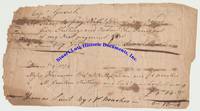
4254DS. 8 ½†x 4 ½â€. December 7 1775. No place likely Massachusetts. A manuscript document signed “Samuel Place†concerning military disbursements: “Capt Gerrish Sr Please to pay Nathl Pearson one pound five Shilling and reduct the same out of my next payment Samuel Place Decemb 7 1775…Moses Harvarne Bot sic of Nath Pearson one pr Breeches at fourteen shillings and eight pence lawful money…â€. Colonel Jacob Gerrish of Newbury headed a company that marched from Newbury to Cambridge for the Lexington Alarm on April 19 1775. Nathaniel Pearson was a private in Gerrish’s regiment and a Minuteman during the Lexington Alarm as was Samuel Place. The document has irregular edges and some ink that has bled through from the verso; it is in very good condition. An interesting Revolutionary War document. unknown books
177921556.04Philadelphia PA 1779. No binding. Fine. The Pennsylvania Packet or the General Advertiser. Newspaper. The Pennsylvania Packet or the General Advertiser John Dunlap: Philadelphia Pa. July 15 1779. 4 pp. 10 1/2 x 16 1/2 in. untrimmed. The front page prints a lengthy letter from ""A Farmer of Virginia"" on inflation taxation and monetary policy. Excerpts""There are three principal causes of the depreciation of our paper-currency. First the great quantity in circulation. Second the want of confidence in the will and ability of the States to redeem it by taxes and specie. Third the deranged State of the public business and the want of effectual laws for regulating the conduct of an bringing to account all such as are employed in the service of the public.I shall endeavor to shew by what methods the quantity in circulation may be lessened and the value restored without violating the public faith or oppressing the citizens of these United States. The paper-money of these States differs from that of any country in Europe because the principle on which it is emitted is different. The principle is taxation; and if it be not duly applied the quantity must encrease according to the exigencies of the States and the credit or value will be diminished in proportion as the quantity emitted exceeds the sum necessary for a circulating medium. This will generally be ascertained by comparing the price of commodities purchased with paper-money to that which shall be purchased with specie. Taxation then being the principle on which the paper money was emitted if it had been applied when the depreciation commenced it would most certainly have produced a remedy for the evil. This would have prevented the enormity of the public debt. p. 1 col. 1-3Also on the front page: an advertisement for ""Good Bohea Tea"" sold by Jewish merchant Benjamin Seixas who had relocated to Philadelphia from New York during the British occupation. p.1 col.3This issue also contains a letter from George Washington responding to Doctor John Morgan who was in the process of a very public vindication. ""No fault I believe ever was or could be found with the economy of the Hospitals during your Directorship. Things in the first stage of the war were plentiful and cheap and I am inclined to think that you contributed as much as lay in your power to provide at the lowest rates."" p.2 col.1As well as the protests of the ""tanners curriers and cordswainers of the city"" in response to inflation: ""The depreciation of our currency is a fact so notorious that the cause of America can receive no injury from mentioning it in the course of the observations we are about to make. For many years preceding the issuing of the present currency the prices of skins leather and shoes were so proportioned to each other as to leave the tradesmen a bare living profit.The prices of leather and shoes continued the same as formerly until the depreciation of the currency had made considerable progress nor did we advance our price until the increased expence of almost every other article of consumption rendered it absolutely necessary and then we kept a great distance behind many other tradesmen and infinitely almost behind the advance on foreign articles. Thus in the beginning of 1777 when money had depreciated or which is the same thing goods had risen for the most part to three and four prices our commodities had advanced scarcely two prices.Having thus stated our ideas of this matter for your consideration we think ourselves justified before the world in declaring that we do not consider ourselves bound by the regulated prices of our commodities and we shall not observe them until a general regulation of all other articles shall take place by common consent."" p. 2 col. 2-3 p. 3 col. 1Along with other reports of the war. ""We have been twice out after the enemy's fleet but can't bring them to action. On our passage to this port in company with the Carrisfort we fell in with a fleet fr. See website for full description unknown books
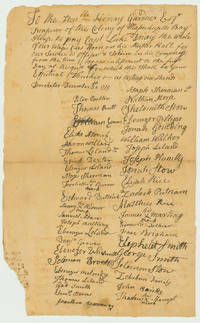
177520781.03<p>A scarce petition for pay listing 44 members of Captain Luke Drury's Company 27 of whom were Grafton Massachusetts-area Minutemen who had marched 36 miles to respond to the Lexington-Concord Alarm on April 19-21 1775. The list includes Fortune Burnee a Minuteman of African American and Native American heritage and his half-brother Joseph Anthony who enlisted on April 29th and died in service. Another of the Minutemen listed is the famous clockmaker Aaron Willard.</p> <b>REVOLUTIONARY WAR.</b>Manuscript Document Dorchester Massachusetts December 30th 1775 addressed to Massachusetts Treasurer Henry Gardner. 1p. 8 x 13 in. Likely Drury's retained copy from the time with the signatures all in one hand though some may be signed with marks & Jonathan Hemenway has signed himself.<p>Petition<i> "to pay Capt Luke Drury the Whole of our Wages as born on his Muster roll for our Services as Officers & Soldiers in his Company from the time of our inlistment to the first Day of August for which this shall be your effectual voucher." </i></p><p>Today the terms <i>minuteman </i>and <i>militiaman</i>are often used interchangeably but there was a distinction in the eighteenth century. Militia were men in arms formed to protect their towns from foreign invasion. They could designate up to one quarter of their force as minutemen a specially trained force required to be highly mobile and able to assemble instantly to a call to arms. It is difficult to categorize specific men into either of the two groups based on the surviving historical record. We apply the term here to all of those militia who responded April 19-21 1775 to the Lexington-Concord Alarm. </p><p>The 27 soldiers and officers listed here who were part of Luke Drury's Grafton Aaron Kimball's Grafton & John Putnam's Sutton April 19-21 Minutemen companies are: 1st Lt. Asaph Sherman Sgt. Nathan Morse Sgt. Shelomith Stow Sgt. Ebenezer Phillips Sgt. Jonah Goulding Cpl. William Walker Cpl. Joseph Leland Drummer Elijah Rice Fifer Zadock Putnam Matthias Rice Isaac Brigham Eliphalet Smith George Smith Peter Butler Thomas Pratt William Evans Elisha Aldrich Aaron Willard Eseck Dexter Moses Sherman Fortinatus Fortune Burnee signed with mark Edward Buttrick Ebenezer Leland Solomon Brooks Ebenezer Melendy Thomas Leland Sr. & Samuel Stearns.</p><p><b>Luke Drury</b>1734-1811 of Grafton Massachusetts joined the militia in 1757 during the French and Indian Wars. As captain of a company of Minutemen and Militamen he responded to the Lexington Alarm and later joined Colonel Jonathan Ward's regiment to fight at Bunker Hill. Drury and his men served in different areas during the war from West Point to Grafton where his company guarded military stores. He also supported the Continentals financially at one point giving £50 fifty pounds to enlist soldiers in Grafton.</p><p>In 1786-1787 Drury became deeply involved in Shays' Rebellion a tax revolt led by farmers in western Massachusetts. The uprising was quashed and Drury imprisoned as "a person dangerous to the state." He was eventually released on good behavior. Drury remained active in state and local politics serving terms as constable deputy sheriff tax collector assessor selectman and state legislator.</p><p><b>Condition</b></p><p>Usual folds small loss at bottom left corner affecting some marginal ciphering else fine condition.</p><p><b>Joseph Anthony</b> and <b>Fortune Burnee Jr.</b> half brothers were both part African-American and Hassanamisco Nipmuc Native American. Compared to records of white New Englanders we know relatively little about them but even so more information exists on these freedmen than is the norm. Several of the Anthonys and Burnees were recorded in the Grafton vital land and probates records the U.S. census neglected to record Native Americans from 1790-1890 and the Burnees have been discussed in recent historical and sociological literature: exploring the relationships both amongst marginalized peoples as well as with their white Yankee neighbors in eighteenth century New England; the definitions of race and identity; social mobility; Indian and black cultures; gender roles; Anglo-Nipmuc land dealings; and the remarkable preservation and history of an 190-acre tract of land in Grafton known as Hassanamesit Woods which is the site of a seventeenth-century "praying Indian" village with Nipmuc habitations that clung on into the mid-nineteenth century.</p><p><b>Joseph Anthony</b>was born in Grafton on December 24 1753 son of Joseph/William Anthony "Negro" and Abigail Printer Abraham "Indian." According to a Nipmuc leader and genealogist Anthony's ancestors include Hassanamisco Nipmuc Chief Anaweakin second in command in King Philip's War in 1675-6; along with Philip/Metacom Anaweakin was killed and his children sold into slavery; his father Noas Sachem of Hassanamesit forced into exile at the same time and died at Deer Island in Boston Harbor; and Nanapashemet Great Sagamore of the Massachuset Federation who was killed in battle in 1619 at Rock Hill Medford the year before Massachusetts was colonized by the English.</p><p>In 1728 seven Indian "Planters" or householders and 33 English re-divided the land at Hassanamesit to incorporate the town of Grafton. In 1739 Abigail Printer married Andrew Abraham Jr. "Indian Planter." Based on Abigail Printer's surname and the very small population left at Hassanamesit in the 1700s it is believed that she is a descendant of Rev. John Eliot's notable contemporary James Printer a Harvard student in 1645-46 who worked for Samuel Green printing Eliot's famous "Indian Bible" in 1663. Abigail and Andrew had three sons before he died in August 1746 after returning from service in the Port Royal Campaign.</p><p>Abigail married second November 14 1752 Joseph/William Anthony. Little is known of him other than his listing in town records as a "Negro." It appears he died circa 1756. Their son the signer of this document <b>Joseph Anthony</b> married Lydia Mercy Johnson. He enlisted in the army April 29 1775 and was reported missing July 6 1777 probably at the Battle of Ticonderoga and dead December 26 1777 possibly a prisoner of war on board an infamous New York City British prison ship. At the time he was a private in Capt. Blanchard's Company of Col. James Wesson's 9th Massachusetts Regiment.</p><p><b>Fortune Burnee Jr.</b> Grafton records spell his name a number of different ways. Dr. David R. Mandell believes there was one man of that name but we find that Electa Kane Tritsch's postulation that there was a father and a son of the same name makes more sense. Abigail again a widow married a third time January 27 1757 to Fortune Burnee Sr. described as "Negro" a veteran of one or more expeditions to Canada during the French and Indian War and widower of another Hassanamisco Sarah Muckamaug Whipple. Mandell writes that Burnee had changed his first name from William to Fortune based on his good luck but does not cite the source or anecdote: Fortune seems more likely a given slave name. He also claims that Burnee abandoned his first wife Sarah before her death but Tritsch has found no evidence for this: that statement may have been compounded with Sarah's first husband Aaron Whipple of Providence Rhode Island. It is thought that Burnee Sr. died about 1771. If so his son <b>Fortune Burnee Jr</b>. is the man who served under Capt. Luke Drury. It is as yet unknown if he is the son of Fortune Burnee Sr.'s second wife Abigail Printer Abraham Anthony Burnee who died in 1776 or his first wife Sarah Muckamaug Whipple Burnee who died in 1751 thus he is either Anthony's younger half-brother or older step-brother. It is interesting to observe that Burnee signs another Drury document with a mark while Anthony was capable of signing in full – whether that hints that Anthony was the younger brother with less responsibilities on the homestead and more opportunity for education is mere speculation. However Tritsch probably by process of elimination finding that Fortune Burnee Jr. does not appear in Sarah's estate papers assigns him as the younger a son of Abigail and half-brother of Joseph Anthony. Fortune Burnee Jr. marched on April 21 1775 in response to the Lexington-Concord Alarm. Marriage records then show that Fortune Burnee Jr. married July 31 1778 "Phylis…negro servant of Rev. Mr. Frost…of Mendon both are listed as "Negroes" and then November 8 1781 Sarah Hector of Sutton again both are listed as "Negroes". He died in 1795.</p><p>Without going into the complex history of Hassanamesit and the Hassanimisco praying Indians Reverend Ezra Stiles's 1761 impressions of the settlement are notable: "At Grafton…I saw the Burying place & Graves of 60 or more Indians. Now not a Male Ind. in Town & perh. 5 Squaws who marry Negroes." By 1770 the town selectmen reported "that there is but one male Indian left" – this man was in fact one of Sarah Muckamaug Whipple's bi-racial children Joseph Aaron. 87 years earlier in 1674 Daniel Gookin had noted that the Indian village had contained twelve families perhaps sixty souls – King Philip's War of 1675-76 and its lingering years of conflict played a major part in this population displacement and decrease.</p><p><b>African Americans & Native Americans in the American Revolution</b></p><p>Of the estimated 100000 men who served in the Continental Army at least 5000 were black. Most black soldiers fought in integrated units as in Massachusetts; some states like Rhode Island had segregated regiments while Connecticut seems to have had both segregated and integrated. Both enslaved and free African-Americans served in the army as soldiers laborers and servants. In some cases slaves were offered freedom for their services as soldiers though others remained enslaved fighting in place of their masters. Many states had been reluctant to arm the black population but had no other countermove to the British Lord Dunmore's offer of freedom to Southern black enlistees. A significant number of colonial blacks at this time were also partly of Native American ancestry – to take once state Massachusetts's eighteenth-century Indian population had two females to one male while the majority of the imported African slave laborers were male. Those figures coupled with their removal to neighboring outskirts of colonial society as well as the enslavement of many Indians in New England after King Philip's War did much to comingle the two ethnic groups.</p> books
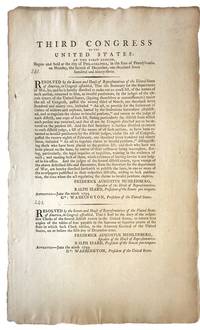
17154United States Congress Third Congress of the United States: At the First Session Begun and held at the city of Philadelphia in the state of Pennsylvania on Monday the second of December one thousand seven hundred and ninety-three. Resolved by the Senate and the House of Representatives. that the Secretary for the Department of War be and he is hereby directed to make out an exact list of the names of each person returned to him . under the Act of Congress. intituled sic "An act to provide for the settlement of claims of widows and orphans. Philadelphia: Printed by Francis Childs and John Swaine 1794. Broadside. Approved June 9th 1794 and signed in type: "Go: Washington President of the United States" "Ralph Izard President of the Senate" and "Frederick Augustus Muhlenberg Speaker the House". One sheet 8" x 13.25" inches. First Edition. Over a quarter of a million Americans served in the Revolutionary War without promise of any benefit after being discharged. General Washington lobbied tirelessly for a pension for military servicemen though it represented an enormous expense to the new nation. The introduction of pensions for disabled veterans and for the widows or children of men killed in combat was an enormous step for the new United States. The statute mandated that the courts determine the monthly payments owed to the veterans based on their degree of disability and states that pension applicants must bring the necessary evidence swear under oath before a judge or other such authorized person and then sent to the Secretary of War who was authorized to reject claims if he suspected "imposition or mistake." In addition to the thousands of soldiers newly eligible two women as well received veteran's pensions for their role in the American Revolution: Margaret Corbin famously called "Molly Pitcher and Deborah Sampson who disguised herself as a man in order to participate in combat. This broadside is very rare-- only two copies of this edition are held at any institutions per OCLC Worldcat. Some toning and wear to edges and small inked consecutive numerals at upper margin of each item likely from a prior collation. In very good condition. unknown books
1783303187Minorca 1783. Two single sheets. Folio. Very good copies a little toned old folds. Two single sheets. Folio. Signed in full by every officer. The first is titled: "No. 26 Pay List for additional Subsistence etc to the officers in st. Philips Castle from 25 Dec. 1781 to 23 Feb. 1782." The second has written on the verso: " No. 136 Pay List to make up Subs. to Brevet Officer etc equal to the Rank where in they respectively serve in The Garrison of Fort St. Philips during the Siege Decemb. 24 1781 - Dollars 4350-50." These two officer pay lists are signed by each of the 36 and 44 listed officers. They're a wonderful souvenir of the siege and with a sample of every officer's signature a valuable source for further research. <br/><br/>The five month Siege of Minorca August 19 1781 - February 5 1782 was a vital victory over England in the European theatre of the Revolutionary War. Throughout most of the eighteenth century English possession of the island was of real strategic importance from its deep-water harbor the Royal Navy could launch attacks against the Mediterranean fleets of Spain France and Italy. unknown books
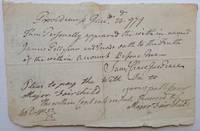
1779223744Providence 1779. unbound. 2 pages front and back 4 x 6.5 inches Providence Rhode Island June 23 1779 -- a payment voucher-receipt payable to a physician who had placed a bill for services rendered to the Continental Army possibly rations for a field hospital. In full: "Then personally appeared the within named James Pelliseur and made oath to the truth of the within amount before me Sam. Chase Jus Peace." With an additional endorsement by a semi-illiterate Major Fairchild Rhode Island Militia quote: "Pleas to pay the with in to Major Fairchild. James Polliseor the within contents in full recieved by Major Fairchild 40 dollars and 52 cents." On the back is an autographed document signed "John Cooke" -- Regimental Quartermaster for the First Rhode Island Regiment 1778 - 1780 attesting that the invoice is correct. In part: "UNITED AMERICAN STATES.I do certify the above is due Dr. James Pelliseur to the best of my knowledge." Contains a list of rations received and the price determined in Pounds Sterling. Natural folds; some toning and rough spots along the edges. Very good condition.<br/><br/> unknown books
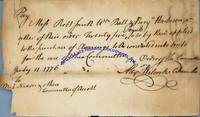
5266REVOLUTIONARY WAR REQUISITION. ADS. 1pg. 8†x 5â€. July 11 1776. Philadelphia. An autograph document signed “Alexr Wilcocks†addressed to John Nixon and the Pennsylvania Committee of Accounts: “Pay Messrs Robt Smith Wm Ball & Benj Haberon or either of their order Twenty five Pounds to be by them applied to the purchase of Awnings to be converted into tents for the use of this Committee…â€. Wilcocks was a prominent patriot leader acting as Chairman of the Committee of Safety. The document mentions John Nixon who on July 8 made the first public reading of the Declaration of Independence. There is overall browning and chipping to the left margin that affects one word. unknown books
3814Revolutionary War Receipt from Comptroller's office of Oliver Walcott dated April 2 1789 Hartford Connecticut. The receipt is signed by Albert Stanley who was a soldier in the American Revolution. This receipt was for the States Notes that were issued during the Revolutionary War and were then redeemed by the soldier. Stanley received one pounds ten shillings and six pence. Signed "Albert Stanley" in the lower right hand corner. Excellent condition with dark clear signatures and writing. unknown books
24685<p><b>The Revolutionary War & Founding Collection</b> consists of more than 1000 original historic letters documents imprints and artifacts—including important documents by Washington Hamilton Jefferson Adams Hancock and more. Boasting many objects that had disappeared from the market for many decades and more that have never been sold before this collection is unique and complete in itself.</p> <b>REVOLUTIONARY WAR AND FOUNDING.</b>The collection contains hundreds of documents from leaders soldiers citizens and the press written when the Revolutionary War and Founding were current events. The collection includes powerful letters and documents of Hamilton George Washington Thomas Jefferson John Adams Benjamin Franklin and Aaron Burr among many others. <p><br /></p><p>Alexander Hamilton letters and documents in the collection include:</p><p>- one of his greatest love letters to Elizabeth Schuyler: <i>"You are certainly a little sorceress… and have rendered me as restless and unsatisfied with all about me as if I was the inhabitant of another world"</i>;<br /></p><p>- Hamilton's letter rallying to defeat Jefferson after Washington declined a third term Hamilton changed his tune four years later when he considered Burr a greater danger;<br /></p><p>- a letter written on behalf of General Washington in October 1777;<br /></p><p>- Hamilton to Robert Morris on biases that affect New York taxes;<br /></p><p>- Hamilton and General Charles Lee's former aide-de-camp avoid a new confrontation years after Hamilton served as a second in his friend John Laurens' duel with Lee.</p><p><br /></p>The collection includes:<p>- the Declaration of Independence—official facsimile printed by order of Congress;<br /></p><p>- Benjamin Franklin's electrifying letter on continuing support for the Declaration and his pleasure upon returning home after nine years as minister to France;<br /></p><p><i>- The Federalist Papers</i> first edition from the estate of a Governor of Pennsylvania;<br /></p><p>- letters and documents of leaders and soldiers among them a pay order for Philip Negro.</p><p><br /></p><p>The collection features letters of the first three American Presidents:</p><p>- George Washington's uncharacteristically tongue-in-cheek letter to close friend Dr. James McHenry cryptically confiding his dream of leaving the army;<br /></p><p>- a Washington letter preparing for a possible campaign after his victory at Yorktown;<br /></p><p>- John Adams crowing about the capture of 55 British Ships but warning not to expect peace yet as <i>"The Heads of a King and Ministers is at Stake"</i>;<br /></p><p>- another great Adams letter reacting to the Reynolds scandal asking of Hamilton: "<i>Can talents atone for such turpitude Can wisdom reside with such Gullibility"</i>;<br /></p><p>- Thomas Jefferson refusing to share private correspondence to protect unfiltered thoughts from "<i>obloquy from bigots in religion in politics or in medicine</i>."</p><p><br /></p><p>Also included:</p><p>- Original printings of the Acts passed by Congress implementing Hamilton's Assumption Plan his 1790 Report on the Public Credit the charter for the Bank of the United States and the charter for the Society for Useful Manufactures;<br /></p><p>- His 1784 Phocion pamphlet explaining Federalist positions on peace with Great Britain;<br /></p><p>- Documentation of a Livingston's slam against Hamilton in a near-riot at Federal Hall; and a letter detailing Hamilton's related challenge of Commodore Nicholson to a duel;<br /></p><p>- A rare printing of the "Reynolds Pamphlet" in which he admits to infidelity but vigorously denies financial malfeasance;<br /></p><p>- A lock of Hamilton's hair carefully preserved by his family for generations;<br /></p><p>- the domain name <b>AHamilton.com</b> is included.</p><p><br /></p><p>The Founding is represented in part by more than 40 exceptionally rare original acts of Congress signed by Thomas Jefferson or Edmund Randolph as Secretary of State including the 1791 budget and<i> the Act for raising a farther sum of Money for the Protection of the Frontiers</i> which Hamilton used as a back-door approach to enact his Report on Manufactures tariff proposals.</p><p>An Addendum features a collection of more than 900 original newspapers from 1800 to 1804 that capture the news of the new nation as it unfolds with reports on the Hamilton-Burr duel printed in his own newspaper and Jefferson's First Inaugural and first four State of the Union addresses. Plus French Revolution and Haiti slave uprising reports more Acts of Congress legal cases such as <i>Marbury v. Madison</i> and more politics personalities events and issues.</p> books
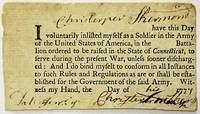
177734560Hartford 1777. Small printed broadside oblong 4" x 2-3/4". "Christopher Sherman" is inserted in manuscript as the name of the volunteer. An "X" for "his mark" is in ink at the end over an attempt to sign his name. For the year "177" is in type and the final "7" in manuscript. "Date" at the bottom is in manuscript along with the month probably "janry". Outer margin closely trimmed but text unaffected. Very Good. <br/><br/> An unrecorded form of Revolutionary War enlistment engagement exceedingly interesting for its reference to "the United States of America." Recorded enlistment engagements from this era-- all of them rare-- refer to the "United Colonies of America" "America" the "Colony of Massachusetts" the "Colony of Massachusetts-Bay". We have handled an unrecorded Massachusetts enlistment engagement from this period which refers to the "United States of America." Enlistment engagements from Connecticut referring to the "United States of America" from this era are unrecorded.<br/> The Continental Congress renamed the Nation "United States of America" on September 9 1776 ordering that "In all continental commissions and other instruments where heretofore the words 'United Colonies' have been used the stile be altered for the future to the 'United States'."<br/> Christopher Sherman was a Private under Captain William Richard's Company in the First Regiment of the State of Connecticut commanded by Lieut. Col. Samuel Prentice Esq. in 1777. A manuscript notation on the payroll sheet for the period January to June 1777 states that he deserted on January 10th or 18th. Revolutionary War Rolls 1775-1783; National Archives Microfilm Publication M246 138 rolls; War Department Collection of Revolutionary War Records Record Group 93; National Archives Washington. D.C. accessed at Ancestry website. <br/>Not located on NAIP ESTC OCLC as of November 2020. unknown books
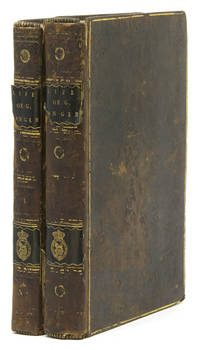
1801302703London: J. Debrett 1801. Complete with half-titles and one illustration to text. 339; 475 4 ads pp. 2 vols. 8vo. Contemporary calf black morocco labels to spine gilt slightly shelf-worn extremities a little rubbed presentation inscription to title-page. Complete with half-titles and one illustration to text. 339; 475 4 ads pp. 2 vols. 8vo. AUTHOR'S PRESENTATION COPY. Presentation copy signed "From the Author" on the title-page. This copy formerly belonged to Sir George Chetwynd; it has both his bookplate and discreet embossed library stamps from Grendon Hall where his collection was housed. A manuscript note to the front free endpaper states that this copy also belonged to the Duke of York.<br/><br/>Having served as aide-de-camp to Clinton during the Charleston campaign he was wounded at Charlotte in 1782 Hanger was appointed Major of Tarleton's Dragoons. With further connections to Carleton Gen. Dickenson and Major Andre among others he was well placed to produce one of the best accounts of the Revolutionary War in the South. <br/><br/>Sabin notes the "curious prophecy" to be found in the second volume: "one of these days the Northern and Southern powers will fight as vigorously against each other as they both have united to do against the British" Howes H-158; Sabin 30227 J. Debrett unknown books
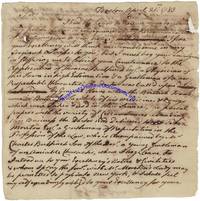
4545GUY CARLETON 1ST BARON DORCHESTER 1724-1808. Carleton was the British colonial governor of Quebec before and at the beginning of the American Revolution. He retired in 1778 but he was brought back to North America in 1782 to oversee the evacuation of New York by British troops and loyalists. AL. 2pgs. 7 ¾†x 7 ¾â€. April 21 1783. Boston. A handwritten unsigned letter addressed to Sir Guy Carleton as Commander in Chief of All the Forces of His Britannic Majesty in North America. The anonymous author seeks reimbursement for a doctor named Thomas Bulfinch who had his entire stock of medicines taken by the British for their use in Boston. Carleton was the in New York City: “Sir I had the honour to receive Excellency’s very polite letter in consequence of my recommendation of Mr. Livingston to your notice; I fear your Excellency will think me trouble some in my frequent addresses to you but I must beg your indulgence in suffering me to solicit your countenance to the application of Thomas Bulfinch Esqr. a physician of respectable character; the doctor was call’d upon by General Howe when the British Troops were in Boston for the whole of his medicines & drugs which were taken & used in their service the several papers with the variety of circumstances attending this business the doctor has dedicated to Mr. Peter Morton Esqr. a gentleman of reputation in the profession of the law who is accompanied by Mr. Charles Bulfinch son of the Doc’r a young gentleman of an amiable character whom I beg leave to introduce to your Excellency’s notice & civilities & whom I pray the fav. with Mr. Morton’s Lady may be permitted to pass into New York & I shall feel myself exceedingly oblig’d to your Excellency for your countenance & support to Mr. Morton & Mr. Bulfinch in the prosecution of this Business with possible that the Doc’r may meet a Reimbursement and I shall be happy to have an oppo’y to demonstrate my readiness on all occasions to convince you of my disposition to make similar returns & with what truth I am Sir Your Excellency’s Most Obed’t humble Serv’t.†Charles Bulfinch 1763-1844 the doctor’s son mentioned in this letter would go on to become an important architect and he was the second Architect of the United States Capital. His son Thomas Bulfinch 1796-1867 is well-known as the author of Bulfinch’s Mythology. The letter is in fair condition with cross-outs repaired folds and dark ink. unknown books
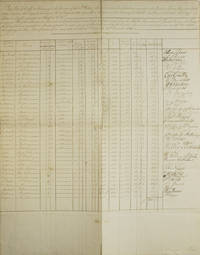
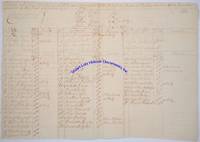
4943MASSACHUSETTS MUSTER ROLL. DS. 2pg. 15 ½†x 10 ½â€. January 1778. No place near Boston. A “Muster Roll of Capt. Ford Company of Militia now in Service of the United States for the Purpose of Guarding the Troops of the Convention Commanded by Col. Eleazer Brooks Taken to Jany 1778â€. The roll of American officers and soldiers lists one captain three lieutenants four sergeants four corporals two drummers and fifty privates. After the British defeat at Saratoga in the fall of 1777 the British prisoners of war were marched to the Boston area; they were later marched to Richmond Virginia. It is signed on the back by Captain Ford Secretary Reed and a Justice of the Peace. Eleazer Brooks 1727-1806 was a farmer and an official in Lincoln Massachusetts. He served as a colonel in the militia and marched on Dorchester Heights. He was later promoted to brigadier general and he represented Lincoln at the Massachusetts ratification of the Articles of Confederation in 1778. The document has the usual aging and wear and dark legible ink. A most unusual Revolutionary War manuscript. unknown books