1 575 résultats
1917WRCLIT78591New York: Funk & Wagnalls 1917. xviiii210pp. Decorated cloth. Frontis and plates. Introduction by Herbert C. Hoover. First edition. Foxing to edges and to pages facing plates' a good sound copy. Funk & Wagnalls hardcover books
1864101456Pamphlet 8vo removed illustrated 86 pp. Probably lacking self wrappers dbd removed some notes on title last leaf folded in the lower corner; normal aging and browning; otherwise a good copy. This pamphlet is a U.S. Sanitary Commission report that includes four pretty dramatic illustrations taken from photographs of Union soldiers in a very emaciated condition. The photographs were taken shortly after the prisoners returned from Belle Isle. The commission appears to be headed by Valentine Mott former head of the medical department at the University of New York who was to find out if the sufferings of the POWs were a deliberate action of the Rebel Government or were the result of matters a beyond their control. Another edition of this work was published in Philadelphia in the same year. A map of the Andersonville prison is also included. books
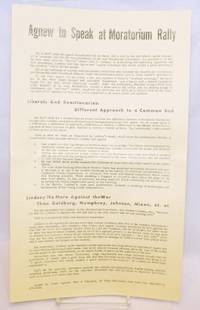
217570New York: Youth Against War and Fascism 197-. 8.5x14 inch sheet of primrose yellow paperstock mimeographed text one side horizontal fold otherwise very good. The reference to Agnew is a tongue-in-cheek insult directed at mayor John Lindsay who nominated Agnew at the previous Republican convention. Argues that Lindsay is no more opposed to the Vietnam War than other mainstream politicians. Notes his prosecution of Panthers and Young Lords. Youth Against War and Fascism unknown books
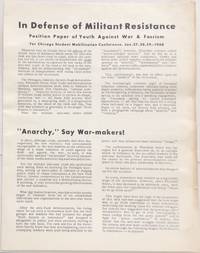
1968253156New York: Youth Against War and Fascism 1968. 4p. 8.5x11 inches edgeworn. Argues that "acceptable" methods of protest and passive resistance are chains on the antiwar movement and defends against charges of adventurism or fears of alienating the working class through more direct action against draft centers companies with ties to the military etc. Youth Against War and Fascism unknown books
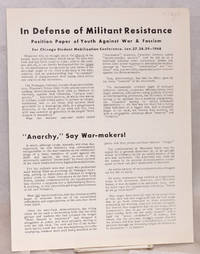
1968135912New York: Youth Against War and Fascism 1968. 4p. 8.5x11 inches very good. Argues that "acceptable" methods of protest and passive resistance are chains on the antiwar movement and defends against charges of adventurism or fears of alienating the working class through more direct action against draft centers companies with ties to the military etc. Youth Against War and Fascism unknown books
1966249220New York: YAWF 1966. Two issues of the single-sheet newsletter 8.5x14 and 8.5x11 inches respectively horizontal fold to number 2. Contents mostly focus on opposition to the Vietnam War. YAWF unknown books
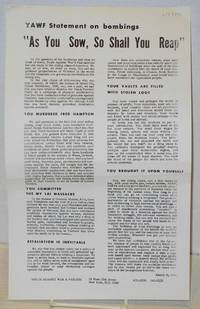
1970135920New York: Youth Against War and Fascism 1970. Legal size sheet printed on one side single horizontal fold else very good condition. Argues that the ruling class has brought upon itself the bombings by radical domestic groups. "You murdered Fred Hampton. You committed the My Lai massacre. Retaliation is inevitable. Your vaults are filled with stolen loot. You brought it upon yourself. Youth Against War and Fascism unknown books
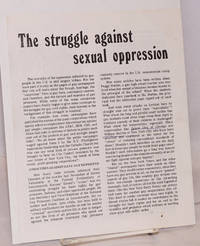
1974110569New York: Gay Caucus Youth Against War & Fascism 1974. Four panel brochure 7x8.5 inches political cartoon and essay YAWF stamp on rear panel else very good condition. Gay Caucus, Youth Against War & Fascism unknown books
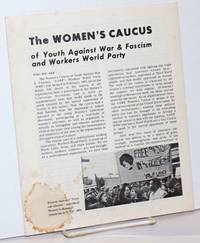
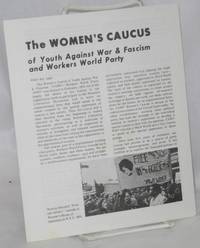
235811New York: Youth Against War & Fascism 197-. Four panel brochure introducing the caucus 7x8.5 inches stain on front panel a reading copy only. Youth Against War & Fascism unknown books
118767New York: Youth Against War & Fascism 197-. Four panel brochure introducing the caucus 7x8.5 inches minor foxing otherwise very good. Youth Against War & Fascism unknown books
19892816Annapolis: Naval Institute Press. Very Good in Near Fine dust jacket. 1989. Hardcover. 087021991X . A reprint of the 1958 original with new material. The rear board has a patch of abrasion from a large partially removed piece of adhesive tape that runs vertically and inexplicably down its center else very good in an about fine dust jacket. . Naval Institute Press hardcover books
195242190Chicago: Faculty-Graduate Committee for Peace 1952. Second printing. 12mo; printed card wrappers; 24pp. Quarter-sized splash-stain to front wrapper else Very Good. Argues that the Cold War rearmament of Germany would threaten post-war peace calls instead for "effective measures for decartelization and elimination of Nazi influence from points of vantage in public life. Faculty-Graduate Committee for Peace unknown books
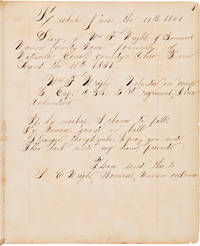
1861WRCAM56124Various places in Iowa and Missouri as described below 1861. 1022pp. approximately 16000 words. Contemporary half sheep and marbled boards. Boards detached but present worn and rubbed. Bookseller stamp on front free endpaper. Pages loosening but all present pages 33-34 with old repairs to a vertical tear running the length of the page. Occasional spots of soiling throughout but overall the text is quite clean and very easily read. Overall very good. An engaging account of the early days of the Civil War in Missouri by William F. Wright a Union volunteer from Somerset Iowa. Missouri was a highly-contested border state with both Union and Confederate supporters. It sent soldiers and arms to both sides was represented with a star on both flags maintained dual governments and featured a vicious intrastate war within the larger national war. William Wright's journal of his service in the first year of the war ably communicates the dangerous and unprecedented nature of guerilla warfare in the western theatre of the Civil War. <br> <br> Wright 1837-1905 enlisted in the 3rd Iowa Infantry Regiment in May 1861 responding to President Lincoln's first call for troops. Much of the diary centers on the months from July to September 1861 as his unit traveled back and forth across Missouri facing a guerrilla enemy with no clear battle lines. Unlike the large armies and massive battles further east Wright's regiment was frequently on the move by rail and foot often splitting off into companies squads and scouting parties prone to ambush by raiding parties with small detachments occasionally getting picked off by snipers. In addition to Confederate soldiers Wright's regiment also faced bands of pro-Confederate irregulars known as "bushwhackers." The war in Missouri was continuous from 1861 to 1865 with conflicts throughout the state. There were over 1200 distinct engagements in the state during the war; only Virginia and Tennessee exceeded this total. <br> <br> Wright is generally stoic throughout though he does admit to occasional homesickness and is justifiably distressed over a case of ague that comes on in August. When not drilling or recounting recent attacks Wright frequently mentions attending church prayer meetings and Bible study though he does not seem overly picky as to where. He attends a Catholic mass and a Presbyterian service on the same day and on another attends Episcopal Methodist and Presbyterian services on the same day. <br> <br> The diary begins on May 27 1861 as Wright puts his affairs in order and travels to Indianola where he "was sworn into the state service for three years" after which he proceeds with other recruits to Keokuk Iowa a major staging area for Union forces. His unit is officially sworn into "United States service" on June 8 receive their rifles on the 23rd and then assemble in camp on the 26th. The next day they receive word that they are heading to Missouri in the morning: "we received orders to cook enough provisions for three meals the drum would beat at 3 in the morning at which time we were to pull up stakes." They march to the docks board several steamships and head south on the Mississippi to Hannibal Missouri. Upon disembarking Wright comes across two men taken prisoner by the home guard "and I had for the first time the privilege of seeing a secession prisoner." <br> <br> The next day July 1 they board trains and head west: "I was surprised to see so many fine residences also quite a number of slaves were to be seen at work in the fields who cheered lustily as we passed.We passed several encampments of soldiers on the way who were all in good spirits. We hauled up at Utica in Livingston Co. slept in the cars." After a couple of weeks of false alarms of pending attack mysterious shots at night low rations and rumors of murdered soldiers the company was on edge. On July 18 Wright and nine other men were detailed to guard the railroad station in Utica after reports "that the enemy was going to burn it." During their watch "a spy came in with the information that from 500 to 800 men on Spring Hill were making preparations for an attack at the bridge and station simultaneously." No attack materialized however: "Daylight came and no enemy we were disappointed as we were well prepared for them and would have been pleased to have seen from 50 to 100 make their appearance." <br> <br> Tensions continued in a similar vein for the next few weeks as they shifted back east to Kirksville. Wright reports of all-night guard duty multiple nights in a row and frequently going without meals due to inadequate rations. On August 19 they received warning of a pending enemy attack which ends up as a small skirmish: "Six of our scouts were surrounded by 25 of the enemy. They killed Corporal Dix. The others made their escape after killing 3 or 4 of the enemy." Not long after they start heading south and while passing through Shelbina Missouri three of their men were shot one died by an enemy squad hidden in the brush. Circling back to Shelbina to rest they find the town partially destroyed by Rebel forces. Wright's unit then finished the task which he describes neutrally: ".the boys were allowed to go where they pleased and they took and destroyed ev'y thing in town. When ever a chicken was heard to crow a dozen men were ready to start for the place. Chickens and pigs were killed women's dresses taken children's playthings &c &c." Passing through Macon Missouri Wright and his comrades "dropped into a Brewery. There were quite a number of the boys there. Some of them were trading their shoes some shirts and others drawers for beer. I do not know whether they were their own clothes or whether they had stolen them. Saw three fights today." <br> <br> Heading west just outside of Kansas City they notice enemy scout activity. After more than two months of skirmishing and sniping the regiment saw its first pitched battle. On September 17 "3 p.m. we started from Liberty about 600 strong in the direction of the river. The enemies scouts were retreating as we went forward. The enemy killed 4 and wounded one of our men. About 4 o'clock we were fired into by the enemy which was the first that we knew of their position. We were within about 100 yds of their lines when we were fired on.We fought about an hour and 20 minutes when we were ordered to fall back as they had three men to our one and were flanking us. Four of the artillery men were kiled & four wounded which did not leave enough to man the gun and she was only fired three times when we had to haul her back by hand.we had 17 killed about 60 wounded and a number missing.it is reported that there were over 100 enemy killed and wounded." This was the Action at Blue Mills Landing also known as the Battle of Liberty. The next day Wright wrote "I have been helping to make coffins for our killed 12 bodies which will be buried in the evening.The most shocking scene that I have ever witnessed is one of the dead men whose face has been skined said to have been done by his brother-in-law." <br> <br> Wright had reported on his unit's tendency to loot earlier in the diary and now makes an interesting clarification: "When in the free State of Kansas the boys behaved very well. But since we have again come into Mo. they have began their old tricks. Last night there were quite a number of chickens stolen and a calf taken out of a man's dooryard." Perhaps in fairness to the Iowa troops they regularly went without rations or were given only flour and because they were often in hostile territory they rarely had permission to hunt or fish for their meals. <br> <br> Until this point Wright does not mention any direct encounters with African Americans but on October 18 as they depart Kansas City he notes they ".took three slaves with us who had run away from Lexington." Upon reaching Quincy Illinois "Will Newton and I went down town and got lodging for the three darkys who came from Kansas City. We left them with the supt. of the Colored Peoples Church." <br> <br> For the remainder of this diary Wright was stationed at the Benton Barracks in St. Louis; some of these entries are slightly out of order chronologically as though Wright inadvertently skipped pages. On December 1 he writes "In the evening one of Co. K was killed by accident. One of his comrades cocked his gun not knowing that it was loaded and shot the top of his head off. It was the most horrible sight that I have yet seen." Not much else happens until the end of the month when they get word that they'll be heading back out soon and start prepping their equipment. Leading up to Christmas he notes many of the men planning a big Christmas dinner: "For my part do not feel like celebrating the day. Think it will not pay here will pass it by as other days for this time." <br> <br> Wright's final entry on Christmas Day is also introspective. Having reflected on his past seven months in the army the things he has seen and how frequently he has been spared he concludes: "I do not like a sol. life. Would be far from following it from choice but believe that it is my duty as we are engaged in a just and noble cause trying to sustain one of the best governments ever formed. Co. G is not drunk to night but slightly inebriated." <br> <br> At the end of the diary Wright has transcribed a letter from a rebel which gives a sense of some the psychological warfare practiced during the conflict. Dated at Fillmore Missouri July 18 1861 it reads in part: "I hope when this letter comes to hand you may have time to read it. And I think that I shal be nearby. And then as soon as it is red I shal be near enough to nock your life out of you. I hope the time may come when the flag of the fifteen glorious states may fly over the free and independent.Instead of one thousand of us there is about 8000 of us and we are coming there as soon as we can get there." <br> <br> Wright reached the rank of sergeant in 1863 and survived to muster out in 1864. After the war he married raised a family and farmed in Kansas and Nebraska. <br> <br> A detailed and informative diary of the brutal and chaotic early months of the Civil War in Missouri. hardcover books
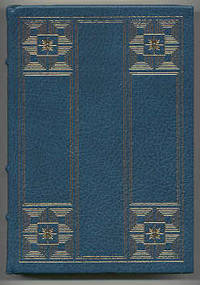
197890123Franklin Center: Franklin Library 1978. Franklin Limited edition. Illustrated by Edward Vebell. Issued unsigned this copy is specially signed by Wouk on the title page. The Franklin Library issued a signed edition of this title in 1977; the 1978 publication was issued unsigned. Marine-blue leather-covered boards all edges gilt satin pagemarker. Unread copy in Fine condition. Rare as such. Signed by Author. First Thus. Hardcovers. Illus. by Edward Vebell. 8vo - over 7¾" - 9¾" tall. Limited Edition.<br />The images are of the book described and not stock photos. Franklin Library hardcover books
196840964Berkeley: World Without War Council 1968. 48p. slightly soiled wraps. World Without War Council unknown books
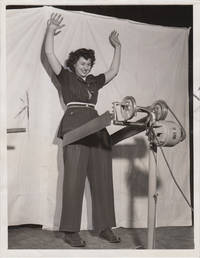
1942CAT0191Cleveland 1942. Silver prints most 6 ½ by 9 with various editorial marks and identifiers to versos. A collection of women's fitness press photographs taken around Cleveland in 1942 from the archives of the Cleveland News. Excellent. A collection of twenty-two photographs documenting women's fitness programs in Cleveland in 1942. The programs and corresponding articles in the Cleveland News appear to be the work of Eleanor Dearnley physical education teacher at Flora Stone Mather College. Other photographs show women's fitness activities at the Lakewood Community Center also in Cleveland. There are several examples of similar local efforts in support of the national "Keep Fit for Victory" Campaign. <br /> <br /> The photographs show women in a range of activities - basketball stretching calisthenics volleyball etc. Some of the photographs are graphically hand-painted by the editorial staff. Most pictures have corresponding articles pasted onto versos. The images are generally quite playful in nature - perhaps because it was early in the war or because the pictures were intended as morale boosters. A generally quite well-preserved group in excellent condition except for the above-mentioned editorial marks. unknown books
1942313964New York 1942. 1p. on Sergievsky's personal letterhead. 8vo. Old folds lower right hand corner chipped not affecting text or signature otherwise a fine letter with a bold clear signature. 1p. on Sergievsky's personal letterhead. 8vo. A letter written by the renowned Russian ace and world record setting Sikorsky test pilot on behalf of Danish-born ballet and Broadway dancer Paul Haakon considered by many to be one of greatest ballet dancers of the 20th century. <br/><br/>Reading in part: "I have known Paul Haakon Longreen for over sixteen years. In the theatrical profession he is known under the name of Paul Haakon. It is very well known that he is one of the best dancers in the world. He gave up his dancing recently to become a flying instructor purely to serve his country. I sincerely believe that anything which could be done to facilitate his joining the United States Army Air Force reserve would benefit our war effort."<br/><br/>Despite Sergievsky's recommendation in our letter it seems Haakon never became a combat pilot during WWII and instead toured as an entertainer with the United Service Organizations. He died in New York in 1992. unknown books
191815610Columbus OH: np 1918. First Edition. Hardcover. Good. 4to. Cloth hardcover three ring binder. Holding 151 leaves; 110 holograph 41 typed. Many sheets loose from ring binding. Cloth torn at spine. Overall contents well preserved. <br/><br/>The classroom lecture notebook of an unnamed cadet at The United States Army School of Aeronautics at Ohio State University Columbus OH covering January through March 1918. During WWI a pilot shortage in the United States became apparent. In response the War Department and U.S. Army formed the Aviation Cadet Training Program installing aviation training schools at six universities across the country. This program at Ohio State appears to have consisted of 8 weeks of classes with training in military drill discipline and technical instruction with an emphasis on aviation. Curriculum from the program formed the basis for the aeronautical engineering courses later taught at OSU. A scarce set of materials from an early instructional program of military aviation training and education one that would eventually become the US Air Force. np hardcover books
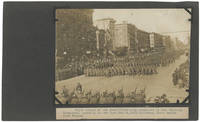
1919CAT0119New York: Underwood and Underwood 1919. First Edition. Gelatin silver prints 7 ¾ x 5 ½ inches each on 11 ½ x 7 inch black paper mounts captioned with affixed text. Very Good. Two WWI-era press photographs related to the Negro 15th Infantry Division of the New York National Guard a.k.a. the 369th US Infantry Regiment and their white commander Colonel William Hayward. One photograph shows the division on parade in New York following their return from combat duty in France in 1919 the other is a well-known image of Hayward who organized the all-black unit and served as its leader. Fighting for a record-breaking 191 consecutive days alongside French troops in the trenches the regiment became known as the "Harlem Hellfighters." <br /> <br /> The opportunity for African-Americans to serve in WWI arose from the Selective Service Act of 1917 which drafted all men between the ages of twenty-one and thirty. Special segregated training camps were established and units were formed. The US National Archives states that 200000 African-Americans served in Europe during WWI but only 42000 saw combat. When the 15th Infantry arrived in France in 1918 Hayward was committed to the idea that his unit would fight on the front lines. After General Pershing refused to integrate them with the full US army Hayward pushed for another assignment under French command. Unlike many other segregated divisions in WWI the 15th aka 369th was eventually sent to the trenches. Its members' distinguished service brought honor and fame. Before leaving the US in 1917 the regiment had not been allowed to participate in the New York National Guard's farewell parade. When they returned victorious Hayward ensured they were publicly honored. <br /> <br /> Both with various press stamps to versos. Small closed tear of about a half inch to upper edge of parade picture good overall. Hayward portrait with some rippling at edges very good overall. Underwood and Underwood unknown books
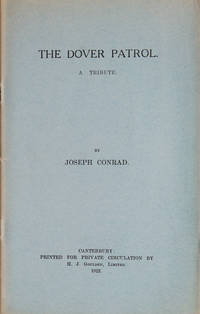
1922303662Canterbury: Printed for Private Circulation by H.J. Goulden Ltd 1922. First edition one of 75 copies this copy is in the earlier state without the half title and title. 14 pp. 1 vols. 8vo. Original pale blue wrappers stapled. Edges slightly faded otherwise about fine. In red calf-backed case. First edition one of 75 copies this copy is in the earlier state without the half title and title. 14 pp. 1 vols. 8vo. ONE OF 75 COPIES. The Dover Patrol provided safe passage to the Continent for British troops in World War One and protected and regulated Channel traffic during the war. Though "no figure of rhetoric can render justice to the quiet resolution of men making up for the inadequacy of their means" Conrad pays them a handsome tribute. This essay written at the request of Lord Northcliffe originally appeared in the The Times July 27 1921 and was later included in Later Essays.<br/>This is one of the most difficult items in the Conrad canon nearly sixty copies eighty percent of the edition are held in universities. A title-page was added to the second printing to please Conrad. Cagle A56a; Keating 221 Printed for Private Circulation by H.J. Goulden, Ltd unknown books
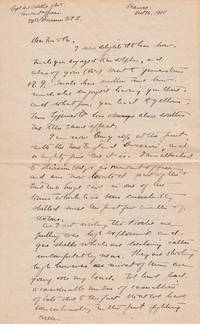
1918308587France 1918. 2-1/2 pages pen and ink on paper with original envelope. Old folds else fine. 2-1/2 pages pen and ink on paper with original envelope. AN OFFICER IN THE REMOUNT SERVICE. An animated letter home from an officer serving in a little-known but vital branch of the service during the First World War. Reading in part:<br/><br/>"I am now living up at the front with the New England division and a mighty fine one it is. I am attached to Division headquarters as remount officer and am now located part of the time in a huge cave in one of the towns which has been considerably shelled since the first few troubles of the war. As I sit writing the Boche are hurling over high explosives and gas shells which are rather uncomfortably near. They are shooting high however most of the time and going over our heads. We have had a considerable number of casualties of late due to the fact that we have been continually in the front fighting area. The animal situation has become so desperate due to the tremendous losses and lack of supply that a number of divisions have become immobile and this one along with still others threatens to become so. That's why I have been sent here and I am doing everything in my power to save up what animals we have by being continually out among them instructing officers and men in proper care and feeding most of the losses have been due to neglect preventing over loading; and making such suggestions to the General as I see fit. It is interesting but difficult work."<br/><br/>Born in Brookline Massachusetts into a prominent and notable American family Brigadier General Nicholas Biddle 1893-1977 was a career officer in the United States Army National Guard who saw action in the Mexican Border 1916 World Wars I and II and was a recipient of the Legion of Merit. Biddle was the son of Edward Biddle 1851-1933 and Lillian Howard Lee Biddle 1862-1946 and great grandson of banker Nicholas Biddle. Biddle married Sarah Lippincott 1894-1962 granddaughter on her father's side of the founder of the J. B. Lippincott Company and granddaughter on her mother's side of Joseph Wharton founder of the Wharton School of the University of Pennsylvania. They had one son John Scott Biddle 1925-2008 who was best know as a foremost yachting cinematographer. <br/><br/>Known as the "Yankee Division" the 26th Infantry was formed from the Massachusetts National Guard in July 1917. The division was sent to Europe in WWI as part of the American Expeditionary Forces and saw extensive fighting in France. The Remount Service was part of the Quarter Master Corps and worked with the Veterinary Corps to handle the thousands of animals that still played a major role in WWI. As the division's "Remount Officer" Nicholas Biddle would have been in charge of supervising the care and handling of the unit's horses and mules. unknown books
19182117881918. 9 issues single sheet except Number 6 & 7 which are 4pp. Small 4to. Fine. 9 issues single sheet except Number 6 & 7 which are 4pp. Small 4to. 'We Cannot Tell a Lie'. Printed on board the USS George Washington a German ocean liner seized by the US and converted to a troop transport during WWI The Hatchet a reference to the legend about George Washington and the cherry tree was started in February 1918 to as a diversion for the troops and sailors on board who were making the dangerous Trans-Atlantic crossing. A bend of shipboard gossip and news received via the ship's radio the single-sheet paper was written by officers with literary experience and printed by on a small hand-press by men who had worked in the printing and publishing business. With a print run of 7000 the paper whose motto was "We Cannot Tell a Lie" boasted that it had "The Largest Circulation on the Atlantic Ocean." <br/><br/>Our collection was presented by the ship's chaplain who also doubled as the newspaper's managing editor to banjo player Joe Lorraine. Lorraine was one of the professional semi-professional and amateur players of the American Stage and Lyceum in WWI that followed the American Army through the war and entertained the troops often in areas close to the frontline. Lorraine entertained more than 2000000 soldiers in 650 appearances over 5 months before being invalided for mustard gas exposure and sent home to recuperate. He returned in 1919 with his famous autographed bull neck banjo which had been signed by more than 700 soldiers from most of the major battles of the war. A pen and ink inscription at the head and tail of Vol. 6 No. 1 reads: "Presented to me by the Chaplain of the George Washington Property of Joe Lorraine. These papers were presented on the transport steamer George Washington during the war with Germany. President Woodrow Wilson sailed to and returned from France on this boat.". unknown books
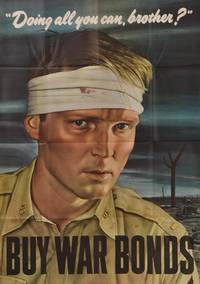
1943WRCLIT70153Washington DC: GPO 1943. Folio color photolithographed broadside 40 x 28"; 102 x 72 cm. Folded as issued. A very near fine unused example. The larger of two formats in which this poster was issued. It features a fair-haired US 2nd Lt. with his head bandaged and with some stains to his uniform cast against a backdrop of a desolate battlefield with armaments a shattered tree and barbed wire receding into the distance. Sloan b. 1915 began his career in commercial art in 1940 including commissions for covers and illustrations for such publications as Time Coronet and Collier's. After he was drafted the same year this poster was issued he did illustrative work for military manuals as well as larger commissions such as the 1944 watercolor "Station Hospital." One of his most widely exhibited works is the 1944 "Negro Soldier" now at the Fogg Museum at Harvard. GPO unknown books
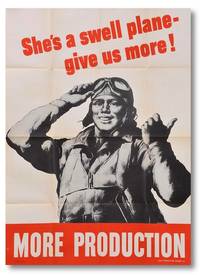
1942WRCLIT70141Washington DC: GPO / War Production Board 1942. Folio photolithographed broadside 40 x 28"; 102 x 72 cm. Folded as issued. Short closed tear at lower edge a few minor wrinkles at edges of folds minor breaks at apexes of a couple of folds with a slight trace of tanning along folds otherwise a near fine fresh unused example. A bold image by Riggs promoting increased homefront production dominated by a large waist-up figure of an American airman raising his goggles with his right hand and gesturing "thumbs up" with his left. Robert Riggs 1896-1970 was in his heyday one of the best- known artists and illustrators in the United States. After studies at the Art Students League and service during World War I Riggs settled in Philadelphia his home base for the rest of his life. In the 1930s and '40s he rose to national prominence as an illustrator lithographer and commercial artist producing well-known images of boxers and circuses two life-long obsessions and of soldiers during World War II. In 1940 around the peak of his career as an illustrator his drawings commanded $750- $1500 each and his name was as well-known in the trade as that of Norman Rockwell. Curiously at a recent auction of African American printed manuscript and visual material an example of this poster was offered quite tenuously making the assertion that the image is of a Tuskegee airman. On the basis of that assertion the example offered there realized $2400. GPO / War Production Board unknown books
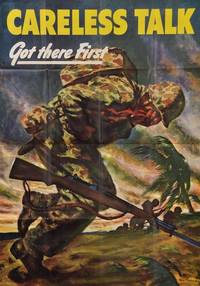
1943WRCLIT70154Washington DC: GPO 1943. Folio color photolithographed broadside 40 x 28"; 102 x 72 cm. Folded as issued. Minuscule breaks at junctions of four folds otherwise a very near fine brilliant unused example. The larger of two formats in which this poster was issued as a forceful reminder about the need for security. The poster is dominated by the image of a serviceman shot in the face during a beach assault dropping his M1 clutching his face with streaming blood trailing to his chest as he falls to his knees. Another design by another artist with the same caption featured a dying paratrooper aloft over land. Prohaska moved in 1908 from his native Yugoslavia to the San Francisco Bay area where he received his formal art education. In 1930 he moved to NYC where he worked as an illustrator for a number of major periodicals and commercial accounts and eventually settled in the east end of Long Island. GPO unknown books