11 490 résultats
1918005037Washington Barracks D.C.: Press of the Engineer School 1918 Charts: No. 1. Epitome Any Headquarters; No. 2. Relationships Any Headquarters; No. 3 Application to Division; No. 4 Application to Army Corps; No. 5. General Organization; No. 6. Application to Infantry Brigade; No. 7. Application to Infantry Regiment. Illus. by 7 Fold-out Charts. 8vo. First Edition. Staped Wraps. Very Good. Press of the Engineer School paperback
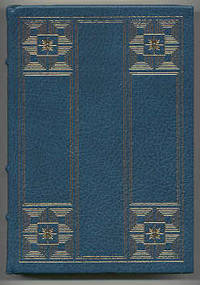
1978103-2008PA: The Franklin Library 1978. In Near Fine condition. Bound in rich blue buffalo hide lushly gilt-stamped on all sides. Raised hubs on the spine. All page-edges gilt. Gray silk moire endpapers with a matching ribbon bookmark. 576pps. The gilt on the top of the textblock is faintly mottled with dullness -- due it would seem to dust. Otherwise clean tight square and bright. All tips are sharp. No aparent reading wear and no previous ownership markings. A very nice copy of this Pulitzer Prize winner and 'the most exciting sea-story since Mutiny On The Bounty.'<br><br><b><font color=#003366> ".Of the major war novels to emerge from World War II one of the best was The Caine Mutiny published in 1951. A gripping story about the officers and men on a Pacific Fleet destroyer-minesweeper -- the U.S.S. Caine -- and the subsequent court-martial of an officer who removed the captain of the Caine from his command."</b></font><br><br> Purchase with confidence: all books gradings and descriptions are rendered the care of a genuine bibliophile. Satisfaction guaranteed or all costs you've incurred will be promptly refunded. Thanks for your interest in Nooks Of Books. Limited Edition. Full-Leather. Illus. by Vebell Edward. The Franklin Library Hardcover
197890123<p>Franklin Limited edition. Illustrated by Edward Vebell. Issued unsigned this copy is specially <em>signed</em> by Wouk on the title page. The Franklin Library issued a signed edition of this title in 1977; the 1978 publication was issued unsigned. Marine-blue leather-covered boards all edges gilt satin pagemarker. Unread copy in Fine condition. Rare as such. Wouk's third novel. Pulitzer Prize winner and the basis of the Edward Dmytryk film with Humphrey Bogart Jose Ferrer and Van Johnson.</p><p>The images are of the book described and not stock photos.</p> Franklin Library hardcover
2007009309Frances Worthington Lipe 2007. First Edition . Pictorial Cover. Fine/No Dust Jacket. 4to - over 9¾" - 12" tall. 2nd Ptg. Bright and crisp unread book with Japanese POW map folded and inserted. Both map and dedication page are signed by Frances Worthington Lipe editor of Josiah Wistar Worthington's diary and his daughter. His diary was in the form of letters to his family and reveal his optimism in spite of the horrors of the POW camps operated by the Japanese. <br/> <br/> Frances Worthington Lipe unknown
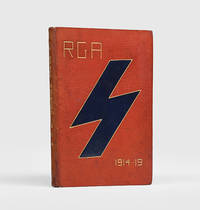
1919189318Fareham: Henry Coles Printer 1919. First and only contemporary edition privately printed and subsequently rare here in a fine period binding with two original sepia-toned gelatin silver prints mounted on preliminary blanks: one a group portrait of officers and NCOs is reproduced in half-tone in the book; the other shows a gun team limbered up and pulling what appears to be a 60-pounder. Among the first recruits to Kitchener's Army 9 Heavy Battery deployed to France in May 1915 and served on the Western Front until the end of the war. It was at Armentières Arras Somme and Festubert. In the winter of 1916-17 it joined 77th Brigade. Posted to the Chemin des Dames in 1918 it was mauled and overrun during the German Spring Offensive losing its guns but was re-equipped in time to join the Hundred Days Offensive This succinctly comprehensive account includes a "battle log" listing of wagon lines appreciations from High Command honours and awards casualties brief service histories of officers and names and addresses of NCOs and other ranks. We trace just four copies institutionally at the Imperial War Museum Alex Turnbull Library New Zealand US Army War College and Toronto Public Library. Octavo 210 x 125 mm 54 pp. With 5 half-tone photographic plates. Title page within a decorative border. Contemporary reddish brown morocco gilt-lettered spine and front cover the latter with the unit's "lightning bolt" insignia in a gilt-edged dark blue sheep onlay marbled endpapers. Binding slightly bowed a few marks to covers some leaves toned: very good. unknown
1954WORLDWAR015752Souvenir Press London. 1954. First edition. Octavo. 163 pages. Frontispiece map. The author commanded an infantry platoon with Wingate's Chindits and took part in the 700-mile march into Burma.Head of spine slightly pushed. Very good indeed in very good slightly nicked dustwrapper a bit rubbed at the edges. Souvenir Press, London. unknown
1941182891London: His Majesty's Stationery Office 1941-45. First editions in all but one case of these morale-boosting wartime pamphlets. They were collected and bound for Maurice Le Blanc-Smith DFC a First World War flying ace with seven recorded victories. The pamphlets cover the British war effort at land air and sea as well as specific campaigns such as the Battle of Malta. Le Blanc-Smith 1896-1986 entered the Royal Flying Corps in 1915 serving in No. 18 Squadron RFC. He was then reassigned to No. 73 Squadron where he achieved his first aerial victory by destroying a Fokker Triplane. He downed six more aircraft that year three of them on the same day. He was awarded the Distinguished Flying Cross on 2 August 1918 for his service. The pamphlets were all published by HMSO as propaganda and informational items disseminating the histories and achievements of the Fleet Air Arm Royal Marines Indian Army and the Eighth Army. The pamphlets also outline the events of specific campaigns such as the Battle of Britain and the Battle of Malta. Triumph in Disaster tells the story of Denmark's participation in the war and victory over Germany. A full list of the pamphlets and their publication dates is available on request. 19 works in 3 vols octavo 223 x 165 mm individual pamphlets from approximately 215 x 135 mm to 223 x 165 mm. Pictorial and map frontispieces 33 half-tone photographic plates 7 double-page 3 maps illustrations and maps in text. Mid 20th-century red crushed quarter roan spines gilt-lettered direct smooth spines tooled in gilt ad blind red pebbled cloth boards lettered in lower right corner in gilt "M. Le Blanc Smith" pamphlets bound with original colour wrappers. Spines sunned and lightly soiled boards a little scratched some pamphlets trimmed at edges with loss toning and offsetting to wrappers some light foxing internally: a very good example. hardcover
1917120706Mogilev: c.1917. The final Russian offensive of the war A firsthand account of this pivotal moment in the war written by Lieutenant-Colonel George Maitland Edwards while he was staff officer and Russian translator to General Charles St Leger Barter. Edwards recounts his displeasure with the Russian army and its poor discipline. The only other copy we have traced is held by the IWM although theirs is only 65 pages long and we have been unable to trace a published edition. Edwards 1882-1946 first went to Russia in the pre-war period where he worked in mining in Siberia and the Urals. In 1914 he joined the Royal Artillery and served in France and Gallipoli in charge of 254 Tunnelling Company. In 1917 he was sent to Russia with General Barter British Military Representative to the Headquarters of the Russian Armies in the Field to inspect the state of the front line. Edwards recounts multiple instances of poor discipline among Russian troops such as on 1 July when Russian soldiers dove into the German trenches "like rabbits" p. 17 instead of continuing on. He recalls his shock at the lack of communication between artillery and infantry as well as his bemusement at an attempt to fight off German planes in Bac u he described as "the very poorest shooting at aeroplanes I have ever witnessed" p. 49. He attributes this to poor leadership and Kerensky's abolition of the death penalty. Nevertheless he compliments the actions of the 8th Army despite being disheartened by the overall failure of the offensive. The work also includes a gelatin silver photograph of a British general relaxing with Russian troops. We have been unable to trace a published edition of this account. Folio 326 x 199 mm ff. 71. Carbon copy typescript on rectos only occasional contemporary typescript corrections sepia gelatin silver photograph 40 x 58 mm mounted on verso of p. 14. Recent red quarter leatherette spine gilt-lettered direct low bands ruled in gilt red cloth boards top edge gilt others untrimmed. Boards a little soiled and marked extremities slightly rubbed contents bright with minor foxing to endpapers first leaf chipped at foot in gutter: a very good example. hardcover
1418190144Germany: Vertriebsstelle Deutscher Zeitungen 1914-18. Stunning large format images Two large albums containing a fine selection of double-size double-weight prints of press photographs attractively laid out and with a well-organized chronology. A remarkable overview of the First World War documenting seven European theatres between 1914 and 1918. The images are all press photographs sold by Vertriebsstelle Deutscher Zeitungen with their stamp on the versos. Many of the images are doubtless by official photographers - the portraits of officers group portraits and the like all suggest so - but others show Germans troops in distress and do not shy away from the hardships and horrors of war. The striking large format images are rare and unusual for this period. The photographs are organized geographically with each section marked by a corresponding laid in map of the region. Images of aerial reconnaissance large-scale battle scenes downed aircraft both English and German tanks bridges bombings and obliterated landscapes sit beside more intimate and amusing shots of recreational and ceremonial activities including dancing musicians and what might be half the winning half of a "tug-o-war". Furthermore we gain insight to the experience of troops on the ground. There are shots of soldiers fighting marching in trenches an Italian POW camp a paratrooper caught in a tree wounded soldiers recuperating in hospital and men hastily constructing wooden crosses to mark graves. Included is a rare photograph of a soldier of African descent and another of a soldier apparently being executed. There are pictures of German planes coming to and from bombing raids and English naval targets. Furthermore civilians are depicted: French peasants farmers driving cattle women children refugees and an elaborate funeral procession. This is a grand attempt to document every aspect of the war in Europe. Although the compiler of the album remains anonymous it was doubtless someone who worked for the company or perhaps one of the photographers whose work is included here. The album was probably put together in the years immediately following the war. The entirety of the first album is devoted to the Western Front. Commencing in the north of France Calais Dunkirk and Ostende then inland to Arras and Valenciennes to Montdidier St. Quentin and Meziers finally the area incorporating Chalons Bar le Duc Nancy and Remiront. It includes 321 photographs of which 69 are large size 106 are mid-size and there are 146 smaller size images. Northern Italy and Austria "Die Front am Insonzo" and "Zu den Kämpfen an der Kärntner-Grenze": 129 photographs of which 34 large size 53 mid-size and 42 smaller size images. This commences with two images "Uebesichtskarte über die Isonsofront" and "Insonzo-Offensive: Uebersichtsplan des Durchbruchgebietes." Russia and Poland : 146 photographs including 25 large size 46 mid-size and 75 smaller size images. Black Sea : 23 photographs of which 4 large size 9 mid-size and 10 smaller size images. Caucasus and Persian border "Der Kaukasus und die persischen Grenzgebiete": 20 photographs including 9 large size 3 mid-size and 8 smaller size images. Great Britain "Karte um Fliegerangriff auf London am 13.6.1917." 46 photographs including 9 large size 19 mid-size and 18 smaller size images. Baltic states : 11 photographs including 9 large size and 2 mid-size images. A fascinating collection which also covers political events meetings and conventions portraits of politicians among others a portrait of Leo Trotzky during these four years. A fascinating collection which also covers political events meetings and conventions portraits of politicians among others a portrait of Leo Trotzki during these four years. Two landscape folio albums 360 x 505 mm. Contemporary half calf thought coated with a synthetic material. Containing 696 photographs with some copyprints most with images numbered on the negative various sizes including 159 large format images measuring roughly 300 by 400mm ; 238 measuring c.170 by 230mm and 299 measuring 120 by 160mm. All tipped onto the album leaves many of them with a stamp on the verso reading "Vertriebsstelle Deutscher Zeitungen." With a manuscript list of photographs loosely laid in. Extremities slightly rubbed. unknown
1919WORLDWAR011374John Lane at The Bodley Head London. 1919. First edition. Octavo. pp x 308. Colour frontispiece and eight black and white plates by John Kettlewell. Cloth-backed boards. The third of these Pepysian pastiches the others having been published in 1916 and 1917.Small patch of fading to head of spine. Fore-edge spotted. Very good indeed in the scarce dustwrapper which is very good chipped nicked and slightly rubbed. John Lane at The Bodley Head, London. hardcover
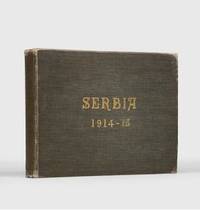
1915142361Various places: c. 1915. We had seen the awful need. and we were itching to begin An interesting record of British involvement in the south-eastern front with photographs captured in the field. The British Red Cross arrived in Uskub now Skopje in North Macedonia in 1914 and spent the following year treating the wounded and typhus sufferers. The photographs show their journey the hospitals doctors and patients and the local scenery. The Serbian Campaign was ignited in July 1914 when Austria-Hungary invaded the kingdom. They were defeated by the Serbs in August considered the first Allied victory of the war. In October 1914 six doctors and twelve St John's Ambulance orderlies were sent to the front line equipped with supplies for a field hospital. Arriving at the front line via Malta and Greece they were instructed to take charge of four full hospitals in Uskub. Despite the great logistical challenge they kept the wards functioning and eventually opened a dedicated typhus hospital before returning in 1915. This mission was recounted by one of the doctors James Johnston Abraham in his 1921 autobiography My Balkan Log. Plates IV VI XIV and XV were produced from photographs in this album and as Abrahams mentions bringing a camera on Page 130 perhaps the album was compiled by him. A number of images show the hospitals and their doctors treating wounded and infected soldiers. Five of the six doctors Abraham Banks Benbow Higginson and Kadish are pictured and identified in the captions as are many of the orderlies interpreters and house staff. It opens with images of Malta Athens and aboard the SS Caucase in stark contrast to the rest of the album filled with shots of the wards patients being bandaged and the graves of typhus victims. There are also many photographs of village life and of the Austrian prisoners of war who worked on the wards. Oblong quarto. With 66 gelatin silver photographs approximately 86 x 137 mm mounted landscape and portrait on recto of 45 leaves 5 blank manuscript captions in white ink. Original grey-green cloth front board lettered in gilt rear board stamped with double-fillet border in blind. Minor silvering of photographs otherwise bright a few marks on mounts binding a little rubbed at extremities: a very well-preserved example. hardcover
1917192609London: 25 July 1917. The devastating impact of submarines A typescript copy marked "secret" of a report from the director of statistics Lieutenant Colonel J. G. Beharrell to the first lord of the admiralty Eric Geddes. It was drafted during a period of increased fear of submarines and gives detailed statistics on annual losses of merchant ships fishing vessels and foreign ships. Much of this information is difficult to find compiled elsewhere. After the international outrage at the sinking of the Lusitania and the Arabic in 1915 the German Admiralty chose to suspend submarine attacks on passenger and neutral vessels. However in 1917 Admiral Henning von Holtzendorff successfully petitioned for a resumption of unrestricted submarine warfare in a last-ditch attempt to starve Britain. This led to a heightened sense of fear on the seas and eventually to the entry of America into the war. The report is split into two sections: Beharrell's letter to Geddes and the accompanying tables of data. Beharrell writes in his opening paragraphs that 1501 merchant vessels had been lost to date with a gross tonnage of 4698324 representing 26.1 per cent of the British pre-war sea-going capability. He then explains each table. First are four tables of annual losses for different types of vessels with estimated rates of annual loss. It is clear to see the growing impact of submarine warfare as the fighting progressed for example where 135 merchant ships were sunk by submarines in 1915 that number climbed to 950 in 1917. The following tables give data on mercantile shipping numbers accounting for losses and new constructions the overall effect on British tonnage the effects on overseas trade the number of ships escaping submarine attacks comparative losses on a monthly basis and the number of submarines reported as sunk. Folio 340 x 220 mm typescript in red and black on recto only of 20 leaves threaded with treasury tags into 2 groupings 5 and 15 leaves all in paper wrappers and tied with string through hole black typescript on front wrapper purple "SECRET" stamps throughout. Leaves a little soiled as expected rust stains around treasury tags fore edges of some leaves worn touching edge of text: a very good example. unknown
1944150498May-July 1944. Eyes over Normandy - the Reich in ruins Taken between February and July 1944 these remarkable large-scale images portray major operations against Axis infrastructure and the preparations for and execution of the Allied invasion of Europe. This is a well-curated selection in terms of both subject matter and size and quality of the prints. We have traced one other copy in institutional libraries at the Library of Congress donated by General Carl Spaatz commander of Strategic Air Forces in Europe in 1944. The shots gathered here include the bombing of Berlin "vast areas of Berlin in ruins"; the destruction of aircraft factories at Limoges Gotha Leipheim and Marienburg and of the railway marshalling yards around Paris; 14 images relate to the D-Day landings and the operations immediately following including landing craft protected by war ships off the coast and at the beaches temporary harbour with "breakwater which consists of Merchantmen and old warships anchored in a continuous line while special pontoon sections make up another and also piers and jetties"; Horsa and Hamilcar gliders at Caen; the bombardment of Caen; Tirpitz at her moorings in Kaafjord; oil refineries at Hamburg in flames; 13 images relating to the V Weapons project: Bois Carré the first V1 launch site to be identified before and after bombing; a V1 in the air pursued by a Hawker Tempest photographed from an American Lockheed Lightning; attacks on the V2 site at the "La Coupole" bunker complex at Wizernes and "the massive concrete structure at Mimoyecques. probably connected with Germany's V.2 rocket weapon" but which was actually intended to house a battery of V-3 cannons the "London Gun" supergun the site was put out of commission by 617 Squadron - "The Dambusters" - with 11900lb Tallboy bombs. A full listing of the photos is available on request. Contemporary landscape quarto post-backed album 288 x 367 mm black sand-grain cloth black marbled paper pastedowns. Containing 54 large-format original photographs 200 x 230 mm to 230 x 330 mm mounted on 27 leaves of heavy grey paper stock all with detailed typed captions giving location details of the events portrayed and in most cases date aircraft crew and height. Calligraphic title page. Binding lightly rubbed the mount leaves lightly rippled but the attached plates in excellent state; overall very good indeed. hardcover
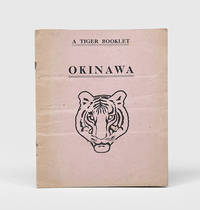
1945165899No place or publisher: 1945. First edition first printing of this guide issued to members of the RAF's heavy bomber Tiger Force during the preparations for Operation Downfall. Of the 5500 copies originally printed none are now found in institutional collections. Victory in the Battle of Okinawa gave the Allies a foothold in the Pacific from which they could mount offensives against the last surviving Axis combatant. For the planners of Operation Downfall air superiority was a key tactical advantage. In early July 3000 personnel were therefore reassigned from RAF Bomber Command Europe to the newly formed Tiger Force ready to conduct sorties into Japan's Asian possessions and support an offensive push on the ground. Preparations for Downfall occurred alongside planning for a nuclear attack and after Japan's unconditional surrender in August Tiger Force was wound down. The booklet provides an overview of Okinawa's history populations climate and culture. Personnel are given advice on disease prevention personal hygiene and options for recreation. As the final page notes "you will no doubt have gathered by now that Okinawa Jima is not altogether an earthly paradise. On the other hand it might be vastly worse and it is a great deal better than the jungles of Burma and New Guinea" p. 6. Square octavo pp. 6. Folding map of Okinawa map in text. Original pink wrappers wire-stitched as issued front cover lettered in black with tiger vignette. Faint contemporary ownership inscription on front cover. Two old horizontal folds throughout wrappers a little toned occasional foxing internally folding map bright with horizontal fold to upper part. A very good copy. unknown
1919WORLDWAR010743Privately printed at the University Press by Robert Maclehose Glasgow and issued by Maclehose & Jackson. 1919. First edition. Octavo. pp xvi 251. Illustrated with the author's photographs and maps. Possibly the author's own copy: binding of full blue morocco with raised bands and gilt thistle motifs to spine author's initials also in gilt at foot of spine marbled endpapers top edge gilt.Fine. Privately printed at the University Press by Robert Maclehose, Glasgow and issued by Maclehose & Jackson. hardcover
194138962South Africa 1941. Quarto. Unnumbered title plus 32 numbered leaves recto only. Signed by Bostock on the upper wrapper. Publisher's stapled wrappers.<br/> <br/> Provenance: Humphrey Winterton booklabel<br/> <br/> A very rare WWII "regimental history" of a South African battery in the East African Campaign.<br/> <br/> Written by Bostock with contributions by others in the regiment the introduction below the title describes the work: "These few sketches of our life principally in Abyssinia but to some extent in Kenya from October 1940 to May 1941 started as a personal record which I thought might be of interest to friends in South Africa and Overseas. Our Battery Commander however was good enough to take the view that somewhat expanded they might constitute a kind of interim battery record of those interesting months." Organized alphabetically entries include both serious and humorous contributions. OCLC records but a single extant example. unknown
19451175131945. WORLD WAR II. Airplane fragment. Japan/Philippines 1945. Painted metal fragment from a World War II Japanese aircraft measuring 3-1/2 by 4-1/4 inches. Housed in a custom chemise and clamshell box. $4500.Original fragment of a Japanese World War II airplane used in the successful kamikaze attack on the USS Salamaua in the Lingayan Gulf on January 13 1945 with its identification scratched into the paint by its owner Lt. Commander Fred R. Salisbury II of the Salamaua.This is a fragment of a Japanese airplane that was flown by a kamikaze pilot into the USS Salamaua on January 13 1945. The ship had participated in the invasion of Lingayen Gulf in the Philippines. It was one of 91 ships damaged or sunk by kamikaze attacks during the war. The aircraft in this case was a Nakajima Ki-84 Hayate single-seat fighter Japan's fastest fighter plane. First produced in the spring of 1942 the Ki-84 did not see major operational use until the Battle of Leyte at the end of 1944. After that point it became a favored airplane and was heavily used.The kamikaze attack carried out by this Ki-84 left a 16-foot by 32-foot hole in the Salamaua's flight deck. It also sparked a number of fires. The plane had carried two 551-pound bombs allowing it to penetrate deeply into the lower decks. One bomb detonated near the tank tops just above the bilge and narrowly missing the bomb stowage compartment. The blast sent debris and fuselage across the flight deck collapsing a number of bulkheads. The second bomb failed to explode and was ejected through the starboard side of the ship at the waterline. The 20-inch hole it left allowed seawater to rush into the ship. As a result the ship lost power communications and steering becoming a sitting duck.While the Salamaua sat immobile two more planes tried to strike it. One crashed into the sea while another detonated in mid-air as it approached. The failure of those pilots meant that the attack killed only 15 of the Salamaua's crew. Another 88 crewmen were injured some seriously.When Rear Admiral Calvin T. Durgin in command of a task force asked for the origin of the smoke he saw coming from the Salamaua he received the reply ""Something just went through our flight deck."" The starboard engine was submerged and the ship listed 8 degrees to starboard. Yet the crew managed to get the ship functional using only the portside engine. Ten long hours after the attack the Salamaua was able to break away to Leyte for repairs. An entire day of pumping failed to alleviate the flooding so the ship merely underwent stabilization repairs before being sent to San Francisco for two rounds of repair. The Salamaua returned to the Philippines in May and eventually was retired from service in 1946 earning the dubious distinction of being the last ship to be successfully attacked by a kamikaze. This fragment belonged to Lt. Commander Fred R. Salisbury II of Minnesota. Salisbury worked in his father's business a furniture manufacturer until the outbreak of World War II Salisbury enlisted in the U.S. Navy in February of 1942 and was assigned to be lieutenant commander of the USS Salamaua a Casablanca-class escort aircraft carrier. Salisbury was released on inactive duty in March 1946 and became vice president of the family business. Salisbury was responsible for etching the inscription""Piece of Jap Kamikazi that hit USS Salamaua of Lingayan Guld Jan 13 1945into the airplane fragment. Accompanied by Salisbury's identification card from the U.S. Naval Reserve dated ""28 NOV. 1945.""A fascinating World War II artifact. unknown
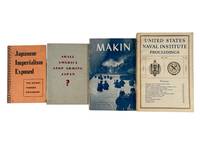
1939214021939. Various authors and issuers group of wartime pamphlets and periodicals 1939-1945 documenting American interpretations of Japanese expansionism prewar economic policy debates and U.S. military operations in the Pacific Theater. The material operates in Cultural/Representational Mode illustrating how military governmental and institutional publications framed Japanese imperial strategy and justified American military response while also presenting technical and battlefield analysis intended for both military and informed civilian audiences. These works collectively offer insight into wartime messaging strategic interpretation and the evolving American understanding of Pacific conflict from prewar trade tensions through active combat operations.<br /> Four printed works issued between 1939 and 1945 including Shall America Stop Arming Japan 1939; Japanese Imperialism Exposed: The Secret Tanaka Document 1942; United States Naval Institute Proceedings Vol. 69 No. 485 May 1943; and Makin U.S. War Department 1944. Staple-bound and softcover formats illustrated with photographs maps charts and technical diagrams. Shall America Stop Arming Japan presents statistical charts detailing American exports of strategic materials noting that Japan sourced significant percentages of copper scrap iron and petroleum from the United States accompanied by arguments advocating embargo. Japanese Imperialism Exposed reproduces the controversial Tanaka Memorial describing a proposed sequence of territorial conquest beginning with China and extending across Asia and the Pacific. Makin issued by the War Department's Historical Division provides a detailed narrative of the U.S. Marine assault on Makin Atoll with photographs of tanks infantry movement and captured terrain alongside fold-out maps showing defensive positions and invasion routes. United States Naval Institute Proceedings includes articles analyzing naval aviation logistics and strategic doctrine with photographic illustrations of aircraft such as the XLRQ-1 seaplane glider and PV-1 Ventura patrol plane as well as discussions of wartime and postwar naval policy.<br /> Together these publications trace the progression of American engagement with Japan from economic and diplomatic tension to full-scale military conflict combining advocacy intelligence interpretation and operational reporting. The juxtaposition of prewar policy argument with wartime combat analysis and technical discussion demonstrates the range of printed materials used to inform persuade and document during the Pacific War. These works support research into wartime propaganda military strategy and the informational frameworks through which the United States understood and prosecuted the war against Japan. Light wear to spines and edges with minor toning to pages; overall very good condition. A cohesive grouping illustrating the intersection of policy debate ideological framing and battlefield documentation in World War II print culture. unknown
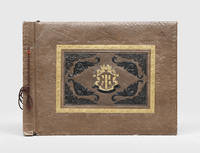
1940182459Manila: 1940s. A graphic album showing fighting in the Philippines the Marshall Islands Papua New Guinea Guam the Solomon Islands and Palau. The compiler chose to include violent images displaying the brutality of the campaign. The album opens with portrait shots of individual Marines or groups along with photographs of American encampments and ships. The scenes then turn more distressing with images of dead locals including children lying on the beach or next to tanks. The photographs were taken across the Pacific theatre: one shows an American soldier holding a flame-thrower on Kwajalein Atoll another shows a beach landing at Luzon and a third shows a Marine posing next to a sign in Bougainville. Most were taken in the final years of the conflict including at Guadalcanal and Peleliu. There are also shots of the end of the war one showing a Japanese soldier surrendering with a white flag and another showing Japanese prisoners of war in a camp in Guam. The final photograph is the most famous "Raising the Flag on Iwo Jima" showing six Marines raising the US flag on Mount Suribachi during the Battle of Iwo Jima. This photograph won the 1945 Pulitzer Prize for Photography. The majority of the photographs are commercial with a few opening portrait shots of the unidentified compiler. Oblong folio 286 x 390 mm. With 55 gelatin silver photographs one lacking approximately 90 x 130 mm landscape or portrait corner-mounted with tape recto and verso on 7 leaves remainder blank. With 2 additional gelatin silver photographs loosely inserted. Contemporary brown sheep commercial album tied through punched holes with brown cord front board stamped with central armourial panel in blind gilt and black. Boards chipped at extremities especially front board bottom left corner rear board rubbed leaves nicked at fore edge photographs moderately toned and creased some slightly torn and abraded: a good example. hardcover
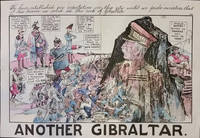
191816560New York: Paramount Advertizing sic Corporation 88 Broadway 1918. Very good condition. World War I propaganda poster centers on Field Marshall Douglas Haig commander of the British Expeditionary Force silhouetted on the Rock of Gibraltar. Von Hindenburg representing Germany Austria the Crown Prince and the Turks all figured with text bubbles while a teaming mass of soldiers charge the rock with bayonets. "John Bull" representing the British comments that the Yankees will soon be here. Vol. 2 in the top left No. 9 in the top right. Lithograph with hand color. Published by the Paramount Advertising Company in NY Subscription Price $1.00 per week. 29.5 x 20 plus margins. Old folds. Considering the carnage wrought on the world in WWI the deaths of over 10 million people & 10 million animals we ought to guard ourselves against the effects of propaganda today. Paramount Advertizing (sic) Corporation, 88 Broadway unknown
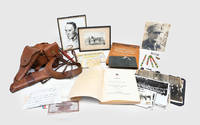
1945172534Various dates primarily 1945-47. The end of the war in south-east Asia A collection reflecting Fuller's important role in South East Asia Command including proof copy number 142 of Mountbatten of Burma's post-war official report inscribed by Mountbatten to Fuller as well as a short snorter signed by General Raymond Wheeler and other members of the US delegation to the Japanese surrender of Singapore. Also present is Fuller's copy of a photographic portfolio documenting the ceremony. A member of West Point's class of 1909 Fuller 1886-1966 gained command of the 41st Infantry Division in 1941 and was promoted to the temporary rank of major-general in December. In late 1944 he succeeded Wedemeyer as deputy chief of staff at SEAC under Mountbatten holding the position during the crucial closing period of the war in Asia. The proof copy of Mountbatten's report is inscribed on the inner front cover "To Horace Fuller Deputy Chief of Staff SEAC in gratitude and appreciation of his loyal support and friendship from Mountbatten of Burma." An accompanying letter from Mountbatten to the general addresses the recent publication of a book mentioning differences between Mountbatten and Stilwell. "I discussed this matter with General of the Army Eisenhower when he was in London in 1946 and he agreed that I should not now omit reference in my Report to any controversial matter published. The two Governments may well not wish the whole of this Report to be published. I would therefore impress upon you that this is a personal copy to enable you to make any last minute comments if you find any factual inaccuracy." On 10 September 1945 Fuller travelled to Singapore as a member of General Wheeler's official party for the signing of the instrument of surrender. The souvenir portfolio of US Army photographs lettered with Fuller's name on the front cover chronicles events between 9 and 13 September. The images show the arrival of Wheeler's group at Kallang Airfield - in a group portrait in front of their C-54 transport plane Fuller stands next to Wheeler - and Wheeler's inspection tour of Changi prison and other sites. Photographs also show the surrender ceremony and a dinner given in Wheeler's honour at Raffles Hotel during which Fuller sat between Brigadier-General Thomas S. Timberman SEAC and Margaret "Peggy" Wheeler a civilian employee of OSS and the general's daughter. Accompanying the portfolio is another souvenir: a banknote signed on 12 September 1945 by members of Wheeler's party perhaps at the Raffles dinner. Among the signatories are Wheeler himself Brigadier-General William H. Tunner Air Transport Command Margaret Wheeler Major-General Thomas J. Hanley United States Air Force and Lieutenant-Colonel Walter H. Skielvig Fuller's executive officer. The note is also signed on the reverse by members of the C-54's flight crew. Alongside these core items is a gelatin silver portrait of General Douglas MacArthur inscribed "To Horace Fuller. With the affectionate regards of his old comrade-in-arms. Douglas MacArthur" and recalling Fuller's command of the 41st Infantry as well as a charcoal portrait of Fuller by McClelland Barclay 1891-1943 executed after Fuller's promotion to major-general. A full listing of the other items in this archive such as ribbon racks photographs and badges is available on request. Together 6 core items: quarto report original buff wrappers front cover lettered in black inscribed by Mountbatten of Burma to Fuller; single-sheet typed letter signed 250 x 200 mm from Mountbatten to Fuller; Japanese Invasion Money 100-dollar banknote 170 x 85 mm inscribed "Singapore Surrender 12 September 1945" at head and signed by Fuller and 16 other individuals on one side and further 6 individuals on other and known as a "short snorter"; Fuller's souvenir portfolio of US Army Signal Corps photographs from surrender of Singapore original wooden boards with photostat reproduction of Instrument of Surrender 36 large gelatin silver photographs 210 x 270 mm 4 leaves duplicated typescript captions; gelatin silver portrait 247 x 197 mm of General Douglas MacArthur inscribed by MacArthur to Fuller; charcoal portrait of Fuller contemporary frame and glaze 260 x 220 mm. Together with material concerning Fuller's military career full inventory available on request. Wrappers of report repaired Mountbatten letter with small loss top-left not affecting text boards of portfolio somewhat worn and caption leaves browned MacArthur portrait with some silver mirroring charcoal portrait with wear to frame other material showing signs of handling: generally a very good collection. hardcover
19451017761945. WORLD WAR II KEYES Geoffrey Lt. Gen. Archive: Hand-colored and annotated map outlining the division of Germany; 25 contemporary V-Mail letters from Keyes to his wife. Waiblingen-bei-Stuttgart Germany: 649th Engineer Topographic Battalion June 1945. Broadside map measures 22 by 29 inches titled ""Administrative Map of Western-Germany June 4 1945."" V-Mail letters each measure 4-1/4 by 5-1/4 inches. $12000.Lieutenant General Geoffrey Keyes' unique hand-colored and annotated map outlining the division of Germany per the Berlin Declaration produced just after Germany's unconditional surrender along with 25 contemporary letters by Keyes to his wife discussing the dramatic events of these historic times.It was agreed at the Yalta Conference held in Crimea February 4-11 1945 that after the war Germany would be split into four occupied zones: American British French and Russian. On May 7 1945 Germany signed an unconditional surrender at Allied headquarters in Reims France to take effect the following day. The Berlin Declaration of June 5 1945 confirmed the division of Allied-occupied Germany into four occupation zones according to the Yalta Conference. The map is titled ""Administrative Map / Western-Germany"" dated ""4 June 1945"" printed by the 649th Engineer Topographic Battalion 649th Engr. Top. Bn 1945"" in Waiblingen-bei-Stuttgart. The landkreise rural district stadtkreis urban district within landkreis and land boundaries made up of adjoining stadtkreis are noted. Identified with flags there are three Region Headquarters Darmstadt Marburg Stuttgart and five R.B. Headquarters Frankfurt Kassel Wiesbaden Mannheim Karlsruhe.Eight areas are outlined by hand in various colors. There are 17 landkreis at the western and southern borders of this map which are not outlined. These areas are in the French occupied zone. France was not represented at Yalta and Russia would only agree to a separate French occupation zone ""within the British and American zones."" It is possible that when this map was printed it was not yet determined if the 17 non-outlined landkreis were American. The four divisions were not confirmed until the Berlin Declaration on June 5 1945 the day after this map was published. The French zone includes the stadtkreis Baden-Baden and Bavaria. The French zone bordered mostly France and Switzerland but also small parts of Belgium Luxembourg and Austria. Included is a color photocopy of the four occupied zones indicating the area depicted in the Administrative Map of Western-Germany here offered.Also present are 25 pages of V-mail each 4-1/2 by 5-1/4 inches from Lieutenant General Keyes to his wife May-August 1945. She was living at the Hotel Tayer West Point. V-Mail used standardized stationery and microfilm processing to produce lighter smaller airplane cargo making space available for war supplies. V-Mail was used from mid-1942 to the end of 1945. Excerpts: ""The capitulation of the Germans yesterday has us all on the humpjust as much so as while we were still fighting We are still awfully busy even if the fighting has ceased on this front VE Day!! Now if we can quickly wind up the Jap affair we can really relax We move to Salzburg this week Well here we are installed in the Archbishop's Palace sweetheart each room is large enough for a battalion almost flew to 3d Army to attend the homecoming ceremonies for Gen. Patton. It really was a great show and he was in rare form Had a nice visit with him With the approaching end of the Jap war it will certainly be open season on generals! Sunday is to be a gala day All the High Commissioners of Austria are gathering and Gen Clark's guests and others are going to the music Festival just had a call and a concert by the Vienna Boys Choir This afternoon the No 1 British French & Russian VIPs are coming to Salzburg as Gen Clark's guests and big festivities are slated "" From the estate of Lieutenant General Geoffrey Keyes.Map folded into quarters with a few minor wrinkles pinholes at corners from posting it on a wall or bulletin board. Near-fine condition an exceptional archive. unknown
19431050611943. WORLD WAR II. Archive: Wake Island Raid maps photographs and documents. Near Wake Island: Intelligence Center Pacific Ocean Areas October 5-6 1943. Sixteen maps photographs and documents; maps range in size from 8 by 8 inches to 18 by 21-3/4 inches; photographs range from 6-1/4 by 8 inches to 18 by 9-1/4 inches. $9500.Superb archive of rarely seen map and photographs used in planning and documenting the October 5 1943 raid on Wake Island which was taken by the Japanese only weeks after the Pearl Harbor attack.Wake Island a U.S. airbase located approximately 2200 miles west of Pearl Harbor was captured by the Japanese in late December 1941. The island remained under Japanese control until the garrison there surrendered on September 7 1945. In October 1943 a U.S. task force conducted a two-day air raid on the island. The Japanese commander Shigematsu Sakaibara convinced the raid was the beginning of an attempt to retake the island marched 98 American civilian prisoners of war to a remote corner of the island and executed them. Following the war Sakaibara was tried and executed for war crimes. Of particular interest is a large map on thick stock folded into quarters and reinforced with tape on the verso bearing copious pencil annotations documenting the second day of air raids on the island recording various points in the action from the initial takeoff from the carrier at ""0515"" through the squadron's departure around ""0745."" The pilot carefully draws the route of two bombing runs the first against the runways on the main island of Wake and the second targeting the barracks and ammunition storage on nearby Peale Island. The pilot noted the direction of anti-aircraft fire positions of guns as well as the wind and the general weather conditions: ""Cumulus @ 2500 strong vertical development Squalls to and from island."" The pilot recorded damage sighted including ""Red flame black smoke 0710"" coming from an underground storage area adjacent to Runway A. On his second run he observed ""Black smoke 0706-0715still going strong at 0725"" near the barracks on adjacent Peale Island. The archive also features four large highly detailed reconnaissance photographs of Wake island together with a large body of smaller maps all used in the planning of the October raid. Also of interest is a mimeographed document titled ""U.S.S. Yorktown Air Department Plan of the Day Tuesday 5 October 1943"" which details the schedule of the first day of operations beginning at ""0245"" and ending prior to sunset at ""1645"" noting the planned launchings and landings of seven major sorties against Wake. Several of the items are stamped ""VT-5 Air Intelligence""; VT-5 was a torpedo bomber squadron stationed on the Yorktown during the war. All items apparently from the collection of Lt. H.T. Reynolds of torpedo bomber Squadron VT-5 stationed aboard the U.S.S. Yorktown. One of the photographs of an Avenger in flight over Wake Island is captioned ""Lt. Reynolds U.S.S. Yorktown 1943.""Typical folds and other wear consistent with use though generally very well preserved in excellent condition overall. A superb collection of original materials used in the planning and subsequent reports on this historic attack. unknown
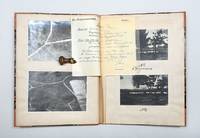
1917152534Ukraine: Vermessungs-Abteilung 22 1917. A masterclass in inter-arms co-operation" - the German assault on the Toboly Bridgehead Remarkable visual record that documents with a combination of forensic exactitude and stark realism the capture of the Toboly bridgehead on the Stokhid River Ukraine in April 1917 significant for the innovative fire plan utilized by Colonel George Bruchmuller "an outstanding artillery co-ordinator" Clarke p. 50. Rare: we have not been able to trace another copy institutionally or on auction records. The Stokhid River was the demarcation line between the Austro-Hungarian and Russian fronts. "The attack on the Toboly bridgehead by the 1 st Landwehr Div of the German Army in March 1917 was supported by 300 pieces of artillery and 100 Minenwerfers short range mortars; by comparison the average German division at Verdun was supported by 94 guns and 60 trench mortars. Barrages were also shorter and more intense - 5hrs 15min at Toboly compared to the 24 hours at Verdun. In a complex fire plan field guns field howitzers and Minenwerfers delivered the rolling barrage directly to the front of the advancing infantry. Heavy guns and howitzers provided both CB Counter Battery fire on the Russian artillery and a box barrage to seal off the objectives from reinforcement. The keys to Col Bruchmuller's success were the effective use of neutralization; surprise; inter-arms co-operation; and massed firepower under centralized command. When assessing Bruchmuller's reputation it is important to stress that he was not doing much that the Allied armies were not already doing on the Western Front. In the East however it was revolutionary and his efforts to ensure that the infantry understood how to make the most of the support they would receive were a masterclass in inter-arms co-operation" ibid. pp. 50-1. Gas was also a key factor in the German attack as was the use of portable flamethrowers in particular by companies of the Garde-Reserve-Pionier-Regiment "whose two-man flamethrower teams were attached to units as necessary to provide specialist fire support for specific operations" Stone p. 432. Of the images assembled here 2 show mines being exploded while others taken after the battle show blast craters; a further 8 aerial photographs with contemporary annotations on the back were taken by artillery reconnaissance unit Flieger-Abteilungen A 283 which was based at Brest-Litovsk. Others show the effect of Minenwerfer fire on barbed wire entanglements and trenches; some 25 prints show Russian dead killed by mortars Minenwerfer gas and flamethrowers; 10 show Russian armaments and trench systems German soldiers posing with battlefield "loot" hand grenades and ammunition and captured artillery; the concluding 10 images particularly well-detailed are of Russian prisoners of which the Germans claimed there were 10000. A stub-mounted printed slip notes that 4 aerial photographs were taken from a height of 100 feet by Lt. Ferdinand Schmid of Fliegerkompagnie 27 of the Austro-Hungarian air force fatally wounded over Toboly. This also gives an explanation of the plates numbered 578-81 which show the battlefield and German infantry advancing; a glassine overlay shows how the plates should be arranged to give a wider perspective of the area of operations. Provenance: although unmarked as such from the library of Reinhart Freiherr Bachofen von Echt 1877-1947 author of several works on hunting; he served with the Austro-Hungarian army on the Eastern Front during the First World War. Produced in very small numbers and printed "in the field" this outstanding survival serves as an important primary source and a doleful testament to a signal German victory on the Eastern Front. Quarto 324 x 245 mm 16 leaves. Printed title page 84 original albumen prints varying between 120 x 165 mm and 60 x 90 mm mounted on paper leaves showing scenes at the Front a number with pencilled annotations on verso; another print reproducing a Russian propaganda card "Willst du Frieden haben ! Da hast du nimm!" Do you want peace! You'll have to take it! picturing the Kaiser being shown the "fig" sign; another reproducing battle reports from the German High Command. Contemporary moderate brown half cloth Papier Tourniquet pattern marbled sides. Some toning and light creasing to title page overall in very good condition. Dale Clarke World War I Battlefield Artillery Tactics 2014; David Stone The Kaiser's Army: The German Army in World War One 2014. hardcover
191915674Cambridge:The Brattle Press 1919. hard cover. Good/No jacket. Cambridge:Brattle Press. 1919. 269pp. Illustrated. Hardcover. Binding shows some shelf-wear to the edges and spine which is also lightly faded. Otherwise in good condition. Interior is clean and free of stray markings save for a previous owner's name a member of the Battery in France on fly leaf. There are several places where the binding of the pages is cracking. However overall a good copy. Cambridge:The Brattle Press hardcover