WORLD WAR I - ARABIAN PENINSULABiblio.com
11 490 résultats
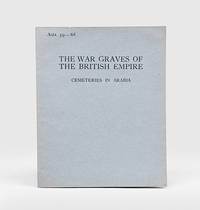
1931180031London: Compiled and Published by order of the Imperial War Graves Commission 1931. First and only edition which can be found in institutional runs of the IWGC cemetery volumes but rarely encountered in commerce. A concise account of the conflict around Aden accompanies a complete list of the 142 war graves in Holkat Bay Maala Perim and Sheikh Othman cemeteries; the dozen or so burials on Kamaran Island and at the Muscat Old and Naval cemeteries are also detailed. Small folio pp. 16. Full-page diagram of Maala Cemetery Aden. Sewn in original grey card wrappers lettered in back on the front panel. Mild marginal toning outside and in but overall very good. unknown
1919100727Folio original cloth with gilt title on top cover illustrated 528 pp. Minor wear to extremities top corner of top cover a little bumpted some aginging and darking throughout; a nice tight copy overall. This volume is essentially a who's who in the first World War. However in addition to the pictures of just about every political figure involved in the war there are countless battle and military picutures. new York Times Publishing hardcover
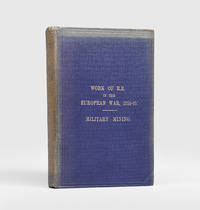
1922189237Chatham: W. & J. Mackay & Co. 1922. First edition the copy of the military historian Major Archibald Frank Becke. Attached to the Historical Section Military Branch of the Committee of Imperial Defence Becke was a major contributor to the British official history of the First World War. For the History of the Great War Based on Official Documents Becke 1871-1974 compiled the six order of battle volumes and contributed maps and sketches research and writing to other volumes Falls praising Becke's cartography and drawings as "probably superior to anything of their kind in previous military histories." During the conflict he served with the Royal Field Artillery. His bookplate and July 1924 ownership inscription are on the front pastedown. Illustrated with dozens of plans and photographic plates the three sections in this work concern the history of military mining its technical aspects and procedures used for rescue operations. Octavo. With 13 plates 57 plans and diagrams 30 folding. Original blue cloth spine and front cover gilt yellow coated endpapers. A little contemporary pencil sidelining pencilled notes perhaps Becke's on rear free endpaper verso. Spine and head of boards sunned content clean: near-fine. Not in Wells. For Becke and the official history see Falls pp. 25-6. hardcover
1921WORLDWAR006089W. & J. Mackay Chatham. 1921. First edition. Octavo. pp 87 three large folding colour maps 15 plates of photographs 33 folding plates of diagrams. The photographs show military bridges being erected in northern France.Fine. Probably not issued in dustwrapper. Scarce. W. & J. Mackay, Chatham. unknown
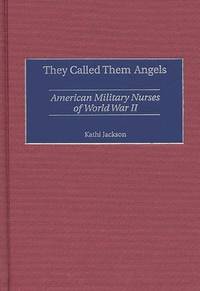
2000DBS-9780275968991Praeger 2000. 1ST. Hardcover. New. Praeger hardcover
2000DBS-9780275968991Praeger 2000. 1ST. Hardcover. New. Praeger hardcover
19411736111941. One of the series of "careless talk" posters produced by the British government during the Second World War. This design was put in public telephone boxes see Hastings and St Leonards Observer 19 July 1941. Offset lithograph 169 x 145 mm. In fine condition. unknown
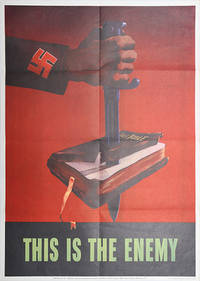
1943175357Washington DC: Office of War Information 1943. Deliver us from evil One of the most striking American wartime propaganda posters depicting a Nazi fist stabbing through the Bible against a vivid red background. "This is the Enemy" was the slogan of various American posters focusing on the evils of Nazi ideology and actions here presenting their attack on freedom of religion and their threat to Christian civilization. The artist Barbara Marks was a Californian art student. The Office of War Information solicited entries from the public for poster designs and received over 2000. Her original slogan was "deliver us from evil". Offset lithograph 710 x 560 mm. Light creases where formerly folded and a couple of tiny chips at intersections. A near-fine copy. unknown
1929WORLDWAR014205Faber and Faber London. 1929. First edition. Criterion Miscellany No. 1. Octavo. 32 pages. A First World War story by the translator of All Quiet on the Western Front. Wheen was an Australian soldier who served and was twice wounded on the Western Front.One of 150 numbered and hardbound copies signed by the author and printed on hand-made paper. Spine a bit faded. Head of spine scuffed. Very good indeed. Faber and Faber, London. hardcover
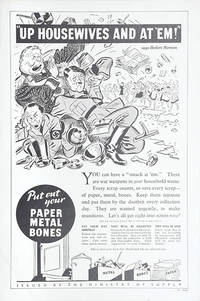
1940173612London: Issued by the Ministry of Supply 1940. A striking British wartime poster appealing for salvage showing Hitler Goebbels and Goering cowering under a barrage of newspapers pots and bones thrown by a mob of British housewives. The poster tells housewives that "you can have a 'smack at 'em'. There are war weapons in your household waste". It instructs them to separate out paper metal and bones from their house waste to be collected and used in munition manufacturing. The title is a quote from Herbert Morrison which was also used for a Pathé newsreel and a popular song. Offset lithograph 379 x 252 mm. Tiny chip at foot light crease at head. In very good condition. unknown
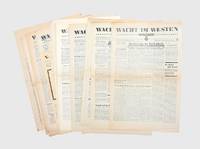
1945188605Germany: Propaganda-Einsatzführer 1945. A slightly broken run from the end of the war of this German newspaper for western front troops with daily updates on the battle for Berlin. It includes the announcement on 2 May of Hitler's death and of the ceasefire. Also covered is Hitler's birthday and the announcement he will stay in Berlin. It reports alleged heavy Soviet losses depicts Soviet brutality toward Germans under their control claims divisions among the Allies and urges troops to disregard foreign propaganda. Together 23 numbers folio. Central crease with minor splits and a little toned some minor chips at extremities one issue somewhat torn. In generally very good condition. unknown
1922WORLDWAR015379Cassell London. 1922. First edition. pp viii 226. Essays and sketches most of which arise from the author's wartime experiences. Fine in very good indeed slightly rubbed dustwrapper with a few nicks. Cassell, London. unknown
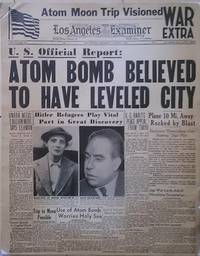
1945143801945. Historic WWII Newspaper War Extra. Los Angeles Examiner August 8 1945. 13.5" by 10.5." Large bold headline "ATOM BOMB BELIEVED TO HAVE LEVELED CITY." Also has two small front page photos of Dr. Lize Meitner and Dr. Neils Bohr who fled Europe during WWII and had developed nuclear fusion that made the atomic bomb possible. This was an extra printed on that day due to the extreme importance of the news of the atomic bomb dropping that could not wait for the next morning. Not much detail was just available at the time of this printing. In very good condition. unknown
1916WORLDWAR015551Privately printed in Truro. 1916. First edition. Octavo. 20 pages. Wrappers. Poems of a mawkish and religious sentimentality intended to provide comfort for those left behind and justification for the war. One of the poems ''Only a Tommy'' attempts to adopta Kiplingesque mode.Staplkes rusted. Spine rubbed. Some creasing to front cover. Good. Very scarce. Privately printed in Truro. unknown
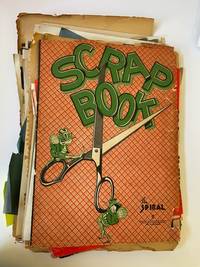
1944175341944. World War II scrapbook of newspaper and magazine clippings 1945 to 1947 a compiled visual and textual record of wartime reporting and immediate postwar interpretation that preserves how mass media presented military technology global conflict and the transition into the atomic age. The scrapbook centers on the final phase of World War II and its aftermath with particular emphasis on aviation industrial production and symbolic moments of Allied victory. By assembling illustrated articles cover imagery and advertisements tied to wartime industries the volume documents the intersection of journalism propaganda and public understanding of modern warfare at the moment of Allied triumph and geopolitical realignment.<br /> <br /> Scrapbook containing more than one hundred pages of clippings from periodicals including Time Life and major newspapers with eighteen Time magazine covers dating from 1945 to 1947. Disbound but retaining original covers with printed design. The contents are organized thematically including a substantial section on military aviation with illustrated features on transport aircraft such as the DC 3 and DC 4 and combat aircraft including the Martin Mariner Boeing Flying Fortress Northrop Black Widow Grumman Hellcat Curtiss Warhawk and Lockheed Lightning. Articles include large format photographic spreads and interior views of aircraft emphasizing design capacity and combat function. Additional sections address wartime events and domestic security including coverage of the "Eight Nazi Saboteurs" captured after landing from submarines on the Atlantic coast and illustrated guides to Army insignia and officer dress. A widely circulated image of President Franklin D. Roosevelt standing aboard the cruiser Tuscaloosa appears within a feature on military presentation reflecting controlled wartime imagery of presidential leadership. Coverage of the atomic bomb includes a 1945 article describing the Los Alamos test as the beginning of a new historical epoch accompanied by imagery of the explosion cloud alongside combat photography such as "Fighting Lady" depicting aerial engagements in the Pacific and a newspaper image of the flag raising on Iwo Jima.<br /> <br /> The scrapbook preserves the visual language through which Americans encountered World War II combining battlefield imagery technological display and corporate advertising from firms such as Lockheed General Motors and Texaco that linked industrial production to military success. The inclusion of atomic bomb reporting marks a shift from conventional warfare to nuclear modernity while aviation features underscore the centrality of air power in both combat and public imagination. As a curated compilation rather than a single publication the volume demonstrates how wartime narratives were assembled circulated and retained at the individual level offering insight into the formation of historical memory in the immediate postwar years. Pages show some edgewear and the scrapbook is disbound; contents remain clean and legible with strong visual quality. Overall very good condition. unknown
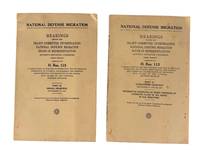
1941215811941. United States House of Representatives. National Defense Migration Hearings before the Select Committee Investigating National Defense Migration. Washington D.C.: U.S. Government Printing Office 1941. First edition. Two volumes: Part 22 Omaha Hearings November 25 1941 and Part 24 Washington Hearings December 22 and 23 1941. Printed for the use of the Select Committee Investigating National Defense Migration. Original tan paper wraps. 8vo.<br /> <br /> A scarce pair of congressional hearing transcripts examining the social and economic impacts of domestic migration caused by World War II defense mobilization. Conducted by the Select Committee Investigating National Defense Migration known as the "Tolan Committee" these hearings document testimonies regarding population shifts housing shortages and labor force changes as the U.S. ramped up war production. Part 22 held in Omaha Nebraska explores the regional consequences of wartime migration including the influx of workers into industrial centers and its strain on local infrastructure. Part 24 held in Washington D.C. focuses on the feasibility of converting the nation's automotive industry to military production highlighting testimony from industry leaders and government officials. The Tolan Committee played a pivotal role in shaping wartime domestic policy addressing concerns over workforce displacement racial tensions and the preparedness of U.S. cities to absorb migrating populations. These volumes provide an invaluable primary source on the economic and demographic transformations of the early war years. Both volumes exhibit minor wear to covers light foxing and some creasing but remain intact and highly readable. Very good condition overall. A vital record of the congressional response to one of the most significant internal migrations in U.S. history. unknown
02-0177ca. 1940. Original gouache painting. Design for a poster. Red and black on white. Framed. Image: 19 x 10 cm. Frame: 36.5 x 24.5 cm. One of a pair. ca. 1940. unknown
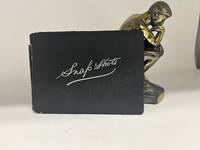
191887875SELF PUBLISHED: Privately Printed 1918. Photograph Album. Very Good Plus. Photo album with thick paper-covered boards labeled on front board in white script "Snap Shots" 7 in. x 5 1/4 in. 36 black mounting pages with 66 4 1/4 in. x 2 1/2 in snapshote plus three tiny "gems" affixed to inside of rear cover. 3-inch flap-tear to spine revealing that paper used in construction of this album was "printers waste" and a photographic image of trees may be seen on reverse of flap. Easily gluable but buyer might want to see this unique example of early "recycling". Minor edgewear to boards and a crease to rear board which has been cracked -- but with no serious damage. <br /> <br /> First photo depicts "Dead Man Hill" in Verdun the next few vast bombing destruction in Reims; cannon and troops; street scenes and overview of Le Mans. Also mounted is a 1917 Cinquante Centimes banknote Issued by the French army with a compelling designe by Ludovic Vallee depicting the "victorious return of the soldier who did his duty baggage under his arm and welcomed by his dog advancing with outstretched arms towards his family. The wife in peasant attire also with outstretched arms is surrounded by two children the older daughter of whom lays a laurel wreath at the winning hero." Numista site.<br /> <br /> Other photos depict a barracks built at the edge of the Sarthe River showing bathing soldiers and hanging laundry; more street scenes in Le Mans; graveyards and urban destruction in St. Mihiel; children amongst the ruins in Chateau Thierry; devastation in Verdun; more graveyards; underground bunkers; bridges. Several pictures of Salt Lake City Utah Mormon Temple SLC street scene and several shots of soldiers recovering from battlefield injuries in the hospital.<br /> <br /> Roughly half the photos are identified/captioned "Campbell" "Cpl. Evans."; ;German Prison Camp"; "Our first picture in the AEF"; ; "Prison Camp for Pro-German" etc. ".the AEF an American Expeditionary Force consisting of troops from both the United States Army and Marine Corps units. .The AEF counter-offensive combat action at Château-Thierry was relatively brief starting on July 1 1918 and lasting for less than a week and was part of the allied effort to push back the recent German advance. American forces had linked up with their French allies at the Marne River on June 3 1918 and had forced the Germans back across the river. This set the stage for the action at Château-Thierry and at the Battle of Belleau Wood. ." Wikipedia. Privately Printed unknown
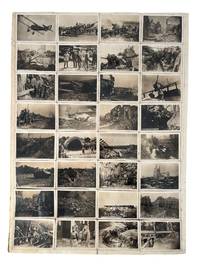
1914213901914. World War I battlefield scenes documented in photographic postcards produced during the conflict between 1914 and 1918. The images record key elements of industrial warfare on the Western Front including trench systems artillery deployments armored vehicles aerial combat and the destruction of urban centers in France. Together the photographs present a visual survey of military technology battlefield conditions and command leadership during the war. Scenes of soldiers in trenches artillery firing positions advancing tanks and devastated cities illustrate the scale of mechanized warfare that defined the conflict and reshaped military operations in the twentieth century.<br /> <br /> Archive composed of 32 vintage real photo postcards mounted on two cardboard display sheets. Each photograph measures approximately 3 x 4.5 inches and is captioned in the negative. The images depict multiple aspects of the Western Front including French soldiers occupying front line trenches and artillery units operating large caliber guns such as a Canon de 220mm Schneider mortar. Several photographs show armored vehicles including Renault FT tanks advancing near Andicourt in the Aisne region. Additional images document captured German heavy artillery including large siege mortars identified as 21 cm Mörser guns seized by British forces. Aerial warfare appears in photographs of fighter aircraft in flight including an image attributed to the aircraft of French ace Captain Georges Guynemer. Urban destruction is represented through photographs of damaged French cities including scenes of devastation in Reims with the cathedral visible above surrounding ruins. Infrastructure damage is also recorded in photographs of a destroyed bridge at Château Thierry. Leadership and command figures appear in several images including a photograph of Georges Clemenceau visiting a French aviation camp near the front and another showing Marshal Ferdinand Foch with General John J. Pershing at American General Headquarters.<br /> <br /> The photographs collectively illustrate the transformation of warfare during World War I through the introduction of mechanized weapons systems coordinated artillery operations and the integration of air power into military strategy. The presence of tanks aircraft and rail mounted artillery demonstrates the technological changes that characterized the conflict and influenced subsequent military development. Mounted photographic postcards also functioned as documentary and commemorative imagery circulated during and after the war to illustrate the scale of military operations and battlefield destruction. Thirty two photographs mounted on two cardboard sheets measuring approximately 12 x 19 inches. Light wear and minor creasing visible on several images with overall strong photographic clarity. Overall very good condition. The mounted set preserves a broad visual record of Western Front combat and military technology during the First World War. unknown
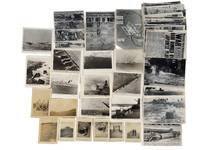
1945213921945. U.S. military operations in the Pacific Theater during World War II photograph and newspaper archive 1941-1945 documenting the Battle of Iwo Jima and the attack on Pearl Harbor. The archive pairs soldier-taken snapshots with official U.S. Navy and press photographs showing how combat equipment and battlefield conditions. The featured original snapshots contain handwritten notations en verso identifying dates specific locations soldiers and equipment.<br /> <br /> The archive comprises 39 silver gelatin photographs ranging from roughly 3.5 x 5 to 6 x 8 inches together with original wartime front pages of the Honolulu Star-Bulletin covering the attack on Pearl Harbor the fall of Italy and the Allied invasion of Europe. Images include amphibious landings on the black sand beaches of Iwo Jima with landing craft advancing under naval bombardment; U.S. Navy battleships destroyers and landing craft firing on shore defenses; and aerial scenes of dogfights and bombing runs. Close-up battlefield images depict the wreckage left in the wake of combat including destroyed landing craft craters from naval artillery and Japanese fortifications. Several photographs focus on the role of air power with images of Japanese aircraft under attack U.S. planes engaging in dogfights and B-29 Superfortresses bombing enemy positions. A particularly striking image captures a Japanese bomber scoring a direct hit on the USS Yorktown with billowing smoke rising from the carrier. Handwritten notations on some images identify U.S. servicemen locations such as Mount Suribachi and captured Japanese positions. The series of larger military-produced photographs and newspaper clippings have inscriptions on verso identifying locations and vessels depicted as well as the name tag "K .Benden." Among these are portraits of American soldiers posing at key strategic points inspecting captured bunkers and standing beside wrecked aircraft. <br /> <br /> Reconnaissance images show terrain and fortified positions; ground-level views show cratered landscapes wrecked landing craft and captured Japanese fortifications. One image shows the USS West Virginia during the Pearl Harbor attack with fire damage and crew visible; another shows a Japanese aircraft striking the USS Yorktown. Other photographs show servicemen near Mount Suribachi inspecting bunkers and beside wrecked aircraft. Many images carry printed captions within the negatives; others have handwritten verso annotations identifying locations dates vessels and personnel including one marked "K. Benden." Light wear minor edge creasing and occasional surface marks; overall in very good with strong image clarity. unknown
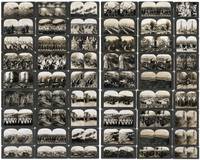
1918231911918. World War I stereographic photographs documenting mass mobilization and wartime public messaging with scenes of troop training segregated transport naval preparation military medicine battle damage and demobilization across the American and European war effort. The photographs preserve the structure of modern war and the language used to justify it through in captions linking domestic reunion to major campaigns and in racialized commentary on Black troops moving toward embarkation. The archive moves from recruitment and preparation to overseas destruction and return to family life and preserving the framework through which these scenes were presented to American viewers.<br /> <br /> Photo archive of 46 silver gelatin stereographic photographs each approximately 7 x 3 inches produced in the United States circa 1918 to 1919 with scenes photographed in both the United States and France. The cards are mounted on gray stock with printed titles serial numbers and lengthy descriptive texts on the versos. Visible scenes include the "1918 Graduating Class at Annapolis" linking the group to officer and naval training; "Fighters Who Broke the Hindenburg Line Parading Down Fifth Avenue" showing victory procession in a major American city; and "Troops on March En Route to Camp After Leaving Transport New York Harbor" where armed servicemen advance through streets lined with civilians waving flags and handkerchiefs while several spectators watch from a rooftop. Other cards show massed formations under the title "Our Answer to the Kaiser 3000 of America's Millions Eager to Fight for Democracy" naval recruits standing at parade rest a church converted into a hospital with rows of wounded men on cots a disappearing coast defense gun elevated for firing at Fortress Monroe African American soldiers shown segregated from white units and halted beside railway cars in "Colored Troops Taking Train Rest" and "Shooting German Airplanes Aircraft Gun Concealed in the Woods" showing two servicemen aiming anti-aircraft artillery skyward. Additional views show soldiers searching shattered ruins in France peace delegates visiting devastated Arras embarkation and harbor activity prisoners under guard and soldiers reunited with wives and children. The printed verso texts sharpen the wartime framing throughout: the New York Harbor parade card invites viewers to imagine securing "the lofty station on the lamp post" for a better view of the "long brown line"; "Happy Reunion for Soldier Fathers" connects domestic embrace to Chateau-Thierry Soissons St. Mihiel and the Meuse-Argonne; "Our Answer to the Kaiser" frames troop concentration as a democratic national response to Germany; "Colored Troops Taking Train Rest" preserves both the visibility of Black military movement and the paternal racial language used to describe Black soldiers during the period; and the anti-aircraft gun card identifies the weapon as part of the defense of Paris against air raids.<br /> <br /> These stereographs treat World War I as a coordinated military and social system moving from academy training and troop embarkation to anti-aircraft defense hospital care ruined French cities victory parades and reunion at home. The group preserves the language that organized public understanding of that system including patriotic appeals to democracy and openly racialized descriptions of Black troops in transit making the cards evidence of both wartime experience and wartime instruction. Light general handling wear with minor edge and corner wear; printed titles and verso texts clean and legible. A sustained visual account of how the First World War was mobilized staged for public viewing and folded into American memory and national myth-making. unknown
739340131Brand_New. NEW condition -SEALED- Fast ship and satisfaction always guaranteed. unknown
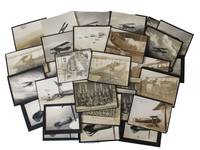
1918177171918. World War I military aviation. Primary-source photographs documenting early United States military aviation training at Henry Post Airfield Fort Sill Oklahoma during the formative period of the U.S. Army Air Service following its establishment in May 1918. The images record the first generation of American military pilots operating within a rapidly developing aviation program built in response to World War I supporting research into the expansion of U.S. airpower pilot training infrastructure and the integration of aircraft into military operations. The presence of DH-4 two-seat biplane bombers the principal American-built combat aircraft of the war situates the archive within the transition from experimental aviation units to operational military squadrons. A dated caption identifying "October 29 1918 Sergeant Schauble" flying at 3700 feet further anchors the material within the final phase of the war.<br /> <br /> Archive of 26 silver gelatin photographs Fort Sill Oklahoma circa 1917-1918 each measuring approximately 7.25 x 5.25 inches. The archive includes many photos of the biplanes in the air one photo shows several DH-4 bombers soaring in the clouds in a Flying-V formation. A handwritten caption on one image "October 29 1918 Sergeant Schauble " is depicted flying in a DH-4 at 3700 feet as well as going on a "parachute trip". One photo shows a serious plane crash with two DH-4s biplanes nose down in the ground. The pilots are also depicted in hot air balloons. Fort Sill was home to several US Army Balloon Companies during this period which were still primarily used for reconnaissance and directing aerial bombardment during World War I. The photo archive includes many shots of biplanes in the clouds or on runways with pilots in goggles including 4 images of pilots or troops in group shots. Most photos show the planes or balloons in mid air. . Army balloon companies stationed at Fort Sill for reconnaissance and artillery observation. Several images capture aircraft at altitude among cloud formations while others document runway activity and pre-flight staging. Versos of many prints retain remnants of black album paper indicating removal from a compiled photographic album.<br /> <br /> The archive documents the early operational environment of American military aviation at a moment when the United States was rapidly expanding its aerial capabilities following limited prewar development including the Army's first acquisition of aircraft from the Wright brothers in 1909. Henry Post Airfield functioned as a central training site for pilots entering service during World War I and the inclusion of both airplane and balloon units reflects the continued reliance on multiple aerial technologies for reconnaissance and combat support. The photographs provide visual evidence of training practices aircraft deployment and the material conditions of early air service operations during a period of institutional formation. Minor edge wear and surface wear are present with album residue on versos; overall very good condition. A cohesive photographic record of early U.S. military aviation training and aircraft use during World War I. unknown
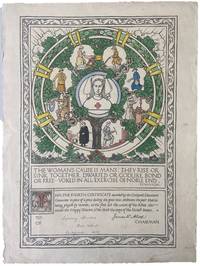
1918179031918. Liverpool Education Committee Holt School nursing award certificate 1918 honors women's World War I service through an elaborate visual program centered on a Red Cross nurse. The certificate places nursing within a wider field of women's wartime labor showing smaller portraits of women working in traditionally male occupations around the central nurse figure. Its imagery and Tennyson quotation connect female service to national duty civic recognition and arguments for women's public importance during the final year of the war.<br /> <br /> Holt School. Nursing award certificate. Liverpool: Liverpool Education Committee 1918. Printed and hand-colored certificate. 12 x 17 inches. Blank verso. The design features an 8.5 x 8.5 inch medallion with a Red Cross nurse at center framed by a tree whose branches contain portraits of women at work all enclosed by a bright floral border. Beneath the image appears the Tennyson quotation: "The woman's cause is man's: they rise or sink together dwarfed or godlike bond or free. Yoked in all exercise of noble end." The text states that it was "the fourth certificate awarded by the Liverpool Education Comittee in place of a prize during the great war."<br /> <br /> The certificate belongs to wartime educational culture that publicly acknowledged women's labor while the war accelerated debates over citizenship work and social recognition. Small half-inch tear at margin not affecting text or image; illustration bright and detailed; very good. An attractive World War I certificate preserving how British schools commemorated women's nursing and war work in 1918. unknown
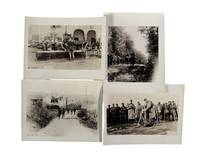
18537World War One Archive of photographs of US soldiers in action produced by the U.S. Army Signal Corps. 4 black and white photos each measure 8.5" x 6.5." One photo shows soldiers of the 168th infantry washing up in a stone trough. Another photo shows the marking of the grave of 1st Lieutenant Quentin Roosevelt son of former President Teddy Roosevelt. Quentin was KIA in July 1918 when his plane was shot down in France. One photo shows American soldiers on horseback from the 167th infantry marching to attack in a "Boche" or abandoned German trench. In the last photo we see soldiers carrying supper to other soldiers in front line trenches with a war torn medieval French home in the background. Because this was official photography from the U.S. signal corps these photos are high quality and present a cohesive representation of a GI's experience in WWI. These photos mostly present the American soldiers in the final days of World War I in France. Photos have a number at the bottom left corner Signal Corps U.S.A. and/or U.S. Official badge at bottom edge. The Photographic Section of the Signal Corps was established in June 1917 and it was responsible for the U.S. Army's official ground and aerial photography of World War I. The photos came with detailed captions that give valuable context. In very good condition overall. unknown