371 résultats
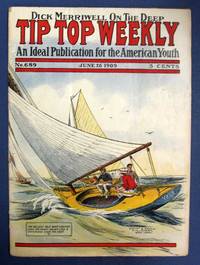
190938988New York: Street & Smith Corporation Publishers 1909. 1st printing presumed. Advert on last p. only lists through #689. Color pictorial wrappers stapled. Now housed in an archival mylar sleeve. Light wear to wrappers mild chipping and rubbing slight tanning to edges. A VG copy. 32 pp. Text double column. 11-1/8" x 8-1/8" <br/><br/>OCLC records only 1 institutional holding. Street & Smith Corporation Publishers unknown books
190139508New York: Street & Smith Corporation Publishers 1901. 1st printing. Series advert lists through #283. Color pictorial wrappers stapled. Now housed in an archival mylar sleeve. Wear to wrappers rear wrapper torn loss wrappers almost detached. Chipping to spine age toning to paper. A Good copy. 29 3 pp. Text double column. 10-3/4" x 8-5/8" <br/><br/>10 institutional holdings found on OCLC. Street & Smith Corporation Publishers unknown books
19261258baRParis France: Plon-Nourrit 1926. Book. Very good- condition. Paperback. Signed by Authors. First French edition. Octavo 8vo. vi 397 pages of text including table. Paperback binding; original blue printed paper wrappers with numerous small creases and tears and extremities and a few tiny chips at top of spine; protected in custom stiff archival mylar and further protected by a custom made gray and navy linen clam-shell box with printed spine label. Measues 20 cm in height. Illustrated with a historic photograph of Ashford as a girl and a facsimile of the first page of the original manuscript. Pages 133-221 contain the French translation of "The young visitors" which Ashford wrote at age 9; it was first published in 1919. This edition with an introduction by Cocteau and translated by Maurice Sachs who was Cocteau's secretary at the time. Sachs has inscribed and signed the book on the half-title page in the year of publication. Sachs was a black marketeer anti-semitic collaborateur went to Germany 1943 to work with Gestapo arrested and shot 1945. Contains the following works: "La messagere de la politique divine" by Humbert Clerissac; "Renoncer a toute richesse" "Jeunesse lacustre" and "Angoisses et autres" by Max Jacob; "Et le sentiment de la mort" by Charles Maurras; "Et sa pensee" by Paul Valery; "Et le soldat" by Anatole France; "Si Peguy etait la." by Henri Massis; "Le destin de la culture" by Nicholas Berdiaeff; "Scenes dans le paradis" by Justin Klotz; "Les freres caches" by Jean Aurenche; "Daisy en France" by Jean Cocteau; "Les jeunes visiteurs ou le plan de Mr. Salteeana" by Daisy Ashford; "Veillee" by Alfredo Gangotena; "Erasme et Thomas Morus contre Machiavel ou la politique et la morale" by Emile Dermenghem; "La traversee inutile" by Julien Green; "I. Mariage" and "II. Les bisons Porteciel" by Paul Sabon; "La Chine et les missions" by Leopold Levaux; "Les traces de Dieu dans la vie de Jacques Riviere" by Jules Lebreton; "Lettre a Frederic Lefevre" by Georges Bernanos. Plon-Nourrit Paperback books
19071338540Wien: Hugo Heller & Cie 1907. Hardcover. Octavo; Two separately published papers bound together second paper published by Franz Deuticke 1910; G; Ex-library; Hardcover; Spine green with gold print; Boards in green buckram with gold print very slight shelfwear else clean and strong; Text block has library stamps on edges library bookplate on front pastedown library pocket on rear pastedown slight pencil notation on first title page correcting publisher to "Deuticke" else clean and tight; Text in German; 81 71 pages frontispiece to second title. 1338540. FP New Rockville Stock. Hugo Heller & Cie hardcover books
19311464baY3New York: Liveright Publishing Corporation 1931. Book. Very good condition. Hardcover. Signed by Authors. First Edition. Octavo 8vo. 589 pages of text. Black hardcover binding with minimal shelfwear; top edge gilt. Number 153 of 245 copies signed by the author on the limitation page. Original slipcase is separated at seams with a piece missing. Tall octavo measuring 24.5cm. First edition. Liveright Publishing Corporation Hardcover books
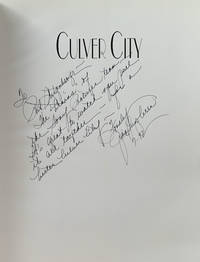
1992BO118-182Chatsworth CA: Windsor Publications Inc 1992. First Edition. Hardcover. Very Good/Very Good. Signed. 4to. 11 1/4 x 8 3/4 inches. 174 pp. Illustrated throughout in black-and-white color and maps bibliography index errata slip tipped-in at the rear of the text; text clean unmarked. Silver-stamped white linen dust-jacket in archival mylar; binding square and tight light foxing to cloth. INSCRIBED AND DATED by the author on the half-title. BO118-182. Very Good. FIRST EDITION. Written by city historian Julie Lugo Cerra on the occasion of Culver City's 75th anniversary this extensively illustrated book is a celebration of the people and organizations that created the city up until its latest boom. Windsor Publications, Inc hardcover books
19917928baBNew York: HarperCollins 1991. Book. Very good condition. Hardcover. First Edition. American novel; 382p.; 24cm; 1/2 maroon cloth rose paper covered boards; photo portrait of American Indian authors on back of dustjacket. HarperCollins Hardcover books
1997PW1596Urbana:: University of Illinois Press 1997. 1997. 8vo. xi 3 284 2 pp. Index. Pictorial wrappers. Near fine. ISBN: 0252022378 Winner of the Hervey B. Wilbur Historic Preservation Award given by the American Association on Mental Retardation 1999. "Genetic screening new reproductive technologies gene therapies and the reality of cloning all make biological solutions to human social problems seem possible. Creating Born Criminals shows how history can guide us in our response to the reemergence of eugenics. The first social history of biological theories of crime in sixty years it examines those theories' origins and content showing their undue influence on crime control in the United States." – Johns Hopkins University Press. University of Illinois Press, 1997. unknown books
30544<p>Octavo 35 letters 484 manuscript pages dated 26 October 1884 to 10 January 1885 letters mounted on stubs within a leather bound album boards lacking spine badly chipped lettering on spine reads "Letters"; text block split some leaves loose edges of some letters chipped several with slight tears otherwise good written in ink in legible hand. </p><p> Five of the letters are illustrated with cleverly rendered drawings to accompany Noyes' intelligent lengthy and astute observations of his travels. The small ink illustrations are of figures caricatures architecture etc. for a total of twenty-eight illustrations. The letters are all signed by Noyes and addressed mainly to his parents or his mother separately with one letter to his brother one to his grandfather and several to a woman by the name of "Jenny" likely his sister Jane. The letters tend to be written from the various hotels in which Noyes was staying while traveling in Europe including: Liverpool Chester London Oxford all in England; a couple of letters written while aboard the S.S. <i>Venetia</i> which he took from England to Gibraltar; and from hotels in Seville Cordoba Granada Madrid and Barcelona in Spain where he spent a lot of time. There are also a number of letters from Marseilles and Nice in Southern France; and Genoa and Florence in Northern Italy.</p><p> <b>Alexander Dana Noyes 1862-1945</b></p><p> Alexander Dana Noyes was a distinguished American financial columnist born in Montclair New Jersey on 14 December 1862 the second of four sons and the third of six children born to merchant Charles Horace Noyes and his wife Jane Radcliffe Dana both of 17th Century New England families. Alexander studied at Amherst College where he received his A.B. in 1883 he was editor of the college weekly and he completed his education with several months of European travel. </p><p> Noyes got his start in journalism with <i>The Commercial Advertiser</i> where he reluctantly became the paper's Wall Street correspondent in 1884 when the banking house Grant and Moore failed and he happened to be the only reporter in the office not on assignment. Noyes recalls these formative experiences in "<i>The Market Place: Reminiscences of a Financial Editor</i>" a memoir that tends to pay more attention to historically significant financial crises than to autobiographic milestones.</p><p> When Noyes began work as a financial editor of the New York Tribune in 1891 most financial columns in the popular press were "tout" pieces writings advertising risk-free investments as insider tips and agency handouts meant more to promote certain investments than to illuminate the inner-workings of the market. According to historian Robert Sobel Noyes was one of the first American journalists "to combine economic analysis and a knowledge of the market in such a way as to interest the general reader." Through his work as a reporter and financial editor for the <i>Tribune</i> and <i>New York Evening Post</i> Noyes covered the Great Panic of 1891 the 1907 Banker's Panic and the closure of the stock market in 1914 establishing himself as "an American counterpart to Walter Bagehot editor of London's <i>The Economist</i> which is to say that he was read by serious students of the market and had a trans-Atlantic audience." During his career Noyes also authored several monographs including "<i>Forty Years of American Finance</i>" 1907 and "<i>The War Period in American Finance</i>" 1926 which would become standard financial histories in university circles. He started writing the monthly "<i>Financial World</i>" feature for Scribner's Magazine in August 1915. Noyes initially used this space in the magazine to discuss the financial problems arising from the outbreak of World War I but the feature later known as "The Financial Situation" would continue to run well past the war.</p><p> In his article "<i>The Speculative Markets</i>" Noyes warns against the belief on Wall Street that America had entered a New Era that "differs so greatly from any in the past that old-fashioned precaution is out of date." </p><p> In the numerous articles he wrote for Scribner's Noyes uses a strategy of analogy to describe World War I using The Seven Years' War America's Civil War and the Napoleonic Wars to draw out questions about America's apparent wartime prosperity and the fate of Europe's economy following the war. Several of Noyes' contributions to Scribner's Magazine during the war years were compiled into a book "Financial Chapters of War."</p><p> In 1920 Noyes became the financial editor of the <i>New York Times</i> where he continued to prove himself an adept reader of the market. During his tenure at the Times Noyes predicted the bull market that would emerge in 1921 and was "one of only a few voices that chose not to sing in the all-bulls choir" the led up to Black Tuesday in 1929. The skepticism of the Times in the months leading up to the Depression strongly contrasts with the outlook of the Wall Street Journal and several other financial publications that failed to realize the danger signs in the market. Noyes remained at the Times until his death in 1945.</p><p> <b>Sample Quotations: </b></p><p>"London Monday Nov 3 /84</p><p>Dear Folks</p><p>Having finished my breakfast and making myself as comfortable in my room as the morning fog will permit I am ready to take an hour or two and scribble off a few pages in time for the Republic which goes back from Liverpool tomorrow. This time is the best for writing. It would be useless to start out before ten or eleven o'clock to see the city; for London is a lazy place and doesn't get itself started until pretty well along in the morning. Harry Warren and the other Americans settled here complain more than anything else of the slow living and the slow manner in which business moves – something especially unpleasant to an American businessman…</p><p> Without the guide I have seen considerable already though I make a point of never going over more than one great point of interest in a day. Last Thursday I went to the Health Exhibition which was then open for the last day. As a whole it was rather a bore consisting mostly of preserved fruit groceries mammoth squashes patent grates and fire places etc. but there were some more picturesque departments. The most interesting was a representation of a street in old London where houses were built up and shops arranged in studious imitation of the city before the Great Fire. As a historical work it was extremely valuable and was made still more so by the shops which were occupied by business firms whose men with the costume and implements of the seventeenth century plied their several trades to the great admiration of the nineteenth century public. What was interesting in another way was a double modern house full-size one half of which was fitted up as a sanitary house and the other as an "insanitary" house. The object was to exhibit and contrast good and bad arrangements for sewerage drainage heat light comfort and ventilation. The insanitary house through which the visitor first passed had arsenic wall paper deficient traps insufficient ventilation and all the other modern improvements. The other was an exactly duplicate house but had all the proper appliances and the contrast was both instructive and interesting.</p><p> On Friday I went to see the Tower of London and on the whole was rather disappointed. It is really a splendid specimen of mediaeval architecture but these stupid Englishmen have spoilt the whole effect by building modern brick walls with chimney pots between the turrets and using them as barracks for the soldiers. The flag of England floating from the White Tower was very grand but not half so impressive as two or three dozen articles of underclothing waving from a clothes-line attached to the same tower…</p><p> I like my lodging place more every day and have reason to be satisfied at being placed so pleasantly. The street is quiet except for an occasional hurdy gurdy or news boy. The latter animal is most distressing here. He hasn't the cheerful shout of a New York boy with his "Nyawk Herrltime Stribyunean World" or even the Boston boy whose "Morn papes" is a trifle more melancholy. These boys are angry indignant in tone. They shout as if they were forced to sell papers for punishment. One came by our place last night with the false news of Gordon's capture. It is impossible to describe the vindictive malice with which he yelled in a curious rhyming chant: "Pa – Par! Tairble slaugh-Tar! Genl Gordon a pris-NAR! Special Edition of the Obser-VAR!" …</p><p> Everything is high in London especially food. The restaurants are very expensive; indeed one can't get a first-class table-d'hote dinner under five shillings $1.25. The things that are generally cheap are hack hire and well I don't know of anything else that is except the buses. On one of them a visitor can travel five miles through the city for three pence. They are queer looking objects – not at all like a Broadway stage for they have a pair of steps at the back and seats on top. The conductor or guard stands on a little platform behind and hangs on by a strap; his duty is to shout out the They are all good drivers however and have a good deal of the traditional grandeur of the old stage coach driver. The buses look very odd at first with the crowd on top and a collection of stovepipe hats sticking up like destination of the bus with a view to alluring passenger and as no human being was ever capable of understanding what he says his usefulness will be apparent. The driver's duties aside from driving are to hit his horses over the neck hit all covered wagons with his whip and shout sarcastic remarks to the drivers of all other vehicles. corks in all directions. Their appearance is made still more striking by the flaring advertisements boarded up against the sides…</p><p>Hoping to hear often from you all I am aff. yours Alex D. Noyes"</p><p>"Hotel de Madrid Seville</p><p>Spain November 30 1884</p><p>Dear Folks</p><p> When I was half dressed this morning and sipping my chocolade in our bedroom it suddenly dawned upon me that I had neglected you of late; and I determined as soon as I had taken a walk and finished my almuerzo that I would begin a long letter to pay for the long delay.</p><p>My excuse for not writing during the past three or four days is valid. I have been travelling nearly all the time. The consequence is I have seen Spanish scenery and Spanish life about as thoroughly as one can do. All this country is true Spain. Madrid and the north is Parisian; this is Spain and retains in its buildings and customs the peculiarities of centuries ago…</p><p> Let me tell you then that Gibraltar is the hardest place to get out of that I ever knew. We came by the P and O boat. Our plan was to go to Tangier and back and then on to Cadiz. Now it rained nearly all the time we were at Gib and the Levanter the sharp east wind of the Mediterranean had stirred up the sea. Some of our fellow passengers from England started by the little boat Hercules for Tangier the day after we arrived in Gibraltar. The boat broke one paddle wheel and made the best of its way back to Gibraltar. From that time on the sea was so rough that no Tangier boat started. There were several ways to get out of Gibraltar. Gregory and his wife and I could get to Cadiz either by steamer from Algeciras or by diligence from the same place. Burroughs was going by steamer from Algeciras to Malaga and so to Barcelona. We decided to leave Gibraltar on Thursday. Then we learned that the sea was too rough for the Cadiz boat…Fortunately we had engaged seats on the Friday diligence as the coach was to start at five a.m. Friday we were obliged to spend the night of Thursday in Algeciras. So at noon Thursday we prepared to go. A little steamer sails three times a day across the bay from Gibraltar to Algeciras. When we were all ready to go we suddenly learned that the bay was too rough and there was no boat that day from Gib. This is the only conveyance. We thought of chartering a steam yacht but Senor Carrara wanted two pounds for it and would not guarantee that the vessel could land at Algeciras in the gale. The only other way to get from Gib to Algeciras was by land around the bay a distance of nearly fifteen miles along the beach and over very bad roads. There was no alternative; so we hired a crazy little two wheeled trap like a prison van. This was drawn by a two-mule tandem. Mrs. Gregory and the luggage went in this with one man in front driving and another riding the leading mule. The three men of the party were in the saddle Gregory and I riding horses and Burroughs astride of a mule. In such state we left the Spanish lines. The Spanish custom house officers at the Spanish lines beyond Gibraltar began to take down our baggage for examination but a silver peseta about twenty cents fixed them…And here let me tell you one thing which I do not think is generally known but which we soon learned to our cost. Baggage is examined by the custom house officials in every city in Spain no matter if you come direct from another Spanish city. Ours has been overhauled at the lines San Fernando Cadiz and Seville. But a peseta goes a good way with these scoundrels.</p><p> The roads to Algeciras were bad – horrible. Half of the distance was along the beach and as the tide was high we rode sometimes in two feet of water. The interior roads were all ruts and there were two rivers to cross by a pontoon bridge. When it began to grow dark we were somewhat anxious and the last and worst of the way was traversed by moonlight. At last we rode into Algeciras and such a desolate deserted place you never saw. A fierce gale blowing from the bay and scarcely a human being could be seen in the streets. We drove to the Hotel Vittoria Marina facing the bay and then we saw the inhabitants. In accordance with what we have since found to be the universal custom in Spain a dozen ragged and dirty cut throats flung themselves on our baggage We have learned now that the only way to do is not to allow an outsider to touch your luggage unless he is porter of the hotel. They are not satisfied with small fees and whatever you give them they invariably demand more. A ruffian in a blue jacket with a face made for the gallows hauled our luggage upstairs. Then he came into my room and demanded twenty-five pesetas or five dollars. He was drunk and refused to take six pence. The hotel was as deserted as the town. I offered the man through a woman who spoke English the alternative of taking six pence or being kicked down the stairs. He refused and resisted but the proprietor coming up the ruffian was hustled off. Such a lonely place you never saw. Our steps echoed over the brick floors. The hotel people were in a different part of the house and in our two big rooms we seemed to be entirely alone. Burroughs and I put our pistols in handy places and retired to a sleepless night so furiously was the wind howling outside…</p><p> In Tarifa we saw an old Moorish town. Dirty is no name for it. None of the streets are more than ten feet wide and are paved with rough stones the water of the gutter running along the middle. The houses are filthy but all built of brick and white washed. All Spanish buildings are made in that way and a village at a distance looks like a pail of whitewash emptied on the ground. In Tarifa all the women wore the mantilla or black shawl of lace or nun's cloth over their heads. There they cover all their faces leaving only one eye exposed. We saw some faces however in the old Moorish synagogue where the priests were celebrating mass. They were all ugly. Tarifa smelt frightfully and well it may for in addition to their natural dirtiness the sewer is carried through the centre of the town in an open stream. Venta de la Vejer where we ate our lunch is a curious old town built on the side of a very steep hill. The country I cannot stop to describe; if I should this letter would never be done. Thee people are in the Middle Ages still. The farmers sleep in vile huts of straw along with the pigs and chickens; they build fences of prickly cactus all the cooking even in the better farm houses is done outside and they plough with a wooden harrow such as the old Romans used. At San Fernando we seemed to be once more in civilization for there we met the railroad. The customs officers seized our luggage here and had to have another peseta. After shoving away some villains who wanted to carry our luggage and waiting an hour we started for Cadiz. There came another fight. We had to strike the dirty beasts with our canes which we now do without compunction. The courier of the Hotel de Paris spoke English and with his assistance we engaged a cab and drove to the hotel…</p><p>Well I have enjoyed this trip through Spain immeasurably. It has been expensive; for travelling is not cheap here; but it has been worth the money; for the more I see here the more I am convinced how little people know about this country…It is not especially easy to get along here; for neither English nor French is spoken except by special interpreters in the large hotels…Some phrases have been acquired by absolute necessity. "Cuanto" meaning "How much" comes up every few hours…Gregory's Spanish is confined to such idiomatic expressions as "Get your hands off that luggage you dirty beggar" pronounced in a ferocious tone and accompanied by a sharp rap on the beggar's knuckles with a stout stick is invariably understood…</p><p> In America the women wear colors and the men dress in black. Here the positions are reversed. The better class of women dress entirely in black while the men were colors. The commonest peasant has a red sash about his waist and most of them wear colored jackets…</p><p>Aff. Yours Alex D. Noyes"</p><p>"Hotel de Madrid Seville</p><p>December 2 1884</p><p>Dear Folks</p><p> …Speaking of money and beggars – two things nearly related. As for fees Spanish loafers who show you about cathedrals or drag about your luggage are never satisfied with what you give them. Nor will they take small sums. Two reals or ten cents will not content these vagabonds. They come back and scream Spanish at us until we drive them out by main force. The only way to do is to order him off and if he don't go we get Gregory to talk English at him. The beggars are fearful. At Cadiz they were worst of anywhere and nearly all old women. They would hobble after you for blocks along the street and if you paid any bill invariably see one of the filthy creatures whining in the doorway. Here in Seville the beggars are not so bad but they are bad enough. They are worst outside the Cathedral. The other day a girl sat outside the main door in an invalid chair crying out in a harsh shrill voice 'Caridad caridad senores por el amor de Dios!' 'Charity Charity gentlemen for the love of God!' and miserable old women limp about or sit by the doorway with their hands always outstretched.</p><p> I never realized until I came here how very national the bull fight sport is. The photographers' shops are full of likenesses of famous bull fighters; the decorations on placques and china are all scenes from the bull ring. Sunday there was to be a grand bull fight the last of the season. Scores of matadores and picadors came up by the Saturday train posing in striking attitudes with their braided jackets and pig tails and they were the admiration of the common people. This bull fight is not the sport of the vulgar; the best people in Spain go and the entrance money is higher than for any other entertainment. It rained on Sunday and as the bullring or plaza de toras is an open space it was all postponed. We consoled ourselves by going to the theatre Monday night where several laughable farces were performed…The tickets of the corrida de toros or bull fight were ten pesetas or two dollars; for the teatro de Cervantes charge only thirty cents for their best seats. Queen Isabella II the King's mother was there in her box a great coarse fat woman with a huge red nose false hair and the most unbecoming dress possible. She lived in the Palace of the Alcazar…Aff. Yours Alex D. Noyes"</p><p>"Seville Spain Dec. 5 /84</p><p>Dear Folks</p><p>I write a few words now on the eve of leaving Seville to give you an idea of my present position and plans…</p><p> Two classes of people conspire to make our lives miserable. One is the volunteer guide and the other is the beggar. The volunteer guide exists because honest labor is so ill paid. In Pickman's pottery manufactory which we visited in Seville the skilled workman who paint the designs for the porcelain and vases get only a dollar a day; the boys who work get no more than two reals or ten cents. Now if a boy hangs around a cathedral all day and fastens himself on to strangers he will always make three times as much…</p><p> But the beggars. O heaven preserve us! – and don't preserve them in their present state at least. I never struck a beggar in my life before but I have done it here and shall do it again. Their impudence is stupendous. When you stand talking in the street they interrupt you and whine out a supplication. While we were at dinner tonight a sturdy beggar stood at the window whining nearly all the time. In Seville a ragged man had a boy with him whose eyes were diseased. He dragged the boy after us with one hand and opened his eyes for our inspection with the other moaning for money. Little children beg in the public streets and in the most matter of fact way too. They leave their play stretch out their hand and assume the mendicant whine. You say no and back they go with a shout to their lay. I saw a Cordoba beggar early this morning pounding on the locked door of a swelling house and whining. I couldn't distinguish his words but I know what he said: "O for charity's sake for the love of God! - for the hope of heaven give give give. I am a poor orphan with aged parents to support. I have fifteen wives and I don't know how many children. O why don't you hurry up confound you and give me something"</p><p> I wish there wasn't a law against shooting men here. My stock of cartridges would not last long.</p><p>If you want to know the national peculiarity of a Spaniard it is this – mind everybody's business but his own. We can't stop a minute to look into a shop window but we have half a dozen lazy loafers about us looking in too. Then is the time we need Spanish. Gregory used to address them in the following Castilian idiom: "What are you loafing about here for you dirty blackguards" But somehow his meaning escaped them. An altercation with a cabman gathers as large a crowd as a street arrest in New York. Why even at this moment here in the hotel in the writing room a beggarly boy passes the door every two minutes and looks in to see if I am still writing. Anda! Allezan diable! Si vedo V un otro vez en la Puerta I'll throw the inkstand at you! But it is not confined to the common folks. The ladies are the worst of all. The Seville girls are pretty and graceful but they have infernally bad manners. Poor Mrs. Gregory had a jacket of the jersey cut and I suppose such a thing had never before been seen in Seville. When she passed a couple of Spanish senoras in the street both would then turn and look after her with open mouths. The only way we stopped them was for us men to return the complement and stare at the senora from the tip of her toe to the crown of her mantilla. I took a fifteen-mile horseback ride this morning and in the city I was the observed of all observers. In the first place I was riding a horse and that attracted a good deal of attention. In the second pace I was evidently a foreigner for I wore clothes of a cut dating later than the fifteenth century. In the third place I wore my old white cloth hat and if Barnum's circus had entered Cordoba it couldn't have created a greater sensation. I could hear the small boys yell "Sombrero! Sombrero!" on all sides – so I suppose they were trying to say "Shoot the hat!" I longed to drive at them with my whip but it was best to pay no attention…so I kept my temper. As I rode off I could hear them yell "Engles! Engles!" They all put us down for Britishers here. America they never think of. Yesterday on the train I told an old Spaniard in Spanish that we were "Americanos" and straight way the whole care of people stared around looking for the tomahawk and war paint. When I come again I shall come that way. I should like to scalp a few million of these Spaniards. – The sum of it all is Spain is an ill regulated ill governed country. The government is a cheat and a swindle. They do all they can to crush individual enterprise and encourage idleness. The great Spanish industry is the manufacturing of cigars and cigarettes. The government monopolies this and as they entirely prohibit foreign tobacco they make enormous profits. The lottery swindle which has a frightful hold upon the entire Spanish population is run by the government; and we computed the other day that out of this they make a net profit of 33 1/3 per cent and that without the slightest risk. There will be trouble here yet. The king has the consumption and will not live long; and he has no heir. The ministry has fixed upon his mother Isabella who was driven from the thrown for her immorality as his successor. The common people want a republic because they believe that under a republic they will not have to work. So everything is in a beautiful state…Aff. Yours Alex D. Noyes"</p><p>"Dec 14 1884 from Granada Spain: </p><p>Mother </p><p> You spoke in a previous letter of the observance of Sunday. I am afraid you would find an American Sunday a decided impossibility here. It is not even as good as France where they at least make a holiday of it. Here they work on the same as usual. The shops are open the farmers plough on and the holiday is a luxury of the rich alone. I went into the Cathedral this afternoon in search of something a little devotional. But the priests are all hypocrites and humbugs the service a blasphemy and the women who cross themselves and mutter as superstitious as the darkest heathen. Then the organ played. Well nothing can profane music. After all it is the truest worship. I found what I sought in simply standing and listening to the magnificent tones of the organ. Music is the only part of worship that cannot be converted into blasphemy…Alex D. Noyes"</p><p>"Nice France</p><p>Dec 31 1884</p><p>Dear Folks</p><p> …The French girls puzzle me. Some of them look very much like Americans but most of those we see – I take it that they are the women of southern France – have very bright eyes and unnaturally dark lashes pencil arsenic and cologne in my private opinion and are moreover usually rather short a little inclined to be stout with an inevitable Roman nose. The young Frenchman is always a handsome insignificant person; the old French man is very amusing especially in the mincing way with which he approaches the ladies. I could never mistake him. The Russian may be recognized by his unkempt appearance but I cannot distinguish the Russian ladies. They are exactly like the French. These are the main nationalities here; a few Italians and Germans make up the quorum…Alex D. Noyes"</p><p>"Hotel des Etrangers</p><p>Genoa North Italy</p><p>January 5 1885</p><p>Amici tuttli!</p><p>All ahail!</p><p> If you kindly drop the curtain on France and fix your compasses on the map of Italy you will probably observe me in the city of Genoa…</p><p> The transition from France into Italy was easy and graceful. I was seated in the train for Genoa peacefully meditating on home wondering whether my box had arrived there as yet and whether there was any possibility of poisoning John Haley by mail – without a thought of custom house officers or examination of baggage – when I awoke to the consciousness that we were in a very large and wide station. Knowing that the dividing line between France and Italy is very broad I began to think this was the border town of Ventimiglia. A dirty Italian boy who thrust his head in at the door and demanded in Choctaw if I wanted my baggage carried to the other train confirmed this impression…Speaking of female dress leads naturally to the discussion of females. Mark Twain if I remember rightly speaks of the wonderful beauty of the Genoese girls. Now one sees some very pretty faces and figures but I don't think the average age will justify the slightest enthusiasm. There are enormous quantities of ugly women here. And as for the beautiful Italian youth – well never mind; I will wait until I have seen southern Italy before I say he is a humbug…</p><p> Now I must tell you something which will be very hard to believe. There are no beggars in Genoa. At least I have tramped the streets for two days and not been assailed by a mendicant yet. I have tried every device to call them forth; I have stared ragged old men in the face gazed intently at slovenly young women with babies jingled keys in my pockets and done a host of things which would have called out the whole contingent of beggars in a Spanish city; but all in vain. I don't understand it. I feel my loneliness doubly now and mean to speak to the Mayor of Genoa about it. Perhaps all the male beggars have enlisted in the army. It is certainly astonishing how many soldiers one sees in Genoa. It was delightful too to find a variety in military uniform. The Spanish soldiers are only weak imitations of the French and I had begun to think that the European military hero existed only in flaring red flannel trousers and sky-blue coat with a long blouse. But the Italian uniform is really something new for Europe. It is more like the uniform of our soldiers being a bluish gray in color; but differs in the facings which are yellow instead of dark blue. Then there are the Italian fusiliers the name of which troop I would not dare to pronounce or write…Aff. Yours Alex D. Noyes"</p><p>"Florence Italy</p><p>Jan. 10 1885</p><p>My dear Grandfather</p><p> It is nearly three weeks now since I received your letter and I have been intending almost every day since to write; but it is quite impossible to keep up a faithful correspondence while one is travelling about and during my stay at Nice my eyes trouble me considerably so that I could do very little writing.</p><p> I shall never cease to be astonished at the blindness of the average tourist. I say blindness because if they would only keep their eyes open they would see all that I or anybody else could see. The most pitiable spectacle of mental debasement to my mind is the tourist who travels because it is "the thing" to travel keeps his eyes fixed on his guide book while he is en route and trots patiently about at the heels of a guide when he is on the spot of the great sights of Europe. There are people who have travelled all over Europe and seen everywhere exactly what they might have seen in London or Paris. They go to the park the museum and the cathedrals and then they have seen everything. I was in Barcelona with a very intelligent young Englishman who has travelled pretty much all over the world. He had been in Barcelona before and said he would show me the city. He took me down the Rambla – the fashionable promenade – along the port into the park – the fashionable drive and into the inevitable cathedral. The whole thing might have been New York. When he conducted me back to the hotel he said "now you have seen all there is to see in Barcelona." I said "My dear fellow I haven't begun to see the city yet." He asked me what I meant. I told him I wanted to see the old city and the tenement house quarter. He said it was very dirty and unpleasant there. I said that was exactly what I wanted to see. "Well" he said "your taste is different from mine." I didn't tell him what would have been quite true that the trouble was he had no taste at all. Some towns one can see in such a cursory way Pisa was one but the cities are always full of interest. I hope it will not be called heresy if I say that Mark Twain was pretty nearly as bad. He kept his eyes open and told the truth about what he saw; but he was very far from seeing everything…</p><p>Aff. Yours Alex D. Noyes"</p> books
19459291945. V.G. 6 bw repros. One page foreword by Louisa Dresser and Herbert P. Barnett. Catalogue lists 58 works by 58 artists. Full page reproductions after John E. Heliker Walter Houmere Walter W. Quirt Zoltan Sepeshy Judson Smith and Max Weber. Lists artists addresses as well. unknown books
19461337810London: Hogarth Press and the International Psycho-Analytical Press 1946-1950. Hardcover. Octavo; 5 volumes; G; Hardcover; Spine green with gold print; Boards in green cloth with gold print mild wear to spine caps and corners light shelfwear: Vol. I. The International Psycho-Analytic Press New York 3rd edition 1946 Early papers. On the history of the psycho-analytic movement Text block has name in ink on front flyleaf light tanning to endpapers ink checks on contents page pencil underlining throughout; 359 pages - Vol. II. Leonard Woolf at the Hogarth Press and the Institute of Psycho-Analysis London 4th edition 1946 Clinical papers. Papers on technique Ex-library library stamp on top edge and endpapers library pocket on rear pastedown name in ink on front flyleaf pencil underlining throughout; 404 pages - Vol. III. Hogarth Press and the Institute of Psycho-Analysis London 3rd edition 1946 Case histories / Alix and James Strachey translators Ex-library name in ink on front flyleaf library pocket on rear pastedown light tanning to endpapers ink and pencil notation on contents pages else clean text age-toning to paper; 607 pages - Vol. IV. Hogarth Press and the Institute of Psycho-Analysis London 5th impression 1949 Papers on metapsychology. Papers on applied psycho-analysis Ex-library shaken binding library stamps on edges and rear pastedown library pocket on rear pastedown library bookplate on front pastedown pencil notation through p. 21 else clean text; 508 pages - Vol. V. Hogarth Press London 1950 Miscellaneous papers 1888-1938 / edited by James Strachey Ex-library library stamps on edges and rear pastedown library pocket on rear pastedown library bookplate on front pastedown clean text; 396 pages. 1337810. FP New Rockville Stock. Hogarth Press and the International Psycho-Analytical Press hardcover books
19781335957Amherst: The University of Massachusetts Press 1978. Hardcover. Octavo; VG/VG; Hardcover with DJ; DJ spine white with blue print; DJ is clean and bright; Boards in green cloth with gold print clean and strong; Text block clean and tight; xxxii 527 pages. 1335957. FP New Rockville Stock. The University of Massachusetts Press hardcover books
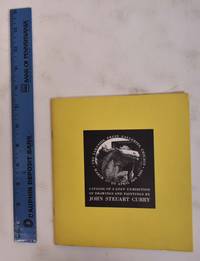
19391096731939. Softbound. Good; ex-lib. Yellow wraps with glued on bw image. 31 pp. 1 color 8 bw repros. Catalog lists 133 works. With an evaluation of the artist and his work by Thomas Craven. paperback books
19392711939. Softbound. VG. Yellow wraps with glued on bw image. 31 pp. 1 color 8 bw repros. Catalog lists 133 works. With an evaluation of the artist and his work by Thomas Craven. paperback books
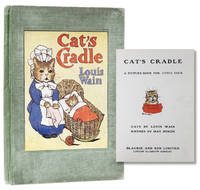
1908315541London Glasgow Bombay: Blackie & Sons 1908. First edition. Illustrated in colour on each page. 4to. Green clothspine over green paper boards with pictorial paper onlay on the upper cover. Very Good. First edition. Illustrated in colour on each page. 4to. Blackie & Sons unknown books
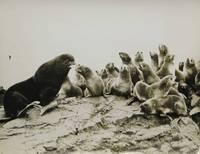
1939440921939. Photographs with some minor curling at corners. Each with stamp to verso: "Mar 9 1939 / E.H.F.". 14 b/w images 7-7/8" x 9-7/8". Possibly unpublished; while it's entirely reasonable to expect these images may have been published in a small forum such as in a government journal or report initial research is unable to confirm such. <br/><br/>Initially appointed by President Taft in 1911 no doubt as a outgrouth of the North Pacific Fur Seal Convention of 1911 Christoffers served with the Bureau of Fisheries till the 1930s rising to the position of Chief Warden. From mss notes on the back of each image we see Christoffers is credited for photographing these 14 scenes and presumably is also the author of the seal activity observations often quite detailed regarding each image also recorded on the photograph verso. The images show divers aspects of the herd with the 'Bull' often featured e.g. "The Harem Master. His favorite resting place a large rock from where he can commanad attention of his silver haired beauties and keep an eye open for interlopers." unknown books
192733686Lucca: Stab. Lippi 1927. Folio. Original publisher's heavy ivory wrappers illustrated by Italian artist Ezio Ricci 1885-1968 printed in dark red and black. 1f. recto with commemorative note verso text of the song printed in dark red 8 pp. facsimile of the composer's autograph musical manuscript.<br/><br/>With a lengthy autograph inscription signed by the composer to upper inner corner of recto of first leaf to "Prof Cav. Pardini" dated Pisa 21.9.37.<br/><br/>Wrappers slightly worn and soiled. Occasional foxing; staples rusted. First Edition. Rare no copies located outside Italy.<br/><br/>Both the music and the song text by Italian poet Augusto Garsia 1889-1956 were written to celebrate the achievement of pioneering Italian aviator and native of Lucca Carlo Del Prete 1897-1928. Del Prete together with Francesco de Pinedo and Vitale Zacchetti completed a record-breaking flight over four continents on June 16 1927. Their 29180-mile flight took 123 days. en.wikipedia.org/wiki/Carlo-Del-Prete<br/><br/>Marucelli appears to have been primarily active during the Fascist period in Italy publishing a choral method and several songs. Stab. Lippi unknown books
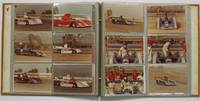
198142764Riverside International Raceway 1981. Housed in a generic commercial dual screw-post vinyl album tan with triple gold perimeter rule to covers. Minor wear & soiling to album. "81" inked to front paste-down. VG. Photos sharp with little wear or fading - Nr Fine. 14 leaves of clear plastic mounting leaves 12 images per leaf. 164 color 3-1/2" x 4-7/8" snapshots of the race drivers maintenance pit shops etc. Album: 11-7/8" x 12-1/2" <br/><br/>Riverside International Raceway sometimes known as RIV RIR or Riverside Raceway was a race track or road course in Riverside California. The track was in operation from September 22 1957 to July 2 1989. This album mostly documents the CAN-AM race held on April 10th 1981 which was won by Al Holbert in car #14 pictured 15 times. Also pictured is the actor sometimes racecar driver Paul Newman 4x 2 in an interview who had two cars #5 6 in the race driven by Bobby Rahal & Teo Fabi both DNF. The last 32 images are apparently of another CAN-AM event albeit unidentified. A nice visual documentation of this Southern California CAN-AM event. unknown books
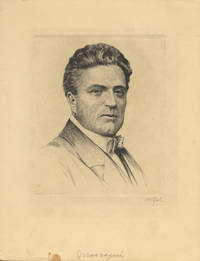
29810N.p. N.d. 120 x 95 mm. plus margins. Printed on wove paper. Signed by the artist in pencil at lower right. A very good impression. <br/><br/>Slightly worn and creased; small stain to lower edge. Mascagni was an Italian composer and conductor best-known for his one-act masterpiece Cavalleria rusticana "enormously successful from its first performance at the Costanzi in Rome in 1890. From then on Mascagni spent the rest of his long career treating a wide variety of subjects." Michele Girardi in Grove Music Online. unknown books
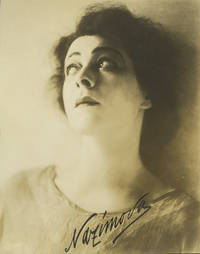
35414No binding. Very Good. 240 x 192 mm. <br/><br/>With copyright stamp of Dorice Studios to verso with minor remnants of adhesive to edges. Nazimova was noted for her roles in the plays of Ibsen Chekhov and Turgenev and also worked in film. unknown books
1984GG01612Pasadena:: Castle Press 1984. 1984. 8vo. ix. 38 pp. Frontis. port. illus. Original printed wrappers. Fine. With an afterword by Everett Gordon Hager. Castle Press, 1984. unknown books
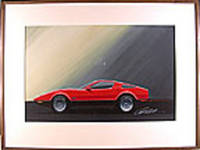
1973187771973. Mixed media on paper. Signed "Grasse" Design for Bricklin car company.<br/> <br/>This strikingly handsome sports car design was designed for Malcolm Bricklin's unsuccessful car manufacturing effort of the mid-1970's. Handsomely engineered on the outside the cars were poorly made and designed within and very few survive. Herb Grasse began designing cars professionally in 1968 for Dodge. He worked for Chrysler Ford and Nissan and eventually had his own design firm. From 1973-75 he was Chief Designer for Bricklin. He died in 2010.<br/> <br/>"herbGrassedesign"; The Museum of Automobile Art and Design website. unknown books
1924333621924. Small folio. Full dark brown cloth titling gilt to spine. <br/><br/>All published Wien by Universal Edition unless otherwise specified.<br/><br/>Contents:<br/>- Op. 12. Vier Lieder für Gesang und Klavier. PN U.E. 8257 1925. 1 title 2-9 1 blank pp. Moldenhauer 212 217 213 216 the first song published previously in Musikblätter des Anbruch May 1922. <br/><br/>-Op. 14. Sechs Lieder nach Gedichten von Georg Trakl für eine Singstimme Klarinette Bass-Klarinette Geige und Violoncelle. Score. PN U.E. 7578 1924. 1 title 2-16 pp. Modenhauer 251 240 237 222 239. 238.<br/><br/>- Op. 15. Fünf geistliche Lieder für Fesang Flöte Klarinette auch Bass-Klarinette Trompete Harfe und Geige auch Viola. Score. PN U.E. 7629 1924. 1f. title 3-14 pp. Moldenhauer 252 256 253 257 224.<br/><br/>- Op. 18. Drei Lieder für Gesang Es-Klarinette und Gitarre. Score. PN U.E. 8684 1927. 1 title 2-7 1 blank pp. Moldenhauer 281 282 283.<br/><br/>- Op. 23. Drei Gesänge . aus Viae Inviae von Hildegard Jone. PN U.E. 10255 1936. 1 title 2-12 pp. Moldenhauer 314 313 312.<br/><br/>-Op. 17 no. 2. Geistlicher Volkstext Liebste Jungfrau. San Francisco: New Music Edition 1930. 1f. title 3-7 1 blank pp. Moldenhauer 275.<br/><br/>Binding slightly rubbed. Small handstamps to some titles; several pencilled markings to violin part of last work. Lacking wrappers to individual works. First Editions. <br/><br/>Op. 17 no. 2 published separately before the complete Op. 17 issued by Universal in 1955. unknown books
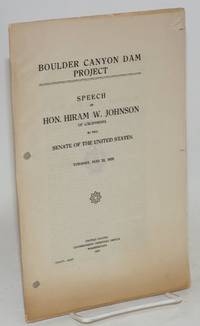
173265Washington DC: Government Printing Office 1928. 31p. smallpoint type 9.5x6 inch plain printed self-wraps. Paste-fastened also has been punch-holed for a binder slight edgewear and toning a very good copy. Johnson directs his sarcasm at senator Smoot of Utah. 106477-4547. Government Printing Office unknown books
192486856Petropolis Berlin 1924. Ltd ed. in French. Hardcover. Near Fine. 61 2p. plus 28 leaves of plates which are printed on one side and seem to alternate with text leaves. Contemporary blue buckram on which almost all of the lighter blue front and back panels of the original wrapper have been mounted. 35cm. Endpapers browned. Glassine tissue guards have some browning and a couple have corner creasing but all are present. French text. This French-language edition was limited to 175 copies 125 of which were to be numbered 1-125 and the other 50 numbered I-L on the colophon page -- this copy is not numbered. Translator not identified. Grigoriev was a Russian painter and graphic artist. <br/><br/> hardcover books