Hayes, Lt. Col. Joseph; Currie, Sir Arthur W. [Foreword]; Ralston, Lieut-Col. J.L. [Introduction]MareMagnum

1 572 résultats
362 pages. Fold-out map inside back board indicates operations of the Battalion. Twenty-one black and white photographic plates (including one at page 56 not included in List of Illustrations). Lists of: Service Dates; Engagements of the Battalion; Wastage in France; Casualties; Honours and Awards. Also includes Nominal Roll of Officers, including name, address and record of service, and Nominal Roll Other Ranks, including number, name, address and record of service. "Being a history of the justly famous 85th Canadian Infantry Battalion (Nova Scotia Highlanders) in the various theatres of the war [WWI], together with a Nominal Roll and synopsis of service of Officers, Non-Commissioned Officers and Men who served with the Battalion in France." - subtitle. Gilt lettering and decoration upon forest green cloth-covered boards. Unmarked with average wear. Binding intact. A sound copy of this important Canadian military history. [Enser p. 88. Cooke p. 130. Dornbusch 426. Amtmann H523] Book
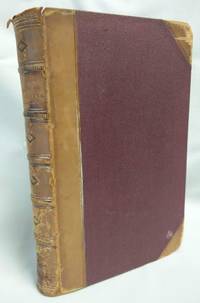
1830013641London: Henry Colburn and Richard Bentley 1830 Book. Illus. by Foldout Map and Three Illustrations. Good Minus. 3/4 Leather. 1st Edition. 12mo - over 6¾ - 7¾" tall. Original 3/4 leather over maroon cloth on boards. Marbled page edges. Five raised bands on spine with gilt and embossed decoration. Minor wear to edges and corners of leather. Top of spine a little frayed. Previous owner's bookplates in front. Front hinge broken but still holding. Medium hinge break between pgs. 120-121. Bad hinge break between pgs. 288-289. Rear hinge cracked. Foldout lithographed map of Nova Scotia counties is in very good condition - just a few extra folds at one edge. Captain Moorsom spent five years in Nova Scotia initially as an officer in the 52nd Regiment. This book is his observances of the people climate geography and economic prospects of the colony written in the form of letters home to friends in England. One biographer calls it "the most complete picture available of Nova Scotia during the 1820s." Some Nova Scotians were upset at some of his comments but Joseph Howe defended Moorsom since he'd promoted the colony in England. This book is on consignment so no discounts apply. It will be sent insured so expect a request for "extra shipping" to cover that cost. Henry Colburn and Richard Bentley hardcover
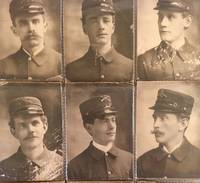
1898List319Massachusetts 1898. The 2nd Massachusetts Volunteers mustered into service in May 1898 and within a month saw significant action in Cuba at the Battle of El Caney. They were one of three volunteer units from Massachusetts to see action on the Santiago Campaign. The regiment was inexperienced - 55% were untrained recruits. The lack of experience combined with their rifles giving off a very visible black smoke led to a heavy casualties in the Battle of El Caney. After an encampment near Santiago de Cuba in which a large number of the soldiers became ill with disease - estimates are as high as 65% - the regiment returned home in August. Historians have noted that soldier demographics changed considerably from the Civil War to the Spanish American war as the smaller number of troops and the lack of a draft led to a more enthusiastic army with higher morale. <br /> <br /> The photographs in this group are interesting as a typological grouping of images of untrained soldiers and also for their historical value as most contain identifications to versos. The highlight of the group is forty-four uniformly mounted portraits of soldiers nearly all identified measuring 3 ¾ x 2 ½ inches each. Other photographs include a large portrait of Captain Frederick E. Pierce with the blindstamp of Goldsmith Studio Springfield Massachusetts and a 3 ¼ x 3 ¼ inch square card of Capt. Pierce in Camp Turner. Also included are two slightly larger photographs on similar mounts. <br /> <br /> Overall an interesting group. Good condition overall with assorted chips and wear. unknown
1898List319Massachusetts 1898. The 2nd Massachusetts Volunteers mustered into service in May 1898 and within a month saw significant action in Cuba at the Battle of El Caney. They were one of three volunteer units from Massachusetts to see action on the Santiago Campaign. The regiment was inexperienced - 55% were untrained recruits. The lack of experience combined with their rifles giving off a very visible black smoke led to a heavy casualties in the Battle of El Caney. After an encampment near Santiago de Cuba in which a large number of the soldiers became ill with disease - estimates are as high as 65% - the regiment returned home in August. Historians have noted that soldier demographics changed considerably from the Civil War to the Spanish American war as the smaller number of troops and the lack of a draft led to a more enthusiastic army with higher morale. <br /> <br /> The photographs in this group are interesting as a typological grouping of images of untrained soldiers and also for their historical value as most contain identifications to versos. The highlight of the group is forty-four uniformly mounted portraits of soldiers nearly all identified measuring 3 ¾ x 2 ½ inches each. Other photographs include a large portrait of Captain Frederick E. Pierce with the blindstamp of Goldsmith Studio Springfield Massachusetts and a 3 ¼ x 3 ¼ inch square card of Capt. Pierce in Camp Turner. Also included are two slightly larger photographs on similar mounts. <br /> <br /> Overall an interesting group. Good condition overall with assorted chips and wear. unknown books
17845638Sarlouis, le 18 mars 1784. 1784 1 feuillet in-folio oblong ( 212 x 286 mm) imprimé à l'encre noire et completé à la main à l'encre brune, cachet de cire rouge du régiment et cachet humide rouge estompé; et au dos est rédigé et signé par l'intendant du régiment, le détail reçu par ce soldat. (salissures, traces de plis, défauts d'usage.)
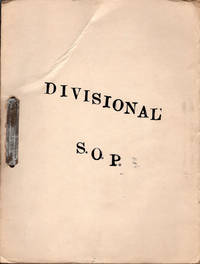
195245343Fort Benning Georgia & Korea: Privately published by the 3rd Infantry Division & the 15th Infantry Regiment 1952. 1952. KOREAN CONFLICT. First editions. Original soft covers binder punch-bound at gutter margin with steel sliding Accu-fasteners numerous annotations and corrections in ink and pencil from the library of Hiro Wakabayashi 1930-2017 Japanese-American and Korean Conflict veteran with his name in ink on title page. Volume one Divisional S.O.P. has approximately 250 pp. separate paginations per section; Volume two Regimental S.O.P. has approximately 200 pp. separate paginations some in pencil pen tipped-in or mounted form samples. First volume is a mimeograph copy; second volume is typescript copy on onion skin paper tipped-in and mounted samples forms graphs charts diagrams. Regimental Standard Operating Procedures manuals for logistics during the Korean War for the Third Infantry Division 15th Infantry Regiment. The 15th Infantry Regiment sailed for Korea from Fort Benning Georgia in August 1950 covered the withdrawal of X Corps from the Chosin Reservoir in 1950 fought to the 38th parallel in 1951 fought battles in the Kumsong sector until the armistice was signed in 1953. These logistics manuals detail all of the procedures for supply officers transportation engineering supply operations ordnance quartermaster division including forms procedures and samples of all possibilities with Army rules governing each instance. Of particular interest are the extended sections on procedures and operational issues for MASH units covering evacuation hospitals medical and dental services disease prevention sanitation medical reports physical examinations and even psychiatric services and procedures. The 15th United States Infantry Regiment is a parent regiment with lineage back to the American Civil War first activated in Wheeling West Virginia. During the Korean War the 3rd Division was known as the Fire Brigade due to its rapid response to crises and received ten Battle Stars with eleven members receiving Medals of Honor. Privately published by the 3rd Infantry Division & the 15th Infantry Regiment, 1952. paperback
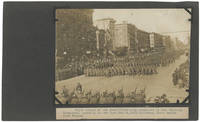
1919CAT0119New York: Underwood and Underwood 1919. First Edition. Gelatin silver prints 7 ¾ x 5 ½ inches each on 11 ½ x 7 inch black paper mounts captioned with affixed text. Very Good. Two WWI-era press photographs related to the Negro 15th Infantry Division of the New York National Guard a.k.a. the 369th US Infantry Regiment and their white commander Colonel William Hayward. One photograph shows the division on parade in New York following their return from combat duty in France in 1919 the other is a well-known image of Hayward who organized the all-black unit and served as its leader. Fighting for a record-breaking 191 consecutive days alongside French troops in the trenches the regiment became known as the “Harlem Hellfighters.†<br /> <br /> The opportunity for African-Americans to serve in WWI arose from the Selective Service Act of 1917 which drafted all men between the ages of twenty-one and thirty. Special segregated training camps were established and units were formed. The US National Archives states that 200000 African-Americans served in Europe during WWI but only 42000 saw combat. When the 15th Infantry arrived in France in 1918 Hayward was committed to the idea that his unit would fight on the front lines. After General Pershing refused to integrate them with the full US army Hayward pushed for another assignment under French command. Unlike many other segregated divisions in WWI the 15th aka 369th was eventually sent to the trenches. Its members' distinguished service brought honor and fame. Before leaving the US in 1917 the regiment had not been allowed to participate in the New York National Guard’s farewell parade. When they returned victorious Hayward ensured they were publicly honored. <br /> <br /> Both with various press stamps to versos. Small closed tear of about a half inch to upper edge of parade picture good overall. Hayward portrait with some rippling at edges very good overall. Underwood and Underwood unknown
1919CAT0119New York: Underwood and Underwood 1919. First Edition. Gelatin silver prints 7 ¾ x 5 ½ inches each on 11 ½ x 7 inch black paper mounts captioned with affixed text. Very Good. Two WWI-era press photographs related to the Negro 15th Infantry Division of the New York National Guard a.k.a. the 369th US Infantry Regiment and their white commander Colonel William Hayward. One photograph shows the division on parade in New York following their return from combat duty in France in 1919 the other is a well-known image of Hayward who organized the all-black unit and served as its leader. Fighting for a record-breaking 191 consecutive days alongside French troops in the trenches the regiment became known as the "Harlem Hellfighters." <br /> <br /> The opportunity for African-Americans to serve in WWI arose from the Selective Service Act of 1917 which drafted all men between the ages of twenty-one and thirty. Special segregated training camps were established and units were formed. The US National Archives states that 200000 African-Americans served in Europe during WWI but only 42000 saw combat. When the 15th Infantry arrived in France in 1918 Hayward was committed to the idea that his unit would fight on the front lines. After General Pershing refused to integrate them with the full US army Hayward pushed for another assignment under French command. Unlike many other segregated divisions in WWI the 15th aka 369th was eventually sent to the trenches. Its members' distinguished service brought honor and fame. Before leaving the US in 1917 the regiment had not been allowed to participate in the New York National Guard's farewell parade. When they returned victorious Hayward ensured they were publicly honored. <br /> <br /> Both with various press stamps to versos. Small closed tear of about a half inch to upper edge of parade picture good overall. Hayward portrait with some rippling at edges very good overall. Underwood and Underwood unknown books
Second, best, and last edition of this comprehensive guide to military strategy. A how-to guide for all ranks of soldier, from private to general. With three folding plates, showing typographical diagrams of military formations. Cockle 588. 4to. Contemporary vellum, title in manuscript on spine. Binding lightly soiled but surprisingly unworn. A little minor, faint, old staining in margins of the first few leaves, but otherwise very fresh internally. A very good copy of a rare book.
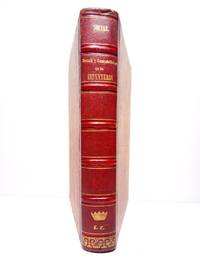
185837012Barcelona: Imprenta de Luis Tasso 1858.- 247 p. 676 p. de formularios y estados; 4º mayor 29 x 22 cm; Media Piel chagrén época lomo dorado con corona iniciales y greca al pie.- RARO libro que es en sí el primer tratado completo de contabilidad militar impreso en España. Los cantos de las tapas y las esquinas con rozaduras y pequeños deterioros diversos pero restaurados en lo posible. Interior impecable. EJÉRCITO Y TEMAS MILITARES Libro en español Imprenta de Luis Tasso hardcover
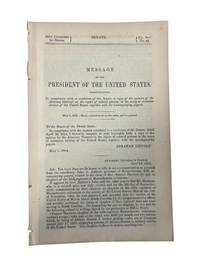
1864214721864. Lincoln Abraham. Message of the President of the United States. on the Rights of Colored Persons in the Army 1864 documents federal policy and legal interpretation concerning the status and compensation of African American soldiers and officers during the Civil War and provides direct evidence of how the U.S. government addressed racial inequality within the Union Army. Transmitting Attorney General Edward Bates' formal opinion the document centers on the case of Reverend Samuel Harrison chaplain of the 54th Massachusetts Volunteer Infantry and addresses the broader question of whether Black service members were entitled to the same recognition and pay as their white counterparts. Issued during active wartime mobilization of United States Colored Troops the pamphlet supports research into African American military service Civil War law and the evolving federal stance on racial equality within military institutions.<br /> <br /> Lincoln Abraham. Message of the President of the United States Communicating. a Copy of the Opinion of the Attorney General on the Rights of Colored Persons in the Army. Washington: Government Printing Office 1864. Disbound pamphlet 9 pages. The text includes the full opinion of Attorney General Edward Bates affirming that "Mr. Harrison was the lawfully appointed and qualified chaplain of the 54th Massachusetts regiment" and therefore entitled to full compensation. The case arose when Harrison despite his commissioned status was paid only ten dollars per month and one ration under interpretations of the July 17 1862 law governing Black enlistment. Bates rejects this limitation stating that denial of proper pay would constitute "a plain violation of the purpose of Congress." Accompanying documents include War Department orders issued by Secretary of War Edwin M. Stanton authorizing the recruitment of African American regiments under Governor John A. Andrew of Massachusetts as well as a muster-in roll confirming Harrison's official appointment.<br /> <br /> Issued at a moment when the Union relied increasingly on African American troops this document records the tension between discriminatory policy and federal efforts to formalize Black military service within established legal frameworks. The case of Samuel Harrison connected to the 54th Massachusetts one of the most prominent Black regiments of the war highlights both institutional inequities and the mechanisms through which they were contested at the highest levels of government. The inclusion of legislative interpretation executive transmission and military documentation within a single publication makes it a concentrated record of how civil rights questions were adjudicated during wartime illustrating the gradual expansion of legal recognition for African American service members. Light toning and minor edge wear from disbinding; overall condition very good. unknown
19462296441The 75th Infantry Division / Army & Navy Publishing Company 1946. First Edition. Large Hardcover. Very Good/No Jacket. Rowe John S. Signed by author. Original platoon photograph signed by dozens of members of the 75th Infantry Division and noting their home towns laid in along with a Remember Pearl Harbor soldier 'diary' detailing the service of a soldier in the division. A couple faint spots to boards otherwise an excellent copy. Soldiers who signed included: Pearson C. Schiller; Sgt. Chitwood; Domenico J. Scatena; George T. Wingard Jr.; Mike Stirling Jr.; Paul Toman; Joe LaPointe; Lowell E. Murphy; 'myself' probably Nathan Hena who signed the Pearl Harbor sheet; Jack M. Reese; Robert N. Dugal; Joseph A. Buzogany; Robert T. Berkebile; Joseph W. Lasley; Grover E. Hardy; Douglas Huff; William C. Woodward; Ivan C. Else; Francis Quinn; G.L. Mae; Calvin W. Hood; Howard L. Marshall; Chester Kalm; Delwyn P. Goodyear; Sgt. Adams; Walter J. Clausius Jr.; John J. Long; Morton L. Plesser; Ridley W. Meek; Richard H. Phillips; Jerry H. Steward; Harry S. Singer; William H. Fleming; Platton Sgt. Smith the sergeants' names are all in pencil in the same hand so they were probably written in by the owner of the book. Some names are numbered to correspond with the photo others are marked as 'not present for picture'. 1946 Large Hardcover. Unpaginated. Black-and-white photographs throughout depicting the service of the 75th Infantry Division toward the end of World War II. The 75th Infantry Division / Army & Navy Publishing Company hardcover books
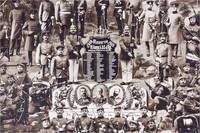
3733807<p>Metz Alsace-Lorraine German Empire: Gebrüder Notton Römerstr. 10 1908. Composite silver process photograph. Mount: 18¾ x 23½ inches. Image: 14¼ x 17¾ inches. Light rubbing to edges of mount with minor wear at bottom right; margins foxed; small mark at bottom extending faintly into image; very good.</p> <p>This is a rich and complex composite photograph from 1908 captioned with the words “Zur Erinnerung an Meine Dienstzeit†which translates to “In remembrance of my service time.†It was created for the 10th Company 8th Württemberg Infantry Regiment Grand Duke Frederick of Baden’s Regiment—possibly light infantry as in “Jäger infanterieregiment.†This regiment was based in Strasbourg in Alsace-Lorraine and served within the Imperial German Army. </p> <p>The surnames of these men are: Baibel Baierl Bauer Berger Jos. Burger Joh. Bumb Büchel Dirr Dirschedl Echtler Feibler Forster Fuchs Gaibl Ganslmeier Gundel Habender Hagl Haub Haüselmeier Herzog Hiemer Huber Jacob Janker Keim Kirchbauer Klemm Knott Kopp Kraus Kreckl Kübel Laubhardt Laubenbacher Lautner Lippert Maier Joh. Maier Seb. Merkel Miehling Moosburger Petermann Pfeilschifter Pflug Prior Rachl Rauschecker Ries Rommel Schmid Schmidt Schnabel Scholz Schraudolf Schweiber Stegmeier Sutter Ulm Weber Weindl Wenniger Wohlfarth Zieringer Zeilinger Zirngibl.</p> <p>The photograph presents a multitude of uniformed soldiers in a staged setting designed to resemble a military encampment or a gathering. The arrangement of soldiers is not casual but highly structured with officers shown with swords and details prominently positioned in the foreground. Many of the men are shown hoisting enormous beer steins with rather serious expressions.</p> <p>The photograph also features regimental flags and other military regalia which were symbols of pride and unity for the unit. The arrangement of soldiers in rows with some seated and others standing is typical of military portraiture of the time intended to display the order and discipline of the troops.</p> <p>The backdrop of the photograph features a bucolic scene a blend of a real outdoor setting and painted backdrops. This kind of photography allowed for the superimposition of studio-taken images onto a different background giving the impression that all individuals were present at a single location. Such methods were used to create cohesive unit photographs when it was not possible to gather everyone at once.</p> <p>The inclusion of phrases like “Mit Gott für König und Vaterland†With God for King and Fatherland reinforces the patriotic sentiment of the era and the soldiers’ commitment to their country and monarch. Other phrases such as “Die Well ist grofs Die Welt ist schön; Wer weifs ob wir uns wiedersehn!†“The world is big the world is beautiful; Who knows if we will see each other again!†reinforce the romanticism of military service.</p> <p>From a photographic history perspective the image represents the advancements in photo montage techniques at the turn of the 20th century. The image quality clarity and composition indicates that the photographers Gebruder Notton used a large-format camera which was capable of capturing detailed group portraits.</p> <p>A rather remarkable photograph encapsulating the military ethos of the German Empire during a period of intense nationalism and militarism leading up to the First World War.</p> unknown
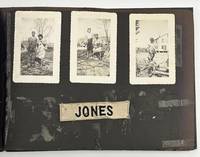
19603443Kansas and Germany 1960. Very good. Twenty-two leaves illustrated with 167 photographs most mounted and captioned in white ink with a handful of loose images and one cloth nameplate. Some images removed. Oblong folio. Contemporary dark blue leatherette triple-ruled gilt borders on front cover string tied. Faint manuscript title on front cover reads "Book of the Past." Front cover detached some edge wear. Minor chipping to initial leaves first two leaves detached photos in generally nice condition. A unique collection of photographs documenting the military service of Private Eugene Jones an African American soldier in Company B of the 26th Infantry known as the Blue Spaders for the spade-like device on the unit's insignia. According to the manuscript captions written on the inside front cover which include his serial number Private Jones hailed from New York City and was stationed in Baumholder Germany as part of the 26th Infantry's 1st Battle Group. The 26th Infantry regiment was sent to Berlin and other spots in Germany in the early 1960s as part of the United States' efforts to reinforce West Germany against the Cold War forces in East Germany. Company B was likely some kind of support unit as Baumholder is located in the far-western portion of Germany much closer to France than Berlin.<br /> <br /> The present photo album contains numerous images of Jones' fellow soldiers most identified by name in manuscript captions. Other photographs picture the unit during their brief training at Fort Riley in Kansas before deploying to Germany. Once in Baumholder the soldiers are pictured in the bivouac area on the streets playing baseball with various women on base and in the barracks on patrol unloading Jeeps at the airstrip and more. One photo shows the exterior of the Baumholder Department Store. Some of the later pages contain earlier photographs showing some of Jones's friends and family from New York; these pages appear to have been ported over from another photo album. The only non-photographic item in the album is Jones's cloth nameplate.<br /> <br /> An interesting photographic record of service in an integrated unit in Cold War Germany. unknown
186432582Columbia: Evans and Cogswell 1864. Stiff wraps. Good. 12mo. 278 pages. Stiff paper boards with title on the front cover. Black cloth spine. Covers are worn and discolored. It appears the covers are facsimiles. Light to moderate foxing to the contents. Pencil inscription on the right front flyleaf reads "Col. Samuel W Milton from the publishers." <br /> <br /> The author wrote this book during his recovery from wounds in battle. He dedicates this work to Jefferson Davis. Jefferson Davis thanks the author and calls him "a master of the art of war" on page 12. Confederate imprint.<br /> <br /> Parrish & Willingham 4953; Confederate Hundred 60; Sabin 44651. The previous owner served as an Assistant Adjutant General under Samuel Cooper from 1863 to the end of the war. From Find A grave dot com taken from the Biography of Eminent Men of the Carolinas: <br /> <br /> Samuel Wickiff how it is spelled in the obit Melton was born in Yorkville S. C. February 7 183 hard to read. Receiving his early education in Yorkville he graduated from the South Carolina college in the class of 1852. He edited the Chester Standard published in Chester in 1852 and 1854. Then he returned to Yorkville and established the Yorkville Examiner on January 1 1855 running it until 1858 when he sold out to Lewis M. Grist. In the meantime in 1857 he was admitted to the bar and commenced the practice of law with his brother C. D. Melton at Chester continuing until the war broke out. He enlisted in the Confederate army in 1861 on the staff of Gen. M L. Bonham as aid-de-camp accompanying him to Virginia remaining with him until after the first battle of Bull Run. Subsequently he went on the staff of Maj. Gen. Gustavius W. Smith commanding the Second corps he having the rank of major. He remained with Gen. Smith until February 1863 and was then assigned to duty in the office of the adjutant and inspector general of the Confederate army at Richmond where he remained until the close of the war. He was in the first battle of Bull Run in the Peninsular campaign in the battles around Richmond at Seven Pines the campaign in 1863 in North Carolina and temporarily on the staff of Gen. Beauregard at the battle of Drury's Bluff. The chief duties however from early in 1862 to the close of the war were in the adjutant general's office in Richmond. Evans and Cogswell unknown
189017551Paris, Garnier Frères, 1890 ; fort in-8, cartonnage polychrome sur fond kaki, titre doré, dos décoré et doré, second plat décoré en noir, plats biseautés, tranches dorées ; (4), 1138 pp. , 54 illustrations aquarellées à la main, dont 16 hors-texte, 30 en-tête et 8 dessins in-texte, 7 vignettes en noir et blanc.
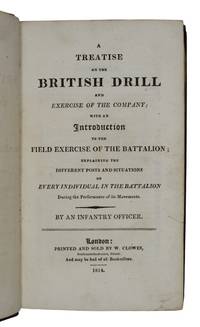
1814AQ22779London: Printed and sold by W. Clowes 1814. 3 vi-xxxii 351pp 1. Without half-title. With 82 engraved figures on five folding plates. Contemporary gilt-tooled calf. Lightly rubbed and marked corners bumped head of spine scorched. Marbled endpapers armorial bookplate of Thomas Francis Fremantle third Lord Cottesloe 1862-1965 to FEP manuscript shelf-marks to front blank fly-leaf tear to leaves K9-10 - touching text without loss of sense. The uncommon first edition of an exhaustive and authoritative manual on British Army drills; published in the penultimate year of the Napoleonic Wars. A second edition appeared in 1816. In his prefatory remarks the anonymous infantry officer bemoans the 'little attention which is sometimes bestowed to the instruction of the troops' and the 'careless manner in which the drill and exercise are often carried on' situations which he hopes his book may rectify. The usual databases record copies at five locations BNF Buffalo California Canadian Museum of History and Mississippi. . First edition. 12mo. Printed and sold by W. Clowes unknown
1928068881Worcester MA: Commonwealth Press 1928. Book. Very Good. Hardcover. 1st Edition. 8vo - over 7¾" - 9¾" tall. Tan cloth lettered/illus. in black. Covers are typically somewhat grubby from handling but otherwise show only minor wear with minor rubbing to extremities. Text block edges dulled by age. Firm binding. xi370 pp. illus. 2 fully intact folding maps tucked in rear pocket. Very scarce. Commonwealth Press Hardcover
192015625Pissburgh: Reed & Witting Company 1920. Decorative Cloth. Very Good. The uncommon 1920 1st edition of this remarkable first-person account of the action on the battlefields of France in 1918 arguably the War's most decisive year from the perspective of a single American machine gunner. THIS COPY IS WARMLY INSCRIBED BY THE AUTHOR'S FATHER HERBERT DU PUY WHO HERE STATES THAT "COL. CHARLES M. DUPUY THE AUTHOR DIED ON JANUARY 25 1925 FROM THE AFFECTS OF HIS SEVERE ARMY LIFE. HE WAS BURIED WITH MILITARY HONORS ON JANUARY 28 1925". The father's inscription is clearly a powerful one --if somewhat ambiguous-- and leaves open the possibility that his son died by his own hand having apparently been deeply traumatized by his service. The book is solid well-preserved and VG in its duo-tone cloth with light soiling and scuffing to the the panels. Internally very light soiling to the the endsheets and light minor creasing along a number of the pages. Quarto crisp impressive black-and-white photos thruout complement Colonel DuPuy's text. <br/><br/> Reed & Witting Company hardcover books
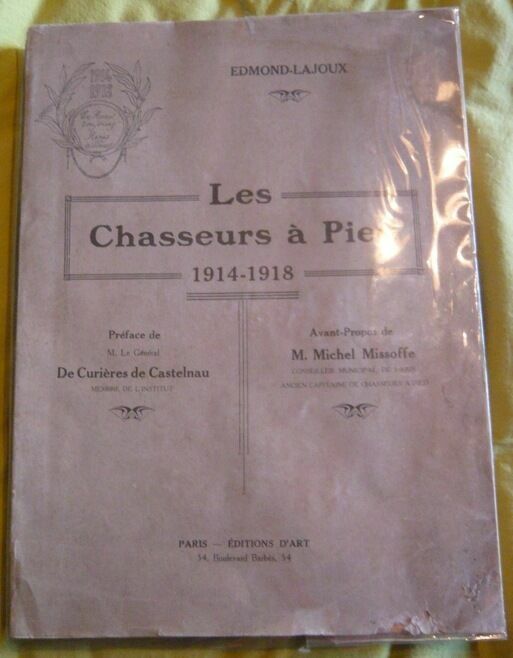
5233Paris éditions d'Art sans date (circa 1920) - 2 volumes brochés 28 cm x 38 cm 595 pages (les 2 vol.) + 17 pages de noms cités - Texte de Edmond-Lajoux préface du Gal de Curières de Castelnau avant-propos de Michel Missoffe - Ills in et hors-texte noir & blanc de l'auteur - Signature du propriétaire sur chaque volume - Petit manque et une tache sur la couv. du premier volume coin inférieur gauche restauré sur le deuxième volume sinon très bon état
236346Paris, Leroy, 1913 in-4, XXX-156 pp., nbses ill. in et h.-t., demi-maroquin bleu canard à coins, dos à nerfs orné d'un drapeau mosaïqué, tête dorée, couv. cons. (Flammarion-Vaillant).
Signed, without inscription, by author upon title page. 42, [2] one-sided pages. Black and white reproductions of photos, maps, and many fascinating wartime documents. Undated but appears to be circa 1989. "I compliment you on your vivid account of your capture and escape at Verrieres Ridge. It is fascinating and very well expressed. I wouldn't suggest you change a word." - Col. C.C.I. Merritt V.C. Author's address ink stamped inside back cover, otherwise clean and unmarked. A sound copy of this important and dramatic personal WWII account. Book
Pages 178-264 pages plus 16 pages of great vintage ads. Features: "Ju-Ju" Justice - a startling West African Ju-Ju incident and its sequel, involving the Elder Dempster branch boat "Lagoon"; Tales of the Service - The Smuggler's Cave (part III) - stirring stories of the Service contributed by a customs-house officer on the West Coast of Scotland and also in Ireland; The Wooing of Abia - a charming yet thrilling love story involving natives of Papua, with great photos; Beyond the Law (part III) - The Dalton Gang terrorized the Western States of America for years while committing train robberies and holding up banks; The Empire's Only Eskimo Soldier - John Shiwak, of Labrador, the only Eskimo soldier to lay down his life for the empire (article with photo); Exploring the Ice-Wilds of Eastern Karakoram (part III) - the Himalayan exploits of Fanny Bullock Workman and William Hunter Workman (with photos); A Nightmare Voyage - in 1905, the American barque Challenger left Port Townsend for Japan in the command of Captain Pedersen; Photo of a Papuan chief's daughter wearing a necklace of hundreds of dog teeth; Lion-Hunting as a Business - Frank Allen of Rhodesia is the only known lion-hunter - article with photos; A Woman's Journey Across Africa (part IV) - a 4,000 mile honeymoon trip east to west across the Dark Continent - with photos; The Baboon and the Baby - a baboon steals a baby from a home; My Experiences in German East Africa - James Henry Butcher relates his thrilling experiences as a private in the South African Infantry, with photos; The Shining Town - a fascinating photo-illustrated sketch of life and scenes in Granada; The "White" Chief of Penrhyn Island - the shipwrecked author was adopted by a chief in the South Sea Islands and went on to become the ruler of an island and its people; Only a Half-Breed - in South-West Colorado in 1869 a white man's squaw prevented a war; Fantastic ad "Swear Off Tobacco" by the Newell harmacal Company of St. Louis inside back cover; and more. Unmarked with average wear. A quality copy of this great vintage issue. Book
1920129462London: Hodder and Stoughton 1920. First Edition. Hardcover. Very Good. London Hodder and Stoughton circa 1920. Large octavo xx 468 pages with 20 maps and diagrams plus 3 folding maps and 16 plates including 2 tipped-in colour plates. Gilt-decorated cloth a little marked and mottled and slightly bumped at the extremities; endpapers offset; edges foxed with light scattered foxing elsewhere; pages adjacent to all plates uniformly tanned; occasional ink underlining to about 20 pages; uneven tanning to three openings from acidic bookmarks no longer present; trifling signs of age and use; a very good copy of a book that does not wear well in our experience. The foreword in French is by Marshal Foch four pages including the translation. A contemporary gift inscription 'To Mother and Father with love from Enid. September 4th 1920' is written in ink on the front flyleaf. Mounted on the front pastedown is a contemporary postcard-format commemorative photographic portrait with the printed caption 'For the Honor of Both . Victoria A.I.E.F. 1916'. Inscribed below it in ballpoint pen thus at a much later stage is the name 'Edwin' and 'Australian Imperial Empire Force 1916'. The honor roll for the 60th Battalion has a pencil mark next to the name 'Gunn Pte E.I.' see page 463. We presume the portrait depicts 1797 Private Edwin Innes Gunn who was killed in action at Fromelles on 19 July 1916 less than three weeks after disembarking at Marseilles. <p>Dornbusch 311; Fielding and O'Neill page 225; Trigellis-Smith 188. Hodder and Stoughton hardcover
8vo., First Edition, with coloured frontispiece, title in red and black, 17 monochrome plates, 9 illustrations and 12 maps and plans (a number full-page) in the text and a large folding map on japon; handsomely bound in full burgundy crushed morocco, sides with gilt frame border, back with raised bands, second and fourth compartments ruled and lettered in gilt, all other compartments tooled in gilt, gilt top, hand-made endpapers, a most attractive copy ideal as a gift or for presentation. With 16pp publisher's catalogue bound in at end. Published in the 'Country Life Series of Military Histories'. Includes coloured plate of uniform, monochrome plates of colours (1-4 Bns), medals, bibliography, ROH (first two years of WWI), and list of officers serving in August 1916. Sutcliffe, p.327; White, p.109.