167 résultats
19742091502135308727Oizumi shoten 1974. Soft Cover. Fine. Number of books: 3 Oizumi shoten paperback
18851307130010Government Printing Office 1885-01-01. Hardcover. Very Good. 0x0x0. A quality copy. Publisher's brown boards. 1 p. l. 121 p. illus. 20 folding maps. 24 cm. Clean unmarked pages. Good binding and cover. From Chilkoot Inlet Alaska to Fort Selkirk on Yukon River Alaska. Account of Indian tribes. Senate executive document United States. Congress. Senate 48th Congress 2nd session no. 2. Government Printing Office hardcover
1961012846Raleigh: Charles R. Sanders Jr. 1961. First American edition. Cloth. Near Fine/Very Good slipcase. 4to - over 9¾ - 12" tall. 1st American edition. Facsimile of the 1st Confederate edition. Limited and numbered edition of 500 this copy being 498. INSCRIBED. A Near Fine copy in Very Good slipcase. Sm. 4to.152 pp. Cloth and paper in original glassine housed in the publisher's slipcase. The slipcase is lightly soiled. The glassine is starting to tone. INSCRIBED by the publisher on the front end paper. A Near Fine copy in Very Good slipcase. Nevins II-138 Facsimile of the Confederate edition of which only 3 copies are known to exist. "A beautifully printed and bound reissue of Noel's original text; editorial trappings are absent"-Nevins Important because of the light it throws on Sibley's campaign in the Southwest. Charles R. Sanders, Jr. unknown
tax mala mus 0818Fine. unknown
1923043773Mittler. nice copy; but ex-private library; Withdrawal card on rear endpaper; stamp on front endpaper; stamp on edges . Very Good. Hardcover. 1st Edition. 1923. Mittler hardcover
192232809Fort Riley KS: Cavalry School 1922. First edition. Hardcover leatherette embossed in gold. Very good covers shelf rubbed outer pages lightly worn. 272p many photos line ills. and ads. No jacket as issued. Small bookseller label in back. Doings at Fort Riley in the academic year 1921-22. Many articles and photos about the history of Fort Riley the classes field officers troop officers basic National Guard and Reserve tactics weapons riding with the A.F. in Germany polo building jumps and cross-country obstacles Saumur etc. Also school activities show results humor and cartoons. The texts are by students and various officers including Harry B. Chamberlin's "Observations on Riding and Training" and Major George S. Patton on "The Cavalryman" "you must become a horsemaster a scholar a high minded gentleman a cold blooded hero and a hot blooded savage if you would be a successful Cavalry leader". Dozens of photos of riders and horses mostly named the buildings the faculty and more. Dedicated to Colonel Hamilton S. Hawkins assistant commandant with his photo. Many local and military related ads. The sixth appearance of the Fort Riley yearbook which ceased publication in 1928. This year is very scarce. Heavy; shipping/handling will be extra. Please keep this in mind when ordering. Wells 6143.1. [Cavalry School] hardcover
185479672Cincinnati: U.P. James 1854. Later printing. Hardcover. Good. Quarterbound buckram over leather spine with gilt lettering. Original Minor age-tanning and staining/tideline throughout and marginal spotting. viii 144 pages. With price of twenty-five cents printed at the top of front wrap. 13 illustrations. Text in double columns. Howes H-767. Graff: 2006. One of the later printings from earlier stereotype plates which had been retained Wagner Camp Becker 134 probably 1854 or after when the James brothers dissolved their business partnership. U.P. James hardcover
195287562Atlanta GA: Albert Love Enterprises c1952. Presumed First Edition First printing. Hardcover. Good. The format is approximately 9 inches by 12 inches. Dornbusch 411. Unpaginated. Endpaper map. Illustrations. Maps. Cover worn and soiled. Edges and corners rubbed. No dust jacket present. Large volume somewhat shaken. If sent outside of the U. S. this would require additional shipping charges. Includes a section on the History of the First Team prior to Korea going back to its precursor lineage units its formal organization in 1921 and its spectacular achievements during World War II. After a substantial text and pictorial section on the combat operations and military activities the volume ends with information on The Division Patch information on the Headquarters and Headquarters Company 1st Cavalry Division 5th Cavalry Regiment 7th Cavalry Regiment of Custer fame and Garry Owen 8th Cavalry Regiment; Headquarters and Headquarters Battery 1st Cavalry Division Artillery 61st Field Artillery Battalion 77th Field Artillery Battalion 82nd Field Artillery Battalion 99th Field Artillery Battalion 29th Antiaircraft Artillery Automatic Weapons Battalion 92d Antiaircraft Artillery Automatic Weapons Battalion 8th Engineer Combat Battalion 13th Signal Company 15th Quartermaster Company 15th Medical Battalion 15th Replacement Company 16th Reconnaissance Company 27th Ordnance Maintenance Company 70th Heavy Tank Battalion 71st Heavy Tank Battalion 191st Counter-Intelligence Corps Detachment 545th Military Police Company and 1st Cavalry Division Band. This is followed by the Roster First Cavalry Division which gives unit name street address and home town and state. The 1st Cavalry Division initially organized in September 1921 at Fort Bliss Texas was serving on occupation duty in Japan when the Korean War began in the summer of 1950. On 18 July 1950 elements of the division went ashore at P'ohang-dong South Korea moving quickly westward to block the enemy along the main Taejon-Taegu corridor which led back to the ports on the Sea of Japan. With unrelenting pressure from the enemy the division withdrew to Kumch'on and later east of the Naktong River where it held part of the front near Taegu on the Pusan perimeter. During the month of August "The First Team" successfully countered five major North Korean attacks in that section. In early September the division launched an attack against the "Walled City" a series of high mountain ridges along the perimeter which the enemy repelled. On 15 September however the United Nations began a new offensive with an amphibious landing at Inch'on near Seoul; with the opening of the second front the 1st Cavalry Division began a drive northwest of Taegu. Six days later the division broke out of the perimeter and North Korean pressure in the south ended. Pursuit of the enemy followed and on 27 September the division met the 7th Infantry Division at Osan. From there the 1st Cavalry Division shifted north to the Kaesong area near the 38th Parallel the dividing line between North and South Korea. On 9 October the 1st Cavalry Division was ordered to take Kumch'on in North Korea which fell on 14 October. Shortly thereafter the division reached P'yongyang the North Korean capital. Elements of the division linked up with the 187th Airborne Infantry at Sunch'on and other elements turned southwest to Chinnamp'o the main port of North Korea. Oon 1 November a new more savage conflict began. Waves of enemy forces swept over the 1st Cavalry Division area near Unsan and the division fell back to a line between the coast and the Taedong River valley. By 12 December the division had withdrawn to only six miles north of Seoul and in January 1951 it occupied positions south of Seoul in the Ch'ungju area. Seoul had been captured but the enemy did not cross the Han River. When the enemy failed to follow up its recapture of Seoul the 1st Cavalry Division undertook a reconnaissance in force resulting in a limited offensive north and west of the capital. By the end of February "The First Team" had reached the Hongch'on area in the central front midway between Seoul and the Sea of Japan. In February the 1st Cavalry Division pushed to the Hwach'on Reservoir north of the 38th Parallel and then went into reserve. On 22 April the Chinese Communists began a new offensive to dislodge the UN forces and the division was given the mission of defending Seoul and the area north of the city. The division pushed northward and by the end of May it was again in North Korea. The 1st Cavalry Division's next assignment was to attack the "Iron Triangle" an area from P'yonggang southeast to Ch'orwon and southwest to Kumhwa which served as a marshalling zone for the enemy. In December 1951 the 45th Infantry Division replaced the 1st Cavalry Division which then began redeploying to Hokkaido Japan. The last element of the 1st arrived in Japan in mid-January 1952. Albert Love Enterprises hardcover
1902228743<p>First edition. 8vo. Frontispiece portrait over 20 b/w illustrations from drawing by Constance Parris. 2 page introductory essay by Amy Dudley. Original stiff black printed wrappers. Very good. 130 pages. Scarce. No signatures or bookplates. Includes chapters on Father Serra land titles Mormons etc. Howes C-1; Rocq #7052; Cowan p. 91.</p> Times-Index Press paperback
1807222466London: Printed for the War-Office by T. Egerton at the Military Library 1807. Sixth edition. Table and 13 folding plates at rear. xvi 374 pp. 1 vols. 8vo. Full contemporary calf maroon leather spine label. Joints cracked but firm; a Very Good copy. Contemporary booklable of Robert B. Taylor Norfolk and his signature on ffep. Sixth edition. Table and 13 folding plates at rear. xvi 374 pp. 1 vols. 8vo. Printed for the War-Office by T. Egerton, at the Military Library unknown
190532898Philadelphia: Franklin Printing Company 1905. First Edition. Hardcover. Good. Thick quarto. 1 xxxvi 614 pages 2. Illustrated with frontispiece photograph of Brigadier and Brevet-Major General William W. Averill folding maps photograph views and portraits. Blue cloth hardcover with gilt title on the spine. The rear hinge is slightly cracked. Light foxing to the verso of the right front flyleaf and to the recto of the frontispiece photograph. Interior text is very clean. Contents include a roster. <br /> <br /> This copy has several notes written in pencil and an inscription that takes up the complete right front flyleaf. Pencil inscription "From Auntie Helen Christmas 1956" written top of the front paste down. Below this inscription is a list of 32 marked pages regarding the service of Colonel Samuel W. Owen and Major Howard Edmonds both officers photograph portraits are located in the book. The inscription on the right front flyleaf reads - "Dear Charles III Your old Auntie would like you to have this book. The pages marked are a brief official record of your Great Grandfather part in the Civil War. He was a wonderful man I knew him and loved him very much. signed Major Howard Edmunds Col. 3rd Pa. Cavalry." Written on the front blank end sheet is a note - "Col. Samuel Owen was your great grandmothers Father." The illustration on preliminary page iv shows 4 soldiers playing "Reveille" with an arrow pointing to one the soldiers with the statement "Major Edmonds he looked like this! 1861". Pencil remarks are made in the text with some short passages underlined. <br /> <br /> Nevins I page 143 - "An exceptionally full day by day chronicle of the regiment first commanded by William W. Averill; indispensable for an insight into Eastern cavalry operations throughout the four years of war. Franklin Printing Company hardcover
18451125558325London: Parker Furnivall and Parker 1845. Book. Near Fine. Hardcover. Rev Edit. 12mo - over 6¾ - 7¾" tall. blue blind-stamped cloth.51 pages .illustrated 2 full page plates title page vignette marbled end papers marbled edges RARE. in near fine condition. Parker, Furnivall and Parker Hardcover
190940921Memphis Tennessee: E. H. Clarke & Brother. Very Good. 1909. Hardcover. Very Good condition. Small grey cloth hardcover with gold writting on the title. Corners and bottom of spine are worn some markins on the cover. Pages are slightly aged and there are a couple small feded pencilings inside the cover. Otherwise the interior is excellent condition. Book has been glassine wrapped for protection. ; 5 3/4" x 8"; 189 pages . E. H. Clarke & Brother hardcover
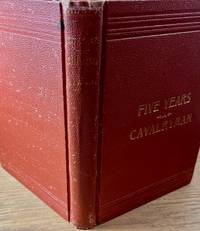
188934405Jacksboro Texas: J. N. Rogers & Co. Printers 1889. Hardcover. Good. Octavo. viii pages 9-319 pages. Brown cloth hardcover with gilt titles on the front cover and spine. Light rubs to the cloth on the spine and board edges. Corners worn. Small stray pen mark page 9. Light damp stain bottom text edge. Text printed on pink paper is very clean inside. Binding cords visible towards the back but text block is firm and unshaken. Author joined the United States Army shortly after the end of the Civil War. He served in Texas and recounts several events including fights with Native Americans. <br /> <br /> Howes N 39; Adams Herd 1380; Rader 2280; Graff 2579; Jenkins Basic Texas Books 131. J. N. Rogers & Co., Printers hardcover
Z1-H-004-01695Saunders Otley and Co. Used - Good. 1865. pp47 24 ads. Ex institutional library. Dedication to endpaper " J. Gibbs esq. Chanpion of Medical Liberty with the Author's respect" Bookplate of Gibbs to endpaper. Pen changes to text in the author's hand. Father of Tudor St. George Tucker. Ships from UK in 48 hours or less usually same day.Your purchase helps support Sri Lankan Children's Charity 'The Rainbow Centre'. 100% money back guarantee. We are a world class secondhand bookstore based in Hertfordshire United Kingdom and specialize in high quality textbooks across an enormous variety of subjects. We aim to provide a vast range of textbooks rare and collectible books at a great price. Our donations to The Rainbow Centre have helped provide an education and a safe haven to hundreds of children who live in appalling conditions. We provide a 100% money back guarantee and are dedicated to providing our customers with the highest standards of service in the bookselling industry. Saunders, Otley, and Co unknown
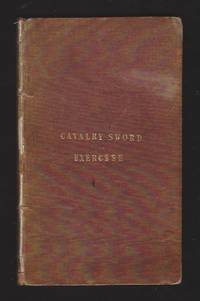
183696361London: W. Clowes and Sons 1836. Hardcover. Good. Scarce 1836 hardcover edition of a System of Drill for sword exercises written by the man who formulated the exercises. Original calf boards with title in gilt on front. Binding is a little wobbly but holding. Ex-library with stamps Trinity College Carmarthen on front and rear pastedown pages and title page. Book is in good condition. Faint staining on corners of some pages. Short tear on one page. Original owner's name in brown ink on title page. 16mo. 27 pp. of text followed by 14 pages of line drawings showing positions; a final plate is indicated Salute but isn't present nor does it appear to have been taken from the book. From the estate of Canadian military collector extraordinaire Donald Skinner. <br/><br/> W. Clowes and Sons hardcover
1896152509Bruxelles : J. B. Stephens 1896. First Edition. Hardback. A fine copy in the original blind tooled pebbled cloth. Remains particularly well-preserved overall; tight bright clean and especially sharp-cornered. Ex-libris copy with minor internal marks remaining. ; 61 pages; Description: 61 p. : ill. some foldng ; 15 cm. Subjects: Explosives --Tactics --Warfare. Lieutenant Piret's copy with signature. Bruxelles : J. B. Stephens hardcover
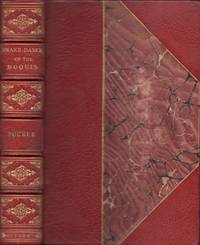
188435196London: Sampson Low Marston Searle & Rivington 1884. Three-quarter leather. Good. Octavo. xvii 371 pages 32 page publisher catalog bound in back. Illustrated with color frontispiece and 31 plates in the back of the text. Recased. Three quarter red leather binding with reddish marbled paper covered boards. Reddish marbled end papers. The original green cloth front cover and spine with gilt title and gilt illustration is bound in the back of the book. The right front flyleaf and the the title page are both clipped at the top edge suggesting a possibly clipped signature of the previous owner. Book plate of Robert C. Euler former anthropologist of the National Parks located on the front paste down. <br /> <br /> Howes B 655; Graff 368 - "The Moquis Indians of Arizona are of course the Hopi. The snake-dance is still performed but is too fascinating to be called "revolting" today. Sampson, Low, Marston, Searle, & Rivington unknown
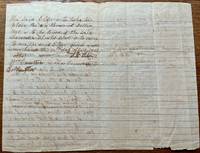
186336642Hamilton County Tennessee: n/a 1863. Document. Good. Document. Folded sheet of paper. 9" x 5". Paper has blue lines and multiple folds. 4 pages with 2 pages of content. Some fading to the ink and light toning to the paper. Chattanooga Tennessee is the seat of Hamilton County. Hand written document transcribed here: "State of Tennessee Hamilton County I Sam Elder of said County and State have this day hired Thomas Cavender as a substitute to serve as a Private in Capt J B Kings company or Capt Lyness for which I agree to pay the said Cavender one thousand dollars in hand & the other thousand dollars to be paid in three months from this date and to be loned at interest for twelve months two years is the time of service I have hired the said Thos Cavender now if the said Cavendar serves faithful as a substitute for the time of two years and at the expiration of that time the said Elder to take his place the one thousand dollars that is to be loned if the said Cavender should desert is to come to me the said Elder given under our hands this 30th day of April 1863 attest Wm Caruthers and Bob Caruthers signed seal S. H. Elder signed seal Thos Cavender." A Confederate soldier who paid another person to take his place is often referred to as a "substitute" soldier. During the American Civil War individuals who were drafted or conscripted into military service had the option to hire a substitute to serve in their place if they could afford it. These substitutes were typically individuals who were either unemployed or seeking financial gain. The practice of hiring substitutes was more prevalent among wealthier individuals who could afford to pay for someone else to take their place in the military.<br /> <br /> The Elder family were pioneers in Tennessee. Some of the family settled in Hamilton County. This excerpt is copied from Chattanoogan dot com: "The children of Robert S. Elder included Samuel Houston Sarah Jane Minerva Jane Robert and James B. Sarah married Thomas Monger a Unionist who was on the County Court. Minerva married James Clifford Allen who fought for the Union and was in the Legislature from Bradley County. Samuel H. was on the Confederate side joining 2nd Co. K of the First CSA Cavalry on Sept. 23 1862. He married Sarah J. White. Their daughter Mary A. married Aaron E. Smith. Samuel H. and his brother Robert had a "store boat'' that made calls at the various river landings and they also had a general store at Snow Hill. Samuel H. was postmaster at Long Savannah. He died in 1910 of a heart attack while walking from Avondale to Snow Hill."<br /> <br /> A record for Benjamin Franklin Cavendar from Hamilton County was found. However no mention of Confederates in Hamilton County for Thomas. Although a "Reader's Comment" from the Chattanoogan dot com states this: CAVENDER Benjamin Franklin Co. B 1TN Cav. Carter's Born 1839 in TN son of Henry Cavender. Farmer in Ooltewah. 1860 HC Census Reader Comment; Henry Cavender by his first wife did have a son named Benjamin S. Cavender b. ca. 1806 in NC living in Hamilton in 1850 but d. March 14 1858 in Dade Co. MO. By his 2nd wife Henry Cavender had a son named Franklin b. ca. 1839 in Hamilton Co. TN. However Henry Cavender relocated with several of his married and unmarried children after the 1860 census but prior to the War to Pitman Randolph Co. AR. In service with nephews in Company A of the 12th Missouri Infantry is Henry's son Francis Marion Cavender and an F.N.C. Cavender who I assume may be Henry's son Franklin. I cannot say for certain since there are no enlistment dates on this post but this Benjamin Cavender may be the son of Henry's son Thomas Cavender who remained in Hamilton Co. Thomas' son Benjamin J. Cavender was b. ca. 1844 in Hamilton Co. relocating after the War to Jeffersonville IN. I would be interested in hearing how the authors pegged this solder as Benjamin Franklin Cavender as Civil War soldiers database only lists him as Benjamin. I regret I cannot say anything more definitive than to cast some doubts. Kendall Sparkman.<br /> <br /> According to a record found in familysearch dot org: Captain J. B. King mentioned in the document was an officer for for Company B of the 1st Regiment Tennessee Cavalry Carter's. This regiment was organized in November 1862 using the 3rd Tennessee Cavalry Battalion as its nucleus. This company was active in the Vicksburg Campaign and was captured July 1863. By exchanged it was attached to Waul's Texas Legion then returned to the regiment. It surrendered with the Army of Tennessee.1<br /> <br /> The Caruthers individuals who attested this document were not found in a brief internet search. However there are other possible spellings of the name such as CARRUTHERS CARETHERS CAROTHERS. Some of the individuals named in the site Chattanoogan dot com were near the Chattanooga area during the Civil War. n/a unknown
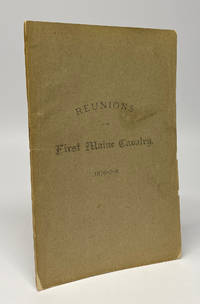
187911869Augusta ME: George E. Nason Printer 1879. First Edition. Softcover. Very good. Octavo 77pp. A clean sound very good copy in the publisher's printed wraps. Long tear and crease to the rear wrap with one small hole affecting the last leaf with no text. Two contemporary library labels internally not at all offensive. A vanishingly scarce volume recording the proceedings of some early reunions of the First Maine Cavalry regiment. Detailed reminiscences of the war make up much of the contents as well as some soldier-authored poetry and some administrative business. As with many cavalry regiments the First Maine saw significant action from the beginning to the end of the war at too many battles to list but including at Gettysburg and in Sheridan's final campaign through Virginia. OCLC notes a single holding at AAS. Ephemeral and considerably rarer than the two regularly published regimental histories of the regiment which both command strong prices in the rare book market. George E. Nason, Printer unknown
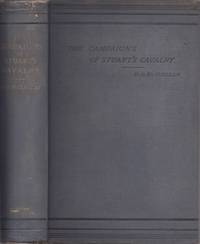
188535742Boston and New York/ Richmond: Houghton Mifflin/ J. W. Randolph 1885. First Edition. Hardcover. Good. Octavo. 1 xviii 468 pages 1. Illustrated with steel engraved frontispiece and 7 maps 3 in folding pocket on rear paste down. Gray cloth hardcover with title on the front cover and gilt title on the spine. Gray end papers. Light foxing to the frontispiece title page and foredge. Some light edge wear to the cloth including just inside the covers. Previous owner inscription written on the right front flyleaf - "R. B. Pleasants December 1874" mistaken year written. <br /> <br /> Howes M 41; Nevins II page 73. Houghton Mifflin/ J. W. Randolph hardcover
190881586Pana Illinois: Kerr's Printing House 1908. Presumed First Edition First printing thus. Staplebound wraps. Fair. 2 16 8 pages Three illustrations/plates. Front cover and title page have the names and address of previous owner and a date stamped on it. Cover is worn torn chipped and soiled. The 2nd Illinois Cavalry Regiment was a cavalry regiment that served in the Union Army during the American Civil War. Companies "A" to "L of the 2nd Illinois Cavalry was mustered into service at Camp Butler Illinois on August 12 1861. Company "M"" was mustered in on December 30 1861. The regiment was mustered out on December 30 1865.<br/>The regiment suffered 8 officers and 50 enlisted men who were killed in action or who died of their wounds and 3 officers and 173 enlisted men who died of disease for a total of 234 fatalities. Commanders: Colonel Silas Noble - mustered out February 16 1863; Colonel John J. Mudd - killed in action May 3 1864; Colonel Daniel B. Bush Jr. - discharged July 24 1865; and Colonel Benjamin F. Marsh. Plates I is of Mrs. John J. Mudd Mrs. Ella Mudd Baldwin and Wm M. Baldwin. Plate II is of Lt.-Col. Harvey Hogg who was killed in the Battle of Middleburg Tenn in 1862. Plate III is of George C. Houchens President of the Second Ill. Cavalry Association who died in 1906. These proceedings include the lengthy poem We've All Grown Old by David G. Palmer. This copy was owned by James P. Chase who served in Company H and later lived in Socorro New Mexico. Related marks on page 8. On pages 10-12 is a letter written by M. H. Musser to his wife in 1962 that addresses the battle in which Lt.-Col. Hogg was killed. Other discussion of the battle follow. Kerr's Printing House paperback
186145596n.p. 1861. Very good folded edge worn light soiling and ink staining. 1 sheet. 7.75 x 4.5 inches. Signed by Ernest G. Chormann Brig. Gen. Fitz John Porter Col. William Woods Averell Chief of ordnance Charles P. Kingsbury and Assistant Adjutant-General Andrew J. Alexander for Gen. George Stoneman with the note "approved" by three signatures. Though undated it was likely signed between September 1861 and January 17 1862 based on the service records of those who signed it.<br /> <br /> 1. Ernest G. Chormann in 1861 recruited a volunteer regiment called "Chorman’s Independent Mounted Rifle Rangers" in Philadelphia. See Library Company of Philadelphia for the broadside. The first company of this regiment was mustered into service July 23 1861 and the last was mustered Sept. 15th 1861. The regiment was then under the command of Col. E. G. Chormann. It was numbered the 89th of the line and the 8th Cavalry and left Pennsylvania for Washington on Oct. 4 where it was brigaded with the 3rd Pa. cavalry thus putting Chormann under the command of William Woods Averell who in turn was under the command of Brigadier General Fitz John Porter. On Nov. 9 1861 the New York Times reported "The Eighth Pennsylvania Cavalry Col. Chormann has been brigaded with the Third from the same State. The brigade is commanded by Col. W.W. Averell of the latter regiment. Both are rapidly improving in efficiency and drill." But on Nov. 27 the Philadelphia Inquirer reported that "The statement that charges have been filed against Col. Chormann is said to be erroneous. The Colonel is laboring energetically to ensure the perfection of drill desireable in all well disciplined regiments." By January 17 1862 Chormann had resigned his commission to be replaced by Capt. David Gregg of the 6th U. S. cavalry an experienced officer and a graduate of West Point. Chormann had endorsed Merrill’s Patent Breech-Loading Carbine on September 19th 1861 his letter to General J. W. Ripley Chief of Ordnance Washington D. C. soon appearing in an advertisement for the weapons but so had many other officers. Thus both the reason for his resignation and the purpose of this document remain unknown.<br /> <br /> Little is known about Ernest G. Chormann other than in his autobiography below and for his filing of numerous patents. He was an inventor and also active as an artist between 1853-1880 See Frick Museum Art Reference Library. In 1852 he exhibited saddle patterns at the Twenty-second Exhibition of American Manufactures at the Franklin Institute; in 1861 listed as an engraver and die sinker he bid on a $2500 contract with the U.S. Government for coin designs as part of ongoing experiments into how to prevent “abrasion counterfeiting and deterioration of the coins of the United States; †he was hired as the engraver; he filed for optical and mechanical patents; in 1880 he painted "Letitia Street House 1880" now at the Historical Society of Pennsylvania. The Pennsylvania's Rangers' War song: "Up ! up ! with our flag let its bright stars gleam out" was dedicated to him. <br /> <br /> The Pennsylvania Historical Review 1886 lists his firm Chormann & Mitchell as "inventors and patentees of the specialties manufactured. They manufacture all kinds of art furniture including parlor easels novel and chaste in design labor- saving studio easels sketching easels artists’ kits etc. together with interior decorations. the studio easel being awarded the first premium and diploma at the Centennial Exposition of 1876."<br /> <br /> Chormann adds his somewhat rather fanciful biography:<br /> <br /> "Mr. Chormann the founder of this business was born in France. Early in life he was noted for his energy talent and determination and visited as an explorer and traveller nearly every country in the civilized world. In 1836 he was a colonel in the San Jacinto war where he manifested great courage and prudence and on its termination made an effort to explore almost alone the sources of the Nile. Eventually after exploring various portions of Australia New Mexico Arizona and Lower California and undergoing great hardships and dangers from climate and Indians he was appointed on his arrival in Texas in 1845 captain and superintendent of the Texan Rangers. He was actively engaged in 1847 and 1848 in the Mexican war where his distinguished military ability was of great service to the United States. During his explorations and travels in the West he was associated with those famous old Indian fighters namely De Soto and California Joe. Mr. Chormann was the first white man who explored the Western portion of the Colorado River the whole of the country at that period 1843 watered by this stream being inhabited by tribes of Indians of the most cruel and treacherous nature. Colonel Chormann organized the first regiment that served during the war and which was known as Chormann’s Mounted Rangers. On the 14th April 1861 immediately after the bombardment of Fort Sumpter he began recruiting and put 5000 men in the field. In 1865 he brought East the first specimen of the moss agate. In a few months Mr. Chormann intends to publish a work on Colorado and the West illustrated with splendid engravings which will prove of the greatest interest to all lovers of nature. He was the inventor of stylograph printing and is noted in scientific and artistic circles for his inflexible integrity and sterling ability."<br /> <br /> 2. Fitz John Porter 1822-1901 Civil War Union Major General West Point 1845 served in the Mexican–American War promoted to brigadier general of volunteers in 1861 and divisional commander in the newly formed Army of the Potomac under Maj. Gen. George B. McClellan who was soon is patron. On November 25 1862 Porter was arrested and court-martialed for his actions at Second Bull Run after McClellan was dismissed by Lincoln. He spent the next 16 years trying clear his name and record which he finally did in 1878.<br /> <br /> 3. William Woods Averell 1832-1900 Civil War Union Brigadier General West Point 1855 2nd Lieutenant assigned to the United States Army Mounted Rifles and served in the Indian Wars on the Western frontier severely wounded in a fight with Navajos in 1859 became a 1st Lieutenant with the Mounted Riflemen and was placed on staff duty in Washington D.C. In August 1861 he was appointed as Colonel of the 3rd Pennsylvania Volunteer Cavalry and soon became a Brigadier General.<br /> <br /> 4. Andrew Jonathan Alexander 1833-1887 Civil War Union Brevet Brigadier General served first as a Captain in the 3rd United States Regular Cavalry then as Lieutenant Colonel and Assistant Adjutant General on the staff of Union General George Stoneman.<br /> <br /> 5. Charles Peeble Kingsbury 1816-1879 graduated from West Point in 1840 2nd in a class of 42 served in the Mexican War as General Wolf's ordnance officer and on General Taylor’s staff wrote 'Elementary Treatise on Artillery and Infantry' 1849 and was a contributor to the American Whig Review Western Quarterly Review Putnam’s Monthly and the Southern Literary Messenger from 1840-67 was superintendent of the Armory at Harper's ferry and Chief of Ordnance for the Army of the Potomac August 12 1861 to July 1862 promoted to Colonel and aide-decamp September 28 1861. unknown
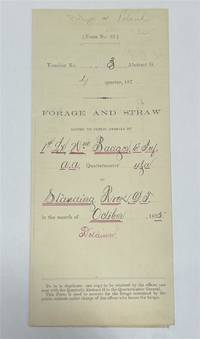
1875320963Standing Rock 1875. unbound. Partly printed military document signed 6th Infantry seven months before Little Big Horn 16.75 x 10.75 inches Standing Rock Nov. 1 1875 "A Statement Of Forage and Straw Issued to and Consumed by the Public Animals under my direction at Standing Rock Dakota Territory during the month of October 1875" for transient animals from Fort Rice signed by Captain and Commander of Post James S. Poland an officer who served under Major Reno at the Little Big Horn and was erroneously reported as "Killed In Action" when severely wounded in the back. At the time this document was signed Poland was ordered to cease his sale of rifles and ammunition to Indians at the Standing Rock Reservation as the recipients were closely connected with Sitting Bull's band. One month later the Commissioner of Indian Affairs called for the use of troops against those Indians. Also signed by Lieutenant William Badger a close friend of Custer who survived the Black Hills Campaign. His son Tom who filled out the body of this document became General Custer's personal secretary in 1876 and was killed at Little Big Horn. Also included: a Xerox of a rare photograph of the 7th cavalry 6th infantry in uniform with accoutrements all identified including Custer Badger and Poland. Partial tearing along one of the folds; otherwise near fine condition.<br/> <br/> unknown
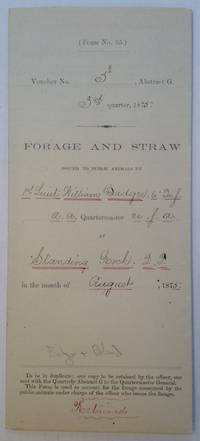
18755905Dakota Territory 1875. unbound. 2 pages Dakota Territory August 1875. This document -- a Statement of Forage and Straw -- is signed by Captain James S. Poland "J.S. Poland" who served under Reno at Little Big Horn and by Lt. William Badger "W. Badger" a close friend of General Custer and survivor of the Black Hills Campaign. The document lists the amount of oats corn barley hay fodder and straw consumed by the animals at the Standing Rock Reservation in The Dakota Territory. The front cover measures 8.5 x 3.75 inches and folds out to the inner page with lists measuring 16.75 x 11 inches. Natural folds and slight creasing in one spot; near fine condition.<br/> <br/> unknown