Bradley, Omar N, General, U S ArmyBiblio.com

9 442 résultats
11701self. 1946. paper. Good with creasing a date stamp a one inch tear in a fold another shorter tear a chip missing on the bottom left corner and a staple in the upper left corner. signed by the author. 8 x 10.5 inches on a Veterans Administration Letterhead this letter from Bradley to Mr. Outland references Paso Robles California as a possible site for the construction of a Veterans Administration Hospital. self unknown
elala5919Charlottetown: 1812. A distinguished military engineer DesBarres served in the British Army in North America during the Seven Years' War and participated in the capture of Louisbourg in 1758 and of Quebec in 1759. General James Wolfe used a chart which he prepared of the St. Lawrence River and approaches to Quebec in his assault on the city. From 1763 to 1773 DesBarres surveyed and charted the Atlantic coast from Newfoundland to New York which resulted in the publication in 1777 of the Atlantic Neptune a four-volume atlas “which stands as a landmark in Canadian cartographic achievement†R.J.Morgan DCB VI pp. 196 and is considered to be the most important atlas of North America published in the eighteenth century. He went on to become the first Lieutenant Governor of Cape Breton 1784-87 the founder of Sydney and the Lieutenant Governor of Prince Edward Island 1804-12. He faced considerable opposition to his administration in both colonies and with the home government and in each instance was recalled to England. The present document is dated just one month before his recall from Prince Edward Island in August of 1812. In it DesBarres reprimands the Grand Jury for overstepping the bounds of their authority although he says he is willing to attribute their statements to “good intentions in an infant colony language which under other circumstances might be very differently received.â€. one-page folio. horizontal folds several tears with no loss of text. matted & framed size of frame: 21.75 x 16 inches; 55.2 x 40.6 cm. elala5919 [Charlottetown]: 1812 unknown
187511943Washington DC: Government Printing Office 1875. First Edition. Hardcover. Quarto brown cloth gilt spine lettering 681 pp 14 plates. Volume III only. A very good copy with fading and discoloration to covers toning to pages few pages in middle detached from binding. Government Printing Office hardcover
188535742Boston and New York/ Richmond: Houghton Mifflin/ J. W. Randolph 1885. First Edition. Hardcover. Good. Octavo. 1 xviii 468 pages 1. Illustrated with steel engraved frontispiece and 7 maps 3 in folding pocket on rear paste down. Gray cloth hardcover with title on the front cover and gilt title on the spine. Gray end papers. Light foxing to the frontispiece title page and foredge. Some light edge wear to the cloth including just inside the covers. Previous owner inscription written on the right front flyleaf - "R. B. Pleasants December 1874" mistaken year written. <br /> <br /> Howes M 41; Nevins II page 73. Houghton Mifflin/ J. W. Randolph hardcover
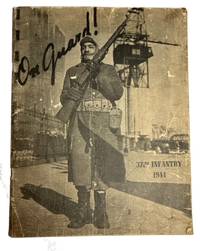
194490244n.p. 1944. 1st ed. Paperback. Good. photos 54p. Softcover in original wrapper. 28cm. Cover rather scuffed and soiled with about one-half of rear panel with an extensive but not showing through brown stain. Rather heavy vertical crease. Moderate browning soiling and other wear. Well-worn but basically sound. Scarce item about this African Amnerican military unit. The 371st and 372d Infantry Regiments were seconded to the 157th Infantry division of the French Army in 1918 during World War I and were involved in significant military action as part of the France's "Red Hand Division. The 372d was reconstituted in the National Guard in 1925 until World War II. The Regiment was not attached to a Division and served stateside and in the territory of Hawaii during World War II. Colonel Edward Orval Gourdin a double Harvard graduate undergraduate and law school and a silver medalist at the 1924 Olympics was the Regiment's commanding officer during World War II. He was later the first African American appointed as a Massachusetts Superior Court judge in 1951 and had achieved the rank of Brigadier General when he retired from the National Guard in 1959. The original owner of this book was a Staff Sergeant in the Regiment. Signed on first blank page by 14 individuals -- most seem to be fellow NCOs. paperback
18781097Washington D.C.: U.S. Government Printing Office 1878. First Edition. Hardcover in red lacquered cloth original US Government Binding stated. Very Good. With included provenance this copy of this report was prepared by the Grandfather of the poet of the same name - Stephen Vincent Benet who wrote John Brown's Body and The Devil and Daniel Webster.<br /> <br /> The book is amazingly well-preserved for its age and is protected in a Book Saver polyethylene cover. Covers bumped and rubbed and have some stains but are very good with one closed tear at the tail. Pages are toned but tightly bound and the book contains 154 plates showing guns canon test results facilities and other important information.<br /> <br /> A very good copy and a testament to the former owners' care and attention. Receipt for last sale in 2000 is included. Incredibly collectable. U.S. Government Printing Office hardcover
1946053591Atlanta: Albert Love. a nice copy of a very scarce armored unit history . Very Good. Hardcover. First. 1946. Albert Love hardcover
053397Paducah: 390th Bomb Group. Very large book; very nice copy; . Near Fine. Hardcover. 1st Edition. 1947. 390th Bomb Group hardcover
188114123Helsingfors 1881-92. Indbundet i 10 samt. hldrbd. Nogle rygge lidt slidte. Med ca 60 plancher. unknown
183814475Paris 1838-49. 8vo. Uncut with orig. wrappers. In all 106 parts with ab. 70 engraved plates. unknown
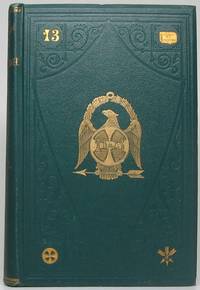
188549406Cincinnati: The Society 1885. Hardcover. Small 4to. Emerald green blind-embossed pebble-grained cloth over beveled boards with gilt lettering and decorations. 561pp 20pp. Color frontispiece 3 partly-color foldout maps. Near fine. Superbly bright and tight first edition of this reunion series here containing reports for the 14th 15th and 16th proceedings. This spectacular copy with gilt as bright as the day published bears the huge and bold ownership signature on inner flyleaf of "D.B. Henderson / Dubuque / Iowa / Sept 9 1885." David B. Henderson 1840-1906 served Congress as U.S. Representative from Iowa from 1883 to 1903 and as Speaker of the House from 1899 to 1903 -- more importantly he served valiantly in the Union army from 1861 to 1864 getting shot in the neck at the Battle of Fort Donelson and losing a foot and part of a leg in the Second Battle of Corinth both in 1862. Quite a choice evocative copy. The Society hardcover
188550403Cincinnati: The Society 1885. Hardcover. Small 4to. Emerald green blind-embossed pebble-grained cloth over beveled boards with gilt lettering and decorations. 486pp 14pp. Color frontispiece 2 foldout maps one color. Near fine. Exceptionally "tight 'n' bright" first edition of this reunion series here containing reports for the 11th 12th and 13th proceedings. Pristine maps titled "Battlefield / 22nd of July 1864 / before / ATLANTA" and partly-color "Battle of / ATLANTA / July 22d 1864." This unusually fresh copy -- gilt as bright as the day published -- bears the huge and bold ownership signature on inner flyleaf of "D.B. Henderson / Dubuque Iowa / Sept 9 1885." David B. Henderson 1840-1906 served Congress as U.S. Representative from Iowa from 1883 to 1903 and as Speaker of the House from 1899 to 1903 -- more importantly he served valiantly in the Union army from 1861 to 1864 getting shot in the neck at the Battle of Fort Donelson and losing a foot and part of a leg in the Second Battle of Corinth both in 1862. Interestingly the membership roster near the close does NOT list Henderson as a member. The 14 pages of Society officers from its inception in 1865 until 1878 is an incredible "Who's Who" of the military mighty Generals John Rawlins John A. Logan O.O. Howar G.M. Dodge William T. Sherman John Pope etc. A most unusual copy in cannot-be-beat condition. The Society hardcover
191042960N.P.: 1910. 1910. TEXAS. 12" x 8 1/2" broadside offering a reward of $50 for Joe Divincenzo private Battery c 3d Field Artillery Deserter From the Army Fort Sam Houston Texas March 11 1910. Two photographs side and front views and a detailed description. "The act of Congress approved June 18 188 provides 'That it shall be lawful for any civil officer having authority under the laws of the United States or of any State Territory or District to arrest offenders to summarily arrest a deserter from the military service of the United States and deliver him into the custody of the military authority of the General Government.'" Horizontal folds and with chipping to top edge not affecting text. Very good. 1910. unknown
1926400618Houghton Mifflin 1926 Houghton Mifflin 1926 xii 305 pp with a large folding map bound in after text. At the height of the 'Great Game' tensions between british India and Russia Leuit.-Colonel Etherton in his capacity as British Consul-General and Political Resident in Chinese Turkistan led an expedition in 1918 north from Kashmir thru Hunza and thence to Central Asia Chinese Turkistan and Mongolia in order to ascertain what the Soviets were up to. Text is clean tight and unmarked. a slip attached to the title page states that this is an advance review copy pre the release date of 2/26/1926. A foldout map of Central Asia is bound-in after text. The map is "as new."The grey-green textured cloth boards with gold-stamped titles are intact with light bumping to extremities. First Printing. Hard Cover. 8vo - over 7¾" - 9¾" tall. First Printing. Hardcover. Houghton Mifflin hardcover
202116493JLondon: Titan 2021. Limited Deluxe First Edition limited to 500 numbered copies signed by Zack Snyder. From the director of Dawn of the Dead Watchmen Man of Steel and Justice League comes Army of the Dead Zack Snyder’s eagerly awaited return to the zombie scene starring Dave Bautista. Following a zombie outbreak in Las Vegas a group of mercenaries take the ultimate gamble venturing into the quarantine zone to pull off the greatest heist ever attempted. Army of the Dead: A Film By Zach Snyder: The Making of the Film takes readers behind the scenes of this much-anticipated film and reveals the locations characters and zombies. The book is full to the brim with exclusive on-set photography costume designs storyboards by Zack Snyder and more and accompanied by cast and crew interviews. 196 pages. Hardbound slightly bumped else fine in dust jacket. Titan hardcover
19822091502135413138Not Available 1982. Soft Cover. Fine. Number of books: 1 Not Available paperback
19762081002109001348Sabae 36th Regiment Historical Preservation Society 1976. Soft Cover. Fine. Number of pages: 443p 11 sheets Size: 27cm Sabae 36th Regiment Historical Preservation Society paperback
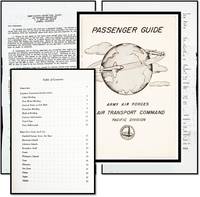
194721653Middle Pacific / Hawaii-Region: Army Printing Plant 1947. Very Good/No Dust Jacket As Issued. <br /> Crossing the Ocean in the Age of Propellers<br /> An evocative artifact of the 'Golden Age' of military transport documenting the massive logistical pivot from total war to global peacekeeping in the Pacific Theater. <br /> <br /> This guide served as the essential orientation for personnel transitioning across the 'Middle Pacific' network covering destinations from the Hawaiian Islands to occupied Japan and China. While the primary text details flight decorum and survival-including the famous advice for women to wear slacks for parachute safety-the unique laid-in letter from the Fleet Logistic Support Wing Alameda CA adds a critical layer of naval aviation history. <br /> This supplementary document provides specific safety protocols for the JRM 'Mars' flying boats the largest Allied aircraft of the era which maintained the vital 'bridge' between California and Hawaii.<br /> <br /> KEY FEATURES<br /> Provenance/Add-on: Includes a rare 2-sided typed letter from the Fleet Logistic Support Wing out of NAS Alameda California.<br /> Content: Detailed orientation for 11 Pacific destinations including Iwo Jima Okinawa Siam and Alaska.<br /> Aviation Specifics: Outlines flight decorum safety procedures and the post-war conversion of C-54/DC-4 aircraft for passenger service.<br /> Rarity: WorldCat/OCLC locates only 2 institutional copies Stanford and Claremont Libraries.<br /> Specs: 8.5 x 5.75 inches; v 54 pp. Illustrated with original mid-century drawings and sketches.<br /> <br /> CONDITION: Very Good. The pictorial stapled wrappers are tight and square with moderate shelf handling wear. The rear cover shows some wrinkling along the bottom edge and lower corner. Internally the text is clean with light even age-toning. The laid-in 8 x 15 inch letter is well-preserved with original folding creases. HISTORICAL SIGNIFICANCE --<br /> Produced by the Army Printing Plant in the 'Middle Pacific' this guide captures the U.S. military's rapid evolution into a global administrative force. It reflects the unique culture of post-1945 air travel where military transport ATC was the only reliable way to navigate the vast distances of the Pacific.<br /> <br /> The laid-in letter is particularly significant for its link to NAS Alameda and the Martin JRM Mars flying boats. By 1947 the Mars fleet named 'Hawaii' 'Philippine' 'Marianas' 'Marshall' and 'Caroline' was setting world records for passenger and cargo loads on the Alameda-to-Honolulu run. The letter's safety instructions represent the high-stakes reality of flying these 'Behemoths of the Bay'-vessels so large they were essentially flying ships.<br /> <br /> SUBJECTS: U.S. Army Air Forces Air Transport Command NAS Alameda Pacific Theater Logistics Martin JRM Mars Post-WWII Occupation Military Aviation Ephemera Travel Guides Military Manuals Ephemera Aviation History.<br /> <br /> BIBLIOGRAPHIC REFERENCE: OCLC # Various only 2 institutional records found. Army Printing Plant unknown
1945509612Ninth Infantry Division Historian's Office / F. Bruckmann Printing 1945. Paperback. NEAR FINE/NEAR FINE. 4 48 4 pp. b/w photo and engraved plates. Sewn binding in stiff plain cards in b/w photo and color engraved dust jacket. With just some trivial wear to the tips and a bit of separation between the first and second gatherings otherwise very clean and fresh. A very nicely produced regimental history of the storied 9th Division in North Africa Italy and German during WWII. Extensively illustrated with B/W photo plates and in-text engravings done by the German Brend'Amour Simhart & Co. Engravers and printed by F. Bruckmann KG Printers in Munich during American occupation following the defeat of the Nazis. Scarce in trade 8 copies in OCLC including LOC NYPL and West Point. Ninth Infantry Division Historian's Office / F. Bruckmann Printing paperback
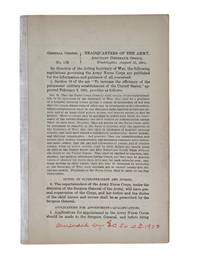
1901219711901. MilitaryNursingWomen in Medicine Military directive establishing the Army Nurse Corps 1901. General Orders No. 113. Headquarters of the Army Adjutant General's Office. Washington August 22 1901. Washington: War Department 1901. First edition. 10 pages. Bound with cloth tape lacking wrappers as issued. A foundational federal directive outlining the regulatory framework for the newly established Army Nurse Corps as authorized by Section 19 of the Act of February 2 1901-legislation intended to increase the efficiency of the U.S. military's permanent establishment. This pamphlet marks a critical milestone in the formal integration of women into the military medical apparatus and reflects early 20th-century gendered labor structures within federal institutions. It defines duties pay appointment qualifications leave policies and uniform standards for female nurses employed by the U.S. Army. Of particular historical note is its stipulation that the superintendent must be a graduate of a hospital training school emphasizing the formal credentialing of women in a field long dominated by informal care roles. The directive further outlines pay rates for chief and reserve nurses entitlements to quarters and medical care and the procedural logistics of leave and illness rendering it an early articulation of professional military nursing policy.<br /> <br /> The text includes sixteen numbered provisions covering areas such as applications for appointment travel reimbursements illness treatment and efficiency reporting. Paragraph 15 specifies the required uniform including "a waist and skirt of suitable white material adjustable white cuffs shoulder collar white apron and cap according to patterns prescribed by the Surgeon General's Office." Such mandates reinforce both the militarization and gendered expectations placed upon early 20th-century women in uniform. A marginal annotation in red ink on the cover notes that this issue was "amended by G.O. 54 W.D. 1908" signaling its eventual revision which adds bibliographic and institutional value for those studying the evolution of military nursing. Light toning. Red pen annotation on page one noting the order's amendment in 1908. Overall very good to near fine condition. A comprehensive government document that institutionalized women's medical labor within the Army. unknown
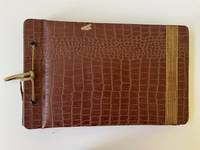
17320WWII-era photographs measuring 11.5" x 7.25" Multiple locations undated Ca. 1940s. With 67 photographs ranging in size from 3.5" x 2.5" to 5" x 4" of a serviceman and multiple generations of his family. Photo Album. U.S. Army Training Camp and Domestic Life in the American South circa 1940s. Oblong photograph album containing approximately estimate based on images shown original black-and-white vernacular photographs most snapshot size corner-mounted to black paper leaves. Circa 1940-1945.<br /> This photo album documents the intertwined military and domestic life of a white American serviceman during the World War II era combining images of U.S. Army training facilities with scenes of rural Southern family life. The military photographs depict a cantonment landscape of low wooden barracks dirt roads telephone poles and regimented formations of soldiers assembled outdoors. One sequence shows uniformed men standing in formation across an open parade ground while others capture military transport vehicles-open troop carriers filled with soldiers-moving through base streets lined with identical wood-frame buildings. Individual portraits show a soldier in full uniform posed formally in front of barracks and beside mid-1940s automobiles suggesting pride in service and upward mobility through military affiliation. A small chapel with a steeple appears prominently underscoring the role of religion in wartime military culture. Another building features an exterior metal slide descending from a second-story opening-likely part of a training or emergency drill structure-emphasizing the regimented preparedness of wartime camps.<br /> Interwoven with these military scenes are intimate images of domestic life: a woman and uniformed soldier standing together on the steps of a clapboard house; a couple tending a vegetable garden beside a brick home; a man seated in a wooden rocking chair reading a newspaper on a brick porch; and several rural outdoor scenes including hunting practice cooking over an open fire and resting beside a parked automobile in a wooded clearing. One photograph shows a small brick utility structure with a cupola and central doorway possibly a pump house or guard building with a suited man posed formally in its doorway-an image that contrasts sharply with the utilitarian wooden barracks of the training camp. A sequence labeled "Camp" partially visible in the images depicts a married couple posing with a wooden sign in a wooded recreational setting indicating leisure travel or stateside furlough during wartime. The album thus captures the dual identity of the mid-century American serviceman: disciplined soldier within the expanding military-industrial system and family member rooted in agrarian and small-town America. Historically the photographs reflect the rapid expansion of U.S. Army training installations in the early 1940s following mobilization after 1940 and especially after the United States' entry into World War II in December 1941. Temporary wooden cantonments-often constructed quickly and economically-became defining features of Southern and Southwestern landscapes. The imagery of standardized housing blocks troop transports and parade formations corresponds with this wartime infrastructure boom. Simultaneously the domestic photographs illustrate gender roles and social norms of the era: women appear primarily in domestic or garden settings while men are shown in uniform hunting or performing outdoor labor. The album therefore offers institutional collectors insight into the lived experience of wartime mobilization rural domestic culture and the social fabric of white middle- and working-class America during the WWII home-front era. As a cohesive vernacular record rather than an official military archive the album provides valuable visual evidence of how national service reshaped everyday landscapes and identities. Condition: Photographs are corner-mounted to black paper leaves; overall clean with minor silvering and light surface wear typical of mid-century snapshots. Album binding shows expected handling wear along edges but remains intact. Very good overall condition. unknown
22637No date but circa 1715 and amended until the mid-1720s. No place War Office London. The present early eighteenth-century document lists the heads of British Army regiments from the period of the Glorious Revolution to the accession of George I. Internal evidence suggests that it was compiled around 1715 and that it was amended until the mid-1720s. The care with which it was compiled over a decade and in a number of hands would appear to suggest some sort of official standing. It is on nineteen 18 x 7.5 cm leaves of laid paper formed in ten bifoliums now loose but originally bound together and with traces of thread still present. Aged and worn with slight loss to bottom inner corners of first five bifoliums not affecting any text. Paginated 1-10 15-42 showing that the document is lacking four pages bifolium containing pp.11-14. The volume can be dated from the entry for the Royal Fusiliers whose Captain is said in the original list to be 'Coll: O Hara' this being changed in another hand to 'Ld Kilmaine' with a second addition of 'now Ld: Tyrawly'. James O'Hara was made Colonel of the Regiment in 1713; was Lord Kilmain in 1722 and Lord Tyrawly in 1724. The first page is ruled at the head with two horizontal red lines. Headings to following pages: 'Horse Guards' 1; '2 Troope of Guards' 2; '3. Troop of Guards' 3; '4. Troope of Guards' 4; '5. First Troope Granades:' 5; '6. Second Troop Granades:' 6; '7. Royall Regt. of Guards' 7; '1. Horse Kings Regimt:' 8; '2.' 9; '3' 10; 'Dragoons' 15; '2 Royall Regimt: of Scots Dragoons' 16; '3. Kings Regiment' 17; 4 to 14 Dragoons 18-28; '1 Foot Guards' 29 '2 Second Regiment' 30; '3. Regiment of Guards' 31; '1 Foot Royall Regimt: of Foot' 32; 3 to 6 Foot 34-37; '7 Fusiliers' 38; 8 to 11 Foot 39-42. Written at foot of following pages: 'Ireland': 19 22-23 26-28 32 37 39; 'Brittain': 18 20-21 24-25 29-31 as 'Brittaine' 33-34 38 41-42; 'North Brittain' i.e. Scotland: 35; 'South. Brittain': 7-15; 'Gibralter': 36; 'Mahone' i.e. Port Mahon Minorca: 40. As an example p.3 reads '3. Troop of Guards Earle Feversham. Ld: Churchill Duke of Berwick E: Malbrough i.e. the Duke of Marlborough E: Rivers E: Arran with word 'Irish' added to distinguish him from 'E. Arran Scotch' of 7 Guards Lt: Gennle: rank deleted Cholmondly Ld: Cholmondly rank and name deleted Ld Newburgh 'now Earle of Choldmy' added'. The page for 5 Foot 'Gibralter': 'E: Clare Coll: Wisely amended from 'Wiesely' Sr: John Fenwick Coll. Monk L Genle: Tallmash Coll Loyd Majr: Genle: Fairfax L Majr: Genle: Pearse.' The page for 6 Foot in Ireland reads: 'Sr: Henry Bellasys Coll Babington Prince De Hesse. Marquis De. Rada. Coll: Cullombine Coll: Rivers Coll: Southwell Coll Harrisson Coll: Robert Dormer M: Brigade: James Dormer'. No date but circa 1715, and amended until the mid-1720s. No place [War Office, London?] unknown
15591'Army Book 485. Naval Form M116. R.A.F. Form 495.' The book printed '9/44' i.e. September 1944. Kayton's entries dating from 8 November 1945 to 6 June 1946; at 106 General Hospital British Army of the Rhine. 44pp. landscape 8vo. In book in columns and title on cover on which Kayton has written 'CAPT MISS KAYTON'. 308 operations are listed by Kayton the first 298 being numbered. After no. 264 18 March 1946 in another hand: '29th March 1946 This is to certify that Capt Miss D. Kayton has administered the above number of anaesthetics and has acted as deputy anaesthetist at 106 General Hospital B.A.O.R. British Army of the Rhine throughout the last 5 months. <G. A.> Goodwin <M.B.Belf.> D.A. Specialist Anaesthetist 106 General Hospital'. Each double-page opening is divided into twelve columns: Serial No. in A. & D. Book; Naval Army or R.A.F. No.; Rank or Rating; DIAGNOSIS; Date of Operation; Ward; ANAESTHETIC used and Anaesthetist's Notes; Anaesthetist; OPERATION - Technical Detail Difficulties Encountered Serial No. or date of any previous operations for same condition or complications of previous operations. More than one line should be used for big cases.; Surgeon; REMARKS. Subsequent Progress Complications Ultimate Disposal in fatal cases Cause of Death and P.M. Findings. Pathological Notes with dates. Up until entry 264 on the twenty-fifth page the entries are on the left-hand pages only with only the first eight columns completed except for nine pages in which the initials of the surgeon have been given in pencil. As an example the first entry reads: T/10677661; Ord. TAYLOR; Ingrowing toe nail; 8-11-45; Ward 10; Pentothol. And entry 274: 14338019; Dvr; SHELLEY; Acute appendicitis; 10.4.46; Ward 3; Pent. Endotracheal Ether & O2; Appendectomy; Surgeon H. Col. Mulvaney. 'Army Book 485. | Naval Form M116. | R.A.F. Form 495.' The book printed '9/44' [i.e. September 1944]. Kayton's entries dating fr unknown
12592Report on War Office 'Form 33'. Ewart's four additional sketches dated 1880 and 1881 the other material undated. The collection deriving from the Ewart family papers is in good condition on aged paper with fraying to the extremities of the report. Sir John Spencer Ewart son of General Sir John Alexander Ewart Colonel of the Argyll and Sutherland Highlanders entered Sandhurst in 1880 and left the following year with the sword of honour to join the Queen's Own Cameron Highlanders. For more information about Ewart and his father who also obtained 'special distinction' at Sandhurst see their entries in the Oxford DNB. ONE. Manuscript 'Report'. Unsigned but in Ewart's hand and with the accompanying map Item Two below docketed with his name. Written on a printed 'War. Office. Form 33. Road Report' form on one side of a piece of grey paper roughly 34 x 40 cm. It describes three locations - Yorktown Watchetts and Frimley - under six columns: Places on or near the Road; Distances in Miles and Furlongs subdivided into Intermediate and Total; Population subdivided into Houses and Persons; Accommodation On a March subdivided into Men and Horses; Supplies Transport and Water; and General Observations. Among the details are the number of bakers butchers waggons carts horses oxen and tons of hay and the observations give the details of th suitability of the locations as defensive positions. TWO. Map 30 x 30.5 cm attached to Item One and furled up with it with 'Ewart' in pencil at head. In ink and colours to a scale of six inches to the mile with Frimley at foot and 'York Town' at head. THREE to SIX. Four more field plans each with 'Ewart' in the top left-hand corner. Each 31 cm square and in black and white two with roads picked out in brown. Comprising: 'Eye Sketch' of the Midrow Hill area and 'Night Fd. Sketch' of the Wishmoor Hill area both dated October 1880; 'Extra Compass Sketch' of the Wishmoor Hill area dated May 1881; 'Ext. Eye Sketch' of the Turf Hill area dated 19 May 1881. SEVEN. '1st. Fd. Sketch' of 'Bare Hill' by 'Sterling'. 29.5 x 30.5 cm in black and white with buildings in red. EIGHT. 'Field Sketch of South Side of Windsor Ride' by 'Gentn. Cadet Gordon'. 29 x 28 cm. In black and white. Report on War Office 'Form 33'. Ewart's four additional sketches dated 1880 and 1881, the other material undated. unknown
21486'The Kings Mews Tuesday August 13th 1799'. 1p 12mo. Bifolium. In fair condition lightly aged and worn. Reads 'Major General Garth presents his Compliments to Mr Ford and informs Him that Their Majesties and Princesses stop to breakfast at Hartford Bridge – and once afterwards for five Minutes at Stoney Cross – The Compton Arms – between Rumsey & Kingwood.' Postscript: 'The Majr Genl: supposes Mr Ford is acquainted that The King leaves Windsor 17th next.' Ford – the son of Queen Charlotte's physician James Ford – was clearly enquiring with regard to the king's itinerary for security purposes. According to his entry in the History of Parliament 'In 1792 he was appointed magistrate of Shadwell police court. He was subsequently employed by the Home Office to collect information on radical agitators and manage French agents. … At the time of his death he was acting magistrate for the Home Office.' See his entry and those of Garth and Princess Sophia in the Oxford DNB. From the distinguished autograph collection of the psychiatrist Richard Alfred Hunter 1923-1981 whose collection of 7000 works relating to psychiatry is now in Cambridge University Library. Hunter and his mother Ida Macalpine had a particular interest in the illness of King George III and their book 'George III and the Mad Business' 1969 suggested the diagnosis of porphyria popularised by Alan Bennett in his play 'The Madness of George III'. 'The Kings Mews Tuesday August 13th, 1799'. unknown