Wahl (Hrsg.), Dr. HansAntiquariat.de

30 331 résultats
191687402Weimar, Gustav Kiepenheuer Verlag, 1916. 194 S. Kl.-8° Klein-Oktav, Softcover/Paperback
18551996BRUXELLES. SANS NOM D’EDITEUR. 1855-1864. DEUX PARTIES EN UN VOLUME IN-4 (19 X 27 X 4 CENTIMETRES ENVIRON) DE (4) + 341 + (1) ET 92 PAGES, 1/2 RELIURE D'EPOQUE CARTONNEE A LA BRADEL, DOS LISSE ORNE DE FILETS DORES, TITRE DORE SUR ETIQUETTE MAROQUIN ROUGE. ILLUSTRE DE 108 PLANCHES HORS TEXTE : 11 DE COSTUMES, ET 97 DE DECORATIONS, 89 DANS LA 1° PARTIE (SANS LA 37, JOINTE ICI EN PHOTOCOPIE COULEURS, ET AVEC UNE 40BIS) ET 8 DANS LE SUPPLEMENT, CERTAINES REHAUSSEES EN COULEURS. BON EXEMPLAIRE.
1924490631Leipzig: Verlag Thalacker & Schwarz. 1924. XI.; 268. 18,5cm. Zustand: Gut bis Sehr Gut gering gebräunt-wellig (Innen); Ex Libris vor dem Titelblatt; Einband (Außen) hat geringe Gebrauchsspuren; Schutzumschlag fehlt, oder es gibt keinen; Schnitt oben BRAUN / Kopffarbschnitt; Gewebe (Brauner Leinen)
246549Friedrich-Ebert-Stiftung Landesbüro Sachsen-Anhalt, 2016.
200225937Diepenau : Göttert, 2002. 102 S. : 1 Ill. 8°. Erstaufl. Orig. engl. Broschur.
189163391Berlin, Verlag des Berliner Lith. Instituts (Julius Moser), o. J. (1891). Gr.-8°. Illustrirt von O. 44 S., Illustr.-OHLwd.
189263392Berlin, Verlag des Berliner Lith. Instituts (Julius Moser), o. J. (1892). Gr.-8°. Illustrirt von O. 44 S., Illustr.-OHLwd.
199732458München, Universitas Verlag, 1997. gebundene Ausgabe
199741508München, Universitas Verlag, 1997. gebundene Ausgabe
199769100München, Universitas Verlag, 1997. gebundene Ausgabe
2007236748Berlin : Links, 2007. 294 S., 21 cm. Pp., gebundene Ausgabe.
198072926Friedberg, Podzun-Pallas-Verlag um, 1980.
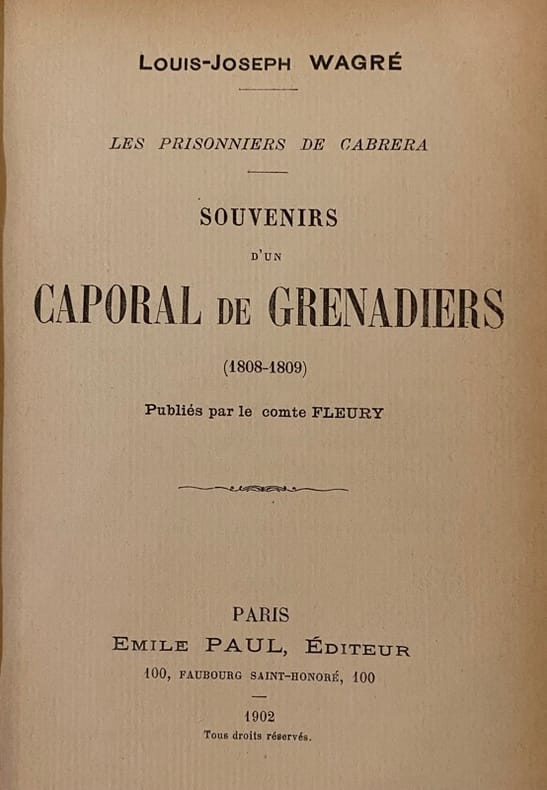
110438Paris, E.-Paul, 1902 in-12, VII-295 pp., bradel demi-percaline rouge, couverture conservée, dos orné, pièce de titre (reliure de l'époque).
74482aafZürich, Verkehrsverlag AG., 1939, in-4to, 92 S., reich ill. mit photogr. Aufnahmen v. Robert Spreng, Kriegstechn. Abt. d. eidg. Militärdept. u.a., Original-Broschüre.
19373132641Halle, Akademie Verlag, 1937. 69 S. Kart.
19833040711Frankfurt am Main, New York; Campus, 1983. 165 S. 8° (=18,5-22,5cm), Broschiert (foliert).
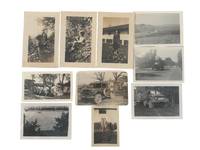
1945225281945. Women History World War II WWII Women's Army Corps photo archive documenting women's military service during World War II and the expansion of women's logistical and technical roles within the United States Army. The photographs record daily activity surrounding Women's Army Corps personnel including ambulance operation vehicle maintenance military training environments and informal moments of rest and recreation. Established in 1943 Women's Army Corps enabled women to enter the Army in noncombat roles that were essential to wartime mobilization including clerical work communications mechanics and medical transport. The images document this institutional transformation through scenes of uniformed women working with military vehicles operating ambulances and participating in the broader infrastructure of wartime military camps. One photograph shows a WAC standing in full service uniform before a low administrative building while others depict women outdoors in wooded settings during moments of leisure illustrating both the disciplined and personal dimensions of wartime service.<br /> <br /> Archive of 20 gelatin photographs created during the 1940s depicting Women's Army Corps personnel military vehicles and associated Army training activities. Photographs measure approximately 3.5 x 5 inches. The photographs show WAC members in both uniform and off duty settings including outdoor portraits and camp scenes. Several images focus on military ambulances and transport vehicles bearing visible Army markings such as "U.S. ARMY 432621" and "AMB-34." Verso inscriptions provide firsthand commentary on military duties and equipment including one caption reading "This is my new AMBULANCE hope you like it sis. safe & OK" and another written beside an ambulance photograph noting "good old Baker 5 kept me from walking." Operational scenes include soldiers crouched behind sandbags with a handwritten note identifying personnel as "Eselinger Conrad Palmer Carvey Boss." Other photographs document the broader military environment surrounding WAC activity including a drill or parade ground and a large motor pool with rows of Army trucks one marked "U.S. Army 008909" positioned in front of a multi story barracks. Additional annotated images identify fellow servicemen and technical details of equipment including "Hines Gallop and myself. Gallop is a jeep driver from North Carolina" and another describing "my radio on right fender" while one photograph is labeled simply "motor pool."<br /> <br /> Women's Army Corps personnel served throughout the United States and overseas during World War II performing essential logistical and administrative work that supported Allied military operations. Ambulance drivers such as the woman referenced in the captions transported wounded soldiers during training exercises and operational deployments and were often responsible for maintaining their own vehicles in field conditions. WAC members later served across European theaters including England France and Italy after the Allied landings in 1944 contributing to the wartime medical evacuation system that moved casualties from combat zones to field hospitals and rear medical facilities. Light edge wear mild surface handling and faint silvering to some prints; overall very good condition. These photographs document both the operational infrastructure of wartime motor transport and the presence of women within that system illustrating how the mobilization of female personnel expanded the technical and logistical capacities of the U.S. Army during the global conflict. unknown
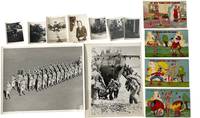
1940231951940. Women's wartime military mobilization photo archive documenting female military service across Allied wartime culture in the United States and southern France during the 1940s. Official press photographers commercial postcard publishers and private snapshot makers record women in uniform within military structures wartime publicity systems and informal social settings while the comic material makes clear that women's enlistment was also processed through satire about masculinization labor reversal and altered domestic authority. The August 22 1944 Army Radiotelephoto press photograph captioned "FRENCH WACS COME HOME" includes helmeted French women carrying rifles and duffel bags as they debark from landing craft "US 38" on the Riviera to join the liberation of their homeland placing women's military service directly within Allied invasion reporting and wartime news transmission.<br /> <br /> Photo archive of 13 silver gelatin and colored real photo postcards ranging from 10 x 8 inch press photos to smaller 3 x 2.5 inches vernacular photos United States and southern France circa 1940s. The grouping joins official press photography commercially printed comic postcards and private snapshots: women serving in uniform within military structures news agencies translating that service into public wartime narrative and vernacular photographs framing servicewomen through friendship memory and off-duty self-presentation. One large press photograph includes a WAC marching unit in tight alignment behind a guidon for a unit attached to a Naval Operating Air Station the elevated viewpoint emphasizing drill uniformity and command structure rather than individual identity. The Radiotelephoto print retains its typed verso caption identifying French WACs coming ashore in southern France. Four color comic postcards published by Beals in Des Moines turn women's enlistment into wartime humor through slogans including "WE'RE GIVING 'EM A BIG WAAC . . . " "I'M BRINGING HOME THE BACON!" "I'M GETTING A BIG BANG OUT OF THIS ARMY LIFE" and "MY HOW TIMES HAVE CHANGED." The most pointed of these "I'M BRINGING HOME THE BACON!" has a uniformed woman dragging a defeated male figure on a rope recasting military service as a comic transfer of masculine power and economic authority to women. "MY HOW TIMES HAVE CHANGED" extends that logic by imagining a man in an apron cooking and sweeping at home making domestic reversal itself the joke. The remaining cards similarly convert women's service into exaggerated spectacle through a rolling-pin attack on a caricatured Axis figure and a smiling servicewoman posed between oversized cannons. Seven small vernacular snapshots shift to individualized presence: one is signed "Love Sherry" two versos identify "Hazel" one verso reads "Golden Gate Park" and the images include women in uniform seated on an urban balustrade standing along city streets posed in landscaped parks visiting a pagoda-like garden site and appearing together outdoors in a paired portrait.<br /> <br /> Women's military service during World War II expanded through the WAAC WAC and related Allied formations while press agencies commercial print culture and snapshot photography assigned that service different public meanings; this archive preserves those overlapping channels in a single grouping. The postcards register wartime unease and fascination around women entering socially masculine roles turning military participation into jokes about strength breadwinning authority and domestic displacement. Minor corner and edge wear to the larger photographs one crease and caption wear to the Radiotelephoto print light rubbing and handling wear to the postcards and general wear curling and minor soiling to the vernacular snapshots; overall very good condition. The grouping preserves women's wartime military presence as it moved between official documentation commercial gender satire and private snapshot culture. unknown
2005119489Erftstadt: Area Vlg. 2005. 396/VI,391 S. Lit.verz. Reg. Kart.iS. *Name auf Titel, sonst neuwertig*.
193546815Marvors Arnhem, 1935. 48 Seiten, 8°, schwarze OHln Brosch
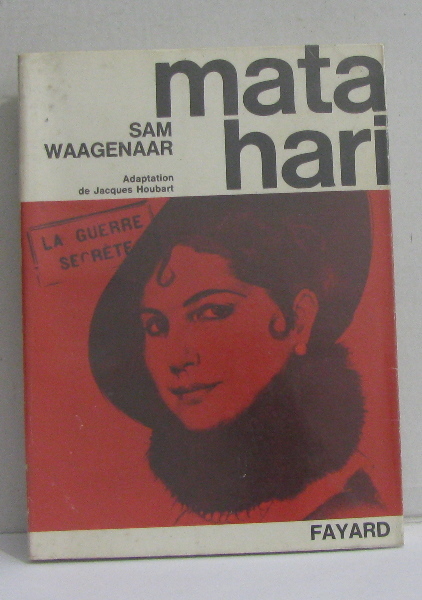
1965219682Fayard 1965 286 pages in8. 1965. Broché. 286 pages.
Very Good Turkish Paperback. Roy. 8vo. (24 x 17 cm). In Turkish. [xviii], 525 p., 6 folded plans and maps. Kafkas Harekâti: 1828-1921. Türk-Kafkas sinirindaki harplerin tarihi. Caucasus Campaigns: History of the military operations at the borders of Turkish and Caucasus, 1828-1921. First Edition.
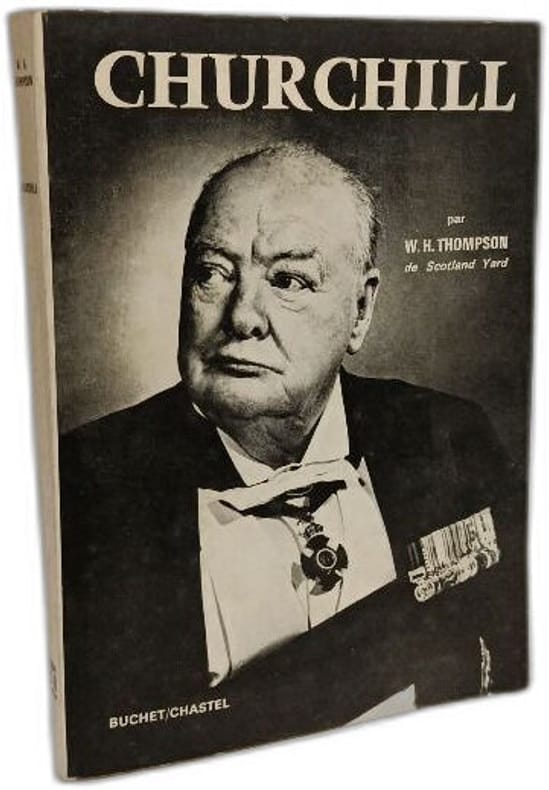
1965100154412BUCHET-CHASTEL 1965 in12. 1965. Broché. Ce livre est une biographie de Winston Churchill écrite par W.H. Thompson son garde du corps offrant un point de vue personnel sur la vie et la carrière du Premier ministre britannique. Traduit de l'anglais par Jean Cathelin il fait partie de la collection 'Grands de ce monde' chez Buchet/Chastel
1980097916U.S.A.: Presidio Press 1980. Hardback. First Edition. Puerto Rico's Fighting 65th U.S. Infantry. From San Juan to Chorwan. Previous owners name and address stamped to inside cover. Wear and a couple to tears to edge of D/J. Slight browning to D/J. Price clipped to D/J. In the second week of June 1951 the heights overlooking the village of Chorwan Korea - the centre of the Iron Triangle - were taken by the all-Puerto Rican 65th U.S. Infantry Regiment. The Chinese withdrew to the North and from that point on the war wound down to the peace table. This was the final combat action of the hard-fighting 65th a regiment given little recognition outside of the Puerto Rican press. Nevertheless one hundred and twenty-five of their number were awarded the Silver Star; four the Distinguished Service Cross. Their commander General Harris reaped praise and commendations from the highest sources for the action of his troops. Certainly no one is more qualified to tell their story. And this he does with verve wit and enthusiasm. When first assigned to the 65th General Harris thought he was being relegated to the boondocks. From the start of training in San Juan however he rapidly changed his mind. In the Vieques maneuvers his men distinguished themselves against the experienced men of the U.S. 3rd Infantry Division. In combat they were fearless. All Korean veterans remember the bitter cold of the winters. To those used to warm climates it was particularly gruelling but the Puerto Ricans stood their ground. Here is a book to make every Puerto Rican proud. It is also an important eyewitness account of action in a war that has not been written about popularly but whose fighters certainly deserve as much recognition as soldiers in any war. Illustrated. 220 pp. We carry a wide selection of titles in The Arts Theology History Politics Social and Physical Sciences. academic and scholarly books and Modern First Editions Reference books and all types of Academic Literature. First Edition. Cloth. Very Good/Fair. 8vo - over 7¾" - 9¾" Tall Octavo. Hardback. Presidio Press Hardcover
Vg/Vg (one very minor area of loss to bottom corner of clipped dj faded on spine, clean red cloth with bright silver titles on spine, lengthy ink gift inscription front free endpaper, pages clean and unmarked, faint yellowing outside page edges) octavo 176pp. Over 100 photographs and diagrams, 4pp of which in colour.