10 371 résultats
190563602Stuttgart, Franckh, 1905. Mit gefalt., farb. Karte und einigen Illustrationen im Text. 82 Seiten, 6 Bl. 8°, braun illustr. O Ln mit Rückentitel
197814069Fischer Taschenbuch Verlag, Frankfurt, 1978. 125(1) Seiten, OTaschenbuch, signiert und gewidmet. ("für Christopher Middleton, dem Zimmersammler, zur Begrüßung in München, 19.11.1978 Wolfgang Bächler"). Das Papier materialbedingt gegilbt. Gutes Exemplar. Selten. Very rare. Good copy, signed by the author. Das Buch stammt aus der Bibliothek eines Autographensammlers. John Christopher Middleton (1926 Truro - 2015 in Austin, Texas) war ein britischer Lyriker, Dichter und Übersetzer.
1983582059Bucharest: Military publishing house. 1983. 134 Seiten. 25cm. Zustand: Sehr Gut min. bis gering gebräunt (Innen); Einband (Außen) hat min. bis geringe Gebrauchsspuren; Buchrücken gering lichtrandig; Schutzumschlag fehlt, oder es gibt keinen; GEWEBE (Brauner Leinen)
1970739121PN. New. 1970. Soft Cover. Date is original print. This is a reprint edition. . PN paperback
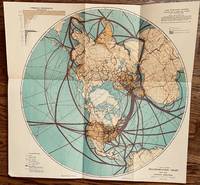
1947601Washington DC: U. S. Army Air Forces 1947. 17 3/8 x 17 3/8 inches. Very good condition. This is a very attractive and informative map of aviation travel in the Northern Hemisphere in 1947. This chart covers; railroads motor able roads inland waterways Ports Ocean commerce and Great circle distances. There are bar charts for automobile populations and railroad mileage. While aviation is importan it is not shown except to the extent of the great circle route for navigation. This is a very attractive map. U. S. Army Air Forces unknown
1945111030553ARMY SERVICE FORCES OFFICE OF THE CHIEF OF TRANSPORTATION 1945. Book. Very Good. Soft cover. Revised Edition. 4to - over 9¾ - 12" tall. Mimeographed softcover book with five hole punches at the spine and one heavy duty staple holding it together. April 15 1945 revised. Secure binding with clean pages. Circular stamp at the rear dated 28 JUN 1945 T LAPOE. Pencil name at the top corner front cover. Rare WW2 manual. ARMY SERVICE FORCES OFFICE OF THE CHIEF OF TRANSPORTATION Paperback
1971741918PN. New. 1971. Soft Cover. Date is original print. This is a reprint edition. . PN paperback
1973746168PN. New. 1973. Soft Cover. Date is original print. This is a reprint edition. . PN paperback
1984772805PN. New. 1984. Soft Cover. Date is original print. This is a reprint edition. . PN paperback
1969737099PN. New. 1969. Soft Cover. Date is original print. This is a reprint edition. . PN paperback
1977M1982Departments of the Army the Navy and the Air Force. Good. 1977. Revised Edition. Softcover. #AR 55-60 NAVSO P-2471 AFR 177-135; reader's crease to spine and front cover along spine crease to covers and several page corners light toning covers have some light moisture markings . Departments of the Army, the Navy, and the Air Force paperback
196279714Fort Eustis VA: U. S. Army Transportation School 1962. Presumed First Edition First printing. Wraps. Good. Five-hole punched and stapled on left side. Format is approximately 6.5 inches by 9.5 inches. iii 1 166 pages. Figures. Tables. References. Shipping Data. Cover has some wear and soiling. The text discusses the impact of tactical and logistical operations upon the world-wide distribution of special ammunition and other components of Army missile weapon systems. It describes the distribution sequence defines the control exercised over the distribution system and identifies the responsibilities of logistic agencies. the text also describes the transportation requirement transportation service responsibilities and the capabilities and limitations of the several modes of transportation. The text includes a discussion of the characteristics of special ammunition and transportability data applicable to all components of army missile weapon systems. The Special Text discusses: Distribution with CONUS Distribution within Oversea Commands The Transportation Environment and Transportation System Characteristics. Appendix I is References. Appendix II is the Safe Handling of explosives and other dangerous articles and protection of classified shipments. Appendix III is Characteristics and Properties of Propellants. Appendix IV is Army Missile Systems Component Shipping Data and this includes sections on Hawk Nike-Ajax Nike-Hercules Little John LaCrosse Sergeant Honest John Corporal Pershing Redstone SS-10 SS-11 Redeye Mauler Shillelagh Nike-Zeus Davy Crockett and a Quick reference complete round loading and shipping guide. On 31 July 1942 the Department of War recognized the need for a single manager of Army transportation and created a new branch the Transportation Corps. Since the Revolutionary War Army transportation had evolved through two branches the Quartermaster Corps and the Corps of Engineers. The demands of World War I made the Army first realize its need for a single manager for military transportation. So began an evolution over the next quarter century that culminated in the birth of the Transportation Corps during the opening months of World War II.<br /> <br /> The War Department directed the Quartermaster Corps to transfer the functions and responsibilities of truck and aviation units to the Transportation Corps by General Orders No. 77 on 24 July 1946. The same year the Transportation School consolidated all training except for drivers at Fort Eustis Virginia because of its intermodal rail and sea capability. In 1950 the Army turned over its deep-draft ships to the Military Sealift Command so the Army no longer had the largest navy in the United States military.<br /> <br /> That same year Brigadier General William B. Bunker convinced the Chief of Transportation Major General Frank S. Besson Jr. of the importance of helicopters in logistics. As a result in May the Army approved the organization of five helicopter companies with the first the 6th Transportation Company Helicopter activated in July 1952.<br /> <br /> In 1954 the Engineer Corps turned its landing craft over to the Transportation Corps making the Transportation Corps responsible for all modes of Army transportation. Coincidentally the Navy lifted the size limit on Army watercraft allowing the Army to build landing craft utility LCUs. This led the Transportation Corps to activate the 159th Boat Battalion.<br /> <br /> The Soviet threat against Europe provided the peacetime Army an enemy to plan against. In anticipation of the needs of the Army the Chief of Transportation directed and championed the development of military transportation. Contingency planners assumed the worst-case scenario in which the Soviet Union would use its bombers or worse yet its nuclear arsenal to destroy the fixed ports in France thus severing the vital lines of communication at their European end. This contingency required the Army to rely heavily on over-the-beach operations.<br /> <br /> The Transportation Corps is a Force Sustainment branch of the U.S. Army headquartered is now at Fort Lee Virginia and is responsible for the movement of personnel and matériel by truck rail air and sea. The Transportation Corps provides a full spectrum of transportation capabilities at the tactical operational and strategic levels of war. The Transportation School trains Soldiers to operate and maintain Army tactical trucks material handling equipment and watercraft. The school trains Transportation Operations Traffic Management Convoy Operations Cargo Transfer Cargo Documentation Movement Control Operation of Heavy Material Handling Equipment Sailing and Maintenance of Army Vessels and Unloading Aircraft Ships Railcars and Trucks. U. S. Army Transportation School paperback
1980762041PN. New. 1980. Soft Cover. Date is original print. This is a reprint edition. . PN paperback
1967733358PN. New. 1967. Soft Cover. Date is original print. This is a reprint edition. . PN paperback
195168862Washington DC: United States Government Printing Office 1951. Presumed first edition/first printing. Hardcover. Fair. Writing on front cover. 11-669 colored in red. Cover has wear soiling and a scuff. Writing on back cover. Pencil erasure residue ont-p. iv 90 p. Includes: illustrations diagrams index. Three-hole punched. Review Questions. This reflects the state of the art state of knowledge and the state of practice at the time of the Korean War. Voltages having complex waveshapes were frequently used in military electronic equipment during this period. These waveshapes did not follow the conventional sine-wave pattern and were called nonsinusoidal waves. Exampes are distorted sine waves square waves rectangular waves trapezoidal waves and exponential waves. Advances in military electronics was focused on new ways of producing and utilizing these nonsinusoidal waves. United States Government Printing Office hardcover
1979759170PN. New. 1979. Soft Cover. Date is original print. This is a reprint edition. . PN paperback
1993148936Stuttgart : Motorbuch-Verl. 1993. 118 S. : überwiegend Ill. (z.T. farb.) 27*23 cm. OPappband, OSchu.
1987145755Stuttgart : Motorbuch-Verl., 1987. 118 S. : überwiegend Ill. (z.T. farb.) ; 4° ( 27cm) Leinen mit Schutzumschlag,
1977753834PN. New. 1977. Soft Cover. Date is original print. This is a reprint edition. . PN paperback
1955704667PN. New. 1955. Soft Cover. Date is original print. This is a reprint edition. . PN paperback
1976751547PN. New. 1976. Soft Cover. Date is original print. This is a reprint edition. . PN paperback
1989790272PN. New. 1989. Soft Cover. Date is original print. This is a reprint edition. . PN paperback
1993262830PN. New. 1993. Soft Cover. Date is original print. This is a reprint edition . PN paperback
1957705597PN. New. 1957. Soft Cover. Date is original print. This is a reprint edition. . PN paperback
1964724643PN. New. 1964. Soft Cover. Date is original print. This is a reprint edition. . PN paperback