473 résultats
201180403Washington DC: National Nuclear Security Administration 2011. Presumed First thus. Held together with a binder clip. Very good. Volume 3 ONLY. C. Deeney's copy per cover sheet. While stated as Volume 3 this appears to be a stand-alone item documenting the Third Review Panel Meeting. It is labeled on the cover shee as NIC Preliminary Data. The agenda covers June 2 and June 3 2011. Among the topics and presentations at tabs are NIC Overview by E. Moses NIC Technical Framework by J. Lindl Ignition Tuning Experiments by N. Landen Progress on Target Layering by J. Atherton Implosion Experiments by J. Edwards and ITF/ITFX Assessment by J. Lindl and NIC FY11 Go-Forward Schedule by J. Atherton. The presentations are printed with four frames per page with substantial use of color. The National Ignition Facility NIF is a large laser-based inertial confinement fusion ICF research device located at the Lawrence Livermore National Laboratory in Livermore California. NIF uses lasers to heat and compress a small amount of hydrogen fuel with the goal of inducing nuclear fusion reactions. NIF's mission is to achieve fusion ignition with high energy gain and to support nuclear weapon maintenance and design by studying the behavior of matter under the conditions found within nuclear weapons. NIF is the largest and most energetic ICF device built to date and the largest laser in the world. The National Ignition Campaign NIC was a multi-institution effort established under the National Nuclear Security Administration of DOE in 2005 prior to the completion of the National Ignition Facility NIF in 2009. The scope of the NIC was the planning and preparation for and the execution of the first 3 yr of ignition experiments through the end of September 2012 as well as the development fielding qualification and integration of the wide range of capabilities required for ignition. Besides the operation and optimization of the use of NIF these capabilities included over 50 optical x-ray and nuclear diagnostic systems target fabrication facilities experimental platforms and a wide range of NIF facility infrastructure. The goal of ignition experiments on the NIF is to achieve for the first time ignition and thermonuclear burn in the laboratory via inertial confinement fusion and to develop a platform for ignition and high energy density applications on the NIF. The goal of the NIC was to develop and integrate all of the capabilities required for a precision ignition campaign and if possible to demonstrate ignition and gain by the end of FY12. The goal of achieving ignition can be divided into three main challenges. The first challenge is defining specifications for the target laser and diagnostics with the understanding that not all ignition physics is fully understood and not all material properties are known. The second challenge is designing experiments to systematically remove these uncertainties. The third challenge is translating these experimental results into metrics designed to determine how well the experimental implosions have performed relative to expectations and requirements and to advance those metrics toward the conditions required for ignition. At project completion in 2009 NIF lacked almost all the diagnostics and infrastructure required for ignition experiments. About half of the 3 yr period covered in this review was taken up by the effort required to install and performance qualify the equipment and experimental platforms needed for ignition experiments. Ignition on the NIF is a grand challenge undertaking and the results presented here represent a snapshot in time on the path toward that goal. The path forward presented at the end of this review summarizes plans for the Ignition Campaign on the NIF which were adopted at the end of 2012 as well as some of the key results obtained since the end of the NIC. National Nuclear Security Administration unknown
200680402Washington DC: National Nuclear Security Administration Office of Defense Programs 2006. Presumed First thus. Three Ring Binder. Good. This binder has seven tabs five with information. After a table of contents the tabs are: Agenda Attendee Listing NA-11 Opening Comments Draft QMU Business Operating Procedure missing Definition of Terms QMU Site Differences missing and White Paper on "National Certification Methodology for the Nuclear Weapon Stockpile" . The White Paper is 8 pages with color illustrations. The Table of Contents has the name Deeny sic Deeney written in the upper right corner. This is believe to have been the copy of a Dr. Christopher Deeny then a senior executive in the office of Assistant Deputy Administrator for Research Development and Simulation NA-11. He later rose to the Assistant Deputy Administrator position. The agenda included assessments of QMU Methodologies at each lab a W76 Nuclear example a W80 example QMU differences between sites QMU Inconsistencies and a Path Forward discussion. There are 30 attendees listed from Sandia Los Alamos Livermore Argonne DOE Office of Science and NNSA. The NA-11 Opening Comments is a nine vugraph presentation that addressed workshop purpose goals description history external interest and desired outcome. The White Paper was authored by Bruce T. Goodwin then of Livermore and Raymond Juzaitis then of Los Alamos later head of the LLC that operated the Nevada National Security Site. This is a rare surviving snapshot of the U.S. Weapons Program development and assessment of Quantification of Margins and Uncertainties in the context of the U.S. Nuclear Weapons Program absent underground testing. Derived from Wikipeida: Quantification of Margins and Uncertainty QMU is a decision-support methodology for complex technical decisions. QMU focuses on the identification characterization and analysis of performance thresholds and their associated margins for engineering systems that are evaluated under conditions of uncertainty particularly when portions of those results are generated using computational modeling and simulation. QMU has traditionally been applied to complex systems where comprehensive experimental test data is not readily available and cannot be easily generated for either end-to-end system execution or for specific subsystems of interest. Examples of systems where QMU has been applied include nuclear weapons performance qualification and stockpile assessment. QMU focuses on characterizing in detail the various sources of uncertainty that exist in a model thus allowing the uncertainty in the system response output variables to be well quantified. These sources are frequently described in terms of probability distributions to account for the stochastic nature of complex engineering systems. The characterization of uncertainty supports comparisons of design margins for key system performance metrics to the uncertainty associated with their calculation by the model. QMU supports risk-informed decision-making processes where computational simulation results provide one of several inputs to the decision-making authority. There is currently no standardized methodology across the simulation community for conducting QMU; the term is applied to a variety of different modeling and simulation techniques that focus on rigorously quantifying model uncertainty in order to support comparison to design margins. The fundamental concepts of QMU were originally developed concurrently at several national laboratories supporting nuclear weapons programs in the late 1990s including Lawrence Livermore National Laboratory Sandia National Laboratories and Los Alamos National Laboratory. The original focus of the methodology was to support nuclear stockpile decision-making an area where full experimental test data could no longer be generated for validation due to bans on nuclear weapons testing. The methodology has since been applied in other applications where safety or mission critical decisions for complex projects must be made using results based on modeling and simulation. Examples outside of the nuclear weapons field include applications at NASA for interplanetary spacecraft and rover development missile six-degree-of-freedom simulation results and characterization of material properties in terminal ballistic encounters. QMU focuses on quantification of the ratio of design margin to model output uncertainty. The process begins with the identification of the key performance thresholds for the system which can frequently be found in the systems requirements documents. These thresholds also referred to as performance gates can specify an upper bound of performance a lower bound of performance or both in the case where the metric must remain within the specified range. For each of these performance thresholds the associated performance margin must be identified. The margin represents the targeted range the system is being designed to operate in to safely avoid the upper and lower performance bounds. These margins account for aspects such as the design safety factor the system is being developed to as well as the confidence level in that safety factor. QMU focuses on determining the quantified uncertainty of the simulation results as they relate to the performance threshold margins. This total uncertainty includes all forms of uncertainty related to the computational model as well as the uncertainty in the threshold and margin values. The identification and characterization of these values allows the ratios of margin-to-uncertainty to be calculated for the system. These M/U values can serve as quantified inputs that can help authorities make risk-informed decisions regarding how to interpret and act upon results based on simulations. Verification and validation V & V of a model is closely interrelated with QMU. Verification is broadly acknowledged as the process of determining if a model was built correctly; validation activities focus on determining if the correct model was built. V&V against available experimental test data is an important aspect of accurately characterizing the overall uncertainty of the system response variables. V&V seeks to make maximum use of component and subsystem-level experimental test data to accurately characterize model input parameters and the physics-based models associated with particular sub-elements of the system. The use of QMU in the simulation process helps to ensure that the stochastic nature of the input variables as well as the underlying uncertainty in the model are properly accounted for when determining the simulation runs required to establish model credibility prior to accreditation. National Nuclear Security Administration, Office of Defense Programs unknown
200880995Washington DC: National Nuclear Security Administration Office of Nonproliferation Research and Development NA-22 2008. Presumed First Edition First printing. Spiral bound. Very good. 27 1 pages including covers. Marked Official Use Only. This limitation is understood to no longer apply due to the passage of time and the public disclosure of comparable information in Congressional Budget Requests Congressional testimony and other information releases. The Atomic Energy Commission originally established the "Aerial Measurements Operations" at Nellis Air Force Base in Las Vegas Nevada in the 1950s. It was created to serve the worldwide emergency system by providing rapid response to radiological emergencies. In 1976 the DOE established an Aerial Measurements Operations at Andrews Air Force Base - now called Joint Base Andrews - in Maryland to provide scientific and technical support to counterterrorism efforts during U.S. Bicentennial events in Washington D.C. With a location on each coast the RSL has served for over 50 years as a valuable national asset for nuclear emergency response and remote sensing capabilities. The Remote Sensing Laboratory RSL is a center for creating and using advanced technologies that provide a broad range of scientific technological and operational disciplines with core competencies in emergency response operations and support remote sensing and applied science and technologies in support of counterterrorism and radiological incident response. The National Nuclear Security Administration's NNSA Office of Nonproliferation Research and Development NA-22 has undertaken a multi-year planning effort to focus its research and development R&D efforts on enabling technologies to improve U.S. capabilities to detect and monitor nuclear weapons production proliferation and testing worldwide. NA-22 has developed an expert Remote Sensing Program working group to assist in this planning. This document is the initial result of the planning effort and its purpose was to established the program's goals objectives and requirements. The primary intent of this document is to 1 provide guidance to the investigators at national laboratories other NA-22 program managers and the user community to better focus future Remote Sensing Program proposals 2 provide a vehicle for user community input and 3 serve as a starting point for the subsequent technology roadmapping process. National Nuclear Security Administration, Office of Nonproliferation Research and Development (NA-22) unknown
200575224Albuquerque NM: National Nuclear Security Administration 2005. Presumed First Edition First issuance thus. CD. Very good. On Hold Shelf. This disk has six files on it: 1. Welcome letter 2. Course Material 3. Self Review 4. Reference Material 5. Software and 6. Read Me. In the course material area there is information of special access programs security policies threat briefing OPSEC overview a Baseline Security Manual and practical exercises. The reference material is indicated as including Executive Orders Presidential Decision Documents Public Laws Director of Central Intelligence Directives 6 DCIDs DoD Manuals DOE policies and other associated materials. In opening the disk there was a reference to SNL so it is assumed that Sandia National Laboratories assisted at least in the production of the CD if not in the development of this training. This CD is marked 'Official Use Only" but previous experience in requesting a determination as to whether the dissemination limitation has almost without exception resulted in silence which we take after a period of time as indicating consent. Special access programs SAPs in the U.S. Federal Government are security protocols that provide highly classified information with safeguards and access restrictions that exceed those for regular classified information. SAPs can range from black projects to routine but especially-sensitive operations such as COMSEC maintenance or Presidential transportation support. In addition to routine controls a SAP may impose more stringent investigative or adjudicative requirements specialized nondisclosure agreements special terminology or markings exclusion from standard contract investigations carve-outs and centralized billet systems. There was no specific organization within the NNSA indicated on the CD that a question on dissemination could be referred to. Since this information is more than a decade old and because multiple requests for status on other Official Use Only materials have been ignored it is assumed that the OUO limitation no long applies. National Nuclear Security Administration unknown
200277513Washington DC: National Nuclear Security Administration c2002. Presumed First Edition First printing. Spiral bound. Very good. Format is approximately 11 inches by 8.5 inches. 30 pages plus covers. Maps. Footnotes. Illustrations many in color. Cover has slight wear and soiling. This document is a high-level synopsis of the full National Nuclear Security Administration's Applied Technology Roadmap. The larger document is the product of a collaborative effort by the NNSA and contractor representatives to the Applied Technology team. Representatives from all of the eight sites comprising the NWC as well as other NNSA staff from headquarters and several field offices participated in several workshops. The authors acknowledged a debt to the group that compiled the NNSA Applied Engineering Testing & Manufacturing Capabilities book. There were four pillars in the roadmap: Flexible Agile Manufacturing; Model-Based Design and Development; Responsive Integrated Enterprise; and Adaptable Knowledge-Enabled Workforce. The Nuclear Weapons Complex relies on the unique synergy created among the design laboratories and the production plants. The laboratories provide a strong science base while the production plants are capable of unmatched precision in producing a wide variety of materials components and assemblies. Together the laboratories and plants can transform a concept into specialized hardware to meet very demanding requirements. The complex thus created in a security environment for synthesizing and processing a wide variety of materials including hazardous and radioactive components. The Applied Technology Roadmap shows how the synergy of the NWC science and technologies base will be used to provide national defense for tomorrow. The most efficient way to support the nation is to build the 'pillars' formed from enabling technologies that rest upon the foundation of NWC capabilities capitalizing on existing and future investment in the NWC. National Nuclear Security Administration unknown
200388243Washington DC: National Nuclear Security Administration Office of Defense Programs 2003. Presumed a unique copy. Unknown if other copies were made. CD is in a paper envelope with a clear plastic face. Good. This disc is marked UNCLASSIFIED and there are no dissemination limitation markings on the three text files contained therein. These files are Implementation Plan FY 2004 Rev. 1 9 pages Management Plan Rev 9 pages and Program Plan Version 4 37 pages includes some strike-out passages. Underground tests conducted by the Soviet Union continued until 1990 the United Kingdom until 1991 the United States until 1992 and both China and France until 1996. In signing the Comprehensive Nuclear-Test-Ban Treaty in 1996 these countries pledged to discontinue all nuclear testing; the treaty has not yet entered into force because of its failure to be ratified by eight countries. Non-signatories India and Pakistan last tested nuclear weapons in 1998. North Korea conducted nuclear tests in 2006 2009 2013 2016 and 2017. The most recent confirmed nuclear test occurred in September 2017 in North Korea. The 2022 NPR says that the United States continues to observe a moratorium on nuclear explosive testing. NNSA conducts subcritical i.e. those that do not produce a nuclear yield experiments and uses other tools to maintain stockpile reliability. The 2018 NPR stated that "the United States will not resume nuclear explosive testing unless necessary to ensure the safety and effectiveness of the U.S. nuclear arsenal." The 2022 NPR notes that the United States "maintains a nuclear explosive test readiness program in the event it is required to resolve technical uncertainties" but "does not envision or desire a return to nuclear testing." Underground nuclear testing is the test detonation of nuclear weapons that is performed underground. When the device being tested is buried at sufficient depth the nuclear explosion may be contained with no release of radioactive materials to the atmosphere. <br /> The extreme heat and pressure of an underground nuclear explosion causes changes in the surrounding rock. The rock closest to the location of the test is vaporized forming a cavity. Farther away there are zones of crushed cracked and irreversibly strained rock. Following the explosion the rock above the cavity may collapse forming a rubble chimney. If this chimney reaches the surface a bowl-shaped subsidence crater may form. The first underground test took place in 1951. Further tests soon led scientists to conclude that even notwithstanding environmental and diplomatic considerations underground testing was of far greater scientific value than all other forms of testing. This understanding strongly influenced the governments of the first three nuclear powers to sign of the Limited Test Ban Treaty in 1963 which banned all nuclear tests except for those performed underground. From then until the signing of the Comprehensive Nuclear-Test-Ban Treaty in 1996 most nuclear tests were performed underground which prevented additional nuclear fallout from entering into the atmosphere. National Nuclear Security Administration, Office of Defense Programs unknown
200388264Washington DC: National Nuclear Security Administration Office of Defense Programs 2003. This may be a unique compilation. Survival status of content documents is unclear. CD in a paper envelope with clear plastic face. Very Good. This CD contains three files: Implementation Plan rev 1; Management Plan Rev. 3 and Program Plan Ver 4. These are draft documents and some pages show strike-outs. The first two are 9 pages each of which after the title and contents leave 7 pages of substance. The program plan is 37 pages and has graphics. From the Implementation Plan: The National Nuclear Security Administration NNSA is transitioning to a shorter test readiness posture. Since 1995 the NNSA has been required to maintain the capability to conduct an underground nuclear test within two to three years from receipt of the order. In FY2003 the NNSA began transitioning to an 18-month test readiness posture to be attained by September 30 2005. This Implementation Plan identifies the activities integration with other sites and programs and funding profile needed for the successful achievement of that objective. It defines associated risks to the schedule and scope of the program. More detail can be found in the Program Plan for Test Readiness. Funding is distributed from NNSA/Headquarters through the Nevada Site Office. The work is organized into five Major Technical Efforts MTEs each with its own MTE Manager. The MTE Manager is responsible for work integration across the participating organizations. The organizational Program Managers are responsible for accomplishing the work at their own organization. A more in-depth description of the management of this program can be found in the Management Plan for Test Readiness. From the Management Plan: The Test Readiness Program overall objective is to transition from the current 36-month to an 18-month nuclear test readiness posture by Sept. 30 2005. The Test Readiness Program is both cost and schedule constrained. Certain technical capabilities and knowledge foundations have not been exercised since the cessation of underground testing and must be re-established. The DOE/NNSA operating principles for the Test Readiness Program are to: Define an overall program governance structure; Solicit planning input from major participants NNSA Nevada Site Office NSO Los Alamos National Laboratory Los Alamos or LANL Livermore National Laboratory Livermore or LLNL Sandia National Laboratories Sandia or SNL and Bechtel Nevada on overall strategy requirements technical objectives current as-is condition of test readiness and resource requirements to meet Presidential directive. Establish clear roles and responsibilities for the integrated program team; Ensure program/cross-project integration; Establish and manage to scope schedule and cost baselines; Focus on program and project execution success; and Control changes. Close coordination between NNSA Los Alamos Livermore Sandia and Bechtel Nevada is necessary to achieve the overall Test Readiness Program objective. The Test Readiness Management Team developed a specific Program Management Plan that provides an operational framework for the successful conduct of the program and its constituent projects. From the Program Plan: The program activities described within this document were identified in the Enhanced Test Readiness Cost Study DOE/NV-828 dated July 1 2002. That study confirmed the findings of other assessments and evaluations that found the longest-lead activities were updating the authorization basis producing replacement field test neutron generators and training technical staff on underground nuclear test-specific activities and diagnostics. The areas "Authorization Basis" and "Diagnostics & Training" comprise two of the five Major Technical Elements needed to achieve the enhanced test readiness posture. The others are: "Planning" "Facilities & Heavy Equipment" and "Operations". Building replacement field test neutron generators began in FY2002 and is funded under Operations. The highest risks for the program are associated with Authorization Basis and Diagnostics & Training. Authorization Basis requires resources that take a long time to train and are heavily used by other Stockpile Stewardship programs. Contracting out some of the work mitigates this. The personnel with underground nuclear test experience who will be needed for the success of Diagnostics & Training are retiring and otherwise becoming unavailable. Accomplishing those activities that require mentors before they leave will mitigate this. This program does not include Defense Threat Reduction Agency DTRA readiness interests beyond NNSA's traditional responsibilities to provide the nuclear source emplace detonate and diagnose the source device performance. Planning for DTRA source availability is addressed in the Major Technical Effort 1 Planning. The balance of NNSA responsibilities for Defense Threat Reduction Agency activities are common to NNSA underground testing and are maintained under NNSA test readiness. Finally it should be noted that this is a plan for test readiness not test execution. Test readiness addresses only those activities that are common to all tests but couldn't be conducted within the 18-month execution time frame. Support of activities to field a set of specific tests falls into the realm of test execution; and while test readiness resources would be used as needed the cost of test execution will require additional funds beyond the scope of test readiness. National Nuclear Security Administration, Office of Defense Programs unknown
200875228Washington DC: National Nuclear Security Administration Defense Programs Program Integration Office Office of Program Management & Evaluation 2008. Presumed First Edition First issuance of disc content included draft material. CD-R. Good. The NNSA proposed a new Weapon Surveillance Facility WSF for non-destructive weapon and pit surveillance to supplement the existing Weapons Evaluation Test Laboratory. By relocating some testing now done at Lawrence Livermore National Laboratory the NNSA says the new WSF would help consolidate non-destructive testing facilities and reduce the number of sites in the nuclear weapons complex with Category I/II SNM. Since all significant quantities of Cat I/II SNM have now been removed from Livermore the NNSA must either find another location for the environmental testing carried out there or seek special authorization to allow Livermore to continue working with SNM for limited periods. The WSF could also free up some Pantex bays now used for evaluation to return to use for assembly/disassembly operations. This CD includes a draft final report of the Weapon surveillance Facility Integrated Project Team unfilled out Official Use Only stamp which as such has no force or effect. In addition to the 23 page draft report there are six word Expert Choice files Minimize investment Impact Minimize Cost Impact Workforce Impact Reduced Length of Transition Reduce square footage Storage Consolidation Decision Criteria and WSF Design Criteria. Some of the functions were being performed at the Lawrence Livermore National Laboratory building 332 but the major emphasis was on options for new construction at Pantex. This type of material rarely survives in either hardcopy or electronic form. This offers a rare snapshot into facility planning and mission assignments within the United States Nuclear Weapons Complex. National Nuclear Security Administration, Defense Programs, Program Integration Office, Office of Program Management & Evalu unknown
20042081502111900506China Environmental Science Publishing House 2004. Soft Cover. Fine. The book is in fine condition. China Environmental Science Publishing House paperback
20022081502111905503Kagaku 2002. Soft Cover. Fine. The book is in fine condition. Kagaku paperback
20222081502111901933Culture publishing company 2022. Soft Cover. Fine. The book is in fine condition. Culture publishing company paperback
20012081502111901866Bunbutsu 2001. Soft Cover. Fine. Number of books: 3 Bunbutsu paperback
20162081502111900901science publisher 2016. Soft Cover. Fine. The book is in fine condition. science publisher paperback
20202081502111904461Shanghai Ancient Book Publishing House 2020. Soft Cover. Fine. The book is in fine condition. Shanghai Ancient Book Publishing House paperback
200784040Washington DC: National Aeronautics and Space Administration 2007. Final Report--Presumed first edition first printing. Wraps. Very good. Format is approximately 8.5 inches by 11 inches. 272 pages. Illustrated front and back cover. Illustrations mostly in color. Definition of Terms. References. Appendices. Minor cover wear noted. NASA letter of appreciation to a senior National Nuclear Security Administration technical expert for support to this report. In the 2005 Budget Authorization Act the U.S. Congress directed the NASA Administrator to provide an analysis of alternatives to detect track catalogue and characterize potentially hazardous near-Earth objects NEO. Congress required that the Administrator submit a program by December 28 2006 to survey 90% of the potentially hazardous objects measuring at least 140 meters in diameter by the end of 2020. In addition the legislation required the Administrator to submit an analysis of alternatives that NASA could employ to divert an object on a likely collision course with Earth. A study team led by the Office of Program Analysis and Evaluation PA&E derived requirements and figures of merit from the Act and used these factors to evaluate the alternatives. The team developed a range of options from public and private sources and then analyzed their capabilities levels of performance life-cycle costs schedules and development and operations risks. This document presents the detailed results of these analyses. A summary report was submitted to Congress in December of 2006. During related Congressional testimony on this report it was stated that The report's basic conclusion is that ``NASA recommends that the program continue as currently planned and we will also take advantage of opportunities using potential dual-use telescopes and spacecraft--and partner with other agencies as feasible--to attempt to achieve the legislated goal within 15 years. However due to current budget constraints NASA cannot initiate a new program at this time.'' In addition the report contained a number of additional findings <br /> including: ``The goal of the Survey Program should be modified to detect track catalogue and characterize by the end of 2020 90 percent of all Potentially Hazardous Objects PHOs greater than 140m whose orbits pass within 0.05 AU of the Earth's orbit as opposed to surveying for all NEOs; The Agency could achieve the specified goal of surveying for 90 percent of the potentially hazardous NEOs by the end of 2020 by partnering with other government agencies on potential future optical ground-based observatories and building a dedicated NEO survey asset assuming the partners' potential ground assets come online by 2010 and 2014 and a dedicated asset by 2015; Together the two observatories potentially to be developed by other government agencies could complete 83 percent of the survey by 2020 if observing time at these observatories is shared with NASA's NEO Survey Program; New space-based infrared systems combined with ground-based assets could reduce the overall time to reach the 90 percent goal by at least three years. Space systems have additional benefits as well as costs and risks compared to ground-based alternatives; Radar systems cannot contribute to the search for potentially hazardous objects but may be used to rapidly refine tracking and to determine object sizes for a few NEOs of potentially high interest. Existing radar systems are currently oversubscribed by other missions. Determining a NEO's mass and orbit is required to determine whether it represents a potential threat and to provide required information for most alternatives to mitigate such a threat. Beyond these parameters characterization requirements and capabilities are tied directly to the mitigation strategy selected.''. National Aeronautics and Space Administration paperback
2016__1537117440CreateSpace Independent Publishing Platform 2016. Paperback. New. 354 pages. 11.00x8.50x0.84 inches. CreateSpace Independent Publishing Platform paperback
200888971Washington DC: National Aeronautics and Space Administration c2008. Presumed First Edition First printing this. Single sticker sheet printed on both sides peal line is about at the diameter line. Very good. The format is a circle with a 4 inch diameter. Sticker seam at the back is at the mid-point. Rare surviving copy. One side is a version of the ARES logo originally designed by Star Trek artist Michael Okuda with 10 stars and a rocket ascending but no image of Earth in the background. The other side has the following text: NASA's Ares I-X Flight Test Vehicle NASA's first flight test of the full rocket for the agency's next-generation spacecraft and launch vehicle systems is launching in 2009. The flight test called Ares I-X will bring NASA one step closer to its exploration goals--to return to the moon for more ambitious exploration of the lunar surface ad to travel to Mars and destinations beyond." Then two links to on-line resources. Ares I-X was the first-stage prototype and design concept demonstrator of Ares I a launch system for human spaceflight developed by the National Aeronautics and Space Administration NASA. Ares I-X was successfully launched on October 28 2009. The Ares I-X vehicle used in the test flight was similar in shape mass and size to the planned configuration of later Ares I vehicles but had largely dissimilar internal hardware consisting of only one powered stage. By flying the vehicle through first-stage separation the test flight also verified the performance and dynamics of the Ares I solid rocket booster in a "single stick" arrangement which is different from the solid rocket booster's then-current “double-booster†configuration alongside the external tank on the space shuttle. Ares I was the crew launch vehicle that was being developed by NASA as part of the Constellation program. The name "Ares" refers to the Greek deity Ares who is identified with the Roman god Mars. Ares I was originally known as the "Crew Launch Vehicle" CLV. NASA planned to use Ares I to launch Orion the spacecraft intended for NASA human spaceflight missions after the Space Shuttle was retired in 2011. Ares I was to complement the larger uncrewed Ares V which was the cargo launch vehicle for Constellation. NASA selected the Ares designs for their anticipated overall safety reliability and cost-effectiveness. However the Constellation program including Ares I was canceled by U.S. president Barack Obama in October 2010 with the passage of his 2010 NASA authorization bill. In September 2011 NASA detailed the Space Launch System as its new vehicle for human exploration beyond Earth's orbit. Unlike the Space Shuttle where both crew and cargo were launched simultaneously on the same rocket the plans for Project Constellation outlined having two separate launch vehicles the Ares I and the Ares V for crew and cargo respectively. Having two separate launch vehicles allows for more specialized designs for the crew and heavy cargo launch rockets. The Ares I rocket was specifically being designed to launch the Orion Multi-Purpose Crew Vehicle. Orion was intended as a crew capsule similar in design to the Apollo program capsule to transport astronauts to the International Space Station the Moon and eventually Mars. Ares I might have also delivered some limited resources to orbit including supplies for the International Space Station or subsequent delivery to the planned lunar base. NASA selected Alliant Techsystems the builder of the Space Shuttle Solid Rocket Boosters as the prime contractor for the Ares I first stage. NASA announced that Rocketdyne would be the main subcontractor for the J-2X rocket engine on July 16 2007. NASA selected Boeing to provide and install the avionics for the Ares I rocket on December 12 2007. On August 28 2007 NASA awarded the Ares I Upper Stage manufacturing contract to Boeing. The upper stage of Ares I was to have been built at Michoud Aerospace Factory which was used for the Space Shuttle's External Tank and the Saturn V's S-IC first stage. The Ares V formerly known as the Cargo Launch Vehicle or CaLV was the planned cargo launch component of the canceled NASA Constellation program which was to have replaced the Space Shuttle after its retirement in 2011. Ares V was also planned to carry supplies for a human presence on Mars. The Ares V was to launch the Earth Departure Stage and Altair lunar lander for NASA's return to the Moon which was planned for 2019. It would also have served as the principal launcher for missions beyond the Earth-Moon system including the program's ultimate goal a crewed mission to Mars. The uncrewed Ares V would complement the smaller and human-rated Ares I rocket for the launching of the 4–6 person Orion spacecraft. Both rockets deemed safer than the then-current Space Shuttle would have employed technologies developed for the Apollo program the Shuttle program and the Delta IV EELV program. National Aeronautics and Space Administration unknown
2012033364U.S. National Aeronautics and Space Administration 2012. Hardcover. Fine/Fine. Octavo Oblong. Book and jacket in fine condition. <br/> <br/> U.S. National Aeronautics and Space Administration hardcover
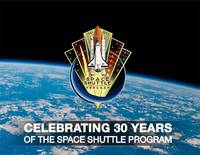
201183828Washington DC: National Aeronautics and Space Administration c2011. One of a number of multiple originals. Coin/Medal. Fine. An approximately 2 inch diameter clear plastic case with a 7.75 inch NASA silver medallion inside. The attached image show both the front and back of the single medallion and clear plastic stand. The front side has a colorful center image of the Space Shuttle Orbiter and Launch Vehicle The outer portion has the text "Celebrating the Legacy of the Space Shuttle Program. The reverse side has an outer ring of text that states: Excellence Achieved By Those Who Believed NASA Commemorative. There is a striking image of the Launch Vehicle with Orbiter attached lifting off with the plume billowing at the bottom. The text on the right states: This medallion contains metal flown on the historic Space Shuttle Mission Complete. Both shuttle medals Mission Complete and Legacy celebrate the winged spacecraft and the program's 30 years of innovation and service. These official medallions were minted with metal from the same ingots used for the framed editions that were flown on a shuttle mission. Each medallion features a full color embedded insert of the official Space Shuttle Program Commemorative insignia. Official NASA Mission Complete Medallion in silver contains flown metal material! This official Mission Complete Medallion is 1.75" and commemorates the historic completion of the Space Shuttle Program. In addition this limited edition medallion commemorates the exceptional accomplishments and missions of the first winged-spacecrafts. This medallion is one of a series of two and is also worthy of the program it represents. These medallions will be plated in silver and protected within circular presentation cases with high-density black foam spacers. The Space Shuttle Program was from 1981 to 2011. National Aeronautics and Space Administration unknown
2023x-1636711545Bernan Pr 2023. Paperback. New. 534 pages. 9.11x6.13x1.15 inches. Bernan Pr paperback
2018G1640243879I3N00Claitor's Publishing Division Incorporated 2018. Paperback. Good. Pages can have notes/highlighting. Spine may show signs of wear. ~ ThriftBooks: Read More Spend Less.Dust jacket quality is not guaranteed. Claitor's Publishing Division, Incorporated paperback
200580249Washington DC: National Aeronautics and Space Administration Exploration Systems Mission Directorate 2005. Draft Rev. 1. Disbound held together with a binder clip. Very good. vi 121 pages single-sided. Tables. Figures some with color. The Exploration Systems Mission Directorate known as ESMD at NASA Headquarters in Washington oversees the Constellation human research exploration technology development and lunar precursor robotic programs as well as the Commercial Orbital Transportation Services Project. The Constellation Program oversees work performed at a variety of NASA centers prime contractors and subcontractors located around the country. This work includes the Orion crew exploration vehicle the Ares I launch vehicle ground operations mission operations and extravehicular activity systems. The Constellation Program abbreviated CxP is a canceled crewed spaceflight program developed by NASA the space agency of the United States from 2005 to 2009. The major goals of the program were "completion of the International Space Station" and a "return to the Moon no later than 2020" with a crewed flight to the planet Mars as the ultimate goal. The program's logo reflected the three stages of the program: the Earth ISS the Moon and finally Mars—while the Mars goal also found expression in the name given to the program's booster rockets: Ares the Greek equivalent of the Roman god Mars. The technological aims of the program included the regaining of significant astronaut experience beyond low Earth orbit and the development of technologies necessary to enable sustained human presence on other planetary bodies. Constellation began in response to the goals laid out in the Vision for Space Exploration under NASA Administrator Sean O'Keefe and President George W. Bush. O'Keefe's successor Michael D. Griffin ordered a complete review termed the Exploration Systems Architecture Study which reshaped how NASA would pursue the goals laid out in the Vision for Space Exploration and its findings were formalized by the NASA Authorization Act of 2005. The Act directed NASA to "develop a sustained human presence on the Moon including a robust precursor program to promote exploration science commerce and US preeminence in space and as a stepping stone to future exploration of Mars and other destinations." Work began on this revised Constellation Program to send astronauts first to the International Space Station then to the Moon and then to Mars and beyond. <br /> <br /> This Systems Engineering Management Plan is a rare surviving technical document from this canceled program. It addressed the System Engineering and Integration SE&I Approach the SE&I Roles and Responsibilities Pre-Phase A Systems Engineering and Integration Phase A Phase B Phase C Phase D and Phase E. These phases addressed safety and mission assurance systems management Systems Analysis Simulation-Based Acquisition Research and Technology Development Requirements Definition Test and Verification Operations Sustaining Engineering Functional Analysis Manufacturing and Assembly Launch Site Operations and Logistics Capability Development. National Aeronautics and Space Administration, Exploration Systems Mission Directorate unknown
2010Q-0160831199Government Printing Office 2010-02-12. Hardcover. New. New. In shrink wrap. Looks like an interesting title! Government Printing Office hardcover
201186082Houston TX: National Aeronautics and Space Administration Johnson Space Center 2011. Presumed First Edition First printing of multiple originals. Single sheet printed on both sides. Very good. The format is approximately 8.5 inches by 11 inches. This is a single sheet with printing/imagery on both sides in a plastic sleeve. On the front side is a large color photograph of the four astronauts/Shuttle Crew members. On the other side are primarily four columns of text one column for each of the crew members with a small one-column spread with a picture of the four crew members at the top left corner and a larger two-column spread with an illustration of the STS-135 Mission Patch and a text description. The four crew members were Commander Christopher J. Ferguson Captain United States Navy ret. Pilot Douglas G. Hurley Colonel U.S. Marine Corps Mission Specialist Sandra H. Magnus Ph.D. and Mission Specialist Rex J. Wallheim Colonel U.S. Air Force ret. The STS-135 patch represent the Space Shuttle embarking on its mission to resupply the International Space Station. The Shuttle is centered over elements of the NASA emblem depicting how the Space Shuttle has been at the heart of NASA for the previous 30 years. The Patch also pays tribute to the entire NASA and contractor team that made possible all the incredible accomplishments of the Space Shuttle. Omega the last letter in the Greek alphabet signifies that this mission is the last flight of the Space Shuttle Program. STS-135 ISS assembly flight ULF7 was the 135th and final mission of the American Space Shuttle program. It used the orbiter Atlantis and hardware originally processed for the STS-335 contingency mission which was not flown. STS-135 launched on July 8 2011 and landed on July 21 2011 following a one-day mission extension. The four-person crew was the smallest of any shuttle mission since STS-6 in April 1983. The mission's primary cargo was the Multi-Purpose Logistics Module MPLM Raffaello and a Lightweight Multi-Purpose Carrier LMC which were delivered to the International Space Station ISS. The flight of Raffaello marked the only time that Atlantis carried an MPLM. Although the mission was authorized it initially had no appropriation in the NASA budget raising questions about whether the mission would fly. On January 20 2011 program managers changed STS-335 to STS-135 on the flight manifest. This allowed for training and other mission specific preparations. On February 13 2011 program managers told their workforce that STS-135 would fly regardless of the funding situation via a continuing resolution. Until this point there had been no official references to the STS-135 mission in NASA documentation for the general public. During an address at the Marshall Space Flight Center on November 16 2010 NASA administrator Charles Bolden said that the agency needed to fly STS-135 to the station in 2011 due to possible delays in the development of commercial rockets and spacecraft designed to transport cargo to the ISS. "We are hoping to fly a third shuttle mission in addition to STS-133 and STS-134 in June 2011 what everybody calls the launch-on-need mission. and that's really needed to buy down the risk for the development time for commercial cargo" Bolden said. The mission was included in NASA's 2011 authorization which was signed into law on October 11 2010 but funding remained dependent on a subsequent appropriations bill. United Space Alliance signed a contract extension for the mission along with STS-134; the contract contained six one-month options with NASA in order to support continuing operations. The federal budget approved in April 2011 called for US$5.5 billion for NASA's space operations division including the shuttle and space station programs. According to NASA the budget running through September 30 2011 ended all concerns about funding the STS-135 mission. The reduced crew size also allowed the mission to maximize the payload carried to the ISS.20 It was the only time that a Shuttle crew of four flew to the ISS. The last shuttle mission to fly with just four crew members occurred 28 years earlier. The Multi-Purpose Logistics Module MPLM Raffaello made up the majority of the payload. This was Raffaello's fourth trip to the International Space Station since 2001 and the 12th use of an MPLM. Unlike previous MPLM missions that delivered large compartments and devices to outfit the space station laboratories STS-135 delivered only bags and supply containers. The MPLM was filled with 16 resupply racks which is the maximum that it could handle. Eight Resupply Stowage Platforms RSPs two Integrated Stowage Platforms ISPs six Resupply Stowage Racks RSRs and one Zero-G Stowage Rack ZSR which sits above another rack during transport. On flight day 4 Raffaello was lifted out of Atlantis's payload bay using the station's Canadarm2. It was berthed to nadir port of the Harmony node. After completing the cargo transfers to the ISS Raffaello was loaded with almost 5700 pounds of unneeded equipment and station waste to be brought back to Earth. On flight day 11 the MPLM was detached from Harmony and was secured in the cargo bay of the shuttle. National Aeronautics and Space Administration, Johnson Space Center unknown
201086164Houston TX: National Astronautics and Space Administration Johnson Space Center 2010. Presumed First Edition First printing. This is one of multiple originals issued. Single sheet printed on both sides. Very good. The format is approximately 8.5 inches by 11 inches. This is a single sheet with printing/imagery on both sides in a plastic sleeve. On the front side is a large color photograph of the six members of the Crew of Space Shuttle Mission STS-133. On the other side there are four columns. At the top of the left column is a small photograph of the crew with last names present. At the bottom of the right two columns is a description of the STS-133 mission patch. The crew members were Commander Steven W. Lindsey Colonel USAF RET. Pilot Eric A. Boe Colonel USAF Specialist Benjamin Alvin Drew Jr. Colonel USAF Specialist Timothy L. Kopra Colonel USA Specialist Michael R. Barratt M.D and Specialist Nicole Passonne Stott. Tim Kopra was injured and was replaced by Stephen Bowen--making this photograph a rarity. In the foreground a solitary orbiter ascends into a dark blue sky above a roiling fiery plume. A spray of stars surrounds the orbiter and a top lit crescent forms the background behind the ascent. The mission number STS-133 is emblazoned on the patch center and crewmembers' names are listed on a sky-blue border around the scene. The Shuttle Discovery is depicted ascending on a plume of flame as if it is just beginning a mission. However it is just the orbiter as it would be at mission's end. This is to signify Discovery's completion of its operational life and the beginning of its new role as a symbol of NASA's and the nation's proud legacy in human spaceflight. The Shuttle Discovery is depicted ascending on a plume of flame as if it is just beginning a mission. However it is just the orbiter without boosters or an external tank as it would be at mission's end. This is to signify Discovery's completion of its operational life and the beginning of its new role as a symbol of NASA's and the nation's proud legacy in human spaceflight. STS-133 ISS assembly flight ULF5 was the 133rd mission in NASA's Space Shuttle program; during the mission Space Shuttle Discovery docked with the International Space Station. It was Discovery's 39th and final mission. The mission launched on February 24 2011 and landed on March 9 2011. The crew consisted of six American astronauts all of whom had been on prior spaceflights headed by Commander Steven Lindsey. The crew joined the long-duration six person crew of Expedition 26 who were already aboard the space station. About a month before lift-off one of the original crew members Tim Kopra was injured in a bicycle accident. He was replaced by Stephen Bowen. The mission transported several items to the space station including the Permanent Multipurpose Module Leonardo which was left permanently docked to one of the station's ports. The shuttle also carried the third of four ExPRESS Logistics Carriers to the ISS as well as a humanoid robot called Robonaut. The mission marked both the 133rd flight of the Space Shuttle program and the 39th and final flight of Discovery with the orbiter completing a cumulative total of a whole year 365 days in space. The mission was affected by a series of delays due to technical problems with the external tank and to a lesser extent the payload. The launch initially scheduled for September 2010 was pushed back to October then to November then finally to February 2011. The mission commander Steven Lindsey handed over his position as Chief of the Astronaut Office position to Peggy Whitson in order to lead the mission. For the first time two mission crew members were in space when a crew assignment announcement was made as Nicole Stott and Michael Barratt were aboard the ISS as part of the Expedition 20 crew. During STS-133 Alvin Drew became the last African-American astronaut to fly on the Space Shuttle as no African-Americans were among the crews of STS-134 and STS-135. Having flown onboard Atlantis' STS-132 mission Bowen became the first and the only NASA astronaut to be launched on two consecutive missions until Doug Hurley launched aboard Crew Dragon Demo-2 in May 2020 after having previously launched on STS-135. National Astronautics and Space Administration, Johnson Space Center unknown