473 résultats
200486160Houston TX: National Aeronautics and Space Administration Johnson Space Center 2004. Presumed First Edition First printing one of multiple originals. Single sheet printed on both sides. Very good. The format is approximately 8.5 inches by 11 inches. This is a single sheet with printing/imagery on both sides in a plastic sleeve. On the front side is a large color photograph of the seven astronauts/Shuttle Crew members. On the other side are primarily four columns of text with text for each of the crew members with a small two-column spread with a outline with names of the seven crew members at the top center and a half-column spread at the bottom of the fourth column with an illustration of the STS-114 Mission Patch and a text description. The STS-114 patch signifies the return of the Space Shuttle to flight and honors the memory of the STS-107 Columbia crew. The Shuttle rising above Earth's horizon includes the Columbia constellation of seven stars echoing the STS-107 patch and commemorating the seven members of that mission. The crew of STS-114 carry the memory of their mission back into Earth orbit. The dominant design element of the STS-114 patch is the planet Earth which represents the unity and dedication of the many people whose efforts allow the Shuttle to safely return to flight. Against the background of the Earth at night the blue orbit represents the International Space Station ISS with the EVA crewmembers named on the orbit. The red sun on the orbit signifies the contributions of the Japanese Space Agency to the mission and to the ISS program. The multi-colored Shuttle plume represents the broad spectrum of challenges for this mission including Shuttle inspection and repair experiments and International Space Station re-supply and repair. STS-114 was the first "Return to Flight" Space Shuttle mission following the Space Shuttle Columbia disaster. The crew members were Commander Eileen M. Collins Colonel USAF Pilot James M. Kelly Lieutenant Colonel USAF Mission Specialist Soichi Noguchi JAXA Astronaut Mission Specialist Stephen K. Robinson Ph.D. Mission Specialist Andrew S. W. Thomas Ph.D. Mission Specialist Wendy B Lawrence Captain USN and Mission Specialist Charles J. Camarda Ph.D. Discovery launched at 10:39 EDT 14:39 UTC July 26 2005. The launch 907 days approx. 29 months after the loss of Columbia was approved despite unresolved fuel sensor anomalies in the external tank that had prevented the shuttle from launching on July 13 its originally scheduled date. The mission ended on August 9 2005 when Discovery landed at Edwards Air Force Base in California.2 Poor weather over the Kennedy Space Center in Florida hampered the shuttle from using its primary landing site. Analysis of the launch footage showed debris separating from the external tank during ascent; this was of particular concern because it was the issue that had set off the Columbia disaster. As a result NASA decided on July 27 to postpone future shuttle flights pending additional modifications to the flight hardware. Shuttle flights resumed a year later with STS-121 on July 4 2006. STS-114 marked the return to flight of the Space Shuttle after the Columbia disaster and was the second Shuttle flight with a female commander Eileen Collins who also commanded the STS-93 mission. The STS-114 mission was initially to be flown aboard the orbiter Atlantis but NASA replaced it with Discovery after improperly installed gear was found in Atlantis' Rudder Speed Brake system. During OMM for Discovery an actuator on the RSB system was found to be installed incorrectly. This created a fleet wide suspect condition. The Rudder Speed Brake system was removed and refurbished on all three remaining orbiter vehicles and since Discovery's RSB was corrected first it became the new Return to Flight vehicle superseding Atlantis. Seventeen years prior Discovery had flown NASA's previous Return to Flight mission STS-26. The STS-114 mission delivered supplies to the International Space Station. However the major focus of the mission was testing and evaluating new Space Shuttle flight safety techniques which included new inspection and repair techniques. The crewmembers used the new Orbiter Boom Sensor System OBSS - a set of instruments on a 50 feet extension attached to the Canadarm. The OBSS instrument package consists of visual imaging equipment and a Laser Dynamic Range Imager LDRI to detect problems with the shuttle's Thermal Protection System TPS. The crew scanned the leading edges of the wings the nose cap and the crew compartment for damage as well as other potential problem areas engineers wished to inspect based on video taken during lift-off. STS-114 was classified as Logistics Flight 1. The flight carried the Raffaello Multi-Purpose Logistics Module built by the Italian Space Agency as well as the External Stowage Platform-2 which was mounted to the port side of the Quest Airlock. They deployed MISSE 5 to the station's exterior and replaced one of the ISS's Control Moment Gyroscopes CMG. The CMG was carried up on the LMC Lightweight Multi-Purpose Experiment Support Structure Carrier at the rear of the payload bay together with the TPS Repair Box. National Aeronautics and Space Administration, Johnson Space Center unknown
200886169Washington DC: National Aeronautics and Space Administration c2008. Presumed First Edition First printing thus. Single sheet sticker of mission logo patch printed on both sides. Very good. Format is a circle with a diameter of approximately 3.75 inches. Front is a colorful image of a spacecraft with a launch trajectory to a star and a large XX at the base. The top of the image has a red gray and blue arc. The text on the back reads: Expedition 20 Patch Description The Expedition 20 patch symbolized a new era in space exploration with the first six-person crew living and working onboard the International Space Station ISS and represents the significance of the ISS to the exploration goals of NASA and its international partners. The six gold start signify the men and women of the crew. The astronaut symbol extends from the base of the patch to the stat as the top to represent the international team both on the ground and on orbit that are working together to further our knowledge of living and working in space. The space station in the foreground represents where we are now and the important role it is playing toward meeting our exploration goals. The knowledge and expertise developed from these advancements will enable us to once again leave low-Earth orbit for the new challenges of establishing a permanent presence on the Moon and then on to Mars. The blue gray and red arcs represent our exploration goals as symbols of the Earth Moon and Mars. Logos of NASA ad Space Flight Awareness are present as is information on an on-line resource. Expedition 20 was the 20th long-duration flight to the International Space Station. The expedition marked the first time a six-member crew inhabited the station. Because each Soyuz-TMA spacecraft could hold only three people two separate launches were necessary: Soyuz TMA-14 launched on 26 March 2009 and Soyuz TMA-15 followed on 27 May 2009. Soyuz TMA-15 launched from Baikonur Cosmodrome at 10:34 UTC on 27 May 2009. The vehicle docked with the station on 29 May 2009 officially changing the Soyuz TMA-14 crew from Expedition 19 to Expedition 20. Gennady Padalka was the first commander of a six-member station crew and the first commander of two consecutive expeditions Expedition 19 and 20. Nicole Stott was the final expedition astronaut to be launched on the shuttle. <br /> During the expedition Koichi Wakata performed a special experiment wherein he did not change his underpants for one month in order to test a specially-designed underwear without washing or changing; he reportedly did not develop body odor due to the effects of the special garment. The station would not be permanently occupied by six crew members all year. For example when the Expedition 20 crew Roman Romanenko Frank De Winne and Bob Thirsk returned to Earth in November 2009 for a period of about two weeks only two crew members Jeff Williams and Max Surayev were aboard. This increased to five in early December when Oleg Kotov Timothy Creamer and Soichi Noguchi arrived on Soyuz TMA-17. It decreased to three when Williams and Surayev departed in March 2010 and finally returned to six in April 2010 with the arrival of Soyuz TMA-18 carrying Aleksandr Skvortsov Mikhail Korniyenko and Tracy Caldwell Dyson. National Aeronautics and Space Administration unknown
200655162Washington DC: Nat Academy of Public Admin 2006. very good. 92 wraps illus. some in color mailing information and stamp on rear cover covers slightly worn and soiled. Nat Academy of Public Admin paperback
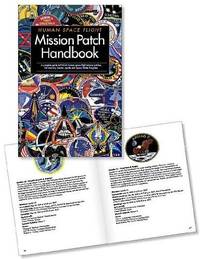
201287989Bradenton Fla: AeroGraphics Inc 2012. First printing stated. Paperback. Extremely subtle wear to spine head and foot faint soiling to top fore-edge very bright pages in tight binding else Near fine. Small blue octavo 173 pages color illustrations; 21 cm. Space Missions. A comprehensive guide to NASA's human space flight mission patches for Mercury Gemini Apollo and the Space Shuttle programs. The book features a collection of 168 mission patches printed in full-color. Details are included about each mission patch design as well as about the mission itself - including launch and landing dates and times crew members and payload. This handbook provides a complete reference for the colorful emblems of NASA's manned missions. Scarce. AeroGraphics, Inc paperback
20011333064PN. New. 2001. Soft Cover. Date is original print. This is a reprint edition . PN paperback
20182-1730998895Independently published 2018. Paperback. New. 418 pages. 11.00x8.50x0.95 inches. Independently published paperback
20182-1730970745Independently published 2018. Paperback. New. 301 pages. 11.00x8.50x0.68 inches. Independently published paperback
201186129Washington DC: National Aeronautics and Space Administration 2011. Xerox-style reproduction. Presumed to be one of only a few copies made for media representatives. Stapled at upper left corner. Very good. 25 1 pages. Illustrations. Contents include Media Services Information; Quick Facts; Jupiter at a Glance; Why Juno; Mission Overview; Mission Phases; Spacecraft; Science Overview; Missions to Jupiter; and Program/Project Management. Juno is a NASA space probe orbiting the planet Jupiter. It was built by Lockheed Martin and is operated by NASA's Jet Propulsion Laboratory. The spacecraft was launched from Cape Canaveral Air Force Station on August 5 2011 UTC as part of the New Frontiers program. Juno entered a polar orbit of Jupiter on July 5 2016 UTC to begin a scientific investigation of the planet. After completing its mission Juno will be intentionally deorbited into Jupiter's atmosphere. Juno's mission is to measure Jupiter's composition gravitational field magnetic field and polar magnetosphere. It will also search for clues about how the planet formed including whether it has a rocky core the amount of water present within the deep atmosphere mass distribution and its deep winds which can reach speeds up to 390 mph. Juno is the second spacecraft to orbit Jupiter after the nuclear powered Galileo orbiter which orbited from 1995 to 2003. Juno is powered by solar panels commonly used by satellites orbiting Earth and working in the inner Solar System whereas radioisotope thermoelectric generators are commonly used for missions to the outer Solar System and beyond. For Juno however the three largest solar panel wings ever deployed on a planetary probe play an integral role in stabilizing the spacecraft as well as generating power. During the science mission infrared and microwave instruments will measure the thermal radiation emanating from deep within Jupiter's atmosphere. These observations will complement previous studies of its composition by assessing the abundance and distribution of water and therefore oxygen. This data will provide insight into Jupiter's origins. Juno will also investigate the convection that drives natural circulation patterns in Jupiter's atmosphere. Other instruments aboard Juno will gather data about its gravitational field and polar magnetosphere. The Juno mission was planned to conclude in February 2018 after completing 37 orbits of Jupiter but now has been commissioned through 2025 to do a further 42 additional orbits of Jupiter as well as close flybys of Ganymede Europa and Io. The probe was then intended to be deorbited and burnt up in Jupiter's outer atmosphere to avoid any possibility of impact and biological contamination of one of its moons. The Juno spacecraft's suite of science instruments will: Determine the ratio of oxygen to hydrogen effectively measuring the abundance of water in Jupiter which will help distinguish among prevailing theories linking Jupiter's formation to the Solar System; Obtain a better estimate of Jupiter's core mass which will also help distinguish among prevailing theories linking Jupiter's formation to the Solar System; Precisely map Jupiter's gravitational field to assess the distribution of mass in Jupiter's interior including properties of its structure and dynamics; Precisely map Jupiter's magnetic field to assess the origin and structure of the field and the depth at which the planet's magnetic field is created. This experiment will also help scientists understand the fundamental physics of dynamo theory; Map the variation in atmospheric composition temperature structure cloud opacity and dynamics to pressures far greater than 100 bar 10 MPa; 1500 psi at all latitudes; Characterize and explore the three-dimensional structure of Jupiter's polar magnetosphere and auroras; and Measure the orbital frame-dragging known also as Lense-Thirring precession caused by the angular momentum of Jupiter and possibly a new test of general relativity effects connected with the Jovian rotation. National Aeronautics and Space Administration unknown
200386119Kennedy Space Center FL: National Aeronautics and Space Administration Kennedy Space Center 2003. Presumed First Edition First printing. Wraps. Very good. The format is approximately 8.5 inches by 11 inches. 61 3 pages plus covers. Illustrated covers. Illustrations most in color. Contents include Center Director's Message; NASA Vision and Mission; KSC Goals and Principles; The President's Management Agenca; Significant Events; Expendable Launch Vehicle Program; Space Shuttle Program; Shuttle Upgrades; International Space Station and Shuttle Payload Processing; Payload Carriers Program; Spaceport and Range Technologies; Future Vehicles; Safety and Health First; Environmental Stewardship; Partnerships; Outreach to the World; Education; KSC Business Report; Economic Impact; Workforce Diversity; Procurement Report; and Financial Statement. The John F. Kennedy Space Center KSC originally known as the NASA Launch Operations Center located on Merritt Island Florida is one of the National Aeronautics and Space Administration's NASA ten field centers. Since December 1968 KSC has been NASA's primary launch center of human spaceflight. Launch operations for the Apollo Skylab and Space Shuttle programs were carried out from Kennedy Space Center Launch Complex 39 and managed by KSC. Located on the east coast of Florida KSC is adjacent to Cape Canaveral Space Force Station CCSFS. The management of the two entities work very closely together share resources and operate facilities on each other's property. Though the first Apollo flights and all Project Mercury and Project Gemini flights took off from the then-Cape Canaveral Air Force Station the launches were managed by KSC and its previous organization the Launch Operations Directorate. Starting with the fourth Gemini mission the NASA launch control center in Florida Mercury Control Center later the Launch Control Center began handing off control of the vehicle to the Mission Control Center in Houston shortly after liftoff; in prior missions it held control throughout the entire mission. Additionally the center manages launch of robotic and commercial crew missions and researches food production and in-situ resource utilization for off-Earth exploration. Since 2010 the center has worked to become a multi-user spaceport through industry partnerships even adding a new launch pad LC-39C in 2015. There are about 700 facilities and buildings grouped throughout the center's 144000 acres. Among the unique facilities at KSC are the 525-foot tall Vehicle Assembly Building for stacking NASA's largest rockets the Launch Control Center which conducts space launches at KSC the Operations and Checkout Building which houses the astronauts dormitories and suit-up area a Space Station factory and a 3-mile long Shuttle Landing Facility. There is also a Visitor Complex on site that is open to the public. National Aeronautics and Space Administration, Kennedy Space Center paperback
200986131Washington DC: National Aeronautics and Space Administration 2009. Presumed First Edition First printing. Comb binding. Very good. 31 3 pages including covers. Contents include Media Services Information; Quick Facts; NASA's Search for Habitable Planets; Scientific Goals and Objectives; Mission Overview; Spacecraft; Instrument - Photometer; Selecting the Kepler Star Field; Education and Public Outreach; Other Exoplanet Activities; Science Team; and Project Management. The Kepler space telescope is a disused space telescope launched by NASA in 2009 to discover Earth-sized planets orbiting other stars. Named after astronomer Johannes Kepler the spacecraft was launched into an Earth-trailing heliocentric orbit. The principal investigator was William J. Borucki. After nine and a half years of operation the telescope's reaction control system fuel was depleted and NASA announced its retirement on October 30 2018.<br /> Designed to survey a portion of Earth's region of the Milky Way to discover Earth-size exoplanets in or near habitable zones and estimate how many of the billions of stars in the Milky Way have such planets Kepler's sole scientific instrument is a photometer that continually monitored the brightness of approximately 150000 main sequence stars in a fixed field of view. These data were transmitted to Earth then analyzed to detect periodic dimming caused by exoplanets that cross in front of their host star. Only planets whose orbits are seen edge-on from Earth could be detected. Kepler observed 530506 stars and detected 2778 confirmed planets as of June 16 2023. By January 2015 Kepler and its follow-up observations had found 1013 confirmed exoplanets in about 440 star systems along with a further 3199 unconfirmed planet candidates. Four planets have been confirmed through Kepler's K2 mission. In November 2013 astronomers estimated based on Kepler space mission data that there could be as many as 40 billion rocky Earth-size exoplanets orbiting in the habitable zones of Sun-like stars and red dwarfs within the Milky Way. It is estimated that 11 billion of these planets may be orbiting Sun-like stars. The nearest such planet may be 3.7 parsecs 12 ly away according to the scientists. On January 6 2015 NASA announced the 1000th confirmed exoplanet discovered by the Kepler space telescope. Four of the newly confirmed exoplanets were found to orbit within habitable zones of their related stars: three of the four Kepler-438b Kepler-442b and Kepler-452b are almost Earth-size and likely rocky; the fourth Kepler-440b is a super-Earth. On May 10 2016 NASA verified 1284 new exoplanets found by Kepler the single largest finding of planets to date. Kepler data has also helped scientists observe and understand supernovae; measurements were collected every half-hour so the light curves were especially useful for studying these types of astronomical events. National Aeronautics and Space Administration unknown
200986122George C. Marshall Space Flight Center Huntsville A.: National Aeronautics and Space Administration George C. Marshall Space Flight Center 2009. Xerox-style reproduction. Assume only a few copies were made for medial representatives. Stapled at upper left corner. Good. Front cover i 1 36 2 pages. Illustrations. Three-hole punched. The top corner of some of the some of the back pages are bent/creased. Contents include Contacts; Media Services Information; LRO/LCROSS Executive Summary; Mission Quick Facts; LRO Quick Facts; LCROSS Quick Facts; Launch Vehicles Mated with LRO/LCROSS; LRO/LCROSS Mission Trajectory; Why the Moon; Historical Explorations of the Moon; LRO Mission Overview; LRO Mission at a Glance; LRO Instruments; LRO Across the Country; LRO Products and Benefits: LRO Spacecraft With Instruments; Treasure Hunting on the Moon: LRO and the Search for Water; Robot Scout: Fly Me Safely to the Moon; LCROSS Mission Overview; LCROSS Mission at a Glance; The Search for Water on the Moon; LCROSS Science Instruments; LCROSS Spacecraft; LCROSS Observation Campaign; Future NASA Lunar Missions; and Program/Project Oversight. The Lunar Reconnaissance Orbiter LRO is a NASA robotic spacecraft currently orbiting the Moon in an eccentric polar mapping orbit. Data collected by LRO have been described as essential for planning NASA's future human and robotic missions to the Moon. Its detailed mapping program is identifying safe landing sites locating potential resources on the Moon characterizing the radiation environment and demonstrating new technologies. Launched on June 18 2009 in conjunction with the Lunar Crater Observation and Sensing Satellite LCROSS as the vanguard of NASA's Lunar Precursor Robotic Program LRO was the first United States mission to the Moon in over ten years. LRO and LCROSS were launched as part of the United States's Vision for Space Exploration program. The probe has made a 3-D map of the Moon's surface at 100-meter resolution and 98.2% coverage excluding polar areas in deep shadow including 0.5-meter resolution images of Apollo landing sites. The first images from LRO were published on July 2 2009 showing a region in the lunar highlands south of Mare Nubium Sea of Clouds. The total cost of the mission is reported as US$583 million of which $504 million pertains to the main LRO probe and $79 million to the LCROSS satellite. As of 2019 LRO has enough fuel to continue operations for at least seven more years and NASA expects to continue utilizing LRO's reconnaissance capabilities to identify sites for lunar landers well into the 2020s. The Lunar Crater Observation and Sensing Satellite LCROSS was a robotic spacecraft operated by NASA. The mission was conceived as a low-cost means of determining the nature of hydrogen detected at the polar regions of the Moon. Launched immediately after discovery of lunar water by Chandrayaan-1 the main LCROSS mission objective was to further explore the presence of water in the form of ice in a permanently shadowed crater near a lunar polar region. It was successful in confirming water in the southern lunar crater Cabeus. It was launched together with the Lunar Reconnaissance Orbiter LRO on June 18 2009 as part of the shared Lunar Precursor Robotic Program the first American mission to the Moon in over ten years. LCROSS was designed to collect and relay data from the impact and debris plume resulting from the launch vehicle's spent Centaur upper stage and data-collecting Shepherding Spacecraft striking the crater Cabeus near the south pole of the Moon. Centaur had nominal impact mass of 5081 lb and an impact velocity of about 5600 mph releasing the kinetic energy equivalent of detonating approximately 2 tons of TNT. LCROSS suffered a malfunction on August 22 depleting half of its fuel and leaving very little fuel margin in the spacecraft. Centaur impacted successfully on October 9 2009 at 11:31 UTC. The Shepherding Spacecraft descended through Centaur's ejectate plume collected and relayed data impacting six minutes later at 11:37 UTC. Contrary to media reports at the time neither the impact nor its dust cloud could be seen from Earth using the naked eye or telescopes. National Aeronautics and Space Administration, George C. Marshall Space Flight Center unknown
201186130Washington DC: National Aeronautics and Space Administration 2011. Xerox-style reproduction. Assumed to be one of only a few produced for media representatives. Stapled at upper left corner. Very good. 63 1 pages. Illustrations. Mars Science Laboratory MSL is a robotic space probe mission to Mars launched by NASA on November 26 2011 which successfully landed Curiosity a Mars rover in Gale Crater on August 6 2012. The overall objectives include investigating Mars' habitability studying its climate and geology and collecting data for a human mission to Mars. The rover carries a variety of scientific instruments designed by an international team. Contents include Media Services Information; Quick Facts; Mars at a Glance: Mars Science Laboratory Investigations; Mission Overview; Comparing Two Mars Rover Projects; Spacecraft; Mars Science Laboratory Landing Site; Recent Current and Upcoming Missions; Mars Science: A Story of Changes; Historical Mars Missions; and Program/Project Management. For several reasons a different landing system was chosen for MSL compared to previous Mars landers and rovers. Curiosity was considered too heavy to use the airbag landing system as used on the Mars Pathfinder and Mars Exploration Rovers. The MSL engineers came up with a novel alternative solution: the sky crane. The sky crane system lowered the rover with a 25 ft tether to a soft landing—wheels down—on the surface of Mars. This system consists of a bridle lowering the rover on three nylon tethers and an electrical cable carrying information and power between the descent stage and rover. As the support and data cables unreeled the rover's six motorized wheels snapped into position. At roughly 25 ft below the descent stage the sky crane system slowed to a halt and the rover touched down. After the rover touched down it waited two seconds to confirm that it was on solid ground by detecting the weight on the wheels and fired several pyros small explosive devices activating cable cutters on the bridle and umbilical cords to free itself from the descent stage. The descent stage then flew away to a crash landing 2100 ft away. The sky crane concept had never been used in missions before. National Aeronautics and Space Administration unknown
201283827Washington DC: National Aeronautics and Space Administration c2012. One of a number of multiple originals. Coin/Medal. Fine. An approximately 2 inch diameter clear plastic case with a 7.75 inch NASA bronze medallion inside. The front side has a colorful center image of the Space Shuttle Orbiter and Launch Vehicle The outer portion has the text "Celebrating the Historic Space Shuttle Program Official Commemorative. The inner text portion states This medallion contains metal flown on a Space Shuttle Mission. The reverse side has an outer ring of text that states: Columbia Challenger Discovery Atlantis Endeavour Mission Complete. The center section is divided into three sections: one depicts the take off of the launch vehicle with orbiter attached; one depicts the orbiter in space with the bay open a satellite deployed and the curve of the earth visible; the final depicts the shuttle landing with parachute deployed. Official NASA Mission Complete Medallion in Antique Bronze contains flown metal material! This official Mission Complete Medallion is 1.75" and commemorates the historic completion of the Space Shuttle Program. In addition this limited edition medallion commemorates the exceptional accomplishments and missions of the first winged-spacecrafts. Minted with the same Shuttle flown ingots included in the NASA Award Medallions this medallion is the second in the series and is also worthy of the program it represents. The official Space Shuttle Program Commemorative Design will be embedded in full color on one side while the other side will dimensionally render a Space Shuttle at work through a launch space mission and landing. These medallions will be plated in Antique Bronze and protected within circular presentation cases with high-density black foam spacers. The Space Shuttle Program was from 1981 to 2011. This design is by Blake Dumesnil. MR. Dumesnil is a senior art director and graphic designer at NASA's Johnson Space Center JSC. Much of the work he does supports the JSC Engineering and Science Directorate as well as the Jacobs-JETS contract. His design work includes all forms of visual presentation and marketing materials used to convey what expertise resources technologies and innovations at JSC in hopes of bringing in new forms of work from a variety of industries. As part of NASA's strive to partner with other industries he has helped represent NASA's involvement in Pumps & Pipes a collaborative effort between the Energy Medical and Aerospace industries in Houston that aims to solve common challenges through new technology and innovation development. In addition to marketing materials he has also had the honor of working with some of the astronaut crews in designing their ISS mission patches and have been personally selected to design some of the agency's anniversary designs as well. National Aeronautics and Space Administration unknown
200786168Washington DC: National Aeronautics and Space Administration c2007. Presumed First Edition First printing. Single sheet sticker of mission patch printed on both sides. Very good. The format is 4.5 inches by 4.5 inches. The design is one square offset over a square of equal size making an eight-pointed 'star'. The base square has the number 122 in the upper left corner the alphanumeric 1E in the upper right corner and part of a graphic design in the lower two corners that blend into the graphic on the main square. The square has an image of the earth and one of a figure of a sailing ship 'morphing' into the space shuttle One the four sides are the crew names of Eyharts o Frick o Poindexter o Walheim o Melvin o Schelgel o Love. On the reverse there is text which reads STS-122 Patch Description The primary objective of the STS-122 mission is to install and outfit the European Space Agency's Columbus laboratory module. Atlantis will rendezvous and dock with the International Space Station ISS on flight day three and Leopold Eyharts will official become a member of the ISS crew replacing Dan Tani who will return to Earth as part of the STS-122 crew. The crew will conduct three spacewalks to prepare the Columbus module and replace a nitrogen tank on the station. The STS-122 patch depicts the continuation of the voyages of early explorers to today's frontier: space. The ship denotes the travels of the early expeditions from the East to the West. The shuttle shows the continuation of that journey along the orbital patch from west to east. A little more than 500 years after Columbus sailed to the new world the STS-122 crew will bring the European laboratory module ":Columbus" to the ISS to usher in a new ear of scientific discovery. NASA and Space Flight Awareness logos. STS-122 was a NASA Space Shuttle mission to the International Space Station ISS flown by the Space Shuttle Atlantis. STS-122 marked the 24th shuttle mission to the ISS and the 121st Space Shuttle flight overall. The mission was also referred to as ISS-1E by the ISS program. The primary objective of STS-122 was to deliver the European Columbus science laboratory built by the European Space Agency ESA to the station. It also returned Expedition 16 Flight Engineer Daniel M. Tani to Earth. Tani was replaced on Expedition 16 by Léopold Eyharts a French Flight Engineer representing ESA. After Atlantis landing the orbiter was prepared for STS-125 the final servicing mission for the Hubble Space Telescope. The original target launch date for STS-122 was December 6 2007 but due to engine cutoff sensor ECO reading errors the launch was postponed to December 9 2007. During the second launch attempt the sensors failed again and the launch was halted. A tanking test on December 18 2007 revealed the probable cause to lie with a connector between the external tank and the shuttle. The connector was replaced and the shuttle launched during the third attempt on February 7 2008. Columbus is a science laboratory that is part of the International Space Station ISS and is the largest single contribution to the ISS made by the European Space Agency ESA. Like the Harmony and Tranquility modules the Columbus laboratory was constructed in Turin Italy by Thales Alenia Space. The functional equipment and software of the lab was designed by EADS in Bremen Germany. It was also integrated in Bremen before being flown to the Kennedy Space Center KSC in Florida in an Airbus Beluga. It was launched aboard Space Shuttle Atlantis on 7 February 2008 on flight STS-122. It is designed for ten years of operation. The module is controlled by the Columbus Control Centre located at the German Space Operations Center part of the German Aerospace Center in Oberpfaffenhofen near Munich Germany. The European Space Agency has spent €1.4 billion about US$2 billion on building Columbus including the experiments it carries and the ground control infrastructure necessary to operate them. National Aeronautics and Space Administration unknown
20011337602PN. New. 2001. Soft Cover. Date is original print. This is a reprint edition . PN paperback
200256499Washington DC: NASA 2002. very good CD-ROM's in fair to good plastic cases. 7 CD-ROM disks 7 CD-ROM disks in plastic cases--cases for disks 1 2 5 & 6 are cracked but no damage to CD-ROM's. The Nimbus 7 Limb Infrared Monitor of the Stratosphere LIMS radiance profile dataset of 1978/79 was reconditioned and reprocessed to Version 6 profiles of temperature and species that are improved significantly over those from Version 5. NASA unknown
200786128Washington DC: National Aeronautics and Space Administration 2007. Presumed First Edition First printing. Comb binding. Very good. 50 pages including covers. Decorative front cover. Phoenix was an uncrewed space probe that landed on the surface of Mars on May 25 2008 and operated until November 2 2008. Phoenix was operational on Mars for 157 sols 161 days. Its instruments were used to assess the local habitability and to research the history of water on Mars. The mission was part of the Mars Scout Program; its total cost was $420 million including the cost of launch. The multi-agency program was led by the Lunar and Planetary Laboratory at the University of Arizona with project management by NASA's Jet Propulsion Laboratory. Academic and industrial partners included universities in the United States Canada Switzerland Denmark Germany the United Kingdom NASA the Canadian Space Agency the Finnish Meteorological Institute Lockheed Martin Space Systems MacDonald Dettwiler & Associates MDA in partnership with Optech Incorporated Optech and other aerospace companies. It was the first NASA mission to Mars led by a public university. Phoenix was NASA's sixth successful landing on Mars from seven attempts and the first in Mars' polar region. The lander completed its mission in August 2008 and made a last brief communication with Earth on November 2 as available solar power dropped with the Martian winter. The mission was declared concluded on November 10 2008 after engineers were unable to re-contact the craft. JPL declared the lander to be dead. The program was considered a success because it completed all planned science experiments and observations. The mission had two goals. One was to study the geological history of water the key to unlocking the story of past climate change. The second was to evaluate past or potential planetary habitability in the ice-soil boundary. Phoenix's instruments were suitable for uncovering information on the geological and possibly biological history of the Martian Arctic. Phoenix was the first mission to return data from either of the poles and contributed to NASA's main strategy for Mars exploration "Follow the water." A press kit often referred to as a media kit is a pre-packaged set of promotional materials that provide information about a person company organization or cause and which is distributed to members of the media for use. Press kits are often distributed to announce a release or for a news conference.<br /> Traditionally the term "press kit" referred to a set of documents photographs such as publicity stills and other relevant materials packaged together and such a kit was designed to be sent to a newspaper or magazine as part of an organization's public relations or promotional program. There is no universal guide to the elements that should be included in a press kit or media kit but the following are common components: Backgrounder with historical information on the company or individual; Fact sheet listing specific features statistics or benefits; Biographies of key executives individuals artists etc.; Past press coverage; Photos or other images; a press release; and media contact information. National Aeronautics and Space Administration unknown
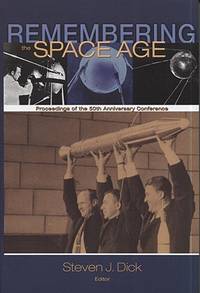
2011SONG016088358XGovernment Printing Office 06/07/2011. First Edition. hardcover. Used: Good. 6.50x0.75x9.75. Buy with confidence. Excellent Customer Service & Return policy. Government Printing Office hardcover
2009Q-0160817234History Division 2009-02-10. Hardcover. New. In shrink wrap. Looks like an interesting title! History Division hardcover
2010DADAX0160817331Government Printing Office 2010-05-05. 1st English langua edition. hardcover. New. 6.50x2.00x9.50. Buy with confidence. Excellent Customer Service & Return policy. Government Printing Office hardcover
20011329808PN. New. 2001. Soft Cover. Date is original print. This is a reprint edition . PN paperback
201086124Washington DC: National Aeronautics and Space Administration 2010. Xerox-style reproduction. Assume relatively few copies made for media representatives. Stapled at upper left corner. Very good. ii 104 pages plus front cover. No rear cover. Illustrations. Three-hole punched. Logo of the United Space Alliance on the front cover. Includes STS-132/ULF4 Mission Overview; STS-132 Timeline Overview; Mission Profile; Mission Objectives; Mission Personnel; STS-132 Crew; Payload Overview; Rendezvous & Docking; Spacewalks; Experiments; History of Space Shuttle Atlantis; Shuttle Reference Data; Launch and Landing; Acronmyns and Abbreviations; Media Assistance; Public Affairs Contacts. STS-132 ISS assembly flight ULF4 was a NASA Space Shuttle mission during which Space Shuttle Atlantis docked with the International Space Station on May 16 2010. STS-132 was launched from the Kennedy Space Center on May 14 2010. The primary payload was the Russian Rassvet Mini-Research Module along with an Integrated Cargo Carrier-Vertical Light Deployable ICC-VLD. Atlantis landed at the Kennedy Space Center on May 26 2010. STS-132 was initially scheduled to be the final flight of Atlantis provided that the STS-335/STS-135 Launch On Need rescue mission would not be needed. However in February 2011 NASA declared that the final mission of Atlantis and of the Space Shuttle program STS-135 would be flown regardless of the funding situation. Also on board Atlantis was a 4-inch long wood sample of Sir Isaac Newton's apple tree. The piece from the original tree that supposedly inspired Newton's theory of gravity along with a picture of Newton were taken into orbit by astronaut Piers Sellers. The wood is part of the collection of the Royal Society archives in London and was returned there following the flight. Additionally a flag from Clarkson University Potsdam New York flew on board shuttle Atlantis. It was there in honor of STS-132 lead shuttle flight director Michael L. Sarafin who is an alumnus of the Clarkson University. The STS-132 mission patch was designed by NASA artist Sean Collins working with astronaut Garrett Reisman. The patch shows Atlantis flying towards a sunset landing with the names of the STS-132 astronauts around the border. During the standard post-flight inspection of Atlantis a United Space Alliance inspector found a STS-132 mission decal accompanied by an inscription "The first last flight of Atlantis left Earth on 14 May 2010 from Pad 39A" together with the crew's signatures. The worker had found it tucked away on the upper side of Locker A-16 while scanning the area with a mirror. Moreover he said the note must have been written in orbit since otherwise the author would have had to stand on their head to write it. At the time the note was written STS-132 was the last planned mission of Atlantis. However one further mission was ultimately approved for the shuttle: STS-135 which was to be the last flight of both Atlantis and the Space Shuttle program. National Aeronautics and Space Administration unknown
200986136Washington DC: National Aeronautics and Space Administration 2009. Xerox-style reproduction. Assumed only a few copies were made for media representatives. Stapled at upper left corner. Very good. ii 110 pages plus covers. Illustrations. Three-hole punched. The contents include STS-129/ULF-3 Mission Overview; STS-129 Timeline Overview; Mission Profile; Mission Objectives; Mission Personnel; STS-129 Crew; Payload Overview; Rendezvous & Docking; Spacewalks; Experiments; Shuttle Reference Data; Launch and Landing; Acronym and Abbreviations; Media Assistance and Public Affairs Contacts. STS-129 ISS assembly flight ULF3 was a NASA Space Shuttle mission to the International Space Station ISS. Atlantis was launched on November 16 2009 at 14:28 EST and landed at 09:44 EST on November 27 2009 on runway 33 at the Kennedy Space Center's Shuttle Landing Facility. It was also the last Shuttle mission of the 2000s. STS-129 focused on staging spare components outside the station. The 11-day flight included three spacewalks. The payload bay carried two large ExPRESS Logistics Carriers holding two spare gyroscopes two nitrogen tank assemblies two pump modules an ammonia tank assembly a spare latching end effector for the station's robotic arm a spare trailing umbilical system for the Mobile Transporter and a high-pressure gas tank. STS-129 was the first flight of an ExPRESS Logistics Carrier. The STS-129 mission patch was designed by Tim Gagnon and Dr. Jorge Cartes. The unusual shape of the patch resulted from the crew's desire for the patch to signify the mission's payload two ExPRESS Logistics Carriers providing equipment ensuring the longevity of the ISS. The insignia incorporates a number of design elements not typically incorporated into a single patch: the Sun Moon Mars NASA's astronaut symbol the ISS the Shuttle orbiter and the continental United States. The 13 stars on the patch represent the crewmembers' children and the Moon and Mars represent the future of space exploration. The names of the crew members are denoted on the outer band of the patch. The primary payloads were the Express Logistics Carriers designated ELC-1 and ELC-2 for the International Space Station ISS. The units carried a variety of tools and equipment designed to augment and enhance experimentation aboard ISS. Docking between Atlantis and ISS occurred on November 18 2009. Undocking occurred on November 25 2009. There were three spacewalks during the mission. The first spacewalk was conducted on November 19 2009 and lasted 6 hours 37 minutes. Astronauts Foreman and Satcher installed a spare antenna and a bracket for ammonia lines outside ISS. They also performed maintenance activities on the ISS Japanese robotic arm. The second spacewalk was conducted on November 21 2009 and lasted 6 hours 8 minutes. Astronauts Foreman and Bresnik installed the Grappling Adaptor to On-Orbit Railing GATOR to the ISS Columbus Laboratory plus an additional ham radio antenna. They also installed an antenna for wireless helmet camera video and relocated the Floating Potential Measurement Unit which takes electrical measurements outside ISS. The third spacewalk was conducted on November 23 2009 and lasted 5 hours 42 minutes. Astronauts Satcher and Bresnik installed an oxygen filled High Pressure Gas Tank on the ISS Quest Airlock. They also installed experiments to ELC-2 as well as a number of other maintenance activities. National Aeronautics and Space Administration unknown
200786117Kennedy Space Center FL: National Aeronautics and Space Administration Kennedy Space Center 2007. Presumed First Edition First printing. Wraps. Very good. The format is approximately 8.25 inches by 11 inches. 8 pages. Illustrations some in color. This includes information on STS-114 STS-121 STS-115 and STS-116 the 17th 18th 19th and 20th Space Station flights The write-ups include mission highlights EVAs Launch and Landing. A latter version of Volume 3 had 12 pages and included two more missions into 2007. This variant is now quite scarce having been superseded. The International Space Station ISS is the largest modular space station in low Earth orbit. The project involves five space agencies: the United States' NASA Russia's Roscosmos Japan's JAXA Europe's ESA and Canada's CSA. The ownership and use of the space station is established by intergovernmental treaties and agreements. The station serves as a microgravity and space environment research laboratory in which scientific research is conducted in astrobiology astronomy meteorology physics and other fields. The ISS is suited for testing the spacecraft systems and equipment required for possible future long-duration missions to the Moon and Mars. The Space Shuttle was a partially reusable low Earth orbital spacecraft system operated by NASA the National Aeronautics and Space Administration. Its official program name was Space Transportation System STS taken from a 1969 plan for a system of reusable spacecraft of which it was the only item funded for development. Operational missions launched numerous satellites conducted science experiments in orbit and participated in construction and servicing of the International Space Station ISS. The first of four orbital test flights occurred in 1981 leading to operational flights beginning in 1982. From 1981 to 2011 a total of 135 missions were flown all launched from Kennedy Space Center KSC in Florida. During that time period the fleet logged 1322 days 19 hours 21 minutes and 23 seconds of flight time. The longest orbital flight of the Shuttle was STS-80 at 17 days 15 hours while the shortest flight was STS-51-L at one minute 13 seconds when the Space Shuttle Challenger broke apart during launch. The cold morning shrunk an O-Ring on the right Solid Rocket Booster causing the external fuel tank to explode. The shuttles docked with Russian space station Mir nine times and visited the ISS thirty-seven times. The highest altitude apogee achieved by the shuttle was 386 milrd when deploying the Hubble Space Telescope. The program flew a total of 355 people representing 16 countries and with 852 total shuttle fliers. The Kennedy Space Center served as the landing site for 78 missions while 54 missions landed at Edwards Air Force Base in California and one mission landed at White Sands New Mexico. The first orbiter built Enterprise was used for atmospheric flight tests ALT but future plans to upgrade it to orbital capability were ultimately canceled. Four fully operational orbiters were initially built: Columbia Challenger Discovery and Atlantis. Challenger and Columbia were destroyed in mission accidents in 1986 and 2003 respectively killing a total of fourteen astronauts. A fifth operational orbiter Endeavour was built in 1991 to replace Challenger. The Space Shuttle was retired from service upon the conclusion of STS-135 by Atlantis on 21 July 2011. National Aeronautics and Space Administration, Kennedy Space Center paperback
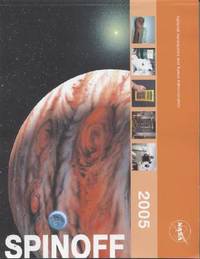
200586140Washington DC: National Aeronautics and Space Administration NASA Center for AeroSpace Information CASI Publications and Graphics Department 2005. Presumed First Edition First printing of this annual report. Trade paperback. Very good. Lynette Cook Front cover art. The format is approximately 11 inches by 8.5 inches. 167 1 pages. Illustrations most with color. Annual report on technology transfer or "technology twice used" inventions from NASA. Since 1976 Spinoff has profiled technologies that benefit from NASA investment and expertise. These developments have transformed into commercial products and services that are used throughout daily life from your cell phone camera to the memory foam in your mattress. When Congress created NASA it mandated the agency disseminate its innovations as widely possible. To that end the Technology Transfer Program was created in 1964 and it has functioned ever since making it NASA’s longest continuously operated mission. Early publications about NASA inventions made available to the scientific and engineering communities resulted in feedback indicating a broad interest in the private sector in adapting NASA technology for commercial uses. As products began to emerge NASA began preparing annual reports on these successes to present at congressional budget hearings. Spinoff has been published in a four-color editionand it has been released every year since 1976. All together since its first edition NASA has shared the stories of more 2000 products and services that began as or have benefited from NASA technology. In addition to the general public NASA sends copies of Spinoff to politicians representatives at the United Nations economic decision makers company CEOs academics scientists engineers professionals in technology transfer the news media and many others. The early black-and-white Technology Utilization Program Reports published in 1973 and ‘74 generated so much public interest that NASA decided to turn them into an attractive publication for a general audience. NASA SPINOFF now features dozens of success stories annually online and in its print publication demonstrating the wider benefits of America’s investment in its space program. The 2005 edition highlights Partnership Benefits in Health and Medicine Transportation Public Safety Consumer/Home/Recreations Environment and Resources Management; Computer Technology and Industrial Productivity/Manufacturing Technology. National Aeronautics and Space Administration, NASA Center for AeroSpace Information (CASI), Publications and Graphics Departmen paperback