Malthus ThomasABAA

542 résultats
1831100869Georgetown D. C.: Published by Charles Cruikshank Rind's Press 1831. First American edition first published in London in 1817. Original cloth backed tan boards printed paper label reading "Additions / to an / Essay /on / Population / by T.B. Malthus" uncut partially unopened. Some spotting and browning of binding rubbing with some wear to extremities some foxing and spotting of leaves insect trail along lower inner hinge marginal tears on R4 and Cc4 not affecting text. A very good copy in brown cloth clamshell box. First American edition first published in London in 1817. Very scarce.This work contains new chapters additions and corrections included in the fifth edition separately published with a new title page and pagination for those who already had the earlier editions. The Contents leaf lists: Book II Chapters I Checks to Population in France and VII Checks to Population in England; Book III Chapters II Of Systems of Equality IV Of Emigration VI Of Poor Laws VIII-XIV the Agricultural and Commercial Systems Corn Laws Exportation and Importation and "Of increasing Wealth as it affects the Condition of the Poor; Book IV Chapters VI "Effects of the Knowledge of the Principal Cause of Poverty on Civil Liberty" XII "Different Plans of Improving the Condition of the Poor considered" and the Appendix. There are new chapters on the Poor and Corn Laws. a revised chapter on rent and especially the change in Chapter III which formely dealt with Godwin and his "Systems of Equality" now relate to Robert Owen his Utopian systems and his "New View of Society". In 1817 at the height of his success Robert Owen addressed the House of Commons speaking on his methods and ideas. Owen had disagreed with Malthus' theories of population. In 1824 Owen had come to America and purchased what became New harmony a communal society experiment. It was not successful and Owen returned to England in 1828. The Appendix contains Malthus' responses to the publication of Principles of Population and Production by Mr. Wayland and An Inquiry into the Principle of Population by James Grahame. Each chapter notes where the additions should be placed referring to the English edition of 1807 and American edition of 1809. Goldsmiths' Kress Library 26723.2; Kress C2883; Kress B6973 Goldsmiths' 21762 Einaudi 3664 last three for London ed. Published by Charles Cruikshank, Rind's Press unknown books
1831376545Georgetown D. C.: Published by Charles Cruikshank Rind's Press 1831. First American edition first published in London in 1817. 8vo. Original cloth backed tan boards printed paper label reading "Additions / to an / Essay /on / Population / by T.B. Malthus" uncut partially unopened. Some spotting and browning of binding rubbing with some wear to extremities some foxing and spotting of leaves insect trail along lower inner hinge marginal tears on R4 and Cc4 not affecting text. A very good copy in brown cloth clamshell box with leather spine label. First American edition first published in London in 1817. 8vo. Very scarce. This work contains new chapters additions and corrections included in the fifth edition separately published with a new title page and pagination for those who already had the earlier editions. <br /> <br /> The Contents leaf lists: Book II Chapters I Checks to Population in France and VII Checks to Population in England; Book III Chapters II Of Systems of Equality IV Of Emigration VI Of Poor Laws VIII-XIV the Agricultural and Commercial Systems Corn Laws Exportation and Importation and "Of increasing Wealth as it affects the Condition of the Poor; Book IV Chapters VI "Effects of the Knowledge of the Principal Cause of Poverty on Civil Liberty" XII "Different Plans of Improving the Condition of the Poor considered" and the Appendix. There are new chapters on the Poor and Corn Laws. A revised chapter on rent and especially the change in Chapter III which formely dealt with Godwin and his "Systems of Equality" now relate to Robert Owen his Utopian systems and his "New View of Society". <br /> <br /> In 1817 at the height of his success Robert Owen addressed the House of Commons speaking on his methods and ideas. Owen had disagreed with Malthus' theories of population. In 1824 Owen had come to America and purchased what became New Harmony a communal society experiment. It was not successful and Owen returned to England in 1828. The Appendix contains Malthus' responses to the publication of Principles of Population and Production by Mr. Wayland and An Inquiry into the Principle of Population by James Grahame. Each chapter notes where the additions should be placed referring to the English edition of 1807 and American edition of 1809. Goldsmiths' Kress Library 26723.2; Kress C2883; Kress B6973 Goldsmiths' 21762 Einaudi 3664 last three for London ed. Published by Charles Cruikshank, Rind's Press unknown
181539958London: Printed for John Murray 1815. Third edition. 47 1 pp. 1 vols. 8vo. Disbound with paper strip on spine pale dampstain to upper margin throughout not affecting text. Third edition. 47 1 pp. 1 vols. 8vo. Kress B 6539; Goldsmith 21179 Printed for John Murray unknown
1820104886P., J.-P. Aillaud, 1820, 2 vol. in-8°, xxxii-501 et 452 pp, brochés, couvertures muettes de l'époque, bon état. Edition originale (Goldsmiths, 22768 ; Kress, C.576 ; manque à Einaudi)
1820002253London England: John Murray 1820. 1st Edition . Half-Leather. Fair. Contemporary calf with hand marbled covers; leather spine dry flaking and rubbed with small piece missing and gold stamped title barely visiible; covers detached; front paste down with previous owner's book plate and name neatly in black ink; foxing throughout text otherwise very good without markings; 8vo; with 601 pages. <br/> <br/> John Murray hardcover
182046619London: John Murray 1820. First edition 8vo vi 601 1 pp. Contemporary black half calf a little rubbed covers very slightly damp stained and bowed gilt spine and red label. "The Principles had only a limited impact at the time. more recently it has received greater recognition largely as a result of the comments by J. M. Keynes in the 1930s. Keynes argued that Malthus's theory of effective demand provided a scientific explanation of unemployment and that the hundred-year domination of Ricardo over Malthus had been a disaster for the progress of economics. Keynes believed that if economics had followed Malthus instead of being constrained by Ricardo in an artificial groove the world would be a much wiser and richer place." ODNB. Goldsmiths 22767. Kress C577. London: John Murray unknown
PJH55320J. P. Aillaud Paris 1820. VG bright set in contemporary slightly worn and scuffed calf bindings with red and black title labels to each spine. 501 452pp. 1st French Edition published same year as the English Edition. Two Volumes. From the collection of Professor Malcolm Deas 1941-2023 an Emeritus Fellow of St Antony's College Oxford and University Lecturer in the Government and Politics of Latin America 1966-2008 J. P. Aillaud (Paris) 1820 unknown
1820RO30109165J. P. AILLAU. 1820. In-8. Broché. Etat passable, Couv. défraîchie, Dos abîmé, Quelques rousseurs. 501+452 pages. Tome premier : Charnières fendues, Manques coiffes. Tome second : Charnières fendues, coiffes abîmées, couverture défraichie.. . . . Classification Dewey : 330-Economie
17163115621716. 4 pp. Small splits at old folds old reinforcement to center fold very good. 4 pp. 18th century apothecary's bill; great-grandfather of Malthus. The bill of one John Boundy as issued by Daniel Malthus 1651-1717 apothecary to Queen Anne and George I and great-grandfather of the economist Thomas Robert Malthus. Items charged include various juleps cordials and draughts linseed oil chamomile flowers marshmallow leaves purging potions King's drops quieting powders etc. Attested paid to estate of Mr. Malthus at end by Tho. Graham and docketed paid £58 July 10 1718. With 4 small circular stamps with the motto of the Earl of Fortescue "Forte Scutum Salus Ducum" "A Strong Shield is the Salvation of Leaders" unknown books
1806236862London: Printed for T. Johnson 1806. Third edition. xvi 505 1 blank 60 index pp.; vii 1 blank 559 1 pp. 2 vols. 8vo. Contemporary three-quarter calf; joints cracked two boards detached; rubbed and scuffed; scattered foxing throughout; withal a good serviceable copy. Third edition. xvi 505 1 blank 60 index pp.; vii 1 blank 559 1 pp. 2 vols. 8vo. GERITS: Third edition the first to be published in 2 volumes and the first published after the Great Quarto edition of 1803 of one of the most important and influential books in the history of economic thought. The third edition contained numerous revisions among which was a text entitled A Reply to the Chief Objections which have been urged against the Essay on the Principle of Population which was also published separately so that it might be bound with earlier ones. Kress B.5067; Goldsmiths 19210; Einaudi 3669; Carpenter Economic Bestsellers XXXII 3; PMM 251 for the first edition; Blaug Great Economists before Keynes p. 141ff Printed for T. Johnson unknown books
17163115621716. 4 pp. Small splits at old folds old reinforcement to center fold very good. 4 pp. The bill of one John Boundy as issued by Daniel Malthus 1651-1717 apothecary to Queen Anne and George I and great-grandfather of the economist Thomas Robert Malthus. Items charged include various juleps cordials and draughts linseed oil chamomile flowers marshmallow leaves purging potions King's drops quieting powders etc. Attested paid to estate of Mr. Malthus at end by Tho. Graham and docketed paid £58 July 10 1718. With 4 small circular stamps with the motto of the Earl of Fortescue "Forte Scutum Salus Ducum" "A Strong Shield is the Salvation of Leaders" unknown
1821040304Boston MA: Wells and Lilly 1821. Book. Very Good. Full-Leather. First American Edition. 8vo - over 7¾" - 9¾" tall. Original full tree calf gilt on burgundy title label mounted on upper spine. Rubbed along edges some surface cracking/crazing rubbed joints and spine extremities. Foxed endpapers some toning and scattered foxing to interior but otherwise intact with firm binding. Former owner's signature on front flyleaf. viii472 pp. Exceptionally scarce first American edition issued a year after the first British edition of 1820. Wells and Lilly Hardcover
180755024London: Printed for J. Johnson in St Paul's Church-Yard by T. Bensley 1807. Fourth edition. Octavo 22cm in two volumes. In contemporary brown calf seven sets of double gilt rules to spine titled in gilt on red leather spine label numbered on black leather spine labels blind tool to board edges all edges sprinkled grey; plain endpapers; vol. I: i-xvi 1-580pp; vol. II: i-viii 1-484 60pp. Sturdy copies much rubbed vol. I slightly cocked lower front joint of vol. I and upper front joint of vol. II cracking vol. II lacking spine label scratch to upper board of vol. II endleaves and some prelims foxed but otherwise internally free from soil: Good or better. <br /> <br /> The fourth edition of Malthus' widely influential discussion of overpopulation. Malthus 1766-1834 argued that population "increases geometrically while food supplies increase only arithmetically" and that some misery was inevitable unless population growth could be restrained. He proposed "moral restraint" as a solution. Many of his theories have now been largely rejected but "the Essay was highly influential in the progress of thought in early nineteenth-century Europe" and "his influence on social policy whether for good or evil was considerable." The first edition was shorter; "later editions were considerably altered and grew bulkier as Malthus defended his views against a host of critics" Printing and the Mind of Man. KRESS B.5219. GOLDSMITHS 19373. PMM 251 1st edn. Printed for J. Johnson in St Paul's Church-Yard, by T. Bensley unknown
1806236862London: Printed for T. Johnson 1806. Third edition. xvi 505 1 blank 60 index pp.; vii 1 blank 559 1 pp. 2 vols. 8vo. Contemporary three-quarter calf; joints cracked two boards detached; rubbed and scuffed; scattered foxing throughout; withal a good serviceable copy. Third edition. xvi 505 1 blank 60 index pp.; vii 1 blank 559 1 pp. 2 vols. 8vo. GERITS: Third edition the first to be published in 2 volumes and the first published after the Great Quarto edition of 1803 of one of the most important and influential books in the history of economic thought. The third edition contained numerous revisions among which was a text entitled A Reply to the Chief Objections which have been urged against the Essay on the Principle of Population which was also published separately so that it might be bound with earlier ones. Kress B.5067; Goldsmiths 19210; Einaudi 3669; Carpenter Economic Bestsellers XXXII 3; PMM 251 for the first edition; Blaug Great Economists before Keynes p. 141ff Printed for T. Johnson unknown
184611941Paris: Guillaumin et Cie. 1846. 233x145mm. 9¼x5¾". Paris Guillaumin & Cie. 1846. En 4º 233 x 145mm. xxxvi-550 pp. Encuadernación de la época en holandesa piel. Segunda edición francesa de esta importante obra de economÃa polÃtica publicada por vez primera en inglés en 1820. Aunque Malthus es más conocido por los puntos de vista sobre la población contenidos en su<em> Ensayo sobre población</em> no cabe duda de que su importancia para los economistas de hoy se basa principalmente en sus <em>Principios de economÃa polÃtica</em>. Fue debido a este trabajo que J.M. Keynes reinstaló a Malthus como una figura importante en el pensamiento económico moderno en un momento en que la redundancia autoinducida del <em>Ensayo sobre la población</em> estaba a punto de reducir a Malthus a la categorÃa de monumento histórico. Los <em>Principios de EconomÃa PolÃtica</em> de Malthus fueron influenciados por los <em>Principios de EconomÃa PolÃtica y Tributación</em> de David Ricardo. Muy buen ejemplar. Guillaumin et Cie. hardcover
1821048324Boston: Wells and Lilly 1821. First Edition. Hardcover Full Leather. Good Condition. Original full calf worn at edges and hinges slight bowing to covers. Internally with dampstains to upper corner heavy browning to half title and final pages and pervasive but mostly mild staining throughout not affecting legibility. Nearly very good overall. viii 472pp.<br /> <br /> Though largely overlooked at the time of publication it is in the principles that Keynes found "scientific explanation of unemployment" and that "the hundred-year domination of Ricardo over Malthus had been a disaster for the progress of economics" ODNB. Malthus's theory that spending on both public works and private luxuries could alleviate recessions and downturns by creating demand and prosperity were well ahead of his time. This is the first US edition. Size: Octavo 8vo. Quantity Available: 1. Shipped Weight: Under 1 kilo. Category: Economics; Americana. Inventory No: 048324. Wells and Lilly hardcover
1829147796London: J. Murray 1829. First appearance in print of these two papers by Malthus on the subject of value as contained in parts I pp. 171-180 and II pp. 74-81 of the first volume of the Transactions of the Royal Society of Literature here bound together. The papers were read before the society by Malthus in May 1825 and November 1827. In the first paper Malthus argues that "the natural and necessary conditions of the supply of all commodities not subject to a monopoly are represented and measured by the labour which they will ordinarily and on an average command and that no other object whatever can be substituted for labour or can represent and measure the natural and necessary conditions of the supply of commodities" p. 171. It was essentially a repetition of the arguments in Malthus's Measure of Value 1823. The second paper's aim was to show that when the term "value of a commodity" is used without referring to some other commodity in which it is to be estimated the term is "generally understood to refer and can only refer correctly to the conditions of its supply or the natural and necessary costs of its production" p. 74. The paper appears to have been intended as a development of the themes treated in his Definitions in Political Economy published earlier in 1827. 2 works bound in 1 vol. quarto 275 x 211 mm. With 21 plates of which 2 folding in first part; 7 plates of which 2 folding in second part. Twentieth-century blue quarter calf spine lettered gilt blue mottled sides marbled endpapers. With the book label to the front pastedown of the Ducs de Luynes at the Château de Dampierre. Residue from label removal at the foot of spine peripheral rubbing skilfully retouched contents clean and crisp. A very good copy. unknown
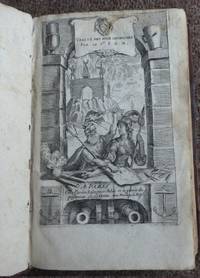
53104<p>Paris Cardin Besogne 1640. TITLE CONTINUED: De nouveau reveu corrige & augmente par l'autheur. 1640 first published in 1629 8vo approximately 170 x 100mm 6¾ x 4 inches French text added engraved pictorial title page of Neptune and Mars fireworks in the background dated 1629 6 full page illustrations 38 text engravings both illustrations and diagrams some decorated initials and headpieces pages: 10 1-277 5 pages 136 and 139 misnumbered 116 and 137 collation: A-S8 T4 T4 a blank bound in contemporary speckled calf raised bands to spine gilt decoration to spine pale red speckling to edges. Binding slightly worn small neat repair to top of spine gilt slightly worn pitting to sides small water stain to top of engraved title a larger one to top of letterpress title see image a very faint small intermittent stain to upper margin throughout very faint half page water stain on S8 - T3 small closed tear to margin of 2 pages neatly repaired very small blank corner missing on S2 verso T3 lightly browned. A very good sturdy copy. Francis Malthus d.1658 of English origin was an engineer in the royal French army and a captain general of mines and sapping. He was responsible for the French use of the mortar beginning in 1634. See: Chris Philip A Bibliography of Firework Books page 91 M 040.5; Spaulding and Karpinski Early Military Books in the University of Michigan Libraries page 19; John Eliot Hodgkin Rariora Volume 3 Books on Fireworks section page 15; Maurice Cockle A Bibliography of Military Books to 1642 page 93 No.118 referring to the English edition of 1629: "This work though in advance of anything so far written on the subject in English does not attain to the standard of Thibourel and Appier. Yet it is with foreign treatises it must be weighed for Malthus received his training in pyrotechnics abroad. It was Malthus who about the year 1634 introduced the mortar into the French service." 4 copies of our 1640 edition listed in Library Hub Discover. MORE IMAGES ATTACHED TO THIS LISTING ALL ZOOMABLE FURTHER IMAGES ON REQUEST. POSTAGE AT COST AND ALL PARCELS SENT FULLY TRACKED AND FULLY INSURED.</p> Paris, Cardin Besogne, 1640. hardcover
18211512140034Boston: Wells and Lilly 1821-01-01. First Edition. Hardcover. Very Good. First American edition. Bound in marbled boards spine rebacked in modern leather. Burgundy Moroccan leather spine label. Clean unmarked pages. Marginal browning to pages. Internally very good. <br> The first English edition was printed by John Murray in 1820 this is the 1st American edition printed in 1821 in Boston.J.M. Keynes "argued that Malthus's theory of effective demand provided a scientific explanation of unemployment and that the hundred-year domination of Ricardo over Malthus had been a disaster for the progress of economics. Keynes believed that if economics had followed Malthus . the world would be a much wiser and richer place" ODNB. The last chapter of the book was devoted to rebutting Say's law and argued that the economy could stagnate with a lack of "effectual demand". In other words wages if less than the total costs of production cannot purchase the total output of industry causing prices to fall; price falls decrease incentives to invest creating a downward spiral. Refs for 1st English ed: Goldsmiths 22767; Kress C577. <br><br>Early signature of E.W. Paige Schenectady NY and his book plate on front paste down. Eugene W. Paige 1852-1919 served in the New York legislature in the 19th century. Boston: Wells and Lilly hardcover
1817264447London: John Murray 1817. First edition. iv 327 1 pp. 1 vols. 8vo. Contemporary sprinkled calf rebacked endpapers renewed. Joints rubbed title and first few leaves a little foxed contents generally clean. First edition. iv 327 1 pp. 1 vols. 8vo. Issued in conformity with but separately from the fifth edition - the penultimate edition before the sixth and final one in Malthus' lifetime. Kress B.6973; Goldsmith 21762 John Murray unknown books
181722733London: John Murray 1817. First edition. 1 vols. 8vo. Rebound in later buckram. Title a little foxed contents generally clean. First edition. 1 vols. 8vo. Malthus' Additions to An Essay. Issued in conformity with but separately from the fifth edition - the penultimate edition before the sixth and final one in his lifetime. Kress B.6973; Goldsmith 21762 John Murray unknown books
1831WRCAM53414Georgetown D.C.: Charles Cruikshank 1831. 2230pp. Half title. Original half cloth and paper boards printed paper label. Front hinge cracked label chipped light edge wear. Light foxing. Very good. Malthus elaborates on his essay concerning checks to population growth in the different states of modern Europe and discusses prospects for mitigating the "evils Arising from the Principle of Population" and other matters. The appendix is Malthus' rebuttal of Wayland and Greene whose works disagreed with his thesis. The first American edition of Malthus' main work was issued by the same printer in Georgetown and is rare; this addenda is even rarer. AMERICAN IMPRINTS 8122. Charles Cruikshank hardcover books
181722733London: John Murray 1817. First edition. 1 vols. 8vo. Rebound in later buckram. Title a little foxed contents generally clean. First edition. 1 vols. 8vo. Issued in conformity with but separately from the fifth edition - the penultimate edition before the sixth and final one in his lifetime. Kress B.6973; Goldsmith 21762 John Murray unknown
182056733London: John Murray Albemarle-Street. Printed by C. Roworth Bell-yard Temple-bar 1820. First Edition. Hardcover. Very Good. 601 pp. Octavo 22 cm; rebound in later brown calf over hand-painted brown cloth with gilt-stamped black morocco spine label raised spine bands new endpapers. Surface of cloth treated with a transparent shellac of some kind giving it a striated shine when viewed at an angle; some bubbling-up of front board cloth light dampstaining to rear board; a handful of light pencil underlines and one contemporary ink blot very light foxing else interior is remarkably clean. A nicely rebound first edition of this classic work. John Murray, Albemarle-Street. Printed by C. Roworth, Bell-yard, Temple-bar hardcover
1807AQ28409London: Printed for J. Johnson.by T. Bensley 1807. In two volumes. xvi 580; vii 484pp 60. With half-titles. Contemporary gilt-ruled half-calf marbled paper boards contrasting green and tan calf lettering-pieces marbled edges. Lightly rubbed corners exposed. Hinges exposed later inked ownership inscription of Arthur Johnson to recto of front blank fly-leaf of Vol. I very occasional light spotting. The fourth edition greatly extended from the anonymous first of 1798 of this cornerstone of early studies of demography and an influential work in the history of political economy. Contrary to the prevailing Whig theory of history English cleric and scholar Thomas Robert Malthus 1766-1834 argued that the agricultural output of modern Britain would not be able to support the rapid population growth witnessed in the eighteenth-century and thus that society would return to earlier subsistence levels following catastrophic outbreaks of disease and famine. The second edition of 1803 was substantially revised and extended to include observations made from European data and most notably the recognition that human agency and especially moral restraint could alleviate the plight of the poorest elements of society. The third edition of 1806 added an appendix in which Malthus replied to his many contemporary critics. This fourth edition incorporates all of the previous revisions and additions. Provenance: Arthur Henry Johnson 1845-1927 historian and chaplain of All Souls College Oxford; author of inter alia The history of the Worshipful Company of the Drapers of London Oxford 1914-22 and The disappearance of the small landowner Oxford 1909. . Fourth edition. 8vo. Printed for J. Johnson...by T. Bensley hardcover