MALTHUS, Thomas RobertBiblio.com

542 résultats
184611941Paris: Guillaumin et Cie. 1846. 233x145mm. 9¼x5¾". Paris Guillaumin & Cie. 1846. En 4º 233 x 145mm. xxxvi-550 pp. Encuadernación de la época en holandesa piel. Segunda edición francesa de esta importante obra de economÃa polÃtica publicada por vez primera en inglés en 1820. Aunque Malthus es más conocido por los puntos de vista sobre la población contenidos en su<em> Ensayo sobre población</em> no cabe duda de que su importancia para los economistas de hoy se basa principalmente en sus <em>Principios de economÃa polÃtica</em>. Fue debido a este trabajo que J.M. Keynes reinstaló a Malthus como una figura importante en el pensamiento económico moderno en un momento en que la redundancia autoinducida del <em>Ensayo sobre la población</em> estaba a punto de reducir a Malthus a la categorÃa de monumento histórico. Los <em>Principios de EconomÃa PolÃtica</em> de Malthus fueron influenciados por los <em>Principios de EconomÃa PolÃtica y Tributación</em> de David Ricardo. Muy buen ejemplar. Guillaumin et Cie. hardcover
0270329129.Ghardcover. Good. Access codes and supplements are not guaranteed with used items. May be an ex-library book. hardcover
1160230277.Gpaperback. Good. Access codes and supplements are not guaranteed with used items. May be an ex-library book. paperback
116771735X.Gpaperback. Good. Access codes and supplements are not guaranteed with used items. May be an ex-library book. paperback
2329476787.Gpaperback. Good. Access codes and supplements are not guaranteed with used items. May be an ex-library book. paperback
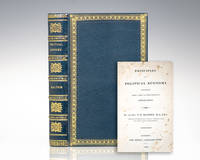
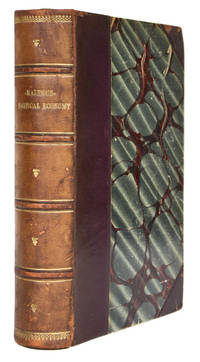
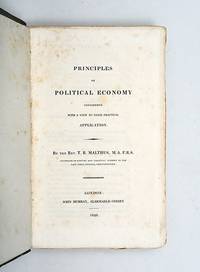
1820143844London: John Murray 1820. Rare first edition of Malthus' classic work. Octavo bound in full diced morocco raised bands gilt titles and tooling to the spine front and rear panels marbled endpapers. In near fine condition. An exceptional presentation. Thomas Malthus was an English economist known for his work in the fields of political economics and demography. His theory that prosperity and production lead not to utopia but to population growth and thereby back to social imbalance known as the "Malthusian trap" was expounded in his Essay on the Principle of Population 1789 one of his most notable and debated works. His Principles of Political Economy was written as a polemic against David Ricardo's On the Principles of Political Economy and Taxation and Say's Law arguing that demand did not grow simultaneously with supply but that they should be analyzed independent of each other expounding ideas which became influential on Keynsian economics. Both these works were divisive incurring backlash and support amongst notable economists. The bleak message of his Principle of Population rendered Malthus a notorious figure: Ebenezer Scrooge from A Christmas Carol for example justifies his refusal to give charity as a Malthusian attempt to control the population. John Murray hardcover
ria9783865507549_inpPaperback. New. New Book; Fast Shipping from UK; Not signed; Not First Edition; Thomas Robert Malthus 1766-1834 was an English demographer and political economist best known for his pessimistic but highly influential views on population growth. For most of his life he was professor of modern history and political paperback
199012049Verona: Stamperia Valdonega per COFIDE Compagnia Finanziaria De Benedetti 1990. Ottimo stato. Mezza pelle editoriale con cofanetto cm 25x17 pp 16 388 6. Prefazione di Carlo De Benedetti. Strenna della Compagnia Finanziaria De Benedetti stampata dalla Stamperia Valdonega in 349 esempari su carta Magnani di Pescia. Esemplare #274. Stamperia Valdonega per COFIDE Compagnia Finanziaria De Benedetti unknown
5070583-nnew. unknown
5070583like new. unknown
45125897like new. unknown
123522London John Murray 1820. . First edition; 8vo 21 x 13.5 cm; moderate spotting front free endpaper just starting to become loose at head of gutter margin remains of a library label to front pastedown; contemporary half calf marbled paper boards spine lettered in gilt dulled; vi 601 1pp.<br /> The first edition of Malthus' treatise on political economy.<br /><br />The book was conceived as a series of tracts rather than a comprehensive and systematic treatise though Malthus published it to establish his own position against that of Ricardo with whom he had been having an ongoing debate about the nature of labour demand and profit. 'In his 'Principles of Political Economy' Malthus was proposing investment in public work and private luxury as a means of increasing effective demand and hence as a palliative to economic distress. The nation he thought must balance the power to produce and the will to consume' DSB.<br /><br />'The Principles had only a limited impact at the time and was severely criticized by J. R. McCulloch and Ricardo; the latter prepared extensive critical notes. More recently it has received greater recognition largely as a result of the comments by J. M. Keynes in the 1930s. Keynes argued that Malthus's theory of effective demand provided a scientific explanation of unemployment and that the hundred-year domination of Ricardo over Malthus had been a disaster for the progress of economics. Keynes believed that if economics had followed Malthus instead of being constrained by Ricardo in an artificial groove the world would be a much wiser and richer place.' ODNB.<br /> Goldsmiths' 22767; Kress C.577. London, John Murray, 1820. hardcover
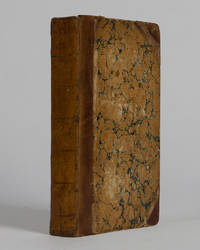
1820002253London England: John Murray 1820. 1st Edition . Half-Leather. Fair. Contemporary calf with hand marbled covers; leather spine dry flaking and rubbed with small piece missing and gold stamped title barely visiible; covers detached; front paste down with previous owner's book plate and name neatly in black ink; foxing throughout text otherwise very good without markings; 8vo; with 601 pages. <br/> <br/> John Murray hardcover
95378London John Murray 1820. . First edition; 8vo; small ownership stamp to lower outside corner of title-page small early 20th century bookseller's label to lower outside corner of verso of upper free endpaper a little age-toning and small ink smudge to title nineteenth century half calf over marbled boards rubbed at extremities spine faded a very good copy; vi 601 pp.<br /> The book was conceived as a series of tracts rather than a comprehensive and systematic treatise though Malthus published it to establish his own position against that of Ricardo with whom he had been having an ongoing debate about the nature of labour demand and profit. 'In his 'Principles of Political Economy' Malthus was proposing investment in public work and private luxury as a means of increasing effective demand and hence as a palliative to economic distress. The nation he thought must balance the power to produce and the will to consume' DSB.<br /><br />'The Principles had only a limited impact at the time and was severely criticized by J. R. McCulloch and Ricardo; the latter prepared extensive critical notes. More recently it has received greater recognition largely as a result of the comments by J. M. Keynes in the 1930s. Keynes argued that Malthus's theory of effective demand provided a scientific explanation of unemployment and that the hundred-year domination of Ricardo over Malthus had been a disaster for the progress of economics. Keynes believed that if economics had followed Malthus instead of being constrained by Ricardo in an artificial groove the world would be a much wiser and richer place.' ODNB.<br /> Goldsmiths' 22767; Kress C.577. London, John Murray, 1820. hardcover
1820119668London: John Murray 1820. First edition of this classic work regarding nature of labor demand and profit. Octavo original boards retaining the original paper spine label. In very good condition. Ownership inscription from the African Society and stamp to the title page. Rare in the original boards. There can be no doubt that Malthus’ importance for economists today rests mainly on his Principles of Political Economy. It was because of this latter work that J. M. Keynes 1933 reinstated Malthus as a major figure in modern economic thought" New Palgrave. "In his 'Principles of Political Economy' Malthus was proposing investment in public work and private luxury as a means of increasing effective demand and hence as a palliative to economic distress. The nation he thought must balance the power to produce and the will to consume" DSB. "The Principles had only a limited impact at the time and was severely criticized by J. R. McCulloch and Ricardo; the latter prepared extensive critical notes. But more recently it has received greater recognition largely as a result of the comments by J. M. Keynes in the 1930s. Keynes argued that Malthus's theory of effective demand provided a scientific explanation of unemployment and that the hundred-year domination of Ricardo over Malthus had been a disaster for the progress of economics. Keynes believed that if economics had followed Malthus instead of being constrained by Ricardo in an artificial groove the world would be a much wiser and richer place" ODNB. John Murray hardcover
1331305829.Gpaperback. Good. Access codes and supplements are not guaranteed with used items. May be an ex-library book. paperback
1820158341London: John Murray 1820. From the library of a neo-Malthusian First edition with the stamp on the title page of Carel Victor Gerritsen 1850-1905 the radical Dutch politican who founded the Nieuw-Malthusiaansche Bond Neo-Malthusian League in 1881; like Malthus Gerritsen deemed unchecked population growth the root of society's ills and proposed - unlike Malthus - the use of contraception to restrain it. Principles of Political Economy was conceived as a series of tracts rather than a comprehensive and systematic treatise. Malthus published it to establish his own position against that of Ricardo with whom he had been having an ongoing debate about the nature of labour demand and profit. Unlike Ricardo Malthus supported the active encouragement of demand and in so doing was seen by John Maynard Keynes as a forerunner of his own thought. "Malthus was proposing investment in public work and private luxury as a means of increasing effective demand and hence as a palliative to economic distress. The nation he thought must balance the power to produce and the will to consume" DSB. "The Principles had only a limited impact at the time and was severely criticized by J. R. McCulloch and Ricardo; the latter prepared extensive critical notes. But more recently it has received greater recognition largely as a result of the comments by J. M. Keynes in the 1930s. Keynes argued that Malthus's theory of effective demand provided a scientific explanation of unemployment and that the hundred-year domination of Ricardo over Malthus had been a disaster for the progress of economics. Keynes believed that if economics had followed Malthus instead of being constrained by Ricardo in an artificial groove the world would be a much wiser and richer place" ODNB. Octavo 215 x 132 mm. Recent brown morocco red morocco label marbled endpapers. Neat ink ownership signature to front free endpaper. Sporadic light foxing short closed tear not affecting text at head of L2. A very good copy. Goldsmiths' 22767; Kress C.577. unknown
19892080502106913526Not Available 1989. Soft Cover. Fine. The book is in fine condition. Not Available paperback
1820151433London: John Murray 1820. First edition. The book was conceived as a series of tracts rather than a comprehensive and systematic treatise though Malthus published it to establish his own position against that of Ricardo with whom he had been having an ongoing debate about the nature of labour demand and profit. "In his 'Principles of Political Economy' Malthus was proposing investment in public work and private luxury as a means of increasing effective demand and hence as a palliative to economic distress. The nation he thought must balance the power to produce and the will to consume" DSB. "The Principles had only a limited impact at the time and was severely criticized by J. R. McCulloch and Ricardo; the latter prepared extensive critical notes. But more recently it has received greater recognition largely as a result of the comments by J. M. Keynes in the 1930s. Keynes argued that Malthus's theory of effective demand provided a scientific explanation of unemployment and that the hundred-year domination of Ricardo over Malthus had been a disaster for the progress of economics. Keynes believed that if economics had followed Malthus instead of being constrained by Ricardo in an artificial groove the world would be a much wiser and richer place" ODNB. Octavo. Uncut and unopened in the original drab paper-backed blue boards printed paper spine label. Housed in a dark blue quarter morocco solander box by the Chelsea Bindery. Engraved book plate "Bibliothèque de Mr de Barante" to front pastedown paper library shelf label to foot of spine. Head of spine chipped front joint cracked rear joint cracked at head spine label a little chipped all still very strong; a very good copy. Goldsmiths' 22767; Kress C.577. hardcover
3865507549.Gpaperback. Good. Access codes and supplements are not guaranteed with used items. May be an ex-library book. paperback
1015455816.Ghardcover. Good. Access codes and supplements are not guaranteed with used items. May be an ex-library book. hardcover
1015461166.Gpaperback. Good. Access codes and supplements are not guaranteed with used items. May be an ex-library book. paperback
1821048324Boston: Wells and Lilly 1821. First Edition. Hardcover Full Leather. Good Condition. Original full calf worn at edges and hinges slight bowing to covers. Internally with dampstains to upper corner heavy browning to half title and final pages and pervasive but mostly mild staining throughout not affecting legibility. Nearly very good overall. viii 472pp.<br /> <br /> Though largely overlooked at the time of publication it is in the principles that Keynes found "scientific explanation of unemployment" and that "the hundred-year domination of Ricardo over Malthus had been a disaster for the progress of economics" ODNB. Malthus's theory that spending on both public works and private luxuries could alleviate recessions and downturns by creating demand and prosperity were well ahead of his time. This is the first US edition. Size: Octavo 8vo. Quantity Available: 1. Shipped Weight: Under 1 kilo. Category: Economics; Americana. Inventory No: 048324. Wells and Lilly hardcover
182123029Boston: Wells and Lilly 1821. First American edition of this landmark work in political economy. Octavo bound in three quarters leather over marbled boards black leather morocco spine label. In near fine condition. In his Principle of Political Economy Malthus was proposing investment in public works and private luxury as a means of increasing effective demand and hence as a palliative to economic distress. The nation he thought must balance the power to produce and the will to consume" DSB. Wells and Lilly hardcover
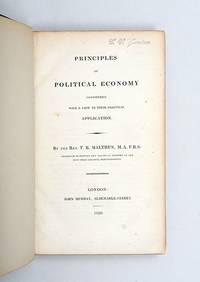
182056733London: John Murray Albemarle-Street. Printed by C. Roworth Bell-yard Temple-bar 1820. First Edition. Hardcover. Very Good. 601 pp. Octavo 22 cm; rebound in later brown calf over hand-painted brown cloth with gilt-stamped black morocco spine label raised spine bands new endpapers. Surface of cloth treated with a transparent shellac of some kind giving it a striated shine when viewed at an angle; some bubbling-up of front board cloth light dampstaining to rear board; a handful of light pencil underlines and one contemporary ink blot very light foxing else interior is remarkably clean. A nicely rebound first edition of this classic work. John Murray, Albemarle-Street. Printed by C. Roworth, Bell-yard, Temple-bar hardcover