Malthus, Thomas RBiblio.com

542 résultats
18265417London: John Murray 1826. Hardcover. Very Good. 2 volumes. 8vo. Pp. xviii 535; iv 528. Both volumes with one blank at the front and at the end. No half-title in volume 1. In the original boards with a patterned cloth spine strip the paper spine labels chipped spine cloth faded board corners worn ink name to the upper edge of the front boards with the previous owner's bookplate to paste-down and an ownership signature to the front endpaper of the first volume. Light foxing to the prelims and very light foxing throughout the text is very clean and the bindings are tight and square. A nice clean set. The sixth edition and the last edition to be published in his lifetime. Lowndes 1459. John Murray hardcover
181751078London John Murray 1817. 8vo. Bound in three nice uniform contemporary half calf with five raised bands and gilt lettering to spine. Spines with wear. Front board and spine detached from book-block on volume 1. Ex-libris pasted on to pasted down front free end-paper on all three volumes. A fine set. <br/><br/><em>The fifth edition of this political and economic classic which constitutes Malthus' first major publication and his main work because of which he is considered the father of demography and one of the main sources of inspiration for Darwin and Wallace.This present fifth edition contain several important additions price of grain and the third chapter of Book III was completely rewritten. The book then as now is considered highly controversial and it has influenced all demographers ever since as well as being of immense importance to the study of economic theory and genetic inheritance. "The "Essay" was highly influential in the progress of thought in the early nineteenth-century Europe. "Parson" Malthus as Cobbett dubbed him was for many a monster and his views were often grossly misinterpreted. But his influence on social policy whether for good or evil was considerable. The Malthusian theory of population came at the right time to harden the existing feeling against the Poor Laws and Malthus was a leading spirit behind the Poor Law Amendment Act of 1834." PMM 251.Thomas Robert Malthus 1766-1834 called the "enfant terrible" of the economists was an English demographer statistician and political economist who is best known for his groundbreaking views on population growth presented in his "Essays on the Principle of Population" which is based on his own prediction that population would outrun food supply causing poverty and starvation. Among other things this caused the legislation which lowered the population of the poor in England. Malthus actually turned political economic and social thought upside down with this work which has caused him to be considered one of the 100 most influential persons in history Hart The 100: A Ranking of the most Influential Persons in History 1978. Of course he was condemned by Marx and Engels and opposed by the socialists universally but the work was of immense impact on not only politics economics social sciences etc but also on natural sciences. "Later in the "Origin of Species" he Darwin wrote that the struggle for existence "is the doctrine of Malthus applied with manifold force to the whole animal and vegetable kingdoms; for in this case there can be no artificial increase of food and no prudential restraint from marriage" p. 63. Alfred Russel Wallace who arrived at a worked-out formulation of the theory of evolution at almost precisely the same time as Darwin acknowledged that "perhaps the most important book I read was Malthus's "Principles of Population" My Life p. 232. Although there were four decennial censuses before Malthus' death he did not himself analyze the data although he did influence Lambert Quetelet and Pierre Verhulst who made precise statistical studies on growth of populations in developed countries and showed how the early exponential growth changed to an S curve." DSB IX p. 69. As Malthus realized that his theories were not satisfactorily presented or sufficiently demonstrated in the first edition from 1798 he travelled for three years through Europe gleaning statistics and then published the second edition in 1803. Among other places he travelled through Northern Germany and his detailed diaries of these journeys provided him with some of the evidence necessary for the development of his theory on population growth. The observational information that he gathered on his travels in Europe were crucial to the development of his theories which also means that the work is of great interest for other European countries and not only Britain. "In 1819 the Royal Society elected Malthus to a fellowship. He was also a member of the French Institute and the Berlin Academy and a founding member of the Statistical Society 1834." DSB IX p. 67. Printing and the Mind of Man 251 first edition. Einaudi 3670Mattioli 2210Goldsmith 21761Kress B6974 </em> hardcover
181771430<p> Volume I xvi 496 pages. Volume II iv 507 pages. Volume III iv 500 pages.</p> Published by John Murray hardcover
180321446London: Printed for J. Johnson by T. Bensley 1803. Book. Very Good. Full Leather. Second Edition. Large Quarto. 26.5 cm x 21 cm. Pp. viii 3 contents 1 errata 610. Bound in contemporary diced calf bordered by double gilt rules artfully rebacked to style with corners restored spine divided into 6 compartments with central blind-stamped ornaments flanked by narrow gilts rules dog tooth rolls and dotted lines between raised bands gilt titled direct marbled endpapers speckled edges. Endpapers and title a bit foxed title and facing blank with brown spotting to inner margin almost certainly caused by pressed foliage but otherwise a very clean copy internally with only an occasional hint of marginal foxing in a handsome and well-preserved binding. The Second Edition known as the Great Quarto Edition of Malthus's famous treatise on population. This edition was so substantially revised and enlarged from the anonymously published essay of 1798 that the author himself considered it almost a new work. The original essay was essentially a polemical tract designed as a corrective to the utopian views of Condorcet and Godwin regarding the perfectibity of society. Malthus argued that progress of society will always be hindered by the tendency of the population to increase faster than the means of subsistence. While populations increase geometrically food production only increases arithmetically resulting in hardship and starvation for the lowest ranks of society. In the vastly enlarged 1803 edition the product of five years of research and travel on the European continent Malthus addresses the many misconceptions and criticisms of his original essay by presenting a far more thorough and balanced statement of his views. He begins the work with a lengthy historical analysis of the working out of his theory in many different types of societies throughout the world from ancient times to the present. By fleshing out his ideas with factual examples he claims to give his work in his own words "a more practical and permanent interest". As the extended title of the second edition indicates the last half of Malthus's work is devoted to an issue barely touched upon in the earlier essay namely the measures and expedients that may be taken by society to mitigate or eliminate the suffering resulting from population pressures. Here he softens the harshness of his original conclusion that the only checks on population consist in "misery or vice" i.e. famine and disease or homosexuality and abortion by proposing a number of preventive measures that should be taken in the form of education for the lower classes reform of the poor laws and "moral restraint" i.e. abstinence and delayed childbearing in order to avoid the ruinous consequences of over-population. Malthus's theory of population though later qualified by technological advances in food production and birth control remains one of the most influential works in the history of social and economic thought. Most importantly it served to call public attention to population as a major factor in the progress of civilisation and through its emphasis on social competition for scarce resources "the struggle for existence" provided the critical impetus for Darwin and Wallace's theory of natural selection. PMM 25 1 cf. 1st edition. Printed for J. Johnson, by T. Bensley Hardcover
1817140901001London: John Murray 1817. Hardcover. Very Good. xvi 496 p; iv 507 p; 500 p. "The fifth edition with important additions." Complete and unrestored in three volumes. Original boards with orginal paper spines most of which are not surprisingly gone given their fragility. In protective mylar wraps. Very Good condition overall: bindings degraded over time but completely unrestored and text in very nice shape. Clean pages-- no marks-- generally bright for age. Some foxing throughout text and typical waviness. Bumped corners. Not ex-library! Old London bookseller's stamp on front paste downs. Secodn volume front cover creased missing small strip o paper. Third volume front board detached the other covers are intact; the mylar wraps keep them all in place. Nice condition overall. A greatly revised and expanded edition of Malthus' most famous work the second-to-last published during his lifetime. Contains revisions of his views on rent a deeper look at how the political organization of states was determined by population and what limits to population growth were already occurring in Europe and an appendix with replies to critics. An enormously influential and controversial work that inspired Charles Darwin and Alfred Russel Wallace. John Murray hardcover
17011508040041John Murray 1817-01-01. 5th. Hardcover. Acceptable. 2 volumes of 3. Vol. 1 and 3 only. 1/4 contemporary leather over marbled boards. Boards detached. 22 cm. 5th edition with important additions. John Murray hardcover
2008SONG0521071348Cambridge University Press 2008-09-04. Reissue. paperback. Used: Good. 6.00x1.16x9.00. Buy with confidence. Excellent Customer Service & Return policy. Cambridge University Press paperback
19993592London: Thoemmes Press / Routledge 1999 Two-Volume set of the Fourth Edition facsimile edition in red boards no remainder marks no defects an exemplary pristine set no dust jackets as issued; 2 thick 8vos: 580 484pp index. Extra shipping charge REQUIRED for priority or overseas delivery of this heavy set extra charge SUBSTANTIAL for overseas shipment. Hard Cover. As New. Thoemmes Press / Routledge hardcover
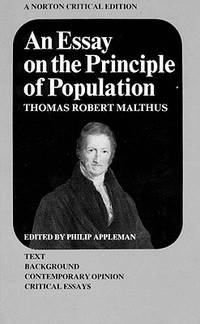
197656124W. W. Norton & Company Inc. As New. 1976. Paperback. 039309202X . FREE UPGRADE to Courier/Priority Shipping Upon Request IN STOCK AND IMMEDIATELY AVAILABLE FOR SHIPMENT - AS NEW THE TEXT BLOCK IS PRISTINE CLEAN UNMARKED AND IN EXCELLENT CONDITION - appears unread - 260 pages. -- with a bonus offer-- . W. W. Norton & Company Inc. paperback
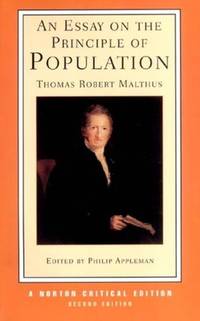
2003DADAX03939241062003-07-22. Second. paperback. New. 5.20x0.80x8.40. Buy with confidence. Excellent Customer Service & Return policy. paperback
2008DADAX0521071348Cambridge University Press 2008-09-04. Reissue. paperback. New. 6.00x1.16x9.00. Buy with confidence. Excellent Customer Service & Return policy. Cambridge University Press paperback
2011SONG1616405708Cosimo Classics 2011-12-01. paperback. Used: Good. 5.50x1.35x8.50. Buy with confidence. Excellent Customer Service & Return policy. Cosimo Classics paperback
1806236862London: Printed for T. Johnson 1806. Third edition. xvi 505 1 blank 60 index pp.; vii 1 blank 559 1 pp. 2 vols. 8vo. Contemporary three-quarter calf; joints cracked two boards detached; rubbed and scuffed; scattered foxing throughout; withal a good serviceable copy. Third edition. xvi 505 1 blank 60 index pp.; vii 1 blank 559 1 pp. 2 vols. 8vo. GERITS: Third edition the first to be published in 2 volumes and the first published after the Great Quarto edition of 1803 of one of the most important and influential books in the history of economic thought. The third edition contained numerous revisions among which was a text entitled A Reply to the Chief Objections which have been urged against the Essay on the Principle of Population which was also published separately so that it might be bound with earlier ones. Kress B.5067; Goldsmiths 19210; Einaudi 3669; Carpenter Economic Bestsellers XXXII 3; PMM 251 for the first edition; Blaug Great Economists before Keynes p. 141ff Printed for T. Johnson unknown
1995005565Norwalk Connecticut: The Easton Press 1995. Hardcover full dark blue leather elaborately stamped with intricate gold floral design and lettering. Special forward commissioned exclusively for this edition by George Zebrowski. Introduction by Donald Winch. A quality book by the easton Press complete with raised spine slik moire endpapers bound in silk ribbon ribbon marker and all edges gilt. A classic of early nineteenth century political-economic thought. An clean crisp unread copy with no previous ownership marks and no faults. An as new copy. Very fine. Collectors Edition. Full-Leather. Very Fine/Not Issued. 8vo - over 7¾" - 9¾" tall. The Easton Press Hardcover
DA10B-01173London: Reeves and Turner. Collectible - Acceptable. London: Reeves and Turner 1888. 9th edition. Sm 4to Hardcover. 551pp. Tables. Poor Ex-Library book. Heavy edgewear. Boards and preliminary pages detached but present. Pages age toned. Slight dampstaining to the boards and top-edge. With usual library markings. In polypropylene bag. population sociology social science history Inquire if you need further information. London: Reeves and Turner hardcover
71831E-090. Very Good. Hardcover. Leather. 8vo. Printed for J. Johnson by T. Bensley London UK. 1806. Two Volumes xvi 505 pgs; vii 559 pgs. Third Edition. Bound in gilt ruled fine calf leather with titles present to the spine. Boards have light shelf-wear present to the extremities boards are lightly rubbed and worn. Previous owner's bookplate present to the front pastedown. Text is clean and free of marks. Binding tight and solid. Third edition the first to be published in 2 volumes and the first published after the Great Quarto edition of 1803 of one of the most important and influential books in the history of economic thought. The third edition contained numerous revisions among which was a text entitled A Reply to the Chief Objections which have been urged against the Essay on the Principle of Population which was also published separately so that it might be bound with earlier ones. As the world's population continues to grow at a frighteningly rapid rate Malthus's classic warning against overpopulation gains increasing importance. An Essay on the Principle of Population examines the tendency of human numbers to outstrip their resources and argues that checks in the form of poverty disease and starvation are necessary to keep societies from moving beyond their means of subsistence. Malthus's simple but powerful argument was controversial in his time; today his name has become a byword for active concern about humankind's demographic and ecological prospects. ; 8vo 8" - 9" tall . hardcover
1995183217Norwalk Connecticut: Easton Press 1995. First Edition; First Printing. Hardcover. Near Fine Leather Bound. Book accented in 22kt gold. Printed on archival paper with gilded edges. The endsheets are of moire fabric with a silk ribbon page marker. Smyth sewing and concealed muslin joints to ensure the highest quality binding. This book is in full leather with hubbed spines. Faint spotting on side text block gilt. ; First Easton Press Edition.; 8vo 8" - 9" tall. Easton Press hardcover
0267893558.Ghardcover. Good. Access codes and supplements are not guaranteed with used items. May be an ex-library book. hardcover
1332592708.Gpaperback. Good. Access codes and supplements are not guaranteed with used items. May be an ex-library book. paperback
0266391338.Ghardcover. Good. Access codes and supplements are not guaranteed with used items. May be an ex-library book. hardcover
0332364119.Ghardcover. Good. Access codes and supplements are not guaranteed with used items. May be an ex-library book. hardcover
0365398160.Ghardcover. Good. Access codes and supplements are not guaranteed with used items. May be an ex-library book. hardcover
0428721583.Ghardcover. Good. Access codes and supplements are not guaranteed with used items. May be an ex-library book. hardcover
0428623387.Ghardcover. Good. Access codes and supplements are not guaranteed with used items. May be an ex-library book. hardcover