MALTHUS, Thomas RobertBiblio.com
100 résultats
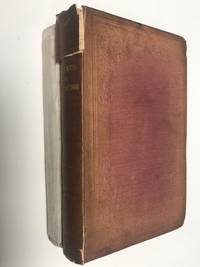
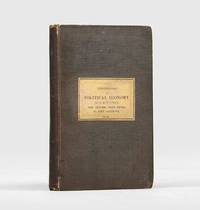
1853133496London: Simpkin and Marshall 1853. Presentation copy to the editor of The Economist Second edition presentation copy of Malthus's Definitions edited and with a new preface notes and additional remarks by John Cazenove 1788-1879 an intimate friend and protégé of Malthus who described him as "a very clever man and good political economist." Cazenove's writings are "a worthwhile contribution to political economy in their own right and an important part of the anti-Ricardian tradition" New Palgrave. This copy is inscribed on the half-title: "To the Editor of The Economist with Mr Cazenove's Comps." The founder and first editor of The Economist was James Wilson 1805-1860 a businessman economist and Liberal politician who continued as editor until 1857. Octavo. Original green cloth printed paper label to front board yellow coated endpapers. Pencil annotation to one or two pages. Spine ends and corners rubbed joints with short splits to extremities occasional marginal finger marks: a very good copy. Sraffa 3702. hardcover
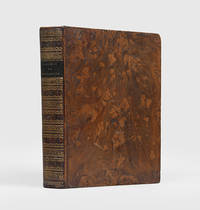
1827170223003London: John Murray 1827. First Edition. Hardcover. Very Good. First edition first printing. Finely bound in brown leather with raised bands and gilt stamping. Contents lightly toned light restoration to several pages evident. Title page and text of last chapter show light evidence of erased pencil markings. Previous owner name on half title page. An important and early work on economic methodology. John Murray hardcover
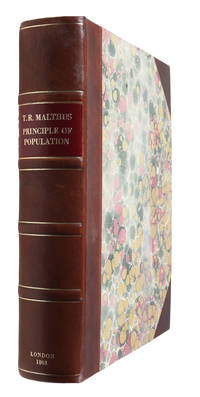
1827122073London: John Murray 1827. First Edition. hardcover. near fine. viii 261pp. 8vo rebound in 3/4 red leather gilt-lettered spine; half-title expertly repaired otherwise fine. London: John Murray 1827. First Edition. Near fine.<br/> <br/> A critique of the terms used by French economists Adam Smith Jean-Baptiste Say James Mill David Ricardo J.R. McCulloch and Samuel Bailey followed by the author's classification. Kress C. 1924. NCBEL III 1294. Palgrave II p.677.<br/> <br/> John Murray unknown
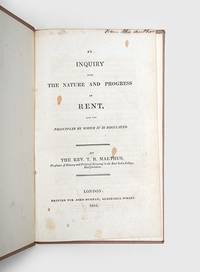
1815168217London: for John Murray; 1815. A major contribution to rent theory First edition first issue presentation copy inscribed in a secretarial hand "from the author" on the title page. The pamphlet is the first expression of Malthus's view for which he is credited as among the founders of the classical theory of rent. "Together with the population principle the theory of rent was one of the chief ideas contributed by Malthus to the re-evaluation of Smith's political economy which took place during the first decades of the nineteenth century" Winch p. 349. Malthus developed the idea from his lectures while professor of history and political economy at the East India College. Its publication grew out of a private debate between Malthus and Ricardo. In response Ricardo expounded on Malthus's ideas and their synthesis was the basis of English thought on rent for the rest of the century. The second issue names J. Johnson and Co. in the imprint. Provenance: with the bookplate of the Dutch economist Arnold Heertje 1934-2020. Octavo 207 x 127 mm pp. iv 62. Twentieth-century pink paper boards red morocco label to spine. Superficial split to front joint contents spotted. A good copy. Black 2877; Einaudi 3673; Goldsmiths' 21130; Hollander 2323; Kress B.6536; McCulloch p. 32. Donal Winch Riches and Poverty 1996. hardcover
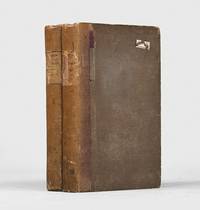
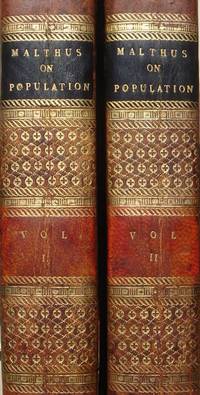
180775775hLondon: Printed for R. Johnson in St. Paul's Church-Yard by T. Bensley Bolt Court Fleet Street 1807. Book. Very Good. Hardcover. 8vo - over 7¾ - 9¾" tall. Two-volume set in full tree-calf with gilt spines. Professionally re-backed with original spines relaid. Moderate handling and bumping to covers. Edges and endpapers toned. Armorial bookplate of Sir Edward Strachey Baronet Sutton Court Somerset inside front covers; early owner's name in ink to free endpapers. Otherwise clean tight and unmarked -- no foxing or staining to text. Very neat -- a sound and handsome set. Half-titles present; extensive index. xvi580viii48460indexpp. Printed for R. Johnson in St. Paul's Church-Yard, by T. Bensley, Bolt Court, Fleet Street Hardcover
1803143843London: T. Bensley 1803. Rare second edition of this cornerstone text of modern economics. Quarto bound in full diced morocco raised bands gilt titles and tooling to the spine front and rear panels marbled endpapers. In very good condition. An exceptional presentation. “Malthus was one of the founders of modern economics. His Essay was originally the product of a discussion on the perfectibility of society with his father who urged him to publish. Thus the first edition published anonymously was essentially a fighting tract but later editions were considerably altered and grew bulkier as Malthus defended his views against a host of critics… The Essay was highly influential in the progress of thought in early 19th-century Europe and his influence on social policy was considerable… Both Darwin and Wallace clearly acknowledged Malthus as a source of the idea of ‘the struggle for existence†PMM 251. T. Bensley hardcover
180345423London: Printed for J. Johnson. by T. Bensley. 1803. Second edition or "A New Edition Very Much Enlarged". 4to. viii iv 610 pp. 19th century half speckled calf over marbled boards gilt rules to the spine gilt lettered green label all edges marbled. Binding expertly resewn and the joints neatly repaired occasional foxing mostly mild an attractive copy. First published anonymously in 1798 Malthus drew upon the works of Hume and Smith amongst others to explain his conservative conception of population control. "The central idea of the essay. was a simple one. The population of a community. increases geometrically while food supplies increase only arithmetically. The 'Essay' was highly influential in the progress of thought in early 19th century Europe. it came at the right time to harden the existing feeling against the Poor Laws" - Printing and the Mind of Man 251. Citing examples from other societies and sources not hitherto known to him Malthus rewrote and extended his essay significantly enough for him to consider this an entirely "new work" in his introduction to this edition. He expanded and refined his theory of positive checks on population growth those that increase the death rate and negative ones those that inhibit birth rates slightly softening his tone by arguing for greater moral restraint as opposed to the bleaker and cruder mechanisms of hunger disease and war to keep population numbers down and therefore keep overall prosperity up. Despite being hugely influential in economic and philosophical terms Malthus has always been a divisive figure and his arguments remain controversial to this day. London: Printed for J. Johnson... by T. Bensley... unknown
180940999Washington City: Roger Chew Weightman 1809. 2 volumes 8vo. 8 1/4 x 5 inches. Vol. 1 xvi 510 xxxiv pp.; Vol. 2 vii 542 pp. Contemporary tree calf skilfully rebacked. Spines gilt ruled forming six compartments lettering pieces in the second compartmenrs<br/> <br/> Provenance: Possibly John Barclay 1749-1824 former Mayor of Philadelphia from 1791 to 1793<br/> <br/> First American edition of a fundamental text of Modern Economics.<br/> <br/> Thomas Robert Malthus was an English economist cleric and scholar influential in the fields of political economy and demography. Malthus came to prominence for his publication of the present work first published in 1798. Between 1798 and 1826 Malthus published six versions of the essay updating each edition to incorporate new material to address criticism and to convey changes in his own perspectives on the subject. Writing in response to Jean-Jacques Rousseau and William Godwin specifically their approaches to the improvement of society Malthus opposed the optimistic view in 18th-century Europe that saw society as improving and in principle as perfectible. Malthus saw population growth as inevitable whenever conditions improved thereby precluding real progress towards a utopian society: "The power of population is indefinitely greater than the power in the earth to produce subsistence for man." Malthus laid the "theoretical foundation of the conventional wisdom that has dominated the debate both scientifically and ideologically on global hunger and famines for almost two centuries" Daoud. He remains a much-debated writer.<br/> <br/> Shaw 17975; Daoud Ade "Robbins and Malthus on scarcity abundance and sufficiency: The missing sociocultural element" in American Journal of Economics and Sociology 69.4: 1206-1229; Harvey David "Population Resources and the Ideology of Science"in Economic Geography 503: 256277. Roger Chew Weightman unknown
1826015875London: John Murray 1826 Book. Fair. Hardcover. 5th or later Edition. 1826 Sixth edition 2 volume set published 1826 The final revised text Good/Reasonable Condition: see notes Vol I: xviii 535pp. Vol 2: iv 528pp CONDITION Set Needs Rebinding Vol I Original Buckram Top of Spine is Loose; see photo Contents tight and clean Viol II No Binding Slight Browning on Title-Page Pencil Scribbles on the back of the last flyleaf Contents tight and clean. John Murray hardcover
1803182784London: printed for J. Johnson by T. Bensley 1803. Malthus softens his conclusions The Great Quarto edition notionally the second edition following the first of 1798 but so substantially enlarged rewritten and re-titled as to be effectively a new book. The Essay was one of the most influential works in the history of economic thought arguing the link between food supply and population size and the inevitability of famine and suffering once population exceeded its limits. "For today's readers living in a post-Malthus era the world's population problems are well known and serious but no longer sensational. It is difficult therefore to appreciate the radical and controversial impact made by the Essay at the time of publication. It challenged the conventional notion that population growth is an unmixed blessing. It discussed prostitution contraception and other sexual matters. And it gave vivid descriptions of the horrendous consequences of overpopulation and of the brutal means by which populations are checked" ODNB. In the second edition Malthus "made clear what was only implicit in the first that prudential restraint should if humanly possible be 'moral restraint' - that is delayed marriage accompanied by strictly moral pre-marital behaviour although he admitted that moral restraint would not be easy and that there would be occasional failures. Whereas in the first edition he had said that all the checks to population would involve either misery or vice in the second edition he attempted to lighten this 'melancholy hue' and 'to soften some of the harshest conclusions of the first essay' by arguing that moral restraint if supported by an education emphasizing the immorality of bringing children into the world without the means of supporting them would tend to increase rather than diminish individual happiness" ODNB. Quarto 269 x 205 mm pp. viii 4 610. Contemporary tree calf rebacked and recornered with original spine laid down spine gilt in compartments with black morocco label. Twentieth-century bookplate of Virginia bibliophile and historian Christopher Clark Geest. Scattered light foxing else a very good copy. Einaudi 3668; Goldsmiths' 18640; Kress B.4701. unknown
18265784691John Murray 1826. Volume 1. This is an ex-library book and may have the usual library/used-book markings inside.This book has hardback covers. In good all round condition. Sixth edition. Medium 8vo with marbled boards and black leather half binding. Raised bands gilt lettering and gilt borders on backstrip. Bumped corners and some minor chipping and general wear. Interior is secure clean and clear save for some foxing. Trimmed. Please note the Image in this listing is a stock photo and may not match the covers of the actual item850grams ISBN: John Murray hardcover
180362792London Printed for J. Johnson by T. Bensley 1803. Large 4to. Later brown hcalf with four raised bands single gilt lines and red leather title-label to spine. First three and last 14 leaves a bit brownspotted title-page and last two leaves marginally repaired at hinge otherwise a very nice clean and solid copy. VIII 4 610 pp. <br/><br/><em>The Great Quarto-edition of Malthus' milestone work the first and most influential book on population. Although being the second edition after the anonymously printed first of 1798 it is so significantly altered revised and expanded that it is considered a new work rather than a new edition. Malthus himself also thought of it as such. It is nearly four times the length of the 1798 essay the title has been changed the title of the first: "An Essay on the Principle of Population as it Affects the Future Improvement of Society with Remarks on the Speculation of Mr. Godwin M. Condorcet and Other Writers" and it is published with Mathus' name as the author not anonymously. All later editions were minor revisions of this heavily expanded and altered second one. "In the course of this inquiry I found that much more had been done than I had been aware of when I first published the essay. The poverty and misery arising from a too rapid increase of population had been distinctly seen and the most violent remedies proposed so long ago as the times of Plato and Aristotle. And of late years the subject had been treated in such a manner by some of the French economists occasionally by Montesquieu and among our own writers by Dr. Franklin Sir James Steuart Mr. Arthur Young and Mr. Townsend as to create a natural surprise that it had not excited more of the publick attention" Preface to the second edition p. IV. The controversial views because of which the work became so influential are most provocative and eyeopening in the second edition in which Malthus for instance for the first time advocates moral restraint meaning sexual abstinence and late marriage and elaborately explains his comparison between the increase of population and food. "The "Essay" was highly influential in the progress of thought in the early nineteenth-century Europe. "Parson" Malthus as Cobbett dubbed him was for many a monster and his views were often grossly misinterpreted. But his influence on social policy whether for good or evil was considerable. The Malthusian theory of population came at the right time to harden the existing feeling against the Poor Laws and Malthus was a leading spirit behind the Poor Law Amendment Act of 1834." PMM 251. Thomas Robert Malthus 1766-1834 called the "enfant terrible" of the economists was an English demographer statistician and political economist who is best known for his groundbreaking views on population growth presented in his "Essays on the Principle of Population" which is based on his own prediction that population would outrun food supply causing poverty and starvation. Among other things this caused the legislation which lowered the population of the poor in England. Malthus actually turned political economic and social thought upside down with this work which has caused him to be considered one of the 100 most influential persons in history Hart The 100: A Ranking of the most Influential Persons in History 1978. Malthus was naturally condemned by Marx and Engels and opposed by the socialists universally but the work had an enormous impact on not only politics economics and social sciences but also on natural sciences. For instance both Darwin and Wallace considered Malthus a main source in their development of the theory of natural selection considering him a great philosopher and his Essay on Population one of the most important books ever. "Malthus’s idea of man’s "Struggle for existence" had decisive influence on Charles Darwin and the theory of evolution. Other scientists related this idea to plants and animals which helped to define a piece of the evolutionary puzzle. This struggle for existence of all creatures is the catalyst by which natural selection produces the "survival of the fittest". Thanks to Malthus Darwin recognised the significance of intraspecies competition between populations of the same species e.g. the lamb and the lamb not just interspecies competition between species e.g. the lion and the lamb. Malthusian population thinking also explained how an incipient species could become a full-blown species in a very short timeframe." The second edition must be considered the most important of all the editions. This is far more a work on the problems of over-population than it is a response to Godwin and Condorcet on their works whic is the main concern of the first edition. "Not so much shocked by his own conclusions in his "Essay on Population" first ed. 1798 as driven by a naturally inquiring mind he travelled for three years through Europe gleaning statistics and then published a second edition 1803." Catlin A History of the Political Philosophers 1939 p. 377. PMM 251 first edition. </em> hardcover
1807AQ28409London: Printed for J. Johnson.by T. Bensley 1807. In two volumes. xvi 580; vii 484pp 60. With half-titles. Contemporary gilt-ruled half-calf marbled paper boards contrasting green and tan calf lettering-pieces marbled edges. Lightly rubbed corners exposed. Hinges exposed later inked ownership inscription of Arthur Johnson to recto of front blank fly-leaf of Vol. I very occasional light spotting. The fourth edition greatly extended from the anonymous first of 1798 of this cornerstone of early studies of demography and an influential work in the history of political economy. Contrary to the prevailing Whig theory of history English cleric and scholar Thomas Robert Malthus 1766-1834 argued that the agricultural output of modern Britain would not be able to support the rapid population growth witnessed in the eighteenth-century and thus that society would return to earlier subsistence levels following catastrophic outbreaks of disease and famine. The second edition of 1803 was substantially revised and extended to include observations made from European data and most notably the recognition that human agency and especially moral restraint could alleviate the plight of the poorest elements of society. The third edition of 1806 added an appendix in which Malthus replied to his many contemporary critics. This fourth edition incorporates all of the previous revisions and additions. Provenance: Arthur Henry Johnson 1845-1927 historian and chaplain of All Souls College Oxford; author of inter alia The history of the Worshipful Company of the Drapers of London Oxford 1914-22 and The disappearance of the small landowner Oxford 1909. . Fourth edition. 8vo. Printed for J. Johnson...by T. Bensley hardcover
1826149989London: John Murray 1826. The definitive text in original boards Sixth edition the final lifetime edition and the definitive text with Malthus's final revisions marking a significantly expanded and amended text from the first edition of 1798. The Essay is one of the most important and influential works in the history of economic thought and the foundation text of modern demography. 2 vols octavo. Original purple cloth-backed drab grey paper boards printed spine labels. Ownership signature dated 1882 to front free endpaper old price label to front cover of vol. II. Spines lightly sunned label of vol. II chipped with loss paper covering on front cover of vol. II peeling around front joint tips a little worn light foxing partly unopened. A very good copy. hardcover
180752022<p>HANDSOME COPY IN CONTEMPORARY BOLDLY SPECKLED CALF<br />2 vols. tall 8vo. iii-xvi 580; iii-viii 484 58 indexpp. contemporary boldly speckled calf smooth spines richly decorated in gilt in panels using two different designs black lettering and russet numbering labels gilt board edges gilt rolled spines a trifle chaffed at headbands some cracking at ends of some joints but overall a very nice copy.<br />Near contemporary pencilled shelf number "D198" of Lord Dunraven of Adare Manor Co. Limerick on endpaper.<br /><br />KRESS B5219<br />This is edition incorporates the substantial revisions and additions which Malthus had made for his third edition of 1806. They are listed and described in full in his preliminary 'Advertisement' to that edition also printed here. The most substantial of the changes made was that "The chapters which were the fourth and sixth of the second book are nearly rewritten on account of an error into which the author had fallen in an attempt to estimate the fruitfulness of marriages and the number born living to be married from the data in registers" 'Advertisement'. Furthermore he added as an appendix here vol.2 p.429-484 his important Reply to the Chief Objections to the second edition of 1803. This appendix he had also published separately in quarto "for the accomodation of the purchasers of the former edition" 'Advertisement'.Malthus recommends that "those who have not the leisure or inclination to read the entire work will find in the appendix such notice of its most prominent arguments as will give them a good general idea of the aim and bent of the whole". In it he writes "My object is to correct some of the misrepresentations which have gone abroad respecting two or three of the most important points of the Essay. . The first grand objection that has been made to my principles is that they contradict the original command of the Creator to increase and multiply and replenish the earth . The next grand objection which has been urged against me is my denial of the right of the poor to support. . and lastly and rather a matter of feeling than of argument. Many persons have accused him of excessive pessimism in throwing a darker shade over our views of human nature and tending particularly to narrow our prospects of future improvement". All of these objections he attempts to refute.<br />From the library of Edwin R. W. Wyndham-Quin Viscount Adare F.R.S. of Adare Manor Co. Limerick.</p> Printed for J. Johnson .. by T. Bensley hardcover
1890226775London: Ward Lock & Co. Limited 1890. Hardcover. Very Good/No Jacket. Hardcover; large 8vo; 614 pages. Scarce in this edition. Dark red cloth with gilt on spine textured cloth. Rubbed edges. Clean dark blue endpapers. "1890" in pen on title page some small pen marks in very few margins. Bright and clean interior. VG/-- <br/> <br/> Ward, Lock & Co., Limited hardcover
1809191317Georgetown: J. Milligan 1809. 1st American Edition. Hardcover. Fair missing covers leather spine heavily worn pages have foxing spots binding split and several pages loose but all appear to be present with minor tears here and there Sold as a reading copy or binding set WAF. Missing covers and worn leather spine. Vol. 1: XVI 510 XXXIV pp. Vol. 2: vii 1 542 pp. This is the first American edition. Volumes 1 2 of a 2 volume set. Includes index. Scarce and worthy of rebinding. J. Milligan hardcover
1806156997London: for J. Johnson by T. Bensley 1806. The foundation text of modern demography Third edition the first edition to be published in two octavo volumes the format which was to remain the standard in Malthus's lifetime. This third edition has important alterations and additions particularly the appendix in which Malthus replied to some of his many critics; it follows the first edition of 1798 in a single octavo volume and the expanded second edition in quarto in 1803. Malthus's treatise on population is one of the most important and influential works in the history of economic thought and the foundation text of modern demography. "For today's readers living in a post-Malthus era the world's population problems are well known and serious but no longer sensational. It is difficult therefore to appreciate the radical and controversial impact made by the Essay at the time of publication. It challenged the conventional notion that population growth is an unmixed blessing. It discussed prostitution contraception and other sexual matters. And it gave vivid descriptions of the horrendous consequences of overpopulation and of the brutal means by which populations are checked" ODNB. Despite its unpopularity with liberal critics Malthus's principle of population became accepted as a central tenet of classical political economy and Charles Darwin acknowledged Malthus's influence in the development of his theory of natural selection. 2 vols octavo 209 x 128 mm. Bound without half-titles. Recent half calf red morocco label marbled sides. A few contemporary annotations in vol. II. Repairs to closed tears at head of A7 and A8 into text without loss slight sporadic spotting light dampstaining at lower outer corner of vol. II towards rear. A very good copy. Einaudi 3689; Goldsmiths' 19210; Kress B5067. unknown