[Révolution française / Dijon / Bourgogne / Claude-Antoine Prieur-Duvernois dit Prieur de la Côte-d'Or] - ViardotLivre Rare Book
123 résultats
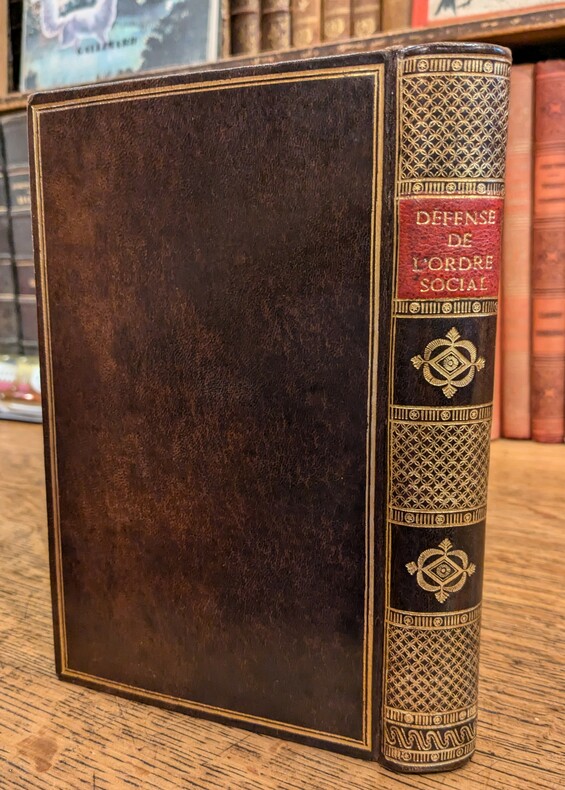
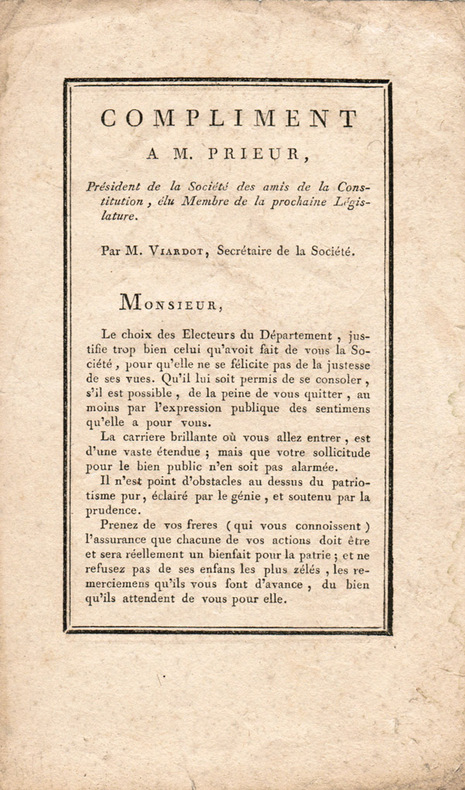
179121491791 Tract de 1 p. in-8 (20,5 x 12 cm), slnd [Dijon, 1791].
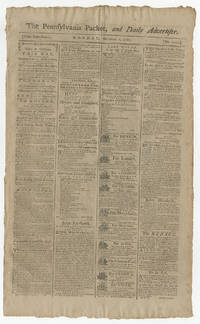
178724135<p><b>U.S. CONSTITUTION.</b>Newspaper. <i>The Pennsylvania Packet and Daily Advertiser</i>. October 1 1787 No. 2700 Philadelphia: John Dunlap and David C. Claypoole including the September 28 resolution of the Confederation Congress to send to the states for ratification the recently completed U. S. Constitution. 4 pp. 12 x 18¾ in. </p><br />"<i>The United States in Congress Assembled. Friday September 28 1787.</i><p><i>CONGRESS having received the Report of the CONVENTION lately assembled in Philadelphia</i></p><p><i>Resolved unanimously THAT the said report with the resolutions and letter accompanying the same be transmitted to the several legislatures in order to be submitted to a convention of delegates chose in each state by the people thereof in conformity to the resolves of the convention made and provided in that case. CHARLES THOMSON Secretary.</i>" p2/c3</p><p>The convention called to revise the Articles of Confederation met in the Pennsylvania's State House in Philadelphia starting on May 25 1787. After many delegates agreed that the Articles could not be sufficiently improved they started to draft an entirely new structure. Maintaining their pledge of secrecy after months of private deliberations over trade defense taxation representation separation of powers the election of a president the slave trade international relations and many other issues the proposed United States Constitution was signed by thirty-nine of the fifty-five delegates on September 17.</p><p>Two days later the Constitution was first published by the <i>Pennsylvania Packet</i>and four other Philadelphia newspapers. The cover letter sent by George Washington president of what came to be called the Constitutional Convention submitting the plan to Arthur St. Clair the President of the Congress of the Confederation in New York was also printed then.</p><p>Congress received and read the proposed Constitution on September 20th. As a sampling of their deliberations William Grayson of Virginia thought it was too weak while Richard Henry Lee of Virginia and Nathan Dane of Massachusetts thought it was too strong.</p><p>On September 27 Virginia's Richard Henry Lee proposed that the Constitution be sent to the executives of each of the states. A Delaware representative quickly added "in order to be by them submitted to conventions of delegates to be chosen agreeably to the said resolutions of the convention." Ten of the twelve states then represented in Congress voted in favor. Before Congress adjourned for the day the majority of Virginia's representatives and a minority of New York's representatives also indicated their support. On September 28 Federalists holding out for a unanimous vote found a way to compromise with anti-Federalists: Congress unanimously resolved to send the Constitution to the states but without any recommendation or approval.</p><p>Arider from New York City arrived in Philadelphia with the resolution that same day.</p><p>George Clymer presented his own resolution to the Pennsylvania Assembly noting that "<i>the late Federal Convention has digested a plan of government for the United States and recommended that it should be referred to the consideration of State Conventions…</i>" After a "<i>very long and animated debate</i>" Clymer's resolution passed by a vote of 43 to 19 and adjourned until 4:00 p.m. But only 44 members returned falling two shy of the necessary quorum. The Assembly's sergeant-at-arms was sent to show the resolution to absent members. Two who still refused to attend were seized by the public dragged through the streets and thrust into the assembly room. The involuntarily completed quorum voted that "<i>it is the sense of great numbers of the grand people of this state already signified in petitions & declarations to this house that the earliest steps should be taken to assemble a convention within the state for the purpose of deliberating and determining on the said constitution.</i>" They called for the election of deputies who would assemble for that purpose "<i>on the third Tuesday of November at the State-house in the city of Philadelphia…</i>" p2/c3-4</p><p>Other articles of interest in this issue include news from Europe and a brief piece against Indians "<i>from the western country</i> who <i>still continue their depredations on the whites…</i>" p2/c3</p><p><b><i>The Pennsylvania Packet or the General Advertiser</i></b>1771-1839 was founded by John Dunlap in late 1771 as a weekly newspaper in Philadelphia though it relocated to Lancaster during the British occupation of Philadelphia in 1777-1778. On May 30 1783 Benjamin Towne turned the <i>Pennsylvania Evening Post</i> into the first daily newspaper in the United States. However with Towne branded a traitor and forced to hawk his own papers on the street the newspaper collapsed the following year. John Dunlap and David Claypoole then made their <i>Pennsylvania Packet</i> the first successful daily on September 21 1784. It underwent numerous name changes in the 1790s until sold in 1800 and renamed <i>Poulson's American Daily Advertiser</i>.</p> John Dunlap and David C. Claypoole
178724135<p><b>U.S. CONSTITUTION.</b>Newspaper. <i>The Pennsylvania Packet and Daily Advertiser</i>. October 1 1787 No. 2700 Philadelphia: John Dunlap and David C. Claypoole including the September 28 resolution of the Confederation Congress to send to the states for ratification the recently completed U. S. Constitution. 4 pp. 12 x 18¾ in. </p><br />"<i>The United States in Congress Assembled. Friday September 28 1787.</i><p><i>CONGRESS having received the Report of the CONVENTION lately assembled in Philadelphia</i></p><p><i>Resolved unanimously THAT the said report with the resolutions and letter accompanying the same be transmitted to the several legislatures in order to be submitted to a convention of delegates chose in each state by the people thereof in conformity to the resolves of the convention made and provided in that case. CHARLES THOMSON Secretary.</i>" p2/c3</p><p>The convention called to revise the Articles of Confederation met in the Pennsylvania's State House in Philadelphia starting on May 25 1787. After many delegates agreed that the Articles could not be sufficiently improved they started to draft an entirely new structure. Maintaining their pledge of secrecy after months of private deliberations over trade defense taxation representation separation of powers the election of a president the slave trade international relations and many other issues the proposed United States Constitution was signed by thirty-nine of the fifty-five delegates on September 17.</p><p>Two days later the Constitution was first published by the <i>Pennsylvania Packet</i>and four other Philadelphia newspapers. The cover letter sent by George Washington president of what came to be called the Constitutional Convention submitting the plan to Arthur St. Clair the President of the Congress of the Confederation in New York was also printed then.</p><p>Congress received and read the proposed Constitution on September 20th. As a sampling of their deliberations William Grayson of Virginia thought it was too weak while Richard Henry Lee of Virginia and Nathan Dane of Massachusetts thought it was too strong.</p><p>On September 27 Virginia's Richard Henry Lee proposed that the Constitution be sent to the executives of each of the states. A Delaware representative quickly added "in order to be by them submitted to conventions of delegates to be chosen agreeably to the said resolutions of the convention." Ten of the twelve states then represented in Congress voted in favor. Before Congress adjourned for the day the majority of Virginia's representatives and a minority of New York's representatives also indicated their support. On September 28 Federalists holding out for a unanimous vote found a way to compromise with anti-Federalists: Congress unanimously resolved to send the Constitution to the states but without any recommendation or approval.</p><p>Arider from New York City arrived in Philadelphia with the resolution that same day.</p><p>George Clymer presented his own resolution to the Pennsylvania Assembly noting that "<i>the late Federal Convention has digested a plan of government for the United States and recommended that it should be referred to the consideration of State Conventions…</i>" After a "<i>very long and animated debate</i>" Clymer's resolution passed by a vote of 43 to 19 and adjourned until 4:00 p.m. But only 44 members returned falling two shy of the necessary quorum. The Assembly's sergeant-at-arms was sent to show the resolution to absent members. Two who still refused to attend were seized by the public dragged through the streets and thrust into the assembly room. The involuntarily completed quorum voted that "<i>it is the sense of great numbers of the grand people of this state already signified in petitions & declarations to this house that the earliest steps should be taken to assemble a convention within the state for the purpose of deliberating and determining on the said constitution.</i>" They called for the election of deputies who would assemble for that purpose "<i>on the third Tuesday of November at the State-house in the city of Philadelphia…</i>" p2/c3-4</p><p>Other articles of interest in this issue include news from Europe and a brief piece against Indians "<i>from the western country</i> who <i>still continue their depredations on the whites…</i>" p2/c3</p><p><b><i>The Pennsylvania Packet or the General Advertiser</i></b>1771-1839 was founded by John Dunlap in late 1771 as a weekly newspaper in Philadelphia though it relocated to Lancaster during the British occupation of Philadelphia in 1777-1778. On May 30 1783 Benjamin Towne turned the <i>Pennsylvania Evening Post</i> into the first daily newspaper in the United States. However with Towne branded a traitor and forced to hawk his own papers on the street the newspaper collapsed the following year. John Dunlap and David Claypoole then made their <i>Pennsylvania Packet</i> the first successful daily on September 21 1784. It underwent numerous name changes in the 1790s until sold in 1800 and renamed <i>Poulson's American Daily Advertiser</i>.</p> John Dunlap and David C. Claypoole books
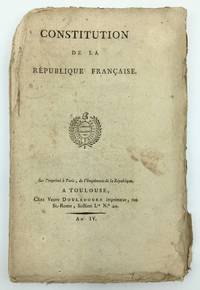
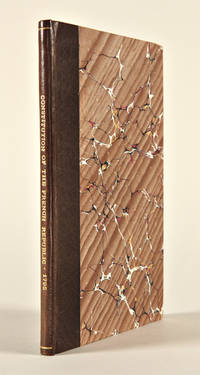
17951507Toulouse: Douladoure. An. IV. 1795. Octavo. Stitched without wrappers likely as issued. Page edges untrimmed. Woodcut device emblematic of the French Republic to the title page. 62pp. A good copy with nibbling/loss to the top left-hand corner not affecting the text and a few minor marks to the title page and rear blank verso. The contents remain clean and in very good order. A scarce provincial printing of the Constitution of the Year III Constitution de l'an III the constitution of the French First Republic which established the Directory regime following the fall of Robespierre.</p><p>Adopted by the convention on 5 Fructidor Year III 22nd August 1795 and approved by plebiscite on 6th September its preamble formed the Declaration of the Rights and Duties of Man and of the Citizen of 1789. Largely the work of political theorist Pierre Daunou it established a bicameral legislature made all taxpaying French males over 25 eligible to vote in primary elections enfranchising around one million more citizens than the 1791 Constitution and contained an explicit ban on slavery.</p><p>It remained in effect until the coup of 18 Brumaire 9th November 1799 which effectively ended the Revolutionary period and began the rise to power of Napoleon Bonaparte. </p><p>A pleasing unsophisticated copy remaining in the same form as it would have been when it reached the hands of ordinary Frenchmen in year that it was issued. Toulouse: Douladoure. unknown
179276952Paris 1792. First French edition of the 1787 Federal Constitution in addition to the thirteen state constitutions the Declaration d'Independance Articles de Confederation; and several treaties. . old marbled wrappers with ms. paper labels on spines preserved in a utilitarian portfolio. . This was Kenneth Nebenzahl's copy with his book label inside the portfolio. An uncut copy in very attractive original condition. 8vo. Howes C-716. Translated and published at the suggestion of Benjamin Franklin who likely contributed footnotes. He wrote in late 1783: "The extravagant Misrepresentations of our Political State in foreign Countries made it appear necessary to give them better information which I though could not be more efectually and authentically done than by publishing a Translation into French." unknown
1795NS0005Paris L'An 3 de la Republique Française une & indivisible. Hard Cover. 8vo; 56 pages a-c8 d4. Dated p. 56: 5 Fructidor l'an troisième i. e. 22 Aug. 1795. Signed p. 56 by Chenier président; Dersey Solignac Bernier Laurenceat Dentzel Quirot sécrétaires. The French Convention Nationale 1792-1795 had governed without a constitution. That of 1791 had been replaced by a more radical one of 1793 which was never activated. "The post-Robespierrist Convention continuing the reaction against popular revolutionism. elements of direct democracy that had characterized the earlier constitution were abandoned but the new one preserved the basic changes brought by the Revolution" see R.R. Palmer <i>Age of Democratic Revolution</i> 2: 214. This edition seems to be unrecorded. It is signed by the members of the committee that drafted it chaired by playwright Marie-Joseph Chenier 1764-1811. The edition seems to be an attempt to persuade people to accept its terms. This Constitution was rejected by even more reactionary elements and led to establishment of the Directorate in October 1795. Not in NUC; not in Martin & Walter cf. 4: 2: 4140. Very Good in contemporary boards leather spine. Stock#NS0005. L'An 3 de la République Française une & indivisible. hardcover
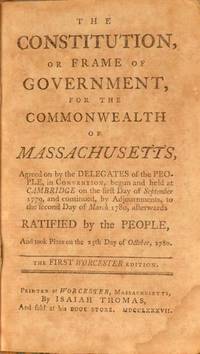
1787768991787. MASSACHUSETTS Constitution of. THE CONSTITUTION OR FRAME OF GOVERNMENT FOR THE COMMONWEALTH OF MASSACHUSETTS . RATIFIED BY THE PEOPLE AND TOOK PLACE ON THE 25TH DAY OF OCTOBER 1780. Worcester Massachusetts: Isaiah Thomas 1787. "The first Worcester edition" stated on the t.p. preceded by three Boston editions 1880-84. 18mo. 107 pp. Worn contemporary binding of leather-backed paper-covered scabbard boards. Approximately half of the lower board is missing. Text leaves are age-browned occasionaly foxed and dampstained in the margin at the bottom fore-corner. The final page has some loss just affecting the final letters in some lines. Sabin 45691. unknown
1795WRCAM11233Philadelphia: Printed and sold by Benj. Franklin Bache 1795. 59pp. Modern half morocco and marbled boards. Minor tanning to text. Very good. The events of the French Revolution were followed with the keenest interest in America. As the excesses in France grew American reaction split along emerging political lines with the Federalists expressing revulsion while the Democrats were more supportive. The French Constitution of 1793 collapsed with the end of the Terror and this new constitution which created the Directory was instituted. This is the first American edition in English of that new constitution published by the Democratic grandson of Franklin Benjamin Franklin Bache. Bache also published an edition in French the same year. It would have keenly interested the politicians of that year both from a party and foreign relations viewpoint. The NUC locates eight copies. EVANS 28694. Printed and sold by Benj. Franklin Bache hardcover books
1787768991787. MASSACHUSETTS Constitution of. THE CONSTITUTION OR FRAME OF GOVERNMENT FOR THE COMMONWEALTH OF MASSACHUSETTS . RATIFIED BY THE PEOPLE AND TOOK PLACE ON THE 25TH DAY OF OCTOBER 1780. Worcester Massachusetts: Isaiah Thomas 1787. "The first Worcester edition" stated on the t.p. preceded by three Boston editions 1880-84. 18mo. 107 pp. Worn contemporary binding of leather-backed paper-covered scabbard boards. Approximately half of the lower board is missing. Text leaves are age-browned occasionaly foxed and dampstained in the margin at the bottom fore-corner. The final page has some loss just affecting the final letters in some lines. Sabin 45691. unknown books
1795177010De l'Imprimerie de la République A Paris, de l'Imprimerie de la République, 1795 - An IV. In-16 relié demi-basane blonde à petits coins, dos lisses, filets dorés, pièces de titre. 1 ff blanc, titre, X + 360 page, 1 ff blanc. Constitution de l'an III, qui contient une Déclaration des "droits" de l'homme revue et corrigée, mais aussi des "devoirs" de l'homme. C'est la seule Constitution française qui définit le territoire, c'est aussi la plus longue constitution. Adoptée le 5 fructidor an II (22 août 1795), elle sera appliquée durant quatre ans, jusqu'au coup d'État de Bonaparte, le 18 brumaire an VIII. Bel exemplaire très propre et bien relié.
1778WOC-145Mise en ordre & augmentées par Monseigneur Jean D'Aranthon D'Alex, et nouvellement par Monseigneur Jean-Pierre Biord, ses successeurs dans le même Evêché.Anneci, De l'imprimerie de J. B.Burdet,1778.In-12(17x10cm)relié plein veau d'époque, dos à faux-nerfs orné de caissons dorés et de fleurons, tranches rouges.XXIJ,388pp.+1f de Fautes à corrigés+10pp. de Formule. Blason de la page de titre.
1740356294Gießen, J. P. Krieger, 1740. 60, 630 S., 21 Bl. Mit Kupferporträt als Frontispiz. Pergament d. Zeit (leicht fleckig). [2 Warenabbildungen]
1727627626Frankfurt u. Leipzig, Fritsch, 1727. 15 Bl., 1760 S., 16 Bl. Mit Kupferporträt Kaiser Karls IV. Pergament d. Zeit (fleckig). [2 Warenabbildungen]
1731409093Frankfurt u. Gießen, Krieger, 1731. 24 Bl., 436 S. , 34 Bl. (d.l.w.). Leder d. Zeit mit Rückenschild, reicher Rückenvergoldung u. Rotschnitt (leicht berieben). [2 Warenabbildungen]
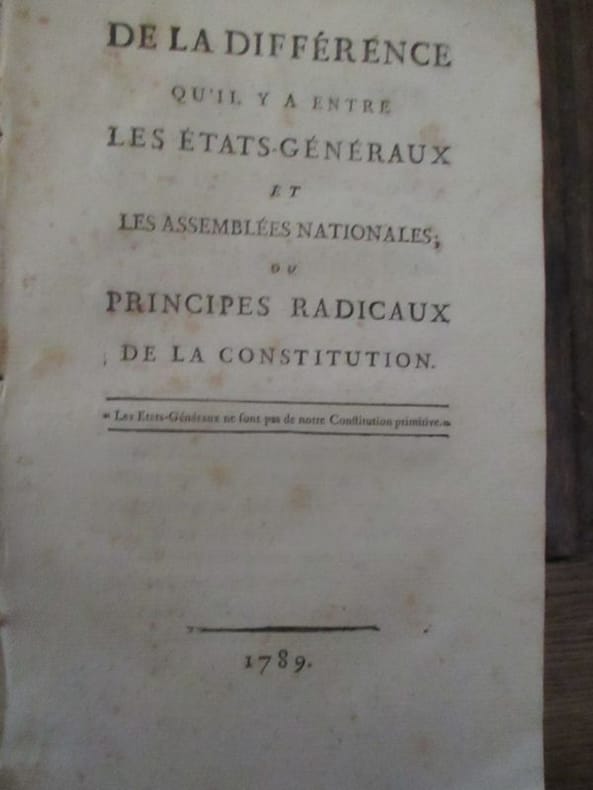
178978151789 Sans lieu 1789 In8 broché 41 pages
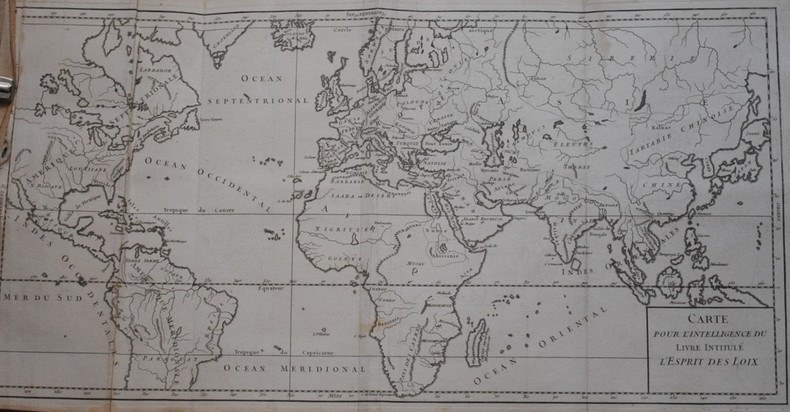
1749P1-4A-7Genève, Barrillot et fils, 1749. 2 parties en 1 volume in-4 (270x210 mm) de XXIII-(1)-1 grande carte dépliante, 326 pp. ; (2)-XIV-398 pp. relié d’époque plein veau brun granité, dos à nerfs orné de fers dorés, pièce de titre charnières faibles. Édition parue un an après l’originale. « ..Nouvelle édition. Corrigée par l’auteur. Et augmentée d’une table des matières, et d’une carte géographique, pour servir à l’intelligence des articles qui concernent le commerce. ».
1763460146Leipzig, Breitkopf, 1763. 4to. 3 Bl., 58 S. Rückenfalz aus Goldpapier.
1778466061Frankfurt u. Leipzig, 1778-79. XIX, 540 S., 15 Bl.; 1 Bl., S. XXI-XXXVIII, 1 Bl., S. 544-1142, 18 Bl. Mit wiederholter gestochener Titelvignette u. 1 gestochenen Kopfvignette. Einfache Pappbände d. Zeit (fleckig u. bestoßen, Rückenbezüge mit Fehlstellen). [3 Warenabbildungen]
1736478620Utrecht, van Megen, 1736. 4to. 3 Bl., 34 S. In Rohbögen.
1793307937En Suisse, 1793. XVI, 286 S. Späteres Bibliothekshalbleinen.
17983458Londres, 1798
177552300Jena, Cröcker, 1775. 2 Bl., 490 S., 31 Bl.; 124 S., 2 Bl. Pergament d. Zeit mit altem Papierüberzug (Kanten bestoßen, Überzugspapier berieben u. fleckig, Rückenschild nur fragmentarisch erhalten). [2 Warenabbildungen]
179181911791 Caen, Chalopin, 1791. Une plaquette in-8 de 8 pages. Bon état.
1742315144Altenburg, Richter, 1742. 4to. 16 Bl., 324, 638 S., 50 Bl. Index. Mit Titelkupfer (Wappen). Leder d. Zeit (stark beschabt, Ecken u. Kapitale bestoßen, Rückenschild mit Abplatzungen). [2 Warenabbildungen]
178767677London: Printed for D. Henry 1787. UNITED STATES CONSTITUTION; URBAN Sylvanus. One of The First Means by Which The British People Learned of The Enactment of The Constitution of The United States of America<br> <br> UNITED STATES CONSTITUTION subject. URBAN Sylvanus editor. The Gentleman's Magazine "New Constitution of the United States of America". Printed by John Nichols for D. Henry November December 1787.<br> <br> First edition of these November and December 1787 issues. Two small octavo volumes 8 1/2 x 5 1/8 inches; 215 x 130 mm. 941-1035 1; 1037-1131 1 pp. With woodcut text illustration on front wrapper of each volume. November issue with one fold-out plate and lacking plate I entitled "S.W. View of Aconbury Chapel 5 Miles from Here." The December issue with two plates plate II and Supp. but lacking plate I Illustrations of the Royal Charter School Near Dublin Clontarfe Castle Dublin and others. Text of American Constitution on pp. 1008-1011; 1110-1112.<br> <br> Self-wrappered. Newer stitching. Some very minor toning and light occasional spotting. Overall very good.<br> <br> This is the first English magazine printing of the U.S. Constitution. The November issue on pages 1008-1011 prints George Washington's Letter and the first Article. The December issue on pages 1110-1112 contains articles two through seven and the delegates names.<br> <br> "The following is the new Plan of the Constitution of the United States of America upon which the Convention of all the most distinguished men in the States have been deliberating for several months and by which if finally adopted the Constitution of the Union is totally changed." From the introduction<br> <br> Einaudi. Goldsmiths'. Howes. Howes. Kress. Streeter. Streeter.<br> <br> HBS 67677.<br> <br> $1500. Printed for D. Henry unknown