[PROPAGANDA FIDE].Biblio.com
4 037 résultats
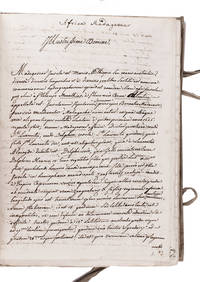
16419A5BDK01U79ORome and perhaps elsewhere 1641. Contemporary Italian sheepskin parchment over flexible boards with 0.5 mm flaps on the fore-edge straight-sewn on 4 alum-tawed supports laced through the joints with a hollow back uncoloured linen ties the smooth spine with contemporary manuscript title Africa Greci Italo Greci . at the head and shelfmark CCXXI at the foot plus later paper spine labels including that with the Phillipps manuscripts number 5580. 4to 28.5 x 21 cm. Collection of manuscript transcriptions of about 30 letters and other documents written in brown ink in several hands on about 20 stocks of mostly or entirely Italian laid paper from Catholic missionaries in or writing about Africa Greece Italy Bosnia and Japan. A large collection of about thirty 18th-century transcriptions of letters and other documents from Catholic missionaries writing from or concerning the missions in Africa including Madagascar Algiers and the Barbary Coast Greece Italy including the Mekhitarist Armenian Catholic monastery on the island San Lazzaro degli Armeni in the Venetian lagoon and Japan. The exact number depends how one defines "one" document. Most of the letters transcribed here were originally written at the time of the Portuguese French and Spanish efforts to suppress the Jesuits in their territories both at home and in their colonies beginning around 1750 and leading to the banning of Jesuits from the Portuguese empire 1759 France 1764 and Spain 1767. The Pope finally dissolved the Jesuit order in 1773 but it was re-established in 1814. The documents from this period some explicitly about attempts to suppress the Jesuits were clearly transcribed when they were still new but the collection also includes transcriptions of older letters and documents.Nearly all concern the Sacra Congregatio de Propaganda Fide "the department of the pontifical administration charged with the spread of Catholicism and with the regulation of ecclesiastical affairs in non-Catholic countries" Catholic encyclopedia. While the Jesuits prior to their suppression were a highly evangelical branch of the Catholic Church the Propaganda Fide was the papal office that coordinated the missionary activities of all the orders. The letters provide good evidence both of the relations between the Catholic Church as a whole and the Jesuit Order and of the Church's efforts to continue their evangelical missionary activities at a time when the Jesuits were no longer able to lead them.The manuscript belonged to Frederick North 1766-1827 5th Earl of Guilford and was bought for Sir Thomas Phillipps 1792-1872 at the 1830 Guilford sale. It was sold in the 1919 Phillipps sale. In very good condition with a few documents showing minor foxing or small stains but most leaves fine. The binding is somewhat rubbed most of the sewing supports have broken at the joints and the cover has come loose from the bookblock at the inside of the front hinge but the sewing and case remain structurally sound. Many of the 30 documents no doubt transcribe originals that have since been lost so the present collection forms an important source for the history of Catholic missionary work in the period for information about the regions where they operated and for the relations of the Church as a whole with the Jesuits.l Evans Catalogue . manuscripts . Guilford 8 December 1830 lot 361; Phillipps manuscripts 5580; Sotheby Bibl. Phillippica 1919 lot 1473. hardcover
1526000453<p>Rare German Anti-Ottoman Propaganda Pamphlet on the Defense of Christendom<br />Germany 1526.</p><p>12mo. One title leaf and 17 ff. 36 pp. Text in early New High German Frühneuhochdeutsch. Nineteenth-century marbled boards. Very Good. Ex-library with two small marginal stamps.</p><p>Extremely rare sixteenth-century political and military propaganda tract directed against the Ottoman Empire printed at the height of Ottoman expansion into Central Europe following the Battle of Mohács 1526. No printer or place stated.</p><p>According to Carl Göllner Turcica: Die europäischen Türkendrucke des XVI. Jahrhunderts only one copy is recorded dated 1526 VD 16 no. 1881 underscoring the exceptional rarity of this work.</p><p>The pamphlet addresses the urgent question of how the Holy Roman Empire Deutsches Reich should organize its defense against the Ottomans. While it discusses military preparedness and strategic resistance to the Turks the core focus of the text lies in the economic and social burden of war specifically:</p><p>How the costs of military defense should be financed<br />The responsibility of the Christian Church and the Vatican<br />Contributions expected from the German territorial states<br />The allocation of financial obligations among different social classes within German society<br />The work reflects contemporary anxieties surrounding the Ottoman threat and provides valuable insight into early modern fiscal-military thought confessional politics and the rhetoric of defending Christendom against Islam. It is an important source for the study of Reformation-era political discourse anti-Ottoman propaganda and the social history of warfare in sixteenth-century Europe.</p><p>A remarkably scarce survival of early German political printing concerning the Ottoman question.</p> hardcover
1891BB009<p> CHINA: Propaganda against Western Missionaries<br /></p><p>The Cause of the Riots in the Yangtse Valley. A "Complete Picture Gallery" by CHOU HAN. Hankow China 1891. With 32 full=page woodblock plates printed in color. Oblong 4to original printed wrappers sewn spine soiling minor repairs.</p><p>The author Chou Han is described by the translator Griffith John 1831-1912 as 'a gentleman of high official rank Taotai in Hunan' and was part of an orchestrated propaganda campaign aimed at discouraging Western Christian missionaries from working and traveling in China. This volume was perhaps his most significant and horrific attack on western culture managing a "reptile press" in Hunan creating unrest and distrust amongst the Chinese people see John's "A Voice from China" 1907 p. 220. Chou Han himself is probably represented in plates IX XIII XXVI and XXIX; the images are virulently anti-foreigner and specifically anti-Christian. John translated and circulated the present work to draw attention to the British authorities of the problems faced by missionaries in Asia. </p><p>Very Rare. ONLY 3 COPIES CAN BE TRACED AT AUCTION IN THE PAST 40 YEARS ABPC & RBH. </p><br /> paperback books
2091502135304420Not Available N.A. Soft Cover. Fine. Number of books: 1 Not Available paperback
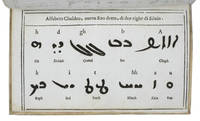
16365CHGGG01U79ORome 1636. Oblong 8vo 11 x 17 cm. Propaganda Fide Contemporary vellum with the spine at the head of the leaves. A complete set of 12 leaves published without a title-page printed on rectos only each page with a frame of double rules and an additional single rule built up from short rules delineating a panel at the head that contains the title of the leaf 10 of the 12 beginning Alfabeto . and showing woodcut 3 or typographic 7 alphabets the latter showing Hebrew meruba & rabbinical Samaritan majuscule and Syriac estrangela & serto types. The other 2 leaves show a woodcut illustration of an inscription in stone and an interpretation of it including a smaller woodcut. 12 ll. Rare publication of the Propaganda Fide in Rome showing alphabets of non-Latin scripts published without a title-page and printed on the rectos only with 7 of the 12 leaves showing alphabets of the Propaganda Fides printing types for Hebrew 3 sizes of meruba square and 1 of rabbinical semi-cursive Samaritan majuscule and Syriac estrangela and serto. The Syriac language bears no relation to modern Syria but is a form of Aramaic spoken by many early Christians in the Middle East and still surviving today. The Propaganda Fide apparently had some of these types cut exclusively for their use and the present publication shows complete alphabets including some variant forms for 6 of the 7 in most cases also with a few words or lines of text it shows only the first half of the alphabet - alaph to kaph - for the very large serto Syriac. This provides an especially valuable overview of the founts.The present publication collates: A-C4 = 12 ll. with quire signatures on leaves 1-2 of each quire each leaf printed on the recto with a title at the head:A1: Alfabeto del protoparente Adamo I. delineato nella libraria Vaticana. woodcut charactersA2: Alfabeto II. di Adamo secondo che riferisce il P. Giacomo Bonavent. Scozese dell'Ordine di S. Francesco di Paolo nel suo alfabetario intitolato Virga aurea. woodcut charactersA3: Alfabeto III. di Adamo cavato dal libro di Lorenzo Schradero stampato in Helmstatt l'anno 1592. woodcut charactersA4: Alfabeto Hebreo detto Soprasilvio. meruba square Hebrew typeB1: Alfabeto Hebreo detto Testo. meruba square Hebrew typeB2:Alfabeto Hebreo detto Garamone. meruba square Hebrew typeB3: Alfabeto Hebreo rabbinico detto Garamone. rabbinical semi-cursive Hebrew typeB4: Lettere cavata dal P. Tomaso da Navara che si trovano sculpite in una pietra piccola posta à piedi del Monte Oreb dove Dio N.S. diede la legge. woodcut of the Mount Horeb inscriptionC1: Analysi dell'antecedente carattere conforme alla dispositione del P. Atanasio Kircher nel Prodromo Copto approvata da' molti. interpretation of the Mount Horeb inscriptionC2: Alfabeto Samaritano detto Testo. majuscule Samaritan type 1636C3: Alfabeto Estranghelo overo Chaldeo antico detto Testo. estrangela Syriac type Coakley S7 1636C4: Alfabeto Chaldeo overo Siro detto di due righe di Silvio. serto Syriac type Coakley W12 large size 1618 bought by the Propaganda Fide 1653Nearly all references describe this book as an oblong 8vo but this appears to be an error. The two copies we have examined are both oblong 4tos with the chain-lines vertical in the oblong leaves and the watermarks divided at the heads of the leaves in the middle of a long edge. Several leaves with the double rule at the foot shaved not effecting the text or quire signatures otherwise in good condition. A rare collection of non-Latin alphabets including the Propaganda Fides Hebrew Samaritan and Syriac types.l Amaduzzi Catalogus librorum . Propaganda Fide 1773 p. 7; Birrell & Garnett 1928 4; Coakley Typography of Syriac W12 & S7; Philologia orientalis 199; D. Stolzenberg Egyptian Oedipus: antiquarianism oriental studies . in the work of Athanasius Kircher Thesis Stanford Univ. 2004 pp. 118 & 121; WorldCat 11 copies in 9 entries. hardcover
19281723681928. SOVIET PROPAGANDA DESIGN. Za oboronu SSSR For Defence of the USSR. 48 pp. illustrated with 32 full page plates printed in red and black. Small folio 275 x 200 mm. bound in publisher's wrappers illustrated by Czech artist P. Skala. Moscow: Izdatel'stvo AKHRR: Shkola FZU pri 1-i Obraztsovoi tipografii 1928. A remarkable collection of Soviet imagery intended as instruction for decorating workers' clubs reading huts and use during rallies. The illustrations include fully decorated interiors concepts for 'hands-on' attractions such as a 'rayok' or Russian peep show shooting galleries and quiz shows. Most of the imagery is in the constructivist style but also includes numerous caricatures of western fat cats fascists and even a Ku Klux Klan member which would have been inspiration for costume design. Rare OCLC finds just one copy at the Bibliotheque Nationale de France. The leaves with illustrations have an even toning from the printing process else a fine copy with the errata slip and unusually printed on fine thick paper. unknown
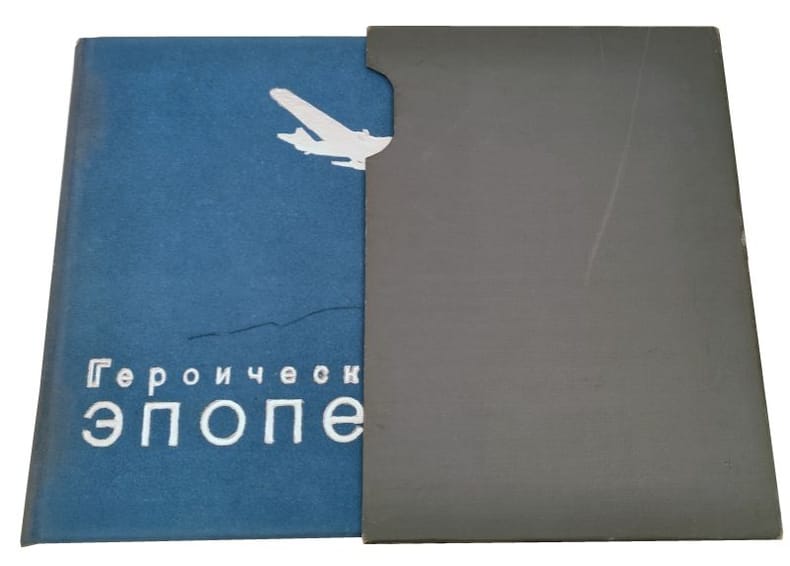
19351057651935 1 Moscou, Pravda, 1935, 350x268mm, 160p., pleine toile bleue façon polaire, lettrage argent sur le plat et au dos, étui toilé gris anthracite.
1935102676BB(Moskau, IZOGIZ (State Publishing House for Fine Arts), 1935). Folio (37 x 28 cm.). [18] Bl. (davon 2 auf Japanpapier), 39, (2) S. (Text) mit illustr. Titel, zahlr. Abb., 1 doppelblattgr. illustr. Karte u. 1 gefalt. Tafel; [71] Bl. (davon 6 auf Japanpapier) mit zahlr. Abb. u. teils farb. Illustrationen u. 6 gefalt. Tafeln; [45] Bl. (davon 1 auf Japanpapier) mit zahlr. Abb. u. 2 gefalt. Tafeln; [24] Bl. mit zahlr. Abb. u. 1 gefalt. Tafel; [24] Bl. mit zahlr. Abb. u. 3 gefalt. Tafeln; [45] Bl. (davon 5 mit ausgestantzten rechteckigen Fenstern) mit zahlr. Abb. (davon 1 mit mont. farb. Stoffmuster) u. 3 gefalt. Tafel OKart. mit Leinenrücken u. silber- oder goldgepr. Deckelillustration in illustr. Orig.-Leinenkassette. 6 (statt 7) Bände.
159 pages. Third printing of the 1928 first edition. The landmark work by the man who has come to be known as "The Father of Spin." "The conscious and intelligent manipulation of the organized habits and opinions of the masses is an important element in democratic society. Those who manipulate this unseen mechanism of society constitute an invisible government which is the true ruling power of our country." - from page 9. Chapters include: Organizing Chaos; The New Propaganda; The New Propagandists; The Psychology of Public Relations; Business and the Public; Propaganda and Political Leadership; Women's Activities and Propaganda; Propaganda for Education; Propaganda in Social Services; Art and Science; The Mechanics of Propaganda. Average wear. Unmarked. Binding intact. Moderate age-toning to contents. A sound early copy of this profoundly influential work. Bibliographic references: Cole p.14, Larson p.9. Book
(ca. 31,5 x 23 cm). 2 S. (Fraktur). Original-Zeitung im kleinen Format, beidseitig bedruckt, mit Titel im oberen Bereich. Papier gebräunt und gefaltet, sonst wohlerhalten. Altersentsprechend guter Zustand. Sehr interessante Zeitung aus den letzten Tagen des Zweiten Weltkriegs. Aus dem Inhalt: Sowjets bei Fehrbellin geworfen / Die Schicksalsfrage / Eine Stunde mit kampfbewährten Hitlerjungen / Dem "Stalin"-Panzer überlegen / Das Bollwerk der Sechzehnjährigen / Triumph der Beharrlichkeit. Die Zeitung für die Soldaten der Wehrmacht und weitere versuchte auch in der aussichtslosesten Situation - wenige Tage vor dem Suizid Hitlers und der folgenden Kapitulation - noch zu mobilisieren. Die Rede ist hier überall von Entschlossenheit zum Kampf und von vorgeblich neuen Erfolgen in der Abwehr des Feindes. Über solche tendenziösen Meldungen geht der Text "Die Schicksalsfrage" noch hinaus. Dieser berührt sehr gut den gesteigerten Fatalismus bei Teilen der hitlertreuen deutschen Bevölkerung in den letzten Kriegsmonaten. Es heißt hier: 'Die Sirenenklänge des Agitationsjuden, wie: "es würde schon nicht so schlimm werden", wenn Deutschland die Waffen niederlegte, oder: es handele sich ja nur um einen "Krieg gegen die Nazis", verfangen schon längst nicht mehr bei dem deutschen Volk Adolf Hitlers. Auf der anderen Seite ist man ja im Gegnerlager unvorsichtig genug gewesen, besonders im letzten Jahr, die Katze vorzeitig aus dem Sack zu lassen. Sie haben ja oft und zynisch offen genug in die Welt hinausposaunt, was sie mit uns, dem deutschen Volk, im Falle eines Sieges der Alliierten - lies Weltjuden - vorhaben. Angefangen mit den hysterischen Entmannungs- und Sterilisationsplänen des Juden Kaufmann aus Neuyork, über die bolschewistischen Sibiriendeportationspläne, bis zu den Absichten, aus Deutschland eine ewige Wüste zu machen [...]." Auch ein Zeugnis des propagandistischen Eifers bis zum letzten Moment ist der kleinere Schlusstext "Triumph der Beharrlichkeit". Hier wird eingangs auf ein Zitat Friedrichs den Großen im Siebenjährigen Krieg referiert: '"Deutschland befindet sich zur Stunde in einer furchtbaren Krisis. Mir ward die Aufgabe zuteil, ganz allein für seine Freiheiten, seine Rechte und seine Religion einzustehen [...]"'. Später heißt es dann: "Was für die preußische Geschichte gegolten hat, gilt heute für die des Großdeutschen Reiches. Auch damals stand der Feind tief im Land und verwüstete Städte und Dörfer, auch jener Krieg kostete Blut und Opfer, brachte Tränen und Verzweiflung. Ueber allem aber triumphierte schließlich eine durch nichts zu erschütternde Beharrlichkeit. So und nich' anders ist es auch heute! / Daran wollen wir denken / Danach wollen wir handeln!". Auf die Propaganda-Kompanie "Eichkater" geht die Zeitung "Frontnachrichten" der Kriegsjahre zuvor zurück. Hier handelt es sich um eine Zeitung der Kompanie aus den letzten Kriegstagen. Ob diese Zeitung in weiteren Ausgaben bis Kriegsende erschien scheint fraglich. Es handelt sich nach unseren Recherchen um eine mehr als seltene Publikation der letzten Kriegstage, welche auch in Archiven so gut wie unauffindbar scheint. Äußerst seltene Archivalie und historisches Dokument aus letzten Tagen des NS-Staats!
195553657Berlin: Verlag Junge Welt 1955. First edition. Loose leaf. Very good condition. Elephant Folio 18 x 25". 8pp 1 42 plates. Original marine blue faux leather portfolio with gilt lettering on cover. <br /> <br /> Complete set of this extraordinary publication on the history of the German workers youth movement from its founding in 1904 to October of 1954. Founded in Mannheim as the "Union of Young Workers" in 1904 the organization merged with other youth organizations over time changed its name several times e.g "Center for the Working Youth" at the SPD party convention in 1908 and triggered after the outbreak of W.W.I and with the help of Karl Liebknecht an opposition youth organization the Youth Education Association and became active internationally.<br /> <br /> This propaganda tool consists of forty-two numbered plates with modern graphic design in variant colors is illustrated with b/w photographs artwork and drawing four in color maps documents newspaper articles and charts produced to entice its use as a wall newspaper or exhibition. It was issued in East Germany during the reign of the Communist Government of East Germany. Not surprisingly the revolutionary elements and history of the organization is highlighted presenting an overview of the development of the revolutionary youth movement in Germany throughout the world wars the Weimar Republic Nazi Germany and the German Democratic Republic stressing an anti-capitalist and antifascist view.<br /> <br /> Enclosed eight-page "Methodical Instructions" for the forty-two plates of visual covering the design and preparations of an exhibition and one paragraph designated to preparations for the exhibition guides. Furthermore it highlights the main objectives of the project and proposes ways to use the material in public schools including details for the correct pedagogical use of the material. Four pages of the pamphlet are reserved for an exhaustive table on the history of the workers youth movement. One copy at Berlin Staatsbibliothek KVK. Text in German. Visual aid lightly browned. Scarce complete edition in very good condition. Verlag Junge Welt unknown
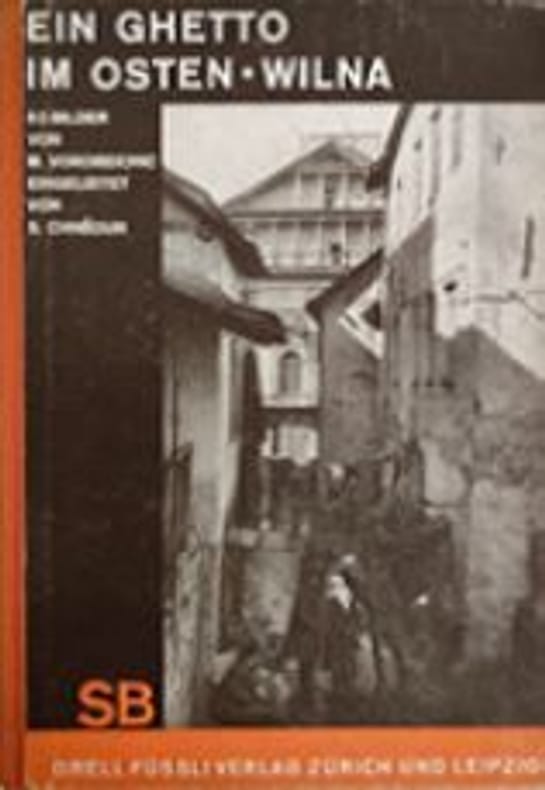
19311049551931 Zurich et Leipzig Orell Füssli Verlag 1931 194x132mm, cartonnage d'éditeur dos toilé, plats photographiques (défauts). Texte en allemand et en hébreu, édition originale. Texte et 65 photographies, photomontages, surimpressions.Ref: Sinibaldi-Couturier 46. Parr & Badger 1, p.130. Autopsie p.326.Moï-Ver, Centre Pompidou, p.34-35;
218 pages. Second printing of the 1923 first edition. "The first book to be devoted exclusively to an occupation which is gradually becoming of overwhelming national importance." - N.Y. Times Book Review. Unmarked with moderate wear. Binding tight. Dust jacket now preserved in glossy new archival-grade Brodart cover. A quality vintage copy of this highly significant work. A wonderful addition to the bookshelf of any prominent public relations professional. Cole p.27, Larson 6, Lasswell, Casey & Smith p.32 Book
Very Good Turkish, Ottoman (1500-1928) Contemporary quarter leather bdg. Handsomely bound. Six raised bands to spine, the second compartment has the title, the fifth has "issue 1-104", and the sixth has ex-owner's name of the volume, "Semseddin" lettered gilt. Original end-papers of the period. Slightly age-toned on the lower pages, fading on extremities of boards, overall a very good volume. Folio. (41 x 29 cm). In Ottoman script (Old Turkish with Arabic letters) and Turkish with Latin letters. This folio volume consists of 104 issues of the periodical, each issue has 4 pages, which has mostly color illustrated covers as well as several b/w ones. A rare togetherness of the first 104 issues of this Turkish satirical magazine, richly illustrated with thousands of attractive illustrations and caricatures, was published in Istanbul twice a week every Wednesday and Saturday with at least four, at most eight pages, during the Letter Revolution 1928, when the transition from the Arabic alphabet to new Latin letters was ensured. The collection provides an invaluable resource, reflecting the changes in society during and after the Letter Revolution in New Turkey, 1928, placing the new Latin alphabet instead of old Arabic letters and contributing to the development of reading and writing skills of the new Turkish society, as well as "creating the basis for the rapid social evolution in the young Turkish Republic Revolution" soon after the proclamation of the Republic in 1923. The newspaper had a printing house with the same name headquartered in Bab-i Ali (The Sublime Porte of Constantinople), the place where the heart of the Ottoman press was. Burhan Cahid Morkaya left Karagöz Newspaper and founded Köroglu Newspaper in 1928 and wanted the people living in Istanbul and Anatolia to be able to read and write new letters. Indeed, during the period of its publication, Köroglu Newspaper reached the most remote corners of the New Turkish Republic with its attractive cartoons covering local and mostly international subjects. In addition to this news and cartoons, Morkaya also published Turkish reading passages with Arabic letters that were transcripted into Latin letters. Therefore, he created a great positive effect that facilitated the transition to new letters during the Turkish Alphabet Revolution. Duman 1155.
19459000C1945. (ca. 31,5 x 23 cm). 2 S. (Fraktur). Original-Zeitung im kleinen Format, beidseitig bedruckt, mit Titel im oberen Bereich. Papier gebräunt und gefaltet, sonst wohlerhalten. Altersentsprechend guter Zustand.
16296EAST GERMANY. Die Kaserne. Bonn: Verlag „Ganz offene Worte" 1957-1963. 26 issues of an East German propaganda magazine. 1957 Heft 3; 1958 Heft 1-5; 1960 Heft 7; 1961 Heft 4-10 12; 1962 Heft 1-7 9-11; 1963 Heft 2. 7 ½ x 5 ½ in. Three smaller format. Staplebound. All have color covers and illustrations throughout. "Die Kaserne" was an East German magazine targeted specifically for young men in the West German military; the main object of the magazine was a disinformation campaign aimed at creating distrust of the West.<br/><br/>Kaserne English translation Barracks was created with the goal of creating dissent within the West German military by targeting conscripts. Some articles explicitly question the validity of required military conscription service which the West instituted in 1956; while others expose Nazi histories of West German leaders such as ambassadors; and many issues have strong criticisms for BRD politicians one even calls Willy Brandt who later became Chancellor of West Germany an American boot-licker Stiefelputzer. Most of the content was not overtly controversial and sought to establish common ground with low-ranking drafted soldiers. The issues are filled with jokes about military life and references to shared German culture i.e. Goethe They also feature notable East Germans such as cosmonaut Yuri Gagarin and include stories about the high quality of life for workers women and families. Appealing to their target audience of young men over a dozen of the issues feature models or pinup girls on the covers.<br/><br/>Rather than try to explicitly convert soldier to full East German ideology the objective of these magazines was to create loyal readers who would disrupt overall West German military strategy. In the ideal situation this would be the first step in converting these Bundeswehr soldiers to East German political ideology and possibly becoming a Communist spy.<br/>Pristine information cards in several issues encourage readers to subscribe to the free publication and to share copies with their fellow West German soldiers. Light reading wear. All in very good condition. unknown books
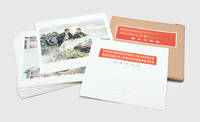
187095Beijing: People's Fine Arts Press 1977. With you in charge I am at ease" - Mao anoints a successor First edition reproducing the 151 artworks selected for a spring 1977 exhibition held in Beijing to much fanfare. Mao's death in September 1976 precipitated a power struggle the faction led by Hua Guofeng eventually prevailing over a radical clique led by Jiang Qing Mao's wife. The artworks include landscapes oil paintings woodblocks sculptures propaganda posters and other media. Organizers selected works by both leading artists such as Liu Wenxi and grassroots representatives of the masses. The most widely publicized exhibit was With You in Charge I am at Ease Ni ban shi wo fang xin an oil painting by Peng Bin and Jin Shangyi that shows Mao symbolically and fictitiously handing over the reins of power to an attentive Hua Guofeng the latter sporting a Mao badge on his breast. One of a number of paintings on the theme to appear in the immediate aftermath of Hua's taking power the picture was put on the cover of the exhibition catalogue. Other exhibits depict Mao and Zhou Enlai revolutionary models and scenes of a politically and socially harmonious society. The publisher released issues for domestic and international distribution. This example is identified as the international issue in the printed colophon. 151 loose sheets 320 x 380 mm printed one side only and mostly in colour; 8-page contents booklet. All housed in publisher's brown card portfolio front panel with title label lettered in gilt on red background. Each sheet numbered in pencil to correspond with pencilled number in contents booklet. Signs of light handling a little finger-soiling and colour offsetting portfolio with short split along one fold: a very good copy indeed. unknown
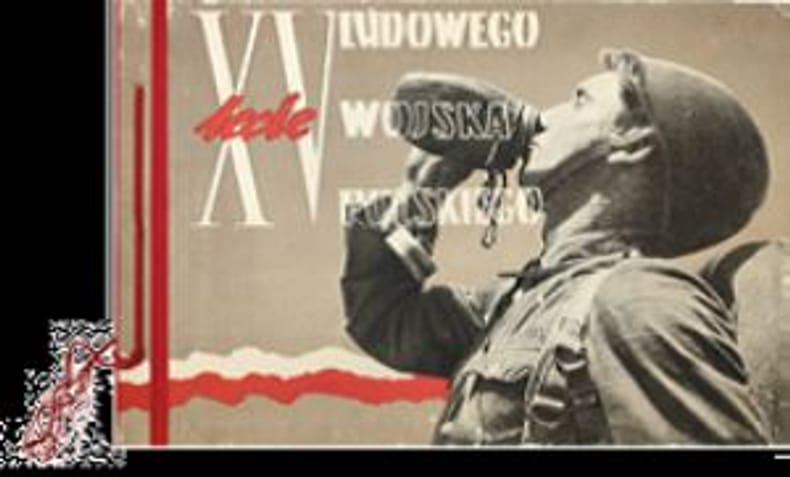
19581049711958 Varsovie, Éditions du Ministère de la Défense, 1958, 300x448mm, 92ff. comprenant colophon, titre et faux-titre, serpentes de protection, reliure de l’éditeur dos carré avec cordelette rouge réunissant les feuillets, sous couverture photographique de Zbigniew Gamski.
19401715961940. SOVIET PROPAGANDA. L'novodstvo khlopkovodstvo i sakharnaya svekla: Tsvetnye tablitsy. Cultivation of Flax Cotton and Sugar Beet: Colorful Tables. 4 25 34 ills. Oblong folio 335 x 240 mm. in original cloth portfolio. N.p.: Izd. Narkomzema 1940. A handsome piece of unintentional book illustration. While the illustrations are largely botanical in nature the overall effect is more of an illustrated book than a tedious tome extolling Soviet agricultural prowess. Extremely rare with no listing on OCLC. hardcover
In folio. pp (2), 38, un rame al frontespizio “dominicus muratori inv. et delin. Vincen. Franceschini scul.”, nel testo da indisegni di Muratori e incisi da Rossi, Limpach, Allet, 6 vignette incise su rame come testatine e finalini e un capolettera. Contiene gli elogia a Maria Clementina in diverse lingue: ebraico, graco, arabo, siriaco, armeno, caldaico, copto, polacco, gotico, illirico, ecc ecc. Legatura in piena pelle con cornice dorata ai piatti e decorazioni in oro al dorso.
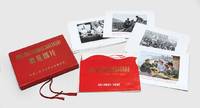
158705Shanghai: Zhongguo renmin jiefangjun Shanghai jingbei qu 1971. The only traceable complete copy Sole edition first printing rare complete set of this portfolio celebrating the political economic and cultural role of the People's Liberation Army in the Cultural Revolution issued to Shanghai cadres responsible for creating pop-up propaganda exhibitions. Institutionally we have traced only the incomplete copy in the Tate's Martin Parr Collection. The 'May Seventh Directive' is the name given to a letter sent by Mao to Marshal Lin Biao in 1966 calling for the army to become an ideological bastion of the unfolding Cultural Revolution. By 1971 the directive had become a hallowed statement of the movement's guiding principles as well as the inspiration for the May Seventh Cadre Schools where party members who had politically erred could find redemption through a daily diet of manual labour and the study of Mao's writings. Sets of this portfolio were used in community spaces schools and workplaces to display the ethos of the directive. The posters are divided into four sections two of which invoke the spirit of Daqing and Dazhai the period's most important economic models: "Political Strides Forward - Mao Zedong Thought Nurtures and Renews"; "Study Dazhai - Triumph Over Nature with an Iron Will"; "Study Daqing - Make Revolution Through Self-Reliance"; and "Power in Unity - the Army and the People Stand Shoulder to Shoulder to Form a New Great Wall". Landscape quarto: 80 posters each 222 x 228 mm loose as issued with tissue guard. With 71 plates 20 colour after propaganda photographs gilt facsimile of Mao's calligraphy 8 decorative posters of text variously in red purple white and gilt captions printed in red. Housed in original folding red cloth portfolio with red string ties front panel lettered in gilt. Posters bright small closed tears at upper corners of title leaf old paper repairs on verso occasional cockling and creasing several small tidemarks and light toning at edges upper margin of second poster horizontally creased. A very good set indeed in the well-preserved case with gilt bright light rubbing and a little soiling especially to base. hardcover
2885Paris chez l'auteur le 30 avril 1896 XLI; 194p avec 2 tableaux généalogiques reliure toile exemplaire numéroté 652 des 1100 exx 12x 185cm. THIS IS THE ORIGINAL ITEM NO REPRINT - unknown
1773664L4Romae: Sacra Congregatio de Propaganda Fide 1773. Leather. Very Good. 7" by 4.5". None. A very scarce example of the Tibetan Alphabetum issued by the Sacra Congregatio de Propaganda Fide. The Alphabetum series was one of the first to print the script of different languages. Written in Latin and Tibetan. A first thus of this work. 'The Alphabetum' was created as a reference text for Catholic missionaries who travelled worldwide to promote God's message. The Sacra Congregatio de Propaganda Fide printing press was established by The Vatican in 1622. The press held the largest collection of printing types from languages and scripts worldwide. They quickly produced these booklets of exotic languages which included Arabic Greek Iberian Syrian among many other languages. Presented in a handy pocket sized format the Alphabetums were a marvel of printing at the time. It demonstrated printing of characters not seen by western audiences. Ex library stamps contemporary to the work to the rear of title page for Biblioth Regia Berolinensi. With the vignette seal of the Congregation. This work includes the Lord's prayer the Ave Maria the Apostles' creed and the Ten commandments in Tibetan and Latin. The Tibetan Alphabetum was the first time that there was a western publication on the Tibetan language. It is based on information sent back by missionaries from the Capuchin mission at Lhasa. The work was first published under the name 'Alphabetum Tibetanum' and it would appear that this 1773 printing is the first time that the work appeared under the title 'Alphabetum Tangutanum sive Tibetanum'. The folding plate is provided in facsimile. An important work in print development and language education. In a half calf binding with marbled boards. Damage to the head of spine and to the outer corner to the bottom of both boards. Loss to the leather resulting in the minor damage and loss to the bottom corner of pages not affecting text. Contemporary library stamp to the verso of title page and contemporary inscription to the head of title page 'Ax J 6'. Pages are bright and clean. Very Good Sacra Congregatio de Propaganda Fide hardcover
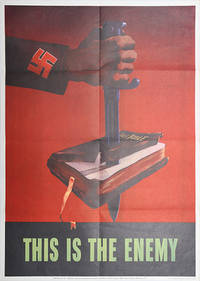
1943175357Washington DC: Office of War Information 1943. Deliver us from evil One of the most striking American wartime propaganda posters depicting a Nazi fist stabbing through the Bible against a vivid red background. "This is the Enemy" was the slogan of various American posters focusing on the evils of Nazi ideology and actions here presenting their attack on freedom of religion and their threat to Christian civilization. The artist Barbara Marks was a Californian art student. The Office of War Information solicited entries from the public for poster designs and received over 2000. Her original slogan was "deliver us from evil". Offset lithograph 710 x 560 mm. Light creases where formerly folded and a couple of tiny chips at intersections. A near-fine copy. unknown
1941ZEIT1004München, Zentralverlag der NSDAP 1939 - 1941. 4°. Blätter teilweise randgebräunt, 8 Blätter mit geringem Insektenfraß außerhalb der Darstellung (am unteren Rand), einige leicht fleckig. Vorhanden sind: 08. -14.Okt. u. 03. - 30.12.1939. = 5 Bl. / Jänner - August 1940 = 23 Bl.; Folge 33 - 52 1940 = 20 Bl. / Folge 2 - 4, 6 - 31, 34 - 38, 52, 53 1941. = 36 Bl. Mit Zitaten von: Adolf Hitler, Hermann Göring, Baldur von Schirach, Carl von Clausewitz, Peter Rosegger, Walter Darré, Friedrich II., Ernst Moritz Arndt, Jean Paul u.A.