-MareMagnum

4 065 résultats
Roma, anni '50, 16mo pp. 44 (A cura della Direzione del PCI. 'Argomenti di Propaganda').
Roma, 1940, 16mo punto metallico, pp. 31 con 5 tavole fotografiche nel testo (copertina sciolta) .
Milano, Anonima Periodici Italiani, 1940, pp. 16 compl. ill.
Milano, 1942, stralcio con copertina posticcia muta, pp. 259/264 con una cartina e numerose fotografie. - !! ATTENZIONE !!: Con il termine estratto (o stralcio) intendiamo riferirci ad un fascicolo contenente un articolo di rivista, sia che esso sia stato stampato a parte utilizzando la stessa composizione sia che provenga direttamente da una rivista. Le pagine sono indicate come "da/a", ad esempio: 229/231 significa che il testo è composto da tre pagine. Quando la rivista di provenienza non viene indicata é perchè ci è sconosciuta. - !! ATTENTION !!: : NOT A BOOK : “estratto” or “stralcio” means simply a few pages, original nonetheless, printed in a magazine. Pages are indicated as in "from” “to", for example: 229/231 means the text comprises three pages (229, 230 and 231). If the magazine that contained the pages is not mentioned, it is because it is unknown to us.
Milano, 1942, stralcio con copertina posticcia muta, pp. 821/824 con una cartina e 2 fotografie. - !! ATTENZIONE !!: Con il termine estratto (o stralcio) intendiamo riferirci ad un fascicolo contenente un articolo di rivista, sia che esso sia stato stampato a parte utilizzando la stessa composizione sia che provenga direttamente da una rivista. Le pagine sono indicate come "da/a", ad esempio: 229/231 significa che il testo è composto da tre pagine. Quando la rivista di provenienza non viene indicata é perchè ci è sconosciuta. - !! ATTENTION !!: : NOT A BOOK : “estratto” or “stralcio” means simply a few pages, original nonetheless, printed in a magazine. Pages are indicated as in "from” “to", for example: 229/231 means the text comprises three pages (229, 230 and 231). If the magazine that contained the pages is not mentioned, it is because it is unknown to us.
Milano, 1942, stralcio con copertina posticcia muta, pp. 685/688 con 2 cartine. - !! ATTENZIONE !!: Con il termine estratto (o stralcio) intendiamo riferirci ad un fascicolo contenente un articolo di rivista, sia che esso sia stato stampato a parte utilizzando la stessa composizione sia che provenga direttamente da una rivista. Le pagine sono indicate come "da/a", ad esempio: 229/231 significa che il testo è composto da tre pagine. Quando la rivista di provenienza non viene indicata é perchè ci è sconosciuta. - !! ATTENTION !!: : NOT A BOOK : “estratto” or “stralcio” means simply a few pages, original nonetheless, printed in a magazine. Pages are indicated as in "from” “to", for example: 229/231 means the text comprises three pages (229, 230 and 231). If the magazine that contained the pages is not mentioned, it is because it is unknown to us.
Milano, 1942, stralcio con copertina posticcia muta, pp. 171/176 con 4 cartine. - !! ATTENZIONE !!: Con il termine estratto (o stralcio) intendiamo riferirci ad un fascicolo contenente un articolo di rivista, sia che esso sia stato stampato a parte utilizzando la stessa composizione sia che provenga direttamente da una rivista. Le pagine sono indicate come "da/a", ad esempio: 229/231 significa che il testo è composto da tre pagine. Quando la rivista di provenienza non viene indicata é perchè ci è sconosciuta. - !! ATTENTION !!: : NOT A BOOK : “estratto” or “stralcio” means simply a few pages, original nonetheless, printed in a magazine. Pages are indicated as in "from” “to", for example: 229/231 means the text comprises three pages (229, 230 and 231). If the magazine that contained the pages is not mentioned, it is because it is unknown to us.
Milano, 1941, stralcio con copertina posticcia muta, pp. 971/ con numerose fotografie e tavole fotografiche. - !! ATTENZIONE !!: Con il termine estratto (o stralcio) intendiamo riferirci ad un fascicolo contenente un articolo di rivista, sia che esso sia stato stampato a parte utilizzando la stessa composizione sia che provenga direttamente da una rivista. Le pagine sono indicate come "da/a", ad esempio: 229/231 significa che il testo è composto da tre pagine. Quando la rivista di provenienza non viene indicata é perchè ci è sconosciuta. - !! ATTENTION !!: : NOT A BOOK : “estratto” or “stralcio” means simply a few pages, original nonetheless, printed in a magazine. Pages are indicated as in "from” “to", for example: 229/231 means the text comprises three pages (229, 230 and 231). If the magazine that contained the pages is not mentioned, it is because it is unknown to us.
Milano, 1943, stralcio con copertina posticcia muta, pp. 13/16 con 2 fotografie. - !! ATTENZIONE !!: Con il termine estratto (o stralcio) intendiamo riferirci ad un fascicolo contenente un articolo di rivista, sia che esso sia stato stampato a parte utilizzando la stessa composizione sia che provenga direttamente da una rivista. Le pagine sono indicate come "da/a", ad esempio: 229/231 significa che il testo è composto da tre pagine. Quando la rivista di provenienza non viene indicata é perchè ci è sconosciuta. - !! ATTENTION !!: : NOT A BOOK : “estratto” or “stralcio” means simply a few pages, original nonetheless, printed in a magazine. Pages are indicated as in "from” “to", for example: 229/231 means the text comprises three pages (229, 230 and 231). If the magazine that contained the pages is not mentioned, it is because it is unknown to us.
Roma, CISI, 1950, 8vo br. cop. ill. (manca cop. post.) complet. ill.
Bologna, Resto del Carlino, 1941, 16mo punto metallico, pp. 47 con numerosi disegni a due colori di A. cervellati
Bologna, 1944/1945, 16mo pp. 15 (A cura della Federazione Repubblicana Emiliana Romagnola).
16° br. pp.30, ben tenuto
Roma, 1941, 16mo opuscolo di pp. 16.
Roma, Istituto Poligrafico dello Stato, 1941, 16mo br. con ill. n.t.
Cartolina postale viagg. 1943.
Cartolina postale viagg. 1942.
Cartolina postale viagg. ma non bollata, 1943.
8° stampato a un solo verso, in fine annotazione riguardante le elezioni provinciali dove viene indicato di votare l'ALABARDA.
In 16, pp. XVI + 232. Br. rifatta. Segni d'uso. Importante e nota raccolta di prescrizioni per gli ecclesiastici in terra di missione: Sul modo di conservare l'integrita', il modo di convertire i gentili, l'istituzione dei catecumeni ecc.
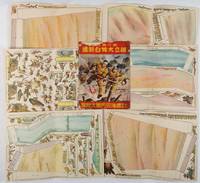
1933214182東京. Tokyo.: 博文館. Hakubunkan. Showa 81933. Six colour card cutout sheets folded as issued 39 x 27cm original wrapper with instructions 28 x 21cm. Paper wrapper chipped and torn with a little loss now neatly repaired with washi. Instructions are complete and the card sheets are in very good condition. This papercraft diorama kit was issued as a supplement to the children’s magazine Tankai in April 1933. The kit recreates scenes from the Japanese attack outside Shanghai in February 1932. During the mission to break through the Chinese defence line three Japanese soldiers were killed and subsequently celebrated as national war heroes known as 爆弾三勇士 The Three Brave Bombing Soldiers. Their bravery was highly revered and they became symbols of courage and sacrifice. <br> <br>The kit includes six platforms that when combined create a rising scene from the creek bed section. It depicts Japanese soldiers attacking Chinese buildings positioned on a hill supported by artillery and tanks. The set features numerous cutouts of Japanese soldiers in action while a smaller number of cutouts portray frightened Chinese fighters. Through this diorama young children learned about the conflict by recreating battle scenes and identifying with the war heroes during play. The kit not only served as a form of entertainment but also as a tool for instilling nationalistic pride and wartime ideology in the younger generation. . 博文館. [Hakubunkan]. unknown
1941600685[ Berlin W 35, Rauchstraße 27. Deutsche Informationsstelle 1940 und 1941]. 18 x 10,5 cm. Altweißes illustriertes Originalheft, unpaginiert. 8 Seiten Text, 8 nach oben aufklappbareTafelabbildungen mit Zeichnungen in s/w. Papier gebräunt, Ecken wenig eselsohrig. Guter Zustand. // White illustrated booklet, 8 pages with text, 8 folded plates. The plates show the situation in England during world war II. When the folded section of the plates is lifted, the "truth" (Nazi propaganda) is revealed. Paper a little bit brownish, corners with traces of fold. Good copy.
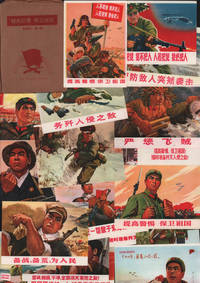
1970215881Anhui province.: 安徽省革命委员会出版发行局. Anhui Sheng geming weiyuanhui chuban faxingju. Circa1970s. Full set of 20 'Increase vigilance and defend the motherland' postcard-sized propaganda prints with original protective envelope. Designed by People's Arts Societies in various provinces and cities each has a different slogan. Original envelope is creased at edges opening a little worn and torn but the little prints have been well protected some corners very slightly bumped but overall in crisp and bright condition. 12.9 x 9.4cm . 安徽省革命委员会出版发行局. [Anhui Sheng geming we unknown
1749Charleville, impr. A. Ancieux, [s.d., avant 1920], in-8, br., 143 p. Première édition en état correct avec petites déchirures en bords, en coiffes, dos usé avec reprise manuscrite du titre, un nom au 1er plat, exemplaire gauchi, rousseurs éparses.
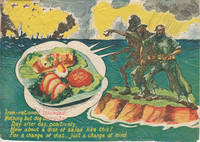
1942175578Circa1942. Small airborne propaganda leaflet printed on one side only featuring a colour illustration. Appears to have been dropped during the Malayan Campaign. 14.6 x 19.8 cm creased and marked on the reverse. Image still very clear and strong. Airborne colour propaganda leaflet urges the British troops to surrender to Japan. The rather oddly worded text reads: <br> <br>"Iron-rationed. Stranded. <br>Nothing but dog biscuits. <br>Day after day positively. <br>How about a dish of salad like this <br>For a change of diet. just a change of mind". <br> <br>The image shows three figures two of whom are identifiable as British soldiers in a desperate situation on a small piece of land possibly representing Singapore. In the distance their warships are burning. A plate of salad which dominates the image looks enticingly fresh and colourful albeit rather surprising that the Japanese military propaganda believed salad would motivate the soldiers to surrender! Similar messages published and dropped by the Allies were distributed to Japanese troops in Japanese towards the end of the Pacific War with the same aim in mind. <br> <br>Although we have not been able to identify the area depicted with absolute certainty we believe this leaflet was likely dropped during the Malayan Campaign rather than Guadalcanal as we have seen it attributed to. Our reasons for this include the leaflet showing British soldiers whereas American servicemen were primarily involved in Guadalcanal. The burning ships offshore seem to fit more with the sinking of the HMS Prince of Wales and HMS Repulse particularly as only two are depicted and they are being destroyed by what seem to be land-based bombers not other ships or carrier-based aircraft. Likewise at the late stage in the Pacific War that the Guadalcanal Campaign took place Japan was no longer in a position where they could cope with POWs nor were they likely to be in a position to print colour leaflets or distribute them. <br> <br>Commonly airborne leaflets were used over land battles rather than in naval battles. . unknown