70 résultats
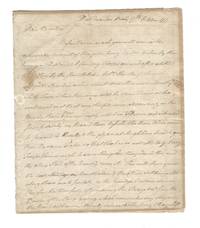
1777BB002<p>CLINTON George First Governor of New York State 1777-1795 1801-1804; also 4th Vice-President of the United States 1805-1812 under Thomas Jefferson and James Madison.<br /></p><p>"Kingston laid in ashes by the Enemy" . <br /></p><p>8vo 7-3/4 x 6-1/2 inches 1-1/2 pages on laid paper with integral address leaf remnants of wax seal some fading to text and signature scattered minor<br /></p><p>It should be noted that Clinton was sworn in as New York's first governor on 9th July 1777 shortly after Kingston was established as its first capitol 20th April 1777. Thus the burning of Kingston and change of capitol to eventually Albany was a consequence of the War for Independence. <br /></p><p>Remarkable handwritten manuscript explaining that the British troops arrived at Kingston before his own re-enforcements whereupon 1000 men burned the town and immediately returned to their ships warning that a similar fate awaits the settlements along the shore and that forage and property should be moved from the path of the enemy reminding him to take the sleigh from the barn as it is all the personal property that remains to him after the destruction in Kingston noting that the enemy is advancing up the river to Saugerties with Tryon commanding on the east side and Vaughn on the west.<br /></p><p>Transcript</p><p><i>Head Quarters Hurley 17th October 1777</i></p><p><i>Dear Brother</i></p><p><i>"Before this can reach you you will receive the – disagreeable account of Kingston being laid in ashes by the Enemy. They landed before my troops arrived after a little opposition by the few militia Cols Pawling & Snyder could collect and marched about 1000 Men immediately up to Town - where they were told by some Tories who continued in it that my People were advancing on the Hurley Road & they immediately set it in Flames and extracted precipitately on Board their Vessels tho their Orders were to proceed to Hurley & the adjacent Neighborhoods to give them the same Fate so that tho I was not able to get my Troops Time enough to save Kingston they saved this and the other Parts of the Country near it. This will show you the Fate New Windsor & the other settlements along shore are to partake on the Enemy's Return down. Therefore the Necessity of removing the Forage &c from the Banks of the River among which remember my Slay in the Barn as it is now the only moveable Property I have left the Best being removed to Kingston shared its Fate tho indeed a great share of Property has been saved out of Town. The enemy sailed up the River this Morning as high as Saghertyes burning along Shore as they go. When they go a little higher I will follow them. They have Parties on both Sides of the River. Tryon commands those on the East & Vaughan on the West Side of the River.</i></p><p><i>Yours Sincerely</i></p><p><i>Geo Clinton</i></p><p>On Friday evening 16 October 1777 a British fleet commandeered by James Wallace and John Vaughn the latter on board the 'Friendship' which had anchored near Easopus Island the day before came into the mouth of Rondout Creek and engaged the gallery "Lady Washington". Shortly after noon the British landed on Rondout Creek and the Cove above Columbus Point. Vaughn personally led the march capturing and forcing a negro to lead them into town without meeting resistance. The troops went through the streets in parties led by Tories setting the whole place on fire in response to the occasional resistance lodged by residents from within their houses. There was looting and vandalism. Meanwhile part of the fleet went a bit up the River and creek to destroy landings and sloops. By the time George Clinton arrived into Kingston the whole town was ablaze and the British party had set out to return to their ships.</p><p>In a letter on 18 October penned at Little Britain NY in response to this letter his brother B. Genl. James Clinton writes:</p><p><i>D'r Brother</i></p><p><i>Yours of yesterday's Date I have just received. I am sorry for the Loss of Kingston &c. </i><i>Five of the Enemy's Shipping Returned Down the River last night without Doing any Damage Except fireing Some Cannon and small arms at our men and wounding one of ours on Board of a Ferry Boat…"</i></p><p>The war became personal for the governor specially after what had happened to Kingston. In a letter to William Smith @ 31 October 1777 his sentiments and commitment are laid bare:</p><p><i>"The Cruelties as well Cowardice with which this Warr has been conducted ag't us must I think be sufficient at this late Hour to convince every Man that all connection with Great Britain is at an End…"</i></p><p>Reference: <b><i>Public Paper of George Clinton</i></b> First Governor of New York War of the Revolution Series. New York: Wynkoop Hallenbeck Crawford Co. 1900. Volume II pp. 457-459. Our letter of 17 October 1777 appears to be unknown to the editors of the Clinton papers although they do list and transcribe the 18th October response by his brother James. Consequently our letter appears to be the only firsthand account by the governor of New York on the actual burning of Kingston an event historically reenacted locally each year within Ulster County.</p> Autograph Letter Signed, “Geo Clintonâ€, written to his brother Gen. James Clinton in New Windsor (“Dear Brotherâ€), from books
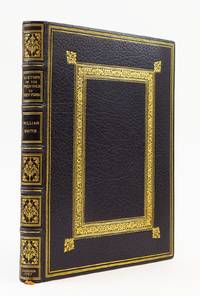
1757ST17682London: Printed for Thomas Wilcox 1757. FIRST EDITION. 257 x 197 mm. 10 1/8 x 7 3/4". xii 255 pp. <br/> HANDSOME DARK BLUE MOROCCO GILT BY THE CLUB BINDERY stamp-signed and dated 1898 on front turn-in covers with French fillet border central panel framed with plain and dotted rules enclosing an intricate floral roll oblique floral spray cornerpieces raised bands spine compartments with floral spray centerpieces floral sprigs at corners gilt lettering turn-ins repeating the floral frame from covers marbled endpapers top edge gilt. With a folding frontispiece engraving "The South View of Oswego on Lake Ontario." Verso of front free endpaper with engraved bookplate of Edwin B. Holden see below. Church 1023; Howes S-703; Sabin 84566; Streeter Sale 871. Text lightly washed and pressed in keeping with bibliophilic fashion at the time of binding plate with insignificant short closed tear to head edge of one fold A2 with expertly repaired and barely discernible curving tear into text minor foxing and browning on the majority of leaves a handful with more overall toning other trivial defects but a nevertheless pleasing copy the text extremely smooth and clean and the beautifully decorated luxury binding lustrous and unworn.<br/> <br/> This classic first history of New York was bound for an eminent Americana collector and founding member of New York's Grolier Club by the bindery he helped organize. According to Larnard this history "ranks with Smith’s Virginia and Hutchinson’s Massachusetts as one of the worthiest examples of historical literature produced in later colonial times." Sabin notes that Smith based this work "chiefly on the Provincial Laws the Minutes of the Council the Journals of the General Assembly and other government records" and drew heavily on the works of Charlevoix and on Colden's "History of the Five Indian Nations. About three-quarters of the text is devoted to the colony's history up to the year 1732 while the rest describes the territory and provides geographical demographic and political information. The son of one of New York's most prominent lawyers judges and legal educators Smith 1728-93 showed an early talent for writing. At age 24 he compiled the first collection of the "Laws of New-York from the year 1691 to 1751 inclusive" 1752 with his friend William Livingston and the following year he co-produced New York's first magazine "Independent Reflector." According to the Dictionary of Canadian Biography the present history "served him well over the years giving him a wide reputation as an authority on the colony and he was often referred to as 'the historian of New York'; 20 years later he began a second volume published posthumously." A Loyalist during the American Revolution Smith emigrated to Canada after the war. Former owner Edwin Holden 1861-1906 was a prominent American bibliophile who collected Americana English literature 16th and 17th century printed books and French illustrated books. After the Grolier Club was established in 1884 it soon became apparent that the country's few established hand binders were overtaxed in providing repairs and rebinding for the club members' rapidly accumulating acquisitions. As a consequence in 1895 Grolier members led by Robert Hoe and Holden along with other wealthy collectors instituted the Club Bindery in order to attract European craftsmen to provide close to home fine quality binding work rivalling what was available abroad. The Club Bindery was in operation until 1909 with Hoe being its most influential manager and client. It provided bindings that tended to be traditional in style--though frequently with elaborate decoration--and that lived up to its patrons' expectations in terms of excellence. The first members of the staff of the Club Bindery were the Englishmen R. W. Smith and Frank Mansell. They were subsequently joined by a number of French binders chief among them being Leon Maillard who had worked previously for Cuzin Gruel and Marius-Michel. Holden served as president of Grolier Club in 1906 and was the first president of the Club Bindery. Printed for Thomas Wilcox unknown
17379900042889Amsterdam: Zacherie Chatelain 1737. Leather Bound. Tall folio. Bound in full contemporary calf with seven raised bands and the spine ornamented in gilt. The binding shows minor wear but is otherwise strong and the contents are in remarkable condition. There is an elaborate engraved plate preceding the formal title page printed in red and black. Measures 47 x 29.5 cms. Zacherie Chatelain d.1723 was the father of Henri Abraham 1684-1743 and Zacherie Junior 1690-1754. They worked as a partnership publishing this atlas under several different Chatelain imprints depending on the Chatelain family partnerships at the time of publication. The original atlas was published in seven volumes between 1705 and 1720 with a second edition appearing in 1732. The maps were accompanied by information pertaining to cosmography geography history chronology genealogy topography heraldry and costume of the world. The maps in the Atlas Historique were based on those of the French cartographer Guillaume De L'Isle but were presented by the Chatelains in an encyclopedic format. The text is in French and is printed in two columns on the page with maps and other illustrations interspersed. Each map and table is numbered consecutively see MapHist dot com. Our offering is described as 'Tome II Seconde Partie ou Tome III' of the 'Nouvelle Edition' which has been 'Revue corrigee & considerablement augumentee'. It covers Great Britain Ireland Switzerland Savoy Lorraine and the Republic of Venice. It contains 26 folding maps and ten genealogical tables or charts. Zacherie Chatelain unknown
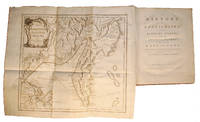
176415085Glocester: R. Raikes for T. Jefferys 1764. First Edition. Hardcover. Near fine. Quarto pp. 8 280 8 with 7 engraved maps and plates 4 folding. Contemporary calf boards with new complementary calf spine in six compartments. Some edgewear to boards; minor foxing to endpapers; text and plates exceptionally clean and bright. Bookplate of Sir Joseph Copley on front pastedown. An abridged translation of the Russian edition of 1755 which offered "The first reliable descriptions of Kamchatka based on the observations of the author and his companions during the Russian expedition to the far north 1734-43 a part of Bering's Great Northern Expedition" Arctic Bib. 9264 9265. It describes the customs morals religion and languages of the inhabitants of the Kamchatkan peninsula. In addition the the author had access to the notes made by pioneering German botanist George Steller during his travels to North America with Bering's expedition and the second part of the narrative includes much on the natural history of the region. Steller's observations "are an important part of this work and constitute one of the earliest accounts of Alaska and the Aleutian islands" Hill 948. R. Raikes for T. Jefferys hardcover books
1775c2412110474xbvkLouvain / Leuven, Belgium; 1775. Titlesheet (former blank front flyleaf), (9) pages 'Proemium Rhetorica / ...' and 'Deperiodo.', 5 blank sheets, pages 17-257 (of?), 1 blank sheet, blank rear flyleaf. - Vellum binding of the period over 5 raised bands with colour-marble-paper covered panel with vellum corners and red edges; small 4to.(ca. 19 x 16 x 2 cm).
17875031London: Charles Eyre & Andrew Strahan 1787. First edition. 27 George III Chapter 44. A Fine copy measuring 310 x 190mm and collating complete: 2 987-988. A scarce and important piece of legal history which ESTC records at only one library Lincoln's Inn and which does not appear in the modern auction record. The present is the only example on the market. <br /> <br /> At the start of the Restoration "English church courts were revived by an act of Parliament on 27 July 1661 to resume their traditional task of correcting spiritual and moral misdemeanors. Soon thereafter parishioners across England's dioceses once more faced admonition fines excommunication and even imprisonment if they failed to conform to the laws of the restored Church of England" Aklund. As much as these courts sought to reestablish a monolithic Anglican communal identity during Charles II's reign their position in the 18th century became "a case study in the secularization of the legal system" particularly given their theoretical justification based in the problematic concept of divine right Harris. Numerous acts the present example among them "represented an important step in the direction of limiting the reach of of ecclesiastical jurisdiction" Harris. <br /> <br /> An Act to Prevent Frivolous and Vexatious Suits in Ecclesiastical Courts was passed in 1787 drawn from a bill presented in Parliament the previous year. Its major accomplishment was the removal of Church authority in the regulation of private sexual behaviors: "It shall be further enacted by the Authority aforesaid That no Suit shall be commenced in any Ecclesiastical Court for Fornication or Incontinence of for any striking or brawling." While the Church may have voiced its moral codes or enacted social shaming within its own communities it no longer had the legal authority to regulate or punish sexual behavior. Such secularization had significant benefits across a number of communities. For survivors of assault it ended the Church's ability to mandate that a woman marry her attacker; for queer communities it prevented Biblically based persecution; for sex workers it took away the risk of arrest or fines for conducting their livelihoods. Ultimately the jurisdiction of ecclesiastical courts over sexual behavior whether in the form of obscene or defamatory words sexual engagement and sensual pleasure was terminated by this act. Little to no legal regulation of sex would be enacted until the next century when the 1861 Offences Against the Person Act and a series of Contagious Diseases Acts would seek to give secular courts more control over individuals' bodies. <br /> <br /> ESTC N58717. Charles Eyre & Andrew Strahan unknown
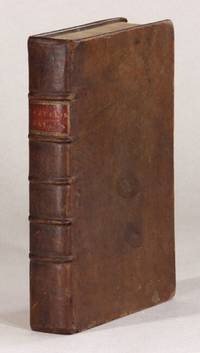
1766363001New York: Printed by Hugh Gaine at his Book-Store and Printing Office at the Bible & Crown in Hanover-Square 1766. Hardcover. Good. First edition. Two volume set. Thick folios. Contemporary full calf. Binding is worn with the boards nearly detached small bookplate on the front pastedowns else a good sound set. Volume one prints the proceedings from April 1691–September 1743; volume two from November 1743–December 1765. This edition includes: "the act for reversing the attainder of Jacob Leisler and others" on the last leaf of volume one. An invaluable resource for the early political social and economic history of New York. ESTC W6332; Evans 9756 10418. Printed by Hugh Gaine, at his Book-Store and Printing Office, at the Bible & Crown, in Hanover-Square hardcover
1778262556Paris: Chez les Libraires Associes 1778. hardcover. very good-. Auquel on a joint les Actes d'Independence; de Confederation.Dedie a M. le Docteur Franklin. 10 370pp. 16mo 19th century 1/2 calf with marbled boards leather label light foxing to some pages mostly to margins otherwise very good. En Suisse i. e. Paris: Chez les Libraires Associes 1778. Second Edition.<br/> <br/> The earliest collection of American state constitutions printed in France. Contains early printing in French in a book of the Articles of Confederation and the Declaration of Independence. "First collected edition compiled by Regnier." Howes R-111. The edition was printed in Paris and not in Switzerland. Using a imprint outside of France was done by the French printer so that the French government could disassociate itself from a book that might be deemed as not expressing the official government's viewpoint.<br/> <br/> Chez les Libraires Associes unknown
1778262556Paris: Chez les Libraires Associes 1778. hardcover. very good-. Auquel on a joint les Actes d'Independence; de Confederation.Dedie a M. le Docteur Franklin. 10 370pp. 16mo 19th century 1/2 calf with marbled boards leather label light foxing to some pages mostly to margins otherwise very good. En Suisse i. e. Paris: Chez les Libraires Associes 1778. Second Edition.<br/><br/> The earliest collection of American state constitutions printed in France. Contains early printing in French in a book of the Articles of Confederation and the Declaration of Independence. "First collected edition compiled by Regnier." Howes R-111. The edition was printed in Paris and not in Switzerland. Using a imprint outside of France was done by the French printer so that the French government could disassociate itself from a book that might be deemed as not expressing the official government's viewpoint.<br/><br/> Chez les Libraires Associes unknown books
1776elala1674London: Printed by T.Wright And Sold by G.Kearsly 1776-81. 1776. 11 Volumes. folio. text in double columns. contemporary calf worn 2 covers detached joints cracked chipping to joints & spine ends. the Richard Heber 1773-1833 copy. Sweet & Maxwell I.369.8. Marke 1030-31. Marvin 660-61. London: Printed by T.Wright And Sold by G.Kearsly, 1776-81. unknown
1778296649Philadelphia: Chez Cellot & Jombert 1778. First. hardcover. near fine. 12 370 pages. Thick 12mo attractively bound in contemporary mottled calf with gilt-decorated spine leather worn at head; light foxing throughout; pages trimmed a bit close at top but otherwise with ample margins. Philadelphie et se vend a Paris: Chez Cellot & Jombert 1778. First Edition. A near fine copy with original drab wrappers bound in.<br/> <br/> The earliest collection of American state constitutions printed in France. Contains early printing in French in a book of the Articles of Confederation and the Declaration of Independence. "First collected edition compiled by Regnier." Howes R-111.<br/> <br/> Chez Cellot & Jombert unknown
1778296649Philadelphia: Chez Cellot & Jombert 1778. First. hardcover. near fine. 12 370 pages. Thick 12mo attractively bound in contemporary mottled calf with gilt-decorated spine leather worn at head; light foxing throughout; pages trimmed a bit close at top but otherwise with ample margins. Philadelphie et se vend a Paris: Chez Cellot & Jombert 1778. First Edition. A near fine copy with original drab wrappers bound in.<br/><br/> The earliest collection of American state constitutions printed in France. Contains early printing in French in a book of the Articles of Confederation and the Declaration of Independence. "First collected edition compiled by Regnier." Howes R-111.<br/><br/> Chez Cellot & Jombert unknown books
1778152956Philadelphia: Chez Cellot & Jombert 1778. First. hardcover. near fine. 12 370 pages. Thick 12mo handsomely rebound in modern tree calf with red & green leather labels on gilt-decorated spine; deckled edges very light foxing and staining to some pages but mostly the text is bright and clean with wide margins. Philadelphie et se vend a Paris: Chez Cellot & Jombert 1778. First Edition. A near fine copy with original drab wrappers bound in.<br/> <br/> The earliest collection of American state constitutions printed in France. Contains early printing in French in a book of the Articles of Confederation and the Declaration of Independence. "First collected edition compiled by Regnier." Howes R-111.<br/> <br/> Chez Cellot & Jombert unknown
1778152956Philadelphia: Chez Cellot & Jombert 1778. First. hardcover. near fine. 12 370 pages. Thick 12mo handsomely rebound in modern tree calf with red & green leather labels on gilt-decorated spine; deckled edges very light foxing and staining to some pages but mostly the text is bright and clean with wide margins. Philadelphie et se vend a Paris: Chez Cellot & Jombert 1778. First Edition. A near fine copy with original drab wrappers bound in.<br/><br/> The earliest collection of American state constitutions printed in France. Contains early printing in French in a book of the Articles of Confederation and the Declaration of Independence. "First collected edition compiled by Regnier." Howes R-111.<br/><br/> Chez Cellot & Jombert unknown books
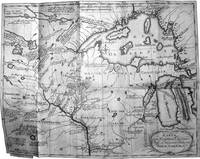
17808583Hamburg: C.E. Bohn 1780. First German edition and first edition in a foreign language 8vo pp. xxiv 456; engraved folding map; nice copy of a scarce edition in 20th century 3/4 red morocco gilt by Stikeman. A seminal book in the history of the exploration of the American west and a cornerstone in Minnesota history. Peace between Great Britain and France at the close of the French and Indian Wars in 1763 brought eastern Minnesota under the British flag for the first time thus opening the vast territory to British fur traders. "Carver spent the winter of 1766-67 a short distance up the Minnesota River with the Sioux. He was then serving as mapmaker and advance man on an expedition led by Captain James Tute and inspired by Maj. Robert Rogers commandant at Fort Mackinac intended to cross the continent in quest of the Northwest Passage. The plan had to be given up but Carver later wrote and published an account of his travels which became a "best seller" of its day and gave to thousands on both sides of the Atlantic their first information about the Minnesota country" Fridley A Sketch of Minnesota p. 3. Sabin 11187. <br/><br/> C.E. Bohn unknown books
17808583Hamburg: C.E. Bohn 1780. First German edition and first edition in a foreign language 8vo pp. xxiv 456; engraved folding map; nice copy of a scarce edition in 20th century 3/4 red morocco gilt by Stikeman. A seminal book in the history of the exploration of the American west and a cornerstone in Minnesota history. Peace between Great Britain and France at the close of the French and Indian Wars in 1763 brought eastern Minnesota under the British flag for the first time thus opening the vast territory to British fur traders. "Carver spent the winter of 1766-67 a short distance up the Minnesota River with the Sioux. He was then serving as mapmaker and advance man on an expedition led by Captain James Tute and inspired by Maj. Robert Rogers commandant at Fort Mackinac intended to cross the continent in quest of the Northwest Passage. The plan had to be given up but Carver later wrote and published an account of his travels which became a "best seller" of its day and gave to thousands on both sides of the Atlantic their first information about the Minnesota country" Fridley A Sketch of Minnesota p. 3. Sabin 11187. C.E. Bohn unknown
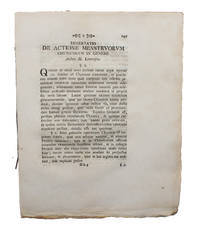
175042895Petropoli St. Petersbourg 1750. 4to. Uncut without wrappers. Extracted from "Novi Commentarii Academiae Scientiarum Imperialis Petropolitanae" Tom. I. ad Annum 1747 et 1748. Pp. 245-266 a. 1 engraved plate ad. p. 251. Clean and fine. <br/><br/><em>First appearance of a groundbreaking paper in chemistry in which Lomonosov describes his discovery of the transition of a metal into passive state and this is the first scientific description of this phenomena. He observed and described fast termination of the dissolution of iron in concentrated nitric acid and attributed this to a change in the solvent properties."Lomonosov employed corpuscular mechanics in chemical explanations more extensively than Boyle had done. Treating chemical compounds as particles in adhesion he held that "adhesion is eliminated and renewed by means of motion.since no change in a body can take place withouy motion". He attempted to apply these theories to chemical phenomena - although he was limited to speculation- in papers on the action of chemical solvents in general."DSB VIII p. 469."Lomonosov was founder of Russian science and he would be universally recognized as a great pioneer of science had he been born a West European. He was famous also for his literary works including poems and dramas. In 1755 he wrote a Russian Grammar that reformed the language and in the same year he helped found the University of Moscow. In 1760 he published the first history of Russia."Isaac Asimov. </em> unknown
177961043Dublin: printed for S. Price R. Cross et al. 1779. First Dublin edition 8vo pp. 20 xiii 1 15-508; engraved folding map bound in as the frontispiece and 2 engraved plates without the Indian plates and the folding map of the Great Lakes region as issued which were present in the London editions full contemporary calf red morocco label on spine; flyleaf excised map is a bit miscreased and is worn through at one fold for about an inch; all else very good sound and clean. Early ownership signature of Elizabeth Ewing. Howes C-215; Sabin 11184. printed for S. Price, R. Cross [et al.] unknown
1751628960London, Osborne & Sandby, 1751-61. Leder d. Zeit mit Rückenvergoldung u. marmorierten Vorsätzen (berieben, Ecken etwas bestoßen, einige Bände mit Wurmspuren, Schabstellen oder kl. Ausbrüchen an den Kapitalen, 3 Bände mit größeren ergänzten Fehlstellen im Bezug, 4 Rückenschilder abgerieben). [2 Warenabbildungen]
1800009915Huntingdon Pennsylvania: publisher not identified Printed for the proprietor 1800. Book. Very Good Minus. Full Calf. Later American Edition. 12mo - over 6¾" - 7¾" tall. Two volumes bound as one in original calf Vol 1 vi 1 8-156 pages; Vol. 2 117 pages. Frontispiece portrait of Franklin in beaver skin hat engraved by J. Bannerman. Preface includes a letter by Richard Price. Pages 96-147 of v. 1 have the continuation of Franklin's life by Henry Stueber. "Extracts from the last will and testament of Dr. Franklin."--Vol. 1 p. 146-156. Very Good Minus joints opening but hinges still solid boards rubbed early prior owner name in ink at frontis title preface and "Life of." pages pencil and ink notations at end pages and paste downs moderate browning throughout. A quite uncommon early American imprint noted for the portrait of Franklin by Bannerman. An incomplete copy came to auction in 2015 else the last copy at auction was 1916 according to RareBookHub. Sabin 25602 Ford P.L Franklin 456 Early American imprints. First series ; no. 37442 English Short Title Catalogue;; W17376. [publisher not identified] Printed for the proprietor, Hardcover
17970006092<p>Boston: S. Hall and Thomas & Andrews 1797. First Edition. Hardcover. Good. 7 Maps. Octavo new full brown calf red spine label new endpapers minor foxing. Ex libris Robert Breck in 1798 on title-page and on flyleaf minor repairs to folds of frontispiece folding map. . <br /><br />Capt. Thomas Hutchins the U. S. General Geographer supplied his notes to assist Morse the "Father of American Geography" in the completion of this work. This copy includes the map of "Georgia Western Territory" which was not incorporated in many of the copies. Howes M839; Evans 32509; not in Graff; Sowerby 3964; Sabin 50923 John Carter Brown 3902; Buck ILLINOIS 53. Contains 7 maps.</p> S. Hall, and Thomas & Andrews hardcover
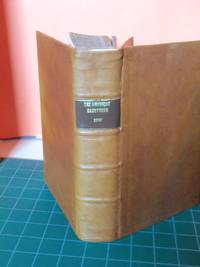
1776100869<p>Folio contemporary sheep rejoined and crudely rehinged viii 493 1 6 6 4 4 1 15 pp. Binding is very worn especially at the extremities despite hinge repairs back cover is detached and top cover a bit loose browning and aging marginal dampstaining affecting appendices early ownership signatures including Belmont Perry and Thomas Hendry on title and elsewhere bookplate on front pastedown. Samuel Allison 1739-1791 was a Burlington attorney who had an interest in both politics and the law. In 1762 he was commissioned as one of the surrogates for West Jersey and was put to work compiling a new edition of provincial laws which is the current volume and covers the period from 1702 to 1776. Allison was a Quaker who opposed slavery and secession from the British Empire. He worked throughout his life to end slavery and became a spokesperson for a sizeable Quaker community in New Jersey. The present work includes coverage of relief of the poor raising money for public buildings preventing the waste of timber and the regulation of slaves. There are several manuscript corrections to the text in this copy which according to Felcone appear to be the rule for all copies. New Jersey in the American Revolution. Felcone 158. Evans 14911. Sabin 53046.</p> Isaac Collins,
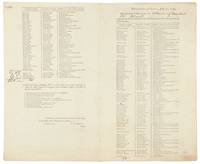
179428825Philadelphia 1794. Folio. 13 x 7 3/4 inches. 4pp. Signed in print by J. Wagner Clerk. Contemporary manuscript notations on each page tallying the number of vessels. Unbound<br/> <br/> A contemporary official printed list of American vessels with spoliation claims issued by the Secretary of State in the midst of the negotiations over Jay's Treaty.<br/> <br/> In 1793 and 1794 the British captured numerous neutral American merchant ships during its conflict with France including ships in both European and North American waters. The Secretary of State here issued an official list of 304 American merchant vessels -- including the ship's name as well as the names of the masters and owners -- for distribution among port collectors compiled "from the record of the Cases in the office of the Department of State." The terms of Jay's Treaty would include compensation for the vexations and spoliations with the British eventually paying out over $10000000 by 1802. A rare and ephemeral early American document. OCLC cites but a single copy Library Company. Not in Evans or Bristol. unknown
1776100869<p>Folio contemporary sheep rejoined and crudely rehinged viii 493 1 6 6 4 4 1 15 pp. Binding is very worn especially at the extremities despite hinge repairs back cover is detached and top cover a bit loose browning and aging marginal dampstaining affecting appendices early ownership signatures including Belmont Perry and Thomas Hendry on title and elsewhere bookplate on front pastedown. Samuel Allison 1739-1791 was a Burlington attorney who had an interest in both politics and the law. In 1762 he was commissioned as one of the surrogates for West Jersey and was put to work compiling a new edition of provincial laws which is the current volume and covers the period from 1702 to 1776. Allison was a Quaker who opposed slavery and secession from the British Empire. He worked throughout his life to end slavery and became a spokesperson for a sizeable Quaker community in New Jersey. The present work includes coverage of relief of the poor raising money for public buildings preventing the waste of timber and the regulation of slaves. There are several manuscript corrections to the text in this copy which according to Felcone appear to be the rule for all copies. New Jersey in the American Revolution. Felcone 158. Evans 14911. Sabin 53046.</p> Isaac Collins, books
179428826Philadelphia 1794. Folio. 13 x 7 3/4 inches. 4pp. Signed in print by J. Wagner Clerk. Contemporary manuscript notations on each page tallying the number of vessels. Unbound<br/> <br/>A contemporary official printed list of American vessels with spoliation claims issued by the Secretary of State in the midst of the negotiations over Jay's Treaty.<br/> <br/>In 1793 and 1794 the British captured numerous neutral American merchant ships during its conflict with France including ships in both European and North American waters. The Secretary of State here issued an official list of 304 American merchant vessels -- including the ship's name as well as the names of the masters and owners -- for distribution among port collectors compiled "from the record of the Cases in the office of the Department of State." The terms of Jay's Treaty would include compensation for the vexations and spoliations with the British eventually paying out over $10000000 by 1802. A rare and ephemeral early American document. OCLC cites but a single copy Library Company. Not in Evans or Bristol. unknown books