45 067 résultats
14129Au bureau du journal Paris, 1882, 2 vol. in-folio demi-vélin, dos lisse. Chaque numéro comprend quatre pages avec une illustration en noir. 1er semestre 175 N° du 1er Janvier au 30 juin 1882 / 2nd semestre 181 N° du 1er juillet au 31 décembre 1882. Contributions de Stop, Draner, Paf, Henriot, A. Grévin, Le Petit etc. pour l'illustration. Bords des plats légèrement frottés. Intérieur en très bon état. Quelques rares restaurations anciennes. Manques à la pièce de titre du second semestre. Année bien complète de ce quotidien fondée en 1833 par René Philippon.
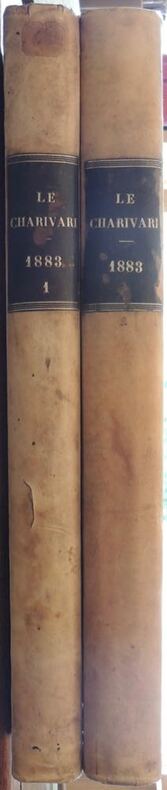
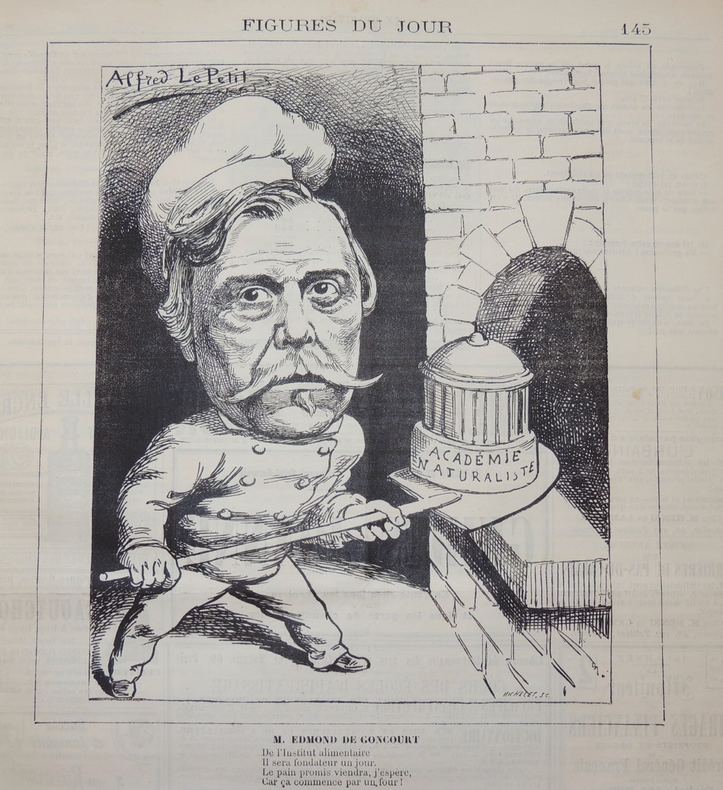
14100Au bureau du journal Au bureau du journal Paris, 1883, 2 vol. in-folio demi-vélin, dos lisse. Chaque numéro comprend quatre pages avec une illustration en noir. 1er semestre 173 N° du 1er Janvier au 30 juin 1883 / 2nd semestre 178 N° du 1er juillet au 31 décembre 1883. Contributions de Stop, Draner, Paf, Henriot, A. Grévin, Alfred Le Petit pour l'illustration. Bords des plats légèrement frottés sinon très bon état. Année bien complète de ce quotidien fondée en 1833 par René Philippon.
14126Au bureau du journal Paris, 1887, 2 vol. in-folio demi-basane bleue, dos lisse. Chaque numéro comprend quatre pages avec une illustration en noir. 1er semestre 174 N° du 1er Janvier au 30 juin 1887 / 2nd semestre 182 N° du 1er juillet au 31 décembre 1887. Contributions de Stop, Draner, Paf, Henriot, A. Grévin etc. pour l'illustration. Bords des plats légèrement frottés. Coiffe du second semestre un peu abîmée. Intérieur en très bon état. Année bien complète de ce quotidien fondée en 1833 par René Philippon.
14099Au bureau du journal Au bureau du journal Paris, 1892, 2 vol. in-folio demi-basane, dos lisse. Chaque numéro comprend quatre pages avec une illustration en noir. 1er semestre 179 N° du 1er Janvier au 30 juin 1892 / 2nd semestre 181 N° du 1er juillet au 31 décembre 1892. Contributions de Stop, Draner, Paf, Morland, Henriot, Maurice Marais, Mars pour l'illustration. Bords des plats légèrement frottés sinon très bon état. Année bien complète de ce quotidien fondée en 1833 par René Philippon.
14098Au bureau du journal Au bureau du journal Paris, 1893, 2 vol. in-folio demi-basane, dos lisse. Chaque numéro comprend quatre pages avec une illustration en noir. 1er semestre 174 N° du 1er Janvier au 30 juin 1893 / 2nd semestre 183 N° du 1er juillet au 31 décembre 1893. Contributions de Stop, Draner, Paf, Morland, Henriot, Maurice Marais pour l'illustration. Bords des plats légèrement frottés sinon très bon état. Année bien complète de ce quotidien fondée en 1833 par René Philippon.
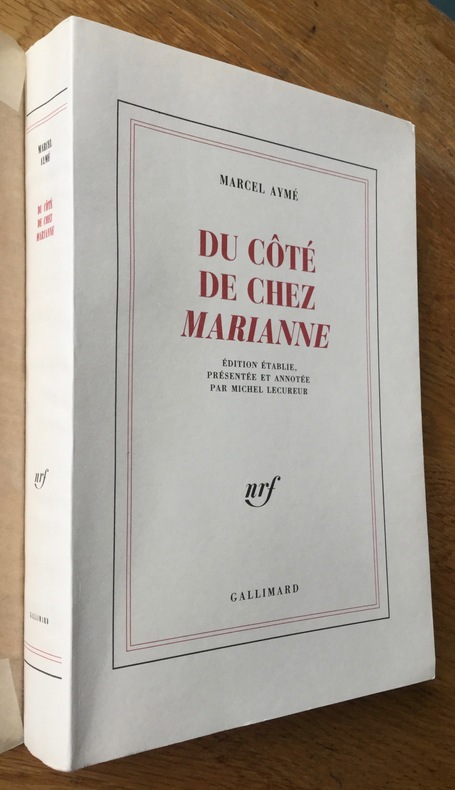
1989UUI-13145In-8 broché sous papier cristal d’origine et couverture à rabats, Gallimard, 1989, 356 pp. Cristal un peu jauni sans gravité au niveau du dos, livre en bel état, intérieur frais et non coupé. Bel exemplaire de l’édition originale, un des 47 numérotés sur vélin pur chiffon de Rives, seul grand papier. Poids 500 g.
EXTREMELY RARE single volume containing all 1894 issues of the daily Hebrew newspaper "Ha-Tsefira". This influential publication, published in Warsaw and read throughout the Jewish world, featured news in matters of international politics, global economy, science and religion, literature and so forth. The issues were sent by mail, and still feature contemporary Austrian-Hungarian stamps. The publication was edited and most of it written by Nachum Sokolov, and is written in the elevated Hebrew prose typical of that era. 400x275mm. 1262 pages. Bound in black cloth Hardcover. Most page edges slightly torn (no damage to text). Many pages taped and nicely restored - NO damage to text. First and last text pages partly torn and detached from binding; these pages are sold along with the volume, but a photocopied version of them is bound within it. Pages yellowing/browning. [SUMMARY]: In spite of the wear it has sustained, this rare collection of Jewish newspapers is in good reading condition. PLEASE NOTE: This item is overweight. We may ask for extra shipping costs.
Madrid, en la Imprenta de Bernardo de Villa - Diego, a costa de Sebastian de Armendariz, 1684. 4to.; 6 hs., 84 folios numerados Ejemplar carente del frontispicio grabado. Taladros en el margen exterior blanco de cincuenta folios, sin afectar a texto. Encuadernación moderna de torpe aficionado en medio pergamino y cartoné.
Tutta l’annata 1851, rilegata insieme, in-folio, mezza pelle con titolo impresso in oro al dorso, con paginazione continua 1- 213. Giunto alla legatura una custodia che contiene 60 tavole principalmente grandi fogli per cartamodelli ripiegati, e alcune stampe di moda. La ricamatrice è una rivista di costume, moda e attualità, vi si parla di lavori femminili soprattutto ricami, confezione di abiti e ccina, ma anche di eventi come l’Esposizione generale di Londra del 1851. “L’editore si ispirò ai giornali americani come «Englishwoman’s domestic magazine», che proponevano articoli di educazione sociale fornendo alla donna gli strumenti per affrontare i problemi inerenti l’amministrazione domestica e la cura della casa, reputando il lavoro casalingo una vera e propria professione che richiedeva un bagaglio di istruzioni teoriche integrate da consigli pratici. Se nel passato il ricamo era stato uno strumento per tenere le donne lontane dalla vita sociale, ora i lavori d’ago e il ricamo erano promossi a mezzo di sostentamento per le donne che, non ancora sposate, avevano bisogno di lavorare: atteggiamento propositivo tipico della mentalità borghese”.
RO20183586L'ILLUSTRATION. NON DATE. In-Folio. Relié demi-cuir. Bon état, Couv. convenable, Dos satisfaisant, Intérieur frais. Environs 28 pages par numero + environs 120 pages de croquis en couleurs hors texte dont certaines sont collées - nombreuses illustrations en noir et blanc dans et hors texte - nombreuses illustrations en couleurs contre-collées hors texte - plats jaspés - titre, année et fleurons dorés au dos.. . . . Classification Dewey : 70-Journalisme, édition. Journaux
1911RO80114509GAUTIER Henri. 1910 - 1911. In-4. Relié. Etat d'usage, Couv. défraîchie, Dos satisfaisant, Intérieur acceptable. 416 + 416 pages. Nombreux dessins en noir et blanc, dans le texte. Nombreux dessins en couleurs, en bandes dessinées. Quelques pages volantes, avec quelques accrocs en marges. Quelques déchirures, n'altérant pas la lecture du texte. Légèrement déboité.. . . . Classification Dewey : 70-Journalisme, édition. Journaux
1902RO30109526A. PIGOREAU. 1900-1902. In-Folio. Cartonnage d'éditeurs. Bon état, Couv. légèrement passée, Coiffe en pied abîmée, Intérieur frais. N° 2265 (25 Aout 1900), paginée de 115 à 138. - N° 2277 (17 Novembre 1900), paginée de 311 à 330. - N° 2278 (24 Novembre 1900), paginée de 331 à 346. - N° 2282 (22 Décembre 1900), paginée de 407 à 429. - N° 2301 (4 MAI 1901), paginée de 321 à 343. - N° 2307 (15 Juin 1901), paginée de 445 à 463. - N° 2311 (13 Juillet 1901), paginée de 21 à 36. - N° 2321 (21 Septembre 1901), paginée de 217 à 236. - N° 2322 (28 Septembre 1901), paginée de 237 à 260. - N° 2378 (25 Octobre 1902), paginée de 385 à 408. - N° 2385 (13 Décembre 1902), paginée de 553 à 575. Nombreuses illustrations en noir et blanc dans le texte et hors texte. Nombreuses illustrations en couleurs dans les numéros 2282 et 2385.. . . . Classification Dewey : 70-Journalisme, édition. Journaux
RO10062513Librairie Nouvelle. Début XXeme. In-12. Broché. Bon état, Couv. convenable, Dos satisfaisant, Intérieur frais. 180 pages, paginée de 1 à 180. Illustrées de nombreuses gravures en noir et blanc dans le texte et hors texte. Texte sur 3 colonnes - 4 photos disponibles.. . . . Classification Dewey : 70.4-Journalisme, chronique
1890RO80172209LE COURRIER DE LONDRES ET DE L EUROPE. 1890. In-Folio. Broché. Etat d'usage, Plats abîmés, Dos abîmé, Intérieur acceptable. 181 pages augmentées de nombreuses photos et d'illustrations en noir et blanc hors texte. Couverture déchîrée, plats désolidarisés, dos abîmé. Texte sur 2 colonnes texte en francais et texte en anglais en regard. 5 PHOTOS DISPONIBLES.. . . . Classification Dewey : 70-Journalisme, édition. Journaux
1909RO80044181"IMP. DES ARTS ET MANUFACTURES et DUBUISSON. 1895 - 1909. In-Folio. Relié demi-cuir. Etat passable, Couv. défraîchie, Dos abîmé, Intérieur frais. 1223 + 832 + 832 + 832 + pages. Titres, années, et filets dorés sur le dos cuir noir. Charnières fendues. Epidermures et manques sur le cuir. Coiffe en tête du Tome ""1900"", abîmée.. . . . Classification Dewey : 70-Journalisme, édition. Journaux"
Hardcover - scarce publication (Something Else's first), limited to 1200 copies, by the co-founder of the Fluxus movement; two works in one, each beginning from either end of volume. Unclipped jacket nicked at spine ends and one edge; the Something Else Manifesto printed on jacket's underside remains unaffected. Spine head is slightly bumped. Page block and p.131 are a little tanned; one or two foxing spots on the former. All text is clear. 271/89pp. TS Used
16851315282Altdorf, H. Meyer für Chr. E. Buchta in Frankfurt u. Leipzig, 1685. Kl.-4to. 2 Bl., 76 S. Neuer Ppbd (geringf. braunfleckig).
Madrid, Establecimiento Tipográfico de Mellado, 1852-1853. Dos volúmenes en 4to, mayor; XLIII pp., 615 pp. y 828 pp. Ilustraciones. Impresión a doble columna. Recorte de un retrato de Pizarro en la pp. XLIII, sin pérdida de texto. Enc. uniforme en media piel, con lomera ornada, de la época.
Complete collection. Very good chap-books or 'samples', encased in a cloth bound slip case with illustrated paper title label. Twenty eight pamphlets included, plus content. Slip case shows light shelfwear, including minor fading in places. Pamphlets within are further protected with complementary cloth card chemise. Unmarked, in 'as unread' condition, colours true. Additional photographs upon request. CN Used
1842621715Emden, Woortman, 1842-44. 4to. Zusammen 232 zweispaltige S. Interimspappband d. Zeit (etwas berieben, Rückenbezug brüchig u. mit Fehlstellen). [2 Warenabbildungen]
18671310732Emden u.a. 1842 - 1867. 4to. 28 S.; 4 S.; 71 Bl. Interims-Br. (Umschl. gebräunt, m. Nässespur, Rücken- u. Randläsuren; einige Bl. braunfleckig bzw. knickspurig, m. Nässespur u. Randeinrissen, 1 Bl. m. größerem Eckkabriß).
Hardcover without jacket; first edition, signed and dedicated by Anthony Burgess on title page ("To John, with every good wish from Anthony Burgess, Chiswick, 1965"). Boards are slightly aged, with a little wear at extremities; a few faint marks and insignificant imperfections on page block. One small age-related spot recurring through preliminary pages (faded by contents pages). Text is clear throughout. TS Used
Barcelona, por Don Juan Oliveres, 1848. Cinco tomos en un volúmen en 12vo.; 116 pp. + 124 pp. + 112 pp. + 124 pp. + 137 pp. Ilustraciones entre el texto. Taladros de polilla en los márgenes blancos, afectando en ocasiones a alguna letra. Encuadernación de época en media piel. Pérdida del papel que cubría el plano superior.
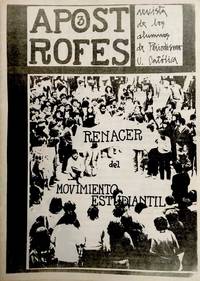
19821197<p><b>Apóstrofes: Revista de la Escuela de Periodismo Universidad Católica. Año I No. 1 May 1982–No. 3 Sept.-Oct. 1982 all published</b>. Santiago Chile: 1982. 8vo three issues: 23 pp. 25 pp. 21 pp.; side-stapled mimeograph with illus. wrappers b/w reproductions of orig. graphics including cartoons collage and photography light edge-wear and toning at extremities No. 2 toned front wrap with small crease.</p><p>When the left-wing Popular Unity party led by Salvador Allende came to power in 1970 they reached an agreement to undo previous limits on the freedom of the press in Chile. This brief period of pluralism was silenced by the Pinochet coup in 1973 which ushered in not only an era of censorship persecution and state-sponsored journalism but also a period in which opposition journalists were imprisoned tortured and "disappeared."</p><p>It is within this context that students at the Journalism School at Santiago's Catholic University began publishing this short-lived serial questioning the role and relevance of the professional journalist in Chile. Beginning as a general inquiry into the conditions of journalism and teaching the tone shifts rejecting university and national hierarchies and censorship. No. 3's headline "Renacer del Movimiento Estudiantil" declares the rebirth of the student movement following the arrest and torture of Marcela Palma secretary general of El Centro de Estudiantes de la Universidad Católica and sister of the leftist paramilitary Ricardo Palma. Articles report on colleagues in exile and the duty of the journalist to justice and critical thinking.</p><p>No copies found in OCLC or direct searches of Chilean national online catalogues.</p>
22703'40 rue Laffitte Paris September 29 1894.'. 1p 4to. On leaf of aged worn and creased cartridge paper. Addressed to 'A. T. Q. C. Care of The Editor of The Speaker 115 Fleet Street E.C. London.' An interesting letter touching on English and American journalistic practice 'sensational' copy plagiarism and fin-de-siècle Paris. The context is not entirely clear: one reading is that the recipient reported on or reproduced in the Fleet Street newspaper the Speaker one of Heilig's 'sensational letters to the American Sunday papers' only to have it 'cribbed' by Pearson's Weekly. Heilig begins: 'Dear Sir I was so amused to compare your own text with that of your robber's in a recent number of The Speaker enclosed. In the one case it was a stolen ruby or flute or piano or spade. In the present it is some stolen skeletons. My business of writing sensational letters to the American Sunday papers does not hold me to any crazy accuracy. The editors trust me they allow me to paint the lily.' He explains that 'In the Cabaret du Neant there are really no skeletons sitting about or at most one in miniature upon a shelf. I thought there ought to be skeletons sitting around so I put them in.' He explains that 'The "P. W. man" going towards the Montmartre hill in full Montmartre! saw these skeletons "lounging on benches" and some which stood about and snapped their jaws a frequent intervals.' He explains that another passage 'has no place in the patter of the show. I took it bodily from their first advertising sheet a journal called "La Mort".' He begins the final paragraph by explaining that he knows 'little of London and nothing of Pearson's Weekly' but that it has occurred to him that 'there may be something even yet more amusing behind their offers of twenty guineas etc.' He believes that 'one of the uses of these offers is to give the editors a screen behind which to protect themselves from even the appearance of evil. They can always say: "The thing was sent in to us. We regret it." Nevertheless I fancy the cribbing is done regularly in their own offices by paid clerks.' '40 rue Laffitte, Paris, | September 29, 1894.' unknown