Rajasthani School, 19th centuryBiblio.com
8 059 résultats
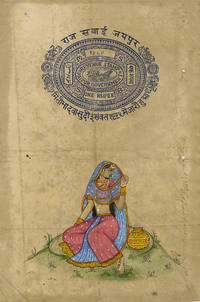
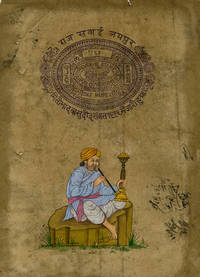
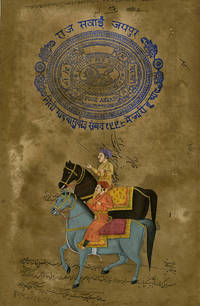
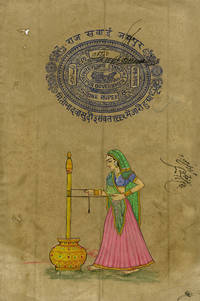
189013411890. Ink and gouache with gold heightening on fibrous brown laid paper with a Jaipur Court Fee tax stamp in purple ink on the recto 13 1/4 x 8 7/8 inches 336 x 226 mm. Toning handling creases and minor scattered surface soiling throughout. There are scattered coeval inscriptions in ink on the recto and verso. A traditional Indian butter churn is operated by rapidly pulling a rope which turns a paddled spindle. The paddles churn cows milk inside a large jar until milk solids form. Ghee is made from cow milk butter which is treated with low heat until the water evaporates leaving behind milk solids. The solids are skimmed off or strained if needed. Ghee is a staple food on the Indian subcontinent and as a cooking oil it is the most widely used food in India apart from wheat and rice. Because of its exalted status at Hindu weddings ghee is expensive and in high demand. Male wedding guests are expected to compete with each other to see who can eat the most of it; consuming two pounds or more at a sitting is considered a proof of virility. <br /> <br /> On the stamp:<br /> <br /> The first revenue stamps in India were issued in the mid-nineteenth century during the Raj and they are still being issued to this day. Apart from issues for the whole of India many princely states provinces and other states also had or still have their own revenue stamp issues. Before independence Indian revenue stamps were closely modeled on similar designs from Great Britain as is the case with this carriage motif stamp from Jaipur. The stamps were issued to denote various denominations including rupees and annas. An anna or Änna was a currency unit formerly used in British India equal to 1â„16 of a rupee. It was subdivided into four old Paisa or twelve pies thus there were 192 pies in a rupee. When the rupee was decimalized and subdivided into 100 new paise one anna was therefore equivalent to 6.25 paise. This particular stamp was used as evidence of court taxes remitted for property dealings. unknown
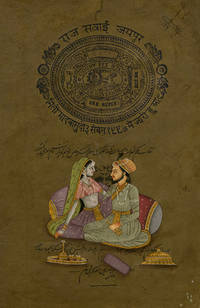
189513361895. Ink and gouache with gold heightening on fibrous brown laid paper with a Jaipur Court Fee tax stamp in purple ink 13 3/8 x 8 3/4 inches 340 x 222 mm. Toning handling creases and minor scattered surface soiling throughout. A typed and signed court order dated 1891 in reference to a landlord/tenant dispute appears on the verso as well as the purple blindstamp of the Treasury of Jaipur. There are scattered coeval Hindi inscriptions in ink on the recto. The following text appears typed on the verso:<br /> <br /> "Maloom order of 2nd July 1891 and 5 party No. b applied to the P.I.B. Department for redress.<br /> <br /> The P.W. Member opined that party No. b is entitled to live in the quarters which had been continually occupied by them and party No.a should not interfere with the other party in respect of the quarters which should be restored to the latter. <br /> <br /> Resolution No.34. <br /> <br /> Resolved that the proposal of the P.W.Member be accepted.<br /> <br /> TRUE COPY<br /> <br /> Registrar<br /> <br /> Mahakma Khas Jaipur."<br /> <br /> <br /> The first revenue stamps in India were issued in the mid-nineteenth century during the Raj and they are still being issued to this day. Apart from issues for the whole of India many princely states provinces and other states also had or still have their own revenue stamp issues. <br /> <br /> Before independence Indian revenue stamps were closely modeled on similar designs from Great Britain as is the case with this carriage motif stamp from Jaipur. The stamps were issued to denote various denominations including rupees and annas. An anna or Änna was a currency unit formerly used in British India equal to 1â„16 of a rupee. It was subdivided into four old Paisa or twelve pies thus there were 192 pies in a rupee. When the rupee was decimalized and subdivided into 100 new paise one anna was therefore equivalent to 6.25 paise. This particular stamp was used as evidence of court taxes remitted for property dealings. unknown
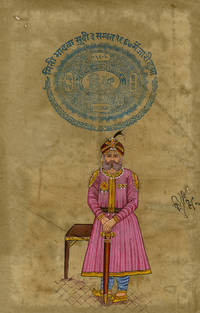
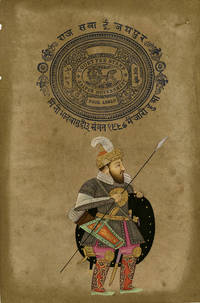
189013381890. Ink and gouache with yellow heightening on fibrous brown laid paper with a Jaipur Court Fee tax stamp in blue ink 13 1/2 x 8 3/4 inches 343 x 222 mm. Toning handling creases and minor scattered surface soiling throughout. There are scattered coeval Hindi inscriptions in ink on the recto. Raja Mahan Singh Mirpuri 1810 - 1844 was a famous general in the Sikh Khalsa Army. He was conferred by Maharaja Ranjit Singh the title of Raja for his conquests of Haripur Nowshera and Peshawar. The town of Mansehra derives its name from him. Singh was murdered by his own soldiers in 1844 when mutiny broke out in the Sikh Khalsa Army. His death was avenged by his son Chhattar Singh who was himself killed soon after.<br /> <br /> The first revenue stamps in India were issued in the mid-nineteenth century during the Raj and they are still being issued to this day. Apart from issues for the whole of India many princely states provinces and other states also had or still have their own revenue stamp issues. Before independence Indian revenue stamps were closely modeled on similar designs from Great Britain as is the case with this carriage motif stamp from Jaipur. The stamps were issued to denote various denominations including rupees and annas. An anna or Änna was a currency unit formerly used in British India equal to 1â„16 of a rupee. It was subdivided into four old Paisa or twelve pies thus there were 192 pies in a rupee. When the rupee was decimalized and subdivided into 100 new paise one anna was therefore equivalent to 6.25 paise. This particular stamp was used as evidence of court taxes remitted for property dealings. unknown
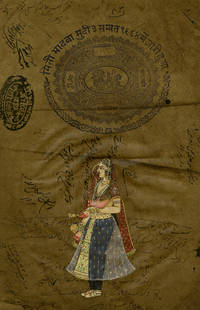
189013371890. Ink and gouache with gold heightening on fibrous brown laid paper with a Jaipur Court Fee tax stamp in gray ink and the 1889 Jaipur State Council stamp in black ink 13 1/4 x 8 3/4 inches 335 x 222 mm. Toning handling creases and minor scattered surface soiling throughout. There are scattered coeval Hindi inscriptions in ink on the recto. "A ragamala translated from Sanskrit as "garland of ragas" is a series of paintings depicting a range of musical melodies known as ragas. Its root word raga means color mood and delight and the depiction of these moods was a favored subject in later Indian court paintings. The celebration of music in painting is a distinctly Indian preoccupation. Ragamalas were first identified as a specific painting genre in the second half of the fifteenth century but their ancestry can be traced to the fifth- to seventh-century Brihaddeshi treatise which states: "A raga is called by the learned that kind of composition which is adorned with musical notes . . . which have the effect of coloring the hearts of men." Often the mood or raga is also written as poetry on the margins of the painting. These works thus evocatively express the intersections of painting poetry and music in Indian court art." <br /> <br /> -The Metropolitan Museum of Art Exhibition Overview Ragamala: Picturing Sound December 2014.<br /> <br /> The first revenue stamps in India were issued in the mid-nineteenth century during the Raj and they are still being issued to this day. Apart from issues for the whole of India many princely states provinces and other states also had or still have their own revenue stamp issues. Before independence Indian revenue stamps were closely modeled on similar designs from Great Britain as is the case with this carriage motif stamp from Jaipur. The stamps were issued to denote various denominations including rupees and annas. An anna or Änna was a currency unit formerly used in British India equal to 1â„16 of a rupee. It was subdivided into four old Paisa or twelve pies thus there were 192 pies in a rupee. When the rupee was decimalized and subdivided into 100 new paise one anna was therefore equivalent to 6.25 paise. This particular stamp was used as evidence of court taxes remitted for property dealings. unknown
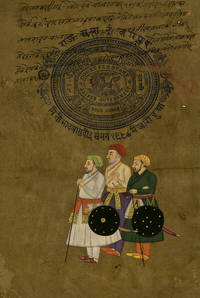
189013331890. Ink and gouache with gold heightening on brown laid paper with a Jaipur Court Fee tax stamp in black ink 13 3/8 x 8 3/4 inches 340 x 222 mm. Toning handling creases and minor scattered surface soiling throughout. Scattered coeval Hindi inscriptions in ink on the recto and verso. The first revenue stamps in India were issued in the mid-nineteenth century during the Raj and they are still being issued to this day. Apart from issues for the whole of India many princely states provinces and other states also had or still have their own revenue stamp issues. <br /> <br /> Before independence Indian revenue stamps were closely modeled on similar designs from Great Britain as is the case with this carriage motif stamp from Jaipur. The stamps were issued to denote various denominations including rupees and annas. An anna or Änna was a currency unit formerly used in British India equal to 1â„16 of a rupee. It was subdivided into four old Paisa or twelve pies thus there were 192 pies in a rupee. When the rupee was decimalized and subdivided into 100 new paise one anna was therefore equivalent to 6.25 paise. This particular stamp was used as evidence of court taxes remitted for property dealings. unknown
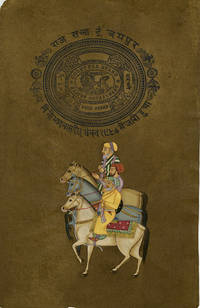
189013351890. Ink and gouache with gold heightening on fibrous brown laid paper with a Jaipur Court Fee tax stamp in black ink 13 3/8 x 8 3/4 inches 340 x 222 mm. Toning handling creases and minor scattered surface soiling throughout. Scattered coeval Hindi inscriptions in ink on the verso as well as the embossed blindstamp of the Treasury of Jaipur. The first revenue stamps in India were issued in the mid-nineteenth century during the Raj and they are still being issued to this day. Apart from issues for the whole of India many princely states provinces and other states also had or still have their own revenue stamp issues. <br /> <br /> Before independence Indian revenue stamps were closely modeled on similar designs from Great Britain as is the case with this carriage motif stamp from Jaipur. The stamps were issued to denote various denominations including rupees and annas. An anna or Änna was a currency unit formerly used in British India equal to 1â„16 of a rupee. It was subdivided into four old Paisa or twelve pies thus there were 192 pies in a rupee. When the rupee was decimalized and subdivided into 100 new paise one anna was therefore equivalent to 6.25 paise. This particular stamp was used as evidence of court taxes remitted for property dealings. unknown
189013341890. Ink and gouache with gold heightening on brown laid paper with a Jaipur Court Fee tax stamp in black ink 12 5/8 x 8 9/16 inches 320 x 217 mm. Toning handling creases and minor scattered surface soiling throughout. Scattered coeval Hindi inscriptions in ink on the recto and verso. The first revenue stamps in India were issued in the mid-nineteenth century during the Raj and they are still being issued to this day. Apart from issues for the whole of India many princely states provinces and other states also had or still have their own revenue stamp issues. <br /> <br /> Before independence Indian revenue stamps were closely modeled on similar designs from Great Britain as is the case with this carriage motif stamp from Jaipur. The stamps were issued to denote various denominations including rupees and annas. An anna or Änna was a currency unit formerly used in British India equal to 1â„16 of a rupee. It was subdivided into four old Paisa or twelve pies thus there were 192 pies in a rupee. When the rupee was decimalized and subdivided into 100 new paise one anna was therefore equivalent to 6.25 paise. This particular stamp was used as evidence of court taxes remitted for property dealings. unknown
189013421890. Ink and gouache with gold heightening on fibrous brown laid paper with a Jaipur Court Fee tax stamp in black ink on the recto as well as the Jaipur City Council blindstamp 13 5/8 x 8 7/8 inches 345 x 226 mm. Toning handling creases and minor scattered surface soiling throughout. There are scattered coeval inscriptions in ink on the recto and verso. The first revenue stamps in India were issued in the mid-nineteenth century during the Raj and they are still being issued to this day. Apart from issues for the whole of India many princely states provinces and other states also had or still have their own revenue stamp issues. Before independence Indian revenue stamps were closely modeled on similar designs from Great Britain as is the case with this carriage motif stamp from Jaipur. <br /> <br /> The stamps were issued to denote various denominations including rupees and annas. An anna or Änna was a currency unit formerly used in British India equal to 1â„16 of a rupee. It was subdivided into four old Paisa or twelve pies thus there were 192 pies in a rupee. When the rupee was decimalized and subdivided into 100 new paise one anna was therefore equivalent to 6.25 paise. This particular stamp was used as evidence of court taxes remitted for property dealings. unknown
189013391890. Ink and gouache with yellow heightening on fibrous brown laid paper with a Jaipur Court Fee tax stamp in purple ink on the recto and the Jaipur State Council Stamp dated June 5 1894 and the 1889 Jaipur State Council stamp in black ink on the verso 12 1/2 x 9 inches 318 x 230 mm. Toning handling creases and minor scattered surface soiling throughout. There are scattered coeval Hindi inscriptions in ink on the recto. The first revenue stamps in India were issued in the mid-nineteenth century during the Raj and they are still being issued to this day. Apart from issues for the whole of India many princely states provinces and other states also had or still have their own revenue stamp issues. Before independence Indian revenue stamps were closely modeled on similar designs from Great Britain as is the case with this carriage motif stamp from Jaipur. <br /> <br /> The stamps were issued to denote various denominations including rupees and annas. An anna or Änna was a currency unit formerly used in British India equal to 1â„16 of a rupee. It was subdivided into four old Paisa or twelve pies thus there were 192 pies in a rupee. When the rupee was decimalized and subdivided into 100 new paise one anna was therefore equivalent to 6.25 paise. This particular stamp was used as evidence of court taxes remitted for property dealings. unknown
189013431890. Ink and gouache with gold heightening on fibrous brown laid paper with a Jaipur Court Fee tax stamp in blue ink on the recto as well as the Jaipur City Council blindstamp 13 1/4 x 8 1/2 inches 335 x 215 mm. Toning handling creases and minor scattered surface soiling throughout. There are scattered coeval inscriptions in ink on the recto and verso. The first revenue stamps in India were issued in the mid-nineteenth century during the Raj and they are still being issued to this day. Apart from issues for the whole of India many princely states provinces and other states also had or still have their own revenue stamp issues. Before independence Indian revenue stamps were closely modeled on similar designs from Great Britain as is the case with this carriage motif stamp from Jaipur. <br /> <br /> The stamps were issued to denote various denominations including rupees and annas. An anna or Änna was a currency unit formerly used in British India equal to 1â„16 of a rupee. It was subdivided into four old Paisa or twelve pies thus there were 192 pies in a rupee. When the rupee was decimalized and subdivided into 100 new paise one anna was therefore equivalent to 6.25 paise. This particular stamp was used as evidence of court taxes remitted for property dealings. unknown
ria9781137548924_inpHardcover. New. New Book; Fast Shipping from UK; Not signed; Not First Edition; This book compares female administrators who specifically chose to serve the Nazi cause in voluntary roles with those who took on such work as a progression of established careers. Under the Nazi regime secretaries SS-Helferinnen fem hardcover
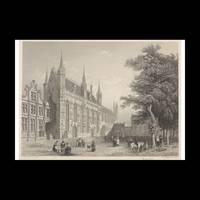
749023Contentum Ltd. Loose sheet. New. High-quality art print based on an original work from the Ycba. Created in the 19th century ca. 1841. Professionally printed on premium fine-art paper Museum Etching museum quality in size A3. The artwork is printed with a white border museum-style presentation. Contentum Ltd. unknown
749026Contentum Ltd. Loose sheet. New. High-quality art print based on an original work from the Ycba. Created in the 19th century ca. 1841. Professionally printed on premium fine-art paper Museum Etching museum quality in size A2. The artwork is printed with a white border museum-style presentation. Contentum Ltd. unknown
749025Contentum Ltd. Loose sheet. New. High-quality art print based on an original work from the Ycba. Created in the 19th century ca. 1841. Professionally printed on premium fine-art paper Photo Rag Bright White premium quality in size A2. The artwork is printed with a white border museum-style presentation. Contentum Ltd. unknown
749024Contentum Ltd. Loose sheet. New. High-quality art print based on an original work from the Ycba. Created in the 19th century ca. 1841. Professionally printed on premium fine-art paper Photo Matt Fibre in size A2. The artwork is printed with a white border museum-style presentation. Contentum Ltd. unknown
2009Q-0345505980Ballantine Books 2009-07-28. Mass Market Paperback. New. In shrink wrap. Looks like an interesting title! Ballantine Books paperback
2007Q-1400065771Random House 2007-07-03. Hardcover. New. In shrink wrap. Looks like an interesting title! Random House hardcover
192335483Harper & Brothers. Near Fine in Near Fine dust jacket. 1923. First Edition. Hardcover. Interesting 19 x 19" laid in broadside NF picturing Pyle and his students. Book is 12.5 x 9.25" 7 pounds. Lovely DJ in Brodart acrylic cover. Tiny nick to upper spine corner. Book is clean and firm. Also some owner hand written sentiment on two pages of foolscap. . Harper & Brothers hardcover
1986Q-0712610278Ebury Press 1986-01-01. Hardcover. New. New. In shrink wrap. Looks like an interesting title! Ebury Press hardcover
9889934728.Ghardcover. Good. Access codes and supplements are not guaranteed with used items. May be an ex-library book. hardcover
SONG9889934728Example Product Brand 0000-00-00. hardcover. Used: Good. 0.00x0.00x0.00. Buy with confidence. Excellent Customer Service & Return policy. Example Product Brand hardcover
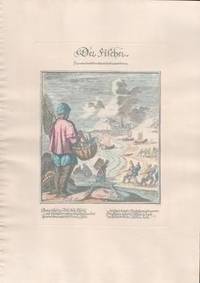
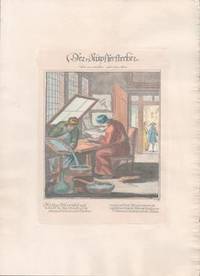
71-1259Europe: German Publisher early 19th century. Hand-colored etching on laid paper. 38.5 x 27 cm sheet. Very Good sheet lightly toned.Provenance: From the Collection of the late Frederick G. Ruffner Jr. founder of Gale Research Detroit. Europe: German Publisher, early 19th century. unknown
71-1260Europe: German Publisher early 19th century. Hand-colored etching on laid paper. 39.5 x 28.5 cm sheet. Very Good sheet lightly toned.Provenance: From the Collection of the late Frederick G. Ruffner Jr. founder of Gale Research Detroit. Europe: German Publisher, early 19th century. unknown