TRADES AND PROFESSIONS: 17th CenturyBiblio.com

8 059 résultats
1690BB005<p><b>L'ARMESSIN II</b> Nicolas de 1632–1694</p><p><b><i>Habits des Metiers et Professions</i></b>. </p><p>Paris: chez N. de L'Armessin ou chez la Veuve de N. de l'Armessin Rue St. Jacques à la Pomme d'Or N.d. <i>circa</i> 1690–1695.</p><p>4to. 62 ff. last two plates with restoration; bound in green morocco gilt second-half of the 19th century signed Chambolle-Duru.</p><p>A remarkable collection of 62 engraved copperplates representing the earliest impressions of fantastic figures composed of the tools or attributes of their trades created and produced about 1690 onwards thru 1694 enhanced at the time with brilliant hand-coloring silver and gold paint. These prints are a marvel of inventiveness showing the inspiration and influence of the 16th century painter Giuseppe Arcimboldo 1527-1593 who chiefly imagined only heads now extended and re-invented for the Court of Louis XIV. </p><p>Amongst the most famous prints of the late 17th century their printing history is rather complicated. Nicolas I de Larmessin or L'Armessin 1632-1694 designed engraved and published approximately 62 plates in his lifetime. His widow Marie Bertrand added 14 plates from his unfinished designs and his younger brother Nicolas II c.1645-1725 engraved a further 21 plates from 1695 to 1720s. All of the prints were individually published with re-engravings in reverse by the younger brother which often simplified these earlier designs by omitting background details. Altogether it has been suggested that a total of 97 images were eventually issued. </p><p>From the Beauvillain library ex-libris by Jouas. Colas 1779 Lipperheide 1971.</p> chez N. de L'Armessin [or for 7 sheets] ou chez la Veuve de N. de l'Armessin, rue St Jacques, à la Pomme d'Or, circa circa hardcover
20786Pen and grey and brown ink grey wash on laid paper on an archival mount. Fine condition. Sheet size: 18 x 23 7/8 inches. Provenance: Dr. C.A. Pompe; G. Meijer; L. Houthakker with his collector's mark at lower right corner not in Lugt. A beautiful and very rare drawing of one of the most beautiful "Wunderkammern" of the day which later became the property of the Empress of Russia.<br/> <br/> This drawing shows the interior of the cabinet of curiosities of Catharina van Grovestins-von Schutz in the family house in The Hague. There is another earlier drawing of the same cabinet by the artist Daniel Marot the Younger 1695-1769 dated 1756 and currently in the collection of the Gemeentearchief in The Hague. This earlier drawing shows the interior just after it was completed but before the expanding collection necessitated certain improvements that are shown in the present drawing: additions include a shaped central cabinet bearing what may be a portrait bust of Catharina van Grovestins-von Schutz. Other improvements include the display shelves for taxidermy specimens that have been added between the built-in display cases and the architrave above; and the central bracketed display of coral and shells that was added above the fireplace. Catharina lady-in-waiting to Princess Anna of Orange employed the talents of the well-known naturalist and collector Arnout Vosmaer to help assemble the Cabinet. Vosmaer later commented in his memoirs that the cabinet was 'one of the most beautiful collections . covering every domain of nature" and noted that it was eventually sold to the Empress of Russia. The present drawing may perhaps have been intended as part of the successful attempt to sell the collection to the Empress The earliest cabinets were gathered together in the 16th century. They initially represented a genuine attempt to begin to understand the natural world but also came to be seen as an expression of the power and influence of the owner: the larger the 'wunderkammer' the more important the owner. They were the precursor to today's museums the most famous in England being the collection of Elias Ashmole 1617-1692. His private collection founded by the naturalist John Tradescant circa 1570-1638 was presented to Oxford University and opened to the public on 24 May 1683 as the Ashmolean Museum. One of the best known American examples was the Peale Museum founded in Philadelphia in 1784 for Charles Wilson Peale a painter and a scientist. His son Rembrandt Peale more famous today as a portrait painter subsequently established a 'branch' of the Peale Museum in Baltimore Maryland and this is now the oldest museum building in the Western hemisphere. The museum differed from the earlier more private collections in that it was always the Peales' intention to open the museum to the public. In its heyday the show included 90 specimens of mammals more than 700 bird specimens mounted in 'naturalistic' mini-dioramas a whole room of marine specimens about 4000 insects numerous minerals as well as their famous mammoth skeleton the first such display as well as scores of Peale's portraits.<br/> <br/> Cf. H. Engel Alphabetical list of Dutch Zoological Cabinets and Menageries Amsterdam: 1986; P. Fuhring Design into Art: drawings for architecture and ornament the Lodewijk Houthakker Collection London 1989 vol. II p. 761 #1102. unknown
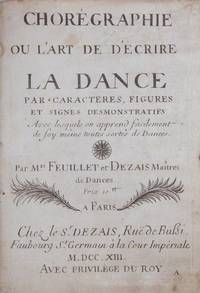
170940499Paris 1709. FEUILLET and DEZAIS<br /> Chorégraphie ou l'art de décrire la dance par caractères figures et signes démonstrifs avec lesquels on apprend facilement de soy-même toutes sortes de dances. ouvrage très utile aux maîtres à dancer et à toutes les personnes qui s'appliquent à la dance. Par Mrs. Feuillet et Dezais Maîtres de Dances. Prix: . <br /> <br /> Paris: Chez le Sr. Dezais Ruë de Bussi Faubourg St. Germain à la Cour Impériale . Avec Privilége du Roy 1713.<br /> <br /> 1f. recto title verso blank i dedication "A Monsieur Pécour Pensionnaire des Menus Plaisirs du Roy et Compositeur des Balets de l'Académie Royale de Musique de Paris" ii Préface i "Extrait du Privilege du Roi" 95 i blank pp. Engraved throughout. <br /> <br /> The revised fourth edition of this seminal work first published in 1700. RISM Écrits Imprimés p. 314 2 copies only of all editions in the U.S.: one of the first 1700 edition at the NYPL and one of the present edition at the Library of Congress. Beaumont p. 72. De Moroda 938. Schwartz and Schlundt 21. This edition not in Cortot Hirsch or Malkin.<br /> <br /> "A rather less known choreographer is Jacques Dezais. He lived in the first half of 18th century and regarded himself as a follower of R. A. Feuillet. In 1726 he published a collection of dances named Premier Livre de Contre-Dances à Quatre à six & à Huit. Unfortunately the publication was lost when the famous Anna-Amalie Library in Weimar burned in 2004." earlydance/news/8138-les-cotillons-de-jacques-dezais<br /> <br /> Bound with:<br /> FEUILLET<br /> Recueil de Dances Composées par Mr. Feuillet Maître de Dance. <br /> <br /> Paris: Chez l'Auteur rue de Bussi Faubourg St. Germain à la Cour Imperiale Avec Privilége du Roy 1709. <br /> <br /> 1f. recto title verso blank 84 pp. Engraved throughout.<br /> <br /> Contains 18 dances in Feuillet notation with melody for each at head as follows:<br /> <br /> - Le Rigaudon de la Paix pp. 1-2<br /> - 2e Rigaudons pp. 3-7<br /> - Gigue à deux Gigue de Roland pp. 8-11<br /> - Entrée a deux Rigaudon pp. 12-16<br /> - Autre Entrée a deux Rigaudon pp. 17-20<br /> - Sarabande pour femme Sarabande pp. 21-24<br /> - Sarabande pour homme Sarabande pp. 25-28<br /> - Sarabande Espagnole pour homme Sarabande Espagnole pp. 29-32<br /> - Folie d'Espagne pour femme Folie d'espagne pp. 33-38<br /> - Canary à deux Canary pp. 39-40<br /> - Gigue pour homme Gigue pp. 41-44<br /> - Entrée pour homme pp. 45-48<br /> - Autre entrée pour homme entree pp. 49-52<br /> - Entrée grave pour homme pp. 53-59<br /> - Entrée d'Apolon Entrée Apolon pp. 60-66<br /> - Balet de neuf Danseurs entre graue pp. 67-72<br /> - Canary pp. 73-74<br /> - second canary p. 75-84 with pp. 77-84 folding<br /> <br /> First published in 1700. Little and Marsh 1709-Feu p. 103 for a list of editions and issues see 1700-Feu. De Moroda 938. This edition not in Malkin Niles & Leslie Schwartz & Schlundt or RISM<br /> <br /> "All but one of the dances in Feuillet's collection are solos or duets ranging from easy to difficult; the single exception is a piece for eight dancers and a soloist - the only known example in Feuillet notation of a French ballet entry for more than two persons." Little and Marsh p. 91.<br /> <br /> Bound with: <br /> FEUILLET<br /> Recueil de Dances Composées par M. Pecour Pensionnaire des menus Plaisirs du Roy et Compositeur des Balets de l'Academie Royale de Musique de Paris et mise sur le Papier par M. Feuillet. Maître de Dance. <br /> <br /> Paris: Chez l'Auteur rue de Bussi Faubourg St. Germain à la Cour Impériale Avec Privilege du Roy 1709. 1f. recto title verso blank 72 pp. Engraved throughout.<br /> <br /> Contains 15 dances in Feuillet notation with melody for each at head as follows:<br /> <br /> - la Bourée d'Achille Bourée pp. 1-3<br /> - menuet pp. 4-11<br /> - La Mariée la Mariée pp. 12-21<br /> - le Passepied passepied pp. 22-23<br /> - 2e. Passepied pp. 24-31<br /> - la Contredance Gigue pp. 32-36<br /> - le Rigaudon des Vaisseaux Rigaudon pp. 37-39<br /> - 2e. Rigaudon pp. 40-42<br /> - la Bourgogne Courant pp. 43-44<br /> - Bourée pp. 45-46<br /> - Sarabande pp. 47-48<br /> - PassePied pp. 49-53<br /> - la Savoye Bourée pp. 54-61<br /> - la Forlana la Forlana pp. 62-67<br /> - la Conty Venitienne pp. 68-72 <br /> <br /> First published in 1700. Little and Marsh 1700-Péc p. 93. De Moroda 1341. This edition not in Malkin Niles & Leslie Schwartz & Schlundt or RISM.<br /> <br /> "Pecour's Recueil was bound and sold with Feuillet's Chorégraphie and Feuillet's Recueil . for a survey of editions and issues see comments under 1700-Feu. This collection contains a variety of pieces for ball dancing in vogue in 1700; many of them are quite difficult. According to the preface to Feuillet's Chorégraphie Pécour himself went over the proofs to eliminate errors in notation." Little and Marsh p. 93.<br /> <br /> Louis Guillaume Pécour 1651-1729 was an important French dancing-master and choreographer. He worked closely with celebrated royal choreographer Pierre Beauchamp 1631-1705 Louis XIV's personal dancing master.<br /> <br /> Octavo. Full dark brown mottled calf with raised bands on spine in decorative compartments gilt dark brown title label gilt. <br /> <br /> Binding worn rubbed and bumped with some abrasions; head of spine joints and edges chipped with minor loss; endpapers slightly worn soiled and foxed. Occasional minor signs of wear soiling and foxing; several titles very slightly cropped. <br /> <br /> Very good copies overall of all three works. Feuillet was a highly important French choreographer dancing-master and author. "He worked at the court of Louis XIV. His fame rests on his Chorégraphie a book describing a system of dance notation that was used in Europe throughout the 18th century. He probably did not invent the system himself although he said he had but derived it from the original work of Pierre Beauchamps Louis XIV's personal dancing-master. Unlike previous methods which describe movement verbally and use letters to refer to the sequence of steps Feuillet's system is a track notation. It represents symbolically not only the steps of the dancer with his turns leaps and slides but also the floor pattern in which he is to travel. The dance music is printed at the top of the page and the steps are marked off in a manner corresponding to the structure of the music. .<br /> <br /> The publication of the Beauchamp-Feuillet notation meant that specific dances could easily be distributed throughout Europe. It also added to France's pre-eminence in the world of dance. Today the system makes it possible for scholars to study some of the dances in use in the late 17th and early 18th centuries an important period for the development of the classical French ballet style and technique." Meredith Ellis Little in Grove Music Online<br /> <br /> "With the invention of his dance notation system in the eighteenth century Raoul-Auger Feuillet revolutionized the dance world. Published in 1700 his Chorégraphie . was conceived as a self-teaching device not a way of preserving dance. Yet owing to its immense popularity throughout Europe even today a large body of theatrical and ballroom dances from that period in both printed and manuscript forms can still be found in most archives. . Chorégraphie was reprinted three times in thirteen years translated into English by John Weaver in 1706 and appeared in various "improved" versions in France Germany Spain and Portugal. Voltaire 1751 ranked the invention among the "achievements of his day" and Denis Diderot 1763 devoted ten pages to the subject in his Encyclopédie." International Encyclopedia of Dance Vol. 2 p. 588.<br /> <br /> An extraordinary presentation of three of the most important early choreographic works all major factors in confirming France's preeminence in the world of 18th century ballet. unknown
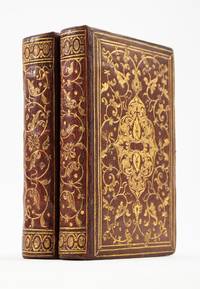
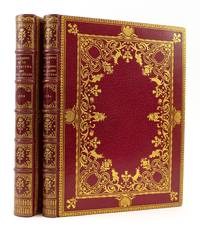
1568ST20921Lutetia Paris: Robert Estienne II 1568. 128 x 87 mm. 5 x 3 1/2". Two volumes. <br/> LOVELY CONTEMPORARY RED MOROCCO GILT covers with large central azured arabesque surrounded by curling vines with azured leaves smooth spines with similar vines head and foot of spines with egg-and-dart roll similar to one used by Claude de Picques second volume with faint blind lettering to spine all edges gilt perhaps with some minor early restorations but if so then done with such care as to preclude certainty. Housed in modern suede-lined calf-backed clamshell boxes with magnetic closures. Printer's device on titles and final page decorative initials and headpieces. Front pastedown of volume I with ex-libris of Georgios Arvanitidis. Renouard 171:1; Schreiber 239; Darlow & Moule 4633; Adams B-1670. See: Verron "Les Reliures de l'Entrée de Charles IX à Paris 1572 . . . réalisées par Claude Picques" in Bulletin du Bibliophile 2014 no. 2 pp. 282-98. Just a touch of rubbing to extremities front hinge of second volume open but everything quite tight text with occasional mild browning small spots trivial smudges or tiny worm trails but A BEAUTIFUL COPY clean and fresh internally and the bindings tight and lustrous with very bright gilt<br/> <br/> With exceptional visual appeal these two precious volumes shining with gilt and containing the Greek New Testament from the renowned Estienne family of printers are of special interest because of their typography their bindings and their provenance. With the expressed goal of printing Greek texts from manuscripts in the royal library at Fontainebleau François I established the post of royal printer in Greek in 1539 appointed Robert Estienne I 1503-59 to the position in 1542 and commissioned the renowned Claude Garamond to cut a new Greek font for this project. To design the type the King called on his own celebrated calligrapher Angelo Vergecio who produced in collaboration with Garamond three different sizes of what came to be called the Royal Types or "grecs du roi." According to Schreiber "These cursive Greek types are universally acknowledged as the finest ever cut." In 1548 and 1549 Robert Estienne issued the press' first Greek Testament known as the "O mirificam" edition for the opening of the dedication to the king in 16mo or "pocket" format using the smaller font of Garamond's "grecs du roi." In 1550 Robert a Protestant moved to Geneva while his son Robert II 1533-70 a Catholic remained in Paris and took over as the royal printer in Greek. Our 1568 Testament--the only one issued by the son--is a reprinting of the "O mirificam" edition but expanded with the critical apparatus from the 1550 folio edition issued by the father. Schreiber notes that our edition is interesting from a typographical point of view as it contains an even more minute version of the already small grecs du roi type for the Table of Chapters. The exceptionally pretty volumes are done in the style of royal binder Claude Picques fl. 1539-78 and employ a decorative roll very similar to one that appears on the spine of the vellum bindings Picques did for "L'Entrée de Charles IX à Paris" 1572. Our volumes once graced the library of Constantinople collector Georgios Arvanitidis 1876-1953 whose library included a number of Estienne Greek editions. They were later in the distinguished library of Frederick B. Adams 1910-2001 director of the Pierpont Morgan Library from 1948-69 and then president of the prestigious Association Internationale de Bibliophilie from 1974-83. And they were featured in the celebrated 1929 Gumuchian catalogue of 398 historically exceptional bindings as item #71. Robert Estienne II unknown
181040869Philadelphia: C. and A. Conrad and Co. of Philadelphia; Somervell and Conrad of Petersborough; Bonsal Conrad and Co. of Norfolk; and Fielding Lucas Jr. of Baltimore. Printed by John Binns 1810. Text: 8vo 8 1/2 x 4 3/4 inches. Atlas: 4to 10 1/2 x 11 inches. Text: 2 1-277 5 1-65 1 1-53 1 1-87 1. 492 pp. Engraved frontispiece portrait of Pike Letterpress Title Deposit Statement To the Public To the President Pike's Expeditions Part I-III Appendices to Parts I-III. Atlas: 6 engraved maps 5 of which are folding. 3 folding tables. Text volume in contemporary tree calf expertly re-backed to style spine in six gilt-ruled compartments with gilt calf lettering-piece in second gilt date in sixth and blind center tool in rest. Atlas volume in contemporary quarter calf with tips over original blue paper boards with printed paper label spine in seven gilt-ruled compartments with gilt red morocco lettering-piece in second gilt date in sixth and blind center tool<br/> <br/> One of the most important of all American travel narratives; Pike's account contains the first maps to incorporate geographical knowledge of the Southwest based on first-hand exploration. It is a milestone in the mapping of the American West. Wheat Here in the rarest and most desirable form with the plates and maps in a quarto atlas.<br/> <br/> Pike's narrative along with that of Long and Lewis and Clark is one of the most significant early books on the exploration of the American West. As such it is a cornerstone of Western Americana. In particular Streeter felt its "description of Texas is excellent." Hill gives the following summary of its contents: "In 1805 Pike was given the difficult assignment of conducting a reconnaissance of the upper Mississippi region. He was ordered to explore the headwaters of that river to purchase sites from the Indians for further military posts and to bring a few influential chiefs back to St. Louis for talks. The trip was only moderately successful as a mission to the tribes but Pike was able to convey important geographical information to President Jefferson and other Washington officials. On Pike's second expedition 1806-1807 he was assigned to explore the headwaters of the Arkansas River then proceed south and descend the Red River from its source. Pike and his men were taken into custody by a Spanish patrol and Pike was able to observe many areas in New Mexico Chihuahua and Texas. His book created interest in the Southwest and stimulated the expansionist movement in Texas." The atlas volume consists of the following maps plus three tables: 1. "Falls of St. Anthony." 2. "Map of the Mississippi River from its Source to the Mouth of the Missouri laid down from the notes of Lieutn Z. M. Pike by Anthony Nau. Reduced and Corrected by Astronomical observations of Mr. Thompson at its source; and of Captn. M. Lewis where it receives the waters of the Missouri." 3. "The First Part of Captn. Pike's Chart of the Internal Parts of Louisiana. 40 miles to the inch by Anthony Nau." 4. "Map of the Internal Provinces of New Spain. The outlines are from the Sketches of but corrected and improved by Captain Zebulon M. Pike who was conducted through that Country in the year 1807 by Order of the Commandant General of those Provinces." 5. "A Chart of the Internal Part of Louisiana. Including all hitherto unexplored Countries lying between the River La Platte of the Missouri on the N: and the Red River on the S: the Mississippi East and the Mountains of Mexico West; with a part of New Mexico and the Province of Texas. By Z. M. Pike Captn U. S." 6. "A Sketch of the Vice Royalty Exhibiting the several Provinces and its Approximation to the Internal Provinces of New Spain." Tables: 1. "Recapitulation of Furs and Peltries Fond du Lac department Marks and Numbers as per margin. North West Company 1804-5." 2. "Abstract of the number &c. of the Nations of Indians residing on the Mississippi and its confluent streams from St. Louis Louisiana to its source including Red lake and Lower Red river." 3. "A Statistical Abstract of the nations of Indians who inhabit that part of Louisiana visited by captain Z. M. Pike in his tour of discovery in that country in the years 1806 and 1807."<br/> <br/> Bradford 4415. Braislin 1474. Field 1217. Graff 3290. Hill 1357 2004. Howes P373 "Best Issue." Jones 743. Rittenhouse 467. Sabin 62836. Schwartz and Ehrenberg p.225. Streeter sale 3125. Streeter Texas 1047C. Wagner-Camp 9:1. Wheat Transmississippi 297 298 299. C. and A. Conrad, and Co. of Philadelphia; Somervell and Conrad of Petersborough; Bonsal, Conrad, and Co. of Norfolk; and Fieldi unknown
3892Watercolour and gouache on vellum signed 'Gablle Fontaine'. An exceptionally large scale work by this talented but apparently unrecorded artist probably executed in the 1830s or early 1840s. The composition includes roses bi-colour pinks/carnations morning glory dahlias auriculas flowering quince or prunus hollyhock plums and peaches. In addition a clouded yellow and two red admiral butterflies are shown. unknown
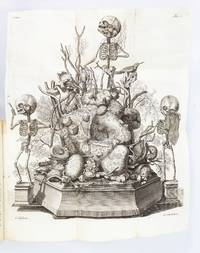
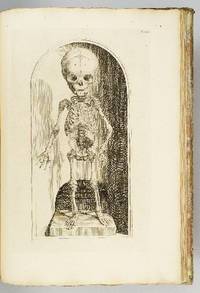
1417ST20185Amsterdam: Joannes Wolters then Jansson-Waesberg 1701-14; 1715-16. FIRST EDITIONS. 224 x 168 mm. 8 3/4 x 6 1/2". 4 p.l. 62 pp. 1 leaf errata; 2 p.l. 98 pp.; 2 p.l. 70 pp.; 1 p.l. 55 pp.; 1 p.l. 54 pp. 2 p.l. 30 pp. 1 leaf 92 pp. 2 leaves 44 pp. 4 leaves 68 pp. 8 leaves 72 pp. 1 leaf errata 12 leaves 78 pp. 10 parts in one volume. <br/> Contemporary stiff vellum smooth spine with ink titling yapp edges. WITH 42 ENGRAVED PLATES as called for by Norman six of these folding. Text in Latin and Dutch. Blake 395; Garrison-Morton 389; Heirs of Hippocrates 627; Jeremy Norman's HistoryofMedicine.com 623; Norman 1875. Vellum lightly soiled front pastedown slightly defective but the original unsophisticated binding in perfect order. Final plate with small hole due to adhesion to facing page minor damage done to image a few other trivial imperfections a couple of negligible marginal tears a faint ink stain across the top inch of text a tiny burn hole but AN UNUSUALLY BRIGHT CLEAN COPY INTERNALLY with all the important plates in exceptionally fine condition.<br/> <br/> Scarce when seen bound from its original 10 parts as here this work describes the memorable "Anatomical Treasure" of Dutch physician and anatomist Frederick Ruysch being illustrated by surrealistic charmingly macabre engravings depicting "fantastic dream-like concoctions constructed of human anatomical parts." History of Medicine Described by Norman as "probably the most original artist in the history of anatomical preparations" Ruysch 1638-1731 "enjoyed making up elaborate three-dimensional emblems of mortality from his specimens" which included fetal skeletons and preserved organs. Heirs to Hippocrates says that "the engraved illustrations deserve special mention for their whimsical almost surrealistic quality: quaintly posed skeletons surrounded by stuffed monsters strange reptiles dried plants and sea creatures." According to Norman "Ruysch's methods allowed him to prepare organs such as the liver and kidneys and keep entire corpses for years. He used a mixture of talc white wax and cinnabar for injecting vessels and an embalming fluid of alcohol made from wine or corn with black pepper added. Using his injection methods Ruysch was the first to demonstrate the occurrence of blood vessels in almost all tissues of the human body thereby destroying the Galenic belief that certain areas of the body had no vascular supply. He was also the first to show that blood vessels display diverse organ-specific patterns." Ruysch's dioramas were displayed in his home museum in Amsterdam which was open to the public; visitors included Tsar Peter the Great of Russia who purchased the collection in 1717 for the foundation of Russia's first public museum the St. Petersburg Kunstkammer. Unfortunately the Russian climate was not kind to the fragile constructions and all deteriorated over time; the dramatic plates here are the best record we have of this unique collection. Joannes Wolters, then Jansson-Waesberg unknown
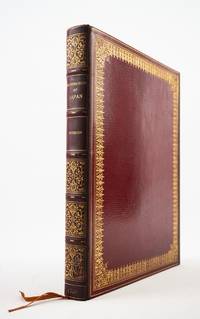
1822ST20877London: Printed for R. Ackermann 1822. First English Edition. 300 x 235 mm. 11 3/4 x 9 1/2". xvi 325 1 pp.Translated by Frederic Shoberl. <br/> Imposing contemporary crimson straight-grain morocco gilt covers with filigree frame with densely massed scrolling fleurons raised bands spine gilt in compartments with radiating viny scrolls surrounded by leaves and annular dots marbled endleaves all edges gilt. WITH 13 HAND-COLORED PLATES in etching and aquatint many after Japanese artworks one folding. Bookplate removed from front flyleaf. Bookseller's ticket of J. L. Thompson & Co Kobe Japan on front pastedown. Abbey Travel 557; Tooley 489; Martin Hardie "English Coloured Books" pp. 113-14. See also E. F. Strange "Japanese Illustration" pp. xxiii-xxiv. Spine and fore-edge of upper board slightly darkened a few minute flakes to lowest spine compartment but the binding extremely well preserved with very lustrous boards. Final 10 leaves slightly creased one repaired marginal tear but still A FINE COPY INTERNALLY exceptionally bright smooth and entirely fresh and clean.<br/> <br/> This generously proportioned production illustrated with 13 vibrant colored plates is a rare European account of Japan during the period in which the country was "closed" to the west offered here in its first English edition. Originally published in French in 1820 "Illustrations of Japan" is comprised of a history and description of the Tokugawa shogunate which Titsingh had translated from the Japanese plus Titsingh's own observations on the language customs and ceremonies of the Japanese people. The present English edition is accompanied by plates in etching and aquatint enhanced with hand coloring. Our author Dutch diplomat Isaac Titsingh 1745-1812 spent 14 years in Nagasaki for the Dutch East India company and between 1779-84 he served as trade director-cum-ambassador travelling to Edo now Tokyo for audiences with the shogun and other high officials in the shogunate. Unlike most of his Western contemporaries Titsingh was open-minded and curious about the people he encountered engaging with their art and culture; in fact art historian and Victoria & Albert Museum keeper Edward F. Strange tells us that Titsingh is the earliest known European collector of Japanese prints of which a number appear in the present volume. Our publisher Rudolph Ackermann 1764-1834 made his living issuing sumptuously illustrated books such as the present volume and was an early adopter of color aquatint and lithography technologies; Hardie writes that he was "the great presiding genius before whose magic wand so many pictorial books sprang into existence." In very attractive period morocco this is a particularly appealing copy of the work free of the foxing and offsetting that often plague copies of this and other large-format color illustrated books. Printed for R. Ackermann unknown
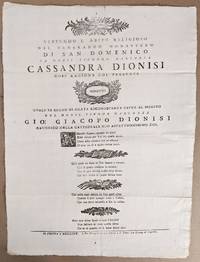
1235<p>Rare Series of Twenty-Four Festival Broadsides Celebrating the Accomplishments and Appointments of Members of the Dionisi Family of Verona During the Middle Years of the Eighteenth Century. Including celebratory broadsides commemorating civil appointments ordinations taking of religious habits by the women of the family retirements and funerals for the Dionisi of Verona.</p> <br /> <p>The format of the twenty-four broadsides is folio four are printed on silk and one in gold ink. There is one duplicate in the collection. Each is illustrated with a large engraved cartouche at the top of the sheet and printer's ornaments in the body of the text. The quality of the paper is uniformly very good and the condition of the collection is excellent. </p> <br /> <p>Gabriello Dionisi or Dionigi as it sometimes appears 1718-1808 was the patriarch of the family and Captain of the Guard for the Lago di Garda. This was an important civil position responsible for protecting the cities along Lake Garda from potential conflicts coming from Austria in the north and the west from Milan and is celebrated in a number of broadsides in the collection. His brother Giovan Francesco a noted lawyer and judge in Verona in is feted in two examples in the collection. Gabrielo's daughters and nieces Cassandra Maria Teresa Origa and Maria Eleonaro are celebrated for entering the Convent of San Domenico and the Monastery of Maria the Virgin One of the broadsides is dedicated to Monsignor Dionisio Dionisi and in another the Marchese Ottaviano Dionisi is recognized for his tenure as Captain of the Guard for Lake Garda. Many of the poems are composed by Giovan Francesco Dionisi and others by Antiono Maroadi Stefano Trimeloni Gio. Battista Turazza Gio. Battista Conte Anton Maria Pedrotti and Alessandro Bonifazio. </p> <br /> <p>This is a unique collection which documents the lives of the men and women of the Dionisi Family during the second half of the eighteenth century. It provides an insight into manner in which noble families took responsibilities for their community and church and celebrated individuals for their contributions to the society in which they lived. Women are celebrated as mothers novitiates and leaders of convents and the men as soldiers lawyers poets and priests. As a collection this group of broadsides offers scholars significant access to a ruling family of Verona one with a distinguished history.</p> . unknown
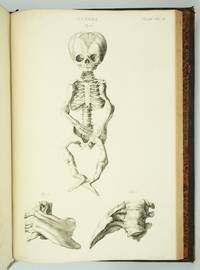
1793ST20586Lugduni Batavorum Leyden: S. & J. Luchtmans 1793 1827 1835. FIRST EDITION A COMPLETE SET. 525 x 350 mm. 20 3/4 x 14". Four volumes. <br/> First two volumes in contemporary cat's paw calf volumes III and IV in contemporary flamed calf raised bands spines gilt in compartments with central fleuron one red and one black morocco label. WITH 206 ENGRAVED ANATOMICAL PLATES all with guards. Front pastedowns with bookplate of Harvard Medical School Library; library shelf markings in white at bottom of spines; bookseller's ticket of Schönhof & Mueller Foreign Books Boston. Bibliotheca Walleriana 8549; Choulant pp. 312-13; Larousse XIX vol. 14 p. 171. Lucas L. Boer Peter L. J. Boek Andries J. van Dam and Roelof-Jan Oostra "History and highlights of the teratological collection in the Museum Anatomicum of Leiden University The Netherlands " American Journal of Medical Genetics Part A Volume 176 no. 3 2018 pp. 618-37.<br /> Shallow chips across the tail of first two volumes covers variably abraded one noticeably so corners somewhat worn partially with boards showing through vague additional signs of wear but the bindings solid and retaining much of their original appeal; plates in first two volumes with faint overall browning either because of paper stock or because of contact with guards a handful of trivial tears but all in all an extremely pleasing set the plates in volume IV very clean and bright and the plates elsewhere and the wide-margined text clean and fresh throughout.<br/> <br/> This is an extremely scarce complete set of a very substantially proportioned anatomical work with more than 200 striking giant folio engravings that emphasize birth defects and that range from clinically cheerless to heartbreaking. A physician and professor of anatomy at Leyden Eduard Sandifort 1742-1814 was commissioned by the University and the city council to publish this account of the school's anatomical collections with a focus on pathological anatomy including especially congenital abnormalities. After the publication of the first two volumes in 1793 the third and fourth were issued following Sandifort's death by his son Gerard 1779-1848 who followed in his father's professorial footsteps in Leyden. The first second and fourth volume are illustrated with copperplate engravings which Larousse tell us make this book "one of the most beautiful works of this genre" though "beautiful" needs to be understood here to mean "convincing" or "compelling" rather than aesthetically appealing. The first volume concludes with nine full-size depictions of skulls; the illustrations in the second and fourth are of a more affecting nature consisting of malformed bodies and body parts damaged or destroyed by disease and birth defects. The engravings of the conjoined twins in these volumes are especially powerful--consisting of poignant even haunting images showing undeserving victims of pronounced congenital defects though some are softened with a touch of the fanciful in their presentation. The thoroughness and accuracy of the work is so great that it remains of scholarly value even today. A recent study by Dutch curators and anatomical scholars Lucas L. Boer Peter L. J. Boek Andries J. van Dam and Roelof-Jan Oostra used "Museum Anatomicum" as a guide to identify and re-diagnose the University's historic teratological collections noting that "many historically made diagnoses could not be improved upon after re-diagnosing the specimens with contemporary dysmorphological knowledge actually confirming that these old collectors were perhaps the first dysmorphologists and can be seen as true pioneers in the field of teratology." Although single volumes and incomplete sets of this work come on the market with some regularity we have been able to trace only five complete sets at auction since 1872. And ours especially fresh and wide-margined in pleasing contemporary calf is a particularly attractive specimen. S. & J. Luchtmans unknown
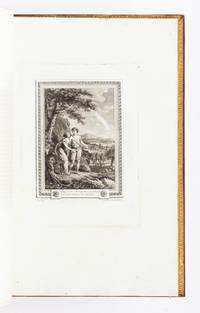
1786ST19671Paris: Chez l'Auteur Veuve Hérissant et Barrois l'aîne 1786-93. First Edition with these Illustrations. 485 x 340 mm. 19 x 13 1/2". Three volumes. <br/> ELEGANT RED STRAIGHT-GRAIN MOROCCO BY BOZERIAN signed in gilt on front free endpaper covers framed by gilt fillets double raised bands separated by a strip of black morocco tooled with gilt chain spine gilt in compartments with a rose or a musical instrument at center turn-ins with gilt arches roll Culot 18 green endpapers all edges gilt. 147 FINE ILLUSTRATIONS AFTER DESIGNS BY JEAN-JACQUES-FRANÇOIS LE BARBIER: three engraved title pages four vignettes 66 tailpieces and 74 leaves of plates including frontispiece portrait of Gessner engraved by Alix Baquoy Dambrun de Longueil et al. ALL IN FIRST STATE those in volumes I and III with original tissue guards. A Large Paper Copy. Cohen-de Ricci 433; Ray 39. For the binding: Culot "Jean Claude Bozerian" roulette #18. ◆Just a hint of rubbing to upper joint of first volume small indent to front cover of volume II occasional mostly marginal mild foxing more frequent in volume II but QUITE A FINE SET clean and fresh internally with beautiful impressions of the engravings and enormous margins in lustrous bindings with few signs of wear.<br/> <br/> This is a sumptuous set approaching 20 inches tall that epitomizes the best in 18th century French book arts: a Large Paper Copy of a book that in Ray's opinion "represents one of the happiest of all collaborations between artist and writer"--all of this in a graceful binding by the preeminent Paris atelier of the day. Gessner 1730-88 was a painter and poet from Zurich who hoped to renew the ancient genre of the eclogue. In his imagined neoclassical world all the shepherdesses are beautiful virtuous and sensitive and the shepherds are always honest and respectful. This struck a chord with illustrator Jean-Jacques-François Le Barbier 1738-1826 who wrote in the dedication "the charm of Gessner's poems filled my imagination and transported it to the happy centuries of the world's innocence." It also inspired him to collaborate with Gessner on this present work. Le Barbier 1738-1826 was one of the first great French neoclassical illustrators and this work is both an important early success in that style and in Ray's words the "most sustained and accomplished series of illustrations" by the artist. Most of Le Barbier's designs for this work are set in the classical world--the exception being "Le Mort d'Abel" based on the story of Cain and Abel in the Bible. There are nymphs fauns and other fantastical creatures mingling with humans in bucolic settings. While Le Barbier illustrates many love scenes they are romantic and wistful rather than passionate; he was a master of nudes but those depicted here seem innocent rather than erotic. As Ray says "Le Barbier's emphasis is on simplicity and naturalness. We are in a different world from the witty gallantry and sophisticated sentiment of the rococo pastoral illustrations." The engravings are characterized by the clarifying use of softly radiant light and by a restrained animation and the book as a whole is "a work of harmonious distinction which admirably realizes the ideals of its author and illustrator." Ray The elegant binding by Bozerian is notable for its refinement and it continues the motif of noble simplicity set by author and illustrator. Jean-Claude Bozerian 1762-1840 was the elder of the Bozerian brothers François is referred to as "le jeune" and was active in Paris from 1795 to about 1810. He began his career in Lyon as an apprentice bookseller printer and bookbinder eventually deciding to focus on the latter craft. Marriage to the widow of binder Pierre Boulier allowed him to establish a binding workshop in Paris where he was joined by his brother. His bindings were soon much in demand by French bibliophiles who appreciated their superior materials tasteful design and flawless execution. A rich man by age 50 he decided to retire and enjoy his leisure turning his business over to his nephew Lefebvre. Gessner's "Oeuvres" typically appears in quarto; Large Paper Copies like this one are very rare especially with all of the plates in first state which according to Cohen-de Ricci is recognizable by the lack of numbering to the plates and their appearance on bluish paper. It would seem next to impossible to imagine a book with margins as wide as are seen here. Chez l'Auteur, V[eu]ve Hérissant et Barrois, l'aîne unknown
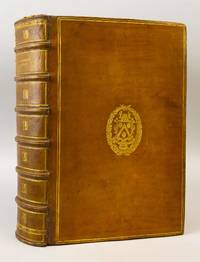
1572ST14214bBasileae: Ex officina Heruagiana per Eusebium Episcopium 1572. 385 x 250 mm. 15 1/4 x 10". 18 p.l. 744 pp. 16 leaves; 368 pp.; 218 pp. 13 leaves.Edited by Hieronymus Wolf and Vincentius Opsopäus. <br/> IMPOSING CONTEMPORARY CALF COVERS WITH GILT FRENCH FILLET BORDER CENTRAL COAT OF ARMS OF JACQUES AUGUSTE DE THOU as a bachelor within a laurel wreath raised bands spine gilt in double-ruled compartments with de Thou's cipher at center older repairs to front joint and to two-inch tear on front cover. Printer's device on title and final pages. Dibdin I 478. ◆Front joint with three-inch crack at tail a little fraying at head of spine a few minor marks to cover but the binding still sturdy the leather lustrous and the gilt bright. Leaves a shade less than bright due to paper quality with a dozen or so quires a little browned isolated paper defects to margins additional trivial imperfections otherwise a fine copy internally clean and fresh with comfortable margins.<br/> <br/> This Latin and Greek edition of the works of Demosthenes and Aeschines fourth century B.C. Greek orators and rivals comes from the illustrious collection of French historian bibliophile and statesman Jacques-Auguste de Thou who assembled one of the greatest libraries of his day. Our binding bears the arms and cipher used by de Thou as a bachelor; after his marriage in 1587 he combined his arms with those of his wife in his supralibros and incorporated her initials in the cipher. Demosthenes 384-322 B.C. was as famous an orator in the ancient world as Homer was a poet and though he wrote no books his many speeches had considerable political importance in his time were recorded and collected and have been much analyzed by generations of students of language and rhetoric. Often printed as here with the works of Demosthenes were the three extant orations of Aeschines ca. 390-314 B.C. He was the arch-enemy of Demosthenes and one can see in Aeschines' public life and orations a concerted attempt to discomfit his rival. In his oration "Against Ctesiphon" for example Aeschines argues that a crown intended for Demosthenes to honor his services to Athens ought not to be awarded. As an orator he was possessed of a learned and impassioned eloquence but in comparison with Demosthenes he lacked taste judgment and moral authority. A pupil of Melanchthon and a major scholar of the period Hieronymus Wolf 1516-80 came to prominence according to Sandys with his editions of Suidas of Isocrates beginning in 1570 and of Demosthenes. For the text here he relied on a manuscript in the Augsburg Library the codex Augustanus primus. Jacques-Auguste de Thou 1553-1617 served French kings Henri III and Henri IV negotiated the Edict of Nantes one of the earliest decrees of religious tolerance in Europe and produced a history of contemporary France noted by modern historians for its scientific and detached approach but condemned in his day for its objective view of Protestantism. A devoted bibliophile and scholar he amassed a library of more than 9000 volumes by the time of his death. Bindings from his collection continue to be very actively sought after. Ex officina Heruagiana, per Eusebium Episcopium unknown
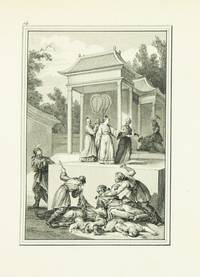
1788ST20889Paris: Chez l'Auteur 1788 1788. FIRST EDITION. 565 x 400 mm. 22 1/4 x 15 3/4". 50 leaves. Two separately published works bound in one. <br/> Modern retrospective calf-backed tan paste paper boards smooth spine profusely gilt with a repeating pattern of grape vines red morocco label lettered in gilt vellum tips. ENGRAVED THROUGHOUT WITH A TOTAL OF 48 FULL-PAGE ILLUSTRATED PLATES each accompanied by either one or two plates of engraved text. SHEETS UNCUT AND UNFOLDED the first work printed only on the recto; the second with three sheets printed on both sides. Reed and Dematté China on Paper 20 21; Cohen-de Ricci 479. Edges and lower corners slightly worn but the binding with only just minor signs of use; free endpaper in front and back with vertical crease one sheet with an early marginal repair isolated inconsequential faint spotting but still AN EXTREMELY FINE COPY the wide-margined sheets exceptionally fresh and bright and with strong impressions of the engravings.<br/> <br/> This pair of lavishly illustrated fully engraved works produced by a talented French engraver after earlier Chinese artworks are here presented in an enormous volume made up of uncut and unfolded sheets. According to Benzit Parisian engraver and print seller Isidore Stanislas Henri Helman 1743 - ca. 1809 "stands out among the engravers of the end of the 18th century" and his skill is evident in the two works bound together here. The first is a pictorial history of the Chinese emperors from the earliest mythical rulers to the Northern Song dynasty 960-1126. It is based on the Dijian Tushuo composed in 1573 to educate the Ming-dynasty Wanli Emperor 1563-1620 who had ascended to the throne at the age of nine. In accordance with its didactic aims it presents the very best and worst of imperial behavior and the original handwritten album was published as a block-printed book to great popularity. Two centuries later the Qing-dynasty Qianlong Emperor 1711-99 commissioned a Western-style edition of the famous work which was executed by two French artists the Jesuit painter Jean-Denis Attiret and the engraver Charles-Nicolas Cochin II. The enterprising Helman was able to see the Attiret-Cochin book in the collection of French statesman Henri Léonard Jean Baptiste Bertin 1720-92 and having had great success with a previous reproduction of a Chinese work Conquêtes de l'Empereur de la Chine ca. 1783 he created the present reproduction. The second work the life of Confucius was also reproduced from plates in Bertin's collection. The source material in this case was the biography of Confucius assembled by the Jesuit Joseph-Marie Amiot 1718-93 as part of his informational series on China meant to educate missionaries. Amiot was a correspondent of Bertin and had sent him the biography and accompanying album of drawings which were based on the Shenji tu Illustrated Traces of the Sage a popular Confucian work throughout the Ming and Qing dynasties. Helman selected 24 scenes from each creating books that balance serene scenes of mountainous landscapes and temples with dramatic fight scenes and dragons. The quality of the engravings is excellent with delicate linework creating faint wisps of smoke and subtle shadows. These two works apparently both published in 1788 were released in several formats. The format here with the engravings laid out on the recto of large uncut sheets appears at auction very infrequently: we have been able to trace only two copies of both works in this format since 2004 and neither in such fine condition as the present example. Chez l'Auteur unknown
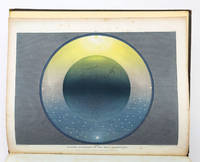
1846ST19286London: Printed by Catchpool & Trent for Simpkin Marshall & Co 1846. FIRST EDITION. 320 x 255 mm. 12 1/2 x 10". xiii 3 96 pp. <br/> Publisher's original blind-decorated dun-colored cloth gilt titling to upper cover smooth spine newer endpapers. WITH 11 COLOR ENGRAVINGS after Frost by W. P. Chubb & Son printed in oil colors by George Baxter all with original tissue guards. Front free endpaper with small ink signature of John Hill. See: Francis Reid "Isaac Frost's 'Two Systems of Astronomy' 1846: Plebeian Resistance and Scriptural Astronomy" in "The British Journal for the History of Science" Vol. 38 No. 2 Jun. 2005 pp. 161-177. Cloth rather spotted corners bumped but the binding solid with no wear to joints or hinges. A few spots of foxing to title page half of the tissue guards with overall very faint foxing/browning the illustrations with minor foxing at edges and in margins but the images themselves clean and bright and all in all a really excellent copy the text wide-margined and quite clean and fresh and the plates with rich coloring.<br/> <br/> Illustrated with beautiful color plates this anti-Newtonian work promotes a view of the universe based on the backward-looking beliefs professed by a Protestant sect known as the Muggletonians. Named after co-founder Lodowicke Muggleton the Muggletonians emerged in London in 1651 based on the claims of two tailors who professed to be the "Last Witnesses" described in the Book of Revelation. Rejecting the new directions in philosophical reason Muggletonians believed in a purely scriptural interpretation of the universe. According to E. P. Thompson's 1994 "Witness Against the Beast" the Muggletonians had curious notions quite contrary to other Protestant denominations: they believed that the soul is mortal that Jesus and God are one and the same that Heaven was left without divine supervision from Jesus' death until the day of judgment that Heaven resides six miles above the Earth that God stands between five and six feet tall and other unconventional things. Although the sect initially avoided both worship and evangelizing during the 19th century some followers became more outspoken about their beliefs and even published books appealing to the general public. Our author Isaac Frost 1793-1858 was a prominent Muggletonian and successful owner of a brass foundry who along with his brother Joseph invested large sums to promote their belief system--the present work being an especially notable example. Divided into two main sections the text first describes the Newtonian system of heliocentric astronomy and then turns to Frost's scriptural interpretation and geocentric views. As Reid tells us "According to Frost Scripture clearly states that the Sun the Moon and the Stars are embedded in a firmament made of congealed water and revolve around the Earth that Heaven has a physical reality above and beyond the stars and that the planets and the Moon do not reflect the Sun's rays but are themselves independent sources of light. Our book was apparently written as a reaction against the lecturers who expressed Newtonian astronomy--which was often for them and their audiences simply shorthand for heliocentrism." The 11 plates that illustrate these extraordinary ideas are the work of George Baxter a pioneering printer who revolutionized color printing techniques by combining metal engravings with woodblock printing using oil-based inks to produce high-quality affordable prints. The plates here are appropriately ethereal and otherworldly utilizing a beautiful palette with subtle gradations and esoteric figures to create memorable pseudo-scientific imagery. Although this work appears at auction with some regularity it is almost always incomplete no doubt because the attractiveness of its plates encourages harvesting. Useful price comparisons include a complete copy said to be in fine condition selling for £7500 in 2016 and six loose prints from the book fetching £6875 in 2015. [Printed by Catchpool & Trent for] Simpkin, Marshall, & Co unknown
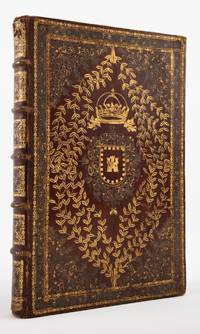
1714ST20995Naples: Bernardo-Michele Raillard 1714. 343 x 223 mm. 13 1/2 x 8 3/4". 6 p.l. CCLXIX 15 pp. <br/> IMPOSING CONTEMPORARY BROWN MOROCCO EXUBERANTLY GILT covers with painted and gilt frames of floral rolls central panel with elaborate volute cornerpieces large central lozenge formed by myriad leafy gilt vines enclosing a coat of arms containing a three-turreted castle topped by a crown held up by two putti raised bands spine compartments framed by floral roll painted and gilt daisy centerpiece tulip cornerpieces all edges gilt. The Academy's engraved device on title page and 75 ENGRAVED PLATES of scientific instruments and experiments. DSB 9:3; Dibner Herald of Science 82 first edition. Joints with modern wear one short crack at top of rear joint head of spine a bit wormed corners and extremities somewhat rubbed gilt a bit rubbed in spots difficult to tell if some of the decoration is dark because painted or is now missing gilt a couple of leaves slightly browned in the text bed occasional minor foxing more pronounced on a couple of quires other trivial imperfections but an excellent copy--quite clean and fresh internally--in a solid binding still bright with gilt.<br/> <br/> Given its binding and provenance this is a uniquely desirable copy of a significant scientific work: our stately Neapolitan edition of the "Essays on Natural Experiments" is offered here in very animated morocco bearing the arms of the man who paid for its printing and to whom the book is dedicated. That remarkable patron Caesare Michelangelo d'Avalos Marquis of Pescara and Vasto prince of Isernia and Francavilla 1667-1729 was a true Renaissance man who took Machiavelli's "The Prince" as inspiration. He was both a wily political conspirator and a generous patron of the arts and sciences. His palace at Vasto was renowned for the beauty of its furnishings for its splendid art gallery and for its impressive library overseen by the humanist scholar Alessandro Berti. The present volume was a worthy addition to that library with its glowing dedication and its regal binding extravagantly gilt but so tastefully composed that it never crosses the line into ostentatious. <br /> First printed in 1666 "Essays" was produced by the Accademia del Cimento the most significant expression of post-Galilean scientific progress in Italy. Founded in 1657 as the first organization formed for the sole purpose of making scientific experiments the Accademia occupies a singular position in the history of the development of science. Prince Leopold of Tuscany the last exceptional member of the Medici family and his brother Ferdinand who followed the Medici family tradition of patronizing the arts and sciences provided the support free-thinking direction and financial patronage for the Academy. A well-equipped laboratory and an apparently inexhaustible supply of apparatus and materials helped to make the work of the 10 scientists associated with the Academy more sustained and broader in scope than anything that had come before it. W. E. K. Middleton "The Experimenters" According to Thorndike among many other subjects the experiments described here "were concerned with air pressure and freezing; or they aimed to prove that water was incapable of compression and that there was no such thing as lightness or positive levity. Some experiments were magnetic and others electric the latter being chiefly performed with amber. Other subjects investigated were the change of colors in fluids the motion of sound and projectiles." Although no author is given by name the title page of the 1666 first edition indicated that this account was written by the secretary to the academy Lorenzo Magalotti 1637-1712. A pupil of Viviani and a friend of Boyle Magalotti was celebrated for his highly finished colorful almost dramatic descriptions of experiments. DSB notes "He has the distinction . . . of having written the best scientific prose in Italian after that of Galileo.". Bernardo-Michele Raillard unknown
105420c. 1850 . Folio 52 x 35 cm; an album of 38 pencil and watercolour plates all in colour except one interior scene in pencil inscribed and dated throughout 37 mounted on paper including one advertisement by Smith's one loose 14 blank pages at rear slight browning and fading throughout decorated endpapers; bound in nineteenth century morocco backed marbled boards spine gilt ruled and lettered green morocco label gilt lettered on upper board worn at extremities frayed; overall an attractive album.<br /> An unusual and amusing album of period pencil and watercolour plates. The numerous plates depict furniture street scenes including protests with placards a variety of costumes including military uniforms theatrical and various trades all English.<br /> c. 1850 hardcover
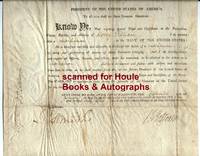
18092221587<p>RARE MIDSHIPMAN APPOINTMENT</p><p>"Th: Jefferson" Partly-printed vellum DS as president 1 page 10" x 10 1/2" January 16 1809. President Jefferson issues a naval appointment for Henry Pilliam. In part: "That reposing special Trust and Confidence in the Patriotism Valour Fidelity and Abilities of Henry Pilliam I do appoint him a midshipman in the Navy of the United States." Neatly signed at the conclusion by President Jefferson and countersigned by Secretary pf the Navy Robert Smith. The document bears an embossed Navy Department seal to the upper left. Intersecting folds overall wrinkling and light staining otherwise fine condition. Such appointments by Thomas Jefferson are quite scarce as he and the Republican party opposed a strong navy. However as Jefferson's term neared its conclusion the naval forces were beginning to grow out of necessity in order to protect the maritime interests of the United States as merchant vessels were frequently being interfered with during their voyages on the high seas. Ultimately these disputes would culminate in the War of 1812 during President Madison's administration. A desirable and well-preserved example of a Jefferson appointment. Very good.</p> unknown
51-7064Paris: chez le Rouge 1777-1779. Oblong folio. 47 x 32cm. 98 engraved plates; some fold-outs. Later half goatskin binding.This compilation includes 4 of the 21 cahiers with 98 of the 491-493 plates in the full set. The 4 cahiers are complete in themselves: .Included are: 6e cahier. Serrail et jardins du grand seigneur includes Richard's Trianon gardens.7e cahier. Jardins anglo-chinois with Tableau de la plantation générale de tous les arbres . par Richard jardinier de la Reine et Le Rouge .8e cahier. Jardins anglo-chinois includes German and Austrian gardens.9e cahier. Jardins anglo-chinois.References: Met Museum: 46.52.21.3;SKB.3312 Brunet III.998 Jardins anglais only Guilmard 260.96; Veronique Royet Bibliothèque nationale de France Elisabetta Cereghini Odile Faliu Bernard Korzus Georges Louis Le Rouge: Les jardins anglo-chinois. Connaissance et Memoires Bibliothèque nationale de France Inventaire du fonds français; graveurs du dix-huitième siècle 15 Paris 2004 cat. no. 49-77 ill.; . Victoria and Albert Museum Department of Prints and Drawings and Department of Paintings Accessions 1953 London: HMSO 1963.Berlin Staatliche Museen Katalog der Ornamentstich-Sammlung der Staatlichen Kunstbibliothek Berlin Berlin and Leipzig 1936-39 3312. J. Dixon Hunt and M. Conan ed.s Tradition and Innovation in French Garden Art: Chapters of a New History Philadelphia: University of Philadelphia Press 2002 p. 115.OCLC Number / Unique Identifier:243866240; OCLC Number / Unique Identifier:1268266935.Other bibliographic references: • Berlin Staatliche Museen Katalog der Ornamentstich-Sammlung der Staatlichen Kunstbibliothek Berlin Berlin and Leipzig 1936-39 3312.• J. Dixon Hunt and M. Conan ed.s Tradition and Innovation in French Garden Art: Chapters of a New History Philadelphia: University of Philadelphia Press 2002 p. 115. [Paris: chez le Rouge, 1777-1779] unknown
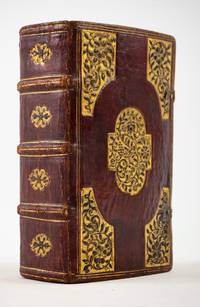
1622ST20888Munich: N. Henricus 1622. First Edition in German. 160 x 100 mm. 6 1/4 x 4". 16 p.l. 699 3 pp. Translated from the Latin by Sebastian Äntzenhover. <br/> UNUSUAL AND QUITE BEAUTIFUL CONTEMPORARY GERMAN DARK RED MOROCCO GILT covers with gilt fillet border central panel with onlaid corner pieces and centerpiece of black morocco stamped in relief to an Ottoman-inspired design of flowering vines raised bands spine panels with gilt centerpiece two leather straps with silver clasps and catches all edges gilt. Title page with engraving of the Tower of Babel. Top half inch of title page cut away to remove owner inscription. VD17 12:103845E; USTC 2019170. A touch of bowing to boards spine a little crackled joints and extremities a bit rubbed occasional small round marginal marks apparently made with wax! and presumably meant to indicate textual importance other trivial imperfections but an excellent copy clean and fresh in an unrestored binding with lustrous boards glistening with gilt.<br/> <br/> This rare work on sinning through the use of wicked words is offered here in a lovely binding that is quite out of the ordinary for its time and place and that may well have a very noble provenance. "Spiritual Tongues: That is a Salutary Treatise Concerning the Poisonous Tongue of Man--How to Guard Against and Remedy It" is an examination of the sins committed through speaking written by Munich Jesuit Johannes Pelecyus 1545–1623 and first printed in Latin in 1620. Pelecyus addresses the evils of gossip slander indiscretion cursing mocking and other injurious speech. The first part of the work is a general overview of the topic from a theological standpoint while the second part is a more practical guide to types of harmful speech and specific remedies for avoiding and correcting these offenses. Pelecyus concludes with a poem "The Devil's Disease and its Remedy." The binding here is remarkable in terms of its material makeup and the conjectural origin of its design. In the first part of the 17th century morocco was not commonly used by German binders who preferred sturdier pigskin particularly for treatises like this which could be expected to see much use poisonous tongues have long been a fact of life and in need of being frequently read about. Morocco was generally reserved for presentation copies or ceremonial liturgical works. In addition to the material the decoration here is unusually lavish for a text of this sort with onlays gilt adornment and silver clasps that required time and skill from the artisan and considerable expense for the patron. Significantly the lovely relief centerpiece design on the boards here also appears on the covers of a Book of Hours originally created for Holy Roman Emperor Maximilian I 1459-1519. That volume was later acquired by another similarly named owner Duke Maximilian I of Bavaria and is now to be found in the Bavarian State Library: shelfmark BSB 2 L.impr.membr. 64. It is certainly well within the realm of possibility that our later Maximilian 1573-1651 could have owned the present poisoned tongue volume and had it dressed in its elaborate morocco attire in imitation of the original binding design on the emperor’s prayer book. Whoever was responsible for the binding they surely did extremely fine work and no doubt for an elite clientele. One other curious feature of this volume is the series of round wax dollops made in the margins which an owner the fastidious second Maximilian has used to mark passages of interest in the text. While they don't materially affect the value of the volume they are intriguing in that they inevitably call up images for us of a careful early reader systematically marking with some kind of unknown implement the parts of the text that seemed important. "Spiritual Tongues" is a rare work: USTC and OCLC find just four copies outside Germany none of them in North America and we could trace just one copy sold at auction. N. Henricus unknown
1780ST17950Caprées i.e. Nancy: Chez Sabellus 1780 1784. FIRST EDITIONS FIRST PRINTINGS 11 lines on title page and long "s" in text with these Illustrations. 256 x 190 mm. 10 x 7 1/2". Two volumes. <br/> BEAUTIFUL 19TH CENTURY RED MOROCCO GILT IN THE ROCOCO STYLE BY CUZIN stamp-signed in gilt on front turn-ins covers with a gilt-ruled border featuring rocaille motifs at the sides and a floral spray at each corner elaborate inner frame of strapwork interwoven with scrolling acanthus drawer-handle tools flower garlands and several special tools including satyrs mountain goats insects and large vases of flowers raised bands compartments with gilt lettering or a central floral sprig surrounded by a frame of leaves and flowers turn-ins with intricate gilt lace roll-tooling all edges gilt. WITH A TOTAL OF 102 EROTIC PLATES by Denon each volume with a frontispiece and 50 plates plus an engraved title in volume II. Front pastedowns with ex-libris of Léon Gambetta. Cohen-de Ricci 474-75. ◆Light offsetting from illustrations paper in both volumes perhaps lightly pressed but not washed FIRST VOLUME with the faint stain from a ribbon marker now gone one plate slightly toned and with two very small repairs to margin otherwise IN FINE CONDITION; paper in volume II slightly toned and with occasional small spots and light stains but still excellent. None of this significant because THE GLORIOUS BINDINGS LUSTROUS AND UNWORN.<br/> <br/> Despite their scholarly titles which promise scenes from the private lives of the 12 Caesars and secrets from an ancient Roman cult these are among the most famous erotic books of the 18th century. In the first volume the 12 Roman emperors from Julius Caesar to Domitian are depicted engaged in a panoply of intimate acts beginning with Julius Caesar's liaison with King Nicomedes IV of Bithynia which led his enemies to dub him "Queen of Bithynia." We see what Caesar's heir Augustus was willing to do in order to succeed his great-uncle and his later sexual excesses as emperor including incest. Antony and Cleopatra are relatively demure compared to the orgies of Caligula Nero and Claudius' wife Messalina. The "Secret Cult of Roman Women" examined in the companion work is devoted to the fertility god Priapus and his phallic symbols with guest appearances by assorted satyrs nymphs and Bacchantes. The images are white-on-black to resemble sculptured wall medallions and claim to be based on ancient carvings; however Cohen-de Ricci informs us that while the text is evidence of d'Hancarville's erudition the illustrations are entirely the result of his libertine imagination. Art historian Pierre-François Hugues Baron d'Hancarville 1719-1805 established himself in the world of antiquarians when he helped William Hamilton acquire the impressive Porcinari collection of Etruscan Greek and Roman antiquities that would subsequently be purchased by the British Museum. He then supervised the production of four sumptuous volumes of engravings documenting the collection. He seems to have undertaken the present work for his own amusement. A later issue of the second title facetiously attributed publication to the Imprimerie de Vatican the Church had of course put it on the Index of Prohibited Books. According to Cohen-de Ricci this is the first and most desirable printing identifiable by 11 rather than 10 lines of text on the title page of the first work and by the use of the f-like "long s" in both volumes. The especially splendid bindings by Francisque Cuzin 1836-90 nod to the Rococo bindings of the 18th century and to the risqué subject matter with satyrs cavorting about the elegant frame. Cuzin opened his Paris workshop in 1855 and soon made his name among bibliophiles of that city with his exquisite bindings establishing what was called the "Cuzin style." Devauchelle says that this style was copied by Cuzin's colleagues but was never equalled. Cuzin was not a gilder but employed some of the best in the trade to execute his graceful designs among them Marius Michel père Wampflug Maillard and Cuzin's eventual successor Émile Mercier. Our copy was once in the library of the distinguished French statesman Léon Gambetta 1838-82 one of the founders of the Third Republic who served as president of the Chamber of Deputies. Chez Sabellus unknown
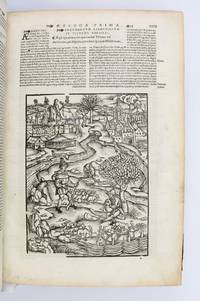
1529ST20181Lugduni Lyon: Jean Crespin 1529. 326 x 215 mm. 13 x 8 1/2". 6 leaves 12-268 pp.; 1-95 1 pp.; 1-600 pp. 8 leaves. Three sections in one. Edited by Josse Badius Ascensius. <br/> Restrained 17th century mottled calf covers triple ruled in blind with oblique gilt fleurons in each corner raised bands neatly rebacked and recornered with modern deep brown morocco marbled endpapers edges sprinkled. WITH 203 TOTAL ILLUSTRATIONS comprised of 190 different woodcuts 11 of which repeat once and one repeating twice. The first title printed in black and red with an elaborate woodcut border; the second title with a fleur-de-lys device. With criblé initials throughout in three sizes many historiated. Handwritten book label of Tobias Gutberleth on title see below title additionally with ink ownership inscription of G. van Olden Junior dated 1860. Front flyleaf with pasted-in manuscript inscriptions of "Francis" and "R. E. Hattiule". Line numbers in ink in a contemporary hand through much of the volume. Mortimer 538; Renouard "Badius Ascensius" III 377; Adams V 474; Brunet V 1282; Graesse VI 336. Binding yawning a bit edges somewhat rubbed but a solidly restored and perfectly acceptable binding. Light smudges of no consequence here and there other trivial defects but internally very clean fresh and bright.<br/> <br/> This is a well-preserved copy of a 16th century printing of Virgil's "Opera" profusely illustrated with wonderfully detailed woodcuts replete with charm and drama. Initially produced in Strassburg for Johann Grüninger’s 1502 Vergil our striking set of illustrations was reused in the 1515 German translation of the Aeneid and then in Sacon’s 1517 Lyon printing which bears many similarities to the present edition. While the plates do show some of the wear expected with this level of reuse—Mortimer notes that several had split by the time of the 1517 printing—the impressions here are nevertheless quite good and the illustrations are no less compelling than befoe. The anonymous artist whom Mortimer describes as having "a skilled hand and lively imagination" has provided animated scenes that perfectly match the content of the text. They range from the charming pastoral images that accompany the Eclogues and Georgics full of cheerful farmers and leaping stags to the dramatic battle scenes of the Aeneid with their fierce heroes in full 15th century armor grotesque monsters and elaborately rendered cities engulfed by leaping flames all overlooked by the pantheon of unconcerned gods. The text here is framed by the commentary of French scholar and printer Josse Badius Ascensius as well as by the commentaries of Filippo Beroaldo Giovanni Pierio Valeriano Bolzani and others. The present copy was owned early in its history by Tobias Guberleth 1609-62 poet and head of the Leeuwarden Latin school. Jean Crespin unknown
15465968Venice: Cornelio Adelkind for Daniel Bomberg 1546. First edition. Very Good. Folio 32 cm; 93 leaves. Text in Hebrew. Title within architectural border reproduced in Amram "Makers of Hebrew Books in Italy" p. 215 also in the Jewish Museum's 1989 exhibition catalogue "Gardens and Ghettos: the Art of Jewish Life in Italy" page 50. Some section headings within ornamental borders. Bound in c19 or c20 dark red crushed morocco ruled in gilt and decorated with arabesques on both boards; spine with raised bands and compartments tooled and titled in gilt; green polished leather doublures with red crushed morocco dentelles bordered in pointillé accented with arabesques; green moiré free endleaves. Edges gilt. Binding not signed. Joints and crown adroitly reinforced with Japanese paper; corners somewhat worn down. Occasional contemporary notes in manuscript in text; brief stain on leaf mem-tet and lightly along the bottom edge of leaves nun-bet and nun-gimmel. Text otherwise pristine. Title page light possibly washed. Old library ink stamps from an institution in Warsaw on title page. Red morocco ex-libris of mining magnate and philanthropist Adolph Lewisohn 1849-1938. References: Adams T-766; BM Italian 674; Steinschneider 7304 #1; Amram 215 illustration and 222. <br /><br />First printed edition editio princeps of the 11th century commentary on portions of the pentateuch by the Bulgarian poet and Talmudist Tobiah ben Eliezer. Published by the house of the seminal printer of Hebrew books Daniel Bomberg under the supervision of his scholar-in-residence extraordinaire Cornelio Adelkind. Venetian law at this time limited Hebrew publishing to Gentile printers. Bomberg a protestant from Antwerp entered this lucrative market and with Adelkind's help became its prime exponent until his death in 1549. Cornelio Adelkind for Daniel Bomberg hardcover
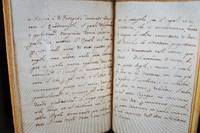
1441Italy 17th Century. <p>127 x 98 mm. 5 x 3 ¾ inches.  16 p. including final blank. Italy 17th century.                                      <br /> A handwritten guide to the drawing of the human head the most important element of any figure drawing and frequently the starting point for early modern drawing manuals. The manuscript appears to be unpublished and we have been unable to trace the text anywhere in the vast digitized corpus.</p> <br /> <p>The content is divided into five brief sections the first explaining how to draw a head in profile. Our scribe focuses on the triangle method in which the profile is anchored by three primary points: the top of the forehead cima della fronte beneath the nostrils sotto le narici and the well of the chin and the beard pozzetta del mento ò barbuccio. The author then explains how to connect these points how to form the nose place the mouth and lips draw the eye etc. Our scribe closes this section with the kind of aspirational promise endemic to manuals of this time namely that if you simple follow my instructions you’ll be able to do this easily. “without much confusion and effort†senza tante confusion et fatiche.</p> <br /> <p>The second section explains how to draw the head “in majesty†Della testa in scurcio by which the author appears to mean ‘head-on’ in such a way to convey power and authority he elsewhere refer to this position as prospetto e.g. on p. 9. Here the author likewise focuses on a simple method of drawing lines between different features of the face. The third section covers drawing the head in shadow Della testa in scurcio which the author admits is alquanto più difficle than the first two exercise and so he won’t be sticking to such geometrical rules. But then he goes on to provide a single very simple rule una regola facile assai namely to start with drawing rounded oval l’ovato cirolare and continues with guidelines that sound awfully geometric to us. The fourth section is on drawing a child’s head in profile la testa del fanciullo in profilo where he again starts with the triangle method adding other geometric principles and referencing the point of a compass. The fifth and final section is on drawing a child’s head in maestà wherein the author cites earlier discussion and further expounds on geometric advice. The author then closes with a general comment on the excellence and nobility of the art of drawing.</p> <br /> <p>The focus throughout is on lines and contours and proportions always guided by geometric rules for producing an accurate but relatively basic sketch. There is only brief passing reference to elements like “hair or other ornament according to the need and what is most pleasing†pelli or altro ornamento secondo che porfarà il bisogno e che più in piacerà . Despite the brief section on drawing the head in shadow there is nothing on rendering value or otherwise on capturing the subtleties that give a drawing depth and feeling.</p> <br /> <p>Like its spine title the Fairfax Murry catalogue calls this 17th-century and we tend to agree based on the script. While we haven’t traced our particular “bird†watermark Heathwood records a few similar marks used in the 17th century and Briquet finds many in the 16th especially in Italy.</p> <br /> <p>No less absorbing than the manuscript is a pair of 16th century Italian binding covers here preserved as doublures both heavily decorate in blind. The front doublure carries an arabesque motif and center Alexander the Great in profile. The rear appears to have been impressed with a single panel stamp also arabesque both doublures betraying the Islamic influence that characterized many Italian bindings of the period. </p> <br /> <p>Provenance: Lot 237 in the second Fairfax Murray sale his label on the inside rear board and perhaps then to Robert Tunstill his bookplate on the front fly-leaf. To us from a fellow ABAA bookseller who purchased it from a UK dealer in the 1990’s.</p> <br /> <p>Condition: Written in a cursive hand in dark brown ink on laid paper watermarked with a bird within a circle. Rebound in the late 19th century or early 20th century in cream pigskin tooled in black preserving as doublures the decorated covers of a 16h-century Italian binding described above title in gilt on spine Del disegno. Ms. Saec XVII. Following the manuscript are four additional blank leaves saved for scanning old pen trials early but the paper is different than the manuscript proper. Additionally six more modern fly leaves have been added at both front and back presumably at the time of rebind. A little loss since filled to the upper outer corner of the manuscript leaves and the four earlier blank leaves affecting just a word or two on each page; a few old pen trials over the text though it remains legible. Binding extremities lightly worn.</p> <br /> References: Catalogue of the Second Portion of the Library of C. Fairfax Murray 1918 p. 42 no. 237 “Manuscript on paper Italian hand 16 pp. repaired white morocco extra the cover of an old stamped vellum binding used as a double. 12mo. Saec. xviiâ€. Alexandra Arvilla Greist Learning to Draw Drawing to Learn: Theory and Practice in Italian Printed Drawing Books 1600-1700 PhD Dissertation UPenn 2011 p. vii “Italian printed drawing books libri da disegnare comprise an important body of evidence for our knowledge of artistic training in Italy during the early modern period. . . Intended for both professional and amateur audiences these printed sources were soon copied throughout Europe where they influenced drawing education for the next 400 yearsâ€. C. M. Briquet. Les Filigranes v. 3 # 12202- 12232 similar watermarks mostly 16th century. Edward Heawood Watermarks Mainly of the 17th and 18th Centuries 1950 # 179 183 similar watermarks 17th century. Anthony Hobson Humanists and Bookbinders 1989 p. 220-21 recording a few 16th century Italian bindings with Alexander the Great plaquettes. Thanks to Patrick Olson for help with this description. unknown
1739ST12883Leyden: Johann Arnold Langerak 1739. First Edition in Latin. 540 x 380 mm. 21 1/4 x 15". 70 leaves of text.Translated by William Dundass. <br/> Original red quarter vellum over marbled boards raised bands UNTRIMMED EDGES. Engraved printer's device on title large decorative initials and tailpieces EXTRA ENGRAVED TITLE AND 114 STRIKING PLATES OF ANATOMICAL FIGURES three folding. Wellcome II 401; Heirs of Hippocrates 468; Choulant-Frank pp. 252-3; Russell 213. ◆Vellum on spine rather worn with three one-and-one-half-inch pieces broken away revealing structure underneath paper boards quite chafed other minor problems externally but an entirely solid unrestored binding. A couple of plates with short closed marginal tears one folding plate with one-inch closed tear into image no loss untrimmed edges a little browned and brittle with isolated small chips occasional minor foxing or insignificant stains three plates lightly browned but still AN UNUSUALLY ATTRACTIVE COPY INTERNALLY with the broadest of margins with especially clean and fresh leaves and with rich impressions of the plates.<br/> <br/> With plates of notable visual impressiveness this was the finest anatomy book in England during the first half of the 18th century; it also was largely a plagiarism borrowing most of its engraved content from a work by the Dutch physician Govert Bidloo published in 1685. Bidloo's work was the first large-scale anatomical atlas to appear after Vesalius' epoch-making "De Humani Corporis Fabrica" and the plates which are highly praised by Norman and Garrison-Morton are characterized by startlingly detailed life-size depictions of the human body both adult and infant with figures flayed to reveal muscles opened to show organs and unfleshed to exhibit bones. According to Choulant-Frank Bidloo's publishers sold 300 impressions of these plates to Cowper probably to recoup some of their money after disappointing sales. Cowper took Bidloo's original 105 plates added nine of his own and produced an English translation of the original Latin text to accompany them. Discussing the original plates produced by Gerard de Lairesse 1641-1711 Norman says that the figures are displayed "in an emotional almost tender manner contrasting the raw dissected parts with the full soft surfaces of uncut flesh placing flayed bound figures in ordinary nightclothes or bedding setting ordinary household objects such as books jars or cabinets in the same scene as cut-up torsos or limbs. His illustrations brought the qualities of Dutch still-life painting into anatomical illustration and gave a new darker spiritual expression to the significance of the act of dissection." When Cowper's version of the atlas first appeared as "The Anatomy of Humane Bodies" in London in 1698 there was also a 1737 Leyden printing in English before our more scholarly Latin edition Bidloo complained to the Royal Society and accused Cowper of plagiarism and fraud resulting in much acrimony and heated pamphleteering between the two physicians. Notwithstanding this scandal Cowper's achievements and discoveries--including the pair of glands that bear his name--were considerable and his text improved significantly upon the original work. Unfortunately as the DNB notes "the notoriety of this case has served to obscure a true appreciation of Cowper and of his many original contributions to anatomical illustration." The atlases of Bidloo and Cowper appear on the market regularly but at 540 x 380 mm. the present copy is distinguished by its size which is significantly larger than what is typically seen with this edition--we have not been able to trace a copy larger than ours from marketplace or institutional records. Johann Arnold Langerak unknown