19th Century French ArtistBiblio.com

8 059 résultats
18-2263Paris France: Grognet 1870-1871. Hand-colored broadside on paper 10†x 13.5â€. Very Good. Printed in France.Originally conceived in 1796 by Jean-Charles Pellerin in his native village of Épinal Vosges the images d'Épinal were inexpensive woodcuts and lithographs of religious and historical content intended for the commonconsumer. During the Napoleonic wars these images became extremely popular as Pellerin's printing house Imagerie d'Épinal cornered the market on commemorative historical prints. During the Great War the traditional style of these prints appealed to French artists looking to show their patriotism as in the eyes of an increasingly anti-German public the image d'Épinal came to represent a distinctly French product unmarred by foreign influence. The prints had a further appeal in that their minimalist form allowed many artists to stay true to the modernist ideals of their time. Paris, France: Grognet, [1870-1871?]. unknown
18-2340Epinal France: Ch. Pellerin 1870s. Large format hand-colored broadside lithograph 11.5†x 11.5â€. Good. Losses on left and right edges. Mounted on paper. Printed in France.Originally conceived in 1796 by Jean-Charles Pellerin in his native village of Épinal Vosges the images d'Épinal were inexpensive woodcuts and lithographs of religious and historical content intended for the commonconsumer. During the Napoleonic wars these images became extremely popular as Pellerin's printing house Imagerie d'Épinal cornered the market on commemorative historical prints. During the Great War the traditional style of these prints appealed to French artists looking to show their patriotism as in the eyes of an increasingly anti-German public the image d'Épinal came to represent a distinctly French product unmarred by foreign influence. The prints had a further appeal in that their minimalist form allowed many artists to stay true to the modernist ideals of their time. Epinal, France: Ch. Pellerin, [1870s]. unknown
18-2336Epinal France: Ch. Pellerin 1870s. Large format hand-colored broadside lithograph 11.5†x 11.5â€. Good. Losses on left and right edges. Mounted on paper. Printed in France.Originally conceived in 1796 by Jean-Charles Pellerin in his native village of Épinal Vosges the images d'Épinal were inexpensive woodcuts and lithographs of religious and historical content intended for the commonconsumer. During the Napoleonic wars these images became extremely popular as Pellerin's printing house Imagerie d'Épinal cornered the market on commemorative historical prints. During the Great War the traditional style of these prints appealed to French artists looking to show their patriotism as in the eyes of an increasingly anti-German public the image d'Épinal came to represent a distinctly French product unmarred by foreign influence. The prints had a further appeal in that their minimalist form allowed many artists to stay true to the modernist ideals of their time. Epinal, France: Ch. Pellerin, [1870s]. unknown
18-2343Epinal France: Ch. Pellerin 1870s. Large format hand-colored broadside lithograph 16.5†x 12â€. Very Good. Some tears on edges repaired with tape on verso. Printed in France.Originally conceived in 1796 by Jean-Charles Pellerin in his native village of Épinal Vosges the images d'Épinal were inexpensive woodcuts and lithographs of religious and historical content intended for the commonconsumer. During the Napoleonic wars these images became extremely popular as Pellerin's printing house Imagerie d'Épinal cornered the market on commemorative historical prints. During the Great War the traditional style of these prints appealed to French artists looking to show their patriotism as in the eyes of an increasingly anti-German public the image d'Épinal came to represent a distinctly French product unmarred by foreign influence. The prints had a further appeal in that their minimalist form allowed many artists to stay true to the modernist ideals of their time. Epinal, France: Ch. Pellerin, [1870s]. unknown
18-2346Epinal France: Ch. Pellerin 1870s. Large format hand-colored broadside lithograph 15†x 12â€. Significant losses on edges. Some text and image missing. Mounted on paper. Printed in France.Originally conceived in 1796 by Jean-Charles Pellerin in his native village of Épinal Vosges the images d'Épinal were inexpensive woodcuts and lithographs of religious and historical content intended for the commonconsumer. During the Napoleonic wars these images became extremely popular as Pellerin's printing house Imagerie d'Épinal cornered the market on commemorative historical prints. During the Great War the traditional style of these prints appealed to French artists looking to show their patriotism as in the eyes of an increasingly anti-German public the image d'Épinal came to represent a distinctly French product unmarred by foreign influence. The prints had a further appeal in that their minimalist form allowed many artists to stay true to the modernist ideals of their time. Epinal, France: Ch. Pellerin, [1870s]. unknown
18-2335Epinal France: Ch. Pellerin 1870s. Large format hand-colored broadside lithograph 16.5†x 12â€. Very Good. Printed in France.Originally conceived in 1796 by Jean-Charles Pellerin in his native village of Épinal Vosges the images d'Épinal were inexpensive woodcuts and lithographs of religious and historical content intended for the commonconsumer. During the Napoleonic wars these images became extremely popular as Pellerin's printing house Imagerie d'Épinal cornered the market on commemorative historical prints. During the Great War the traditional style of these prints appealed to French artists looking to show their patriotism as in the eyes of an increasingly anti-German public the image d'Épinal came to represent a distinctly French product unmarred by foreign influence. The prints had a further appeal in that their minimalist form allowed many artists to stay true to the modernist ideals of their time. Epinal, France: Ch. Pellerin, [1870s]. unknown
18-2339Epinal France: Ch. Pellerin 1870s. Large format hand-colored broadside lithograph 15†x 12â€. Very Good. Printed in France.Originally conceived in 1796 by Jean-Charles Pellerin in his native village of Épinal Vosges the images d'Épinal were inexpensive woodcuts and lithographs of religious and historical content intended for the commonconsumer. During the Napoleonic wars these images became extremely popular as Pellerin's printing house Imagerie d'Épinal cornered the market on commemorative historical prints. During the Great War the traditional style of these prints appealed to French artists looking to show their patriotism as in the eyes of an increasingly anti-German public the image d'Épinal came to represent a distinctly French product unmarred by foreign influence. The prints had a further appeal in that their minimalist form allowed many artists to stay true to the modernist ideals of their time. Epinal, France: Ch. Pellerin, [1870s]. unknown
18-2338Epinal France: Ch. Pellerin 1870s. Large format hand-colored broadside lithograph 15†x 12â€. Very Good. Printed in France.Originally conceived in 1796 by Jean-Charles Pellerin in his native village of Épinal Vosges the images d'Épinal were inexpensive woodcuts and lithographs of religious and historical content intended for the commonconsumer. During the Napoleonic wars these images became extremely popular as Pellerin's printing house Imagerie d'Épinal cornered the market on commemorative historical prints. During the Great War the traditional style of these prints appealed to French artists looking to show their patriotism as in the eyes of an increasingly anti-German public the image d'Épinal came to represent a distinctly French product unmarred by foreign influence. The prints had a further appeal in that their minimalist form allowed many artists to stay true to the modernist ideals of their time. Epinal, France: Ch. Pellerin, [1870s]. unknown
18-2337Epinal France: Ch. Pellerin 1870s. Large format hand-colored broadside lithograph 15†x 12â€. Very Good. Minor loss on top left corner not affecting image. Reinforced with tape on verso. Printed in France.Originally conceived in 1796 by Jean-Charles Pellerin in his native village of Épinal Vosges the images d'Épinal were inexpensive woodcuts and lithographs of religious and historical content intended for the commonconsumer. During the Napoleonic wars these images became extremely popular as Pellerin's printing house Imagerie d'Épinal cornered the market on commemorative historical prints. During the Great War the traditional style of these prints appealed to French artists looking to show their patriotism as in the eyes of an increasingly anti-German public the image d'Épinal came to represent a distinctly French product unmarred by foreign influence. The prints had a further appeal in that their minimalist form allowed many artists to stay true to the modernist ideals of their time. Epinal, France: Ch. Pellerin, [1870s]. unknown
18-2334Epinal France: Ch. Pellerin 1870s. Large format hand-colored broadside lithograph 16.5†x 12â€. Very Good. Reinforced with tape on verso. Printed in France.Originally conceived in 1796 by Jean-Charles Pellerin in his native village of Épinal Vosges the images d'Épinal were inexpensive woodcuts and lithographs of religious and historical content intended for the commonconsumer. During the Napoleonic wars these images became extremely popular as Pellerin's printing house Imagerie d'Épinal cornered the market on commemorative historical prints. During the Great War the traditional style of these prints appealed to French artists looking to show their patriotism as in the eyes of an increasingly anti-German public the image d'Épinal came to represent a distinctly French product unmarred by foreign influence. The prints had a further appeal in that their minimalist form allowed many artists to stay true to the modernist ideals of their time. Epinal, France: Ch. Pellerin, [1870s]. unknown
63-1940London: ca. 1820. Engraving 8.5 x 11 cm. Good with image rubbed loss at upper right corner. Clarke was an Irish Methodist Theologian. [London: ca. 1820]. unknown
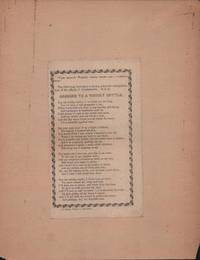
69-8129Dublin Ireland: J.F. Fowler ca. 1850s-1860s. 24 x 31.5 cm mount board 11 x 18 cm clipping. Good. Darkening on page. Darkening tears and staining on mount board. Else very good. Dublin, Ireland: J.F. Fowler, [ca. 1850s-1860s] unknown
06478Overbrook Press 1935. First edition one of 450 copies. Hardcover. Fine. Quarto full blue English buckram over boards vi 3 33 2 pp. one illustration. Attractively printed by John MacNamara in black and blue with decorative initials by Anna Simons and a decorative border by Valenti Angelo. Composition and Typography by Margaret B. Evans. The Overbrook Press is generally considered to be one of the greatest private presses in operation during the 1930's. Zamorano Club bookplate on endpaper slight fading at spine else a fine copy. Walsdorf 146. <br/> <br/> Overbrook Press, (1935). First edition, one of 450 copies. hardcover
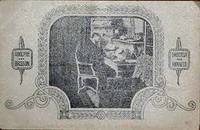
70-0261London: Universal Ca. 1930s. Original hand colored real photograph issued as a postcard. 5.5 x 3.5 inches. Very Good. Printed on verso: "Film Partners" Series 85 Long Acre London; No. PC 232. Made in Great Britain.Adolphe Jean Menjou February 18 1890 – October 29 1963 was an American actor. His career spanned both silent films and talkies. He appeared in such films as Charlie Chaplin's A Woman of Paris where he played the lead role; Stanley Kubrick's Paths of Glory with Kirk Douglas; Ernst Lubitsch's The Marriage Circle; The Sheik with Rudolph Valentino; Morocco with Marlene Dietrich and Gary Cooper; and A Star Is Born with Janet Gaynor and Fredric March and was nominated for an Academy Award for The Front Page in 1931.Edna Mae Durbin December 4 1921 – April 17 2013 known professionally as Deanna Durbin was a Canadian-born actress and singer later settled in France who appeared in musical films in the 1930s and 1940s. With the technical skill and vocal range of a legitimate lyric soprano she performed many styles from popular standards to operatic arias. Durbin made her first film appearance with Judy Garland in Every Sunday 1936 and subsequently signed a contract with Universal Studios. Her success as the ideal teenaged daughter in films such as Three Smart Girls 1936 was credited with saving the studio from bankruptcy. In 1938 at the age of 17 Durbin was awarded the Academy Juvenile Award. London: Universal, [Ca. 1930s]. unknown
17-3525Paris : Les Annales Politiques et Littéraires 1900-1940s. B&W postcard 5.5 x 3.5 inches. Very Good. Light toning and edge wear. Scarce. Paris : Les Annales Politiques et Littéraires, [1900-1940s?]. unknown
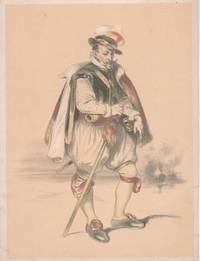
76-0661Paris: French Publisher circa 1850. Color lithograph. 21 x 16 cm sheet. Good light specks of foxing minor surface soiling. [Paris: French Publisher, circa 1850]. unknown
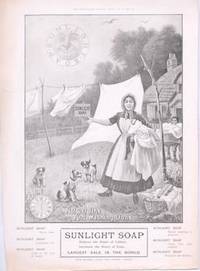
71-7501London: The Illustrated London News July 5 1902. Wood engraving. 40 x 28.5 cm sheet. Very Good light toning and tears along sheet edges none extending into image. London: The Illustrated London News, July 5, 1902. unknown
71-7505London: The Illustrated London News July 5 1902. Wood engraving. 40 x 28.5 cm sheet. Very Good light toning and tears along sheet edges none extending into image; brown staining at top sheet margin extending into image. London: The Illustrated London News, July 5, 1902. unknown
19992090502113705023Not Available 1999. Soft Cover. Fine. The book is in fine condition. Not Available paperback
73-2364Paris: Ad. Catelin circa 1800s. 28x20 cm. Black and white lithograph. Very Good. Foxing on bottom right corner. Paris: Ad. Catelin, [circa 1800s?] unknown
1902Ancient world 1436<p><strong>Ancient world 1436</strong> Terence<strong> </strong>Publius Terentius Afer ca. 190-159 B. C. Aelius Donatus fl. mid-fourth century AD. <strong>Aelius Donatus quod fertur Commentum Terenti: accedunt Eugraphi commentum et scholia Bembina. </strong>Recensuit Paulus Wessner. Series: <em>Bibliotheca scriptorum Graecorum et Romanorum Teubneriana</em>.Three volumes. Lipsiae: in Aedibus B. G. Teubneri 1902-1908 l 542 pages appendix corrigenda et agenda; viii 550 pages corrigenda et agenda; xxviii 331 pages corrigenda et agenda. Good to very good copies some pencil notes in margins in Volume II small hand. A split in spine edge to top of Volume II has been repaired. Very uncommon set. <strong>The three volumes: $75.00 box 1234</strong></p><p>Aelius Donatus was a Roman grammarian and teacher of rhetoric. St. Jerome states in <em>Contra Rufinum</em> 1.16 that Donatus was his tutor.</p> in Aedibus B. G. Teubneri, hardcover
0282255540.Gpaperback. Good. Access codes and supplements are not guaranteed with used items. May be an ex-library book. paperback
1956054656Sudan: Mc Corqudale Sudan Ltd. 1956. 1st Edition . Soft cover. Very Good. 8vo - over 7¾ - 9¾" tall. Paperback. Roy. 8vo. 24 x 17 cm. In English. 2 21 p. First and only edition of this extremely rare pamphlet documenting the first constitutional and judicial movements in the Islamization of Sudan started in the 1950s Sudanese society and government. "The judicial system of Sudan survived the transfer of power to the independent state with few changes. Independence did however bring to the fore conflicts which had been kept under the carpet during the Condominium. The nature of the constitution became one of the most contested issues. The Transition Constitution adopted 1st January 1956 Independence Day formalized a Westminster style of government but it was never meant to be more than temporary. The debate on the new permanent constitution took many forms. In a long memorandum Sheikh Hasan Muddathir the Grand qadi of Sudan i.e. the head of the sharia division of the judiciary presented the Islamist position". Source: Social Welfare in Muslim Societies in Africa by Holger Weis. <br/> <br/> Mc Corqudale (Sudan) Ltd. paperback
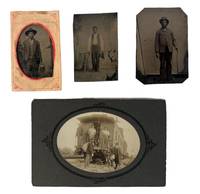
1870202721870. Early photographs of African Americans produced during the decades following emancipation provide important visual documentation of Black life during the Reconstruction and early Jim Crow eras. Portrait photographs and vernacular images from the late nineteenth century capture African Americans navigating newly won freedoms while confronting the economic and social constraints that defined the post slavery United States. Such photographs often record moments of labor travel and self presentation reflecting both the aspirations and realities of African American life during a period of profound social transformation. This small photographic archive dating from the 1870s through the 1890s preserves rare images of African American men during the generation immediately following the end of slavery.<br /> <br /> Archive of four original photographs including two tintypes and one albumen print measuring approximately 2.25 x 3.25 inches to 4.5 x 6.5 inches. The most visually complex image an albumen photograph dating from the late 1890s depicts a Black man and a young boy standing on railroad tracks behind a caboose where four white men are also present. The African American man wears a hat and carries a large sack across his back while the boy holds a basket filled with produce suggesting a scene connected to travel commerce or railroad labor in the expanding transportation networks of the late nineteenth century. The presence of the caboose and railroad workers situates the photograph within the rapidly developing rail infrastructure that reshaped the American economy during the post Civil War period. The remaining photographs consist of tintype portraits of African American men dressed in the formal attire of the late nineteenth century including bowler hats vests and tailored suits. One sitter is photographed wearing a three piece suit and holding a cane while another poses beside a table while holding his hat in hand.<br /> <br /> Portrait photography played an important role in African American communities during the decades after emancipation as newly freed individuals asserted dignity respectability and personal identity through formal portraiture. At the same time vernacular photographs such as the railroad scene record the economic realities and labor environments in which many African Americans worked during the late nineteenth century. Together these photographs document African American presence within both public labor landscapes and private studio portraiture during a formative period in the history of Black life in the United States. Four original photographs including tintypes and an albumen print measuring approximately 2.25 x 3.25 inches to 4.5 x 6.5 inches. One photograph with clipped corners; otherwise images clear and well preserved. Overall condition very good. unknown
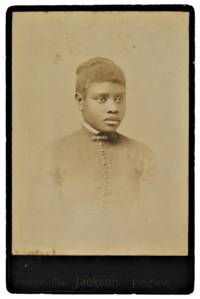
1880188841880. African American Photography Cabinet card photograph depicts an attractive young African American woman in formal dress. She wears a high collar with a golden brooch and has a serious expression. Circa 1880s. Photography studio is C. Jackson's located in Hannibal Missouri. 6.5" x 4." Card bears front gilt caption: "Hannibal Mo. Jackson. Pittsfield MS." On the back is the photography studio's address and logo printed in ornate gilt. Very good condition. unknown