231 résultats
176147533Cuir Paris 1761
178439553London i.e. Paris: J. Johnson St. Paul's Church-Yard 1784. Original blue patterned wrappers spine wrappers shorn stitched untrimmed. xii 203 1 blank pp. Mild occasional foxing binding a bit shaken. Very Good. <br /> <br /> Howes calls this "another issue" of the first edition. OCLC declares "The imprint is false being a repetition of that on the French edition printed in London; probably printed in Paris" OCLC 85860350 noting facsimiles. Lathrop Harper noted "The book was of course not allowed to be printed in France and the writer was living in London at this time" Harper Catalog 224 - 154. <br /> As a hereditary organization limited to officers of the American Revolution and their eldest male descendants the Order reflects "the true seat of nobility" inconsistent with a new republican society. <br /> Alarmed the author says the Society will quoting from the version in English language "strip the middle and lower ranks of life of all influence and of all importance; consign them to the most palpable contempt and reduce them to the completest nullity." This "military nobility" will inevitably become "a civil nobility and an aristocracy the more dangerous because being hereditary it will perpetually increase in the course of time and will gather strength from the very prejudices it will engender; because originating neither in the constitution nor the law the law has provided no means to controul it and it will incessantly overbear the constitution." <br /> Howes M653aa. OCLC 4949019. J. Johnson, St. Paul's Church-Yard unknown
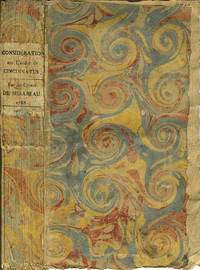
178810516London: J. Johnson St. Paul's Church Yard; & chez C. R. Hake a` Rotterdam 1788. Hardcover. Very good condition. A spectacular copy in original blue marbled paper wraps with the printed title label and spine intact and untrimmed. Howes 653a De l'Imprimerie de T. Spilsbury Snow-hill." on the last page. This edition includes the first translation into French of Richard Price's "Observations on the importance of the American Revolution and the means of making it a benefit to the world". Price was a London based pamphleteer known for supporting a formal declaration of independence by America.<br /> <br /> Mirabeau's important work opposing the Order of Cincinnati in the newly formed United States. The "Order of the Cincinnati" was considered inimical to American principles and this rare piece gives Mirabeau's views on the subject. It was not allowed to be printed in Paris. It was based on an anonymous American pamphlet by Aedanus Burke one of the Chief Justices of South Carolina which condemned the proposed Order of Cincinnati Considerations on the Society or Order of Cincinnatus Philadelphia 1783" and signed "Cassius". Howes M-653a; OCLC: 1184167359. In a half maroon morocco slipcase gilt title on spine slightly marked. Overall a spectacular copy. J. Johnson, St. Paul's Church Yard; & chez C. R. Hake, a` Rotterdam hardcover
17751376974Londres London: n.p. 1775. First Edition. Hardcover. Octavo 275 2 pages. In Very Good condition. Bound in 18th century quarter acid-washed calf marbled paper boards. Gilt titling and tooling to spine. Light rubbing and wear primarily to extremities lower front hinge. Text block partially unopened along the fore edge. With all 5 cancels as called for in the 'Avis au relieur.' M7 cancel loose but present. Shelved case 10. ESTC: 28190. Anonymous but by Gabriel-Honoré de Riquetti comte de Mirabeau.<br /> With final two errata leaves. The imprint is false; probably printed on the continent.<br /> <br> <br /> <br> <br /> Comte de Mirabeau's first published book. Mirabeau published his Essay on Despotism which denounced the arbitrariness of royal power: "le despotisme n'est pas une forme de gouvernement . s'il en était ainsi ce serait un brigandage criminel et contre lequel tous les hommes doivent se liguer." 1376974. Shelved Dupont Bookstore. [n.p.] hardcover
17987738Paris 1798 3 A Paris: Rue S. André-des-Arts, No 46, An VI (1798). Trois volumes in-8. 12,5 x 20 cm. I/ 2 ff. n. chif., XX, 376 p. II/ 2 ff. n. chif., 394 pp. III/ 2 ff. n. chif., 388 pp. Les Elégies constituent les deux premiers tomes, Les Baisers de Jean Second la fin du deuxième, les Contes et Nouvelles le troisième. Ouvrages reliés en pleine basane racinée, dos lisse orné de caissons et fleurons dorés, pièces de titre en maroquin rouge, de tomaison en maroquin vert. Filet doré sur les plats et les coupes, gardes en papier marbré, tranches marbrées. Cette édition est enrichie de deux frontispices (Mirabeau dans le premier volume et Sophie de Ruffey dans le deuxième) et de douze gravures par Jean-Louis Delignon (1755-1820), Jean Baptiste Michel Dupréel (1757-1828) et François Rolland Elluin (1745-1810), d'après des compositions d'Antoine Borel (1743-1810). Les filets sur les plats sont largement effacés, les mors du t. II sont fendus, très discrètement abîmés en queue sur les autres tomes ; il y a quelques brunissures éparses à l'intérieur, sinon exemplaire propre et élégant dans sa belle reliure d'époque.
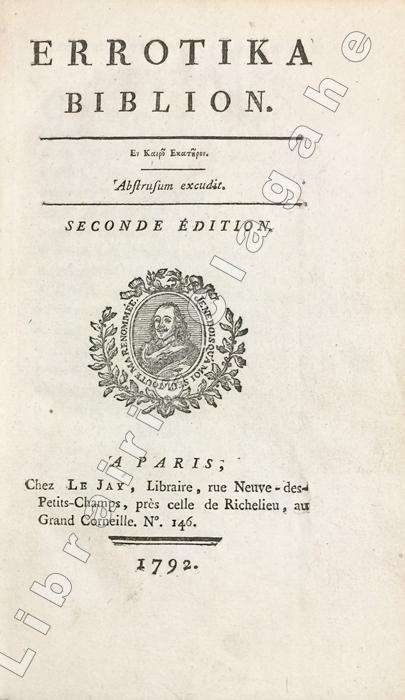
17926334Paris, Le Jay, 1792 ; in-8 ; plein veau glacé bronze, dos à faux-nerfs décorés de grecques, fleurons et titre dorés, double filet hachuré d'encadrement des plats, roulette dorée sur les coupes et d'intérieur, gardes fguschia, toutes tranches dorées (reliure du début du XIXe) ; (2), 176 pp., fleuron bois gravé à l'effigie de Pierre Corneille avec sa célèbre devise "Je ne dois qu'à moi seul toute ma renommée".
178865686Chez J. Johnson | à Londres 1788 | - | relié
179112143A Paris, chez Lavillette, 1791. In-8 de XXVIII-516-(1) pp., demi-basane brune, dos lisse orné de filets dorés, pièce de titre en maroquin blond (reliure de l'époque).
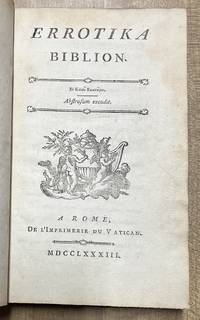
178322332Rome i.e. Paris or Neuchatel: de l'imprimerie du Vatican 1783. First edition 8vo pp. iv 192; title-page vignette 2 cupids; bound in modern dark brown morocco gilt a.e.g. by Wood; light wear a few contemporary manuscript notes fine. A compendium of curiosities culled from ancient writings in an effort to present indelicate subjects such as onanism tribalism etc. in a manner acceptable to the general public. Written while Mirabeau was imprisoned in the castle of Vincennes the book was according to Kearney pursued with such vigor by the authorities that only fourteen copies of the first edition have survived - a number almost assuredly inaccurate. Following a second edition of 1792 Errotika was included in the Papal Index of prohibited books. "A further edition was ordered to be destroyed in 1826 by the Royal Court of Paris and for 'outrages against public morality and good manners' there were two other prosecutions in 1856 and 1868" Kearney. The book was published in several subsequent editions and was included by Apollinaire along with some of Mirabeau's other prison writings in his scholarly edition of 1910 issued in the Bibliotheque des Curieux series. Barbier II 172. Graesse IV 535. Kearney Private Case 1190. Kearney Erotic Literature p. 80. Not in Brunet. <br/><br/> de l'imprimerie du Vatican unknown books
1789FIRst[MI10Alençon: Malassis le jeune 1789. 1789. 2 Volumes. 8vo. pp. 2 p.l. xvii 318; 2 p.l. 376 102 Correspondence Pour Servir De Suite. Potsdam: 1789. with half-titles. contemporary mottled calf rubbed joints cracked. armorial bookplate of Richard Howard. First Edition. Mirabeau's secret mission to the Court of Prussia in 1786-87 was a diplomatic failure and his anonymously published account was condemned by French law. Martin & Walter 24476. Stewart 1845. cfCioranescu 45214 citing incorrect date. 1st Edition. Hardcover. Very Good. [Alençon: Malassis le jeune], 1789. Hardcover
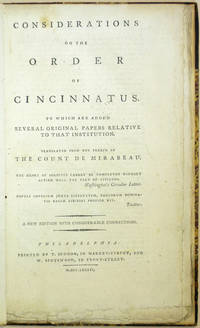
178641762Philadelphia: Printed by T. Seddon 1786. A new edition with considerable corrections. 19th c. three quarter morocco over marbled boards. A very good untrimmed copy; chips to spine ends; scuffed tips owners bookplates on front end-papers and first blank; tight binding. iv 68 pp. 8vo. First American edition. "The Society was not greeted so warmly in the United States. Within months of the adoption of the Institution critics began to charge that the members planned to use the Society to impose a hereditary aristocracy on the new American republic. The leading critic was a South Carolina judge Aedanus Burke. In a pamphlet titled Considerations on the Society or Order of Cincinnati published in Charleston in late 1783 and soon republished all over the country Burke charged that the Cincinnati would form an American aristocracy dominating the government and extinguishing the liberties of the people. Dozens of other critics soon joined Burke and resolutions denouncing the Cincinnati were introduced into several state legislatures. At a moment when Americans were deeply anxious about the future of their untried experiment in republican government the Society of the Cincinnati stirred fears of a conspiracy to seize power and create a new aristocracy as the first step toward re-establishing a monarchy over America" societyofthecincinnati.org. Mirabeau picks up this argument in his "highly controversial imitation" of Burke's work which was suggested to Mirabeau by Ben Franklin" See Echeverria & Wilkie The French Image of America. Provenance: Frank Maier whose collection of American First editions was auctioned in 1909 bookplate Ganevoort-Lansing Collection to NYPL Tiffany & Co. bookplate and William S.S.Horton M.D. manuscript collector armorial bookplate. Sabin 49395. Howes M653. Evans 19803. Echeverria & Wilkie: 786/49 JCB III: 3084. Printed by T. Seddon hardcover books
178641762Philadelphia: Printed by T. Seddon 1786. A new edition with considerable corrections. 19th c. three quarter morocco over marbled boards. A very good untrimmed copy; chips to spine ends; scuffed tips owners bookplates on front end-papers and first blank; tight binding. iv 68 pp. 8vo. First American edition. "The Society was not greeted so warmly in the United States. Within months of the adoption of the Institution critics began to charge that the members planned to use the Society to impose a hereditary aristocracy on the new American republic. The leading critic was a South Carolina judge Aedanus Burke. In a pamphlet titled Considerations on the Society or Order of Cincinnati published in Charleston in late 1783 and soon republished all over the country Burke charged that the Cincinnati would form an American aristocracy dominating the government and extinguishing the liberties of the people. Dozens of other critics soon joined Burke and resolutions denouncing the Cincinnati were introduced into several state legislatures. At a moment when Americans were deeply anxious about the future of their untried experiment in republican government the Society of the Cincinnati stirred fears of a conspiracy to seize power and create a new aristocracy as the first step toward re-establishing a monarchy over America" societyofthecincinnati.org. Mirabeau picks up this argument in his "highly controversial imitation" of Burke's work which was suggested to Mirabeau by Ben Franklin" See Echeverria & Wilkie The French Image of America. Provenance: Frank Maier whose collection of American First editions was auctioned in 1909 bookplate Ganevoort-Lansing Collection to NYPL Tiffany & Co. bookplate and William S.S.Horton M.D. manuscript collector armorial bookplate. Sabin 49395. Howes M653. Evans 19803. Echeverria & Wilkie: 786/49 JCB III: 3084. Printed by T. Seddon hardcover
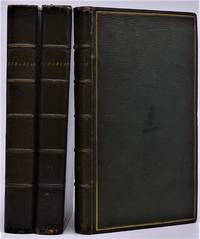
1795009014Tours and Paris : chez Letourmy and Berry 1795. "traduction nouvelle adresse´e du Donjeon de Vincennes par Mirabeau l'aine´ a` Sophie Ruffey." No dates published 1795-96. A portrait of Mirabeau engraved by Voysard after Borel frontispiece to volume I; portrait of Sophie engraved by Elluin after Borel frontispiece of volume II; engraving by Dupreel after Marillier frontispiece of volume III 12 figures out of text engraved by Elluin after Borel. Finely bound in contemporary green straight-grain morocco all edges gilt gilt inner dentelles with added ruling and decorative gilt acorn motifs at corners on paste downs & flyleaves armorial book plate. Very Good corners and spine ends rubbed spines darkened light soiling to boards modest scattered toning. Laid into Vol. I an engraved portrait of Mirabeau engraved by Mariage after F. Bonneville that appears to have been taken from another publication. A handsome set in period binding. . First Translated Edition. Straight - Grain Morocco. Very Good. 8vo - over 7¾" - 9¾" tall. chez Letourmy and Berry Hardcover books
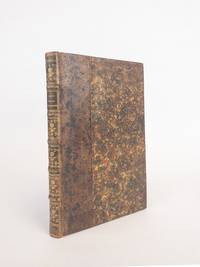
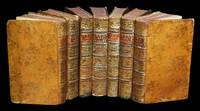
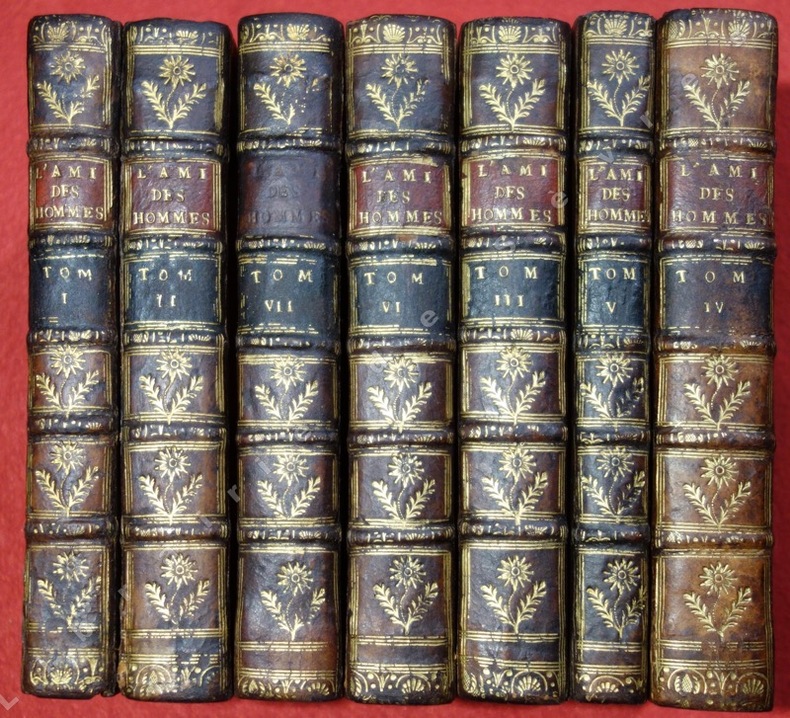
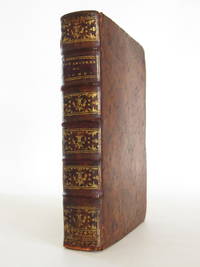
176030466A Hambourg, chez Chrétien Hérold, 1760 - S.l., s.é., 1761. 8 parties reliées en 7 vol. au format in-12 (168 x 102 mm) de 2 ff. n.fol., 308 pp. et 1 f. n.fol. ; 2 ff. n.fol., 426 pp. et 1 f. n.fol. ; 422 pp. et 1 f. n.fol. ; 2 ff. n.fol. et 336 pp. ; 2 ff. n.fol., vi - 281 pp., 2 ff. n.fol. et 1 f. bl. ; 2 ff. n.fol. et 205 pp. ; 2 ff. n.fol., 192 pp. et 2 ff. n.fol. ; 2 ff. n.fol. et 104 pp. ; viii - 422 pp. Reliures uniformes de l'époque de pleine basane glacée et marbrée blonde, filet gras vertical à froid porté sur chacun des plats, dos à nerfs ornés de filets gras à froid, caissons d'encadrement dorés, important décor fleuronné doré, pièces de titre de maroquin vieux-rouge, titre doré, tomaison dorée, palette dorée en tête et queue, jeu de petits filets obliques dorés sur les coupes, tranches saumon.
1760304661760. A Hambourg chez ChrÂŽtien HÂŽrold 1760 - S.l. s.ÂŽ. 1761. 8 parties reliÂŽes en 7 vol. au format in-12 168 x 102 mm de 2 ff. n.fol. 308 pp. et 1 f. n.fol. ; 2 ff. n.fol. 426 pp. et 1 f. n.fol. ; 422 pp. et 1 f. n.fol. ; 2 ff. n.fol. et 336 pp. ; 2 ff. n.fol. vi - 281 pp. 2 ff. n.fol. et 1 f. bl. ; 2 ff. n.fol. et 205 pp. ; 2 ff. n.fol. 192 pp. et 2 ff. n.fol. ; 2 ff. n.fol. et 104 pp. ; viii - 422 pp. Reliures uniformes de l'ÂŽpoque de pleine basane glacÂŽe et marbrÂŽe blonde filet gras vertical ˆ froid portÂŽ sur chacun des plats dos ˆ nerfs ornÂŽs de filets gras ˆ froid caissons d'encadrement dorÂŽs important dÂŽcor fleuronnÂŽ dorÂŽ piÂces de titre de maroquin vieux-rouge titre dorÂŽ tomaison dorÂŽe palette dorÂŽe en tÂte et queue jeu de petits filets obliques dorÂŽs sur les coupes tranches saumon. Ensemble complet de ses 8 parties ; ici reliÂŽes en 7 volumes. A la fin du dernier a ÂŽtÂŽ reliÂŽ - sans page de titre - La ThÂŽorie de l'imp™t de Mirabeau. Ouvrage en outre complet de ses 6 tableaux dÂŽpliants. Primitivement paru en un volume ˆ Avignon en 1759 les derniÂres cinq autres parties qui composent cet ensemble parurent de 1758 ˆ 1760. En effet lorsque Mirabeau publia le prÂŽsent ouvrage il ne connaissait pas encore Quesnay. Ce dernier fut vivement impressionnÂŽ par L'Ami des hommes et trÂs rapidement de leur rencontre naquit l'ÂŽcole Physiocratique et les trois autres parties de l'Ami des Hommes seront le rÂŽsultat de la collaboration des deux hommes. Principal propagateur des doctrines ÂŽconomiques en France Riquetti propose ici un traitÂŽ fondamental pour la physiocratie alors naissante en partie inspirÂŽ de FranÂois Quesnay. On y trouve ici ÂŽnoncÂŽs des principes comme le primat de lÕagriculture et la condamnation de la finance du luxe et de la Ç cupiditÂŽ È dans un monde sous la conduite de propriÂŽtaires et dÕun ÇÊroi pasteurÊÈ. Aussi d'aprÂs l'auteur ''la vraie richesse ne consiste que dans la population. Or la population dÂŽpend de sa subsistance et la subsistance ne se tire que de l'agriculture. Ainsi pour ce physiocrate convaincu tout dÂŽpend de l'agriculture : elle reste le premier des arts. Mirabeau se rangera derriÂre l'idÂŽe que Ç Plus vous faites rapporter ˆ la terre et plus vous la peuplez È''. Riquetti comprit avec quelques autres la vÂŽritable nature du paysan franÂais sa dÂŽvotion ˆ la terre et sa persÂŽvÂŽrance ˆ endurer un travail dur et ÂŽreintant pour en obtenir une parcelle.Ê Le paysan nՎtait pas pauvre par paresse mais parce que le dÂŽcouragement de ne jamais rien obtenir le conduisait ˆ baisser les bras au milieu de beaucoup de contraintes. Il travaillerait toujours dur pour son propre intÂŽrÂt. Il fallait donc lui faciliter lÕaccÂs ˆ la propriÂŽtÂŽ rurale en supprimant les causes de son dÂŽcouragement.Ê En outre Mirabeau souligna le besoin dÕun traitement rural de lÕassistance publique convaincu quÕil ÂŽtait de la supÂŽrioritÂŽ de lÕagriculture sur toutes les autres formes de richesse. Les villes lui paraissaient comme des excroissances ÂŽconomiques sources de luxe qui rÂŽpandait son pouvoir de corruption sur les campagnes environnantes. Barbier I Dictionnaire des ouvrages anonymes 133 - Brunet III Manuel du libraire et de l'amateur de livres 1739 - Cioranescu II Bibliographie de la littÂŽrature franÂaise du XVIIIÂme siÂcle 45626 - TchÂŽmerzine VIII Bibliographie d'ÂŽditions d'auteurs franÂais 283 - QuÂŽrard VI La France littÂŽraire p. 154. Angles ÂŽlimÂŽs. Quelques abrasions ou petits manques superficiels affectant les plats. Quelques coiffes arasÂŽes. Dos prÂŽsentant un ÂŽclat lÂŽgÂrement altÂŽrÂŽ. Quelques rousseurs et feuillets parfois oxydÂŽs. Petite dÂŽchirure en marge d'une page de titre. Du reste bonne condition. b42961 unknown
178265195S. n. | A Hambourg 1782 | 12 x 20 cm (In-8) | relié
1758163581758 La Haye, Benjamin Gibert, 1758-1762, 7 tomes en 7 vol. in 12 de (2)-274-(2) pp. ; (2)-363-(1) pp. ; 374-(2) pp. ; (4)-475-(1) pp. ; VIII-218-(6) pp. ; (2)-372 pp. ; VI-(2)-352 pp., la "Théorie de l'impôt" est à la date de 1761 et forme le 7e volume de la série, rel. d'ép. plein veau brun moucheté, dos à nerfs ornés de fers dorés, pièces de titres rouges, charnières fragiles, la pièce de titre de la Théorie de l'Impôt manque, les 3 premiers volumes sont à la date de 1758, le 4e à la date de 1759 et le 5e et le 6e à la date de 1762, bon ex.
178865686à Londres London: Chez J. Johnson 1788. Fine. Chez J. Johnson à Londres London 1788 - relié First edition second issue. The first of 1784 contains only 212pp. against 403 for this one which has been expanded with the translation of Price's work: ""Observations on the Importance of the American Revolution"". Turgot's letter and Price's book benefit from a half-title. Later modern binding. Pastiche blonde cardboard Bradel binding. Smooth spine with pink sheep title and volume labels. Spine lightly darkened. Rubbing. Uncut copy bound directly from the original wrappers. The first 2 leaves browned. Scattered browning. Last leaf with lack to lower right corner. The Order of Cincinnati a modern order of chivalry was instituted by Washington to reward the French and Americans at the end of the War of Independence. The creation of this order was initially criticized in the United States itself as contrary to the democratic principles of equality. Mirabeau's work then residing in England takes up these criticisms and extends them to all noble heredities. The translation of Richard Price's work major in the history of American democratic ideas was requested by Benjamin Franklin. A letter from Turgot attached to the whole asks Americans to be more scrupulous in the future regarding democratic principles. Chez J. Johnson unknown
178956166S. n. | Imprimé à Rome 1789 | 13 x 19 cm | relié
1764RO80074491CHEZ LES LIBRAIRES ASSOCIES. 1764. In-12. Broché. Etat d'usage, Couv. légèrement passée, Dos satisfaisant, Quelques rousseurs. 420 pages. Un tableau dépliant en fin d'ouvrage. Relié plein veau marbré. Tranches rouges. Titre et caissons dorés sur le dos à 5 nerfs. Léger manque de cuir en coiffes.. . . . Classification Dewey : 630-Agriculture et techniques connexes
178734759BBLondres, 1787. In-8°. 34 f. n. ch., 130 p. Cartonnage papier marbré, pièce de titre noire.
1783321855Rome: Vatican 1783. hardcover. iv 192 pages. Copper engraved title-page vignette with 2 cupids. 8vo full contemporary brown mottled calf gilt-decorated spine rather worn rubricated edges. Rome: Vatican 1783. First Edition. Very good.<br/> <br/> Written while Mirabeau was imprisoned in the castle of Vincennes. Erotika was included in the Papal Index of prohibited books.<br/> <br/> Vatican unknown
178322332Rome i.e. Paris or Neuchatel: de l'imprimerie du Vatican 1783. First edition 8vo pp. iv 192; title-page vignette 2 cupids; bound in modern dark brown morocco gilt a.e.g. by Wood; light wear a few contemporary manuscript notes fine. A compendium of curiosities culled from ancient writings in an effort to present indelicate subjects such as onanism tribalism etc. in a manner acceptable to the general public. Written while Mirabeau was imprisoned in the castle of Vincennes the book was according to Kearney pursued with such vigor by the authorities that only fourteen copies of the first edition have survived - a number almost assuredly inaccurate. Following a second edition of 1792 Errotika was included in the Papal Index of prohibited books. "A further edition was ordered to be destroyed in 1826 by the Royal Court of Paris and for 'outrages against public morality and good manners' there were two other prosecutions in 1856 and 1868" Kearney. The book was published in several subsequent editions and was included by Apollinaire along with some of Mirabeau's other prison writings in his scholarly edition of 1910 issued in the Bibliotheque des Curieux series. Barbier II 172. Graesse IV 535. Kearney Private Case 1190. Kearney Erotic Literature p. 80. Not in Brunet. de l'imprimerie du Vatican unknown
178265195A Hambourg Hamburg: S. n. 1782. Fine. S. n. A Hambourg Hamburg 1782 12 x 20 cm In-8 relié First edition. The second part is regarded as rare since Prussia ordered the manuscript to be seized and the copies burned although in fact the second part is found in many sets. Contemporary full mottled brown calf binding. Spine with raised bands richly gilt. Red morocco lettering-piece. Lower headcap partly torn. Abrasion to the lower cover with loss along the joint. Two corners rubbed. A brown stain in the upper margin of p. 49 about 2 cm. Loss in the margin at the corner of p. 144 not affecting the text. Marbled endpaper with a cut along the outer margin. Some gatherings browned. A good copy. The work written during and after Mirabeaus arrest and imprisonment at Vincennes is both a plea and an indictment against arbitrary justice and power. « J'entreprends de parler des emprisonnements arbitraires et des prisons d'état. » The volume contains numerous historical commentaries and substantial documentation on arbitrary authority and judicial practice. In the second part Mirabeau deals more specifically with prison life and incarceration. He also reflects on the English constitution and argues that our own history condemns the use of lettres de cachet just as it makes kings the sole representatives of the people. A rich source of material on prisons and imprisonment. S. n. hardcover
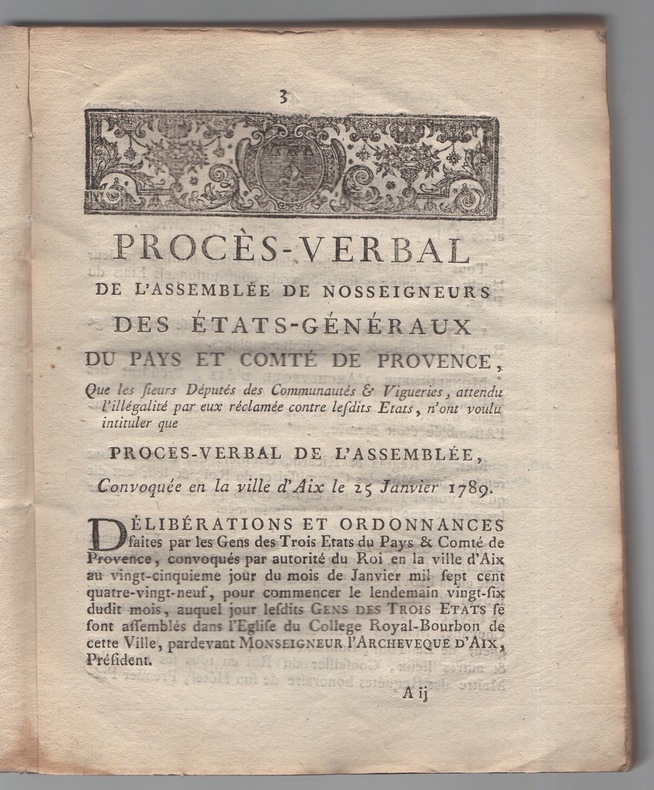
17898522Très important document, prodrome de la Révolution, dans lequel se trouve la fameuse décision de Mirabeau de passer de la noblesse dans le tiers … Broché sous couverture muette Très bon Aix David 1789 1 volume in-4°