119 résultats
179169037F. Buisson Paris 1791 1791. priv. Einband 3 Volumes 412 527 471s. guter Zustand. LSB104b . . HC F. Buisson, Paris 1791, hardcover
1792AQ14462A Paris: Chez F. Buisson 1792. 4 392pp. With half-title. Early twentieth-century calf-backed glazed orange paper boards lettered in gilt. Lightly rubbed sunned library shelf-marks in correction fluid to spine. Bookplate of Bath Reference Library to FEP with their occasional embossed stamps throughout closed tear to C8 just clipping text. The record of the political life of French statesman Emmanuel-Armand de Vignerot du Plessis de Richelieu duc d'Aiguillon 1720-1788 his governorship of Brittany as his service as Minister of Foreign Affairs during the reign of Louis XV. The work is commonly attributed to Honore-Gabriel de Riqueti comte de Mirabeau 1749-1791 with the role of editor assumed by Jean-Louis Giraud Soulavie 1752-1813. . Third edition. 8vo. Chez F. Buisson hardcover

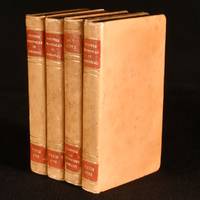
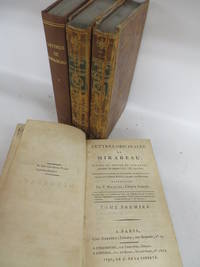
1792998F70Paris: Garnery 1792 . First edition. Leather. Very Good Indeed. 7" by 4.5". None. The complete four volume first edition of Honore Gabriel Riqueti comte de Mirabeau's letters to his mistress Marie Therese de Monnierm written when he was imprisoned in Vincennes. In the original French.The first edition of this work complete in four volumes.The letters of French writer orator and statesman Honore Gabriel Riqueti comte de Mirabeau a prominent figure of the early stages of the French Revolution.He spent much of the 1770s imprisoned for his anti-government politics including four years in Vincennes Castle. During this period he wrote a series of letters to his mistress Marie Thérèse de Monnier. These love letters were collected and published in this edition posthumously.Rebound in calf with endpapers renewed.Bookplate of Edward Alan Walker to the front pastedowns.These love letters were written between 1777 and 1780 at Vincennes. In Vincennes he met the Marquis de Sade who was also writing erotic works; however the two disliked each other intensely. Rebound in full calf with endpapers renewed. Fading to back strips with light rubbing to back strip heads and tails. Bookplates to front pastedown. Internally firmly bound. Pages age toned with instances of spotting to first and last few leaves of each volume. Very Good Indeed Garnery hardcover
179275644Paris:: J. B. Garnery 1792. contemporary old full calf elaborately gilt spines. A clean tight and sound set handsomely bound. small 8vo. Contenant tous les details sur sa vie privee ses malheurs et ses amours avec Sophie Ruffeim marquise de Monnier. J. B. Garnery, unknown
179227091106Paris: Garnery 1792 an 4. Full tree calf leather spine labels. Lacks all but 1 spine label; all volumes rubbed at extremities with cracked joints esp. v1 front; a small box is cut out of the free endpaper of each volume; endpaper of volume 1 tipped back in with following 3 pages torn at fore edge: Good -. 12mo. 1st edition. 1e edition. TEXT IN FRENCH. TEXTE EN FRANCAIS. Garnery hardcover
1792118246Paris Strasbourg et Londres: Garnery Treuttel et de Boffe 1792. Hardcover. Very good. 4 Vols. FRENCH language text. xlvi 358p; 414p; 430p; 418p. 17.5 cm full leather binding with gilt spine and trim on vols. 1-3. Vol. 4 rebound in library cloth with gold lettering on spine. Ex-library with labels date record sheets and stamps on endpapers. Stain from library labelling on spine of vol. 4. Front board detached on vol. 1. Spine leather cracked and fragile on vol. 2. Some staining and spotting to pages but mostly clean with text unmarked. Sold "as-is." <br/><br/>Ecrites due Donjon de Vincennes pendant les annees 1777 78 79 et 80; Contenant tous les details sur sa vie privee ses malheurs et ses amours avec Sophie Fuffei Marquise de Monnier. Garnery, Treuttel, et de Boffe hardcover
179617117AParis, Décade philosophique, an V, (=1796-1797). Ca. 18,3 x 12 cm. 4 Blätter, 142 Seiten, 1 Blatt Verlagswerbung. Mit Heftstreifen geheftet (Rückenbroschur).
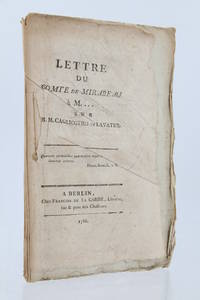
178681145Paris: François de La Garde 1786. Fine. François de La Garde Paris 1786 14.50 x 22 cm broché First edition of this work addressed to the new King of Prussia Friedrich Wilhelm against the three great impostors of the time: Cagliostro Lavater and Mesmer. First page creased title page some light foxing. Rare work in original stitching. François de La Garde unknown
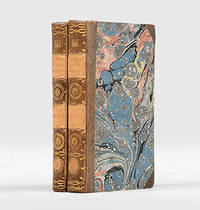
1769126597Amsterdam et se trouve à Paris: Lacombe 1769. Scarce complete thus attractively bound First duodecimo edition of Mirabeau's Les économiques also printed in a single quarto volume format the same year. A further volume was published in 1771 also in both quarto and 2-volume duodecimo formats. Complete sets are very scarce. Mirabeau who seems to have taken the title of this work from the Économiques of Xenophon here gives various methods of economic instruction for the various levels of society; he also suggests the method of approach in the instruction of heads of government. 2 vols duodecimo 162 x 95 mm. Engraved head- and tailpieces. Near-contemporary half calf twin morocco labels spine elaborately tooled in gilt red morocco onlay roundels with vol. numbers to foot of spine marbled paper boards. Ownership signature to title pages of both vols of one H. Wrangel possibly a descendant of the Swedish Governor General Hermann Wrangel 1584-1653 whose crest incorporates a turret as stamped at the head of each spine. Extremities lightly rubbed two neat paper repairs to title leaf of volume 1 else a very good set attractively bound. Einaudi 3943; Higgs 4568; INED 3196; Mattioli 2432 hardcover
178930088s. l. Paris ou Londres London: S. n. 1789. Fine. S. n. s. l. Paris ou Londres London 1789 13.50 x 21.50 cm broché Reprint of the first edition also published in 1789. A second volume of these portraits would appear a little later. In original wrappers. Title page margins worn. The work is a series of portraits with a key at the end of the book to identify them; it includes Necker Guillotin Sieyès. Luchet also participated in writing some of these portraits. S. n. unknown
1789166325France : S. N. 1789. First Edition. Hardback. Very good copy in the original gilt-blocked calf over matching boards with gilt cross-bands. Panel edges somewhat dulled and dust-toned as with age. Corners sharp with an overall tight bright and clean impression.; 8vo 8"" - 9"" tall; 204 pages; Physical desc. : 204 2 p. ; 21cm. Published anonymously. By le marquis J. -P. -L. De Luchet le comte A. De Rivarol le comte de Mirabeau et P. -A. -F. Choderlos de Laclos. Cf. Barbier 2/518. Subject: Etats generaux. France - History - Revolution 1789-1799 - Biography [France? : S. N. ] hardcover
178228463Londres Neuchâtel 1782. First Edition. Wrappers. vii 1 240pp. Contemporary gray wrappers with handwritten label affixed to the spine panel all edges uncut. Of particular interest are two chapters: chapter XVII titled Lettre du Comte de Chanmburg écrite de Rome au baron de Hohendorff commandant des troupes Hessoises en Amérique is attributed to Benjamin Franklin and appears here in book form for the first time The Papers of Benjamin Franklin Vol. 23 eds. William B. Willcox and Douglas M. Arnold 1983 p. 480; chapter XVI titled Avis aux Hessois & autres peuples de l'Allemagne vendus par leurs princes à L'Angleterre written by Honoré Gabriel Riqueti comte de Mirabeau and published originally as a pamphlet in 1777 is a call to Hessian mercenaries to join with the Americans in the overthrow of tyranny. Other sections are dedicated to bull fighting economics etc. Three ink stains to the front cover one of which barely affects the fore edge small worm hole to the margin of two of the leaves authors' names in pencil on the verso of the front cover. Internally fairly clean. About very good. ; Octavo. unknown
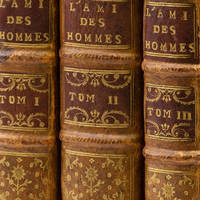
1760304661760. A Hambourg chez ChrÂŽtien HÂŽrold 1760 - S.l. s.ÂŽ. 1761. 8 parties reliÂŽes en 7 vol. au format in-12 168 x 102 mm de 2 ff. n.fol. 308 pp. et 1 f. n.fol. ; 2 ff. n.fol. 426 pp. et 1 f. n.fol. ; 422 pp. et 1 f. n.fol. ; 2 ff. n.fol. et 336 pp. ; 2 ff. n.fol. vi - 281 pp. 2 ff. n.fol. et 1 f. bl. ; 2 ff. n.fol. et 205 pp. ; 2 ff. n.fol. 192 pp. et 2 ff. n.fol. ; 2 ff. n.fol. et 104 pp. ; viii - 422 pp. Reliures uniformes de l'ÂŽpoque de pleine basane glacÂŽe et marbrÂŽe blonde filet gras vertical ˆ froid portÂŽ sur chacun des plats dos ˆ nerfs ornÂŽs de filets gras ˆ froid caissons d'encadrement dorÂŽs important dÂŽcor fleuronnÂŽ dorÂŽ piÂces de titre de maroquin vieux-rouge titre dorÂŽ tomaison dorÂŽe palette dorÂŽe en tÂte et queue jeu de petits filets obliques dorÂŽs sur les coupes tranches saumon. Ensemble complet de ses 8 parties ; ici reliÂŽes en 7 volumes. A la fin du dernier a ÂŽtÂŽ reliÂŽ - sans page de titre - La ThÂŽorie de l'imp™t de Mirabeau. Ouvrage en outre complet de ses 6 tableaux dÂŽpliants. Primitivement paru en un volume ˆ Avignon en 1759 les derniÂres cinq autres parties qui composent cet ensemble parurent de 1758 ˆ 1760. En effet lorsque Mirabeau publia le prÂŽsent ouvrage il ne connaissait pas encore Quesnay. Ce dernier fut vivement impressionnÂŽ par L'Ami des hommes et trÂs rapidement de leur rencontre naquit l'ÂŽcole Physiocratique et les trois autres parties de l'Ami des Hommes seront le rÂŽsultat de la collaboration des deux hommes. Principal propagateur des doctrines ÂŽconomiques en France Riquetti propose ici un traitÂŽ fondamental pour la physiocratie alors naissante en partie inspirÂŽ de FranÂois Quesnay. On y trouve ici ÂŽnoncÂŽs des principes comme le primat de lÕagriculture et la condamnation de la finance du luxe et de la Ç cupiditÂŽ È dans un monde sous la conduite de propriÂŽtaires et dÕun ÇÊroi pasteurÊÈ. Aussi d'aprÂs l'auteur ''la vraie richesse ne consiste que dans la population. Or la population dÂŽpend de sa subsistance et la subsistance ne se tire que de l'agriculture. Ainsi pour ce physiocrate convaincu tout dÂŽpend de l'agriculture : elle reste le premier des arts. Mirabeau se rangera derriÂre l'idÂŽe que Ç Plus vous faites rapporter ˆ la terre et plus vous la peuplez È''. Riquetti comprit avec quelques autres la vÂŽritable nature du paysan franÂais sa dÂŽvotion ˆ la terre et sa persÂŽvÂŽrance ˆ endurer un travail dur et ÂŽreintant pour en obtenir une parcelle.Ê Le paysan nՎtait pas pauvre par paresse mais parce que le dÂŽcouragement de ne jamais rien obtenir le conduisait ˆ baisser les bras au milieu de beaucoup de contraintes. Il travaillerait toujours dur pour son propre intÂŽrÂt. Il fallait donc lui faciliter lÕaccÂs ˆ la propriÂŽtÂŽ rurale en supprimant les causes de son dÂŽcouragement.Ê En outre Mirabeau souligna le besoin dÕun traitement rural de lÕassistance publique convaincu quÕil ÂŽtait de la supÂŽrioritÂŽ de lÕagriculture sur toutes les autres formes de richesse. Les villes lui paraissaient comme des excroissances ÂŽconomiques sources de luxe qui rÂŽpandait son pouvoir de corruption sur les campagnes environnantes. Barbier I Dictionnaire des ouvrages anonymes 133 - Brunet III Manuel du libraire et de l'amateur de livres 1739 - Cioranescu II Bibliographie de la littÂŽrature franÂaise du XVIIIÂme siÂcle 45626 - TchÂŽmerzine VIII Bibliographie d'ÂŽditions d'auteurs franÂais 283 - QuÂŽrard VI La France littÂŽraire p. 154. Angles ÂŽlimÂŽs. Quelques abrasions ou petits manques superficiels affectant les plats. Quelques coiffes arasÂŽes. Dos prÂŽsentant un ÂŽclat lÂŽgÂrement altÂŽrÂŽ. Quelques rousseurs et feuillets parfois oxydÂŽs. Petite dÂŽchirure en marge d'une page de titre. Du reste bonne condition. b42961 unknown
17588067Paris 1758. Second Edition of parts I-III first Edition of part IV. 8 192; 2 266 4; 6 264; 8 278 81pp. 2 vols. 4to. Contemporary mottled calf with gilt spines red morocco labels; covers a bit rubbed spine extremities and corners worn with slight chipping otherwise a very good copy internally crisp and clean. Frontispiece lacking as is often the case. Bookplates of A. de Seville. Second Edition of parts I-III first Edition of part IV. 8 192; 2 266 4; 6 264; 8 278 81pp. 2 vols. 4to. A work of fundamental importance whose appearance created a sensation throughout Europe was widely translated and reprinted and earned its author an international reputation "greater than that of any other economist before or after not excluding Adam Smith or Karl Marx." Schumpeter p. 175n Mirabeau argues that wealth is the product of population -- in particular agriculture -- and that a large populartion is desirable that religious toleration free enterprise a more equitable system of taxation and distribution of wealth were necessary components of a vital economy. The first three parts appeared in 1756; by 1758 Mirabeau had fallen under the influence of Quesnay and issued the fourth part in which the latter's influence is very much felt. The two between them it may be said founded the school of the physiocrats. A fifth and sixth part were added in 1760. Kress 5735; Higgs 1631; Goldsmith 9317 unknown
1758EIRAm[MI39<p>Parts I-III: Avignon: 1756 & Part IV: np: 1758. 1758. 4 Parts in 5 Volumes. 12mo. pp. 431 1; 578 1 leaf; 577 1; 4 p.l. 285; 1 p.l. 313 1 150 1 leaf. engraved frontis. in Vol. I. woodcut initials. An attractive set bound in 19th century tree sheep slight worming to lower front joint of Vol. I & lower front cover of Vol. III. First Duodecimo Edition; originally published in quarto format the same year. Fourth present here fifth and sixth parts containing material by other writers including Quesnay were published in 1758 and 1760. Mirabeau's treatise created a sensation throughout Europe and was widely reprinted and translated earning for its author "though only for a few years a.fame much greater than that of any other economist before or after not excluding Adam Smith or Karl Marx.". Schumpeter p. 175n In it Mirabeau intended to show that agriculture is the great source of subsistence and must be encouraged that a large population is desirable and that religious toleration free trade a more equal distribution of wealth and lower and equitable taxation are needed for the economic improvement of the country. The work attracted the attention of Quesnay and the meeting of the two men led to the formation of the physiocratic school. Quesnay contributed to the continuations including a portion of the fourth part and the Tableau Économique in part six. Goldsmiths' 9093 Vols. I-III. Higgs 1143 & 2160. Kress 5545. Quérard VI 154. Stourm p. 100n. Tchemerzine VIII 750 Vols. I-III. Coquelin & Guillaumin II pp. 190-91. cfEinaudi 3941.</p> [Parts I-III:] Avignon: 1756 & [Part IV:] np: 1758.
1756131625Avignon: n.p. 1756-60. The first public appearance of Quesnay's Tableau économique First edition of all six parts containing the first public appearance of Quesnay's Tableau économique. The first to follow Quesnay in the foundation of the Physiocratic circle Mirabeau was familiar with and influenced by Cantillon's theories. As well as fully articulating the principles that were to mark the school of physiocrats and expounding their implications regarding population agriculture and commerce the Ami des Hommes contained a reproduction of Quesnay's Tableau économique vol. VI previously published separately in very small numbers in 1758 and 1759. Mirabeau's reproduction made the essay obtainable thus bringing the founding document of the school of physiocrats to the attention of a wide public. "This remarkable treatise created the greatest sensation throughout the whole of Europe. It is said to have gone through forty editions and was translated into several languages. Its anonymous author soon discovered became the idol of the day and was generally referred to by the soubriquet which he had chosen for the title of his book" Palgrave II p. 775. Following the publication of the first three parts Mirabeau made the acquaintance of Quesnay who had been greatly impressed by his book. "Mirabeau now became the fervent admirer of Quesnay and between them they founded the school of the Physiocrats" ibid. In 1758 a fourth part was published in which Quesnay's influence is clearly visible. The remaining two parts were published in 1760. The final part is of particular importance as it contains the first obtainable appearance of Quesnay's Tableau économique which was previously published separately in tiny numbers in 1758 and 1759. An English translation was first published in 1766. 6 parts in 2 vols quarto 246 x 188 mm. Contemporary French mottled calf spines ruled and decorated gilt in compartments all edges red. Joints and extremities expertly restored scattered foxing to contents; a handsome copy. Einaudi 3941; Goldsmiths' 9092; Higgs 1143 1631 & 2160; INED 3194; Kress 5543 & 5736; Mattioli 2426 2428 & 2429. unknown
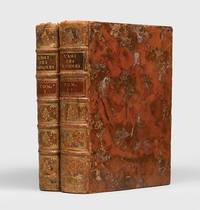
1758153197Avignon: no publisher 1758-60. The first public appearance of Quesnay's Tableau Économique First complete edition of all six parts containing the first public appearance of Quesnay's Tableau Économique; a superb copy in contemporary French red morocco very uncommon thus. The first to follow Quesnay in the foundation of the Physiocratic circle Mirabeau was familiar with and influenced by Cantillon's theories. As well as fully articulating the principles that were to mark the school of physiocrats and expounding their implications regarding population agriculture and commerce the Ami de l'Homme contained a reproduction of Quesnay's Tableau Économique vol. 6 previously published separately in very small numbers in 1758 and 1759. Mirabeau's reproduction made the essay obtainable thus bringing the founding document of the school of physiocrats to the attention of a wide public. "This remarkable treatise created the greatest sensation throughout the whole of Europe. It is said to have gone through forty editions and was translated into several languages. Its anonymous author soon discovered became the idol of the day and was generally referred to by the soubriquet which he had chosen for the title of his book" Palgrave II p. 775. Following the publication of the first three parts Mirabeau made the acquaintance of Quesnay who had been greatly impressed by his book. "Mirabeau now became the fervent admirer of Quesnay and between them they founded the school of the Physiocrats" ibid. With this new edition of the first three parts a fourth part was published in 1758 in which Quesnay's influence is clearly visible. The remaining two parts were published in 1760. The final part is of particular importance as it contains the first obtainable appearance of Quesnay's Tableau Économique which was previously published separately in tiny numbers in 1758 and 1759. An English translation was first published in 1766. 6 parts in 3 vols quarto 252 x 195 mm. Engraved frontispiece in part I engraved head- and tailpieces initials. Contemporary French red morocco spines elaborately decorated gilt in compartments twin green morocco labels raised bands triple gilt rule border to sides gilt inner dentelles marbled endpapers gilt edges green silk ribbon bookmarkers. Authorship attribution to first title in ink in an early hand. Bar a few trivial marks to sides the binding in beautiful condition corners a touch rubbed; vast majority of contents bright crisp and clean with very occasional spotting third volume with some light browning and foxing; loss to lower corners of leaves vol. 1 Hh2 and vol. 3 Aa3 not affecting text; patch of dampstain to last two leaves and final blank of vol. 2. A near-fine set. Einaudi 3941; Goldsmiths' 9317; Higgs 1628 1631; INED 3194; Kress 5735 & 5736; Mattioli 2427 2428 2429 & 2430. hardcover
1760322182Paris 1760. First complete edition. Frontispiece. 192; 266 4; 6 263 1; 6 1-278; 80; viii 1-167 1; 279 5pp. Six parts in three volumes. 3 vols. 4to. Contemporary mottled french calf gilt spines red edges. Some wear at edges and joints. First complete edition. Frontispiece. 192; 266 4; 6 263 1; 6 1-278; 80; viii 1-167 1; 279 5pp. Six parts in three volumes. 3 vols. 4to. The first three parts constituting L'Ami des Hommes were first published by Mirabeau in 1756 before his meeting with Quesnay and his conversion to the physiocratic theses. In 1758 the work was reissued as a new edition with a fourth part added and in 1760 the fifth and sixth parts. Thus the present edition is the first complete one.<br /> <br /> Notably the final volume of the work includes Quesnay's Tableau Economique the first work attempting to describe the workings of the economy in an analytical way. Portions of Quesnay's work had been privately printed in a few copies only at the palace at Versailles in 1758 and 1759 but is here more widely and fully published.<br /> <br /> An important work on economic thought and political theory. Higgs 1628; Goldsmiths 9317; Kress 5735 unknown
1756018550Avignon 1756-58. Quattro parti in cinque volumi in 12°. Mezza pelle del tempo. Dorso a nervi ornato e dorato doppio tassello di titolo e tomagione. Paginazioni: Vol 1: 431pp.-1. Frontespizio inciso. Vol 2: 578pp.-1. Vol 3: 577pp.-1. Vol 4: 8-285pp. Vol 5: 2-313pp-1-150pp. 7pp numerate 145-150 e una per Fautes à corriger che ripetono con modifiche le ultime 7pp del testo. Prima edizione in 12° dello stesso anno di quella in 4° delle prime quattro parti dellopera fondamentale del movimento fisiocratico. Una 5° e 6° parte vennero poi pubblicate nel 1760. Eccezionale la presenza al termine della quarta parte Questions interessantes. delle pagine di modifica del testo pagg. 145-150 che ad opera del legatore o nelle tirature successive sono quasi sempre integrate sopprimendo le ultime sei pagine dello stampato originale. unknown
1760018551Avignon Hambourg: Se Herold 1760. Otto parti in sette volumi in 12° piena pelle del tempo dorso a nervi ornato e dorato. Paginazioni: Vol.1: Avignon 1760; pp.290. Vol.2: Avignon 1760; pp.389. Vol.3: Avignon 1760; pp.378. Vol.4: Avignon 1760; pp.208336. Vol.5: Memoire sur lAgriculture Hambourg Herold 1760; VI281pp. Vol.6: Reponse a lEssai sur les Ponts et Chaussées Hambourg Herold 1760; 205pp. Vol.7: Tableau économique avec ses explications Hambourg Herlod 1760; 192pp con 6 tavole ripiegate Huitième partie Lettres pour servir de suite a lAmi des Hommes Hambourg Herold 1760; 184pp. Lultima parte con le Lettres pour servir. è in edizione originale. Gli ultimi tre volumi sono dello stesso anno delledizione originale. Bell' insieme in ottime condizioni di questa opera capitale per la storia dell'economia politica testo fondatore della scuola fisiocratica. Se, Herold unknown