ABDELKEBIR KHATIBILivre Rare Book
593 résultats
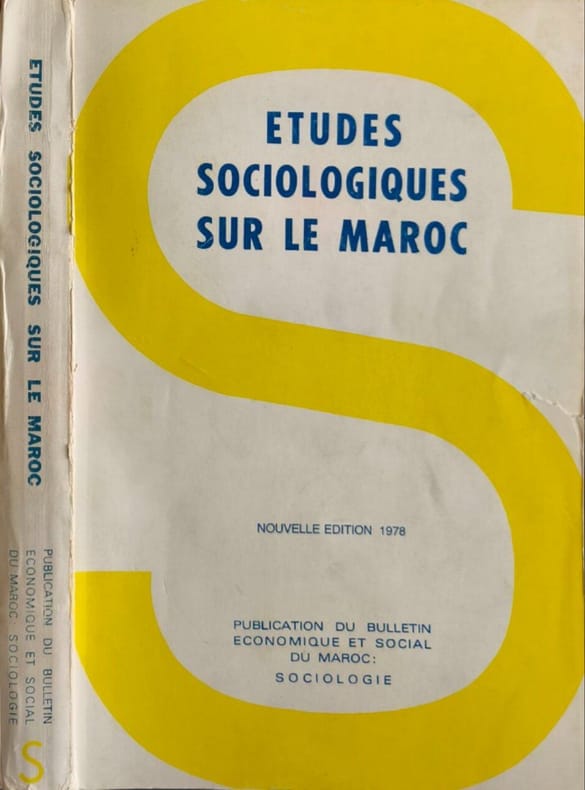
197813600Éditions marocaines et internationales 1978 361 pages in8. 1978. broché. 361 pages. Cet ouvrage est un recueil d'articles conçu et préparé par le sociologue marocain Abdelkébir Khatibi publié en 1971 par les Éditions marocaines et internationales. Il propose une analyse sociologique du Maroc abordant des thèmes comme les classes sociales les collectivités rurales les concessions foncières et l'emploi
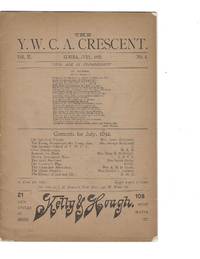
1892164651892. The Y.W.C.A. Crescent. July 1892. Vol. 2 no. 4. Young Women's Christian Association 1892. Newsletter with the slogan "Our Aim is Progress" published by the Young Women's Christian Association. Covers are loose or separated from body of the newsletter. Very good. unknown
1st edition. VG pbk. 9437. eng
1890164641890. Young Women's Christian Association. Employment Agency Branch. York: Young Women's Christian Association 1890s. This pamphlet In self wrappers details the policies for the Employment Agency Department issued by the Young Women's Christian Association. The World Young Women's Christian Association World YWCA is a movement working for the empowerment leadership and rights of women. Very good. unknown
1991VIEN0130(Wien), Verlag f. Gesellschaftskritik (1991). 235 S., 2 Bl. Anzeigen, OKart., schwache Knickspuren. (= Aufrisse Buch 15).
Inscribed by Marianne Gray on front end paper. No other marks or inscriptions. A very clean very tight copy with unmarked maroon cloth boards, well-tanned pages edgesand margins and no bumping to corners. Dust jacket not price clipped or marked or torn with light creasing to upper edge. 239pp. An invaluable book for many these days which sets out the pros and cons of home working and includes over 200 ideas for ways of earning money from home.
No marks or inscriptions. No creasing to covers or to spine. A very clean very tight copy with bright unmarked slightly foxed boards and no bumping to corners. 40pp. A discussion of the means needed to further the aims of the proletariat.
Previous owner's name inside front cover. No other marks or inscriptions. Tiny crease to upper edge of front cover, none to rear, crease to spine. A very clean very tight copy with bright unmarked boards and no bumping to corners. 310pp. We do not use stock photos, the picture displayed is of the actual book for sale. Every one of our books is in stock in the UK ready for immediate delivery.
little creasing on the corners of the cover and on the spine, last owers name on the FEP.
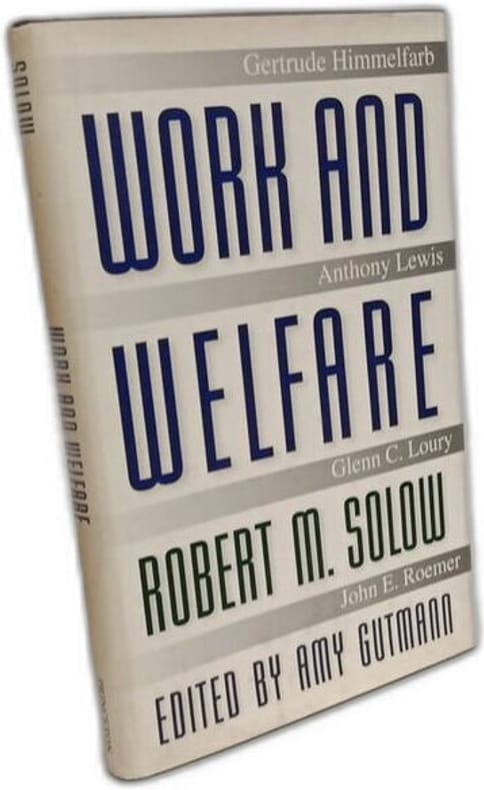
1998100147563Princeton University Press 1998 100 pages 14 2x1 6x21 4cm. 1998. Cartonné jaquette. 100 pages.
No marks or inscriptions. Very small crease to lower spine corner of front cover, none to rear or to spine. A lovely clean very tight copy with bright unmarked boards and no bumping to corners. 236pp. An examination of the world of work in the light of the major changes which took place in the previous decade.
212 pages. "These essays emphasize the social, cultural, economic, historical, and geographical contexts in which women work, and the effect of specific conditions on women's experineces." - from back cover. Soiling to top edge. Few markings to contents. Light wear. Sound working copy. Book
Dust jacket shows minor wear; gilt title on top board and spine wearing off a little. Contents remain clean and sound throughout. Used
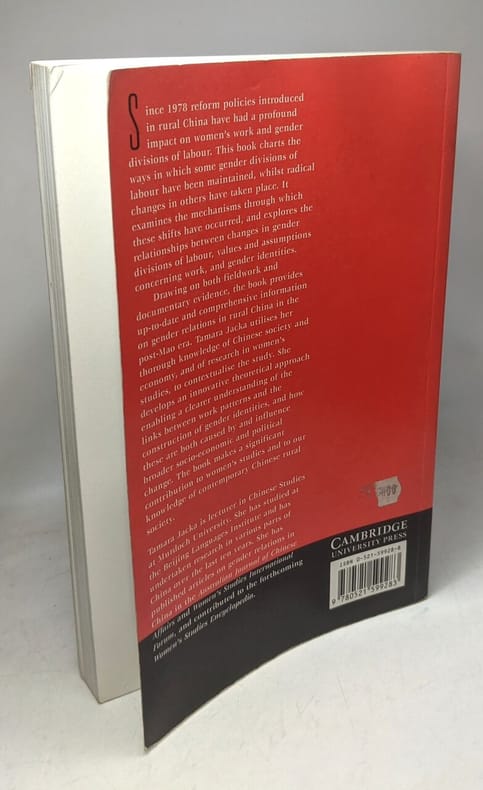
2008100122363Cambridge University Press 2008 276 pages 15 2x2 2x22 6cm. 2008. Broché. 276 pages.
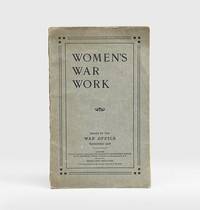
1916183494London: Chiswick Press 1916. First edition of this illustrated government publication promoting women's wartime employment. Women's War Work contains a detailed list of several hundred roles left vacant by men that women successfully fulfilled. Several of these are demonstrated by characterful photographs which show women employed in a range of professions including the postal service factories breweries and shops. The War Office recruited women into the workplace to maintain productivity produce munitions and ensure that as many men as possible were available for the Armed Forces. By July 1916 it was estimated that 750000 women across Britain had taken up such work and the War Office produced Women's War Work in September to further increase their numbers. The preface asserts that employers who had women in their workface would "readily admit that the results achieved by the temporary employment of women far exceed their original estimates and even so are capable of much further extension" p. 5. Women's contributions to the war effort drastically changed public perception of their capabilities and helped women over 30 to achieve enfranchisement in 1918. Provenance: from the collection of the suffrage historian Elizabeth Crawford. Quarto. 72 black and white photographs. Drab paper wrappers front and rear cover printed in black. Library sticker of the Women's Service Library and withdrawal stamp on front inside cover former shelfmark to front cover in pencil former bookseller's price to half-title. Spine repaired loss to ends wrappers lightly toned extremities a little creased extending to outer leaves at bottom corner occasional light finger-soiling to contents but otherwise clean: a very good copy of a fragile publication. unknown
Name on front end paper. No other marks or inscriptions. No creasing to covers. A very clean very tight pamphlet with slightly foxed unmarked rear cover and no bumping to corners. 20pp. A report on the problems facing women in gaining employment.
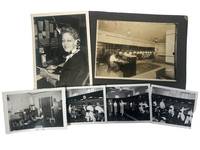
1900200911900. Telephone operator photo archive circa 1900 to 1958 documents women's labor within telephone exchange systems showing how urban communications depended on trained female operators seated at switchboards connecting calls handling information and maintaining the human infrastructure behind early and mid twentieth century telephone service. The material documents telephone communication labor through photographs of switchboard rooms operators wearing headsets plug boards supervisory presence and grouped clerical activity revealing how connection work operated in practice before automated dialing fully displaced manual exchange work. The archive supports research into women's wage labor communications history gendered office work New York telephone service and the disciplined workplace culture that positioned young women as the public voice and operational center of the telephone network.<br /> The archive consists of six black-and-white photographs including five silver gelatin photographs and one early albumen photograph with images measuring from approximately 3.5 x 4.25 inches to 7 x 9 inches. The date range appears to extend from the early twentieth century to 1958 based on the later dated images. Several photographs show women seated in tight rows facing large switchboards wearing heavy headsets with horn mouthpieces and working among dense arrangements of cords and plugs. The early albumen photograph shows a row of women facing the switchboards while a female supervisor watches over the room indicating both the gendered hierarchy and procedural discipline of the exchange floor. One image shows an operator turning toward the camera with a plug in hand smiling while gesturing toward the board. Four smaller photographs dated 1958 show teams of women moving between boards and a small group with paperwork behind the operating area; pencil inscriptions on the versos identify the location as New York.<br /> The photographs are valuable because they make visible the labor system behind telephone service: rows of operators standardized equipment supervisors paperwork and the coordinated manual routing of calls. They also record the gendered character of communications work in which women's voices posture speed and manner were made part of the service itself. Light handling wear minor edge wear and expected age toning; images remain crisp with equipment and personnel details clearly visible; overall very good. Strong women's labor and communications history archive documenting the human operation of telephone exchange systems across the first half of the twentieth century and into the postwar period. unknown
1935189931935. Women's Employment World-War II McConnell Dorothy. Women War and Fascism. New York: The American League Against War and Fascism 1935. 18 pages. Bound in brown cardstock wrappers. Measuring 5.5" x 8". McConnell presents a "protest against the use of women as cheap labor in factories and offices in the U.S. as well as in the fascist states" asserting that "Munitions plants employ women at dangerous tasks with long hours and low wages. Discriminatory laws against women should be defeated and women's wages made equal with men's for equal work". Wrappers are vibrant and unworn. Small penciled inscription on the title page not affecting text. An interesting pamphlet promoting the fight for women's labor safety and equal pay during WWII. Very clean and bright pages in very good condition. unknown
No marks or inscriptions. No creasing to covers. A very clean very tight copy with bright unmarked boards and no bumping to corners. 48pp. Advice and Information for Women Wishing to Return to Work.
Appears unread. Tippex mark to front end paper, no other marks or inscriptions. No creasing to covers or to spine. A lovely clean very tight copy with bright unmarked boards and no bumping to corners. 351pp. A comparative feminist analysis of the impacy of social policy on women across capitalist, socialist and social-democratic countries. Essential reading for those involved with social policy, social work and women's studies.
No marks or inscriptions to contents. Tiny creases to two corners of covers. A clean tight copy with slightly dusty boards and page edges and rubbing to spine foot. 86pp. North West Labour History Bulletin 7, 1980-81 with six articles all by female authors on women's history, trades unions, social democracy, Enid Stacy and Mrs Cooper. Very scarce.
Inscribed by Edwina Currie to half-title page. Appears unread. No other marks or inscriptions. Crease to spine and to upper rear corner. A very clean very tight copy with bright unmarked boards and no bumping to corners. 282pp. A collection of essays from experts of all political shades on women's position in society and practical guidance to women on the challenging issues of today.
1528485270.Gpaperback. Good. Access codes and supplements are not guaranteed with used items. May be an ex-library book. paperback
1528544978.Gpaperback. Good. Access codes and supplements are not guaranteed with used items. May be an ex-library book. paperback
261 pages including index. Told for the first time, here are the stories of twelve of Canada's outstanding labour leaders and organizers. Their accounts tell the behind-the-scenes story of some of the key events in twentieth-century Canadian history from the 1919 Winnipeg General Strike, the 1935 On-to-Ottawa trek of the unemployed which played a major role in the defeat of Tory prime minister R.B. Bennett and the 1945 Ford strike in Windsor which consolidated the rights of big industrial unions through to the 1972 Common Front of Quebec's public sector workers. Average wear. Unmarked. Binding solid. Book