Solingen Trade CatalogBiblio.com
6 837 résultats
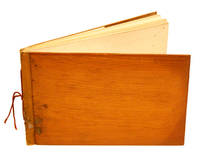
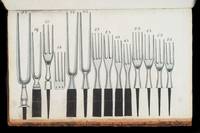
179212195Düsseldorf: s.n. 1792. Contemporary mottled calf rebacked restored marbled endleaves. <p>      ILLUSTRATED PATTERN AND PRICE BOOK OF STEEL KNIVES AND FORKS MANUFACTURED AT SOLINGEN with the strict governmental guidelines for craftsmen and their commercial partners.<br />       The “City of Blades†Solingen was the largest sword knife and scissor manufacturer in the West. It employed over four thousand workers and exported globally. Through their rigid guild system est. 1571 the knife makers protected their trade secrets. Legal standards and strictures ensured the Solingen bladesmiths dominated the market and were the sole suppliers to elite merchants who commissioned bulk orders and custom products. Ordinary tradesmen — like the owner of this book — could only purchase ready-made items and had to pay cash.<br />       KNIVES FOR COBBLERS WOOD- AND LEATHERWORKERS BUTCHERS HUNTERS FARMERS TAILORS GARDENERS WEAVERS AND COOKS form the largest section in the volume. Each blade has a schematic manuscript illustration with separate costs for the work of smiths and for grinders. Many models adopt Dutch English French Flemish and Portuguese designs for the local chic and for export. Only the leatherwork knives are illustrated in watercolor 95 pieces marking a specialty of the owner of this sample book.<br />       THE SECTION ON FORKS HAS ONE HUNDRED THIRTY-EIGHT WATERCOLOR ILLUSTRATIONS and price lists of large carving tools to dainty ones for desserts 65 models. This other house specialty addressed the increasing adoption of forks by upper- and middle-class families in later 18th-century Europe.<br />       ANOTHER SECTION SHOWS HANDLES. These were exclusively manufactured by artisans called Reyder. Each of the two hundred three models listed was available in a range of specified styles and materials. The cost of each type of custom work like turning polishing and coloring is itemized. THE MOST PRIZED EXAMPLES ARE OF FINELY DECORATED BONE EBONY ANTLER GOAT HORN GUAIAC OR PALM WOOD. Look-alikes of “false deer horn†“false guaiac wood†etc. fit other budgets with imitation luxury finishes and less expensive materials. The illustrated examples of knives showcase eighteen different handle decoration options including black red white yellow or green dye black marbling and fine lacquer painting in abstract or foliate patterns. Seven handles are inscribed with German verse. In good condition some light staining hand soiled throughout.<br /> ¶Daniels Vollständige Beschreibung der Schwert-Messer- und übrigen Stahl-Fabriken zu Solingen 30-62.</p> s.n. unknown
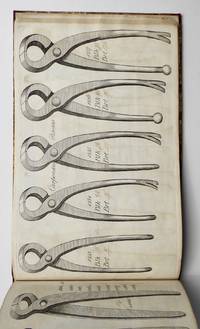
18124628<p>TRADE CATALOGUE - STEEL GOODS. Book of Steel Toys. Birmingham n.p. c.1812. </p><p>A remarkable trade catalogue of steel goods for the household ladies and gentlemen's personal effects gardening tools and instruments for trades and professions. This is a treasure trove of visual information about a vast range of now obsolete tools and the objects required for daily life in the age of Jane Austen: spinet tuning keys muffin toasters cheese tasters sugar hatchets teeth cleaning sets netting vices boot hooks and so on. Particularly fascinating is the distinction between tradesmen's tools and those specifically marketed for amateurs. These are described in the individual engravings as well as in the engraved and letterpress leaf after the index leaf where the contents of 9 oak chests of tools for gentlemen are itemised as well as chests of garden tools turners tools and mahogany chests of tools for cleaning gentlemen's guns. Among the articles listed in the index are 'Lady's hammers' and 'Lady's sets of garden tools' but these do not seem to be the articles engraved on the corresponding plates. </p><p>Engraved trade catalogues of this sort were used by salesmen to solicit orders from retailers. The prices entered in manuscript are selling prices on which the retailer received a discount probably 25% see below. Stamped brass and silverware catalogues turn up from time to time but catalogues of steel goods are much rarer. Unusually too this catalogue is provided with a letterpress index. Normally the engraved leaves would be gathered up in different combinations for individual salesmen hence the plates are numbered in manuscript. In this example they do not exactly follow the printed index so the 'missing' engravings 49 and 50 may never have been present but the presence of stubs suggests that pls. 35–40 which from the index showed corkscrews were once present and have been removed from the volume.</p><p>There is a similar volume in the Public Library of Cincinnati and Hamilton County also with a printed index and 51 leaves of plates. There is a printer's imprint W. Tolley and Son on the first plate. This may be the William Tolley engraver and copperplate printer active in Birmingham from before 1790 to 1830. The name of the agent is on a label on the upper cover: 'Muntz & Purden Book no. 29 discount 25%' indicating that the MS prices are retail prices.</p><p><i>Oblong folio 235 x 375mm; letterpress 'Index to book of steel toys' folding letterpress and engraved leaf 'Gentlemen's Tool Chests' and 46 leaves of plates many printed recto and verso from 80 engraved plates. There is a gap in the pagination and stubs between 34 and 41 and these leaves have presumably been removed; pls 49 and 50 are also missing but there are no stubs so may never have been present.</i></p><p><i>Manuscript additions. The index leaf is annotated 'Livre 64456 W&L' this has been varnished over; every item is neatly priced and in some cases additional products are described for example the ice skates 48 shillings plain or 60 shillings hollow ground could be had with leather straps and buckles for another 18 shillings per dozen pl. 70; small marginal tears in first two and last leaf strengthened with tissue on verso; recent half morocco and marbled boards; from the Forschungsinstitut für Geschichte der Zahnheilkunde with stamp on index leaf and several plates. </i></p> n.p. hardcover
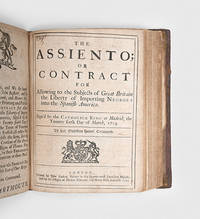
1713186652London: Printed for John Baskett Printer to the Queens most Excellent Majesty And by the Assigns of Thomas Newcomb and Henry Hills deceas'd 1713. A foundational document in the transatlantic slave trade First edition of a major development of the transatlantic slave trade which greatly expanded the market for British slave traders in the Americas and helped establish Britain as the predominant slave trading power. After the War of the Spanish Succession Spain ceded to Britain the exclusive right to import African slaves into Spanish America. This monopoly the Assiento was delegated to the newly formed South Sea Company and held until 1750. The supposed value of the Assiento was the basis of the South Sea Bubble. In fact the restrictive terms - slave numbers were capped and all shipments were heavily taxed by the Spanish Crown - resulted in the South Sea Company never making substantial profit from the agreement. Nonetheless the Assiento played a major role in boosting and consolidating Britain's role in the Atlantic slave trade. The front free endpaper contains a detailed contemporary owner's note naming the binder of the volume - John Worrall - the price paid how it was constructed and how the book should be used: a very unusual survival. The notes state "This book Intituled State Pamphlets was bound by John Worrall for 2s. 2d. and containes 425 leaves". Little is recorded of John Worrall. He was apprenticed from 1674 to 1682 and was working at Warwick Court in 1709 and at Fleet Ditch in 1722. He died in 1726 all from Howe p. 103. The notes continue that the contents are consecutively numbered in manuscript and to use that numbering not the pagination of the original pamphlets. It specifies that "Remarks" are to be "entred in the proper cleane leaves as the observation thereof sees best" - blanks are bound between the tracts. It then notes that the manuscript table should be placed as the second leaf as is found. It refers the reader to another volume with more detailed instructions - it is evident the volume was held in a library which anticipated wide use. The nine other works bound in the volume - an inventory is available on request - date from 1688 to 1714 and are tracts on religion law and politics alongside the Treaty of Utrecht. It includes Jonathan Swift's first political work A Discourse of the Contests and Dissensions between the Nobles and Commons in Athens and Rome 1701 - this copy is the second issue with most of the first edition type corrected and reset. 10 works bound in 1 vol. quarto 206 x 156 mm. Contemporary calf red morocco label to style covers ruled in blind edges sprinkled red. 19th-century ownership signature "S. Louise Langdon" to verso of manuscript contents leaf. Joints and extremities restored slight staining to endpapers a little browned occasional trimming to pagination. Overall very good. ESTC T4476 another issue only has Baskett in the imprint; Kress 5020; Sabin 2227. Ellic Howe A List of London Bookbinders 1648-1815 1950. unknown
177097Birmingham or Sheffield 1770. <p>Oblong folio. 390 x 220 mm. 15 1/4 x 8 3/4 inches. Vellum spine over decorative blue paper wrappers paper label with title in Italian on upper board and ink title in Italian on spine. Paper stock toned with age a few leaves with staining in the margin otherwise in good condition.</p> <br /> <p>Silversmith model book containing 80 full-page engravings of candles sticks and holders candelabra pitchers plates salt and pepper shakers serving utensils silverware and other household pieces. Each image is beautifully and careful engraved with rich detail and ornamentation. Each includes a printed product number as well as one in ink with a different item number and a price.</p> <br /> <p>Although there is no title-page or signatures of engravers this large sales catalogue appears to be English as some of the engravings have English words of explanation engraved in the text. The binding is definitely Italian and the paper label is in an Italian hand. The watermark is a "fleur de lis" pattern suggesting an international company manufacturing the silver. There were only a few English companies with the capacity to export at this time including silver works in Sheffield and Birmingham both of which by 1770's had established networks of dealers selling their wares across the continent. This catalogue with specific Italian connections is very unusual and suggests the scope of the business had reached export capacity by the third quarter of the century. The most important Italian silver makers at this time were Giardini of Rome and Venuti of Naples.</p> . unknown
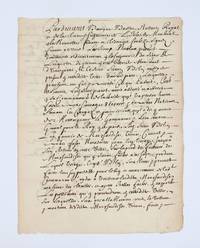
1688368775Montreal 1688. In French. 2pp. recto and verso on a single leaf. Signed by Perrot Bleinz and notary Benigne Basset. With an English transcription. Quarto. Old folds. Near fine. Provenance: Archibald de Léry MacDonald; Lawrence Lande. Exhibition: An Exhibition of Early Documents and Printed Material Relating to the Beginnings of Trade in North America from the Private Collection of Dr. Lawrence M. Lande McGill University May 30-July 15 1985 with an 8-page exhibition catalogue. In French. 2pp. recto and verso on a single leaf. Signed by Perrot Bleinz and notary Benigne Basset. With an English transcription. Quarto. Scarce seventeenth century voyageur fur trade contract for an expedition to the wilderness to trade with the Ottawa signed by one of the most important early traders and explorers of Canada and the upper midwest. "Partnership agreements such as this one of Nicholas Perrot are of great rarity" Lande.<br /> <br /> Perrot 1644-1717 was an explorer interpreter trader commandant diplomat and seigneur. He was one of the best-known figures in the early fur trade of New France particularly during the latter part of the 17th century and took possession of large tracts of land in the Great Lakes region in the name of King Louis XIV. His travels commonly took him deep into unexplored territory and he was the first Frenchman to explore the Upper Mississippi in what is now Wisconsin and Minnesota.<br /> <br /> Perrot arrived in New France about 1660 as a young donné or contracted assistant in the company of Jesuit Missionaries and travelled to the western Great Lakes region where he gained the friendship of the local First Nations people by trading guns for furs believing that they were entitled to defend themselves from their enemies. He also took the opportunity to learn several Native languages which served him well during his career. Perrot soon entered the fur trade full time and began forming business partnerships. He enlisted himself as a translator with government authorities and participated in peacekeeping missions to bring warriors of several First Nations together to sign peace treaties. By 1685 he was appointed Commandant-in-Chief at Bais des Puants present day Green Bay Wisconsin and surrounding regions and travelled to the upper reaches of the Mississippi River in the territory of the Sioux tribes where he built Fort St. Antoine in present-day Minnesota.<br /> <br /> During the spring of 1687 in preparation for taking part in raids on Indian villages in the Seneca country Perrot left his store of furs with the Jesuits at St. Francois-Xavier mission in present-day Wisconsin. While out with the raid party a fire at the mission destroyed his entire fur inventory valued at more than 40000 livres. Financially ruined Perrot returned to Montreal to deal with creditors and renew partnership agreements like the present.<br /> <br /> In the summer of 1688 Perrot partnered with Simon Bleinz to undertake an expedition to trade with the Ottawa Indians and other Nations. Perrot had always been a staunch ally of Governor Frontenac and had obtained a fur trade license from the governor for this venture to ensure that his activities were in keeping with the rules and regulations of the trade.<br /> <br /> The agreement states that Perrot would supply Bleinz with goods food provisions a canoe and other necessary supplies for the voyage and that Bleinz would convey the goods to the trading area and do all that he was able for the success of the partnership. Bleinz had the option of taking at his own expense six shirts two capots or hooded coats of blanket cloth moosehide or other material and one rifle to trade for his own personal profit. The pelts resulting from the venture were to be distributed evenly amongst Bleinz another unnamed associate of the partnership and Perrot. An "apichimon" or bonus of six beaver pelts was to be paid to Bleinz by the partnership upon the successful conclusion of the expedition. <br /> <br /> "Perrot who was often unappreciated even during his lifetime was France's best representative among the Indians of the west. His knowledge of the languages of the country his natural eloquence the happy blend of daring and coolness that were the essence of his character had made it possible for him to win the esteem confidence and even affection of the Indians. The Potawatomis the Menominees the Foxes the Miamis the Mascoutens and the Sioux granted him with the honours of the pipe of peace the rights and prerogatives enjoyed by their own chiefs. His credit was not less among the Ottawas and the Hurons. During the last four decades of the 17th century at a time when alliance with the nations of the west was indispensable in order to ward off the Iroquois peril and allow access to new territories Perrot thanks to the influence that he had acquired rendered valuable assistance to the colony" Dictionary of Canadian Biography.<br /> <br /> The present document is from the famed collection of Lawrence M. Lande 1906-1998 detailed as item 107 in his second bibliography of his collection The Founder of our Monetary System John Law Compagnie des Indes & the Early Economy of North America Montreal: 1984. Lande began collecting manuscript material relating John Law the Compagnie des Indes and the fur trade - North America's first economy - as early as the 1960s principally working with dealers Izzy Ehrlich and Alfred Van Peteghem purchasing material from the collections of Thomas Phillips Philip Sang and historian Archibald Lery MacDonald the assemblage of which Van Peteghem termed an "unparalleled feat." All of the printed material and many of the documents were donated by Lande in his lifetime; however a grouping of the manuscript items including the present document were sold by his heirs after his death. Lande Founder of our Monetary System 107 unknown
10960Scroll 385 x 8560 mm. with fine colored paintings using brush ink & various colors of wash of the route and major features along the way. Japan: mid-Edo.<br /> <BR> <BR> The route from Edo today’s Tokyo to Nagasaki and vice versa by land and by sea was one of the major thoroughfares and trade routes of Edo-period Japan. The Dutch and Chinese had been allowed to establish exclusive trading outposts in Nagasaki and Edo was the heart of domestic commerce and administration. Foreign goods especially silks other luxury items raw materials useful to the military and medicinal goods flowed through Nagasaki to Edo and the rest of Japan while Japanese goods including copper silver and porcelain were transported to Nagasaki for export. Most of the silver was sent to China to settle the trade balance. From the late 1670s to the 1740s Japan was the world’s largest copper producer and exporter. This route also carried the head of Nagasaki’s Dejima trading post to Edo for frequent mandatory ceremonial audiences with the shogun.<br /> <BR> <BR> The beginning of our scroll depicts the land route from Edo to Kyoto and then on to Osaka. The famous battleship Atake Maru is seen docked at the mouth of the Sumida River. Starting from Edo Castle in the great capital the scroll proceeds to Nagoya and Kyoto along the TÅkaidÅ road which was the most important highway of the Edo period. It depicts in great detail and with manuscript labels: stations on the route; bridges; major castles temples and shrines; the palace at Kyoto; other notable buildings; important geographical features including Mount Fuji partly shrouded in clouds; and towns and villages along the way.<br /> <BR> <BR> Distances are given and travellers are well-depicted showing their various clothing. Also shown are ships and skiffs in the nearby sea.<br /> <BR> <BR> We see more landmarks along the TÅkaidÅ road from Kyoto to the commercial hub and port city of Osaka an extension built in the 1620s. Arriving at Osaka we view the great castle the city’s canals and other sites.<br /> <BR> <BR> The rest of the scroll shows the hazardous passage from Osaka to Nagasaki through the 400 km. long Inland Sea Seto Naikai. The accomplished artist depicts the two main routes and alternate routes depending on the weather one for summertime in the open sea and the other hugging the coast for wintertime. Another route is shown that involved landing in the Bungo area of KyÅ«shÅ« island and crossing overland to Nagasaki. Navigating through the Inland Sea with its 3000 plus islands and rocky outcroppings presented enormous problems in the era before modern navigation systems. Shown in very great detail are areas of turbulence including famous whirlpools numerous islands rock formations landscapes for orientation anchorages harbors along the way and fishing areas. The route then passes through the narrow Kanmon Strait the stretch of water separating the main island of Honshu and KyÅ«shÅ« to the Sea of Japan finally arriving in Nagasaki. Dejima is prominently shown. A foreign ship is shown passing the GotÅ islands making its way to Nagasaki.<br /> <BR> <BR> Our scroll is finely drawn in black ink and heightened with wash in green blue gray pink and red. The routes are drawn from a partial “bird’s-eye†perspective with lovely vistas of mountains and islands and villages and towns.<br /> <BR> <BR> In fine condition preserved in an oldish wooden box which has the inscription on the outside of the lid 江戸長崎海陸é“ä¸çµµå›³ “From Edo to Nagasaki Travel by Land and by Sea Illustratedâ€. Inside this lid is the ownership inscription of RyÅra Gakuto. unknown
1787162443London: Printed by Charles Eyre and Andrew Strahan 1787 i.e. 1788. Among the earliest Parliamentary responses to the British slave trade First edition of the first British law to regulate slave shipping preserved in its original volume of yearly parliamentary acts. The law bound 54th in this volume pioneered techniques of popular abolitionist appeal. The Slave Trade Act 1788 limited the number of enslaved persons that could be transported on British ships. It also required that all ships carried a doctor to monitor the conditions of the enslaved persons. The Act was supported through Parliament by Sir William Dolben 1727-1814 and Charles Stanhope 1753-1816. LoGerfo notes of their campaign that "the machinery used to appeal to the literate public would also be used in the future" p. 450. This volume collects 57 acts passed by the 16th Parliament of Great Britain which met from November 1787 to July 1788 and was led by Pitt the Younger. Like all Parliamentary statutes of this period the Slave Trade Act was separately printed with a general title page for inclusion in the yearly volumes of acts. Most of these statutes were printed with their own title pages included in the signatures and pagination - here all such pages have been removed. These laws were printed in limited numbers usually estimated at around 1100 copies only. The volume includes laws against chimney sweeps and child labour and measures to compensate dispossessed American loyalists in the years after the Revolution. Folio 304 x 191 mm pp. 1012 = 900 title pages of individual acts removed. Woodcut device to title page woodcut head- tailpieces and initials to contents. Contemporary quarter sheep spine lettered and with black morocco label in gilt marbled paper sides. Bumping and wear minor loss to spine ends joints cracked but holding firm slight browning and foxing to endpapers and contents slight marking to edges: a good copy. ESTC N58828; N58797 Slave Trade Act. James W. LoGerfo "Sir William Dolben and "The Cause of Humanity": The Passage of the Slave Trade Regulation Act of 1788" Eighteenth-Century Studies Vol. 6 No. 4 Jun. 1973. unknown
1837ABC_47982London 1837. Folio 32 x 20.5 cm. William Clowes 1837-1845; T. R. Harrison 1848-1872. Later stiff blue paper wrappers with white title-label on the front cover blue sprinkled edges. Ad. 11 in beige paper wrappers. With several tables of data. 14 volumes. Rare collection of 14 volumes containing transcriptions of British diplomatic correspondence with other countries relating to the slave trade in the 19th century printed for the British government. Although slavery in the British Empire was abolished in 1807 enslaved people in the colonies were not freed until 1838. In the present volumes which mostly date from 1837-1846 directly after slavery was abolished in most British colonies the British government urges other countries to help put a halt to the now illegal slave trade. The present collection contains the correspondence between Britain and numerous countries in Europe the Americas and North Africa especially France Spain the United States and Austria. The letters describe the ships carrying enslaved people in detail also mentioning their ports of call so they could be more easily found and stopped. Of particular interest are the transcriptions of slave trade acts from various countries as well as the treaties between France and chiefs in African colonies which are difficult to find in print anywhere else.The letters reveal the profound change in attitude towards slavery in the middle of the 19th century. The tone of the correspondence with countries that were quick in abolishing slavery like Denmark is very different than that of the countries that were much slower like the Netherlands and various countries in Latin America. However the letters especially make clear how difficult it must have been to find and stop the ships that were illegally carrying enslaved people. The owners of the vessels often hid their illegal practices behind obscure transactions and renamings which made finding them arduous and sometimes dangerous. It was the task of British commissioners and naval officers to try to uncover the network behind the Atlantic slave traders and bring them to justice. By collaborating with other countries the courts succeeded in the condemnation of over 600 vessels engaged in the slave trade and the liberation of nearly 80000 enslaved people.Ad 11 with blue library stamp on the title-page "Bibliothèque du palais de la paix". All volumes in good to very good condition some very slight browning and foxing some marginal notes in most volumes. unknown
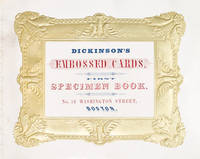
1842232013Boston: Samuel N. Dickinson 1842. Printed title in blue and red within an embossed gilt ornamental frame one printed "Notice" from the publisher dated June 1842 49 specimens of embossed cards many tinted some printed all mounted to stiff card stock; and 7 sheets of "Embossed Specimens of Printed Billets" sewn to a stiff printed card. Oblong 4to. Bound in an album of contemporary half calf and marbled paper boards with red leather label on upper cover stamped in gilt "Dickinson's Embossed Cards" calf shows much deterioration and corrosion although the sewing is still intact 28 specimen cards have been removed and are no longer present some minor soiling and foxing but generally vey clean and sound internally custom morocco backed folding box. Printed title in blue and red within an embossed gilt ornamental frame one printed "Notice" from the publisher dated June 1842 49 specimens of embossed cards many tinted some printed all mounted to stiff card stock; and 7 sheets of "Embossed Specimens of Printed Billets" sewn to a stiff printed card. Oblong 4to. With a very interesting presentation note from a previous Philadelphia owner Alfred Darrach dated 1928 affixed to the front pastedown identifying the original owner his grandfather as Christian Gobrecht 1785-1844 artist engraver embosser inventor engraver to the U.S. Mint and from 1840-1844 the 4th United States Engraver of the Mint where he was responsible for the creation of several new models and designs including the famous Seated Liberty design which appeared on a variety of American coins from 1836 through 1890. <br /> Gobrecht designed many notable medals coins and dies during his career but he also "invented a speaking doll and later a camera lucida. He also produced engravings for calico printers and dies for bookbinders. He engraved the brass dies for embossing the Morocco covers of the Boston Token from 1831 - 1836 as well as the eagle cover of the Philadelphia Token. Among the medals he engraved were the Charles Willson Peale medal the Franklin Institute medal etc ." - DAB.<br /> A remarkable specimen album in and of itself all the more so for having belonged to one of America's most important engravers. We cannot say for sure but it is entirely likely that if Gobrecht himself did not design many of the dies for this embosser he may have used the album for his own work and possibly removed the cards which are no longer present. Samuel N. Dickinson unknown
19082080202102900126Not Available 1908. Soft Cover. Fine. Books: 13 books Not Available paperback
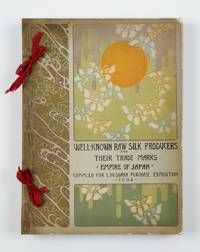
77254Tokio Tokyo The Japan Sericultural Association 1904. Folio 29.6 x 22.0 cm. Preliminary leaf title page xiv advertisements 166 7 ix pp. 144 text illustrations logos of which 142 in colour - mostly in full colour chromolithography a few partly printed in silver. Additional full-colour illustrations in the advertisement sections. Original multi-colour pochoir wrappers with two silk ties. Printed erratum leaf tipped in. = A very rare survey of Japanese silk producers prepared for the 1904 Louisiana Purchase Exposition. In all 144 companies present themselves here each providing a - mostly very colourful - logo often depicting birds as well as various other animals flowers geishas warriors etc. Included is an overview of the silk industry and its history. Between 1850 and 1930 raw silk ranked as the leading export of Japan accounting for 20 per cent to 40 per cent of Japans total exports. Between the 1890s and the 1930s Japanese silk exports quadrupled making Japan the largest silk exporter in the world. "The Louisiana Purchase Exposition informally known as the St. Louis World's Fair was an international exposition held in St. Louis Missouri United States from April 30 to December 1 1904. Local state and federal funds totaling $15 million were used to finance the event. More than 60 countries and 43 of the then 45 American states maintained exhibition spaces at the fair which was attended by nearly 19.7 million people" Wikipedia. It was by far the most important world fair before WWI." The Japanese government spent lavishly: $400000 plus $50000 from the Japanese colonial government of Formosa with an additional $250000 coming from Japanese commercial interests and regional governments". This lavishly illustrated work was not for sale and it seems likely that most copies ended up in governmental libraries. This copy however is not a library copy and apart from some very light wear to the wrappers is in excellent condition. Provenance: inscribed on the front free endpaper William Streuli from Berizzi Bute . One copy in the collection of The Met in New York City and one copy recorded in OCLC in a Danish library. We found only one auction record. unknown
1818127276London: J. M. Richardson 1818. One of the outstanding exponents of the theory of international trade in the nineteenth century First separate edition of this anonymous tract originally published in The Pamphleteer Volume XII number 23. Arnold Plant declared that "the anonymous author of this tract should take his place with Ricardo J. S. Mill Longfield Mangoldt and Edgeworth as one of the outstanding exponents of the theory of international trade in the nineteenth century. His use of algebraic symbols in setting out the ratios between the quantities of commodities his method of ascertaining from these ratios which of a number of commodities can be most advantageously exported and imported his demonstration that the ratios used may be either those of quantities of different commodities within the same countries or of the same commodities in different countries will bear comparison with for instance Professor Viner's own lucid exposition well over a century later" Plant introduction to 1933 reprinting pp. 40-41. Although the tract was reprinted in the Pamphleteer in the same year it has otherwise left little trace. Octavo 197 x 120 mm. Recent quarter cloth paper label to spine marbled paper sides. Light marking to cloth some very faint scattered foxing else an excellent copy. See Goldsmiths' 22070 for The Pamphleteer. hardcover
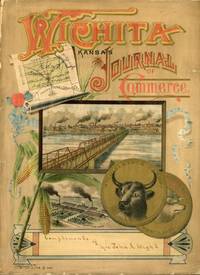
188854232Wichita Kansas: Eagle Printing House 1888. 1888. KANSAS. First edition.4to. Original color pictorial wrappers 92 pp. introduction numerous illustrations numerous advertisements mostly printed in double column. This promotional publication by the Wichita Board of Trade was published to counter the "malignant attacks" conducted by "powerful newspapers all over the country" who have "deliberately leveled their batteries at Wichita." The promotional contains an historical overview of Wichita in the cattle trade information on crops and capabilities of Kansas and calls Wichita "The Southwestern Metropolis." Illustrations include street cars telegrams churches private residences and schools. Containing also a directory of wholesale business information on Wichita's railroads and railway connections lists of industrial enterprises the meat packing centers the livestock market and information on taxes and building enterprises. In addition there are numerous advertisements for various businesses in Wichita. Light cosmetic touch-up to the spine and extremities by a master paper conservator else an attractive informational and scarce promotional for Wichita. Housed in a quarter leather and color decorated boards with raised bands and titles stamped in gilt on the spine. Not in Adams Herd. Not in Graff Eberstadt or Howes. OCLC locating only three copies. Considered to be very scarce with only a few known surviving copies. Eagle Printing House, 1888. hardcover
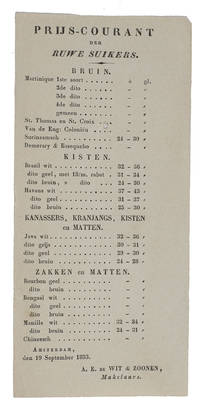
1721LC4D1MQ3QGJ6Amsterdam 1721. 1 leaf 21 x 8 cm; 1 leaf 20.5 x 8 cm; 1 leaf 17.5 x 8 cm. Jacobus van Egmond Ad 1: Text printed on both sides each in a border built up from typographic ornaments. Ad 2: Text printed on one side. Ad 3: Text printed on one side. 3 documents. Ad. 1: Rare VOC ships manifest for cargo shipped from the East Indies - Batavia and Ceylon Sri Lanka - on 22 East-Indiamen sailing on 1 December 1720 from Batavia and on 15 November from Ceylon. The list includes more than 100 different colonial wares and gives the weights in pounds or the lengths in feet: from pepper more than 6.5 million pounds cloves 694000 pounds cinnamon 604000 pounds and coffee more than 1.77 million pounds to 962 pounds of Javanese cardamom some jewels and rariora and many feet of silk and linen cloth. Small wormhole affecting two characters otherwise in good condition.Ad. 2: Rare list of the results of the auctions of colonial wares organized in 1781 by the Chambers of the VOC Amsterdam 30 April 1781; Zeeland 7 May; Delft 15 May; Rotterdam 17 May; Hoorn 22 May; Enkhuizen 23 May including pepper cinnamon nutmeg etc. with the prices fetched. With a small tear not affecting the text. Still in good condition.Ad. 3: Price list of the various varieties of raw sugar: brown sugar from Martinique Surinam etc.; sugar packed in chests from Brazil Havana; in bales from Bengal Manilla etc.Small hole not affecting the text.l Ad. 1: cf. Landwehr VOC 1123-1134 other manifests. hardcover
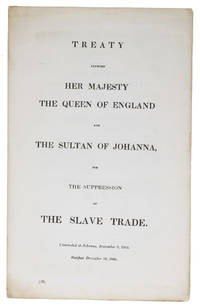
1845ABC_48495Johanna Anjouan 1845. Ca. 32.5 x 20.5 cm. Original paper wrappers. 5 1 blank pp. Historically important treaty between Queen Victoria of the United Kingdom of Great Britain and Ireland 1819-1901 and Sultan Selim dates unknown of Johanna present-day Anjouan for the suppression of the slave trade. The treaty was concluded in November 1844. The present work is the ratified version from 10 December 1845 signed by Sultan Selim and Christopher Wyvill 1792-1863 captain of the HMS Cleopatra and formation commander of the British Royal Navy in Africa between 1849-1853. The publication is exceptionally rare. We have not been able to find any printed copies anywhere else either in sales records or libraries. The archives of the UK parliament make mention of the treaty but it appears to be otherwise unknown.In the present work the Sultan of Anjouan states that: "There shall be no dealing in slaves in our territory and no slaves shall be imported to be sold in our country". He further allows the British to inspect Anjouan ships and take them to an English port if they are found engaging in slave trade. The present treaty which is of significant historical importance is an excellent example of the measures that were undertaken across the world to stop the slave trade.The leaves are slightly creased and browned around the edges. Otherwise in good condition. unknown
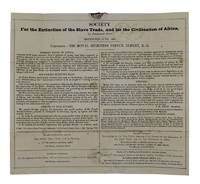
AQ30000Single leaf mulready letter- sheet folded addressed to 'Mrs Clive Sanderstead Croydon Surrey' postmarked Frome with the 306 duplex cancellation to folded front and further post-marks of Croydon and Frome dated September 1844 to folded verso. Some tears to folds margins without loss of text remains of opened wax seal and old paper repairs to recto. The earliest of several known variants of this rare plea for donations for the Society for the Extinction of the Slave Trade and for the Civilization of Africa printed on the reverse of a 'Mulready' penny postal stationary sheet. First issued on 1 May 1840 in parallel with the world's first stamp - the Penny Black - these pre-paid self-folding letter sheets featured an engraved design by John Thompson after William Mulready 1786-1863 and were valid for use from 6th May. Much to postal reformer Rowland Hill's surprise unlike their adhesive philatelic counterpart the Mulready covers quickly proved unpopular both with customers and stationers - who relied upon the sale of writing paper for letters - alike. They were superseded by the introduction of simpler postal stationary with impressions akin to stamps in the top left hand corner in 1841; Mulready sheets were subsequently withdrawn from sale during the early 1840s. Despite their unpopularity soon after issue the promotional opportunities provided by advertising on the verso of the Mulready letter-sheets were seized upon by commercial and voluntary associations alike. Insurance companies banks newspapers publishers and religious institutions are all known to have advertised in such a manner; many made this stationary available in quantity at a discounted rate to ensure wide circulation to the writing desks of the literate across Britain. Advertisements for The Society for the Extinction of the African Slave Trade are known to have featured on nine slightly different advertisements to the verso of the Mulready one- and two-penny letter-sheets; this is the earliest known advertising that 'Shortly will be Published' an Abridgement of Buxton's The African Slave Trade London 1840 implying that these were issued in the very first year of the stationary's use. The fact that no fewer than four works published by John Murray are also advertised could indicate that the cost of producing these pre-paid advertising letter sheets was borne by the publisher. 'A subscription of One Guinea and upwards per annum constitutes an Annual Member. A donation of Ten Guineas and upwards constitutes a Life Member Subscriptions and donations of a smaller amount will be thankfully received.' Founded by English politician Fowell Buxton 1786-1845 in June 1839 with the aim not only of finally extinguishing the Slave Trade in Africa some decades after the original abolition of the Trade in Britain her colonies and the United States but also to 'watch over and befriend the interests of Africa' and form a commercial 'Company which shall cultivate portions of her soil'. As noted in this advertisement which sought 'subscriptions and donations' this included persuading the British Government's sending an expedition see item number 36 led by the Royal Navy to explore the Niger river which despite the death of a full third of the those involved largely to fever did secure the signing of several treaties against the slave trade with tribes in modern day Nigeria. As this advertisement - signed by secretary Irish clergyman and missionary John Trew 1792-1869 notes further expeditions 'into the interior of Africa' were envisaged at 'considerable expense' to the society; however the Society was acrimoniously dissolved in 1843 - the year before this letter-sheet was used - before any such expeditions could be repeated. Stanley Gibbons Queen Victoria Vol. 1 Pt. 1 SG MA480a. Dimensions unfolded: 220 x 200 mm; folded: 133 x 88 mm. unknown
AQ27989vs.: vs. 1820-40s An archive comprised of sixty-eight loose articles of late Georgian and early Victorian manuscript and printed ephemera relating to the purchase of alcohol including a number of bill-heads for merchants in inter alia Glasgow and London. The majority of the manuscript material - predominantly receipts and purchase orders - are addressed to Nottingham-based wine merchant Thomas Bailey 1785-1856 father of poet Philip James Bailey 1816-1902 noted author of Festus 1839. The elder Bailet who established his business in 1817 relinquished control in the 1830s in order to devote himself more fully to his roles as newspaper editor and author. The later material in this archive dating to the 1840s is addressed to Bailey's son-in-law and successor John Brown. A remarkable opportunity to acquire an archive of mid-nineteenth century commercial material directly connected to the provincial wine and spirit trade. . [vs.], [1820-40s] unknown
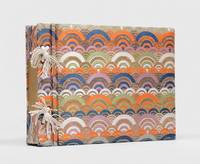
1934180258Japan: 1934. A last-ditch attempt to repair Anglo-Japanese relations A well-preserved photo album presented by the Japanese government to members of the Barnby mission. This delegation was "unofficial and supposed to deal solely with commercial issues but the Japanese government and media treated it as if it had a political purpose much to the embarrassment of the British Embassy" Cortazzi p. 141. WorldCat lists no other examples. After the invasion of Manchuria and Japan's withdrawal from the League of Nations in 1933 a pro-Japanese group in Britain centred on Neville Chamberlain attempted to repair relations between the two countries. The group was led by Colonel Lord Barnby the former president of the Federation of British Industries and staffed by representatives of the Iron and Steel Federation and the banking firm Seligman Brothers. Officially its goal was to investigate business opportunities in the new colony but as the Japanese ambassador Matsudaira Tsuneo wrote "its real aim is to promote friendly relations between Japan and Britain and between Britain and Manchukuo" Nish p. 19. The delegation was greeted by an audience with the emperor much to the horror of the British ambassador Robert Clive who suspected that their friendliness was simply a ruse to persuade the British to "accept a subordinate position in East Asia" Cortazzi p. 142. The mission caused such a stir that it was debated in parliament on 7 November 1934 where Viscount Cecil of Chelwood asked whether the Japanese government had been properly informed of its non-political nature. The first photograph shows the mission meeting with the Japanese delegation and the final photograph shows the interior of a railway car. There are also many photographs of traditional Japanese sports and performing arts as well as the scenery of famous places like Nara Hakone and Kyushu. Oblong folio. With 60 gelatin silver photographs landscape or portrait approximately 105 x 152 mm mounted recto and verso on grey card with captions in English. Original patterned brocade white thread musubi-toji binding spine ends capped with patterned brocade gilt-speckled endpapers gilt edges. Brocade fresh a little frayed at edges a few leaves sometime strengthened with tape at the gutter photographs bright with a little toning and silvering at edges: a very good example. Hugh Cortazzi British Envoys in Japan 1859-1972 2021; Ian Nish Anglo-Japanese Alienation 1919-1952: Papers of the Anglo-Japanese Conference on the History of the Second World War 1982. unknown
184324188St. Louis: John B. Sarpy 1843. Folio. 2 pp. 12 1/2 x 7 1/2 inches. Docketed on verso fold lines with some separation a few repaired. A manuscript affidavit written by fur magnate John Baptiste Sarpy of Pierre Chouteau & Co. that gives one a granular sense of the difficulities of running a frontier business dependent on mountain men like Jim Bridger and Frapp.<br/> <br/> A remarkable window onto the business dealings of famed mountain man Jim Bridger this signed manuscript affidavit of John B. Sarpy testifies to his actions on behalf of the estate of fellow fur trader Henry Fraeb also known as Frapp who was killed by Indians in the Rocky Mountains. Sarpy who was a partner in the major fur firm Pierre Chouteau &. Co. had worked closely with Frapp and knew him well. In his affidavit he writes about the Chouteau Company's concerns about Jim Bridger Frapp's partner at the time of his demise and the difficulty of getting Bridger to pay his debts. Written in St. Louis Sarpy's affidavit states: "On the 8th day of August last he was appointed . . . administrator of the estate of Henry Fraeb then lately deceased. Said Fraeb had been a trader in the mountains & was at the time of his death in partnership with a man of the name of James Bridger & said Bridger & Fraeb were indebted to the firm of Pierre Chouteau Jr. & Co. & it was feared by the members of said firm that unless some one became the administrator of the said Fraeb the said Bridger might interpose difficulties in the settlement of the accounts existing between them & Bridger & Fraeb & for the purpose of doing justice to themselves as well as to the said Fraeb the said Sarpy applied for letters of administration which were granted to him as above mentioned. The said Bridger has however since this time been here & has settled in full the accounts existing between the firm of Pierre Chouteau Jr. & Co. & the said Bridger & Fraeb. And the said Sarpy says that no property has come into his hands as the administrator of the said Fraeb although it may be that the said Fraeb has property in the mountain country or in the hands of James Bridger his former partner." Though he may have been one of the greatest and most beloved mountain men of all time Jim Bridger was not the best debtor in the world nor did Pierre Chouteau & Co. forget business. John B. Sarpy unknown
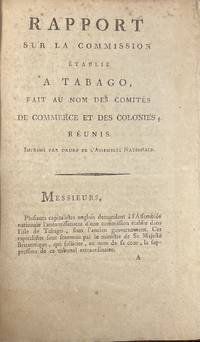
17913649Paris: Imprimerie Nationale 1791. First edition. Bound in later hardpaper boards covered with pastepaper spine with red gilt leather title vignette. Untrimmed. Paper tanned. Otherwise in very good condition. First edition. Bound in later hardpaper boards covered with pastepaper spine with red gilt leather title vignette. 18 2 blank p. <p><br /> Official report on the 1786 “Commission de Tabago†an extraordinary tribunal established to examine debts between British creditors and settlers after the French conquest of the island.<br /> <p><p><br /> First edition of the National Assembly’s official report on the controversial “Commission de Tabago†an extraordinary tribunal established in 1786 under the ancien régime to review debts between British capitalists and settlers after the French conquest of Tobago.<br /> <p><p><br /> The report reconstructs the background of the island’s transfer: originally ceded to Britain in 1763 Tobago had been largely settled and financed by British investors who lent capital for the development of sugar estates secured by mortgages. Following the French conquest 1781 and definitive cession Treaty of Paris 1783 the treaty guaranteed the inhabitants’ property rights under English law. Nevertheless in 1786 the Conseil du Roi created a special commission at Tobago to investigate alleged usury and excessive interest rates in these mortgage contracts. The commission—presided by the governor and ordonnateur—confiscated titles annulled or reduced debts and declared most English claims void provoking losses estimated at over 13 million livres.<br /> <p><p><br /> This Rapport examines the legality of the tribunal under both French and English law concluding that it was arbitrary unconstitutional and in violation of the 1783 peace treaty. The committees show that English statutes were misquoted that the island’s existing courts Common Pleas and Chancery already had proper jurisdiction and that no disputes existed before the commission was imposed. The report also denounces the suppression of trial by jury and the disregard of due process. It recommends—and the Assembly accepted—that the entire commission and its judgments be annulled thereby restoring lawful jurisdiction in the colony. The episode marked one of the last acts of French administration on Tobago which was recaptured by Britain in April 1793 returned to France in 1802 under the Treaty of Amiens and formally surrendered under the Treaty of Paris in 1814.<br /> <p><p><br /> An important Revolutionary document reflecting early attempts to reconcile French constitutional principles with colonial administration and international treaty obligations.<br /> <p><p><br /> Not in Sabin. No records on RBH. WorldCat locates 6 copies.<br /> <p>. [Imprimerie Nationale] unknown
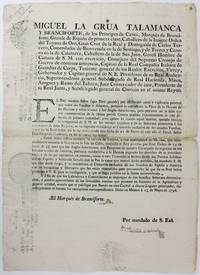
17965074Mexico City: May 13 1796. About very good. Broadside 17 x 12.25 inches. Old fold lines. Slight separation and loss at center fold slightly affecting a few letters. Minor wear else. Proclamation made by the Viceroy of New Spain authorizing trade between Cuba and the United States. The Caribbean was in tumult in the 1790s with Toussaint L'Ouverture overthrowing the French colonial government and outlawing slavery. Likewise in Cuba there was a similar revolt against slavery demanding abolition and equality -- both revolutions were of substantial concern to slaveholders in the American South. Specifically the present decree mentions flour and other vital foodstuffs as a measure against shortages in Cuba intended to prevent further trouble. "Para precaver la escasez de viveres y con especialidad de harinas que verosimilmente causaria la guerra concedio El Rey Permiso por Real Orden de 25 Junio de 93. para que los Anglo-Americanos.pudiesen conducirlos a la Havana pagando los derechos los puertos habilitados de España." The Viceroy at the time was Don Miguel de la Grua Talamanca de Carini y Branciforte First Marques de Branciforte. The Marques was notoriously corrupt even for colonial Spain having gained position through marriage to the Prime Minister's sister. He made sure to make some profit on everything that passed through his hands including taking advantage of the War in Cuba to remove the French from their lands and sell them to his benefit. A rare and interesting decree. We locate a single copy in OCLC at the University of Minnesota. May 13 unknown
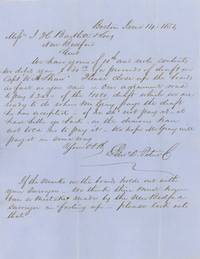
1855List3333Massachusetts New York Maine Pennsylvania and others 1855. Fifty letters with four empty envelopes or covers. Forty-four letters addressed to I.H. Bartlett & Sons: two from the 1830s eight from the 1840s and thirty-four from the 1850s. With five letters addressed to Capt. John C. Blanchard 1838 1839 1844 and 1849 and one to Cumston & Hatch N.d. Overall excellent to Near Fine. Ivory Hovey Bartlett 1794–1871 was a merchant and whale oil seller based in New Bedford Massachusetts. Bartlett moved to New Bedford from Plymouth in 1819 first dealing in grain and later transitioning to general merchandise and whaling.1 Whale oil and spermaceti were widely used in lamps and as lubricant and whalebone baleen was used for structure in items like umbrellas and corsets. In the nineteenth century whaling was the basis of New Bedford’s economy—supporting shipbuilding refineries toolworks and more—making it the wealthiest city in North America at the peak of the industry in the midcentury. Whaling declined in the 1860s with the rise of petroleum which could be both used as a lubricant and distilled into kerosene for lighting.<br /> <br /> Offered here is a collection of letters mainly to Bartlett’s company I.H. Bartlett & Sons with five to Captain John C. Blanchard of Searsport Maine and one to Cumston & Hatch. The latter is unknown; Blanchard was in the cotton and sugar trades sailing between the US Europe and West Indies.<br /> <br /> Letters to Bartlett are mainly from other mercantile firms; they pay bills make purchases discuss oil prices and occasionally complain. For instance Robert Robinson of Portland Maine writes:<br /> <br /> “I have just got 4 Casks of my oil 3 of the last and 1 of the invoice of 30th ult. I cannot understand why my oil should be keep back in this way. Hyde had seven casks by yesterdays Boat the same boat which mine came by it seem’s as if the fates where against this Oil as yesterday boat did not arrive untill late yesterday afternoon and this mornings boat has arrived without the balance there must be something wrong somewhere . I must say I think such neglect should be made known but perhaps it would be better to suffer for fear of the future. I shall not be able to get off any oil untill tomorrow as the oil was not out of the boat untill this morning. it is not thirteen days since that one cask left New Bedford .â€. October 13 1852<br /> <br /> Most of Bartlett’s customers buy whale oil though beef molasses and coal are also discussed but some are interested in whalebone; as are Wright Bros & Co a Philadelphian umbrella manufacturer who write to complain about market speculation:<br /> <br /> “The fact appears to us that speculation and the calculation of holders put the price kept it so high that it considerably lessened consumption – so much so of late that some have been disposed to slide it off below New Bedford rates very quietly.†October 23 1852<br /> <br /> The letters to all parties are generally all business except for two of the five to John Blanchard: one from his wife Caroline Houston and one from fellow Searsport captain David Nickels Jr. 1823–1888 who writes from Bangor:<br /> <br /> “I see by to day’s Mercantile gazette that you are in trouble I can sympathize with you God knows I have had a good share of it since I left the land of Gospel light and liberty as the good people say in their prayers I have been in this place fifteen days you doubtless knew I was chartered by Capt Pendleton to go from Leith to Bangor for a cargo of slates and from here to Boston I sailed from Leith on the 27th of November last for this place I got as far as the Orkney Islands on the 30th of November the wind blowing heavy from the westward and having a pilot belonging to the Orkneys on board I concluded to take the harbour of Longhope and lay till a shift of wind or till it moderated . in spite of all our endeavouring we were driven on shore broke the keel out of her filled as high as the lower deck which was on the 3d of December and on the 22d of March we left the Orkney Islands after having been near four months there When I got here I found the man who was to freight the Barque from here to Boston had neglected to place funds in the hands of the slate agent of this place consequently he refuses to put slates on board of the vessel till he receives funds from Boston .â€. May 13 1849<br /> <br /> Overall a look at the dealings of maritime merchants in the mid-nineteenth century particularly in the critical east coast whaling industry.<br /> <br /> 1 “Death of a Well-Known Merchant†The Standard-Times February 6 1871 2. unknown
193042850Leicester UK: Cascelloid 1930. Very good . Beautifully-produced trade catalogue from the Cascelloid "Palitoy" company displaying a wide range of baby dolls and other toys. Several uncomfortable designs of black children with pitch-dark skin date this catalogue at roughly the 1930s when the Cascelloid company was dubbed the "House of Constant Progress" by the industry press for its material innovations with the plastics Bexoid and Plastex. One page features a celluoid model by the noted designer Mary Lucie Attwell a doll named "Diddums." The catalogue also displays the company's offerings of animal dolls die-cast trucks pool toys golf and ping-pong sets rattles pinwheels and more. Needless to say color photography was not the norm at this time and this catalogue comprises a beautiful set of vivid and sharp photographic prints. A truly exceptional example unlike anything we've seen: simultaneously surreal and nostalgic. Oblong 4to. album. Blue leather-covered boards. Contains 29 color photographs all 9" by 6.5" approx. mounted on rectos one each of light-gray cardboard leaves. About very good plus overall. Moderate rubbing and edgewear to boards. Several pages display mild soiling and offsetting from photos. Prints just a bit yellowed but remain sharp vivid and clean. [Cascelloid] hardcover
1893607017Lowman & Hanford 1893. First Edition. Wraps. Very Good. A Rare Northwest imprint; this was from the library of noted historian Edmond S. Meaney with his signature to the front pastedown and further inscribed 'From C. T. Conover Seattle Wash.' This copy has been specially bound with a leather spine and two bevelled and varnished wooden boards. 38pp. with 10 b/w plates one panorama shot of the waterfront and one map. Issued as a souvenir for Seattle's guests on the occasion of the celebration commemorating the completion of the Great Northern Railway to its Pacific terminus at Seattle and the inauguration of through traffic June 1893. WorldCat only located 3 copies. [Lowman & Hanford] unknown
19391729691939. INK TRADE CATALOGUE. Kraski. Trest 'Poligraf'. 173 unnumbered leaves of text and illustrations. Vertical 4to 265 x 175 mm publisher's cloth fastened with string. Moscow: Nauchno-issledovatel'skii institut poligraficheskoi i izdatel'skoi tekhniki 1939. The State Trust of the All-Union Economic Council of National Economy "Poligraf" existed since 1924 and produced movable types. They also produced printing inks. In this sample book they are divided by the techniques they were intended for: movable-type printing lithography offset lithography mezzotint. The samples are on different kinds of papers to show the differences for printing. At the end is an overview of complementary mixtures and drying oils including fatty printing pastes to increase the capacity of printed forms. One of 300 copies only. Of the greatest rarity and not listed on OCLC. hardcover