1 488 résultats
19432091502135500120Not Available 1943. Soft Cover. Fine. Number of pages: Mimeograph Internal material size: 18x24 cm Not Available paperback
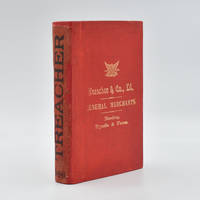
190621209251906. Mumbai: The Times Press. 1906. 8vo. Publisher's red cloth upper board lettered in gilt spine lettered in black; advertisements to pastedowns; pp. x iv xxi 1 blank '800' i.e. 802 xi-xviii continued pagination from advertisements at front free endpapers included in pagination; pp. ii-x and xi-xvii printed on pink paper numerous lithographic in-text illustrations throughout p. iv printed in pink 23 ff. plates of which 6 on pink paper 9 in colour and 2 double-page pp. 352-530 'Jewellery and Hall-Marked Goods' printed on thick paper; rebacked with original spine laid down plate facing p. 732 with two central closed cuts browning to 2 ff. tipped-in advertisements after p. 330; a very good copy; contemporary manuscript corrections to p. i. An extensively illustrated and very rare Mumbai-printed trade catalogue advertising goods for the British market in India encompassing an extraordinary range of products from gunpowder to soap and everything in between with numerous coloured plates.Treacher & Co. were a prominent British-run firm operating as merchants druggists and chemists based in Bombay Mumbai and Poona Pune during the late nineteenth and early twentieth centuries. This extensive catalogue presents a vivid picture of colonial consumption and supply advertising an exhaustive array of merchandise including toiletries; crockery; agricultural machinery and flower and vegetable seeds; pipes; sporting equipment and 'Gymkhana kit' including Brooks' bicycle saddles for both men and women bicycle pumps dumbbells and Sandow's Obesity Reducer and Sandow's Combined Developer; alcoholic drinks as well as 'Sparklet's' carbonation tablets and 'Seltzogenes for the production of sodawater lemonade gingerade &c.'; parlour games including board games billiards roulettes and table bowls; cameras; books and medical remedies; jewellery; and more. The catalogue features numerous plates many chromolithographic or printed on coloured paper advertising china sets gunpowder biscuits tar and vinolia soaps California poppy perfumes Windsor & Newton's paints and hair lotions inter alia. A contemporary owner has corrected in manuscript the names of two of Treacher & Co.'s directors to p. i.No copies traced on OCLC or Library Hub. hardcover
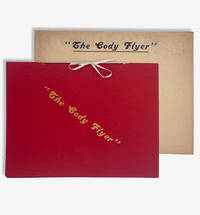
191221208461912. Aldershot: Gale and Polden. 1912. 4to. Original red card wrappers lettered in gilt original printed envelope preserved; pp. 11 1 highly illustrated after photographs and drawings printed on yellow blue and white coated paper; wire-stitching removed and replaced with new ties traces of oxidation along gutters final page with a little offsetting from red wrappers; a rare survival with the original printed envelope this a little spotted.Extremely rare trade catalogue for the Cody mono- and biplanes as well as a manned war kite. 'Samuel Franklin Cowdery was born in 1867 in Davenport Iowa was a Wild West showman and early pioneer of manned flight. He changed his name to Cody at age 21 when he was part of a touring Wild West show not to be confused with that of Buffalo Bill Cody. He is most famous for his work on the large kites known as Cody War-Kites that were used by the British in World War I as a smaller alternative to balloons for artillery spotting. Financed by his Wild West shows Cody's unusual interest in manned kites advanced significantly when he enlarged upon Lawrence Hargrave's double-cell box kite to increase its lifting power especially by adding wings on either side. He patented his design in 1901 and it became known as the Cody kite. Cody eventually managed to interest the British Army in his kites. In 1906 he was appointed Chief Instructor of Kiting for the Balloon School in Aldershot and soon after joined the new Army Balloon Factory down the road at Farnborough. The Factory would eventually become the Royal Aircraft Establishment. In 1908 the War Office officially adopted Cody's kites for the Balloon Companies he had been training. This group would in due course evolve into the Air Battalion of the Royal Engineers No. 1 Company of which later became No. 1 Squadron Royal Flying Corps and eventually No. 1 Squadron Royal Air Force. During 1907 he was given full authority as the designer of the the British governments dirigible understructure and propulsion system. On 5 October 1907 Britain's first powered airship British Army Dirigible No 1 and using Cody's engine the Nulli Secundus flew from Farnburough to London. In 1907 the British Army decided to back the development of Cody's powered aeroplane the British Army Aeroplane No 1. His flight of 16 October 1908 is recognized as the first official flight of a piloted heavier-than-air machine in Great Britain. He went on to win a number of aeronautical awards and started developing his own aircraft company. That company produced the Cody Flyer a monoplane for which this pamphlet was issued. On 7 August 1913 he was test flying his latest design the Cody Floatplane when it broke up at 200 feet and he and his passenger the cricketer William Evans were killed' Nat DesMarais Rare Books. The 1908 British Army Aeroplane No.1 was actually Cody's biplane sometimes called Cody 1 later officialy referred to as The Cody Flyer. 'On 16 October at Farnborough it made what is recognised officially as the first sustained powered flight in Great Britain by a heavier-than-air machine covering 423.7m before crash-landing' Virtual Aircraft Museum online.Library Hub locates a single copy in the National Aerospace Library. unknown
19392091502135501147Binjiang Chamber of Commerce and Industry 1939. Soft Cover. Fine. Number of pages: 2 4 303p Size: 16x24cm Binjiang Chamber of Commerce and Industry paperback
19332091502135307713Not Available 1933. Soft Cover. Fine. Volume: 1 Not Available paperback
19102091502135501018Mukden Chamber of Commerce 1910. Soft Cover. Fine. Number of pages: 2 Size: 19x26cm Mukden Chamber of Commerce paperback
19312091502135500838Yingkou Chamber of Commerce 1931. Soft Cover. Fine. Number of pages: Transcription 80p Size: 26cm Yingkou Chamber of Commerce paperback
1983mon0000074968U.S. Government Printing Office 1983. Paperback. Very Good. in x in x in. Light shelf wear. Otherwise clean and tight. No cover as issued. U.S. Government Printing Office paperback
1901106049Ludwigshafen am Rhein: Badische Anilin- & Soda-Fabrik 1901. First Edition. Hardcover. Very Good. Ludwigshafen am Rhein Badische Anilin- & Soda-Fabrik 1901. Quarto x last blank 534 xi index pages plus 2 plates showing the company's German French and Russian factories and 20 'Pattern Sheets' with over 620 captioned mounted samples of dyed fabrics and threads. Original half morocco-grain cloth with green cloth sides embossed with a crocodile-skin pattern; spine lettered and decorated in gilt; joints cracked but sound; covers slightly marked with light wear to the corners and minor loss to the head and foot of the spine; paper lightly toned with occasional light foxing; a few trifling signs of use; overall a very good copy with the wonderful fabric samples uniformly bright and in fine condition. A comprehensive manual to the aniline dyes produced by the Badische Anilin- & Soda-Fabrik including detailed instructions for dying yarns and printing fabrics. The mounted samples comprise wool 135 fabric swatches; cotton 180 swatches and tassels of thread; silk 138 tassels; blended fabrics 96 swatches; and printed fabrics 72 swatches and tassels. The verso of the front flyleaf contains a printed generic 'with compliments' message ending with 'For Own Use Only'; this copy was presented to the John Young & Company cotton mill in Radcliffe Manchester in January 1907. Founded in 1865 the Badische Anilin- & Soda-Fabrik was a pioneer manufacturer of synthetic dyes. Still based in Ludwigshafen and now trading as BASF it is currently the largest chemical producer in the world. Badische Anilin- & Soda-Fabrik] hardcover
1914B6358Sydney: Anthony Hordern and Sons. 1914. Hardcover. Very Good. Some light water marks confined to prelims. Some corners lightly worn.; Rebound in burgundy buckram title label in gilt. Original cloth cover laid down.; Small 4to 9" - 11" tall; 1530 pages; Overall an excellent specimen of a rare WW1 issue . Anthony Hordern and Sons hardcover
1973ZB644081Berkeley Calif. ; Vancouver : Faculty of Commerce and Business Administr 1973. Volumes 9-26 lacking Volume 18 else an uninterrupted run of complete volumes partly bound minor library markings else text clean & bindings tight. - If you are reading this this item is actually physically in our stock and ready for shipment once ordered. We are not bookjackers. Buyer is responsible for any additional duties taxes or fees required by recipient's country. Photos available upon request. Berkeley, Calif. ; Vancouver : Faculty of Commerce and Business Administr unknown
19432080502106912069Not Available 1943. Soft Cover. Fine. The book is in fine condition. Not Available paperback
19106626New Orleans; New York: The Board of Trade; Printed by H. R. Elliot & Co. Printers and Embossers 1910. Stapled booklet 10.25 x 15.25 cm. 14 unnumbered leaves; printed text decorated with red borders on rectos only. Cover title: Recipes for Cooking Rice. Author information inferred from external evidence. Printer from rear panel of wrappers. ~ Evident FIRST EDITION. A promotional publication designed “to create a greater interest†in a foodstuff that had yet to become a staple in many parts of the United States. With a dozen recipes including Gumbo Soup Jambalaya Belle Calas fritters Rice Pudding Riz au Lait. ~ The phrase “Louisiana Rice Exhibit†can be found in reference to displays in the agricultural halls of world’s fairs – the World’s Columbian Exposition Chicago 1893 for instance as well as the Louisiana Purchase Exposition St. Louis 1904 – but in the event the phrase is better understood not as an installation but as a program. The New Orleans Board of Trade had indeed exploited opportunities to educate the public by such means cf A. C. Cantley “Rice Display by Louisiana at World's Fair of 1904†The Planter and Sugar Manufacturer 32 no. 7 February 13 1904 page 121 but it would have been highly unlikely for booklets such as How to Cook Rice to have been produced specifically for them without bearing any mark of the association. Moreover Louisiana Rice Exhibits so-named were also staged at parish fairs livestock shows even horse races. Their visual aspect was meant to entrance and amuse. “The New Orleans Board of Trade made a very splendid exhibit†a trade paper reported “at the National Farm and Livestock Show with a display of all the products it handles with the centerpiece a working model of a rice mill†“Current Rice News Notes†The Rice Journal and Southern Farmer 19 no. 12 December 1916 page 33. ~ Founded in 1880 the Board itself coordinated among many other activities rice shipments from mills in Louisiana and to a smaller extent from eastern Texas and Arkansas too. In this case their printing contract with H. R. Elliot & Co. places the publication later than the Chicago Exposition as this form of name was not in use until after 1900 “The Manufacturing Stationer†Walden’s Stationer and Printer 31 Spring 1909 page 16. The date of issue proposed here rests on reports that the Board of Trade distributed booklets in or perhaps slightly before 1910 a note for example from the American Poultry World recorded that recipes from the Louisiana Rice Exhibit of New Orleans had been received 1 no. 5 March 1910 pages 354-355. ~ Interior clean and bright. Stapled in ivory wrappers with gilt illustration of rice plants overseen by a pelican in honor of the Pelican State. Near fine. OCLC locates four copies; Uhler 252; New Orleans Culinary History Group page 152; not in Bitting Brown or Cagle. [The Board of Trade; Printed by] H. R. Elliot & Co., Printers and Embossers paperback
19127149London and Liverpool: The Journal of Commerce 1912. Book. Good . Hardcover. First Edition. Somewhat worn copy bound into burgundy boards with worn extremities. This is the first one volume edition of the reports that were published serially in the Journal of Commerce at the time. The original paper cover is loose but easily re-attached. Advertisements interspersed among the daily reports. Internally very good. The first comprehensive account of the Titanic disaster. May - July 1912 . 272 pages. Scarce. The Journal of Commerce Hardcover
19832080402107100702Iwasaki bijutsusha 1983. Soft Cover. Fine. The book is in fine condition. Iwasaki bijutsusha paperback
2000Manohar-9780521780957Cambridge University Press 2000. Hardcover. New. Cambridge University Press hardcover
19532091502135419069The Electric Association of Japan 1953. Soft Cover. Fine. Number of books: 1 The Electric Association of Japan paperback
19372091502135501205Korea Sinuiju Chamber of Commerce 1937. Soft Cover. Fine. Number of pages: 107p151p Size: B5 size 19x26 cm Number of books: 2 Korea Sinuiju Chamber of Commerce paperback
19392091502135501149Jinzhou Chamber of Commerce 1939. Soft Cover. Fine. Number of pages: 130p 119p Size: A5 size 16x23 cm Jinzhou Chamber of Commerce paperback
1973mon0000365085Stationery Office Books 01/08/1973 00:00:01. paperback. Acceptable. in x in x in. Ex-library book usual markings. Well read with wear to spine front chunck of pages are loose from spine cover but still very useable. Stationery Office Books paperback
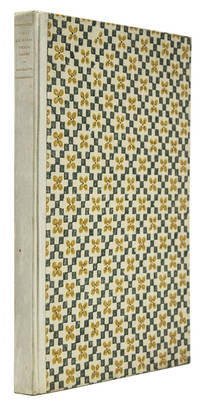
1927250121New York: William Edwin Rudge 1927. First Edition. One of 50 copies specially bound with a double-page frontispiece color reproduction of a trade card for a Mitchell & Crosdale Philadelphia dealer in Sperm Whale Lard & Tanners Oils Candes Rice & c. of Whale killing. XLIV plates uncut. 25 pages of text. 1 vols. 4to. Bound in quarter vellum and patterned boards. Very Fine in remains of original glassine. First Edition. One of 50 copies specially bound with a double-page frontispiece color reproduction of a trade card for a Mitchell & Crosdale Philadelphia dealer in Sperm Whale Lard & Tanners Oils Candes Rice & c. of Whale killing. XLIV plates uncut. 25 pages of text. 1 vols. 4to. William Edwin Rudge unknown
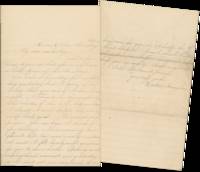
1909List3421Ohio Illinois Michigan and Ontario 1909. Seventy-four letters in thirty-seven envelopes mainly dating between 1885 and 1895. With two undated and one empty envelope. Conditions vary with a few letters having damage intersecting with significant amounts of text and others Near Fine. Overall excellent. A collection of letters mainly sent between Captain William Faragher 1842–1921 and his second wife Harriet Chamberlin 1853–1920 with several from Faragher’s children from his first marriage Burton 1872–1961 and Maude 1875–1952. Most letters are from Chamberlin to Faragher with fourteen from Faragher to Chamberlin.<br /> <br /> Faragher owned and captained several merchant ships in Lake Erie and Lake St. Clair—presumably sailboats as he frequently complains of having been stuck without wind. He also describes more severe weather out on the lake writing from St. Clair Michigan:<br /> <br /> “I am anxious to get down from here but as the day advanced the wind began to frisken and it began to snow hard and as it was freezing hard it had rained then snowed and then froze hard saturday night so the poor Venture was in a sad plight but she was in a worse one when we got to where we lay run as it breezed up fresh and the wind dead ahead the water was flying over her in all directions and froze wherever it fell and besides it had turned into a blinding snow storm but we had a certain point to make . she seemed as anxious to get to a place of safety as I did and as the boys say she got there and none too soon as it has been blowing a gale ever since and snowing and freezing but we are in the lee and at a good dock and are comfortable but oh the wind is whistling through the rigging .†November 20 1887<br /> <br /> In the 1880s steamships were increasing in popularity on the Great Lakes primarily because of sailboats’ susceptibility to both calm and weather; steamboats were bulky for their capacity and slow but more reliable whereas sailboats could carry overall more cargo.1 Generally steamers took packaged goods and passengers and sailboats mainly schooners took bulk cargo. The Great Lakes were the site of much shipping innovation; Faragher’s fleet was not yet behind the times but steam would overtake sail in the 1880s and 90s.<br /> <br /> Faragher’s cargo was mainly produce—apples and grapes—though he does mention picking up salt and other materials. His letters indicate that his business involved both shipping and mercantile aspects: he chose and bought the products shipped them to their destination and then also had to find and sell to customers. The grapes in particular seem to cause a lot of trouble:<br /> <br /> “We left Lorain Sunday morning early and had a nice trip to the Island got there at 4 PM bustled around monday morning and bought 400 baskets of grapes and had them all aboard by dark . it commenced to snow just as we got to Marine City bad bad omen for grapes but imagine my chagrin when I went up town and not a store or commission house wanted a grape folks were full of grapes and there was no sale for them and they said that I had got left and if the truth were known they were glad of it but its a cold day when I get left if trying will lit me out but one thing certain the weather and the lateness of the season were against me but you know I never cross a bridge before I get to it well we hauled up to our old Island Saturday morning and I sold out to my old friend . we had sold since 11 am 190 baskets of grapes . only half our cargo and at a good margin too. People would ask are you the man that was arrested here for selling grapes when told yes they seldom failed to buy but the strangest part was the number of ladies that came to buyâ€. October 28 1887<br /> <br /> Though he does not narrate the incident in which he was arrested for grape peddling—nor does it appear to have made the paper—he later mentions yet another grape-related debacle this time at Port Huron:<br /> <br /> “Sander and I went to town to sell the grapes today . when down came a city official and wanted to know if I had a license to sell . well I couldent sell another grape without paying 5.00 a day license that was a stormer you see the whole sale men were going to drive me out of the market . but they were not as sharp as they thought they were I went and gave a bill of sale of my whole cargo to a citizen here and he appointed one of his agents to sell the grapes†September 20 1888<br /> <br /> Faragher’s letters here do not discuss the financial state of his business but given Chamberlin’s statements it cannot have been all too positive. Chamberlin’s letters depict a woman struggling with her financial circumstances and with how the era’s expectations of her gender intersected with them. In one illustrative letter she writes:<br /> <br /> “A man drove by here Sat. asking for you. Ms. Lawler has given him her note to collect. He says the interest brings it to nearly fifty dollars. I told him I thought you could not meet it just at present but he said he must have the money and would give you just one week and if it was not paid then he would let the law settle it. Marvin and Laird are his lawyers. Mr. Laird is the one who helped get my money from father’s estate. I would not have them connected in this way about you for – O a great deal!! I have thought and planned till it seems as though my brain would burst. I have inquired about that law regarding taking any more married women as teachers. If Mr. Day would work for me it might perhaps be broken. There will be a vacancy in the Detroit building this fall. Will if I possibly can I want to commence teaching in Sept. The children would have to learn to do more about the house and with both of us earning it seems as though some of these harassing debts must be settled after a time. The frequent calls of men with bills against you have taken away all my pride and I believe I am humble enough to do most anything now.†July 11 1887<br /> <br /> In 1887 Ohio passed the Married Women’s Property Act which allowed married women to keep their own property separate from their husbands’—in fact Chamberlin occasionally mentions “her†money in her correspondence. At the same time the state’s Board of Education was debating passing an act that would not only ban school districts from hiring married women as teachers but also fire all the married women it then employed. Newspaper reporting at the time indicates that this measure was not particularly popular not the least because married women tended to be older and more experienced with the job.<br /> <br /> Chamberlin clearly perceives her role as a wife in a rather more progressive way at one point writing to Faragher that “a true wife†is “not a doll-baby to be kept in finery†N.d. after he had taken out a loan to send her money for a new hat. Throughout their correspondence Chamberlin is perhaps surprisingly open with Faragher about her opinions particularly on his work and their financial affairs; for instance:<br /> <br /> “I should like to examine your pocket-book after that $25 tax money left it. What are you going to live on up there while you are hunting for freight Sawdust won’t put any fat on your bones. Sailing up and down past Saginaw bay won’t prolong your life or lessen your grey hairs. What are you sailing for anyway For the sake of wearing yourself out and giving employment to two or three men and keeping the Root from rusting out I guess I am naughty!†May 25 1894<br /> <br /> She also frequently provides her opinion on whether and at what rate Faragher should sell his two other ships besides the Root the Venture and the Sassacus. She continues in the same letter:<br /> <br /> “I know I almost had a regular fight yesterday morning right there on the lounge. I wanted to do my housework and I couldn’t. I wanted to sew and I couldn’t sit up long for that. I wanted to help you and I couldn’t. I wanted to earn money and whereas I used to earn fifty-five cents for every hour I worked now I can not earn anything. Then if I could not do for self and family I wanted to make church and S.S. calls but I couldn’t walk for that.†<br /> <br /> Of course she was at that time prevented from these activities by her health not by gendered standards but she clearly had financial ambitions for herself. After her time as a regular school teacher Chamberlin taught at a Sunday school where she earned a few cents per student and in one letter reported having eighty-one students in a single session. <br /> <br /> Chamberlin also struggles with the expectations of her as step-mother to Faragher’s two children from his first marriage to Emma Humphrey 1848–1880. She writes:<br /> <br /> “I get so discouraged sometimes and it seems as though I am in the wrong place as mother. I think of Emma as my sister. I want to do as she would have me. I look upon my work as sacred. And yet sometimes I feel as though life was not worth living.†November 5 1886<br /> <br /> She frequently describes conflict with Burt who was then in his late teens to early twenties writing that she could not “have quite the very own mother-love for him†though she is “sure that Emma was not more conscientious in her desires to do right by him than I am†May 20 1891. As it still is today the role of step-mother was a difficult and frequently demonized one with the trauma of losing a mother and wife often in conflict with the feminine duty of maintaining perfect domestic harmony. In general Chamberlin seems to have been somewhat out of step with the feminine ideal of the time even telling Faragher in a letter describing the death of an acquaintance’s baby how glad she was to not have any children of her own.<br /> <br /> Overall a look at the private lives and difficulties of a middle-class Ohio household as despite the relative prestige of its head being a captain-owner it struggled with debt. Of interest to both historians of Great Lakes trade and those of women’s roles in the late nineteenth century.<br /> <br /> 1 Dina M. Bazzill “The Missing Link Between Sail and Steam: Steambarges and the Joys of Door County Wisconsin†East Carolina University Program in Maritime Studies Research Report no. 19 2007. unknown
19505503N.p.: Ministerstvo Pishevoy Promishlennocti 1950. Octavo-sized accordion fold 25 x 18 cm. 24 pages. Illustrated with seventeen color plates by C.B. Popov. FIRST EDITION. A trade catalogue of Russian liquors issued by the Russian Ministry of Food. The spirits are of all types with a wide range of vodkas but also a rich variety of cordials brandies and dessert liqueurs. The handsome color plates all stand out for their single color backgrounds and the printing process would appear to have been a hybrid combining photolithography and lithography and then colored. Whatever one makes of the Soviet cultural landscape in general it did attain high standards in some fields and in a modest way this trade catalogue is a proud reflection of its aesthetic achievement. Clean and bright within. Textured wrappers with debossed copper lettering and gilt ruling; lightly soiled and with wear and some separation at spine. Good. OCLC locates no copies. Ministerstvo Pishevoy Promishlennocti unknown
193882843Paris: American Chamber of Commerce in France Incorporated 1938. Fourteenth Edition stated. Presumed first printing thus. Stiff boards. Good. Format is approximately 5.5 inches by 7.5 inches. xxiv 554 pages. Illustrated endapers. Stamp of the American Embassy on free end paper and stamp and signature and location of previous owner on second fep. Some cover wear and soiling. Cloth strip as page marker. Some looseness at hinges--heavy book for the hinges. Illustrations. Tabbed Sections with unpaginated illustrated dividers. General Index of American Officials Organizations Societies & Clubs Franco-American and International Organizations in which American participate. American Residential Directory: Home Business and Mil Addresses. American Commercial Directory: American firms establishes or represented in France Alphabetical Listing See also American classified trades and professions. American Classified Trades and Professions: See American Commercial Directory for Alphabetical Listing. General Information: Schools for Americans Chamber of Commerce in Paris Clubs and Sports Establishments in Paris Clubs Athletics and gold Environs of Paris Embassies Legations and Consulates in Paris Hotels in Paris Museums Restaurants in Paris Tea-rooms in Paris Theatres Concert-Halls and Motion Picture Houses in Paris Travel in Europe Railways Airways & Information Offices and Steamships Travel; and the final section on Advertisers: Home and Decoration a carpentry contractors decorators electrical installations flooring painting mosaics shades tapestries works of art; b heating plumbing roofing sanitary installation ventilation; Landscapists and Florists Pharmacies and Ambulances etc. This work constitutes a unique book of reference and by the completeness of its contents has become virtually indispensable to all Americans who live in France and to all others who require a convenient and trustworthy source of information concerning their names and addresses and their business and social affiliations. This 1938 fourteenth edition was the published in the last full year of peace before the German onslaught into Poland in September 1939 formally initiated the Second World War. As such it represents a marvelous snapshot in time of Paris before the world was shattered. It provides a unique surviving source of information as to the number and location of American expatriates living in France and also provides insight into the business and recreational entities available to them and American tourists and other visitors to France. Resources such as this would also have been used once the war commenced to the Office of Strategic Services the Special Operations Executive and other military diplomatic and humanitarian assistance organizations during wartime. American Chamber of Commerce in France, Incorporated hardcover