[EXPOSITION UNIVERSELLE DE 1900]Livre Rare Book
15 990 résultats
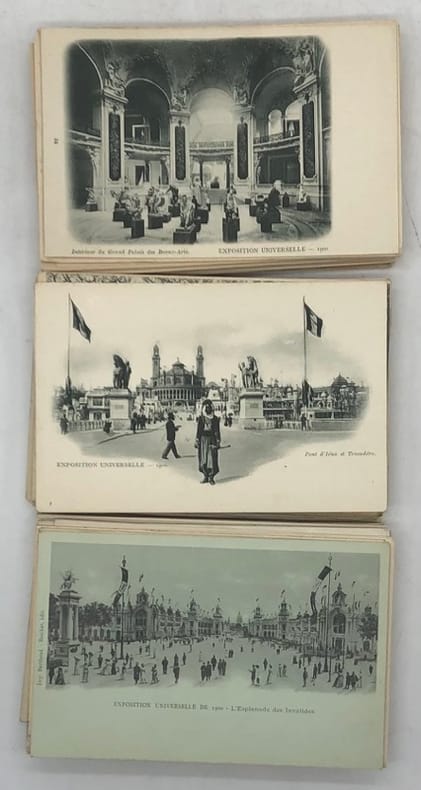
207589S.l., s.d. (1900) 176 cartes postales de format 9 x 14 cm,
1864154Paris, Imprimerie impériale, 1864. Grand in-4 de XXVI-1115 pp., couverture bleue imprimée.
176315240, , 1763. 2 parties en 1 vol. in-4 de 230-161-(1) pp. suivi de : Pièces justificatives des faits contenus au mémoire. Relié à la suite :Réponse du Sr Dupleix, à la lettre du sieur Godeheu. Paris, Cellot, 1763. In-4 de 330 pp.2 pièces reliées en 1 vol. in-4, cartonnage vert, dos lisse orné, tranches rouges (reliure de l'époque).
234656Paris, 1719 - 1784 17 pièces in-4, en feuilles.
234668Paris, 1701 - 1791 22 pièces in-4, en feuilles.
17582792A Rouen, Chez Richard Lallemant, 1758. 2 vol. in-8 de (VII)XII-524-(2)-319 pp. ; IV-VI-(2)-LII-764 pp., basane havane marbrée, dos orné à nerfs, pièces de titre et de tomaison en veau blond et vert, tranches rouges (reliure de l'époque).
Very Good Turkish, Ottoman (1500-1928) Original three autograph letters. 1+1+1 p. 'Ismail Pirge Biçak, Destere ve Tarak Imal ve Satis Yeri' letterhead. Signed by Ismail Pirge, who was the most important Turkish knife and pocketknife craftsman and manufacturer in Bursa city, third of six generations. They are two kind request letters. Written to Osman Bey. Dated 1948. In Ottoman script. One is written by a pencil, another is by a fountain pen with a black ink. Between the years 1877-1878 the Ottoman - Russian War (93 Harbi) after the Turks from the Balkans migrated to Anatolia, there was also a knife master Ismail Bey. In 1879, he started to work in Yahya Usta's shop (Yesilyayla Biçakçisi) in Okçular Çarsisi (one of famous bazaar which means 'Archery Bazaar' in Bursa city which still has touristic crafts) and started to produce knives and agricultural tools. When he died at a young age in 1885, his son Mehmet (Pirge) continued to do the affairs of Ismail Usta. The art of knives was thus passed on from father to son. In 1934, Mehmet Bey received the surname "Pirge" with Turkish Surname Law which means 'master who trained masters'. Ismail Pirge was son of Mehmet Pirge. At Okçular Bazaar, he and his craftsmen produced knives and accelerated trade with manufacturing. Thus, he began sending his products to a large part of Turkey, Iraq and Egypt in the 1970s. These autograph letters shed light on early history of this art comes from Ottoman tradition.
175611024A Metz, Chez Joseph Collignon, 1756. In-4 de 7 pp., demi-maroquin lie-de-vin à la Bradel (reliure moderne).
Very Good Turkish, Ottoman (1500-1928) Original hand-drawing and hand-coloured cloth bdg. with anchor drawing. 16mo .(13 x 8 cm). In Ottoman script. [218] p., 2 hand-drawing ills. (a mosque and a ship). Used pen and pencils during the notebook. Notes written between the years of 1926-1930. Full; only several pages are blank. Signatures on first pages and cover. Starting date is September, 11, 1926. Notebook mostly includes his lecture and personal notes on navigation. Some of chapters: It starts with an epigraph by Doris (?). Notes from fantastic realms (wonders of the world): Hanging Gardens of Babylon, Colossus of Rhodes, Great Pyramids of Egypt, Statue of Zeus at Olympia, the Lighthouse of Alexandria, etc. and their descriptions.; There are his course scores section in the name of 'Müzakere notlari'.; Navigation history notes.; His exam dates.; Diary for some days showing naval education in early Republican Turkey and some personal notes.; Some poems.; 'Beginning English for the Levant'.; Morse Alphabet with Ottoman script, etc. Cloth margins slightly rubbed, no missing. There is original pen pocket of note book, however its pen is missing. Some pages designed as an alphabetical index personally by writer. Otherwise it's a very good manuscript. No information on Hikmet Sakir.
178815755Londres et Paris, Buisson, 1788. In-8 de 174 pp., basane fauve, dos lisse orné, pièce de titre en maroquin, double filet à froid d'encadrement sur les plats (reliure de l'époque).
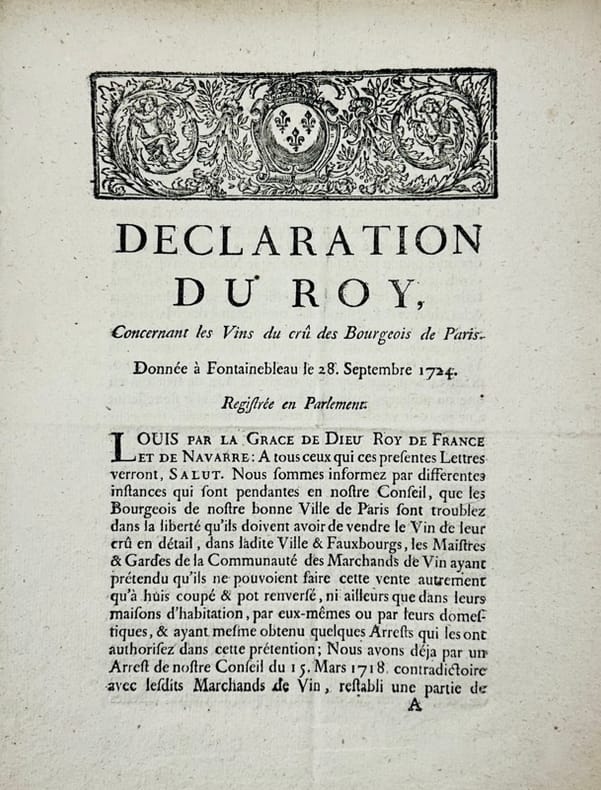
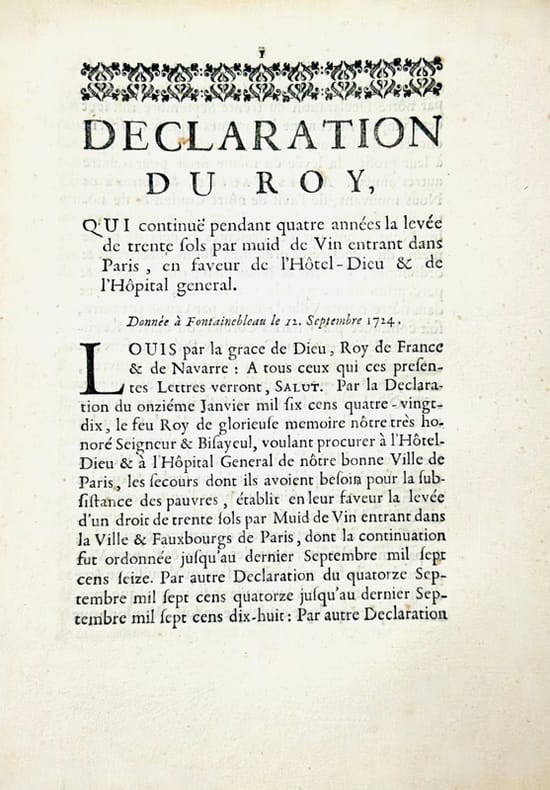
172444821Paris, De l’imprimerie royale, 1724. 1 vol. In-8 broché de 4 pp.
172444822Paris, Chez Louis-Denis Delatour & Pierre Simon, 1724. 1 vol. In-4 broché de 4 pp.
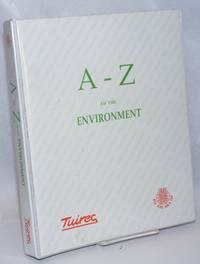
1995243317Ferney Voltaire France / Oxford: Public Services International / TUIREG 1995. Unpaginated loose leaves standard size printed recto only on good-quality alkaline paperstock bound in a four-ring snap-open plastic binder measuring12x10 inches. At least one hundred printed pages. Plastic has picked up slight dust-soil paper is immaculate a very good copy. How to address general disregard of environment by state and corporate bodies i.e. people's health and safety while adjusting for local situations. Public Services International / TUIREG unknown books
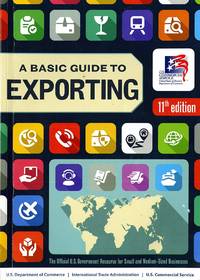
2508P-13998A-1506EGovernment Printing Office 2017-11-15. paperback. Very Good. 7x0x10. This Book is in Very Good condition. See our picture for exact item you will receive. All items ship within 24 hours. Packaging is 100% Recyclable. Most items purchased from Charitable organizations. A portion of each sale is also donated to a monthly charity check your package for this month's charity. Reuse-Recycle-Rebook! Government Printing Office paperback
251031007Government Printing Office 2017-11-15. paperback. Used: Very Good. 7x0x10. 11th Edition. Clean and unmarked. Some minor cosmetic shelf wear. From a private collection. Very good condition. Comes from non smoking home. Government Printing Office paperback
2009Q-0160792045International Trade Administration 2009-01-02. Paperback. New. In shrink wrap. Looks like an interesting title! International Trade Administration paperback
0963186493.Gpaperback. Good. Access codes and supplements are not guaranteed with used items. May be an ex-library book. paperback
0844233897New. paperback. New. Satisfaction Guaranteed or your money back. paperback
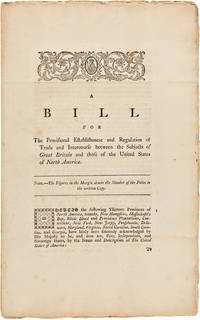
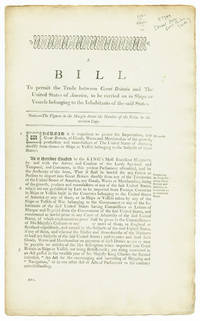
1788WRCAM47396London 1788. Paginations given below. Folio. Four of the titles string-tied as issued. First title lightly foxed and toned. Very good. In a half morocco and marbled boards box spine gilt. An interesting assemblage of British legislation from the period immediately following the Revolutionary War documenting British efforts to allow only very limited trade with the newly independent United States. British trade policy during this period is an excellent example of a foreign power taking advantage of the weak structure of the American Articles of Confederation which made it difficult for the thirteen states to act in concert and out of a any position of strength through unity. <br> <br> By 1783 the United States had formal trade relations with only two nations: France secured through the 1778 Treaty of Amity and Commerce; and the Netherlands via a Commercial Treaty negotiated by John Adams in 1782. Before the Revolution British merchants had relied heavily on exports sent to the British colonies in North America which greatly outweighed goods imported to Britain from the colonies. After the war the British government was reluctant to sign a formal commercial treaty with the United States. The states at the time were operating under the relatively weak structure of the Articles of Confederation and the British felt that they could secure the benefits of trade with the American states without making any treaty concessions. <br> <br> Britain opted instead for a series of acts that established limited trade with the United States and between the United States and Canada and the British colonies in the West Indies. The first of these laws was passed in 1783 and the evolution of that law is reflected in the first three items below. In all these British laws severely circumscribed American trade with England and with English colonies though they did allow some markets for American exports and did facilitate the flow of much needed imports into the United States. In 1784 British exports to the United States were valued at more than £3.5 million while American exports to England were less than one-fifth of that sum. The United States and Great Britain would not sign a formal trade treaty until the Jay Treaty which was approved in 1795 and which gave the United States limited trading rights in the British West Indies. <br> <br> The first second third and fifth titles below were printed in very small numbers for the use of members of Parliament during debate and action on the bills. Known as "slip bills" they are a snapshot of the legislation as it proceeded through the legislative process. The first and fifth titles contain blank spaces in the text where dates and tariff rates would be filled in later and all four of the slip bills have printed docketing on the final page. The first and fifth items also contain a printed note before the text of the bill reading "the figures in the margin denote the Number of the Folios in the written copy" which indicates just how early in the legislative process these bills were printed. <br> <br> The four bills and one act included in this group are: <br> <br> 1 A BILL FOR THE PROVISIONAL ESTABLISHMENT AND REGULATION OF TRADE AND INTERCOURSE BETWEEN THE SUBJECTS OF GREAT BRITAIN AND THOSE OF THE UNITED STATES OF NORTH AMERICA caption title. London. 1783. 31pp. This bill gives the United States the same trading status as other independent sovereign states but restricts American exports to Great Britain only to those goods that are "the growth produce or manufacture of the said United States." It thus forbad the "triangular" trade in which American merchants liked to engage while not imposing the same restriction on British exporters. ESTC locates only five copies. ESTC N32490. BELL G578 ref. <br> <br> 2 A BILL AS AMENDED IN THE COMMITTEE FOR THE PROVISIONAL ESTABLISHMENT AND REGULATION OF TRADE AND INTERCOURSE BETWEEN THE SUBJECTS OF GREAT BRITAIN AND THOSE OF THE UNITED STATES OF NORTH AMERICA caption title. London. 1783. 51pp. This bill expands on and further defines the previous bill clearly spelling out the limitations on American trade with England while imposing no such restrictions on English merchants and in fact making every provision to facilitate British exports to America. ESTC locates six copies. ESTC N32061. <br> <br> 3 A BILL AS AMENDED IN THE COMMITTEE TO WHOM THE SAME WAS RE-COMMITTED FOR THE PROVISIONAL ESTABLISHMENT AND REGULATION OF TRADE AND INTERCOURSE BETWEEN THE SUBJECTS OF GREAT BRITAIN AND THOSE OF THE UNITED STATES OF NORTH AMERICA caption title. London. 1783. 51pp. As with the previous two versions of this bill the language here explains that it would be "highly expedient" to have a trade treaty with the United States but until that point England would make due with legislation regulating Anglo- American commerce. The same restrictive language regarding exports from America is carried over. ESTC locates only five copies. ESTC N32016. <br> <br> 4 AN ACT TO EXTEND THE POWERS OF AN ACT.FOR GIVING HIS MAJESTY CERTAIN POWERS FOR THE BETTER CARRYING ON TRADE AND COMMERCE BETWEEN THE SUBJECTS OF HIS MAJESTY'S DOMINIONS AND THE INHABITANTS OF THE UNITED STATES OF AMERICA TO THE TRADE AND COMMERCE OF THIS KINGDOM WITH THE BRITISH COLONIES AND PLANTATIONS IN AMERICA.caption title. London: Printed by Charles Eyre and William Strahan 1784. 2715-716pp. This law specifically relates to British exports of iron hemp and sail cloth from the Baltic states to the United States. ESTC locates only three copies. ESTC N58431. BELL G585. <br> <br> 5 A BILL FOR REGULATING THE TRADE BETWEEN THE SUBJECTS OF HIS MAJESTY'S COLONIES AND PLANTATIONS IN NORTH AMERICA AND IN THE WEST INDIA ISLANDS AND THE COUNTRIES BELONGING TO THE UNITED STATES OF AMERICA; AND BETWEEN HIS MAJESTY'S SAID SUBJECTS AND THE FOREIGN ISLANDS IN THE WEST INDIES caption title. London. 1788. 91pp. This bill essentially prohibits American trade with Britain's colonies in the West Indies and prohibits American exports to Canada as well. The sole exemption is with regard to salt from the Turks Islands a product the English wanted to encourage. The bill allows American ships to receive salt on the islands. It also limits exports from the West Indies to America on such goods as sugar molasses coffee etc. to British ships only. ESTC locates only four copies. ESTC T201245. RAGATZ p.95. BELL G618 ref. <br> <br> An important group of rare working drafts of British legislation. hardcover books
1778WRCAM39128London 1778. 3pp. plus printed docket title on verso of second leaf. Bifolium. Three early horizontal folds. Very minor foxing and soiling. Near fine untrimmed. The rare Parliamentary printing of a bill relating to American trade under consideration by the house of Commons. In 1660 during the reign of Charles II Parliament passed a bill "for the encouraging and encreasing of Shipping and Navigation" which granted bonding for ships and vessels transporting goods from British plantations in Africa Asia and America directly to another British plantation or to a port in England Ireland or Wales. Three years later Ireland was struck from the list. The present law passed during the American Revolution restores Ireland's bonds privileges allowing her ports to accept goods directly from the colonies in the Americas now mostly limited to Canada and the West Indies Asia and Africa. Not in Kress Goldsmiths' or TPL. OCLC locates three copies at the University of Arizona the University of Texas at Dallas and the University of Regina Saskatchewan. A rare example of a law reflecting the changes of British mercantilism at the close of the First Empire. unknown books
1809WRCAM47399London 1809. 1pp. on a folded folio sheet with printed docketing on the fourth page. Folio. Lightly tanned around the edges. Near fine. Rare printing of a British Parliamentary "slip bill" seeking to reestablish trade between Great Britain and the United States a few years before the outbreak of the War of 1812 and in the midst of great tension between the two nations. This bill was considered by Parliament in the spring of 1809 in the wake of President Jefferson's rescinding the Embargo Act and following the negotiations between U.S. Secretary of State Robert Smith and British envoy David Erskine which created a glimmer of hope that Anglo- American relations might be repaired after a period of great stress and turmoil. In March 1809 Jefferson signed the Non- Intercourse Act which rescinded the Embargo of 1807 and held out the promise of resuming trade with England and France if either of those nations ended its commercial restrictions toward the United States. The Erskine-Smith negotiations of April held out the promise of improved relations and in May the Parliament considered the present bill which permitted trade between Great Britain and the United States to be carried on in American ships. Unfortunately Prime Minister Canning disavowed the Erskine-Smith Agreement in late May and Anglo-American relations continued to deteriorate culminating in outright warfare in 1812. <br> <br> Slip bills are printed during the legislative process in small numbers for the use of legislators and staff. They are ephemeral items and their survival is rare. A printed note before the text of the bill reads "the figures in the margin denote the Number of the Folios in the written copy" which indicates just how early in the legislative process these bills were printed. OCLC locates only a single copy at the University of Massachusetts. OCLC 49887290. unknown books
Second edition, [2], 77, [5]pp., without half-title, 6 folding tables, disbound. Goldsmiths'-Kress, 17698.
Second edition, [4], 77, [1]pp., with half-title which is a little soiled, 6 folding tables, disbound. Goldsmiths'-Kress, 17698.
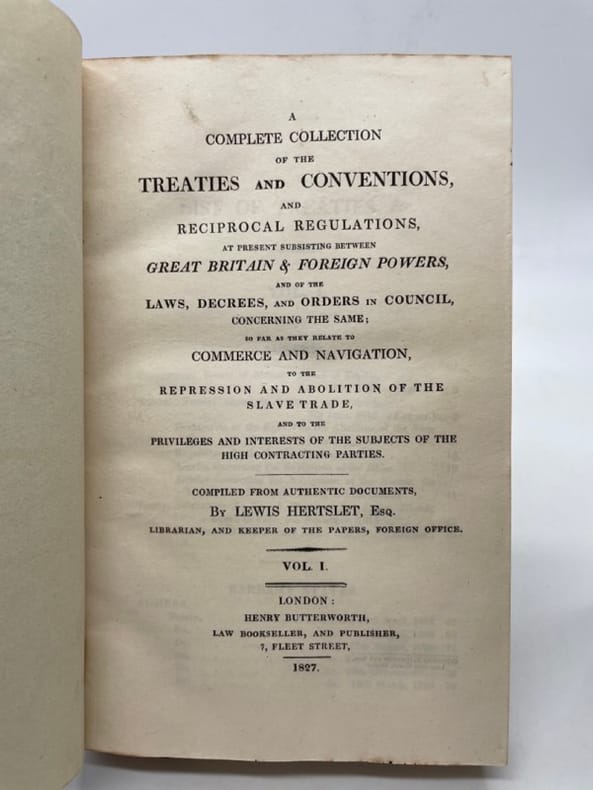
187538Londres, Henry Butterworth, 1827-1835 4 vol. in-8, VI-408, VI-411, XII-575 et XV-563 pp., demi-veau blond, dos lisses ornés de guirlandes et filets dorés, ainsi que de fleurons à froid, pièces de titre et de tomaison cerise, tranches mouchetées (reliure de l'époque). Bon exemplaire.
R12525CFine. Fine Published by Macmillan Press in 1997 Very light shelf wear to cover previous owner's name on first page otherwise like NEW Quality Books Because We Care - Shipped from Canada Usually ships within 1-2 business days If you buy this book from us we will donate a book to a local school We donate 10000 books to local schools every year unknown