Livre Rare Book
64 résultats
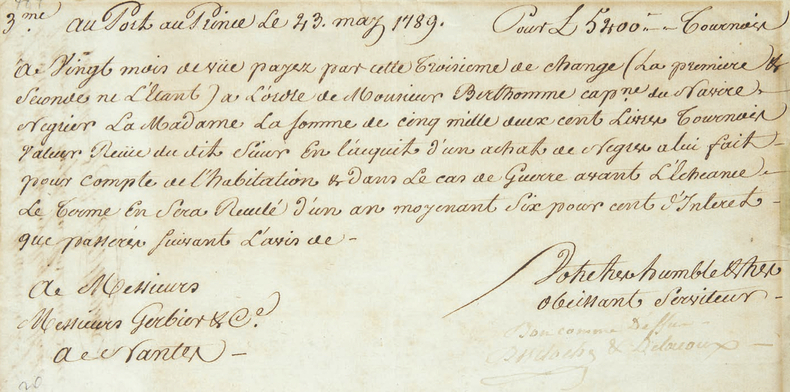
1789YQV-13Port-au-Prince, 23 mars 1789 Un billet in-8 oblong (128 × 243 mm), manuscrit à la plume au recto (11 lignes) et au verso (4 lignes), encre noire.
1759ST19900Philadelphia and Germantown: Benjamin. Franklin and David. Hall or Christopher Sower 1759-60. 192 x 130 mm. 7 1/2 x 5". 1 p.l. collection title 47 1 71 4 76-168 iv 5-43 1 55 1 64 16 pp. <br/> Contemporary blind-ruled sheep nicely rebacked to style raised bands. Verso of front flyleaf inscribed in ink in the recipient's hand: "This Book is the Gift of Mr. Anthony Benezett sic to William Anderson October 14th 1760"; front pastedown with ink inscription: "The holy Book To Be Read"; title page with signature of William Anderson dated 1760; front flyleaf and both free endpapers with additional 19th century owner inscriptions. Miller 730; Smith Friends' Books I p. 240. For "Observations": Sabin 4676; Evans 8542. Boards a little dried and scuffed with a couple of small stains text variably toned because of colonial paper quality perhaps a fifth of the text rather browned dampstaining in the upper margin in the middle part of the volume mostly unobtrusive but darker and extending downward on a few leaves. The texts in the kind of problematic condition expected with early American imprints but the binding much better than is normally seen.<br/> <br/> This is a presentation copy of an important published collection of Quaker texts that includes four works printed by Benjamin Franklin as well as an early significant abolitionist tract that delivers a powerful condemnation of the slave trade. The collection title page lists nine tracts in total six of which were issued with separate title pages comprising: "An Extract from the Spirit of Prayer" by W. Law; "A Discourse on Mistakes concerning Religion" by Thomas Hartley; "Christ's Spirit or a Christian's Strength" "The Stumbling Stone" "The Doctrine of Baptism" and "The Trial of Spirits" all by William Dell; "The Liberty of Flesh and Spirit Distinguished" by J. Rutty; and "Observations on Enslaving Importing and Purchasing of Negroes &c." followed by "The Uncertainty of a Death-bed Repentance" both by Anthony Benezet. Miller asserts that "the first fifth sixth and seventh had previously been printed by Benjamin Franklin and David Hall all in Caslon type. The remainder had been printed by Christopher Saur who owned no Caslon letter." The volume title also in Calson type is attributed to the press of Franklin and Hall for the same reason. According to Miller Anthony Benezet put together this collection of Quaker material in the spring of 1760 in an edition of 500 copies with the hope of reaching those living "in ye back Parts of Maryland Virginia & N. Carolina . . . and Connecticut." First printed in 1759 Benezet's forceful denunciation of the slave trade is notable for using eyewitness accounts from people actually involved with the trade recounting the horrific practices and conditions that were realities of the system. Citing various lines of scripture Benezet argues that slavery runs contrary to Christian teachings and Mosaic law and that those who purchase and keep slaves bear as much guilt as the traders themselves. Born in France to Huguenot parents Benezet 1713-84 was a Quaker abolitionist educator and writer who became one of the earliest and most outspoken advocates against slavery in colonial America. He emigrated to Philadelphia by way of Rotterdam and London in 1731 where he founded Pennsylvania's first secondary school for girls and later opened one of the first schools to welcome black students. ANB says that "Although Benezet is recognized as the most prolific antislavery propagandist of the eighteenth century throughout his lifetime he supported and wrote about a wide variety of causes and topics including assistance for Acadian refugees temperance peace fair treatment of Native Americans religion educational reform and poor relief." His wife Joyce Benezet d. 1786 née Marriott was a preacher in the faith herself. According to Waldstreicher Franklin maintained a "lifelong friendship with Quaker politicians merchants and scientists. . . . He admired Quakerism because of its affirmation of simplicity frugality anti-slavery and humanitarianism." Franklin also saw the possibility of profit in printing for the considerable Quaker population of his colony. Hall 1714-72 came to Philadelphia from London in 1744 to work for Franklin and became a partner in the firm in 1748. As a considerable mark of his regard for Hall Franklin drew up a contract whereby his partner would over an 18-year period buy him out. It is a further sign of Franklin's regard for Hall that the printer is buried beside Franklin and his wife. As to contemporaneous provenance we can speculate with some degree of certainty that our William Anderson was the person of that name who was a Quaker preacher from Haverford near Philadelphia. His wife Margaret--like Benezet's wife Joyce--was also a preacher and these two husband-and-wife teams are dealt with in Rebecca Larson's "Daughter of Light: Quaker Women Preaching and Prophesying in the Colonies and Abroad 1700-1775" 1999 Appendix 2. . B[enjamin]. Franklin and D[avid]. Hall or Christopher Sower unknown
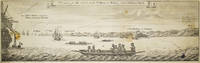
1745316296London: Thomas Astley 1745. Engraving. 4 x 13-1/4 inches. Creased from prior folding a few wormholes soiling and foxing. Engraving. 4 x 13-1/4 inches. Engraving showing "Negro Canoas carying Slaves aboard at Mansrow" extracted from A New Collection of Voyages and Travels 4 vols London: Thomas Astley 1745-7. <br/><br/> Thomas Astley unknown
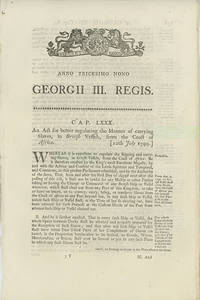
179928145London: Printed by George Eyre and Andrew Strahan Printers to the King's most Excellent Majesty 1799 1799. ESTC N60288 Lincoln's Inn Library and Wellcome Institute. Fine. 4to disbound paginated 637-652 untrimmed. An act passed by Parliament in the summer of 1799 delineated in 39 paragraphs that regulated the slave trade beginning in August 1800 - an act no doubt intended to placate the growing voices of opposition to the English slave trade. The act stipulates how many slaves could be stowed in a ship by mathematical formula according to the size of the ship but never more than 400; that slaves must be separated from other cargo; and that the space for the slaves "be full and complete perpendicular height of five feet." Nothing is said about their treatment other than that the ship's surgeon was required keep a log of illnesses and deaths of both slaves and crew. Much of the act is taken up with its enforcement and the penalties and fines for violations; it also regulates the conditions and treatment of the crew. The acts of Parliament were usually published separately and later issued in collections of the Public General Statutes; this one was issued as part of the collection of statues Passed in the Thirty-Ninth Year of the Reign of His Majesty King George the Third: Being the Third Session of the Eighteenth Parliament of Great Britain. This copy is disbound from such a volume. (London: Printed by George Eyre and Andrew Strahan, Printers to the King's most Excellent Majesty, 1799) unknown
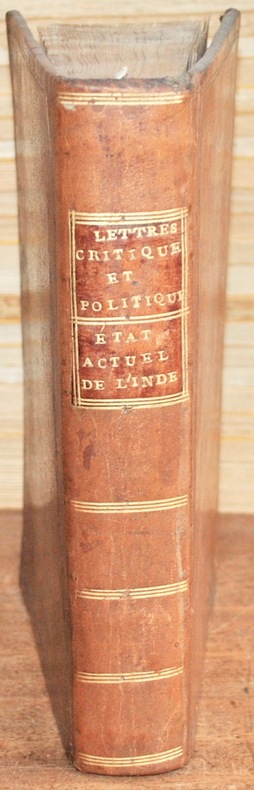
178513753A Londres, s.é., 1785. 2 vol. au format in-12 étroit (166 x 98 mm) de 154 et 158 pp. Reliures uniformes de l'époque de pleine basane marbrée havane, plats jansénistes, dos lisses ornés d'un double filet d'encadrement doré, triples filets dorés, larges fleurons dorés, semis de points dorés, pièces de titre de maroquin vieux-rouge, titre doré, tomaison dorée, filet doré sur les coupes, toutes tranches rouges.
178643537Bergerac, J. B. Puynesge, 1786. 2 vol. in-4 de XXV-(1)-553-(1) pp. et XVIII-401-(1)-40 pp., demi-basane brune, dos lisse orné (relié vers 1820).
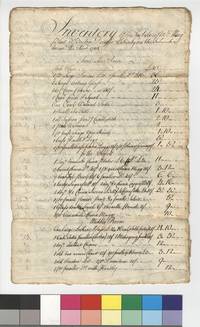
178940544Hempfield Westmoreland County Pennsylvania 1789. Folio leaves folded to oblong 7.5" x 9." Plain wraps with manuscript title detached but present. 44 pp including: 1-title 35 hand-paginated with entries 1-tally page and 1-assessors' certification 6 blank. Toned some splitting along spine folds light chipping at edges. Good. <br /> <br /> In March 1780 Pennsylvania enacted "An Act for the Gradual Abolition of Slavery" requiring "That all persons as well Negroes and Mulattoes as others who shall be born within this state from and after the passing of this act shall not be deemed and considered as servants for life or slaves; and that all servitude for life or slavery of children in consequence of the slavery of their mothers in the case of all children born within this state from and after the passing of this act as aforesaid shall be and hereby is utterly taken away extinguished and for ever abolished." Persons born in Slavery before the date of the Act would remain as slaves. <br /> This inventory of taxable property is a Who's Who of Hempfield Township in western Pennsylvania consisting of an alphabetical list of the heads of households for the township. Each entry includes the number of servants under columns headed "Negro & Mulatto Slaves" or "Negroes"; land by deed warrant or location; improvements; number of horses horned cattle mills stills houses/lots and outlots; and value of the property in pounds shillings and pence. <br /> Several entries have "Single Man" written across the first few columns. The total taxable property in this return is £12850.3.9. Five entries have a "1" under the "Negroes" column including: William Perry Esq.; James Guthry who notes F 30; Alexander McDowall; David D.P. Marchant; Christian Rhodabough who notes 1-30. Other entries have an "X" in the "Negroes" column. The assessor is listed on the last page as Robert Flemman; Robert McKee 1771-1850 and Robert Taylor are his assistants.<br /> "Hempfield's early settlers were Germans from southeastern Pennsylvania. The name Hempfield was taken from Hempfield Township in Lancaster County which was formed in 1729 as an English place name. Hempfield Township in Lancaster County derived their name from the production of hemp. In 1818 Lancaster County divided Hempfield Township into East and West Hempfield. The settlers from Lancaster County that came to this area gave the same name to our Township where some of the early settlers had resided. Agriculture was the base for the settlers in the early days. The Township was known for the stills and distilleries where farmers refined the substantial grain output." "Naming & Establishing Hempfield Township" accessed at official website of Hempfield Township 25 February 2025. <br /> Two notable individuals listed are Henry Aleshouse 1757-1837 and Michael Huffnagle 1753-1819. Aleshouse was Captain of the Continental Army from 1776-1780 and prisoner of war during his service; Major in the Pennsylvania Militia in 1783; member of the Pennsylvania State House of Representatives from 1802-1805 1812-15 1817-1818; and Pennsylvania State Senate from 1819-1826. Huffnagle was prothonotary for Westmoreland County Captain in the 8th Pennsylvania Regiment during the Revolutionary War one of the first lawyers admitted to the Westmoreland County bar Judge of the Court of Common Pleas Clerk of the Court of Quarter Sessions and Clerk of the Orphan's Court and Agent for Forfeited Estates. <br /> Of the slave owners Dr. David Marchant Marchand 1746-1809 was a Captain in the American Revolution local doctor and founder of the first hospital west of the Allegheny Mountains; William Perry Esq. 1745-1793 was a sheriff of Westmoreland County from about 1777-1789 Treasurer of Westmoreland County from 1783-1788 County Sheriff in 1779 and Captain of a company of rangers with the Westmoreland Militia.<br /> Some of the surnames listed are: Alesworth Aultman Berger Brisby Beer Barnheart Bell Campbell Condon Cough Crookshank Clingahsmith Davison Errit Fullerton Jenkins Kimble McCurdey Russell Robison Shotts Shull Taylor Turner Wagley Waterson Yokey and others. unknown
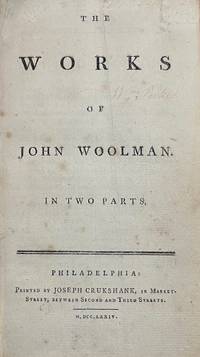
177434482Philadelphia: Joseph Crukshank 1774. First Edition. Three-quarter leather. Good. Octavo. 1 xiv 2 436 pages 1. Rebound in three quarter leather with tan cloth covered boards. Raised bands gilt decorations and title on the spine. Two title pages but continuos pagination. Inscription by the previous owner on the front blank end sheet. Front blank end sheet has some holes upper corner partly affecting the inscription. Moderate toning to the contents. Small worm hole lower back foredge not affecting the text. Pages 407-428 also has a small worm hole top edge not affecting the text. Chapter in part 2 pages 279-311 is titled "Considerations On the Keeping of Negroes."<br /> <br /> This first edition was published after the death of Woolman 1720-1772. Several later editions have been published. John Woolman was a Quaker minister and early abolitionist. He traveled to England in 1772 to promote the abolition of Slavery but died soon after arriving in England. He is buried in York. <br /> <br /> <br /> Howes W 669; Sabin 10524. Joseph Crukshank unknown
177435034Philadelphia: Joseph Crukshank 1774. First Edition. Leather bound. Fair. Octavo. 1 xiv 2 436 pages 1. Polished calf leather covers. Chipped title on the spine. Missing a section of leather bottom spine and another section is coming loose. Front cover is detached. Text lightly toned with scattered light brown stains. <br /> <br /> Two title pages with continuos pagination. Chapter in part 2 pages 279-311 is titled "Considerations On the Keeping of Negroes." This first edition was published after the death of Woolman 1720-1772. Several later editions have been published. John Woolman was a Quaker minister and early abolitionist. He traveled to England in 1772 to promote the abolition of Slavery but died soon after arriving in England. He is buried in York. <br /> <br /> Howes W 669; Sabin 10524. Joseph Crukshank unknown
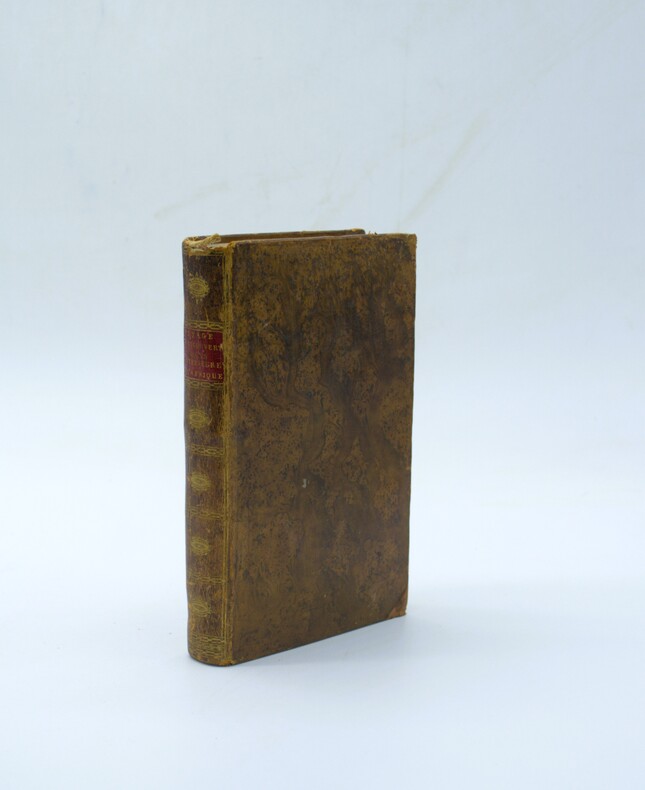
177830042A Paris, chez Prault / Les Frère Jombert et Cellot / La Veuve Duchesne / Lesclapart, 1778. 2 ouvrages (le premier pourvu de son Supplément) reliés en un vol. au format in-8 (198 x 125 mm) de 1 f. bl., 1 frontispice gravé n.fol., viii - 216 pp. ; 73 pp. et 1 f. n.fol. ; 2 ff. n.fol., 104 pp. et 1 f. bl. Reliure de l'époque de pleine basane marbrée havane, plats jansénistes, dos lisse orné d'un double filet d'encadrement doré, triples filets dorés, important décor fleuronné doré, semis de petits fleurons et de cercles dorés, pièce de titre de maroquin vieux-rouge, titre doré, palette dorée en tête et queue, filet doré sur les coupes, tranches saumon.
173860003<p>Mary Grosse Phillips Blair 1681-1738. Manuscript Document Estate Inventory Boston Mass. November 3 1738. 8 pp. folio. Mary Blair was widow of Capt. John Phillips and Capt. William Blair merchant. This inventory depicts a lavishly furnished mansion vast real estate holdings and a rich array of items in the shop -- suggesting that Mary Blair continued the mercantile trade after her husband's death in 1736. Also of note are enslaved persons Cato and Monday. Thomas Hancock was one of the administrators of the estate which was valued at over £28232. Another copy of the inventory exists in state records Suffolk County probate case 7223.</p><p>Fine condition.</p>
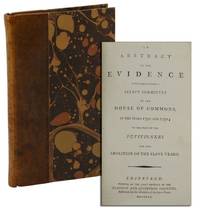
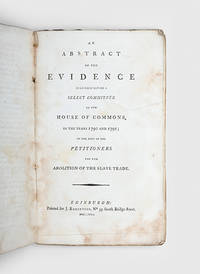
1791140945477Printed at the Joint Expence of the Glasgow and Edinburgh Societies instituted for the Abolition of the Slave Trade: Edinburgh 1791. First Edinburgh Edition. Very Good. Rare first Edinburgh edition published same year as the London edition of eye-witness testimony on the horrors of the British slave trade containing a very early engraving of the famous large folding plate of slaves packed into the hold of the slave-ship Brookes. The famous engraving is one of the most powerful and influential images in the history of social justice and the fight to abolish slavery. It served as a gruesome test of the Britain's "humane" Slave Trade Act of 1788 also known as Dolben's Act which limited the number of enslaved people that British slave ships could transport based on the ships' tons burthen. <p>Very Good. Small 8vo bound in somewhat recent quarter calf and marbled boards with light fading to the spine. Folding frontispiece map of the west coast of Africa in with 2 x 0.5" loss along one edge neatly restored. Large folding woodcut 16.25 x 15.5" of a slave ship based on the engraving W. Elford published in a pamphlet in London in 1789 is excellent and bright with several repairs made to the verso mending tears. The print now an iconic symbol of the Middle Passage was so visually arresting that William Wilbeforce created a scale model of the Brookes making it a central part of his presentation before the House of Commons. His abolition bill did not garner enough support to pass and it was not until 1807 that England succeeded in abolishing slavery. Edinburgh unknown
178640654Philadelphia: London printed: Philadelphia: re-printed by Joseph Crukshank 1786. 8vo. 8 1/2 x 5 inches. xix 2 22-155 pp. Publisher's advertisement at rear. Original blue paper wrappers<br/> <br/> Exceedingly rare first American edition of Clarkson's first work. A landmark work by the writer who helped abolish slavery in the British Empire.<br/> <br/> First American edition of Clarkson's rare first published work preceded by the same years first English edition his famous prize essay on the abolition of slavery igniting the campaign for one of the fundamental rights of man PMM 232. In 1770s England as "rebellious Americans were severing ties with their former British motherland a strenuous battle occurred that spawned the noble civil- and human-rights fight that eventually ended Britain's participation in the African slave trade." With this Essay on the Slavery and Commerce of the Human Species Thomas Clarkson "became the official whistle-blower of the horrors of transatlantic slavery the driving force behind the abolition of African slavery and the slave trade" Smith Thomas Clarkson 17. Clarkson's "famous prize essay was the prelude to parliamentary action" on the abolition of slavery. Clarkson together with William Wilberforce led the "campaign carried on by word of mouth and by means of the printing press for one of the fundamental rights of man" PMM 232. Clarkson had been completing his studies at Cambridge when he entered an essay competition and came across an "advertisement for Benezet's Historical Account of Guinea. He was profoundly struck by the title and 'hastened to London to buy it'. Overwhelmed by the horror and brutality of transatlantic slavery his goal of merely winning the prize for its own sake" shifted to creating a work of wider impact. On winning the 1785 Cambridge prize Clarkson translated the essay his Latin dissertation into English for publication. He documents the long history of slavery the devastating Middle Passage and the inhumanity of slavery in the colonies. Clarkson is renowned as "the man who spawned the British Abolitionist Movement and the first Briton to devote his entire adult life to ending African slavery… the moral conscience of American slavery proponents well into the 19th century" Smith 9-30 43. "He never ceased to work for anti-slavery lending his pen and his prestige particularly to the cause of abolition in the United States" DNB.<br/> <br/> Evans 19561; Library Company of Philadelphia. Afro-Americana 1553-1906 2nd ed. 2384; Kress B1028; ESTC W32021; PMM 232a; Sabin 13484. London, printed: Philadelphia: re-printed by Joseph Crukshank unknown
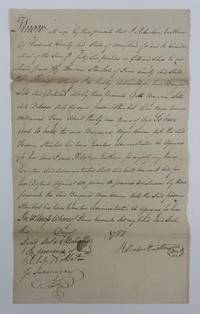
17884111Frederick County Md: March 7 1788. About very good. 1p. folio docketed on verso. Old folds short splits along a couple of fold lines minor toning. An impactful manuscript document from the early national period in Maryland formalizing the sale of a slave woman in Frederick County. The sale was made by Robertson Eastburn whose family emigrated from England to Maryland in the early 18th century. The document reads in part: "In consideration of the sum of forty six pounds in Gold and Silver to me in hand and paid by Frederic Strombol.I do hereby Acknowledge have Bargain'd Sold and Delivered and by these presents doth Bargain Sell and Deliver Unto the said Frederic Strombol One Negro Woman named Torry about thirty years of age To Have and to hold the said Bargained Negro woman unto the said Frederic Strombol."<br /> <br /> Slavery in Maryland lasted over 200 years from its beginnings in 1642 when the first Africans were brought as slaves to St. Mary's City to its end following the Civil War. In 1664 under the governorship of Charles Calvert 3rd Baron Baltimore the Assembly ruled that all enslaved people should be held in slavery for life and that children of enslaved mothers should also be held to the same standard of law. 19th-century American slave sale documents are growing increasingly scarce in the market. March 7 unknown
1791180598Edinburgh: Printed for J. Robertson 1791. Stepping up the campaign against slavery Second Edinburgh edition of this best-selling report on the colonial slave trade including a version of among the most famous abolitionist images the cross-section depicting the enslaved individuals transported aboard the Brookes. The Abstract is the first abolitionist work to ground its arguments not on biblical appeals or forceful rhetoric but on documented eyewitness accounts. Until 1790 the abolitionist campaign had been channelled through pamphlet and pulpit. After 1790 abolitionists turned to the new technique of mass petition campaigns against Parliament. The Abstract publishes the testimonies of the witnesses called by the petitioners arranging them thematically by chapter. Among others the select committee called planters traders naval officers and doctors. "The abolitionist petition campaign reached an apex during 1791-1792 where an unprecedented 519 abolitionist petitions coming from all over Britain were delivered to Parliament. Some 400000 persons signed these petitions 1 out of every 11 adults with Manchester alone contributing 20000 names from an adult population of about 30000" Fogel p. 212. Octavo pp. iv 128. Large folding plan of a slave ship folding map of the western coast of Africa tables in the text. Original paper wrappers spine lettered in manuscript ink edges uncut. Housed in custom orange cloth box. Contemporary presentation inscription from "Mr. Campbell" to "John White" on the front cover. Rubbing and chipping minor loss to spine and extremities browning and foxing to contents slight offsetting to plates folding plan loose: just about a very good fragile copy. ESTC N29168. William Fogel Without Consent or Contract 1989. hardcover
17101200341710. First Edition. SLAVERY ANONYMOUS. A True State of the Present Difference Between the Royal African Company and the Separate Traders. London: No publisher 1710. Slim octavo period-style full tan sheep gilt red morocco spine label raised bands; pp. 40. $1650.First edition of this argument against providing a monopoly over the British slave trade to the Royal African Company with tipped-in diagram of one of the Royal African Company's forts.This work attempts to highlight the irregularities of the business practices of the Royal African Company and to argue for the superiority of open trade in Africa particularly as a means of supplying slaves to the American plantations. Founded in 1660 by the royal Stuart family and the City of London the Royal African Company was founded to exploit natural resources like gold along the west coast of Africa. While the Royal African Company did participate heavily in the gold trade the majority of their income came from slave-trading. The Royal African Company was part of a concerted effortfully elaboration in the Navigation Actsto establish dominance in the slave trade since the Dutch had been the leading slave-traders prior to the Restoration. To that end the Royal African Company established a brutal and highly efficient slave-trading system eventually providing more slaves to the West Indies than any other company or state. The slaves were branded with the initials of the company or its longtime governor the Duke of York. Children were included in the transports. Between 1662 and 1731 the Company transported approximately 212000 slaves a fifth of whom died enroute. While the Company formally gave up slave-trading in 1731 they remained involved in the trade of ivory and gold dust industries dependent on labor exploitation and slavery. Goldsmiths 4605. Kress 2677. Early ink underlining and marginal notations.Small paper repair to diagram text and diagram trimmed close affecting portion of imprint and scattered catchwords not affecting readability. A very good copy. hardcover
17730034671773 Amsterdam, et se trouve à Paris, Chez Merlin, 1773. Deux volumes in-8 (134 X 205 mm) veau fauve marbré, encadrement de filet à froid sur les plats, dos cinq nerfs, caissons dorés avec fleuron central, large dentelle en queue et tête, coupes et coiffes ornées, pièces de titre et de tomaison maroquin rouge, tranches rouges (reliure de l'époque). Tome I : (1) f. blanc, faux-titre, frontispice, titre, 328 pages, 3 planches et 4 tableaux dépliants, (1) f. blanc ; Tome II : faux-titre, titre, 278 pages, 2 planches, (1) f. blanc. Notice ancienne collée sur le premier contreplat du tome I. Les planches de Moreau sont brunies.
1780PHO-2207Nyon l’Ainé, Paris, 1780, 2 vol. in-12 de XIV - XVIII -389 pp. et 1 f.- 352 pp., relié plein veau marbré époque, dos à nerfs orné avec pièces de titre et tomaison, tranches rouges, petits manques au dos, coiffes sup. arasées, coins usés, légères épidermures.
1730PHO-2325Paris, Guérin, 1730-1731. 2 volumes in-4 (25,5 × 20 cm). XXVIII, 482 p., 29 ff. ; XIV, 506 p., 30 ff., reliures postérieures en demi-veau, pièces de titre et tomaison, coins et coupes légèrement frottés et émoussés, petits manques aux coiffes. Légèrement bruni, légères galeries de vers et traces d’humidité dans la marge intérieure au début du tome I ; les pages 17-20, 221/222, *19/*20 du tome I ainsi que les plans « Plan de la ville de San-Domingo » (tome I) et « Plan du Cap François » (tome II) sont déreliés ; petit déchirement restauré au pli de la garde de la « Carte de l’Isle de Saint-Domingue » (tome II). Ex-libris Jack Grout.
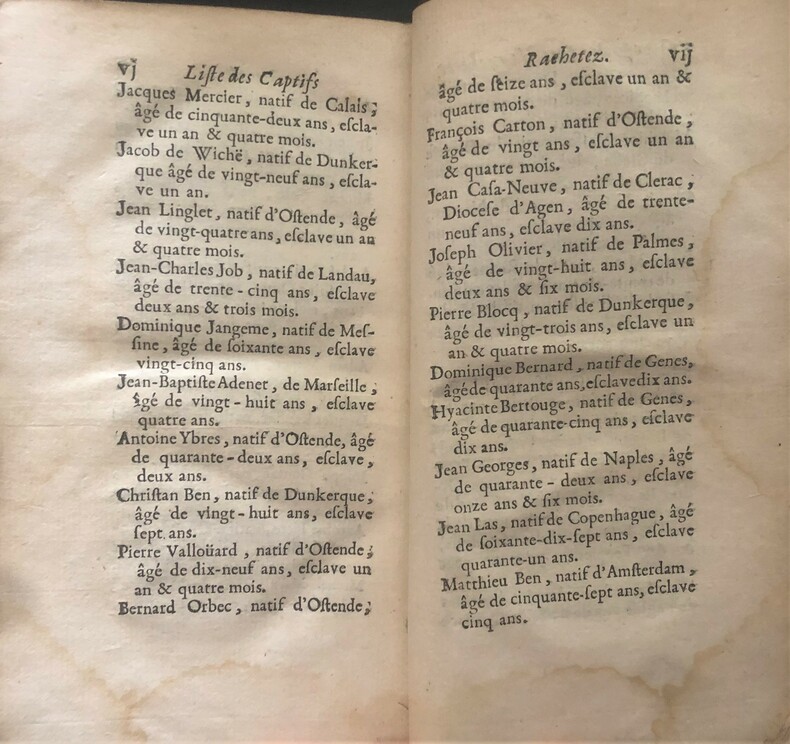
1726PHO-646Paris, Louis Sevestre, Pierre-François Giffart. 1726. In-12, X-364pp-XII pp(liste des esclaves)- 2ffnch , relié plein veau brun, dos orné, pièce de titre (Reliure de l'époque), défaut d’usage , travail de vers en début d’ouvrage . Chadenat, n°680. - Gay, n°465.
1726PHO-648Paris, Louis Sevestre, Pierre-François Giffart. 1726. In-12, X-364pp-XII pp(liste des esclaves)- 2ffnch , relié plein veau brun, dos orné, pièce de titre (Reliure de l'époque), défaut d’usage , une charnière fendue , mouillures en fin d’ouvrage .Chadenat, n°680. - Gay, n°465.
1726PHO-941Paris, Louis Sevestre, Pierre-François Giffart. 1726. In-12, X-364pp-XII pp(liste des esclaves)- 2ffnch , relié plein veau brun, dos orné, pièce de titre (Reliure de l'époque), reliure avec défauts , écritures sur les feuillets blancs.Chadenat, n°680. - Gay, n°465.
178515723Genève, Paris, [], 1785. In-8 de 14-(2)-292 pp., veau fauve, dos lisse orné, pièce de titre en maroquin (reliure de l'époque).
179010775A Paris, chez Demonville, 1790. 2 parties en 1 vol. In-8 de (4)-166 pp. 1 f. blanc 141 pp., demi-toile bleue, couverture imprimée conservée, non rogné (reliure du XIXe siècle).
1798PHO-2264Paris, Tavernier, An VI [1798)]. In-8° de [4], 343 pp. 3 cartes dépliantes & Paris, Directeurs de l'Imprimerie du Cercle Social, 1792, l'an premier de la République Française. 171 pp. Basane fauve racinée, dos long orné, p. de t. en maroquin rouge, filet doré sur les coupes, tranches citron (Reliure de l'époque). Annotations anciennes dans les marges. Accident à la coiffe de tête, usure aux coins, frottements au dos.