BERNARDIN DE SAINT-PIERRE (Jacques-Henri).Livre Rare Book
75 résultats
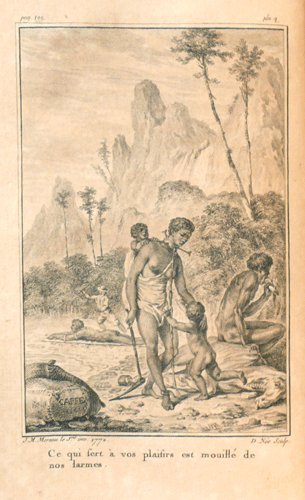
17730034671773 Amsterdam, et se trouve à Paris, Chez Merlin, 1773. Deux volumes in-8 (134 X 205 mm) veau fauve marbré, encadrement de filet à froid sur les plats, dos cinq nerfs, caissons dorés avec fleuron central, large dentelle en queue et tête, coupes et coiffes ornées, pièces de titre et de tomaison maroquin rouge, tranches rouges (reliure de l'époque). Tome I : (1) f. blanc, faux-titre, frontispice, titre, 328 pages, 3 planches et 4 tableaux dépliants, (1) f. blanc ; Tome II : faux-titre, titre, 278 pages, 2 planches, (1) f. blanc. Notice ancienne collée sur le premier contreplat du tome I. Les planches de Moreau sont brunies.
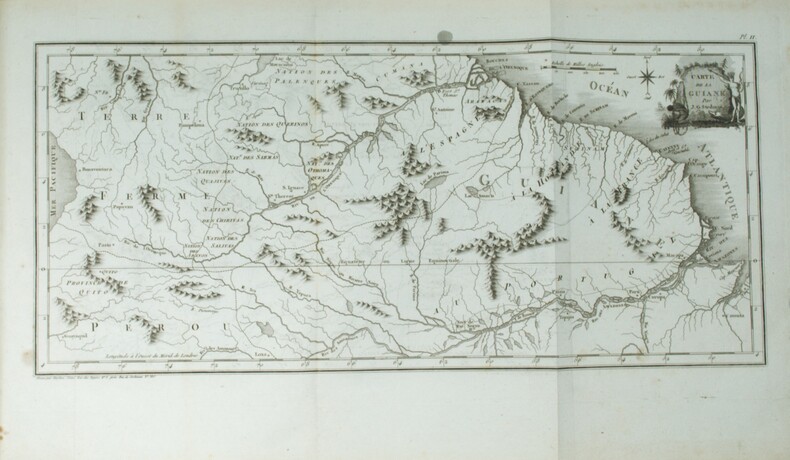
1798PHO-2264Paris, Tavernier, An VI [1798)]. In-8° de [4], 343 pp. 3 cartes dépliantes & Paris, Directeurs de l'Imprimerie du Cercle Social, 1792, l'an premier de la République Française. 171 pp. Basane fauve racinée, dos long orné, p. de t. en maroquin rouge, filet doré sur les coupes, tranches citron (Reliure de l'époque). Annotations anciennes dans les marges. Accident à la coiffe de tête, usure aux coins, frottements au dos.
1732PHO-1798Paris, Veuve Delormel et René Josse, 1732. In-12, plein veau, dos orné, pièce de titre rouge, tranches rouges (Reliure de l'époque). Ex-libris et ex-dono manuscrits anciens au titre, frottements et épidermures, coiffe sup. accidentée, 1 coin usé, manque le plan de Troie.
1730PHO-1650Paris, Saugrain, 1730.4 vol. in-12 de I. xxiv-[2]-381 pp., 15 pl. ; II. [4]-364 pp. 12 pl. ; III. [4]-350 pp., 4 pl.; IV. [4] pp., pp. 345-682, [36] pp., 1 pl., les tomes I à III reliés en basane brune, dos à nerfs ornés, p. de titre en mar. rouge, p. de titre en veau blond ; le tome IV reliés en veau brun, dos à nerfs ornés, p. de titre et de tomaison en mar. grenat (reliures de l'époque).
1730PHO-1965Paris, Saugrain, 1730.4 vol. in-12 de I. xxiv-[2]-381 pp., 14 pl. ; II. [4]-364 pp. 11 pl. ; III. [4]-350 pp., 4 pl.; IV. [4] pp., pp. 345-682, [36] pp., 1 pl., veau brun époque, dos usés avec manque, 1 carte volante, 1 carte avec déchirure sans manque. De la bibliothèque de Sir William Geary, 2nd baronnet (1756 –1825) homme politique conservateur anglais avec son ex-libris
1743PHO-1218La HAYE ,Jean Neaulme, 1743, deux volumes in 4° (260x210mm) reliés plein veau marbré, dos orné à 5 nerfs, pièce de titre, tranches rouges ,(2 plats détachés),coiffes arasées, coins usés, papier bruni ,Épître à Frédéric roi de Prusse imprimé en rouge et noir, XLIV-414pp./IV-192 pp., à la suite extraits de plusieurs auteurs anciens et autres pièces ,178 pp. ,orné de 12 cartes dont 9 dépliantes et 21 planches dont 5 dépliantes, une planche de musique et un fragment de la célèbre carte de Peutinger , ex-libris de Charles Kettaneh Première édition en français,
1798PHO-1492Paris, chez Buisson, an VII (1798),4 volumes ; Texte 3 volumes in-8 demi percale et un Atlas in-4, demi cuir époque, dos lisse avec auteur et titre ,44 planches, certaines en double page ou dépliantes, gravées par Antoine-François Tardieu d'après John Gabriel Stedman, la planche 25 détachée, mouillure claire en marge sur 4 planches, frottements coins et coupes usés, exlibris Aldo Maffey, journaliste et écrivain italien.
17917496BBElberfeld, Chr. Wilhelm Giesen, 1791. 8°. XX S., (2) Bl., 608 S.; XXXIX, 574 S.; (4) Bl., 400 S. Mit gest. Portrait. Pappband der Zeit mit verg. Rückensch. + Wichtig: Für unsere Kunden in der EU erfolgt der Versand alle 14 Tage verzollt ab Deutschland / Postbank-Konto in Deutschland vorhanden +, bild 3 Bände.
17917496BB3 Bände. Elberfeld, Chr. Wilhelm Giesen, 1791. 8°. XX S., (2) Bl., 608 S.; XXXIX, 574 S.; (4) Bl., 400 S. Mit gest. Portrait. Pappband der Zeit mit verg. Rückensch.
178513753A Londres, s.é., 1785. 2 vol. au format in-12 étroit (166 x 98 mm) de 154 et 158 pp. Reliures uniformes de l'époque de pleine basane marbrée havane, plats jansénistes, dos lisses ornés d'un double filet d'encadrement doré, triples filets dorés, larges fleurons dorés, semis de points dorés, pièces de titre de maroquin vieux-rouge, titre doré, tomaison dorée, filet doré sur les coupes, toutes tranches rouges.
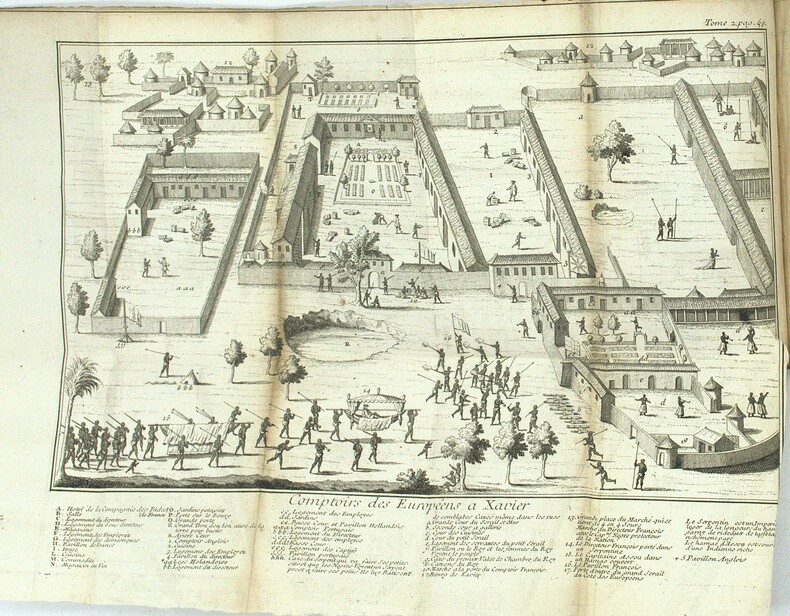
17101200341710. First Edition. SLAVERY ANONYMOUS. A True State of the Present Difference Between the Royal African Company and the Separate Traders. London: No publisher 1710. Slim octavo period-style full tan sheep gilt red morocco spine label raised bands; pp. 40. $1650.First edition of this argument against providing a monopoly over the British slave trade to the Royal African Company with tipped-in diagram of one of the Royal African Company's forts.This work attempts to highlight the irregularities of the business practices of the Royal African Company and to argue for the superiority of open trade in Africa particularly as a means of supplying slaves to the American plantations. Founded in 1660 by the royal Stuart family and the City of London the Royal African Company was founded to exploit natural resources like gold along the west coast of Africa. While the Royal African Company did participate heavily in the gold trade the majority of their income came from slave-trading. The Royal African Company was part of a concerted effortfully elaboration in the Navigation Actsto establish dominance in the slave trade since the Dutch had been the leading slave-traders prior to the Restoration. To that end the Royal African Company established a brutal and highly efficient slave-trading system eventually providing more slaves to the West Indies than any other company or state. The slaves were branded with the initials of the company or its longtime governor the Duke of York. Children were included in the transports. Between 1662 and 1731 the Company transported approximately 212000 slaves a fifth of whom died enroute. While the Company formally gave up slave-trading in 1731 they remained involved in the trade of ivory and gold dust industries dependent on labor exploitation and slavery. Goldsmiths 4605. Kress 2677. Early ink underlining and marginal notations.Small paper repair to diagram text and diagram trimmed close affecting portion of imprint and scattered catchwords not affecting readability. A very good copy. hardcover
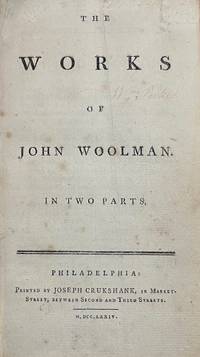
177434482Philadelphia: Joseph Crukshank 1774. First Edition. Three-quarter leather. Good. Octavo. 1 xiv 2 436 pages 1. Rebound in three quarter leather with tan cloth covered boards. Raised bands gilt decorations and title on the spine. Two title pages but continuos pagination. Inscription by the previous owner on the front blank end sheet. Front blank end sheet has some holes upper corner partly affecting the inscription. Moderate toning to the contents. Small worm hole lower back foredge not affecting the text. Pages 407-428 also has a small worm hole top edge not affecting the text. Chapter in part 2 pages 279-311 is titled "Considerations On the Keeping of Negroes."<br /> <br /> This first edition was published after the death of Woolman 1720-1772. Several later editions have been published. John Woolman was a Quaker minister and early abolitionist. He traveled to England in 1772 to promote the abolition of Slavery but died soon after arriving in England. He is buried in York. <br /> <br /> <br /> Howes W 669; Sabin 10524. Joseph Crukshank unknown
177435034Philadelphia: Joseph Crukshank 1774. First Edition. Leather bound. Fair. Octavo. 1 xiv 2 436 pages 1. Polished calf leather covers. Chipped title on the spine. Missing a section of leather bottom spine and another section is coming loose. Front cover is detached. Text lightly toned with scattered light brown stains. <br /> <br /> Two title pages with continuos pagination. Chapter in part 2 pages 279-311 is titled "Considerations On the Keeping of Negroes." This first edition was published after the death of Woolman 1720-1772. Several later editions have been published. John Woolman was a Quaker minister and early abolitionist. He traveled to England in 1772 to promote the abolition of Slavery but died soon after arriving in England. He is buried in York. <br /> <br /> Howes W 669; Sabin 10524. Joseph Crukshank unknown
1794126550London no printer 1794 or later. First edition variously dated by ESTC and WorldCat between 1794 the date given at the end of the preliminary "Short Account of the origin and present state of the charitable fund" and 1823. The short account dated March 1794 is followed by a tipped in leaf reporting on the first meeting of the society which took place on Thursday April 3 1794 electing the Lord Bishop of London as president. The Charter of the Society 18 pages in length is dated at Westminster "this thirtieth Day of October in the thirty-fourth Year of our Reign" which again falls in 1794. Octavo 190 x 123 mm pp. ix 18. Sometime in a pamphlet vol. now disbound. Spine shows evidence of earlier binding sometime folded vertically; title lightly dust soiled page ix trimmed down and tipped onto p. viii; a good copy. Sabin 85881. unknown
1713370449London: Printed for John Baskett 1713. 2 48pp. printed in English and Spanish in parallel columns. Without the Privilege leaf preceding the title. Quarto. Trimmed and inlaid into folio sheets and bound within a folio volume of treaties between Great Britain and Spain assembled by the British Foreign Office Library approx. 850pp in total. 19th century half roan and marbled paper boards worn some restoration at joints. Provenance: British Foreign Office Library bookplate on the front pastedown. 2 48pp. printed in English and Spanish in parallel columns. Without the Privilege leaf preceding the title. Quarto. First edition in English of one of the most important documents in the history of slavery in the Americas and in the political and financial history of Europe and the Americas in the early 18th century. <br /> <br /> Though the term "assiento" could refer to any number of Spanish contracts "the Assiento" almost always refers to the "Assiento de Negros": a monopoly contract granted by the Spanish crown between 1528 and 1779 for the sole right to import slaves from Africa into the Spanish colonies. Normally granted to individual companies the 1713 Assiento was granted directly to the British crown as part of negotiations for the Treaty of Utrecht which ended the War of Spanish Succession. In the decades following this 1713 Assiento an estimated 200000 enslaved Africans were transported across the Atlantic.<br /> <br /> The document grants sole privilege for the trade to the British crown for a period of thirty years expiring in 1743. The agreement consisting of forty-two articles allows for a maximum of 4800 slaves to be introduced to the colonies each year with a provision for increasing that annual amount each year by paying an added duty places limits on sale prices sets the cost of the duty to be paid for each enslaved person allows for the use of British or Spanish ships and mariners in the slave trade provides for the French Guinea Company's extraction from the colonies and establishes the details of precisely where British ships would be allowed to travel and trade. The British were also granted the unique privilege to send one vessel with a cargo of up to 500 tons of other trade goods to the Spanish colonies each year. <br /> <br /> While the Assiento seemed a lucrative deal most Assientists over the years saw considerable losses due to the difficulty of cross-Atlantic trade and the duties paid to the Spanish king. The real benefit to its grantees was not profits from the slave trade but rather the illegal ability to send other contraband on board their vessels to the otherwise closed-off Spanish markets in the New World. Britain was eager to get their own products overseas and to deny this revenue stream to the French who had held the Assiento since 1701 thereby preventing them from refilling their coffers too quickly and upsetting the balance of power in Europe after the costly War of the Spanish Succession. <br /> <br /> Queen Anne delegated the Assiento privilege to the South Sea Company which had recently been established to pay off Britain's considerable national debt. The privilege was largely granted to them as an encouragement to investors in order to allow the Company to achieve its original purpose more readily. Ultimately however it proved to be a costly and unprofitable endeavor for the South Sea Company who were able to import only about one-third of their allowed quota of slaves each year were frequently interrupted by war and were required to render twenty-five percent of their profits to King Philip V of Spain. <br /> <br /> The present example comes from the British Foreign Office Library inlaid and bound into a folio volume of other treaties between Great Britain and Spain arranged chronologically by treaty date. Over the course of many years the library of the Great Britain Foreign Office inlaid copies of nearly every treaty involving Great Britain to folio size and bound them together by region. The library was dispersed in the late 20th century with most of the volumes and particularly the American volumes broken up and sold by the William Reese Company.<br /> <br /> Most of the other treaties with Spain within this volume are clippings or extracts from larger works or true copies in manuscript of treaties dated between the years 1176 and 1739. Included in the volume however is a separately-printed English edition of the Treaty between Great Britain and Spain as part of the Treaty of Utrecht 1713: Tractatus pacis & amicitiæ . Treaty of peace and friendship between The most Serene and most Potent Princess Anne by the Grace of God Queen of Great Britain France and Ireland Defender of the Faith &c. and the most Serene and most Potent Prince Philip the Vth the catholick King of Spain concluded at Utrecht the 2/13 day of July 1713. London: Printed by John Baskett 1714. 115 1pp. ESTC T51509.<br /> <br /> There are two issues of the Assiento treaty; this is the issue with a semicolon after "Assiento" and no punctuation after "or" on the titlepage. A crucially important document in the history of colonial trade Spanish-British relations English finances and slavery in the Americas. Sabin 2227; European Americana 713/85; Hanson 1896; Sperling 34; JCB 1III:175; ESTC T4476 Printed for John Baskett unknown
1728100536Pamphlet 8vo modern full calf in the style of an 18th century “Cambridge†binding 32 pp.Very slight aging; in excellent condition. This is a rare first edition of a work that presents a complaint by British planters in the West Indies concerning the Assiento or “agreement’ with Spain that gave Britain a virtual monopoly on the African slave trade. This agreement came out of the Treaty of Utrecht which ended the War of the Spanish Succession. This pamphlet indicates that the planters feared as a result of this agreement British slavers might be required to provide African slaves to the Spanish colonies which could result in insufficient numbers available for the West India plantations. The Assiento with Spain would mark the beginning of the Atlantic slave trade as a very powerful economic growth engine. Unfortunately this would translate into millions of Africans being taken from their homes. H. Whitridge unknown books
1728100536<p>Pamphlet 8vo modern full calf in the style of an 18th century Cambridge binding 32 pp.Very slight aging; in excellent condition. This is a rare first edition of a work that presents a complaint by British planters in the West Indies concerning the Assiento or agreement with Spain that gave Britain a virtual monopoly on the African slave trade. This agreement came out of the Treaty of Utrecht which ended the War of the Spanish Succession. This pamphlet indicates that the planters feared as a result of this agreement British slavers might be required to provide African slaves to the Spanish colonies which could result in insufficient numbers available for the West India plantations. The Assiento with Spain would mark the beginning of the Atlantic slave trade as a very powerful economic growth engine. Unfortunately this would translate into millions of Africans being taken from their homes.</p> H. Whitridge
178940544Hempfield Westmoreland County Pennsylvania 1789. Folio leaves folded to oblong 7.5" x 9." Plain wraps with manuscript title detached but present. 44 pp including: 1-title 35 hand-paginated with entries 1-tally page and 1-assessors' certification 6 blank. Toned some splitting along spine folds light chipping at edges. Good. <br /> <br /> In March 1780 Pennsylvania enacted "An Act for the Gradual Abolition of Slavery" requiring "That all persons as well Negroes and Mulattoes as others who shall be born within this state from and after the passing of this act shall not be deemed and considered as servants for life or slaves; and that all servitude for life or slavery of children in consequence of the slavery of their mothers in the case of all children born within this state from and after the passing of this act as aforesaid shall be and hereby is utterly taken away extinguished and for ever abolished." Persons born in Slavery before the date of the Act would remain as slaves. <br /> This inventory of taxable property is a Who's Who of Hempfield Township in western Pennsylvania consisting of an alphabetical list of the heads of households for the township. Each entry includes the number of servants under columns headed "Negro & Mulatto Slaves" or "Negroes"; land by deed warrant or location; improvements; number of horses horned cattle mills stills houses/lots and outlots; and value of the property in pounds shillings and pence. <br /> Several entries have "Single Man" written across the first few columns. The total taxable property in this return is £12850.3.9. Five entries have a "1" under the "Negroes" column including: William Perry Esq.; James Guthry who notes F 30; Alexander McDowall; David D.P. Marchant; Christian Rhodabough who notes 1-30. Other entries have an "X" in the "Negroes" column. The assessor is listed on the last page as Robert Flemman; Robert McKee 1771-1850 and Robert Taylor are his assistants.<br /> "Hempfield's early settlers were Germans from southeastern Pennsylvania. The name Hempfield was taken from Hempfield Township in Lancaster County which was formed in 1729 as an English place name. Hempfield Township in Lancaster County derived their name from the production of hemp. In 1818 Lancaster County divided Hempfield Township into East and West Hempfield. The settlers from Lancaster County that came to this area gave the same name to our Township where some of the early settlers had resided. Agriculture was the base for the settlers in the early days. The Township was known for the stills and distilleries where farmers refined the substantial grain output." "Naming & Establishing Hempfield Township" accessed at official website of Hempfield Township 25 February 2025. <br /> Two notable individuals listed are Henry Aleshouse 1757-1837 and Michael Huffnagle 1753-1819. Aleshouse was Captain of the Continental Army from 1776-1780 and prisoner of war during his service; Major in the Pennsylvania Militia in 1783; member of the Pennsylvania State House of Representatives from 1802-1805 1812-15 1817-1818; and Pennsylvania State Senate from 1819-1826. Huffnagle was prothonotary for Westmoreland County Captain in the 8th Pennsylvania Regiment during the Revolutionary War one of the first lawyers admitted to the Westmoreland County bar Judge of the Court of Common Pleas Clerk of the Court of Quarter Sessions and Clerk of the Orphan's Court and Agent for Forfeited Estates. <br /> Of the slave owners Dr. David Marchant Marchand 1746-1809 was a Captain in the American Revolution local doctor and founder of the first hospital west of the Allegheny Mountains; William Perry Esq. 1745-1793 was a sheriff of Westmoreland County from about 1777-1789 Treasurer of Westmoreland County from 1783-1788 County Sheriff in 1779 and Captain of a company of rangers with the Westmoreland Militia.<br /> Some of the surnames listed are: Alesworth Aultman Berger Brisby Beer Barnheart Bell Campbell Condon Cough Crookshank Clingahsmith Davison Errit Fullerton Jenkins Kimble McCurdey Russell Robison Shotts Shull Taylor Turner Wagley Waterson Yokey and others. unknown
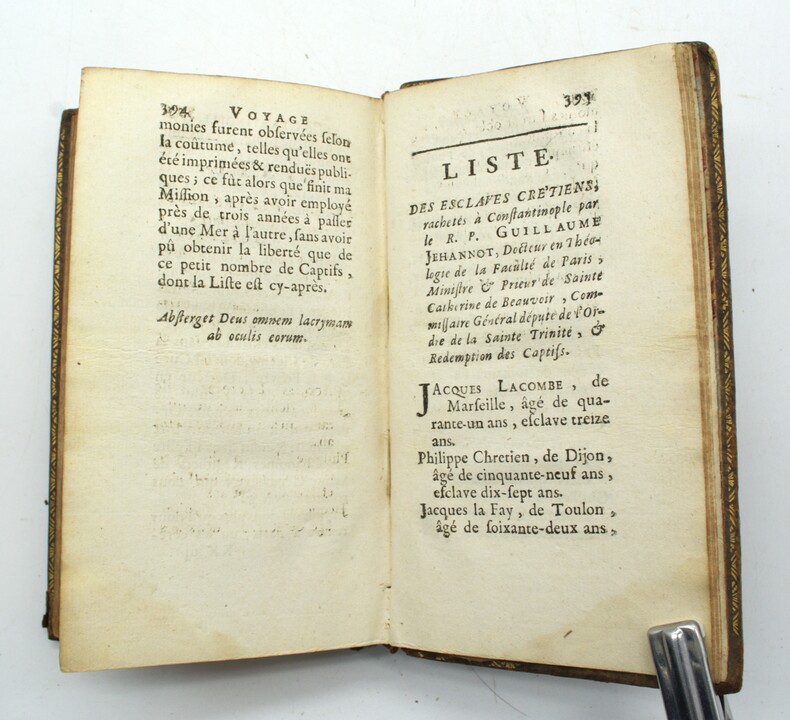
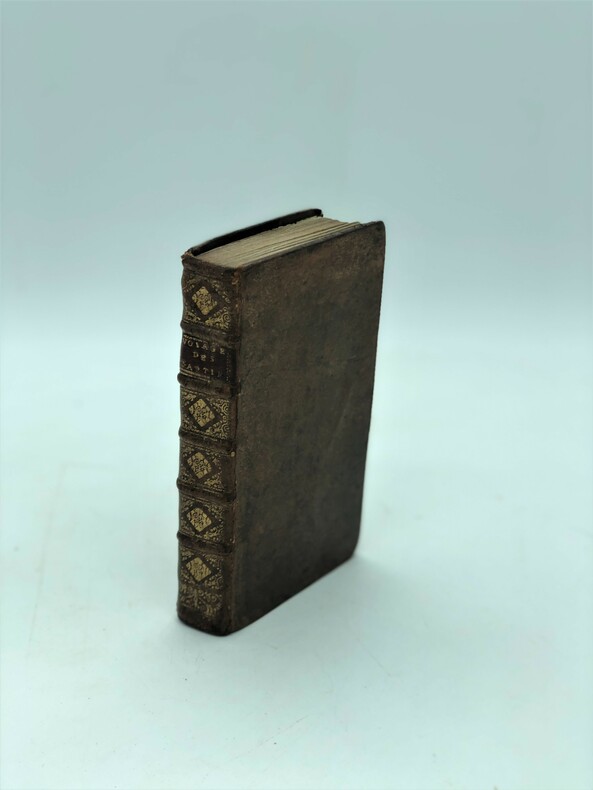
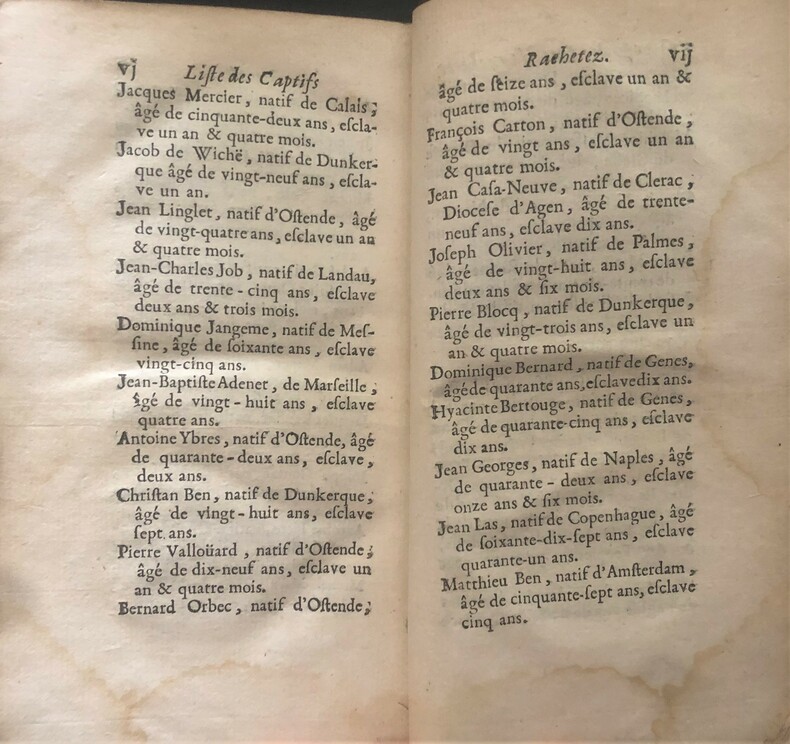
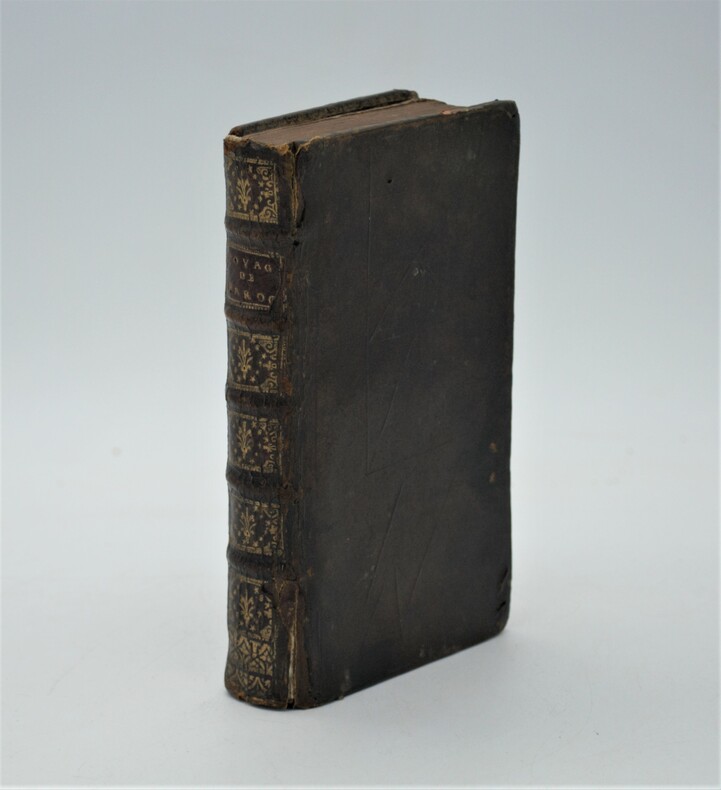
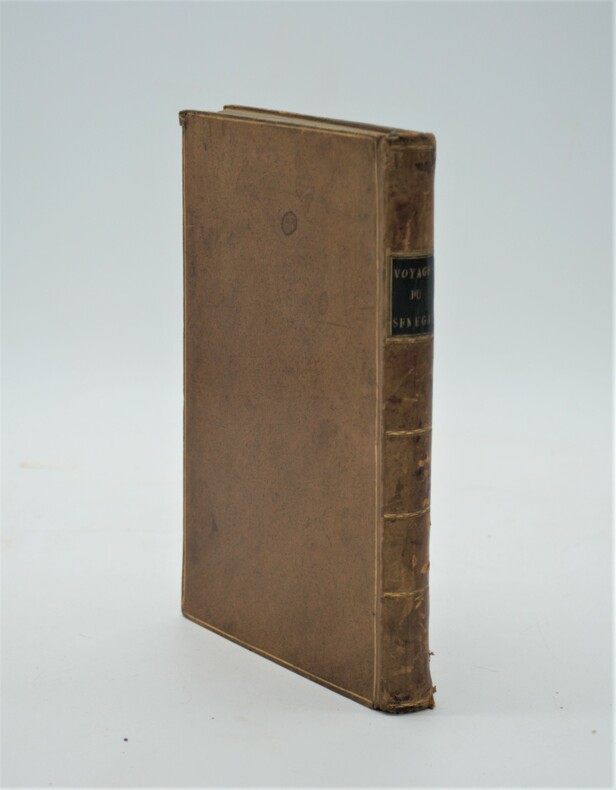
1726PHO-646Paris, Louis Sevestre, Pierre-François Giffart. 1726. In-12, X-364pp-XII pp(liste des esclaves)- 2ffnch , relié plein veau brun, dos orné, pièce de titre (Reliure de l'époque), défaut d’usage , travail de vers en début d’ouvrage . Chadenat, n°680. - Gay, n°465.
1726PHO-648Paris, Louis Sevestre, Pierre-François Giffart. 1726. In-12, X-364pp-XII pp(liste des esclaves)- 2ffnch , relié plein veau brun, dos orné, pièce de titre (Reliure de l'époque), défaut d’usage , une charnière fendue , mouillures en fin d’ouvrage .Chadenat, n°680. - Gay, n°465.
1726PHO-941Paris, Louis Sevestre, Pierre-François Giffart. 1726. In-12, X-364pp-XII pp(liste des esclaves)- 2ffnch , relié plein veau brun, dos orné, pièce de titre (Reliure de l'époque), reliure avec défauts , écritures sur les feuillets blancs.Chadenat, n°680. - Gay, n°465.
1791PHO-884Paris, Gueffier jeune, 1791. In-8, viii-341p. Plein veau blond époque , dos lisse avec titre , filet sur les plats, tache sur le plat, petites griffures
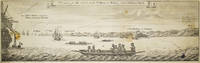
1745316296London: Thomas Astley 1745. Engraving. 4 x 13-1/4 inches. Creased from prior folding a few wormholes soiling and foxing. Engraving. 4 x 13-1/4 inches. Engraving showing "Negro Canoas carying Slaves aboard at Mansrow" extracted from A New Collection of Voyages and Travels 4 vols London: Thomas Astley 1745-7. <br/><br/> Thomas Astley unknown
179010775A Paris, chez Demonville, 1790. 2 parties en 1 vol. In-8 de (4)-166 pp. 1 f. blanc 141 pp., demi-toile bleue, couverture imprimée conservée, non rogné (reliure du XIXe siècle).
17921262151792. HAITI SLAVERY. A Particular Account of the Insurrection of the Negroes of St. Domingo Begun in August 1791: Translated from the French caption title as issued. London: 1792. Slim octavo modern green cloth; pp. 32. $1800.Fourth edition published one year after the very rare first of this sensationalistic account of the early months of the Slave Rebellion in Haiti the beginnings of the Haitian Revolution which ultimately led to the establishment of the first independent black state in the New World. The publishers of this polemic hoped to frighten the British public and turn them away from the abolitionists Wilberforce and Clarkson who were trying to put and end to slavery in the British colonies in the West Indies.Translated into English this is a speech to France's National Assembly ""by the Deputies from the General Assembly of the French part of St. Domingo."" The tract provides a frightening and grisly account of the August 1791 Slave Rebellion the result of ""a plot to set fire to the plantations and to murder all the whites."" The start of the insurrection by its ""perfidious"" leaders resulted in a catalogue of horrors and atrocities as the rebels ""spread over the plain with dreadful shouts set fires to houses and canes and massacred the inhabitants."" The ""fury of the cannibals"" is recounted in gory detail. The Speech is signed at the bottom of page 19 by six Deputies who call the insurrection ""the greatest calamity that has visited the human race in the course of the eighteenth century."" An Appendix records Letters and Speeches concerning the Rebellion. ESTC T110428. Goldsmiths' 15167. See Sabin 58932 1791 first edition; LCP 7460 2nd edition 1792; Work 349 1832 printing. First and last leaf slightly darkened text quite clean. Trimmed irregularly along upper margin affecting page numbers on two leaves but not any text. A very good copy of this scarce item. hardcover