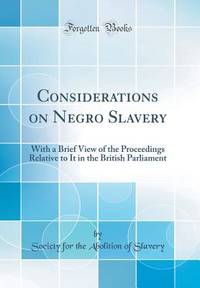
Society for the Abolition of SlaveryBiblio.com
224 résultats
1331271592.Gpaperback. Good. Access codes and supplements are not guaranteed with used items. May be an ex-library book. paperback
1528590139.Ghardcover. Good. Access codes and supplements are not guaranteed with used items. May be an ex-library book. hardcover
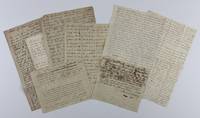
182012624Virginia and Alabama 1820. Eight manuscript documents totaling sixteen pages. Typical mailing folds and handling wear. Very good. Manuscript records from an extraordinary court case in modern-day West Virginia in which a free person of color named Caesar Freeman also known as Ceasar Cesar or Black Cesar and his family defended themselves and then sued to re-establish their own freedom over twenty years after being manumitted by their owner who had attempted to use them as collateral for a loan after their manumission. The case took place in Greenbrier and Pocahontas counties in West Virginia. Pocahontas County is located on the Virginia-West Virginia border and at the time of these documents was located in Virginia; Greenbrier County is a bit further west. A few of these documents emanate from or relate to Franklin County Alabama where one of the deponents had moved by the time of the legal proceedings.<br /> <br /> The case is detailed in a small pamphlet entitled Ceasar Mountain: Slavery and Freedom in Western Virginia by John Cohassey published in 2016. The opening paragraphs of said pamphlet provide excellent background on the case: “In Pocahontas County West Virginia lore tells of an 18th century legal feud between landowners George Massingbird and Thomas McCarty. In 1796 Massingbird secured a loan from McCarty. Thirty-two days after entering the contract and in need of collateral Massingbird claimed that his freed slaves – Cesar and family – were still his property. Nearly two decades later Massingbird remained indebted to McCarty who demanding final payment sought ownership of the Ceasar Freeman family. From the outset of this financial arrangement the Freemans served as collateral for a loan that Massingbird had intended to pay without likely expecting that the transaction would jeopardize the family’s freedom. When legally threatened to make the final payment Massingbird stated truthfully in a deposition that he had freed Caesar and family after the date of his initial loan. A Virginia statute stipulated that any slave manumitted after the date of a contract was not subject to reenslavement. But at this point Massingbird’s motivation for changing his story likely had more to do with his preventing McCarty‘s claim over the Freemans than to settle a debt that threatened him with serious legal consequences. Without money to pay McCarty upon the deadline of the debt Massingbird changed his story once again – that Cesar and family had not been freed after the contract. This untruthful claim as in the initial loan now placed the burden on the Freemans to prove their status as free persons of color. Assisted financially by local whites Ceasar and family won their case. Learning that Massingbird had on two occasions claimed them as collateral the Freemans sued both Massingbird and McCarty. Victorious in court the Freemans were awarded land in a region where they once were slaves – while the name of a nearby mountain was reputedly taken from their respected patriarch.†The mountain referred to here is known as Caesar Mountain in Pocahontas County.<br /> <br /> The present documents emanate from the case in 1819-20.  Two of the earliest documents dated in October and November 1819 relate to McCarty’s suit against Massingbird and mainly pertain to making sure Caesar and his family remain in the state. This included the jailing of Caesar and Sarah’s daughter Nancy Ware whom Massingbird apparently still claimed as a slave. One chief aspect of the importance of these documents lies in the fact that Caesar and his entire family are listed by name as such: “Caesar Sarah his wife Nancy Adam Zachariah John Esther Jim Sally Abraham Elizabeth Martha & Rebecca Children of Caesar and Sarah who are persons of colour.†Also of particular interest is that one of the documents appears to be signed by both Caesar and his daughter Nancy with their marks the day after Nancy was released from jail.<br /> <br /> In the remaining six documents Caesar and his family as well as defendant McCarty work through the Virginia and Alabama courts to secure a deposition from James J. Mayers a trustee of the Massingbird-McCarty agreement which supposedly still held the Freeman family in bondage. These documents are dated between July 1819 and February 1820. The earliest of these documents is a summons for Massingbird McCarty and Mayers to appear in Greenbrier County court “to answer a bill exhibited against them by Caesar and Sarah his wife as well as their adult children…who are permitted to sue in forma pauperis.†This is an extraordinary document encapsulating the right of free persons of color to sue their former owners and others in court in Virginia in 1819 and representing the Freemans’ fight for their continued freedom. The next document dated October 29 1819 contains testimony from George Massingbird confirming that “the Petitioners the Freemans were emancipated by your respondent Massingbird prior to the contract made by your respondent with his codefendant McCarty….†Finally the truth from Massingbird. In the third document dated the same day the trustee James Mayers asks to be dismissed from the case agreeing to all that was said by Massingbird in court.<br /> <br /> This was not enough for the courts or perhaps for one of the defendants Thomas McCarty. The final three documents dated between February and April 1820 further pertain to securing testimony from Mayers in the case. On February 21 1820 Virginia clerk John A. North addresses a one-page partially-printed form completed in manuscript to “any two Justices of the Peace for Franklin County State of Alabama.†The document was sent “on behalf of Thomas McCarty Defendant as of Caesar & other persons of colour Plaintiffs who are permitted to sue in forma pauperis.†The intentionof the document was to seek the help of Alabama officials in “examining whatever witnesses†they might have in the case. The next document is dated two days later and sent from McCarty to Caesar. Here McCarty informs “Black Caesar†that he intends to depose Mayers in Alabama on April 24 and that the deposition shall “bee red as evidence in the Chancery Court in a suit where you are plaintiff and myself and others are defendants.†Again a rare instance in which a white defendant writes to a Black plaintiff in the antebellum South involving the freedom of the latter.<br /> <br /> The final document chock full of detail on four folio pages contains the substance of Mayers’ deposition indeed given on April 24 1820. Here Mayers discloses all he knows of Massingbird’s contrary claims involving the case including the fact that Massingbird told him two contradictory stories about the Freeman’s manumission. Mayers professes that after Massingbird told him the whole truth of the matter he was “no little surprized at this declaration after what had taken place when application was made to draw the trust deed.†Sadly these four pages constitute the majority of Mayers’ testimony but seem to end mid-sentence leaving the remainder of his testimony to the vagaries of time. Still the most important part of the story is told here: Massingbird emancipated Caesar and then lied about it when he couldn’t pay his debts endangering the freedom of an entire family in the interest of cold hard cash.<br /> <br /> According to Cohassey’s 2016 pamphlet this testimony was “read aloud in court†and “no doubt revealed Massingbird’s duplicity in the matter.†Eventually Caesar and his family won the court case. Afterwards Massingbird deeded over 400 acres of land in Pocahontas County to the Freemans which apparently included Caesar Mountain. The Freemans lived out their remaining years as free people recorded in local tax lists between 1825 and 1843. unknown
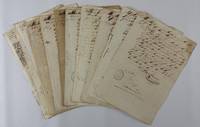
187312720Cuba 1873. Twelve manuscript documents on folio sheets approximately 8.5 x 12.5 inches all with official rubber-stamped seal. Small pinholes along left margin light wear occasional chipping to edges some ink bleed and light damp staining. Overall very good. A collection of documents recording the liberation or attempted liberation of numerous men women teenagers and a child from enslavement. The child is but seven years old while the remaining slaves range from fifteen to fifty-seven years old. The slave trade ended in Cuba around 1867 but the practice of owning slaves remained legal until 1880 and then was abolished completely by Spanish decree in 1886. Cuba was the penultimate country to outlaw slavery in the western hemisphere beating Brazil to formal abolishment by two years. Even before the official abolition of slavery in Cuba African or criollo slaves were manumitted by a variety of owners and at various costs as evidenced here especially after the practice of importing Chinese indentured servants began. Each of the present documents names the slaveholder and the slave granted "libertad" along with the cost in escudos or pesetas of that liberty. The slaves liberated here are as follows:<br /> <br /> 1 Luis criollo 7 years old for the sum of 28 pesos<br /> <br /> 2 Maria Antonia part criolla 20 years old for the sum of 2500 pesetas<br /> <br /> 3 Catalina morena de Africa 41 years old for c.200 pesetas<br /> <br /> 4 Lorenzo moreno criollo 21 years old for 2500 pesetas<br /> <br /> 5 Lucia morena criolla 15 years old for 320 pesos or 1600 pesetas<br /> <br /> 6 Frigidae "negro.de Africae" 56 years old<br /> <br /> 7 Augusto criollo 19 years old for 1750 pesetas<br /> <br /> 8 Marta criolla 16 years old for 1621 pesetas<br /> <br /> 9 Gil moreno de Africa 57 years old for 1500 pesos<br /> <br /> 10 Carmita morena criolla 20 years old for 1750 pesetas<br /> <br /> 11 Augustina Prieto morena criolla 30 years old for 1750 pesetas<br /> <br /> 12 Edwigio 39 criolla; Lazara 36 criolla; and Maria Leoncia 15 criolla for 2000 pesetas.<br /> <br /> These Cuban slave manumissions are offered with one 1844 manumission document liberating a slave in Spain totaling two pages and measuring about 8.5 x 13.5 inches. The document also has three rubber-stamped official seals at the head noting Isabella II. This document appears to free slave Nicolas 25 years old for the sum of 400 pesos and is signed November 5 1844. unknown
183094792Circa 1830s. 1830s. Good . - The close of a letter on a 3-1/4 inch high by approximately 6 inch wide piece of note paper is signed "Geo Thompson". The paper is darkened with some staining not affecting the signature. The paper is mounted on a sheet of yellow paper and has been folded twice for mailing. Good. <p>The British antislavery orator and activist George Donisthorpe Thompson 1804-1878 worked toward the abolition of slavery through lecture tours and by introducing legislation while serving as a member of Parliament. An able orator he was hired by the London Anti-Slavery Society in 1831. While in Scotland in 1832 where he became interested in abolishing slavery in the United States as well as other parts of the world he met William Lloyd Garrison and the African-American abolitionist Nathaniel Paul. Invited to visit New England by Garrison he traveled to the US in 1834 where he drew the attention of pro-slavery supporters and was forced to flee for his life. The Hobart Town Courier later printed a letter in which Thompson stated that he had ".left the United Sates to escape the assassins knife." the editor noting that attempts had been made to "burn and murder" him in several US towns. He returned to the US following the passing of the Fugitive Slave Law in 1850. By then the abolitionist movement having substantially grown and gained in influence Thompson found a warmer welcome. Returning to London he and his son founded the London Emancipation Society which supported the Union during the Civil War. Returning to America he allied himself with William Wells Brown and met President Abraham Lincoln. Throughout his life Thompson was a powerful voice for emancipation. He supported East Indian reform free trade Chartism non-resistance and the peace movement often protesting legislation that offered only limited restrictions on slavery.<p>RARE. Circa [1830s]. unknown
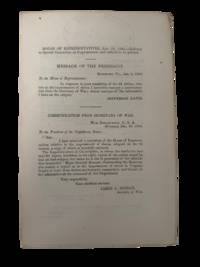
1865231171865. Civil War Black Military Slavery Virginia Confederate government imprint documenting one of the clearest bureaucratic efforts to formalize the use of enslaved labor in direct support of the Confederate war effort at the very moment of institutional collapse. Issued in Richmond Virginia in January 1865 and printed by the Confederate House of Representatives. The document responds to a congressional inquiry into the impressment of enslaved people explicitly acknowledging state-directed seizure of enslaved men for military labor. Within the text the Confederate state attempts to regulate this extraction noting limits such as "no more than one out of five male slaves between the ages specified. from any one owner" while simultaneously confirming large-scale requisitions including "5000 slaves from the State of Virginia for service with the army of Northern Virginia." The language reveals both the administrative reach of the Confederate state and its dependence on enslaved labor as a logistical backbone in the war's final phase.<br /> <br /> Octavo pamphlet measuring 9.5" x 6" 5 pages printed in Richmond Virginia January 1865. The text includes titled sections "Message of the President" "Communication from Secretary of War" "Resolution of House of Representatives" and "Response of Superintendent of Conscription" along with dated correspondence from December 1864 through January 1865. The imprint corresponds to Parrish and Willingham 2298. As a primary source the pamphlet holds substantial institutional value for collections in African American history Civil War studies and the history of slavery particularly for research into the transition from plantation labor systems to militarized coercion and the administrative mechanisms of late Confederate governance.<br /> The pamphlet is especially significant for how it exposes internal contradictions within Confederate ideology. While the Confederacy had long resisted arming or formally incorporating enslaved people in ways that might destabilize slavery this document demonstrates a late-war shift toward coercive mobilization framed as "employment" to "increase the efficiency of the army." Additional correspondence from Brig. Gen. Jno. S. Preston and Major Gen. J. L. Kemper details the mechanics of requisition emphasizing proportional seizure across slaveholders and acknowledging prior errors in impressment including the improper inclusion of enslaved people outside prescribed categories. Condition shows light toning minor spotting and edge wear consistent with age; paper remains stable with clear legible text throughout; faint institutional stamp present on front. Overall very good condition. This document underscores how the Confederate war effort relied on systems of exploitation applied to enslaved African American men. unknown
19682090502113717692Not Available 1968. Soft Cover. Fine. The book is in fine condition. Not Available paperback
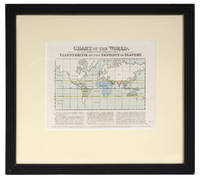
94420London Joseph Cross n.d. but c. 1825. . Hand coloured engraved map. The map shows the extent 30° north and south of the Equator in which sugar is grown. Australia is still shown as New Holland. 29.8 cm x 23.7 cm 11¾" x 9¼". Framed and glazed.<br /> Scarce colour-coded map concerning the sugar trade and its link to slavery.<br /><br />The section shaded yellow is the appropriate climate for the growing of sugar. The section shaded red is the area from which Britain may obtain sugar cheaply parts of South America and the West Indies under British rule. The blue section shows where Britain is unable to obtain sugar due to the devastating effects of the slave trade. The pink and green areas are those from which the sugar trade is limited by high duties and restrictions. The argument is that the duties and restrictions are there to protect the slave trade and ultimately damage the British economy.<br /><br />James Cropper was a successful and wealthy Quaker merchant philanthropist and disciple of Adam Smith. A major force in the anti-slavery movement he believed that eliminating tariff protections would lead to the end of slave labour in the West Indies. Cropper himself had interests in East Indian sugar and therefore stood to benefit from the reduction of tariffs which colored his role in the abolition movement. Nevertheless 'in Cropper's mind the intensity of Quaker Quietism had fused with the economic optimism of Adam Smith. Anti-slavery confirmed this union endowing laissez-faire with an immediate moral and spiritual purpose and enriching his faith in the inevitability of human progress' Davis James Cropper and the British Anti-Slavery Movement 1961.<br /> London, Joseph Cross, n.d. [but c. 1825]. unknown
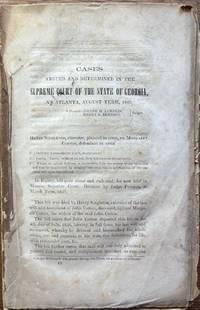
185736729Atlanta: State of Georgia 1857. Wraps. Fair. Stitched wraps. Pages 261-465. Missing the outer front cover that identifies the printer and location. Rear wrap missing. Rest of contents present. Untrimmed wraps lightly soiled on the front cover. Interior contents clean. Contents include a lengthy case regarding the American Colonization Society versus Lucius J. Gartrell administrator will of Francis Gideon deceased in the county of Fulton pages 448-465. State of Georgia unknown
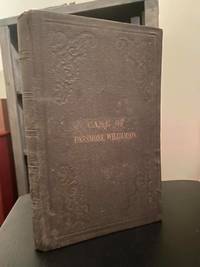
1856218<b>First edition of "the most complete record available" of the controversial Pennsylvania case on fugitive slaves establishing a "precedent set in federal and state courts… and important cause célèbre for the antislavery movement" crucial in asserting a clear path for the following year's Dred Scott decision and provoking a "legal crisis… that led to the Civil War" elusive in original cloth. An overall clean text with soiling on top of pages 1-16 & pgs. 161-191 and contemporary ink marginalia by Strawbridge on a few pages. John Strawbridge is inscribed in old ink on page prior to title page. A book which has become difficult to find in the original cloth.</b> Uriah Hunt & Son hardcover
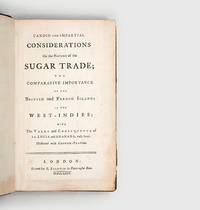
1763132583London: R. Baldwin 1763. A classic of in the field of colonial and Caribbean literature First edition of the first-named fourth of the second which was first published in Antigua 1750 under the pseudonym of "An Old Planter". John Campbell 1708-1775 was a highly successful historian and miscellaneous author Johnson thought well of him and praised the usefulness of his knowledge also describing him as "the richest author that ever grazed the common of literature" ODNB. The present work was commissioned by Lord Bute to rebut criticism of the Treaty of Paris by demonstrating "the value of colonial holdings in general and of sugar islands in particular" Ragatz. That is was felt to have done its job is perhaps confirmed by Campbell's appointment in 1765 as king's agent to Georgia. Considered by Ragatz to be a "classic of in the field of colonial and Caribbean literature embodying as it does one of the clearest statements of eighteenth-century philosophy regarding the relations that should exist between the metropole and its outlying possessions". This copy has additional material bound in: Bew's map of St Christopher's a 2-page manuscript index and bound at the rear a copy of Martin's practical essay on plantation management. Samuel Martin 1694/5-1776 had been born on Antigua but spent some considerable time thereafter in Britain on his full-time return to the island he found the family estates much run down and "embarked on a rigourous policy of reconstruction. Although he helped to pioneer improvements at most of the key stages in sugar-making and rum distillation his interests focused mainly on the non-manufacturing side of production. He was a firm advocate of crop rotation followed by marling in order to improve soil fertility. He was also instrumental in developing more effective systems of drainage and utilising windmills rather than animals for crushing the cane. By the standards of his contemporaries Martin was an enlightened slave owner. He advocated the provision of adequate supplies of food clothing shelter and medical facilities for slaves and ground for the cultivation of their own food" ODNB. His methods made him Antigua's leading and most progressive planter and during his own lifetime he certainly "succeeded in making sugar production a moderately profitable enterprise on his own estates". Both titles are moderately well-represented institutionally but neither appear with any great frequency at auction just a handful of copies of Campbell in the last fifty years and no copy of the Essay upon Plantership in any edition has passed through the rooms since 1951. Two works bound in a single vol. octavo 196 x 120 mm. Both bound without half-titles. 4 folding maps to the first-named 3 as called for; Caribbee Islands and Guyanna coloured in outline; The Harbour of Calivenie. Island of Grenada. Drawn by John Powell Topographer; and Plan of Fort Royal in the Island of Grenada and additionally a map of St. Christophers by J. Bew dated 1782 coloured. Contemporary streaked calf flat spine ruled gilt red morocco label single gilt rule to board edges Dahlia marbled endpapers. A little rubbed particularly on the joints label chipped no loss of lettering corners through small patch of insect damage to the lower board pastedowns lifting at the lower corners front free endpaper torn without loss slight erosion at the lower corner of the text-block for the first thirty pages or so mild worming to the fore-margin pp. 39-176 some small splits and closed tears to the maps no losses; overall very good. Campbell: ESTC T65879; Ragatz p. 284; Kress 6081; Sabin 10232. Martin: ESTC T81835; Sabin 44920 hardcover
18451216681845. First Edition. PHILLIPS Wendell. Can Abolitionists Vote or Take Office under the United States Constitution New York: American Anti-Slavery Society 1845. Octavo half calf-gilt marbled boards; pp. 1-3 4-39 1. $1500.First edition of the provocative abolitionist's fierce attack on the Constitutionproclaiming it ""an irredeemably proslavery document""declaring its legacy implicates ""all Americans in the crimes of slaveholding"" and caused the American flag to be weighed ""heavy with blood.""An eloquent writer and orator abolitionist Wendell Phillips was the ""most important ally"" of William Lloyd Garrison who famously contended the Constitution was a ""covenant with death"" and ""an agreement with Hell."" As Garrison's ""deepest source of inspiration"" Phillips saw the ""abolitionist as the catalyst for revolution."" In this seminal work he contends ""that the U.S. Constitution was an irredeemably proslavery document and abolitionists must withdraw support from the political system because it implicated all Americans in the crimes of slaveholding"" ANB. He notes herein that since the ratification of the Constitution Americans witnessed ""slaves trebling in numbersslaveholders monopolizing the offices and dictating the policy of the Government making the courts of the country their tools.""A citizen's vote Phillips declares is ""an oath to support the Constitutionthe whole of it a contract with the whole nation"" emphasis in original. He cites key clauses quotes statements made by James Madison and others during its ratification and counters a series of 16 objections to the Garrisonian/Phillips position. In answering ""the question of slavery"" he states: ""we are not dealing with extreme cases every sixth man is a slave the national banner clings to the flag-staff heavy with blood If the Constitution is not what history unbroken practice and the courts prove that our fathers intended to make it and what too their descendants say they did make it and agree to upholdwho shall decide what the Constitution is"" Scholar Paul Finkelman points out that while there now seems certain failure in the Garrisonian/Phillips position that the Constitution ""logically led to the conclusion that the free states should secede from the union in the 1830s and 40s the idea of a northern secession as a way of destroying slavery made some sense what would happen if the Garrisonians accomplished their goal and the North left the Union to form a nation based on freedom instead of slavery It would be like moving the Canadian border to the Mason-Dixon line. Suddenly slavery would be threatened in Kentucky and Virginia because slaves could now escape to a free country just by crossing the Ohio River"" Making a Covenant. Phillips is widely esteemed as ""a commanding presence in the history of the nation's struggles to overcome racial and economic injustice"" ANB. First edition first printing: No. 13 The Anti-Slavery Examiner. '""Introduction"" signed in print ""Wendell Phillips. Boston Jan. 15 1845."" With ""Extracts from J.Q. Adams"" at rear. Sabin 81919. Text very fresh tiny gutter-edge-pinholes from original stitching handsomely bound. hardcover
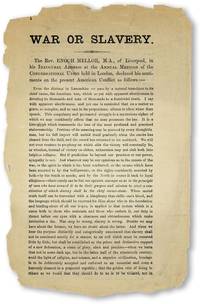
186346597Manchester: Union and Emancipation Society n.d. ca. 1863. First Edition. Original broadsheet handbill 22x13.5cm.; extremities chipped with shallow losses not approaching text the whole rather dust-soiled and unevenly toned else Good or better overall. Text reproduces an address delivered by the Rev. Enoch Mellor of Liverpool "in his INAUGURAL ADDRESS at the ANNUAL MEETING of the CONGREGATIONAL UNION held in London" in which he "declared his sentiments on the present American Conflict." Mellor 1823-1881 was the life-long minister of the non-conformist Square Congregational Church in Halifax West Yorkshire with the exception of a five-year period coinciding with this address when he succeeded the abolitionist Congregational minister Thomas Raffles 1788-1863. Mellor's argument begins with reference to the Lancashire Cotton Panic an economic depression caused by a dearth of baled cotton imports following the start of the American Civil War. Mellr goes on to say that "War /may/ be wrong slavery /is/ wrong" comparing its presence on the American continent with that of the propagation of polygamy "carefully and resolutely laid as a foundation-stone in the territory of Utah. Union and Emancipation Society unknown
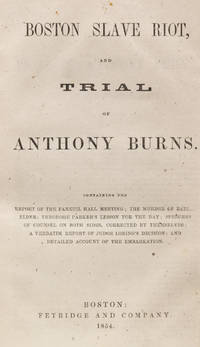
18541266841854. First Edition. SLAVERY BURNS Anthony. Boston Slave Riot and Trial of Anthony Burns. Boston: Fetridge 1854. Slim octavo modern half calf and marbled boards. $3000.First edition of a seminal pre-Civil War pamphlet on the 1854 arrest and Boston trial of fugitive slave Anthony Burns whose return to his Virginia slave owner at the order of the Boston court sparked public fury and ""set Boston on its ear in the spring of 1854"" inspiring Whitman to write his Boston Ballad and Thoreau to deliver his speech Slavery in Massachusetts to a July 4 1854 antislavery rally.The trial of fugitive slave Anthony Burns which ""set Boston on its ear in the spring of 1854 .was nothing less than a pocket revolution"" Von Frank Trials of Anthony Burns xii. The arrest and trial in Boston of Burns whose Virginia slave-owner Suttle followed him there was ""one of the most dramatic and famous incidents in the enforcement of the Fugitive Slave Act."" When Boston Commissioner Loring signed Burns' arrest warrant Richard Henry Dana Jr. and Charles Ellis immediately volunteered to defend Burns. On ""May 26 there was a mass meeting in Faneuil Hall to protest Burns' arrest. This meeting was followed by a poorly planned and disastrously executed attempt to rescue Burns Despite conflicting testimony and imperfect evidence provided by Suttle Loring declared Burns was indeed Suttle's slave."" With that Burns was taken from the courtroom and through streets crowded with his supporters then placed aboard a ship ""for return to Virginia. The trial and removal of Burns from Boston created one of the great spectacles of the late antebellum period"" Finkelman 107-112.""The Burns case made slavery appear to Northerners as an immediate threat Walt Whitman was impelled to write an ironic piece A Boston Ballad soon to be incorporated into his revolutionary volume Leaves of Grass At an antislavery rally in Framingham Massachusetts on July 4 William Lloyd Garrison burned copies of the Fugitive Slave Law and the Constitution as the large crowd chanted 'Amen!' Thoreau delivered his speech Slavery in Massachusetts declaring that the American system had lost its integrity and purity The antislavery sentiment bred by the case helped give birth to the Republican Party which in turn fostered Lincoln's Presidency the South's secession and the Civil War"" New York Times. Containing ""valuable primary source material about the trial and the events surrounding it"" including testimony legal documents"" as well as the full texts of the speeches of the counsel and the opinion of Commissioner Loring."" Bound without rear advertisements: ""some have advertisements at the back of the pamphlet while others do not"" no priority established Finkelman 113. Sabin 6505. Harvard Law Catalogue II:1030. Text fine. hardcover
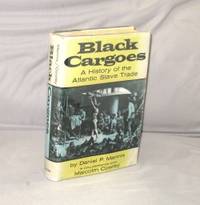
196229404<p>New York:: Viking Press 1962. Second Printing of the First Edition. A Very Good copy in a Very Good plus unclipped dust jacket with light edge wear to the extremities. The African slave trade in the Americas officially began in 1518 with the landing in the West Indies of the first black cargo direct from Africa and was offically suppressed in the United States in 1865. It is estimated that approximately 15 million Africans had crossed the Atlantic during this period. This book attempts to tell where the slaves came from how they were enslaved in Africa how they were purchased by sea captains how they wre transported and how the trip survivors were sold in West Indian and American markets.</p> Viking Press, hardcover
185234901Glasgow Kentucky: W.S. Brown 1852. Early edition being a reprint of the 1851 Louisville edition. Each page printed within a decorative chain-line frame the stereotyped title-page makes reference to engravings but none are called for in this edition. Tall 8vo in the publisher's original brown cloth the covers with decorative embossing retaining the emblem of the Louisville publishers in blind the spine lettered in gilt and with flat bands ruled in blind powder-blue endpapers. xiii 569 8 8 ads pp. A sound copy the text-block well preserved and complete a bit of expected age toning to the paper and light foxing here and there as usual the binding with some age-wear but still very sturdy strong and tight. ONE OF THE MOST NOTORIOUS PRO-SLAVERY BOOKS PUBLISHED IN THE UNITED STATES BEFORE THE CIVIL WAR. The author stylized himself as "the Rev. Josiah Priest" but was not ordained in any denomination.<br> The present Louisville text evolved from an earlier version titled "Slavery As It Relates to the Negro or African Race" published in 1843. It went through numerous editions and title changes during the 1840s and 1850s reflecting the growing sectional controversy over slavery. The popularity of the work exploded <br>in 1852 as it was viewed as a counter-argument to Stowe's pro-abolitionist epic UNCLE TOM'S CABIN.<br> The work's central claim is that slavery is fully sanctioned and approved of by the Bible. Among his arguments are: people of African descent were descendants of Ham and therefore subject to a divine curse; the racial differences were ordained by God; that slavery was beneficial or natural for Black people; and that abolitionism was a dangerous fanaticism threatening the social order and status quo.<br> Although repugnant to many modern readers the book is historically significant because it demonstrates how slavery's defenders tried to answer the growing abolitionist movement. The title also accurately states that the issue of slavery was going to divide the Republic thus predicting the Civil War. W.S. Brown hardcover
1861Cat338Lafayette Ohio 1861. Autograph letter signed 2 pp. Addressed to D. T. Chapin of Enfield Connecticut. Good condition with normal folds and light wear. A concise but revealing early Civil War letter combining financial anxiety agricultural reporting and clear-eyed political commentary on slavery and the future course of the conflict. Writing amid the first months of the American Civil War Chapin opens with the immediate purpose of the letter—forwarding “a draft of $240 for int. on the noteâ€â€”before situating the payment within a deteriorating economic landscape: “It is very difficult to get money now even of the best men.†He describes a local economy under strain noting “no market for wool to bring in money†compounded by regional instability “on account of the bank failing and many of the merchants in Medina closing†concluding bluntly: “Terrible bursting times with them.†Even the act of sending funds carries uncertainty as he cautions that “in these times I consider there is a risk in the best of banks.†Alongside these concerns Chapin provides a snapshot of agricultural conditions: “Corn is very backward and short wheat nearly middling grass rather below middling†summing up the situation as “rather tight times as well as troubled times.â€<br /> <br /> The most significant portion of the letter however turns to the war itself and the unresolved question of slavery. He writes:<br /> <br /> “We hope the end will be well but our nation will have to be humbled. It is well to put down rebellion but it is rather queer that the cause of the trouble must be let entirely alone. The nation will get their eyes open after a while. The President possesses the war power to abolish slavery and Congress possess the power also in my humble opinion and the time will come when they will have to do it unless the south run their heads so hard against the rock as to do it themselves.â€<br /> <br /> The letter closes with a brief note on a failed business transaction—“our trade for the sale of the mill fell throughâ€â€”underscoring the economic uncertainty of the moment before returning to family matters. Overall an evocative early Civil War letter by a merchant expressing fears and anxiety for the pending conflict. unknown
183331599England: Elliott Cresson 1833. Bi-folded folio. 3 pp. 12 1/3 x 7 1/2 inches. Important autograph letter from Elliott Cresson one of the foremost proponents of the American Colonization Society and its colony in Liberia to Member of Parliament Benjamin Hawes presenting a resolution to found the British African Colonization Society. Discusses the famed abolitionist William Lloyd Garrison's opposition to the colonization movement.<br/> <br/> The letter begins with the two-page text of a resolution to establish the British African Colonization Society under the patronage of the Duke of Sussex: "That Colonies composed of fair settlers of African race established on judicious principles on the Coast of Africa appear calculated beyond any other plan to put an effectual stop to the slave trade . . . Resolved that a Society be formed to be called the British African Colonization Society and that its objects be to cooperate with the American Colonization Society and with the several missionaries and other religious and charitable societies in Great Britain and the United States of America in such measures as may promote the total abolition of the slave trade and the establishment of Christianity and Civilization among the Natives of Africa chiefly by the employment of Free Persons of African birth or descent . . ." In the letter which follows Cresson writes of William Lloyd Garrison's opposition to the colonization movement: "I send the list of officers as far as accepted several others have not yet answered but I trust we shall present a bold front. I have just heard thru his Chaplain from the Duke. Garrison has written to poison his mind and probably will annoy our meeting. I trust that as the notice has been so short our friends will bring many with them . . . My letter to the Times in answer to Garrison they have not yet noticed so that it will be put in the Globe whose Editor has offered it a place in his columns." Cresson a noted Philadelphia businessman and philanthropist was among the most ardent supporters of colonization the movement to relocate formerly enslaved people and free black Americans to colonies in Liberia. In 1832 he traveled to England to promote international support for the movement. The following year Cresson and the Philadelphia Young Men's Colonization Society a branch of the American Colonization Society founded Port Cresson in Liberia. However the colony was attacked in 1835 by Bassa tribesmen incited by Spanish slave traders and destroyed. Although initially in favor of colonization William Lloyd Garrison changed his mind and decried the efforts of the American Colonization Society as a perpetuation of slavery. For Garrison's 28 June 1833 letter to the Duke of Sussex referenced above see The Letters of William Lloyd Garrison I:107. Elliott Cresson unknown
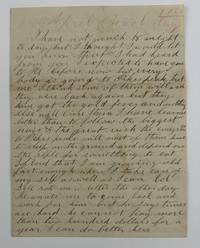
18604105Missouri: April 1 1860. Very good. 4pp. on a single folded sheet. Original mailing folds minor toning. An informative letter written by Charles H. Cram in Missouri to a friend in New England dated "April Fools Day 1860" in red pencil at the top of the first page. Cram mentions hoop skirts Pike's Peak and slavery while trying to decide whether to continue westward during the latter years of the California Gold Rush. Cram's letter reads in part: "Everybody is going to Pikes Peak but me. I think some of them will wish they were back again but they have got the gold fever and nothing else will cure them. I have learned better than to follow the biggest nois and the great rush. The emigrants to Pikes Peake will most of them will have to sleep on the ground and depend on the rifle for something to eat. I may start for Santa Fe about the first of June. I can git 15 dollars a month to drive a teem to Santa Fe. If I do cross the plains I shall go to California but if I have good health I shall stay here though I do not like to live in a slave state."<br /> <br /> In another portion of his letter Cram addresses his correspondent's question of whether slaves and freedpersons wore hoop skirts in Missouri. Cram writes: "You wanted to know if niggers wore hoops. Some do and some don't some slaves in broadcloth and silk and some go nearly naked. Slaves have there stent to do so much & if they do more they are payed for it. Most of them have a piece of ground that they call their own. What time they get they work on it. That is how they git their fine cloths. There is not a nigger in Missouri that works as hard as I do but I have consolation that I can work only when I am a mind to. You tell Albert not to start out among strangers as I did for he will find the people different in the country from them in New England."<br /> <br /> Cram then speaks to the emigrant populations he encounters out west as well as the agricultural bounty and animal life of Missouri: "The greatest difficulty I had was to learn the French and German language. I have been for weeks where I could not understand a word but now I can understand anything that comes along. But now for something else. The peach trees are in flower and the woods look green. Cattle and horses pick their living here the year round. I have not seen a barn in the country. The way to feed a horse is to tie him up to a tree and throw him a few ears of corn on the ground. I cannot rite to day much for there is half a dozen in the room talking about pikes peak or some young lady and how many negroes her father owns etc."<br /> <br /> Cram ends his letter with some advice for his friends back east: "Tell Mr. Bosworth that if he can rais $500 that he had better go to Cansas Kansas and go to farming. If you can persuade Andrew Marshall to go west it will be a good lesson for him."<br /> <br /> A mid-19th century manuscript letter with informative observations on the clothing of slaves and with notable observations of western life in Missouri. April 1 unknown
184740201Stewartsboro TN 1847. Folio 15" x 12-3/4" sheet folded to 7-1/2" x 12-3/4". 4 pp. Completely in ink manuscript integral address leave bearing Stewartsboro Tennessee April 3 1847 manuscript postal marking. mailing address on last page. The initials of the writer's name are difficult to decipher; this is our best guess. Old folds two short fold splits and a few tiny holes at fold corners. Wax seal remnant with tear at edge loss of a few letters some toning. Good to Very Good. <br /> <br /> The writer is concerned that Thomas had not responded to his letter "relating to the negro girl Tabitha given by Uncle R. to his daughter- nothing has been done in that suit as yet. I think she is collecting evidence from her mother & other sources to make it appear that the consideration viz the girl Tabitha which was given her in lieu of the piano was a failure & then to base her claim for the amount of the piano between 4 and 500 dollars princp. & int. against me as executor of my brother Edmond who was security for the faithful administrationship of John Nash Barksdale but he having failed to collect sd. debt while R. Barksdale was solvent. Levi Wade & her lawyer are persuading her. . . " He gives Thomas permission to "calculate on receiving a portion of the money for which Paulina sold. . . Negroes have advanced within 3 or 4 months but I fear one diseased as your boy Phil will command but a small price."<br /> Dr. Thomas Hill Read 1798-1874 of Tennessee settled in Macon County Illinois in 1831. He was the brother-in-law of Capt. David L. Allen one of the most prominent early citizens having married his sister. Dr. Read became known for his success in the treatment of children's ailments and was considered an expert in cholera infantum. He had a reputation for honesty and was said to have acted as administrator of more estates than anyone else in Macon County. Dr. Read was a member of the Decatur Board of Trustees in 1839 1841 1846 and 1847; County Treasurer from 1845-1846 and County Probate Judge from 1846-1849.<br /> John Nash Barksdale 1818-1844 Thomas Read's maternal cousin was born in Tennessee graduated from the University of North Carolina and became a lawyer. He practiced law in Tennessee for a few years and then moved to Columbus Mississippi and entered the law firm of his cousin Gen. William Barksdale. The Columbus bar announced that its members would wear the badge of mourning for thirty days following his death. "Death of John N. Barksdale" Republican Banner Nashville TN Dec. 6 1844 Page 2.<br /> Uncle R was likely Randolph Barksdale 1795-1844 Thomas H. Read's maternal uncle and John Nash Barksdale's father. Randolph settled in Tennessee with his father in 1808 and later established his own plantation. He was married three times and became the owner of a large estate and several slaves in Rutherford County Tennessee thanks to the wealth of his first wife. He also owned an estate near Chulahoma in Marshall County Mississippi. unknown
183431598Philadelphia 1834. 3pp. Later annotation at head of first page. Scarce letter on the Liberian colonization movement by one of its founders.<br/> <br/> Writing to Hawes a member of Parliament and a committee member of the Society for the Extinction of the Slave Trade Cresson wishes for success in the British anti-slavery action off the coast of Sierra Leone writing "I hope that you may yet enjoy the satisfaction of crushing one of the worst & most unacceptable of the slave markets in existence that at Gallinas." After mentioning the travels of the colonial governor of Liberia he writes: ". I have been gratified to learn from several highly respectable sources that such a Colony as you propose located either at the mouth of the Cape Mount River or even a little more to the Northward say at Sugaree & provided with a good supply of trade goods to exchange with the natives would have a powerful tendency to break up the monopoly now enjoyed by the Spanish Slavers. My letters from Africa state that the demand is so great in Cuba from the ravages of Cholera among their ill-fed human cattle as to have rendered the shipments from the Gallinas during the past year almost unprecedented. It appears that the benevolent efforts of your Govt. are not likely to extirpate the evil until commercial & agricultural colonies shall be substituted for cruisers." The letter continues with news from their consul at Liberia before turning to American politics: ". political affairs engrossing the entire energies of the nation. The excitement is painfully great . Our military chieftan Jackson by his acts of unauthorized assumption has called forth a burst of indignation which cannot subside until we get rid of the offender." The letter concludes with an introduction for Gerard Ralston. Cresson a noted Philadelphia businessman and philanthropist was among the most ardent supports of colonization the movement to relocate former slaves and free African Americans to colonies in Liberia. In 1833 Cresson and the Philadelphia Young Men's Colonization Society a branch of the American Colonization Society founded Port Cresson in Liberia. However the colony was attacked in 1835 by Bassa tribesmen incited by Spanish slave traders and destroyed. unknown
15313Birmingham 3/13 1852. 1-page 8vo tipped on to part of an album page. He regrets that he is unable "to lodge at your home at the Quarterly Meeting" as "My dear Hannah is expecting to be confined almost daily and I cannot.leave home at all.". Birmingham 3/13 1852. unknown
1827213910London: John Hatchard and Son 1827. Illustrated by 9 etchings. viii 464 pp. 1 vols. 8vo. Full calf spine gilt. Upper board missing 8 leaves damp-stained else Near Fine. Illustrated by 9 etchings. viii 464 pp. 1 vols. 8vo. John Hatchard and Son unknown
1827163198London: Printed for the London Society for the Mitigation and Abolition of Slavery in the British Dominions 1827-32. A new age of abolitionist agitation First collected editions being the full run under its original title of Zachary Macaulay's abolitionist magazine the leading organ of British abolitionist thought and campaigning. It was afterwards renamed the Anti-Slavery Reporter and has lasted under changing titles to this day. The journal "systematically collected information on the abuses of slavery" ODNB. "Highlighting the rise of abolitionist petition drives antislavery discussions in church and government venues and debates over unfree labor throughout the empire the paper celebrated a new age of abolitionist agitation" Newman pp. 44-45. The volumes collect the monthly issues from June 1825 to December 1831 with collective title pages and contents tables. 4 vols. octavo 216 x 129 mm. Contemporary half calf rebacked black morocco labels marbled sides edges speckled brown. Wear at extremities inner hinges reinforced a little browned and spotted: still very good copies. Richard S. Newman Abolitionism: A Very Short Introduction 2018. unknown
23092Without date or place. 3pp. 12mo. Bifolium on ruled laid paper. Fair: aged with a 12.5 x 5 cm section cut away from the top of the first leaf before the writing out of the poem. 63 lines divided into six nine-line stanzas. The stanzas are numbered and the poem is complete. The stanzas are numbered and the poem is complete. Written from the slave's point of view with the first stanza reading: 'I'm weary yet I cannot sleep Dark thoughts of morning make me weep For at the rising Sun I'm told I'll be converted into gold There's no escape I must be sold Because my master wants the gold And I'm his Slave yes I'm his Slave Because my master wants the gold And I'm his slave'. Last stanza describing the slave's flight to Canada: 'At last my dreadful journeys o'er I'm safe upon the farther shore St Georges cross floats over me I've found the land of Liberty. My youths renewed no more I'm old That fear is gone of being sold For now I'm Free Yes now I'm Free The fear is gone of being sold For now I'm Free.' No indication has been found that the poem was ever published. Without date or place. unknown