610 résultats
Very Good Turkish, Ottoman (1500-1928) Original color map on cloth. A little foxing on cloth. Very good. Folded. Oblong atlas folio. (66 x 72 cm). In Ottoman script. Scale: 1/210.000. Ottoman sanjaks in Greece. A rare Ottoman map of Balkans with Turkish place names for the period of pre-Balkan Wars, (1912-1913). Very important for onomastics and historical geography. Written 'Paris -French meridian- was accepted as the 0 meridian'. The Paris meridian is a meridian line running through the Paris Observatory in Paris, France-now longitude 2°20'14.03" east. It was a long-standing rival to the Greenwich meridian as the prime meridian of the world. Personal stamp of Muhiddin Pasha on cloth, under the printed descriptive texts. It's from the collection of him. Hasan Muhiddin Pasha [Çanga], (1866-1944), who was a lieutenant in Hedjaz Army of the Ottoman Empire in 1887. After he suppressed the rebellion in Yemen, 1891, his rank was promoted to the 'major'. After the Imam Yahya rebellion in Yemen, 1904, he prepared a report for the Ottoman government. He also took part in Ethiopia, Sudan, Yemen, Arabian Peninsula for various military duties. After promotion to division command, he was provincial president of CHP (Republican People's Party). He was a very important politic and diplomatic figure for the last period of Ottoman and early Republican Turkey. Not in Tooley. Extremely rare.
Very Good Turkish, Ottoman (1500-1928) Original color map on cloth. A little foxing on cloth. Very good. Folded. Oblong atlas folio. (66 x 72 cm). In Ottoman script. Scale: 1/210.000. Ottoman sanjaks in Balkans, Macedonia. A very detailed map of Old Zagora. A rare Ottoman map of Balkans with Turkish place names for the period of pre-Balkan Wars, (1912-1913). Very important for onomastics and historical geography. Extremely rare.
Very Good Turkish, Ottoman (1500-1928) Original color map on cloth. A little foxing on cloth. Very good. Folded. Oblong atlas folio. (66 x 72 cm). In Ottoman script. Scale: 1/210.000. Ottoman sanjaks in Greece, mostly in Thessaly and Macedonian Greece. A rare Ottoman map of Balkans with Turkish place names for the period of pre-Balkan Wars, (1912-1913). Very important for onomastics and historical geography. Written 'Paris -French meridian- was accepted as the 0 meridian'. The Paris meridian is a meridian line running through the Paris Observatory in Paris, France-now longitude 2°20'14.03" east. It was a long-standing rival to the Greenwich meridian as the prime meridian of the world. Personal stamp of Muhiddin Pasha on cloth, under the printed descriptive texts. It's from the collection of him. Hasan Muhiddin Pasha [Çanga], (1866-1944), who was a lieutenant in Hedjaz Army of the Ottoman Empire in 1887. After he suppressed the rebellion in Yemen, 1891, his rank was promoted to the 'major'. After the Imam Yahya rebellion in Yemen, 1904, he prepared a report for the Ottoman government. He also took part in Ethiopia, Sudan, Yemen, Arabian Peninsula for various military duties. After promotion to division command, he was provincial president of CHP (Republican People's Party). He was a very important politic and diplomatic figure for the last period of Ottoman and early Republican Turkey. Not in Tooley. Extremely rare.
Very Good Turkish, Ottoman (1500-1928) Original color map on cloth. A little foxing on cloth. Very good. Folded. Oblong atlas folio. (66 x 72 cm). In Ottoman script. Scale: 1/210.000. Ottoman sanjaks in Balkans. A rare Ottoman map of Balkans with Turkish place names for the period of pre-Balkan Wars, (1912-1913). Very important for onomastics and historical geography. Written 'Paris -French meridian- was accepted as the 0 meridian'. The Paris meridian is a meridian line running through the Paris Observatory in Paris, France-now longitude 2°20'14.03" east. It was a long-standing rival to the Greenwich meridian as the prime meridian of the world. Personal stamp of Muhiddin Pasha on cloth, under the printed descriptive texts. It's from the collection of him. Hasan Muhiddin Pasha [Çanga], (1866-1944), who was a lieutenant in Hedjaz Army of the Ottoman Empire in 1887. After he suppressed the rebellion in Yemen, 1891, his rank was promoted to the 'major'. After the Imam Yahya rebellion in Yemen, 1904, he prepared a report for the Ottoman government. He also took part in Ethiopia, Sudan, Yemen, Arabian Peninsula for various military duties. After promotion to division command, he was provincial president of CHP (Republican People's Party). He was a very important politic and diplomatic figure for the last period of Ottoman and early Republican Turkey. Not in Tooley. Extremely rare.
Very Good Turkish, Ottoman (1500-1928) Original color map on cloth. A little foxing on cloth. Very good. Folded. Oblong atlas folio. (66 x 72 cm). In Ottoman script. Scale: 1/210.000. Ottoman sanjaks in Albania, Macedonia, Greece and Serbia. A rare Ottoman map of Balkans with Turkish place names for the period of pre-Balkan Wars, (1912-1913). Very important for onomastics and historical geography. Written 'Paris -French meridian- was accepted as the 0 meridian'. The Paris meridian is a meridian line running through the Paris Observatory in Paris, France-now longitude 2°20'14.03" east. It was a long-standing rival to the Greenwich meridian as the prime meridian of the world. Personal stamp of Muhiddin Pasha on cloth, under the printed descriptive texts. It's from the collection of him. Hasan Muhiddin Pasha [Çanga], (1866-1944), who was a lieutenant in Hedjaz Army of the Ottoman Empire in 1887. After he suppressed the rebellion in Yemen, 1891, his rank was promoted to the 'major'. After the Imam Yahya rebellion in Yemen, 1904, he prepared a report for the Ottoman government. He also took part in Ethiopia, Sudan, Yemen, Arabian Peninsula for various military duties. After promotion to division command, he was provincial president of CHP (Republican People's Party). He was a very important politic and diplomatic figure for the last period of Ottoman and early Republican Turkey. Not in Tooley. Extremely rare.
Very Good Turkish, Ottoman (1500-1928) Original chromolithograph folded map. Oblong atlas folio. (49 x 65 cm). In Ottoman script. Repaired with a band in the contemporary period from its backside. Set including 4 sheets. Other sheets are Basrah, Bagdad, and Qut al-Amare. This is the first sheet including 'Samawah'. Rare. Scale is 1/500.000. Samawah city was settled by the Arab tribe of Banu Quda'a around the 3rd century AD. It is built on both sides of the Euphrates river; there are four bridges in the center of town for crossing between the two sides. The west bank of the city contains the commercial heart of the city and includes the old town and the Jewish quarter, Agd al Yahood. The west bank is the site of the covered market Suq Al Masgoof, which dates to the Ottoman period. The area surrounding the market is the old city with its Byzantine maze of crowded markets and streets. The eastern side of the city including 'Qushla' has a more modern feel and contains a number of estates of apartment blocks built during the 1970s and 1980s, As Samawah Stadium, which is home to the local Muthanna football team Samawa FC, as well as technical colleges and the polytechnic. There too is Al Qushla, the historic "Ottoman Barracks". The most famous attraction of Samawah in the ruins of the ancient Sumerian city of Uruk which dates to 4000 BC. This was the largest city in Sumer, extending over 2 km2. Uruk was not only the largest conurbation of the first urban civilization on earth, but it is also the place where the first written script was discovered, the oldest dating back to 3300 BC. The palm groves of Samawah: Samawah is built on both sides of the Euphrates and is surrounded by hundreds of palm groves that give it a tropical feel, especially in the southern and northern suburbs. These groves provide cool respite from the scorching heat of Mesopotamia and were the inspiration for the famous Iraqi folk song "The Palm of Samawah".
Very Good Turkish Original color map. 52x65 cm. In Turkish. Scale: 1: 800,000. Showing shores from Latakia to Haifa; Lebanon , Beyrouth, North Palestine, Syria, Saudi Arabia and borders, Orontes river, deserts. [TURKISH MAP of BEYROUTH, DAMASCUS, JORDAN] Sam, Beyrouth, Lebanon, Jordan.
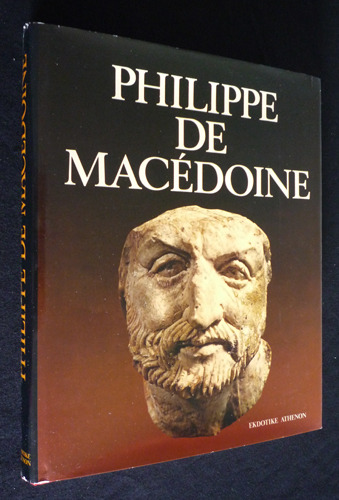
1991xl1564Ekdotike Athenon Cartonné avec jaquette 1991 In-4 (22,5 x 28 cm), cartonné avec jaquette, 255 pages, illustrations couleur ; jaquette légèrement jaunie, trois petites déchirures sur les bords de la jaquette légèrement usés, par ailleurs ouvrage en bon état. Livraison a domicile (La Poste) ou en Mondial Relay sur simple demande.
Angelike Hatzimichali [1895-1966] spent decades recording the folk traditions of Greece . Two extensive volumes were produced by the Benaki Museum based on her research on costume : He Hellenike Laike Phoresia, and edited by Tatiana Ioannou-Giannara. (Later published in English as The Greek Folk Costume 1. Costumes with the sigouni./ 2 . Costumes with the Kavadi] Sections on various regions of Greece have been re-issued seperately by Melissa Publishing This item covers the costumes of Florina in Macedonia [Various pagination) illus (some col) Book
Office du livre, Bibliothèque des arts, 1982, 255 pp., relié, bon état.
Gift inscription from author to ffep. Light creasing along upper edge and corners of wraps. ; CONTENTS: Preface par Pierre Vidal-Naquet - Introduction - De Thessalie en Macedoine - Demeter et la Belle deesse a Lete - Le dromos en Macedoine - Dionysos Agrios, Ertayptos, Pseudanor - Imberbe et travesti - La guerre et la chasse - Initiations, consecrations et affranchissements - En guisse d' epilogue - APPENDICE: Le sanctuaire de Demeter et de Kore pres de. ; Meletemata 19; Centre De Recherches De L'Antiquite Grecque Et Romaine. Fondation Nationale De La Recherche Scientifique; 171 pages; 26 pl. & 2 maps. ; Signed by Author
Dustjacket has edgewear with chipping and small tears. Upper Corners are bumped. ; In autumn 1977 an unplundered royal tomb containing works of art of astounding richness and exquisite craftsmanship was discovered by Professor Manolis Andronicos at Vergina in Macedonia. The excavator's suggestion that the tomb's occupant was probably Philip, son of Amyntas, king of the Macedonians and Captain General of the united Greeks, created an understandable sensation, and aroused world-wide interest in this extraordinary personality: father of Alexander the Great, one of the greatest Macedonian kings, and also one of the most important political figures of antiquity. In response to this interest nine scholars, all eminent specialists in the history of 4th century Greece, describe the tumultuous career of Philip, re-evaluate his personality and re-examine his political achievements in the light of the recent discoveries. The book closes with an account of the excavation of the fabulous treasures of the royal tombs at Vergina by Professor Andronicos. ; 254 pages
Dustjacket has edgewear with light chipping and a couple of small tears. Very light shelfwear to book. Former owner's bookplate on ffep. ; In autumn 1977 an unplundered royal tomb containing works of art of astounding richness and exquisite craftsmanship was discovered by Professor Manolis Andronicos at Vergina in Macedonia. The excavator's suggestion that the tomb's occupant was probably Philip, son of Amyntas, king of the Macedonians and Captain General of the united Greeks, created an understandable sensation, and aroused world-wide interest in this extraordinary personality: father of Alexander the Great, one of the greatest Macedonian kings, and also one of the most important political figures of antiquity. In response to this interest nine scholars, all eminent specialists in the history of 4th century Greece, describe the tumultuous career of Philip, re-evaluate his personality and re-examine his political achievements in the light of the recent discoveries. The book closes with an account of the excavation of the fabulous treasures of the royal tombs at Vergina by Professor Andronicos. ; 254 pages
Scholar's name to ffep (Jenifer Neils). Dustjacket has edgewear with chipping and small tears. ; In autumn 1977 an unplundered royal tomb containing works of art of astounding richness and exquisite craftsmanship was discovered by Professor Manolis Andronicos at Vergina in Macedonia. The excavator's suggestion that the tomb's occupant was probably Philip, son of Amyntas, king of the Macedonians and Captain General of the united Greeks, created an understandable sensation, and aroused world-wide interest in this extraordinary personality: father of Alexander the Great, one of the greatest Macedonian kings, and also one of the most important political figures of antiquity. In response to this interest nine scholars, all eminent specialists in the history of 4th century Greece, describe the tumultuous career of Philip, re-evaluate his personality and re-examine his political achievements in the light of the recent discoveries. The book closes with an account of the excavation of the fabulous treasures of the royal tombs at Vergina by Professor Andronicos. ; 254 pages
Minor scuffing. Adhesive stains to inner covers. ; The successors of Alexander the Great were neither his closest friends nor his most prominent generals. But because these marshals labored in his shadow, their careers and contributions to Alexander's success have been neglected by historians, ancient and modern. The primary aim of this book is to bring them to light. Waldemar Heckel presents an interpretative prosopographical study of more than 130 officers who served Alexander the Great. As such, The Marshals of Alexander's Empire is a revision, a continuation and an expansion of H. Berve's Das Alexanderreich aup prosopographischer Grunlage, volume 2 (Munich, 1926). The Marshals of Alexander's Empire provides the first full discussion in English of the careers of Alexander's Macedonian officers and closest friends. ; 1.2 x 9.3 x 6.1 Inches; 444 pages
Offprint from the Southeast European Yearbook 1992 - transcripts and copies of Greek and FYROM documents. 18p. illus (col) map Brochure
New English Paperback. Pbo. Roy. 8vo. (24 x 17 cm). In English. 58 p. Destroying ethnic identity: The Turks and Greece. A Helsinki watch report, August 1990. Between 120,000 and 130,000 ethnic Turks live in Western Thrace, in the Northeastern part of Greece. Greek citizens proud of their ethnic heritage, the Turkls of Western Thrace resent the efforts of the Greek government to deny them their ethnic identity. A Helsinki Watch mission visited Western Thrace in May 1990 and confirmes reports of human rights abuses including deprivation of citizenship; denials of the right to buy land or houses; restrictions on freedom of expressioni mevoment and religion; and degrading treatment of ethnic Turks by Greek government officials. Aydin-Alkan 1428.
Sur les Routes du 'Drang' - Pr?face -Avant-propos 1 18x11.5 cm., legatura in mezza tela, titolo in oro al dorso, pp. XXX, 354 non refilate, 7 carte geografiche-politiche, di cui una a colori, pi? volte ripiegate, in fine, prima edizione, in lingua francese, piccoli segni d'uso ai margini esterni, parte alta del dorso, ma buon esemplare.
Mm 170x250 Volume cartonato rigido di pagine 699 con numerose illustrazioni nel testo e fuori testo e 3 cartine. Opera in buone condizioni. Spedizione in 24 ore dalla conferma dell'ordine.
19514671951 1951 IN-12 BROCHE DE 392 PAGES, COUVERTURE IMPRIMEE. ILLUSTRE DE 2 CARTES REPLIEES. EDITION ORIGINALE.
The political history of the foundation of the Yugoslav Republic of Macedonia from IMRO to the end of World War II.Translation from Macedonian by Bernard Meares. 152p. Front cover with slight mark and scuffing, else fine Book
Book shows light shelf wear to covers. Text/interior is clean and free of marking of any kind. 168 pages with b&w photos, color photo section at back. Contents include Ritual dances, in five sections: Rougatsdria or Rogatsaria, Carnival or Apokries, Anasteenaria or fire-dancing, Lazarines, Tzamala, Regional Dances and Style: Cyclades Dodecanese islands, Sporades, Ionian Islands, Saronic Islands, Norther and Central Aegean, Crete Mainland Dances and Style : Peloponnesos, Attki, Roumeli, Thessaly, Epiros, Macedonia, W. & E. Trace; Vlachs, Arvanites, Sarakatsans: Vlachs, Albanians, Sarakatsans & Asia Minor : Pontos, Cappadocia, Constantinople & Coastal regions et al.
Very Good English Paperback. Pbo. Cr. 8vo. (20 x 14 cm). In Turkish. 65 p., numerous b/w ills., Ottoman documents. Pomak Türklerinin tarihi geçmisinden sayfalar. A study on history of Pomak Turks.
In-8° (cm. 22,5x14,3), pp. 93, (3b). Bross. edit. Intonso. Mende al ds., ma ben cucito. Risposta a "Remarques sur l'ethnographie de la Macedoine" [1907], di Zvijitch. Movimenti e storia di Serbi e Bulgari in MACEDONIA.