3 035 résultats
71773Köln, 1991.
Boards slightly bowed. Scholar's bookplate to inner cover (G. P. Goold). Pages tanned. DJ has some loss with tears and chipping. DJ is browned. ; 215 pages
150657Stuttgart, Hiersemann, 1963.
1967125632Darmstadt 1967 Darmstadt 1967, In-8 relié pleine toile brique, 80 pages. Texte en allemand. Bon état.
Darmstadt 1967, In-8 relié pleine toile brique, 80 pages. Bon état.
601348Praha, Univ. Carolina Pragensis, 1995 In-4, rel. pleine toile de l'éd. sous jaquette, 183 pp., 85 fig. in-t., 32 pl. en noir hors-t., index, bibliogr. Texte en anglais.
601349Excavations of the Czech Institute of Egyptology. 2001. In-4, cartonnage de l'éd. sous jaquette ill. en coul., 211 pp., fig. in text, LXXXIX pl. en noir et en coul., index. Texte en anglais.
601347Prague, Czech Institute of Egyptology, Faculty of Arts, Charles Univ., 2002. In-4, cartonnage de l'éd. ill. en noir sous jaquette ill., 164 pp., fig. in-t., XXXII pl. hors-t. Texte en anglais.
505602Pais, 1990. In-8, broché, 583-791 pp.
505605Paris, Editions Klincksieck, 1981. In-8, broché, 623-797 pp.
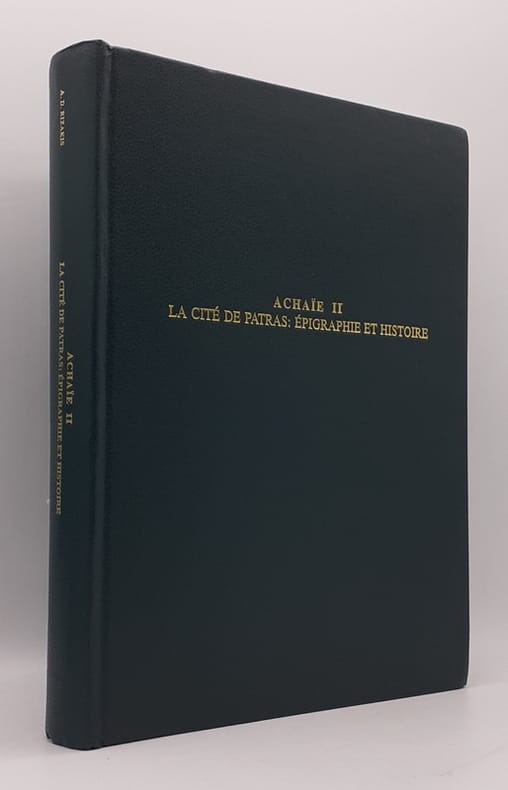
601529Athènes, 1998. In-4, rel. éd. pleine-perc. verte, titre doré au dos et sur le 1er plat, VII-487 pp., 3 cartes dont 1 sur double pp., 59 pl. de reprod. photogr. en n/b., qq. fig., plans, croquis, tableaux en n/b. in-t., bibliographie sommaire, indices et tables importantes en 3ème partie. Envoi autographe de l'auteur.
In-8°, pp. 55 (da p. 176 a p. 231), bross. edit. con dis. in cop. Il bollettino era iniziato nel 1937 a c. di Calderini e altri, poi cessato per la guerra. "Il nuovo bollettino riguarda però esclusivamente i reperti e le pubblicazioni di epigrafia greca e romana in Italia, ed ha inizio dal 1° gennaio 1965." (dalla pref.). Censito in 4 bibl.
Madrid, Sociedad Española de Estudios Clásicos, 1958. 4to. mayor; XXI - 620 pp., 1 h. y 29 reproducciones fotográficas en láminas fuera de texto. Cubiertas originales.
100621Madrid, 1990.
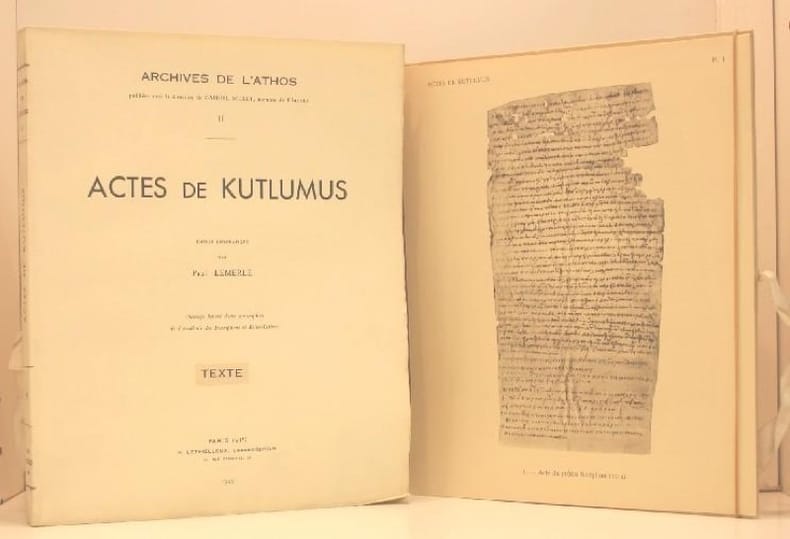
451284Paris, P. Lethelleux, 1945. 2 vol. in-4 (22,5 x 27,5 cm), 1) vol. de texte broché, VI-305pp, 2) album: cartonnage d'imprimé d'édition à lacets, dos toilé, contenant 32 planches d'ill. photographiques d'après les négatifs de la Mission gabriel Millet exécutée en 1918. Première édition.
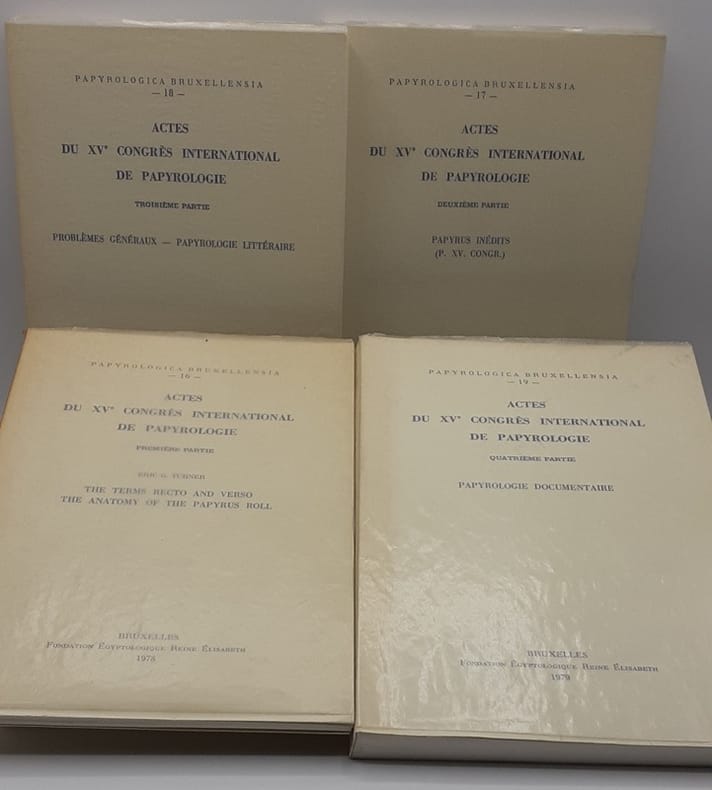
589592Bruxelles, Fondation Egyptologique Reine Elisabeth, 1978-1979. 4 vol. in 8 broché, 71,140,197 et 279 pp., qq. fig. en n/b. in t., 16 pl. en n/b., textes en français, anglais, italien, extraits en grec. Rare.
Con una tavola in bianco e nero in antiporta.
In 8 (cm 16,5 x 23,5), pp. 31 + (1 bianca). Pagine intonse. Brossura editoriale. Saggio con le aggiunte alla Silloge delle Iscrizioni latine anteriori al secolo di Augusto pubblicata da Raffaele Garrucci per Paravia.
16931263801693 sumptibus ac typis J. J. de Rubaeis (Romae) - 1693 - In-folio à l'italienne (48x38,5cm environ), reliure plein veau marbré d'époque, dos à 5 nerfs portant pièce de titre en doré sur fond rouge et caissons ornés de fleurons en doré, toutes tranches jaspées rouge, roulette dorée sur les chasses, contregardes marbrés seules - 84 pages dont 82 gravures
<p>25 cm, brossura editoriale, p. 155. Numerose illustrazioni in nero n.t. Piccola mancanza alla seconda di copertina. Interni ottimi. In parte intonso.</p>
<p>25,5 cm brossura editoriale; p. 158, (2). Una carta geografica più volte ripiegata e 23 figure su tavole fuori testo</p>
Very light foxing to textblock else Fine. ; 288 pages; This remains the major book on Aeschylus' Supplices, its dating and the trilogy to which it belonged. Its first appearance, in 1969, was a response to the publication of a papyrus fragment from Oxyrhynchus in Egypt, which indicated a late production date (the 460s BC) for Aeschylus' play. This upset the previous consensus that it was the earliest Greek tragedy to survive: there was, Garvie argued, no longer good reason to suppose that the play belonged to an early stage in its author's development. The book also examines the evidence for reconstruction of the other, lost plays of the trilogy. Garvie remains convinced that, even without the additional testimony of the papyrus, all the internal from the text of the play points to the 460s, though some have tried to pull it back to the 470s because it feels like an early play. Some of the salutary lessons to be drawn from the discovery of the papyrus have still to be learnt.
Scholar's name to ffep (G. De Montmollin). Institution stamp to ffep (Dept. Of Classics - University of Toronto) - no other markings. Corners bumped. DJ is price-clipped. DJ has light browning to back panel. Dustjacket has minor shelfwear and rubbing. ; 288 pages; This remains the major book on Aeschylus' Supplices, its dating and the trilogy to which it belonged. Its first appearance, in 1969, was a response to the publication of a papyrus fragment from Oxyrhynchus in Egypt, which indicated a late production date (the 460s BC) for Aeschylus' play. This upset the previous consensus that it was the earliest Greek tragedy to survive: there was, Garvie argued, no longer good reason to suppose that the play belonged to an early stage in its author's development. The book also examines the evidence for reconstruction of the other, lost plays of the trilogy. Garvie remains convinced that, even without the additional testimony of the papyrus, all the internal from the text of the play points to the 460s, though some have tried to pull it back to the 470s because it feels like an early play. Some of the salutary lessons to be drawn from the discovery of the papyrus have still to be learnt.
Scholar's bookplate to inner cover (G. P. Goold). Minor shelfwear to book. DJ has minor shelfwear. ; 288 pages; This remains the major book on Aeschylus' Supplices, its dating and the trilogy to which it belonged. Its first appearance, in 1969, was a response to the publication of a papyrus fragment from Oxyrhynchus in Egypt, which indicated a late production date (the 460s BC) for Aeschylus' play. This upset the previous consensus that it was the earliest Greek tragedy to survive: there was, Garvie argued, no longer good reason to suppose that the play belonged to an early stage in its author's development. The book also examines the evidence for reconstruction of the other, lost plays of the trilogy. Garvie remains convinced that, even without the additional testimony of the papyrus, all the internal from the text of the play points to the 460s, though some have tried to pull it back to the 470s because it feels like an early play. Some of the salutary lessons to be drawn from the discovery of the papyrus have still to be learnt.