Da Bisticci VespasianoBiblio.com
103 résultats
0260622389.Ghardcover. Good. Access codes and supplements are not guaranteed with used items. May be an ex-library book. hardcover
cm. 15 x 21,5, 732 pp. Istituto nazionale di studi sul Rinascimento 1040 gr. 732 p.
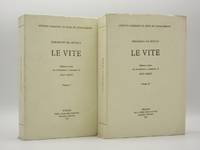
19701231I163Firenze Florence: Nella Sede Dell'Istituto Palazzo Strozzi 1970-1976. 1st Edition . Paperback. Printed pages: lxvi 601; 731. Good Plus. 6 x 8.5 inches 15 x 22 cm. Complete two volume set. Card wraps. Light soiling and slight foxing to covers. Crease to front cover of volume I. Slight wear to edges of covers. Light foxing to page edges. Clean text throughout. Italian languange. Overall condition is Good Plus. Please Note: This is a heavy item and international postage will be more than the standard rate. Actual Royal Mail postage costs are: Europe £19.00; USA £33.00; Oceania £40.00; Rest of World £37.00. A postage supplement will be requested after the order has been placed. Size: 6 x 8.5 inches 15 x 22 cm. Nella Sede Dell'Istituto Palazzo Strozzi paperback
cm. 17 x 24, 432 pp. con 148 ill. n.t. b.n. e col. Accademia Nazionale Virgiliana di Scienze Lettere e Arti 1177 gr. 432 p.
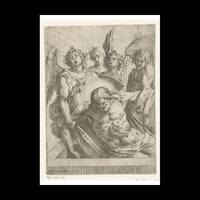
1915036Contentum Ltd. Loose sheet. New. High-quality art print based on an original work from the Rijksmuseum. Created in the 16th century 1592. Professionally printed on premium fine-art paper Photo Matt Fibre in size A2. The artwork is printed with a white border museum-style presentation. Contentum Ltd. unknown
3559359Contentum Ltd. Loose sheet. New. High-quality art print based on an original work from the Rijksmuseum. Created in the 16th century 1592. Professionally printed on premium fine-art paper Photo Rag Bright White in size A2. The artwork is printed with a white border museum-style presentation. Contentum Ltd. unknown
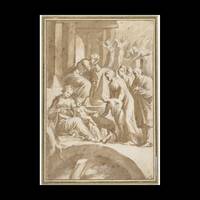
1915037Contentum Ltd. Loose sheet. New. High-quality art print based on an original work from the Rijksmuseum. Created in the 16th century 1592. Professionally printed on premium fine-art paper Photo Rag Bright White premium quality in size A2. The artwork is printed with a white border museum-style presentation. Contentum Ltd. unknown
3559360Contentum Ltd. Loose sheet. New. High-quality art print based on an original work from the Rijksmuseum. Created in the 16th century 1592. Professionally printed on premium fine-art paper Photo Rag 308 premium quality in size A2. The artwork is printed with a white border museum-style presentation. Contentum Ltd. unknown
In 8, pp. 56 + (2). Copertina e fr. con ill. umoristica in lit. di 'Vespa', pseudonimo di Vespasiano Bignami (Cremona, 1841 - Milano, 1929), personaggio eclettico che studio' pittura a Bergamo, e fu illustratore di alcuni periodici caricaturali. Legatura in br. ed. con danni rip. al d. Leggera gora centrale alle cc. Racconto militare umoristico che nell'introduzione viene presentato come Arringa tenuta dallo Stato Maggiore della Guardia Nazionale ai componenti il XXIX battaglione mobile, nella caserma del beato Eustorgio l'anno 66 dell'era nostra, auspice Apollo in suo pieno splenmdore e calore.
I due busti maschili rappresentano due imperatori romani. Tito Flavio Vespasiano, meglio conosciuto come Vespasiano (Cittareale, 9 – Roma, 79), che governò fra il 69 e il 79. Fondatore della dinastia flavia, fu il quarto a salire al trono nel 69 ponendo fine a un periodo d'instabilità seguito alla morte di Nerone. Marco Cocceio Nerva, più noto semplicemente come Nerva (Narni, 30 – Roma, 98) governò dal 18 settembre 96 alla sua morte. Fu l’ultimo imperatore italiano sia di nascita che di famiglia. Inserita nell'opera "Il Museo Pio-Clementino descritto da Ennio Quirino Visconti Direttore del Museo Capitolino - Tomo sesto - Dedicato alla Santita di Nostro Signore PIO SESTO Pontefice Massimo. Edito da Luigi Mirri / Mercante di quadri incontro il Palazzo Bernini. In Roma MDCCXCII con Privilegio Pontificio. Opera dedicata ai Busti del Museo Pio-Clementino
20002091202133212200Rinsen Bookstore 2000. Soft Cover. Fine. Volume: 1 Rinsen Bookstore paperback
196498104New York : Cooper Square Publishers 1964. First Edition. Hardback. Three fine copies in the original gilt-blocked cloth. All remain particularly well-preserved overall; tight bright clean and especially sharp-cornered. Still in the Publisher's protective stiff-card box. ; 0 pages; Complete in 3 volumes 2 volumes and a checklist volume . Subjects: Frontier and pioneer life - United States - Bibliography. America - Discovery and exploration - Bibliography. New York : Cooper Square Publishers hardcover
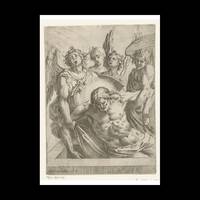
1915038Contentum Ltd. Loose sheet. New. High-quality art print based on an original work from the Rijksmuseum. Created in the 16th century 1592. Professionally printed on premium fine-art paper Museum Etching museum quality in size A2. The artwork is printed with a white border museum-style presentation. Contentum Ltd. unknown
3559361Contentum Ltd. Loose sheet. New. High-quality art print based on an original work from the Rijksmuseum. Created in the 16th century 1592. Professionally printed on premium fine-art paper Museum Etching museum quality in size A2. The artwork is printed with a white border museum-style presentation. Contentum Ltd. unknown
1731901489AGAmsterdam:, Westersteins en Smith, 1731. Kupferstich 28,5 x 43 cm, Blattgröße 39,5 x 47 cm.
1975001834Stuttgart-Bad Cannstatt Germany: Dr. Cantz'sche Druckerei 1975. Reproduction Edition . Hardcover. As New/As New. Oblong 16mo. One of 250 copies in a Limited Edition; also parts in German and English; binding 1/4 vellum and hand marbled paper; very light pencil line on title page; with original slip case with title written in pencil on spine; ghost of small binder's ticket lower left corner of rear paste down; unpaginated; oblong 16mo; in Italian. <br/> <br/> Dr. Cantz'sche Druckerei hardcover
H1616Paris.Ducher; bzw. Dresden Gilbers 1877. Folio. 12 S. und 51 Lichtdruck-Tafeln. Original-Halbleinenmappe mit bedrucktem Original-Vorderdeckel leicht berieben und beschabt Tafeln etwas gebräunt 3 Tafeln mit Randläsuren gutes Exemplar. unknown
1823GES943Londini, Veneunt Apud G. & W. B. Whittaker (Edito Nova et Auctior), 1823. 596/464/600/288 Seiten, Index: 183 Seiten, lat., 8° (22 cm H.), OLdr. (in lateinischer Sprache) - alle 4 Bände sind in braunem Kalbsleder gebunden, Buchrücken: 5 Bünde, mit jeweils 2 Rückenschildern. - Band 1: Buchdeckel und Rücken leichte Abschabungen, Ecken und Kanten abgerieben, ersten und letzten Seiten leichte Stock- und Altersflecken, einige dezente Bleistiftanstreichungen. Band 2: wie Bd. 1, ohne Anstreichungen, mehr Seiten stockfleckiger. - Band 3: Einband an den Kanten abgeschabter, Rückendeckel mit zwei kleinen Löchern im Leder, ersten und letzten Seiten leicht alters- und stockfleckig, ab Seite 565 durchgehend bis Ende am Fußschnitt ein kleinerer brauner Fleck. - Band 4: wie Bd. 3, auf dem vorderen Buchdeckel durchgehend bis zur letzten Seite ist auf der unteren Ecke ist ein größerer duchgehender Fleck von variierender Größe. - Alle 4 Bände sind altersbedingt in sehr guter Erhaltung. fest gebunden/ hardcover
<p>15,5 cm, rilegatura in cartone decorato (inizio '900), tagli colorati. Marca editoriale con tela e ragno al centro; carte 328. Rara edizione cinquecentesca della Guerra Giudaica di Giuseppe Flavio, tradotta dal greco in volgare. Capilettera animati. Antica firmetta e minime mancanze agli angoli del frontespizio, leggermente rifilato al margine superiore</p>
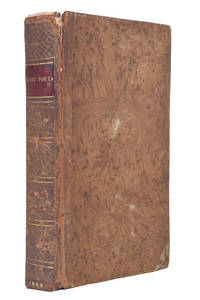
121689Parisiis ex officina Simonis Colinaei 1530. 8vo. 8 leaves. 256 numbered leaves. 3 leaves. Half calf smooth spine decorated binding from the early 19th century. Second edition of the poetic works of the Strozzi father and son which were collected and published for the first time by Aldo Manuzio in 1513. From a powerful family through which he forged ties with the Este house of Ferrara Tito Vespasiano Strozzi 1422-1505 held high positions in the administration and justice of that region. He was known for his humanist compositions in Latin and a few sonnets in Italian. It is said that he spent his life improving the love poems he had written in his youth. His son Ercole Strozzi 1471-1508 whom he associated with his high administrative positions was a friend of Lucrezia Borgia and had married the poetess Barbara Torelli with whom he had a daughter in addition to the two illegitimate children he is known to have. "This union caused his death claim contemporary historians: he was assassinated by a lover of his wife believed to be Alfonso d'Este" Larousse. This edition contains the dedication to Lucrezia Borgia written for the first edition as well as an epitaph dedicated to Ercole Strozzi by Aldo Manuzio. The volume ends with: "Oratio Tvmvltvaria Habita à Caelio Calcagnino In Fvnere Hercvlis Strozae" in prose. Large old ink stain on the title page whose printer's mark has been colored with a contemporary handwritten note: "Manzatus santo me possidet" . Some defects to the binding. Renouard Bibliography of the Editions of Simon de Colines p. 166: "Copy of the Aldine edition of 1513". unknown
157242366In Venetia, , 1572. In-12 oblong (15 x 20,6 cm) de (4) ff. de texte (43) ff., modèles de calligraphie, titre avec vignette gravée sur bois, veau brun, dos orné à nerfs (reliure du XVIIe siècle). Manque 8 feuillets (signatures D 6 à E 5).
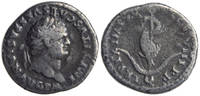
62084[Rome, AD 79-80]. 18 mm. diameter. Dolphin entwined around anchor on one side, and Draped bust of Tutus, turning right on the other side. An excellent, near mint specimen. 3,05 g. Obverse: IMP TITVS CAES VESPASIAN AVG P M, laureate head rightReverse: TR P IX IMP XV COS VIII P P, dolphin coiled around an anchor.RIC 26a, RSC 309.
62084Rome AD 79-80. 18 mm. diameter. Dolphin entwined around anchor on one side and Draped bust of Tutus turning right on the other side. An excellent near mint specimen. 305 g. Obverse: IMP TITVS CAES VESPASIAN AVG P M laureate head rightReverse: TR P IX IMP XV COS VIII P P dolphin coiled around an anchor.RIC 26a RSC 309. <br/><br/><em>Good specimen of the beautiful and rare coin that inspired Aldus Manutius' famous printer's device the dolphin-and-anchor the most famous logo in the history of book printing and the trademark of the Renaissance. The Aldus coin is the only book- or printing-related ancient coin in existence.Aldus Manutius the most famous printer of all times had been given a copy of the Titus coin with the dolphin-and-anchor logo on the verso as a gift by Pietro Bembo. He was extremely taken by the magnificent logo that in Roman times by Titus Vespasian had been used to illustrate the proverb "Festina lente" "make haste slowly" and was so inspired by it that he began using it as his printer's device at the very beginning of the 16th century. Before it appears as his printer's device for the first time he used it as an illustration in one of his most magnificent books Colonna's "Hypnerotomachia Poliphili" 1499.In his "Adagiorum Collectanea" the collection of classical proverbs that he kept revising throughout his life Erasmus Roterodamus had composed a lengthy essay on the "festina lente" proverb which intrigued him immensely. Erasmus traced the motto back to the emperor Titus Vespasian who had minted a coin with the emblem i.e. the present coin and had the rare opportunity to inspect that very coin - namely that which belonged to his printer Aldus Manutius who had been given it by the great Italian scholar Pietro Bembo. The second edition of Erasmus' "Adagiorum Collectanea" was published by Aldus in Venice in 1508 and Erasmus subsequently praises his printer to the skies in the course of explaining "festina lente". Erasmus explains the motto as such: "the circle as having neither beginning nor end represents eternity. The anchor which holds back and ties down the ship and binds it fast indicates slowness. The dolphin as the fastest and in its motions most agile of living creatures expresses speed. If then you skillfully connect these three they will make up some such principle as "Ever hasten slowly" and adds that by claiming it as his own recognizable and marketable emblem Aldus gave "fresh celebrity to the same device that was once approved by Vespasian". Not only is it "most familiar it is highly popular among all those everywhere in the world to whom sound learning is either familiar or dear." Erasmus seems to also suggest that the device had perhaps become too popular: "the city of Venice with its many claims to distinction has none the less become distinguished through the Aldine press so much so that any books shipped from Venice to foreign countries immediately find a readier market merely because they bear that city's imprint."And he might have been right. In fact the Aldine press was so successful and renowned and Aldus' printer's device as taken from the Titus Vespatian coin so incorporated a symbol of elegant correct printing and higher learning that it was imitated by printers all over Europe. By using the dolphin-and-anchor device other printers although much inferior would benefit from the authority and prestige of the Aldine press. In spite of Erasmus' attempts to make the public aware of this by praising the efforts of Aldus and opposing them to "those common printers who reckon one pitiful gold coin in the way of profit worth more than the whole realm of letters" publishers kept using the Aldus device for centuries. Aldus Manutius Grolier Club: no 129RIC 26a RSC 309. </em> unknown
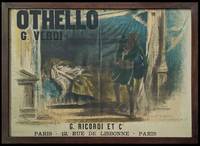
1894verdiothello<p>VERDI'S OTELLO COMES TO PARIS</p><p>Lithograph poster 88 x 65 cm outer dimensions of frame color lithograph framed and glazed plexi. Centerfold very minor toning excellent.</p><p>Very rare color lithograph poster produced in conjunction with the Paris premier of Giuseppe Verdi's opera <em>Otello</em>. Verdi 1813-1901 had retired from opera after <em>Aida</em> in 1871 but his publisher Giulo Ricordi 1840-1912 and the librettist Arrigo Boito 1842-1918 at last convinced him to return with <em>Otello</em> which premiered on 5 February 1887 at the Teatro alla Scala in Milan and proved to be a global success. The Paris production was a French-language version by Camille du Locle 1832-1903 and Boito which opened at the Paris Opéra on 12 October 1894 under the direction of Alexandre Lapissida 1839-1907; Verdi was in attendance.</p><p>The poster designed by Vespasiano Bignami 1841-1929 depicts the climactic scene in Act 4 Act 5 of Shakespeare's play in which Otello rises having just strangled Desdemona in her bed. In Paris the part of Otello was sung by Albert Saléza 1867-1916 and that of Desdemona by Rose Caron 1867-1930. Bignami's composition is not entirely of his own invention but an interpretation preserving the original staging of this scene. At the foot of the poster is the address 12 Rue de Lisbonne of the Paris branch of the Ricordi publishing firm where interested parties could acquire the score of the production.</p><p>Printed at the time as ephemeral advertising the poster is today very rare. We could locate no examples in institutional collections.</p> R. Stabilimento Ricordi-Milano
153045363Parisiis, Ex officina Simonis Colinaei, 1530. 8vo. Bound in a very fine later full calf (around 1700), profusely gilt spine, titlelabel in leather with gilt lettering, broad gilt borders on covers, edges of covers gilt, edges of leaves gilt. A very small nick to top of spine. (8) lvs. + (1-)256,(3) lvs. + 1 blank. A small and very faint dampstain to upper inner margins of the first 8 lvs. Otherwise very clean throughout. A beautifull printed and wide-margined copy (17x11,5 cm).