52 résultats
155521267Venice 1555. 18th-century gold-tooled vellum with the title lettered in gold on the spine and the manuscript title and year of publication in brown ink on the front board. Oblong 4to. With a woodcut of two hands one holding a compass and the other holding a pen 6 charming woodcut initials in text and 85 engraved models of calligraphic text and initials all set within black-lined borders. Rare edition of a famous Italian writing book by Vespasiano Amphiareo Ferrara 1501-Venice 1563 first published as "Un novo modo d'insegnar a scrivere" at Venice in 1548. A new enlarged edition followed in 1554 in two issues after which our edition followed and sixteen more before 1620. Amphiareo belonged to the noble family Albertaccia and had been to all probability a pupil of the famous Tagliente and later he was a writing-master at Venice for some thirty years. He dedicated his writing book to the Doge Francesco Donà. We see for the first time in an Italian writing book a majuscule alphabet based on botanical motives another on trunks of trees heavy gothic letters embodying putti and masks and black strapwork letters obviously linked to contemporary writing books in Germany and Switzerland. The book ends with a section on teaching the cutting of the quill and how to make a clear black ink partly based on Arrighi's instructions. To the second edition Amphiareo added further sections on illuminating in azure and gold and in vermilion in his later editions. The real significance of the writing book is that Amphiareo was dissatisfied with both the chancery and mercatile hands of his time. He therefore devised a mixture of the two styles "like a mystic body" in the Friar's Bastard as he called it which would suit both purposes. He wanted this "invention"' to be generally known and thus "with incredible personal expense" he had his book engraved and printed. After the famous writing masters Tagliente Arrighi and Palatino Amphiareo represented both their tradition and the transition to the revolutionary writing master Cresci of the second half of the 16th century.The title page is slightly browned slight marginal foxing throughout. Otherwise in very good condition.l Casamassima Trattati di Scrittura 1966 p. 90 no. XII and plates XLV-XLVIII first ed.; EDIT 16 CNCE 61646 1 copy; Johnson A.F. A catalogue of Italian writing books of the 16th century in: Signature N.S. 10 1950 p. 36; Medri G. Le opera calligrafiche a stampa II Vesp. Amphiareo da Ferrara in: All' insegna del libro I 1928 pp. 57-58; cf. Becker D.P. The practice of letters 1997 no. 19; Bonacini 49. hardcover
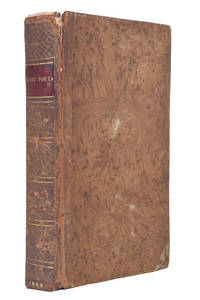
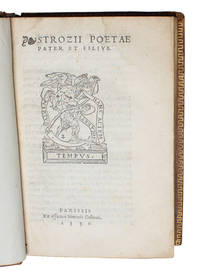
153045363Parisiis Ex officina Simonis Colinaei 1530. 8vo. Bound in a very fine later full calf around 1700 profusely gilt spine titlelabel in leather with gilt lettering broad gilt borders on covers edges of covers gilt edges of leaves gilt. A very small nick to top of spine. 8 lvs. 1-2563 lvs. 1 blank. A small and very faint dampstain to upper inner margins of the first 8 lvs. Otherwise very clean throughout. A beautifull printed and wide-margined copy 17x115 cm. <br/><br/><em>Scarce second edition of the "opera" of the poetical works of both father and son. Their collected opere were first published by Aldus Manutius in 1513 together with works of his son under the title Strozii poëtae pater et filius. The offered edition is copied from this Aldus-edition. They were both members of the famous Strozzi-family exiled from Florence.Adams S 1957. - Graesse VI: 512. </em> hardcover
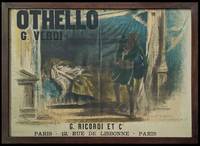
1894verdiothello<p>VERDI'S OTELLO COMES TO PARIS</p><p>Lithograph poster 88 x 65 cm outer dimensions of frame color lithograph framed and glazed plexi. Centerfold very minor toning excellent.</p><p>Very rare color lithograph poster produced in conjunction with the Paris premier of Giuseppe Verdi's opera <em>Otello</em>. Verdi 1813-1901 had retired from opera after <em>Aida</em> in 1871 but his publisher Giulo Ricordi 1840-1912 and the librettist Arrigo Boito 1842-1918 at last convinced him to return with <em>Otello</em> which premiered on 5 February 1887 at the Teatro alla Scala in Milan and proved to be a global success. The Paris production was a French-language version by Camille du Locle 1832-1903 and Boito which opened at the Paris Opéra on 12 October 1894 under the direction of Alexandre Lapissida 1839-1907; Verdi was in attendance.</p><p>The poster designed by Vespasiano Bignami 1841-1929 depicts the climactic scene in Act 4 Act 5 of Shakespeare's play in which Otello rises having just strangled Desdemona in her bed. In Paris the part of Otello was sung by Albert Saléza 1867-1916 and that of Desdemona by Rose Caron 1867-1930. Bignami's composition is not entirely of his own invention but an interpretation preserving the original staging of this scene. At the foot of the poster is the address 12 Rue de Lisbonne of the Paris branch of the Ricordi publishing firm where interested parties could acquire the score of the production.</p><p>Printed at the time as ephemeral advertising the poster is today very rare. We could locate no examples in institutional collections.</p> R. Stabilimento Ricordi-Milano
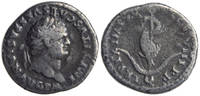
62084Rome AD 79-80. 18 mm. diameter. Dolphin entwined around anchor on one side and Draped bust of Tutus turning right on the other side. An excellent near mint specimen. 305 g. Obverse: IMP TITVS CAES VESPASIAN AVG P M laureate head rightReverse: TR P IX IMP XV COS VIII P P dolphin coiled around an anchor.RIC 26a RSC 309. <br/><br/><em>Good specimen of the beautiful and rare coin that inspired Aldus Manutius' famous printer's device the dolphin-and-anchor the most famous logo in the history of book printing and the trademark of the Renaissance. The Aldus coin is the only book- or printing-related ancient coin in existence.Aldus Manutius the most famous printer of all times had been given a copy of the Titus coin with the dolphin-and-anchor logo on the verso as a gift by Pietro Bembo. He was extremely taken by the magnificent logo that in Roman times by Titus Vespasian had been used to illustrate the proverb "Festina lente" "make haste slowly" and was so inspired by it that he began using it as his printer's device at the very beginning of the 16th century. Before it appears as his printer's device for the first time he used it as an illustration in one of his most magnificent books Colonna's "Hypnerotomachia Poliphili" 1499.In his "Adagiorum Collectanea" the collection of classical proverbs that he kept revising throughout his life Erasmus Roterodamus had composed a lengthy essay on the "festina lente" proverb which intrigued him immensely. Erasmus traced the motto back to the emperor Titus Vespasian who had minted a coin with the emblem i.e. the present coin and had the rare opportunity to inspect that very coin - namely that which belonged to his printer Aldus Manutius who had been given it by the great Italian scholar Pietro Bembo. The second edition of Erasmus' "Adagiorum Collectanea" was published by Aldus in Venice in 1508 and Erasmus subsequently praises his printer to the skies in the course of explaining "festina lente". Erasmus explains the motto as such: "the circle as having neither beginning nor end represents eternity. The anchor which holds back and ties down the ship and binds it fast indicates slowness. The dolphin as the fastest and in its motions most agile of living creatures expresses speed. If then you skillfully connect these three they will make up some such principle as "Ever hasten slowly" and adds that by claiming it as his own recognizable and marketable emblem Aldus gave "fresh celebrity to the same device that was once approved by Vespasian". Not only is it "most familiar it is highly popular among all those everywhere in the world to whom sound learning is either familiar or dear." Erasmus seems to also suggest that the device had perhaps become too popular: "the city of Venice with its many claims to distinction has none the less become distinguished through the Aldine press so much so that any books shipped from Venice to foreign countries immediately find a readier market merely because they bear that city's imprint."And he might have been right. In fact the Aldine press was so successful and renowned and Aldus' printer's device as taken from the Titus Vespatian coin so incorporated a symbol of elegant correct printing and higher learning that it was imitated by printers all over Europe. By using the dolphin-and-anchor device other printers although much inferior would benefit from the authority and prestige of the Aldine press. In spite of Erasmus' attempts to make the public aware of this by praising the efforts of Aldus and opposing them to "those common printers who reckon one pitiful gold coin in the way of profit worth more than the whole realm of letters" publishers kept using the Aldus device for centuries. Aldus Manutius Grolier Club: no 129RIC 26a RSC 309. </em> unknown
121689Parisiis ex officina Simonis Colinaei 1530. 8vo. 8 leaves. 256 numbered leaves. 3 leaves. Half calf smooth spine decorated binding from the early 19th century. Second edition of the poetic works of the Strozzi father and son which were collected and published for the first time by Aldo Manuzio in 1513. From a powerful family through which he forged ties with the Este house of Ferrara Tito Vespasiano Strozzi 1422-1505 held high positions in the administration and justice of that region. He was known for his humanist compositions in Latin and a few sonnets in Italian. It is said that he spent his life improving the love poems he had written in his youth. His son Ercole Strozzi 1471-1508 whom he associated with his high administrative positions was a friend of Lucrezia Borgia and had married the poetess Barbara Torelli with whom he had a daughter in addition to the two illegitimate children he is known to have. "This union caused his death claim contemporary historians: he was assassinated by a lover of his wife believed to be Alfonso d'Este" Larousse. This edition contains the dedication to Lucrezia Borgia written for the first edition as well as an epitaph dedicated to Ercole Strozzi by Aldo Manuzio. The volume ends with: "Oratio Tvmvltvaria Habita à Caelio Calcagnino In Fvnere Hercvlis Strozae" in prose. Large old ink stain on the title page whose printer's mark has been colored with a contemporary handwritten note: "Manzatus santo me possidet" . Some defects to the binding. Renouard Bibliography of the Editions of Simon de Colines p. 166: "Copy of the Aldine edition of 1513". unknown
H1616Paris.Ducher; bzw. Dresden Gilbers 1877. Folio. 12 S. und 51 Lichtdruck-Tafeln. Original-Halbleinenmappe mit bedrucktem Original-Vorderdeckel leicht berieben und beschabt Tafeln etwas gebräunt 3 Tafeln mit Randläsuren gutes Exemplar. unknown
1975001834Stuttgart-Bad Cannstatt Germany: Dr. Cantz'sche Druckerei 1975. Reproduction Edition . Hardcover. As New/As New. Oblong 16mo. One of 250 copies in a Limited Edition; also parts in German and English; binding 1/4 vellum and hand marbled paper; very light pencil line on title page; with original slip case with title written in pencil on spine; ghost of small binder's ticket lower left corner of rear paste down; unpaginated; oblong 16mo; in Italian. <br/> <br/> Dr. Cantz'sche Druckerei hardcover
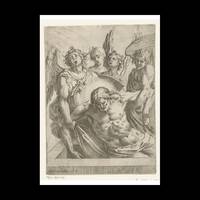
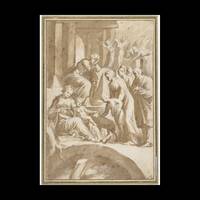
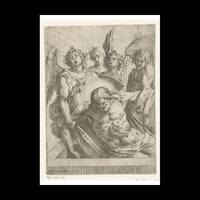
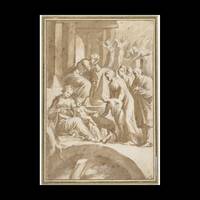
1915038Contentum Ltd. Loose sheet. New. High-quality art print based on an original work from the Rijksmuseum. Created in the 16th century 1592. Professionally printed on premium fine-art paper Museum Etching museum quality in size A2. The artwork is printed with a white border museum-style presentation. Contentum Ltd. unknown
3559361Contentum Ltd. Loose sheet. New. High-quality art print based on an original work from the Rijksmuseum. Created in the 16th century 1592. Professionally printed on premium fine-art paper Museum Etching museum quality in size A2. The artwork is printed with a white border museum-style presentation. Contentum Ltd. unknown
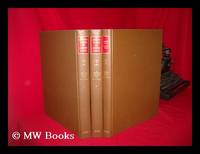
196498104New York : Cooper Square Publishers 1964. First Edition. Hardback. Three fine copies in the original gilt-blocked cloth. All remain particularly well-preserved overall; tight bright clean and especially sharp-cornered. Still in the Publisher's protective stiff-card box. ; 0 pages; Complete in 3 volumes 2 volumes and a checklist volume . Subjects: Frontier and pioneer life - United States - Bibliography. America - Discovery and exploration - Bibliography. New York : Cooper Square Publishers hardcover
20002091202133212200Rinsen Bookstore 2000. Soft Cover. Fine. Volume: 1 Rinsen Bookstore paperback
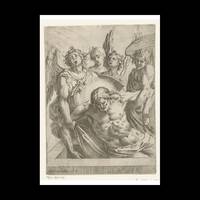
1915037Contentum Ltd. Loose sheet. New. High-quality art print based on an original work from the Rijksmuseum. Created in the 16th century 1592. Professionally printed on premium fine-art paper Photo Rag Bright White premium quality in size A2. The artwork is printed with a white border museum-style presentation. Contentum Ltd. unknown
3559360Contentum Ltd. Loose sheet. New. High-quality art print based on an original work from the Rijksmuseum. Created in the 16th century 1592. Professionally printed on premium fine-art paper Photo Rag 308 premium quality in size A2. The artwork is printed with a white border museum-style presentation. Contentum Ltd. unknown
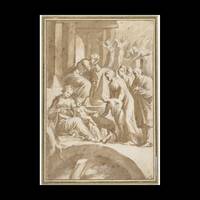
1915036Contentum Ltd. Loose sheet. New. High-quality art print based on an original work from the Rijksmuseum. Created in the 16th century 1592. Professionally printed on premium fine-art paper Photo Matt Fibre in size A2. The artwork is printed with a white border museum-style presentation. Contentum Ltd. unknown
3559359Contentum Ltd. Loose sheet. New. High-quality art print based on an original work from the Rijksmuseum. Created in the 16th century 1592. Professionally printed on premium fine-art paper Photo Rag Bright White in size A2. The artwork is printed with a white border museum-style presentation. Contentum Ltd. unknown
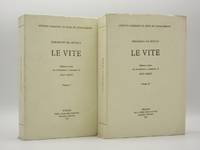
19701231I163Firenze Florence: Nella Sede Dell'Istituto Palazzo Strozzi 1970-1976. 1st Edition . Paperback. Printed pages: lxvi 601; 731. Good Plus. 6 x 8.5 inches 15 x 22 cm. Complete two volume set. Card wraps. Light soiling and slight foxing to covers. Crease to front cover of volume I. Slight wear to edges of covers. Light foxing to page edges. Clean text throughout. Italian languange. Overall condition is Good Plus. Please Note: This is a heavy item and international postage will be more than the standard rate. Actual Royal Mail postage costs are: Europe £19.00; USA £33.00; Oceania £40.00; Rest of World £37.00. A postage supplement will be requested after the order has been placed. Size: 6 x 8.5 inches 15 x 22 cm. Nella Sede Dell'Istituto Palazzo Strozzi paperback
0260622389.Ghardcover. Good. Access codes and supplements are not guaranteed with used items. May be an ex-library book. hardcover
1167713583.Gpaperback. Good. Access codes and supplements are not guaranteed with used items. May be an ex-library book. paperback
1160143641.Gpaperback. Good. Access codes and supplements are not guaranteed with used items. May be an ex-library book. paperback
0332152553.Ghardcover. Good. Access codes and supplements are not guaranteed with used items. May be an ex-library book. hardcover
1016966954.Ghardcover. Good. Access codes and supplements are not guaranteed with used items. May be an ex-library book. hardcover
0266624650.Ghardcover. Good. Access codes and supplements are not guaranteed with used items. May be an ex-library book. hardcover
1997009205Toronto ; Buffalo : University of Toronto Press in association with the Renaissance Society of America c1997. 1997. Soft cover. Fine. xvi 475 p. 12 p. of plates : ill. ports. ; 23 cm. ; LCCN 97189468 LC DG537.8.A1 V6 1997 ; ISBN 9780802079688 0802079687 ; OCLC 36691440 ; "Vespasiano da Bisticci b. 1421 was a Florentine bookseller known as the most celebrated dealer of books and manuscripts of his generation. The renewed interest in Greek and Roman texts brought about by the rise of humanism inspired many wealthy individuals to seek codices of the best ancient and early Christian works. Vespasiano's bookshop became a meeting place for learned men and he acquired patrons as illustrious as Cosimo de Medici Frederigo de Montefeltro the Duke of Urbino Mathias Corvinus King of Hungary and John Tiptoft Earl of Worchester. The invention of the printing press proved to be too much competition for da Bisticci and he retired to write his memoirs and biographical sketches of his friends and patrons." "Vespasiano da Bisticci's memoirs are a valuable resource in the study of politics warfare and intellectual history written from the perspective of an intelligent man who was able to watch and comment on the events of his age from a privileged position." ; Contents: I.A Discourse by the Author -- II. Popes and Rulers. Pope Eugenius IV 1383-1447. Pope Nicolas V 1398-1455. Alfonso King of Naples 1401-1458. Federigo Duke of Urbino 1422-1482. Alessandro Sforza Lord of Pesaro 1404-1466. Gostanzo Sforza -- III. Cardinals. Cardinal Branda 1341-1433. Cardinal Antonio de' Coreri. Nicolao degli Albergati Cardinal of Santa Croce 1395-1443. Giuliano Cesarini Cardinal of S. Agnolo 1398-1444. Domenico Capranica Cardinal of Fermo 1400-1458. Cardinal Niceno -- a Greek d. 1472. The Cardinal of Ravenna d. 1461. Cardinal Jacopo of Portugal 1413-1439. The Cardinal of Girona. The Cardinal of Rieti. The Cardinal of Spoleto. The Cardinal of S. Marcello. The Cardinal of S. Sisto -- a Catalan. The Cardinal de Mella -- a Spaniard. The Cardinal di Mendoza -- a Spaniard. Cardinal Cusano -- a German 1401-1464 -- IV. Archbishops and Bishops. Archbishop Antonio Florentine 1309-1459. Santo Bernardino da Massa 1380-1444. Orlando Bonarli Archbishop of Florence. The Bishop of Ferrara. The Bishop of Verona 1410-1471. The Bishop of Padua Donati 1380-1447. The Bishop of Padua Zeno. The Bishop of Brescia. The Bishop of Brescia. Patriarch of Jerusalem. The Bishop of Raugia 1437-1510. -- The Bishop of Fiesole. The Bishop of Corone. The Bishop of Capaccio. The Bishop of Imola. The Bishop of Volterra Cavalcanti d. 1449. The Bishop of Volterra degli Agli. The Bishop of Massa Dati d. 1471. The Bishop of Sipontino Perotto d. 1430. The Bishop of Ely Gray 1408-1478. The Bishop of Vico. The Archbishop of Strigonia. The Bishop of Funfkirchen. The Bishop of Cologna a Hungarian. The Bishop of Miletus. Alfonso di Portogallo Bishop. Gregorio Protonotaio Apostolico. The English Protonotary Apostolic. Friar Ambrogio -- V. Statesmen. Cosimo de' Medici 1389-1464. Palla di Noferi degli Strozzi 1372-1462. Matteo Strozzi. Agnolo Pandolfini 1360-1446. Pandolfo Pandolfini. Piero di Neri Acciaiuoli. Donato Acciaiuoli 1428-1478. Agnolo Acciaiuoli. Agnolo Manetti. Piero de' Pazzi. Lorenzo Ridolfi. Ser Filippo di Ser Ugolino d. 1454. Bernardo Giugni. Count Camarlingo d. 1481. Michele Feriero. Matteo Malferito. Francesco del Bennino. Duca di Worcestri John Tiptoft Earl of Worcester 1427-1470. Alvaro di Luna d. 1453. Antonio Cincinello -- VI. Writers. Poggio Fiorentino Bracciolini 1380-1454. Works Written by Messer Poggio. Lionardo d' Arezzo Lionardo Bruno d. 1443. Carlo d' Arezzo Marsuppini d. 1455. Benedetto D. Arezzo 1415-1466. Giannozzo Manetti 1396-1459. Nicolao Nicoli d. 1437. Franco Sacchetti. Giorgio di Trabisonda 1396-1468. Francesco Filelfo 1398-1481. Vittorino da Feltre 1399-1447. Guerino Veronese 1370-1460. Biondo da Forli 1388-1463. Matteo Palmieri d. 1433. Maffeo Vegio 1406-1458. Zembino ; FINE <br/> <br/> Toronto ; Buffalo : University of Toronto Press in association with the Renaissance Society of America, c1997. paperback
1017069069.Ghardcover. Good. Access codes and supplements are not guaranteed with used items. May be an ex-library book. hardcover
1017570752.Ghardcover. Good. Access codes and supplements are not guaranteed with used items. May be an ex-library book. hardcover