4 023 résultats
46679Paris.Rocolet.1648.Plusieurs textes dans une reliure in-8 peignée. TBE.Reliure peigne avec étiquette sur le plat supérieur.
3123Paris Chez Petit / L.G. Michaud, imprimeur du Roi 1815 in 8 (21,5x13,5) 1 volume broché, couverture muette de l'époque, 88 pages, non rogné. Rare. Bel exemplaire
197041387Sûreté du Québec En feuille 1970
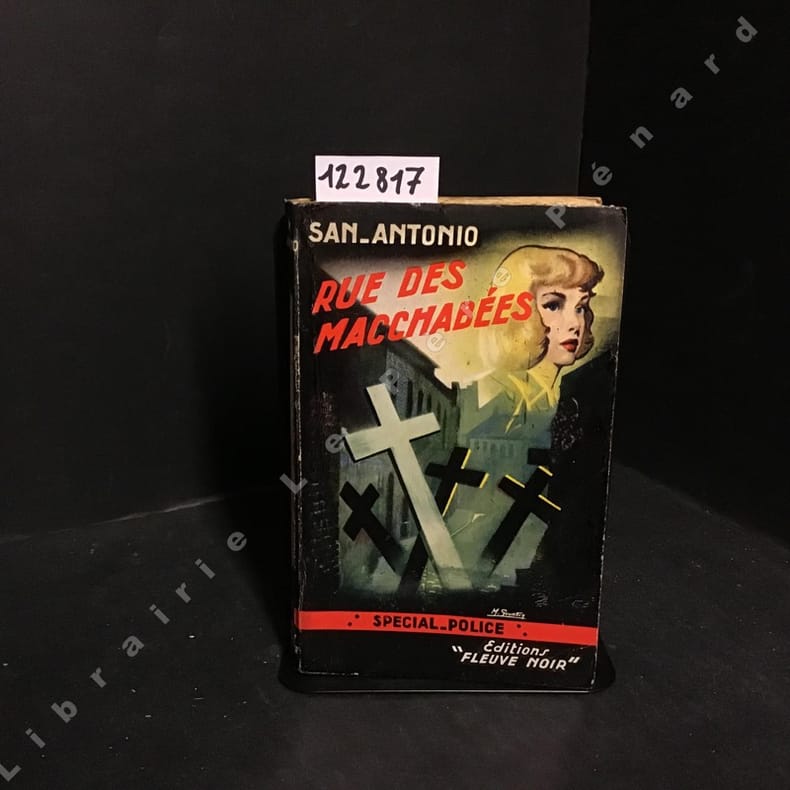
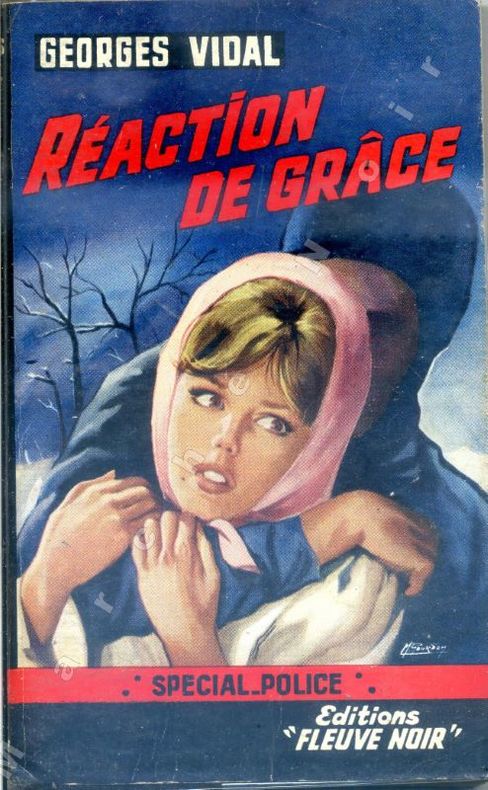
13920Spécial Police n° 351 / Fleuve Noir (1963) - Edition originale - In-12 broché de 224 pages - Très belle couverture en couleurs de Michel Gourdon - Très bon état
45734, Paris, Impr. municipale, Hôtel de Ville 1972, in-8, br., impression sur papier glacé, (couverture fanée), intérieur frais, 259p.
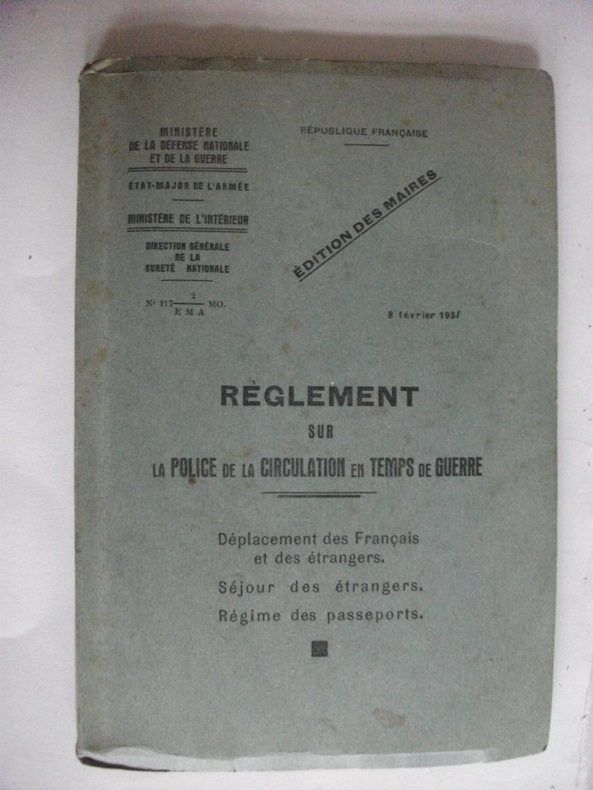
5790déplacement des français et des étrangers, régime des passeports.Edition des maires,8 février 1937,ministère de la défense nationale et de la guerre.Ministère de l’intérieur.In 12 cartonné souple 152 pages,avec mises à jour.
216489Langres, Jean Bonnin, 1771 in-12, [94] pp. mal chiffrées 88 (il y a saut de chiffrage de 56 à 51), un f. n. ch., 16 ff. vierges, demi-vélin rigide à coins, dos lisse muet (reliure de l'époque). Coupes très rognées.
16755874A Troyes, Par Louis Blanchard, 1675. Petit in-8 de 86 pp., vélin souple (reliure de l'époque).
167546402199A Troyes, Louis Blanchard, 1675 ; in-12, veau ancien, plats accidentés. 86 pp.Betz 771 , donne une fausse collation de 67 pp. Réparation au f. 73-74, justifiée ainsi sur la garde du volume : “Monsieur J. P. Finot troyen a raccommodé le f. 73-74 de cet exemplaire d’un volume devenu rare. L’exemplaire dont il s’est servi est aujourd’hui est aujourd’hui 15 nov. 1871 la propriété de Mr Pigeotte, mais il sera très prochainement légué avec beaucoup d’autres à la Bibl. de Troyes qui n’a de celui-ci qu’un seul exemplaire incomplet de 6 feuillets.”Ce J.-P. Finot, historien né à Troyes en 1803, mourut en 1873. D’abord ouvrier bonnetier, cet autodidacte étudia le grec et le latin puis ouvrit une école privée. Il publia de nombreux travaux d’histoire locale qu’il signait Finot troyen, tant il aimait sa ville natale. Voir Socard Biogr. Aude p. 151.Après la p. 75 on trouve un nouveau titre : DÉCLARATION du Roy donnée en faveur des Prevôt des Marchands, Eschevins, Procureurs du Roy... de la ville de Paris, Colonels, Capitaines, lieutenants et enseignes... du 15 janv. 1655 ; mais la pagination du volume continue jusqu’à 86.
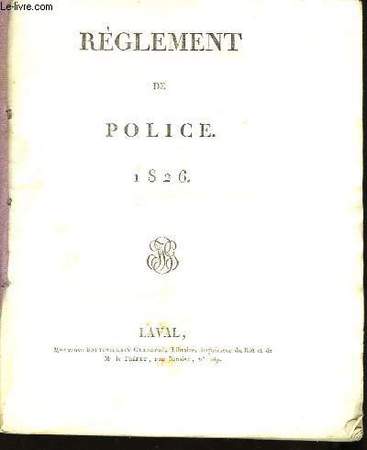
1826RO80037832BOUTEVILLAIN GRANDPRE. 1826. In-8. Broché. Etat passable, Couv. défraîchie, Dos abîmé, Mouillures. 50 pages. Couverture muette. Manques sur le dos.. . . . Classification Dewey : 353.36-Police
357p. Hardcover Very good condition good
13581Spécial Police n° 57 / Fleuve Noir (1954) - Edition originale - In-12 broché de 224 pages - Très belle couverture en couleurs de Michel Gourdon - Très bon état
19541228171954 Editions Fleuve Noir - Collection Spécial Police N° 57 - 1954 - In-12 broché, couverture illustrée - 220 pages
14216" Spécial-Police " n° 627 / Editions Fleuve Noir (1967) - Edition originale - In-12 broché de 224 pages - Très belle couverture en couleur de Michel Gourdon - Excellent état
VLE-289P., Firmin-Didot, sd, in-8, VIII+295pp broché sous jaquette abîmée
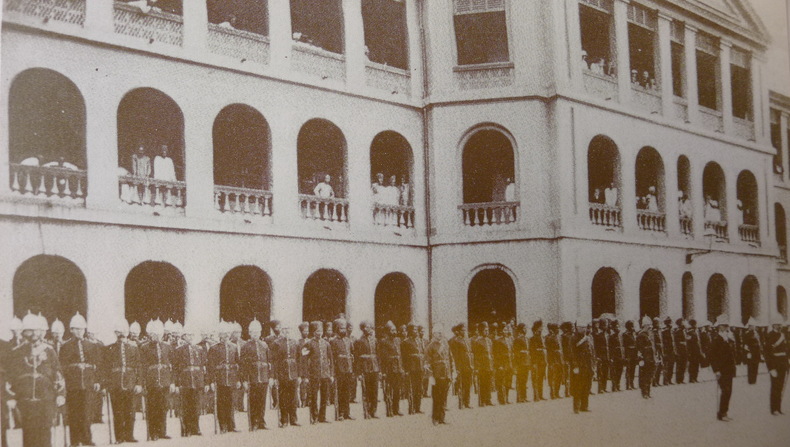
4429Hong Kong, Royal Hong Kong Police Museum, no date (ca 1980). 1 set of 10 postcards under iluustrated slipcase, being photographic reproductions in black and white of original pictures exhibited in the Hong Kong Royal Police Museum.
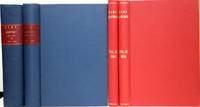
1933142091Ottawa: Royal Canadian Mounted Police July 1933-Fall 1994. Hardcover & Softcover. Very good. Volume 1 No. 1 July 1933 to Volume 59 No. 4 Fall 1994. Near complete run with only 14 issues missing. Made up of 2 different bindings with additional loose issues. 11-volume set bound in blue cloth contains issues from July 1933 to October 1954 with the original quarterly wrappers bound into the volumes from years 1945 forward. Previous owner's name written in front free endpaper - books were previously owned by former RCMP officer Frank P Baxter of Saskatchewan & Calgary. Partial 10 Volume set Volumes 28 to 41 bound in red cloth contains issues from years 1962 to 1976. Missing from this set are Volumes 30 37 and 38 with loose issues making up the missing years. Set has stamp from Mount Royal College on front free endpaper text edges and on some interior issue covers. Very good condition overall. The official Royal Canadian Mounted Police news bulletin filled with interesting articles photos illustrations and advertisements. The set includes information on the different "Divisions" retirements obituaries and generally what people were up to in the force. A heavy set which will require extra shipping charges. 1933 Royal Canadian Mounted Police paperback
13550Spécial Police n° 45 / Fleuve Noir (1953) - Edition originale - In-12 broché de 224 pages - Très belle couverture en couleurs de Michel Gourdon - Bon état
193pp. 23 cm. Paperback Very good condition Inscribed and signed by the author
10861in 12 reliure éditeur plein cuir, titre et filets dorés, jaquette en rhodoïd, étui cartonné avec portrait. Edition établie par Jacques Dubois avec Benoît Denis. Titre, 1736 pages, tête orangée. Bibliothèque La pléiade NRF 18 avril 2003. Très bon état , proche de l’état de neuf . Contient : la neige était sale-les mémoires de Maigret-la mort de Belle- Maigret et l’homme du banc-l’horloger d’Eveton-le Président-Le train-Maigret et les braves gens-les anneaux de bicêtre-le petit saint- le chat-- Introduction-1948-1989-Notices-notes et variantes-bibliographie-filmographie-
10860in 12 reliure éditeur plein cuir, titre et filets dorés, jaquette en rhodoïd, étui cartonné avec portrait. Edition établie par Jacques Dubois avec Benoît Denis. Titre, LXXXVII 1493 pages, tête orangée. Bibliothèque La pléiade NRF 18 avril 2003. Très bon état. Proche de l’état de neuf. Contient : Le charretier de la Providence- l’affaire Saint Fiacre- Les fiançailles de Mr Hire- Le coup de lune- La maison du canal- l’homme qui regardait passer les trains- le bourgmestre de Furnes- les inconnus dans la maison- la veuve Couderc- lettre à mon juge- Introduction-1877.1947-Note sur la présente édition-notices- notes et variantes
21484The Queen's Lodge Windsor. 1 April 1796. For the context of this letter see David J. Cox 'A Certain Share of Low Cunning: A History of the Bow Street Runners 1792-1839' 2010: 'From 1792 at least two Principal Officers were also permanently stationed at Windsor after the King had received several death threats. These Officers were considered to be part of the royal retinue … William Anthony who became an active Principal Officer by 1800 had originally launched his career by attending the King at St James and was transferred to Windsor in 1796.' The unnamed recipient is probably Richard Ford 1758-1806 the London police magistrate acting for the Home Office the Duke of Portland being Home Secretary at the time. Cox supports the view that Ford 'could in some ways be regarded as a “quasi†permanent Under-Secretary coordinating Bow Street's assistance to the Home Department in its investigative work'. 1p 4to. Bifolium. In good condition lightly aged. Folded three times and endorsed on reverse of second leaf. Having received that morning the unnamed recipient's letter 'respecting the appointment on trial of William Anthony of the Bow Street Office in the room of Samuel Mayner lately deceased' he can report that 'Anthony is arrived & officiated this Morning & by the character given of Him & from His appearance He seems likely to do very well in his new situation'. He 'took an early opportunity' of mentioning to the king 'that the Duke of Portland had appointed William Anthony to be stationed at Windsor & also that I had received this communication thro' You all which arrangement His Majesty seem'd to approve of –'. From the distinguished autograph collection of the psychiatrist Richard Alfred Hunter 1923-1981 whose collection of 7000 works relating to psychiatry is now in Cambridge University Library. Hunter and his mother Ida Macalpine had a particular interest in the illness of King George III and their book 'George III and the Mad Business' 1969 suggested the diagnosis of porphyria popularised by Alan Bennett in his play 'The Madness of George III'. The Queen's Lodge [Windsor]. 1 April 1796. unknown
21485'The Queens Lodge Windsor Saturday Janry. 9th: 1796.'. The subject of the letter is clearly a seditious communication found in the Windsor area and brought to Greville's attention which he is forwarding for the attention of the Home Secretary the Duke of Portland. David J. Cox casts light on the context in his 'A Certain Share of Low Cunning: A History of the Bow Street Runners 1792-1839' 2010 stating that from 1792 'at least two Principal Officers were also permanently stationed at Windsor after the King had received several death threats'. The unnamed recipient is probably Richard Ford 1758-1806 the London police magistrate acting for the Home Office. Cox supports the view that Ford 'could in some ways be regarded as a “quasi†permanent Under-Secretary coordinating Bow Street's assistance to the Home Department in its investigative work'. 1p 4to. Bifolium. In good condition lightly aged. Folded three times. The endorsement on the reverse of second leaf notes 'one Enclosure' but this is not present. Greville begins the letter: 'Sir Late Yesterday Evening two respectable Tradesmen of Windsor came to The Queens Lodge & enquired for me – on my seeing them they deliver'd the enclosed to Me which they informed Me had been thrown Yesterday Evening down the Area of one of their Houses & found by the Maid Servant who brought it to Them. On examining the contents they were induced immediately to wait upon me with it.' The 'only step's Greville has taken are to ask the men 'not to make mention of the circumstance or contents of the inclosed in Windsor – but I have given Maynard & Jealous Officers from the Public Office in Bow Street directions to keep a good look out & shall use every means which I think may be useful or proper on this occasion.' He is putting 'the original Letter' in the recipient's hands 'requesting that You will have the goodness to lay it before the Duke of Portland by doing which I shall have the satisfaction of knowing that every necessary attention will be paid to this business thro' the properest & best directed channel'. In a postscript he gives 'The Tradesmens names': 'Mr. Dixon Shoemaker in Thames Street Windsor Mr. German Taylor in Thames Street Windsor'. Cox lists 'Maynard' and 'Jeallous sic' among the 'particular personnel' requested to accompany the king on journey from Windsor to Weymouth. From the distinguished autograph collection of the psychiatrist Richard Alfred Hunter 1923-1981 whose collection of 7000 works relating to psychiatry is now in Cambridge University Library. Hunter and his mother Ida Macalpine had a particular interest in the illness of King George III and their book 'George III and the Mad Business' 1969 suggested the diagnosis of porphyria popularised by Alan Bennett in his play 'The Madness of George III'. 'The Queens Lodge Windsor | Saturday Janry. 9th: 1796.' unknown
1912002650Cincinnati: By the Author 1912. First Edition. Good. Poster; 12 x 8; beige stock printed in black and illustrated with a photograph; paper fragile and age-toned; upper two corners clipped; old horizontal fold line with two thin closed cuts to edges; residue from a brown paper strip to upper margin of verso; in good to very good condition. A missing poster for two small children from Cincinnati it gave a detailed description of the two brothers the time they were last seen April 29 1912 and the speculation that "Hungarians" might have picked them up. Hungarian-Slovak gypsies emigrated to the US in the late-19th century primarily to Pennsylvania Ohio Michigan Illinois and New York. They would become well-known for making a living by playing music at cafes and restaurants and for being semi-permanently settled unlike the other nomadic Romani groups in the country including the Ludar the Romanichal the Black Dutch etc. Despite that the general perception of the gypsies' roaming lifestyle and strange and secretive culture gave way to widely-spreading antiziganism. An article in the Greenfield Republican from May 23 1912 stated that indeed Hungarian gypsies had been suspected of kidnapping the boys as the former had hurriedly left Cincinnati around the time of the disappearances but ultimately the children had been found by their father drowned in a feed-box in a stable. By the Author unknown books
1912002650Cincinnati: By the Author 1912. First Edition. Good. Poster; 12 x 8; beige stock printed in black and illustrated with a photograph; paper fragile and age-toned; upper two corners clipped; old horizontal fold line with two thin closed cuts to edges; residue from a brown paper strip to upper margin of verso; in good to very good condition. A missing poster for two small children from Cincinnati it gave a detailed description of the two brothers the time they were last seen April 29 1912 and the speculation that "Hungarians" might have picked them up. Hungarian-Slovak gypsies emigrated to the US in the late-19th century primarily to Pennsylvania Ohio Michigan Illinois and New York. They would become well-known for making a living by playing music at cafes and restaurants and for being semi-permanently settled unlike the other nomadic Romani groups in the country including the Ludar the Romanichal the Black Dutch etc. Despite that the general perception of the gypsies' roaming lifestyle and strange and secretive culture gave way to widely-spreading antiziganism. An article in the Greenfield Republican from May 23 1912 stated that indeed Hungarian gypsies had been suspected of kidnapping the boys as the former had hurriedly left Cincinnati around the time of the disappearances but ultimately the children had been found by their father drowned in a feed-box in a stable. By the Author unknown