5 445 résultats
52 pages. Includes the following immortal songs: Crime of the Century; Bloody Well Right; Rudy; Dreamer; School; Hide in Your Shell; Asylum; If Everyone was Listening. Above-average wear. Unmarked. Has probably been rebound with convenient spiral binding. A rare surviving collection of these songs which will forever live within the 70's generation. Book
Abundant black and white illustrations and reproductions of photos. Features: The Hypnotist Detective - Dr. Leopold Thoma of Vienna is a new kind of detective; Knocking at the Cannibals Door - a very dramatic story of the "white man's burden" near the Kunimaipa River in British New Guinea; My Misadventures in Finistere - an amusing account of a holiday sojourn on a little island off the northern coast of Brittany; Through the East by Air - Part III - The adventures of Richard and Sydney Carline who were commissioned by the National War Museum to paint scenes in Egypt, Palestine, Syria, Mesopotamia, Kurdistan, and Persia; The Tiger Calls - an account of what befell two Indian teaplanters; Our Little Outing - An exciting story from a P. Burns and Co. beef camp southeast of Olds, Alberta; The Man Who Turned Thief - Part III - the remarkable story of a man who conducted the most mysterious one-man robberies to ever occur in America; The Ship That Disappeared - The perilous adventure of the Canadian Government Merchant Marine steamer "Canadian Importer"; The "Human Leopards" - A Terrible secret society in Sierra Leone, West Africa; The Blue Spot Theory - a funny story about checking for birthmarks on Burmese babies; Five Thousand Miles on Foot in Central Africa - Part I - Oscar Olsson's aim was to shoot big game with a film camera; My Fishing Trip - a British Officer's touch and go experience in Sopor, a village in Kashmir; and more. 86 pages plus 16 pages of nostalgic ads. Clean and unmarked with light wear. Binding tight. A high-quality copy of this excellent vintage issue. Book
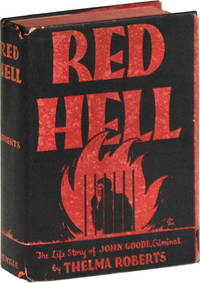
193452693New York: Rae D. Henkle Publisher 1934. First Edition. First Printing. Octavo 20.5cm; black cloth with titling and decorations stamped in red on spine and front cover; red topstain; dustjacket; 67-320pp. Base of spine gently nudged else a fresh Fine copy. Dustjacket is unclipped priced $2.50 edgeworn with a few shallow nicks to spine ends and corners none affecting lettering a short split at lower flap fold and some old faint spatter marks most evident on the red portions of the panels; Very Good. <br /> <br /> Memoir of Boston-born career criminal John Goode 1864-1934 whose life in crime began at age 11 working as a look-out for a gang of burglars after moving to a Colorado mining camp. His criminal career involved robbery and train robbery cattle rustling looting gambling houses pickpocketing and grand larceny spending time in prisons and penitentiaries across the country. "Goode has recorded a great amount of detail about experiences in prison cells -- the long nights the childish pranks prisoners play to relieve the tedium and the devious and limitless ways in which life is made more uncomfortable" SUVAK 128. Includes commentary on his experiences doing time at the Ohio Penitentiary City Prison of Manhattan and Sing Sing Prison. Goode was encouraged "to put his story into some form of written order" by his friend publisher Rae D. Henkle who in his prefatory note describes him as having "a gentle kindly smile that reflected a gentle kindly spirit: a man who had been helped out of his particular hell and who wanted with all his heart to help other men." Goode died shortly prior to publication of his memoir. Scarce in dustjacket; OCLC notes about two dozen holdings but most appear to be in circulating collections. Rae D. Henkle, Publisher unknown
192919739New York: Alfred A. Knopf 1929. First Edition. First Printing. Octavo 22.5cm; purple cloth with titles stamped in gilt on spine and front panel; red topstain; dustjacket; 308pp 1. Vintage bookseller's ticket to rear pastedown upper board edges slightly darkened with a slight bump to upper right corner of front panel; Near Fine. Dustjacket is price-clipped with several edge tears and a dozen clear tape mends on verso; light wear and shallow chipping to extremities with a deeper chip at crown not affecting titles; just Very Good.<br /> <br /> Narrative account of Ernest Booth an unreprentant career criminal who by his own admission was an accomplished burglar and forger. "Booth's career as a thief was punctuated by several brief stays in county jails and over half of a five-year sentence at San Quentin. He secured an excellent inmate job at San Quentin photographer but after a parole denial soured on it and used the position as a front to appropriate salable items from the administration." Uncommon and rarely found in jacket. SUVAK 26. 19739. Alfred A. Knopf unknown
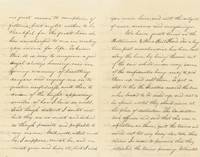
1857List2022Washington 1857. Autograph letter measuring 8 x 5 inches bifolium with free franked stampless cover. Fine condition. Fine. An interesting letter written by James W. Denver written while he was serving as Commissioner of Indian Affairs describing crime on the Baltimore and Ohio Railroad in 1857. He writes:<br /> “We have great times on the Baltimore & Ohio Railroad. For a long time past merchandise has been lost along the line by being thrown out of the cars while under way some of the confederates being ready to pitch them up and sell them. To put a stop to this the Directors ordered the cars when loaded to be sealed up and not to be opened until they should arrive at the place of destination. The conductors took offense and said that this was a reflection on them quit the trains and would not let anybody else take their places. In order to prevent this they attacked the trains passing Ellicott’s Mills and succeeded in turning back all but one. Today it was rumored that the Plug Uglies had possession of the track between Baltimore and the Relay House but this is hardly so as a train has I am told arrived here this evening. This is a very extraordinary affair as it is in fact an effort to give greater license to stealing and from the way they have acted there is not much doubt but the conductors were engaged in the plundering.â€<br /> The Plug Uglies first operated in Baltimore beginning in 1854. Several iterations of the Nativist gang eventually formed all of which were referred to by the same name. They would be involved a month later in the Know Nothing Riot in Washington D.C. in June of 1857 the same month that Denver would gain his appointment as Secretary of Kansas Territory. <br /> <br /> <br /> Full text follows:<br /> <br /> My Dear Wife<br /> The cheerful tone of your letter of the 28th ult. pleases me very much. I hope and trust that will be ever thus. A light heart and cheerful disposition makes life a perennial springtime. There is nothing like it. Keep up your sprits ever thus and besides being the pride of my life you will be my light also—the polar star of my existence.<br /> <br /> O Lou! how lonely I feel here at times without you! Were we only together how much more pleasantly would the time pass away. Still I have no great reason to complain of fortune but ought rather to be thankful for the great boon she has vouchsafed to me in making you mine for life. To know this it is easy to imagine a good angel always hovering near me giving warning of besetting dangers and urging me on to greater usefulness and then to dream of the bright approving smiles of her I love so well. And though distant I doubt not but they are as sweet and as kind as though present and palpable to my vision. Well well what must be I suppose must be and we must grin and bear it; but I wish you were here and not the subject of mere dreams and imaginings.<br /> <br /> We have great times on the Baltimore & Ohio Railroad. For a long time past merchandise has been lost along the line by being thrown out of the cars while under way some of the confederates being ready to pitch them up and sell them. To put a stop to this the Directors ordered the cars when loaded to be sealed up and not to be opened until they should arrive at the place of destination. The conductors took offense and said that this was a reflection on them quit the trains and would not let anybody else take their places. In order to prevent this they attacked the trains passing Ellicott’s Mills and succeeded in turning back all but one. Today it was rumored that the Plug Uglies had possession of the track between Baltimore and the Relay House but this is hardly so as a train has I am told arrived here this evening. This is a very extraordinary affair as it is in fact an effort to give greater license to stealing and from the way they have acted there is not much doubt but the conductors were engaged in the plundering.<br /> <br /> Judge Stephen A. Douglass intends leaving <br /> here with his family tomorrow. Nat Cartmell was here on Friday. He said they were all well in Virginia except cousin John Lupton who was convalescing. Tell your father I will keep him posted and tell your mother to keep you at work—if she can. My love to all. Goodnight. God bless you my own dear Lou. Adieu. — Will. unknown
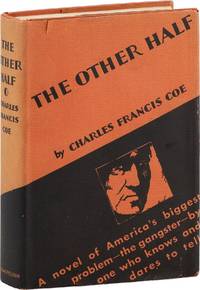
193088102New York: Cosmopolitan 1930. First Edition. First printing. Octavo 19cm. Orange-red cloth titled in black; dustjacket; 309pp. Very Near Fine copy with just a trace of light rubbing to bottom board corners. In the original dustwrapper unclipped priced $1.50 at base of front flap slightly sunned on spine panel with a few tiny nicks to extremities and a short split to upper portion of front flap-fold; still Near Fine most uncommon thus. <br /> <br /> A hard-boiled novel set in the world of New York gangsters focused not so much on a single criminal plot as on the day-to-day machinations of its central figure one Antonio Scarvak head of a small-time rum-running and extortion racket. The New York Times in its 1931 review noted with some pique that Coe's antihero seemed ".an incredibly dull-witted gunman.who moves rather absurdly through the web of murder graft and corruption that makes the background for the novel." Coe a former boxer and federal agent specialized in works that brought to life the criminal underworld with which he was long familiar and his work is unusual in that while it was clearly designed to appeal to the growing audience for lurid hard-boiled crime it kept one foot firmly planted in the realm of social fiction. There are only a few novelists of the period whose work is equally likely to be cited in Hubin's Bibliography of Crime Fiction this title cited on p.88 as in Archibald Hanna's bibliography of American social fiction A Mirror for the Nation no. 728. Uncommon in jacket this is a particularly fresh example. Cosmopolitan unknown
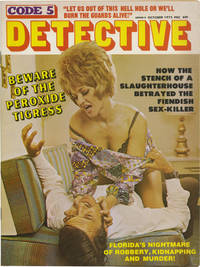
1973160726Freeport New York: G.C. London Publishing 1973. October 1973 issue. Included is a vintage black-and-white photograph used as the magazine's cover image struck in 1976 based on the article "Beware of the Peroxide Tigress." Photograph with a "True Action Detective / Mar 1976" stamp on the verso with manuscript pencil ink and marker annotations on the verso.<br /> <br /> Photograph: 8 x 10 inches. Near Fine with faint creasing on the bottom right corner margin.<br /> <br /> Magazine: 8 x 10.75 inches 65 leaves. Near Fine with two tiny chips at the top of the rear wrapper. G.C. London Publishing unknown
19328879Edinburgh: W. Green and Son Limited 1932. First edition. Hardcover in dust illustrated dust jacket. Frontis plates and facsimiles throughout. Red cloth boards show a few smudges and light shelf wear. Lengthy gift inscription dated 1946 on verso of frontis. Jacket witha couple tears to bottom edge of front panel light use at spine ends and corners and darkening to rear white panel. Very good. <br /> <br /> First edition in the scarce jacket of this title an early literary collection featuring notable Scottish murder trials such as the baby-farmer and child-murderer Jessie King. Roughead 1870-1952 was a pioneer in the genre which became known as True Crime. W. Green and Son, Limited hardcover
196813659New York: New American Library / World Publishing 1968. First edition. Hardcover. Very Good /very good. First edition of Michael Crichton's first book written under this alias. Winner of the Edgar Aawrd for Best crime Novel of the Year. A clean very good plus copy in very good clipped dustwrapper. One of the more sought after of the Edgar winners. <br/><br/> New American Library / World Publishing hardcover books
192919739New York: Alfred A. Knopf 1929. First Edition. First Printing. Octavo 22.5cm; purple cloth with titles stamped in gilt on spine and front panel; red topstain; dustjacket; 308pp 1. Vintage bookseller's ticket to rear pastedown upper board edges slightly darkened with a slight bump to upper right corner of front panel; Near Fine. Dustjacket is price-clipped with several edge tears and a dozen clear tape mends on verso; light wear and shallow chipping to extremities with a deeper chip at crown not affecting titles; just Very Good. Narrative account of Ernest Booth an unreprentant career criminal who by his own admission was an accomplished burglar and forger. "Booth's career as a thief was punctuated by several brief stays in county jails and over half of a five-year sentence at San Quentin. He secured an excellent inmate job at San Quentin photographer but after a parole denial soured on it and used the position as a front to appropriate salable items from the administration." Uncommon and rarely found in jacket. SUVAK 26. Alfred A. Knopf unknown books
193628984New York: E.P. Dutton & Co. Inc 1936. First Edition. First Printing. Octavo 21cm; mauve cloth with titling and decorations stamped in black on spine and front cover; black topstain; dustjacket; illus.frontispiece 368pp. Slight musty odor else Fine in a Very Good dustjacket unclipped priced $3.00 sunned and edgeworn with small chips to extremities short tears and splits along flap folds. Life story of a career criminal incarcerated in the Oregon State Prison after a career of check forging hold-ups safe-blowing and theft. "Principal incidents are Duncan's escape and recapture; otherwise this is a diary of a criminal's routine prison life" SUVAK 98 p.32. Scarce in dustjacket. E.P. Dutton & Co., Inc unknown books
195025986Milwaukee WI: Tee-Pee-Gee Company n.d. but ca.1950. Board game consisting of one 1 game board 21.5" x 22" set of two 2 red acrylic dice 41 round and square painted wood pieces in black white green red yellow blue and brown one black piece replaced 17 game cards 2.25" x 3.75" printed on rectos only and original instruction manual 6" x 4". Dice game pieces and cards housed in the original manufacturers two-piece box. Game board is hinged with linen lightly worn at extremities with some occasional board exposure; instruction manual is browned overall folded in half with some splitting along spine fold and holographic notes to front and rear wrappers. Box for entire game not present though it is unclear whether or not one was issued. Presumed complete. "The fascination of this game lies in the variety of ways chances and combinations in which it can be played. For instance - a player may decide to play all the men on the straight and narrow path to freedom by being pardoned or take a shorter but more risky method as a fugitive. The trials of fate and temptation may enter at any time and upset all plans. This novel game which may be played by two to six players illustrates the separation of prisoners from the outside world and their discipline and reformation. It is a game of chance and skill and the possibility of your opponents' chance to win depends upon where and how you make your moves. It will hold you spellbound from beginning to end" - opening statement from instruction booklet.<br/><br/>A prison-themed board game with a phantom manufacturer; our research has failed to reveal much information about either one though in theory and objective it bears remarkable similarities to the much later ca.1990's board game The Slammer produced by Ruppert Games. Tee-Pee-Gee can be played by up to six players and while it appears fairly easy at first glance the dynamics are quite complicated with game pieces representing inmates messengers guards and visitors. The possibility for numerous moves exists dictated by the roll of the dice cards chosen and each players respective positioning on the board. Prisoners can be released or can choose to escape with or without the help of visitors. The winner of the game is the player with all their prisoners outside the walls either as "pardoned" or "fugitives" and their visitors "in good standing" with the prison officials. Rare; we find no example for sale at the time of this writing March 2021 and no record in OCLC. Tee-Pee-Gee Company unknown books
192125752Boston: Roxburgh Publishing Company 1921. First Edition. Octavo. Blue cloth boards lettered in gilt on spine and front cover; 258pp. Slightly shaken; spine gilt dulled legible with difficulty; internally clean tight and unmarked. A solidly VG copy lacking the presumed dustwrapper. Extremely uncommon survey of vice and crime in the Windy City presented as an exercise in "psychopathology" but written in a flat hard-boiled style by the enigmatic "Prince Immanuel of Jerusalem" whose true identity is shrouded in mystery. This pseudonym turns up in a number of unexpected locations: as a steerage immigrant to California in 1909 where he is described as "the son of the Sultan of Turkey and an Arabian Jewess" and is apparently seeking to raise funds for the construction of a "Universal University" on the site of King Solomon's Temple see The Lompoc California Journal for Jan 3 1909; as the headmaster of an institution called the "University College of Africa" in Cairo Egypt ca. 1917 see Hill The Marcus Garvey and Universal Negro Improvement Papers v.11 p.769n; and as the creator of an invented language "Universal" ca. 1914 see Okrent In the Land of Invented Languages p.296. In the first two sources he is identified as "I.E. Goldreich" and "Eleasar Isaac Goldreich" respectively and he appears to have been a one-time British citizen. He was responsible for at least two other published works: Postcards of Palestine Cairo ca 1912 and Chaos: Written for the Illiterati Columbia City IN: 1947. A scarce and somewhat mysterious Chicago item. Roxburgh Publishing Company unknown books
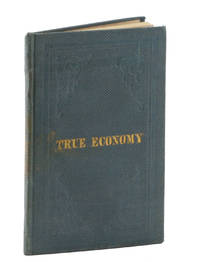
184119189Boston: Published by S. G. Simpkins 1841. First edition. Some trifling wear and soiling; a fine copy. 16mo original blind-stamped diaper grain blue cloth gilt lettering 48 pages. No man of ordinary observation can pass through the streets of New York or Philadelphia without meeting numerous living witnesses of the misery which exists in both of those cities and especially in the former. Enough can be seen in Boston to make any benevolent heart ache daily for suffering humanity. But still the amount is less in proportion to population than in either of the other two cities. Through the influence of better laws for education intellectual culture the best preservative from vice and crime is more generally diffused in Boston than in Philadelphia; and from its geographical position Boston is not like New York the common resort of the squalid poverty that seeks refuge on our shores from Europe." A fairly nuanced sociological criminal and economic argument for temperance among the laboring classes pointing to the savings in cost of drinks and to the economic advantages of sober fathers; additional aspersions are cast as well on adulteration of wines and liquors. Originally published as a series in Boston Daily Times here collected and published with a prefatory Advertisement dated May 1841 and signed by a committee of Boston advocates of temperance. Includes an appendix of collected statistics on inmates at the jails and house of correction juvenile crime insane asylum numbers etc. OCLC 6/2019 notes two locations. Published by S. G. Simpkins, unknown books
193022159Cleveland OH 1930. Large 8vo. Original color pictorial wraps. Good only. Covers chipped and worn. Pages toned. But still sound. 127pp. <br/><br/>A detailed account of the great Ohio Penitentiary fire of 1930 published within the year of the April 21 blaze the deadliest prison fire in American history which killed 322 inmates. Written by Cleveland newspaper reporters Dan W. Gallagher and T.J. Thomas the book provides a comprehensive portrait of the state of the prison during 1930 concentrated on its miserable conditions which the authors compare to Medieval torture chambers and 19th Century prison ships and severe overcrowding. According to the text at the time of the fire more than 5000 prisoners were kept in a facility originally designed to house about 1500. SPOTLIGHT indicts the prison's guards and administration notably a Captain John Hall head guard on duty who refused to unlock the cell block where most deaths occurred. The text is illustrated throughout with 22 photograph reproductions most being of the fire’s aftermath many with African-American prisoners figuring prominently and Thomas and Gallagher appear to have extensively interviewed prisoners for the book. Novelist Chester Himes was incarcerated in the penitentiary where his writing career began during the fire and he wrote about in his breakout article “To What Red Hell” which appeared in Esquire in 1934. Rather poorly produced and likely intended for regional distribution only SPOTLIGHT appears genuinely scarce. OCLC notes 7 holdings only 2 of those outside of Ohio. A rich and largely unheralded work of journalistic advocacy for prisoners’ rights. paperback books
Binding slightly loose but not bad for its age. Some pages uncut; Darrow's autobiographical novel, a fictionalized account of his boyhood ; 12mo; 277 pages
1955ZB393272National Council on Crime and Delinquency. 1955. volumes 1 3 6-7 9-12 14 16-18 20 25 27 29 1955-1983; complete volumes partly bound ex library; PRICE IS FOR THE LOT. - If you are reading this this item is actually physically in our stock and ready for shipment once ordered. We are not bookjackers. Buyer is responsible for any additional duties taxes or fees required by recipient's country. Photos available upon request. National Council on Crime and Delinquency. unknown
200117080082Black Inc Australia 2001. Trade Paperback. Very Good. Trade Paperback. 649 pages. PUBLISHING DETAILS: Black Inc. Australia 2001. CONDITION: This book is in very good condition. More specifically: Covers have light creasing. Corners of covers are lightly bumped. Spine has minimal reading creases. . Edges of pages are lightly browned. ABOUT THIS BOOK: Tells how so many war criminals have entered into Australia. He discusses the modern war criminals who have recently found sanctuary here. He also analyses the work of the Special Investigations Unit into war crimes and its betrayal by the Keating Government. Forward by Bob Hawke. Quantity Available: 1. Category: True Crime; Military & Warfare. ISBN: 1863953701. ISBN/EAN: 9781863953702. Inventory No: 17080082. 9781863953702 Black Inc paperback
First edition, 8to (228 x 150mm), [2], iv, [2], 228pp., perforated stamp of the 'Hartford Medical Society Library' on title, errata slip pasted on the verso of the 'Contents' leaf, folding plate of an improved hand-crank mill for prison labour, modern boards, uncut, printed paper label on spine, a good copy. In his final years Hippisley turned to the question of prison discipline, and the study of the prevention and punishment of crime, publicly advocating the hand-crank instead of the treadmill. Goldsmith, 23921.
Single sheet printed on one side only (214 x 135 mm), printed black on white fragile paper, mounted on card, soiled and creased. From the London Times, February 25, 1828, page 3, Column 1 : "It is this week our painful duty to record one of the most cold-blooded murders that ever darkened the annals of crime, a deed which has spread a wider gloom and deeper horror than any event which has occurred in this neighbourhood within the remembrances of the eldest inhabitants." John Dyon was the second son of a wealthy landowner in Yorkshire, England near Doncaster. He lived a hard working, respectable and quiet life. He married the lovely Betty Conway and together they had 3 daughters, Elizabeth (from whom we descend), Mary and Matilda. Working closely with his father, he often gained favors and gifts from the older man. In 1826 and 1827 alone, it is recorded that he received 63 acres of land and 300 pounds sterling. His older brother, William also received many gifts from their father as a young man, but the money was mostly squandered and drunk, and eventually the gifts stopped coming. So William struggled and John thrived? and William stewed, and his resentment grew. William frequently ranted of his anger to his son, John, poisoning the younger man's mind against his uncle. On Saturday, the 16th of February, 1828, John Dyon attended the market in Doncaster (12 miles away) with a couple of friends as was his custom. On his return home that evening, when he dismounted his horse to open the gate to his property, he was assaulted, shot, and left for dead. His wife, concerned when he didn't arrive home at the time he should, sent a servant to look for him. The servant found John's horse standing near the gate, but did not see John lying a few feet away. They found him in the morning lying where he had bled out. Mr. E. B. Denison, Esq. and the local constable rode out from Doncaster immediately upon receiving the news Sunday morning and began their investigation. Mr. Denison, a student of the new forensic sciences, was pleased to find the murder scene offered an abundance of clues. It had rained on Saturday and the ground was quite moist, then the temperature dropped below freezing overnight, capturing the escape route of the assailants. Mr. Denison observed that there were two attackers; one smaller and lighter than the other. He noted that these persons were relatively wealthy because they possessed a pair boots with both a right and left foot. He also noted that the larger footprints had a distinctive toe-out gait. An inquest was called by the coroner. After the presentation of evidence, the jury delivered a verdict of "Willful murder by person or persons unknown". Many in the area knew of the ill will that William Dyon and his son held for William's brother, John Dyon. By Thursday of the following week, both were arrested. They provided alibis, insisting that they had been nowhere near the scene of the crime. The magistrate felt he had to let them go. After his release by the authorities, William went to a pub in Gainesborough, and bragged there that he had "humbugged" the local magistrate, apparently disclosing further details of the crime. His brags were soon brought to the attention of Mr. Denison and additional inquiries were made. A farmer who had previously worked for William, but was now in John's employ, admitted that he knew of William and young John's plan to kill John Dyon. He also said that he had hidden the gun at his home for a week prior to the murder, and that William had bribed him and threatened him to keep quiet about the plan. Soon, William and his son, John were arrested. The constable searched their homes and found the boots, a pair having both right and left feet, and the gun. During the trial, the farmer, John White, testified to everything he knew, including the fact that William had showed up the evening of the killing to pick up his gun. Several witnesses came forward to testify to the ill will that William and his son bore for the deceased. They also testified that William had a distinctive gait, walking with his toes pointed outward. William Dyon and John, his son, were hanged for their crime on April 4, 1828. William staunchly declared his innocence throughout, but his son confessed to all as they placed the noose around his neck. No other copy located.
Folio, xvi, 195, [1]pp., stitched as issued, orig. blue printed wrappers, spine lightly chipped. Important transportation Government Blue Book, predominantly relating to Western Australia.
12mo (150 x 85 mm) 37, [1]pp., several leaves mounted on stubs, new boards. Henry Sanderson, Adam Adie and Robert Bamford, were for murder, on Friday, March 22, 1822. Sanderson was out shooting pheasants, when he was apprehended by William Carr, gamekeeper to Sir Thomas Wollaston White. While wrestling with the gun Carr was shot, but he lived just long enough to identify his assailant. Adie and Bamford underwent the penalty of the law for the murder of John Timms, aged 17. The three, along with William Knight, were out on the town, after they decided to go poaching but only just got passed Trent Bridge before it began to rain. They then abandoned their plan and went to the Three Horse Shoes public house. Here they argued who was to pay for the drink consumed, Timms, having treated them all in the afternoon, refused to pay more than his share. On the way home the three robbed Timms of his watch and three shillings in silver. Knight then knocked him down, and Adie threw him over the battlements of the bridge into the river Trent. Adie and Bamford were executed after Bamford confessed, but Knight could not be identified, and was consequently acquitted. NOT found on JISC or OCLC.
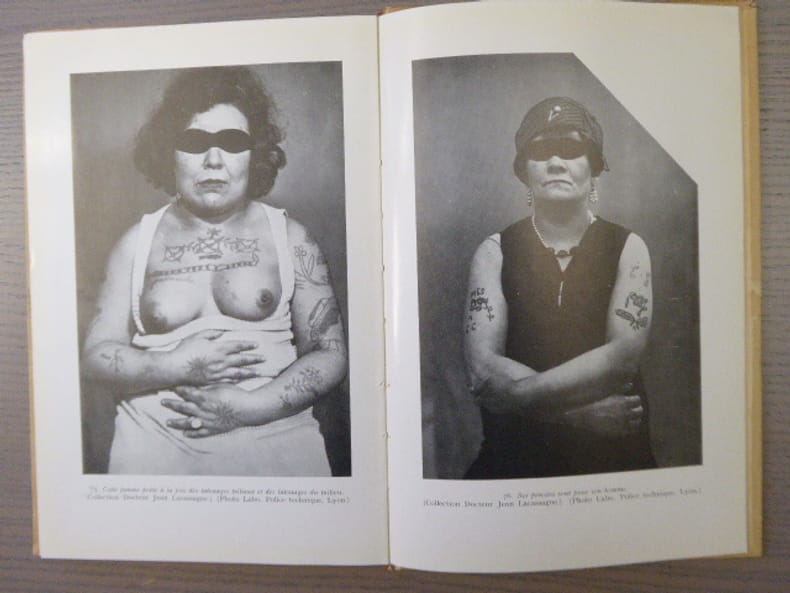
32697La Roulotte Paris 1950 In-8 ( 235 X 160 mm ), cartonnage ivoire, dos lisse janséniste. 56 pages de textes illustrés en marges des 80 dessins de tatouages par Jacques DELARUE et 64 planches illustrées de 80 photographies reproduites sur papier couché, dont 11 sont de Robert DOISNEAU, d'autres proviennent du Musée de l'Homme ou des collections Alexandre LACASSAGNE ( un des fondateurs de l'anthropologie criminelle ) et GRANGEVERSANNE. EDITION ORIGINALE sur papier d'édition. Jaquette absente, le dos a été habilement restauré, l'ouvrage est pur et les photographies très fraîches.
1995x-0748402373Routledge 1995. Hardcover. New. 1st edition. 224 pages. 9.50x6.50x0.75 inches. Routledge hardcover
Silver print cm 24 x 16. Al verso annotazione dattiloscritta e segni di stampa. Al di la' della nota apposta da un ignoto cronista, l'immagine scattata in Sardegna negli anni che vedono Graziano Mesina latitante in Barbagia, sembra raccontare una comunanza di disgraziati davanti a un fuoco piu' che una guerra di uno stato storicamente invasore dell'isola.