Poincare, RaymondBiblio.com

1 189 résultats
102184683X.Gpaperback. Good. Access codes and supplements are not guaranteed with used items. May be an ex-library book. paperback
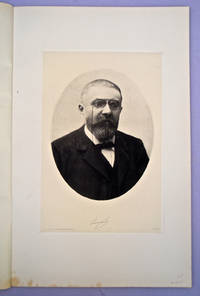
GF9934Photographie 7,5x4 cm - collée sur carton - vers 1900 -
GF12889Photographie 7,5x4 cm - collée sur carton - vers 1900 -
191031971Berlin: Adolf Eckstein 1910. 46.5x30cm. Includes biographical cover page. Foxing in bottom margin and bottom left corner. Adolf Eckstein unknown
191031971Berlin: Adolf Eckstein 1910. 46.5x30cm. Includes biographical cover page. Foxing in bottom margin and bottom left corner. Adolf Eckstein unknown books
191150Budapest: Magyar Tudományos Akadémia Société Franklin 1911. Only edition. Published unbound. In fine condition. Only edition. Published unbound. 38 p. The “International Bolyai János Prize of Mathematics†founded by the Hungarian Academy of Sciences in 1902 with the aim to compensate the lack of Nobel Prize in the field of mathematics. It is awarded in every five years to mathematicians having published their monograph describing their own important new results. The prize was given first time in 1905 to Henry Poincaré and for second time to David Hilbert. Because of the outbreak of WWI and other historical and political reasons the prize was not given until the year 2000.<br /> David Hilbert was awarded in 1910 by the committee of Gyula Julius KÅ‘nig Gusztáv Rados Gösta Mittag-Leffler and Henry Poincaré.<br /> In the brochure there is a short description of the Prize a few words about the committee and the declaration that for the years 1905–1906 Hilbert is awarded. The following 36 pages is the report of Poincaré about the works and achievements of Hilbert in fields of invariant theory transcendent number e constant after Lindemann arithmetics the Hilbert-Waring theorem geometry integral equations and the Dirichlet’s principle. Magyar Tudományos Akadémia (Société Franklin) unknown
1884ZG057271884 500 p., 24 col. maps, paperbound. Unopened copy. Some very slight scattered foxing. Very scarce work.
128442aafParis : G. Masson, éditeur, M DCCCLXXXIV, (1884), gr. in-8vo, 2 ff. + 500 p., cachet de la Société de Lecture de Genève, reliure en demi-cuir d’épque. (Rel. C. Perrenoud Genève),
60653Paris, Ernest Flammarion, 1939. 12 x 19, 282 pp., 19 figures, broché, bon état (couverture défraîchie).
048405337X.Ghardcover. Good. Access codes and supplements are not guaranteed with used items. May be an ex-library book. hardcover
1332485154.Gpaperback. Good. Access codes and supplements are not guaranteed with used items. May be an ex-library book. paperback
2014475202.Gpaperback. Good. Access codes and supplements are not guaranteed with used items. May be an ex-library book. paperback
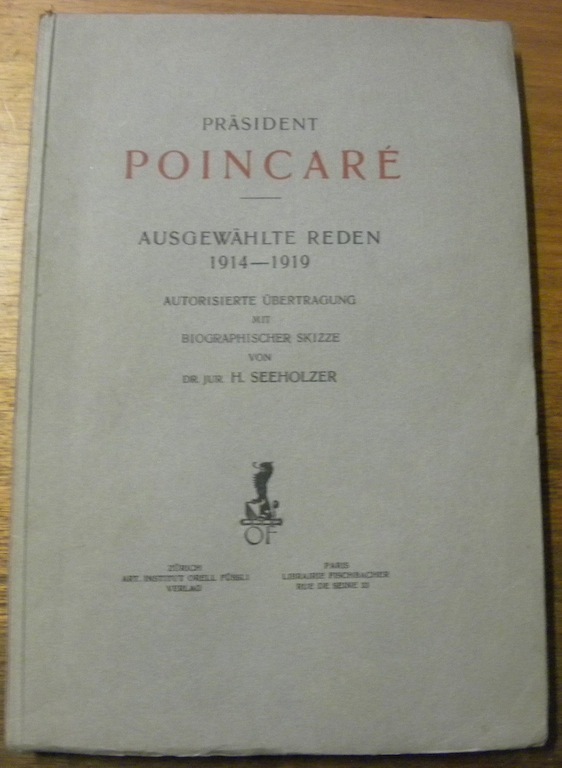
29087Zürich, Orell Füssli ohne Jahr, ca. 1920, 240x165mm, 114Seiten, broschiert.
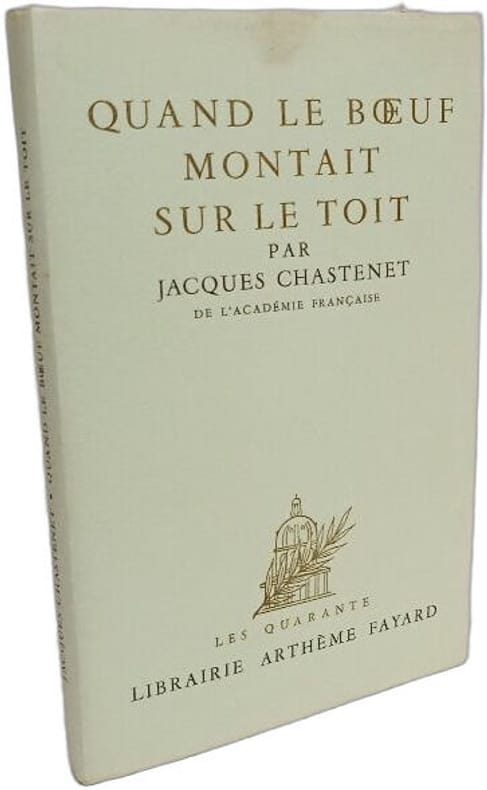
1958100153822Librairie Arthème Fayard 1958 in12. 1958. Broché. L'ouvrage de Jacques Chastenet analyse la France de l'après-Première Guerre mondiale en explorant les transformations politiques intellectuelles et culturelles survenues entre 1918 et le début des années 1920. L'auteur y examine notamment l'expérience Poincaré et les bouleversements de la société française
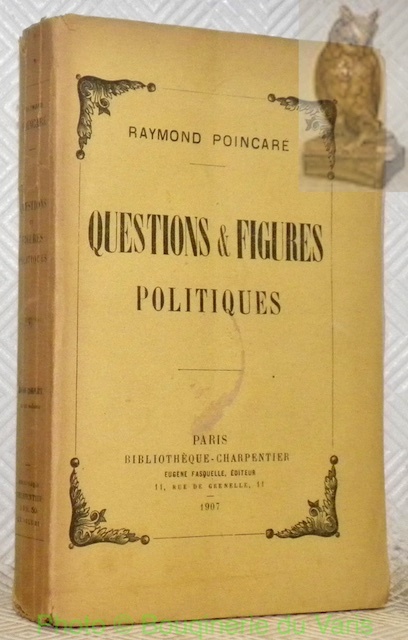
1907RO40081885Bibliothèque-Charpentier. 1907. In-12. Broché. Etat d'usage, Tâchée, Dos abîmé, Non coupé. 506 pages.. . . . Classification Dewey : 944.081-IIIe République, 1870-1945
1907R320056424BIBLIOTHEQUE CHARPENTIER. 1907. In-12. Broché. Etat d'usage, Tâchée, Mors fendus, Intérieur acceptable. 506 pages. . . . Classification Dewey : 320-Science politique
23298Paris, Bibliothèque-Charpentier-Fasquelle 1907, 185x120mm, 506pages, broché. Bel exemplaire.
1907125842P., Bibliothèque-Charpentier, 1907, in-12, 506 pp, reliure demi-percaline brun foncé, dos lisse orné d'un fleuron et d'un double filet dorés en queue, pièce de titre basane noire (frottée) (rel. de l'époque), bon état. Édition originale sur papier d'édition (il y a eu 15 ex. sur Hollande)
22735Paris, Charpentier, 1907. In-8 de 506 pages. Edition originale sur papier d'édition après 15 exemplaires sur Hollande. Ex-libris de la bibliothèque d'Arthur Meyer gravé par Stern. Intéressant envoi de Poincaré à Arthur Meyer "Hommage cordial d'un adversaire politique". Très bon état intérieur. Demi-maroquin brun, double filet doré sur les plats, dos à nerfs portant en queue le coq et sa devise "Je chante clair' de la bibliothèque d'Arthur Meyer, tête dorée. Couvertures jaunes conservées. Excellent état.
RO20081049Charpentier.. 1907.. In-12. Broché. A relier, Livré sans Couverture, Dos abîmé, Intérieur acceptable. 506 pages. Manque la couverture. Manque le dos. Ouvragé débroché.. . . . Classification Dewey : 840-Littératures des langues romanes. Littérature française
2013408927.Gpaperback. Good. Access codes and supplements are not guaranteed with used items. May be an ex-library book. paperback
c3458Paris, Aux Editions Tallandier, 1933 ; grand in-8°, broché,couverture crème imprimé et illustrée en noir;3ff., 88pp.,1f.Illustré du portrait de Poincaré, d'une bandeau et de lettres ornées par Rapeno.
191249614Berlin, G. Reimer, 1912. 4to. Bound in contemporary half cloth with gilt lettering to spine. In ""Acta Mathematica"", Vol, 35, 1912. Entire volume offered. Stamps to title page, otherwise a fine and clean copy. Pp. 1-28. [Entire volume: (4), 398, (1), 27, 19 pp].
1325P., Gauthier-Villars, 1900-1901, 4 fort volumes in 8 brochés, couvertures muettes d'origine pour les tomes 1 à 3, broché couverture imprimée pour le tome 4, T.1 : 15pp., 698pp., T.2 : 570pp., T.3 : 618pp., T.4 : 171pp.
191249614Berlin G. Reimer 1912. 4to. Bound in contemporary half cloth with gilt lettering to spine. In "Acta Mathematica" Vol 35 1912. Entire volume offered. Stamps to title page otherwise a fine and clean copy. Pp. 1-28. Entire volume: 4 398 1 27 19 pp. <br/><br/><em>First appearance of Poincaré's report on 1910 Bolyai Prize which was awarded to David Hilbert in recognition of his work in fields of invariant theory transcendent number e constant after Lindemann arithmetic the Hilbert-Waring theorem geometry integral equations and the Dirichlet’s principle.In 1910 Hilbert became only the second winner of the Bolyai Prize of the Hungarian Academy of Sciences. It was the recognition of the fact that Hilbert was one of the leading mathematicians of his time. The first winner of the prize in 1905 was Henri Poincare the most prolific mathematician of the 19th century.Poincaré about the works and achievements of David Hilbert in fields of invariant theory transcendent number e constant after Lindemann arithmetic the Hilbert-Waring theorem geometry integral equations and the Dirichlet’s principle. </em> hardcover