2 100 résultats
1844437201844 1 vol fort in-8 - demi basane brun clair - recueil périodique des lettres des évêques et des missionnaires des missions des deux mondes et de tous les documents relatifs aux missions et à l'œuvre de la propagation de la foi. - Années 1844 et 1845 - Tome seizième et dix-septième à Lyon chez l'Editeur des Annales - 1844 et 1845 - 536 et 536 pages
Very Good German Original color map on cloth of Constantinople, the Bosphorus, the Golden Horn, Princess' Islands, Pera, Galata, Scutari and environment. Map on cloth. 50x60 cm. Toponyms are in German entirely. Folded. Scale: 1:100000. A detailed toponyms list titled "Verzeichnis der mit Ziffern bezeichneten öffentlichen Gebaude" under the sections A: Pera und Galata, B: Stambul, C: Skutari; and "Erlauterung der Abkürzungen". Some toponyms are transcripted Turkish into western characters like Karadenis - Bahr-i Siach, Burgas Adassi, Kisil Adalar, Jeni Djami, etc. A rare Istanbul map printed in 19th century.
Very Good Turkish, Ottoman (1500-1928) A very attractive chromo-lithograph map on paper. Oblong: 26,5x37,5 cm. In Ottoman script (Old Turkish with Arabic letters). Light foxing and fading on margins and printed area. A very detailed and fine double hemisphere map of the northern and southern skies, showing the various constellations, together with a third map showing the zodiacs on one paper. On the bottom margin, it's written 'Printed in the 549 Numbered Press', and 'Dersaadet...'. This map seems to be influenced (or, a direct translation) from the map of the sky of Sir Francis Baily, (1774-1844), who was one of the leading English Astronomers of the first part of the 19th Century. He is most famous for his observations of "Baily's beads" during a total eclipse of the Sun. Baily was also a major figure in the early history of the Royal Astronomical Society, as one of the founders and as the president four times. After a tour in the unsettled parts of North America in 1796-1797, his journal of which was edited by Augustus de Morgan in 1856, he entered the London Stock Exchange in 1799. The successive publication of Tables for the Purchasing and Renewing of Leases (1802), of The Doctrine of Interest and Annuities (1808), and The Doctrine of Life-Annuities and Assurances (1810), earned him a high reputation as a writer on life-contingencies; he amassed a fortune through diligence and integrity and retired from business in 1825, to devote himself wholly to astronomy. He had already, in 1820, taking a leading part in the foundation of the Royal Astronomical Society. In 1827, the Society awarded him its Gold Medal for preparation of the Astronomical Society's Catalogue of 2881 stars. He was instrumental in the reform of the Nautical Almanac in 1829. In 1837, he recommended to the British Association and later worked extensively on the reduction of Joseph de Lalande's and Nicolas de Lacaille's catalogues containing about 57,000 stars. He also supervised the compilation of the British Association's Catalogue of 8377 stars (published 1845) and revised the catalogues of Tobias Mayer, Ptolemy, Ulugh Beg, Tycho Brahe, Edmund Halley and Hevelius. His notice of Baily's Beads, during an annular eclipse of the sun on May 15 1836, at Inch Bonney in Roxburghshire, started the modern series of eclipse-expeditions. Very rare.
19042P., Editions de l'Ibis, 1983 ; in-4 (23 X 33 cm) pleine basane verte de l'éditeur, plats entièrement estampés de motifs à froid, encadrement de fleurs de lis dorées, dos à nerfs, fers à froid, tête dorée, étui doublé et bordé revêtu de moire vert bronze. 191 pp.22 miniatures de Jean-François Mincet (page de titre, double page, 4 hors texte, 8 dans le texte en bleu et 8 dans le texte en couleurs). La page de titre, la double page et les hors texte sont rehaussées à l'or et protégées d'un papier fin. Chaque page est en outre ornée d'un large encadrement répété, constitué de volutes en couleurs.Tirage limité à 950 exemplaires. 1/ 643 numérotés sur vélin chiffon de Lana (N°536). Il est joint le certificat des Editions de l'Ibis, signé par l'éditeur, Roger Antic.Dos de l'ouvrage uniformément passé, sinon parfait état,etui .Bel ouvrage dont le texte est celui du manuscrit du XIIe siècle du British Museum reproduit par Francisque Michel. Les illustrations de l'artiste ont été mises en couleurs à la main dans l'atelier d'art d'enluminure au pochoir des éditions de l'Ibis.
93358sd Sans mention de date ni d'éditeur - In-8 à l'italienne, couverture brune avec titre en doré - Album de 36 vues photographiques imprimées en noir et blanc sous serpente
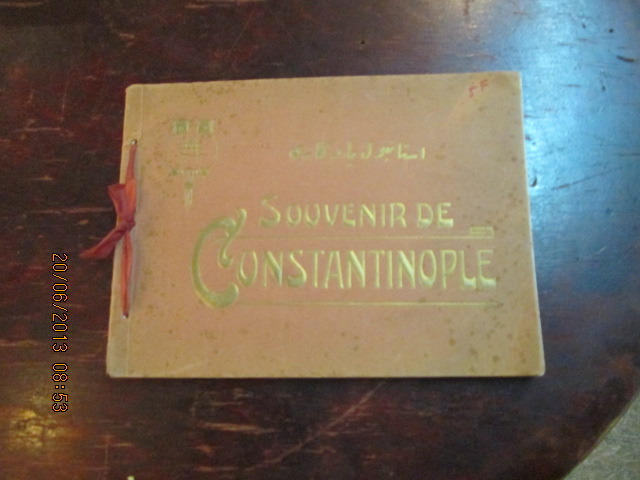
605974Se Sl sd In-12 à l'italienne ( 170x225 mm, attache ficelle rouge, titre doré sur 1er plat, couverture cartonnée.24 planches photographiques.
1818212461818 PARIS, Amable Costes. 1818 - In-12 Carré - 1/2 Reliure - Dos lisse orné - T. I à IX - 5ème édition revue et corrigée.T. I) XII-388 + Table - T. II) 395 + Table - T. III) 391 + Table - T. IV) 397 + Table - T. V) 390 + Table - T. VI) 350 + Table - T. VII) 345 + Table - T. VIII) 382 + Table - T. IX) 330+ table - rousseurs éparsesEx-libris Armorié & chiffré "Château de la Bretesche"
PARIS, Amable Costes. 1818 - In-12 Carré - 1/2 Reliure - Dos lisse orné - T. I à IX - 5ème édition revue et corrigée. T. I) XII-388 + Table - T. II) 395 + Table - T. III) 391 + Table - T. IV) 397 + Table - T. V) 390 + Table - T. VI) 350 + Table - T. VII) 345 + Table - T. VIII) 382 + Table - T. IX) 330+ table - rousseurs éparses Ex-libris Armorié & chiffré "Château de la Bretesche" Possibilité d'acquérir chaque volume au prix de 25 €
New English Paperback. Pbo. Roy. 8vo. (24 x 17 cm). 2 volumes set: 245 p.; 178 p. Istanbul'a ait günlük hâtiralar, 1672-1673. 2 volumes set. Prep. by Charles Schefer. Translated by Nahid Sirri Örik.
As New English Original bdg. In publisher's original slip-case. Elephant folio. (66 x 50 cm). In French and English. Color and b/w ills. 144 p., 49 plates., 3 maps. Another superb facsimile edition of a very rare book by Ertug & Kocabiyik. In 1795 the Alsace-born Antoine Ignace Melling, who had come to Constantinople to seek his fortunes, was appointed imperial architect by the Ottoman Sultan Selim III. During his tenure in that position, he also designed and landscaped a seaside palace for Selim's sister, Princess Hatice. While in Constantinople, Melling executed a number of astonishing panoramic views of the city and its environs.Melling returned to Paris in about 1803. In 1809 he set up an engraving studio for the purpose of reproducing these drawings. The completed images were published as a series of fascicles that were sent out to subscribers. The last one appeared in 1819. The Ertug & Kocabiyik facsimile edition of the complete book is produced from the original "elephant folio", an unfolded first edition in the collection of Ahmet Ertug. The technical aspects of the project were done under the supervision of Mr. Ertug in Switzerland by some of the world's leading facsimile specialists. This outstanding facsimile edition is available in two different bindings. One is bound in sturdy Japanese cloth and the other is a very limited edition of only 50 copies bound in leather that is intended for connoisseurs of exceptionally fine books. The binding and decoration of all the leather-bound copies were done by hand. The book measures 50 by 66 cms. The foldout image plates are 65 by 97 cms. There are 48 views of Constantinople in the late 18th century and also three maps. The publishers also offer an edition of the unfolded image plates presented in a leather-bound case. Only 25 copies of this version have been produced. The text for this edition is bound separately and presented in a pocket in the leather case. The descriptions of the views in the facsimile edition are in the original French and an English translation is also provided. The Ertug & Kocabiyik facsimile edition of "Voyage pittoresque" is an outstanding achievement and one that is certain to appeal to collectors of rare books and to those who admire beautiful art objects.
New New English Original bdg. Dust wrapper. Folio. (31 x 25 cm). In English and Croatian. 171 p., color and b/w ills. The Istanbul letters of Antun Vrancic: Croatian and English translation of selected latin letters.= Carigradska pisma Antuna Vrancica: Hrvatski i Engleski prijevod odabranih Latinskih pisama. Prep. by Oguz Aydemir. Antun Vrancic or Antonio Veranzio, was a Croatian prelate, writer, diplomat and Archbishop of Esztergom in the 16th century. Antun Vrancic was from Dalmatian town of Sibenik (modern Croatia), then part of the Republic of Venice. Vrancic is also known under his Latinized name Antonius Verantius, while Hungarian documents since the 19th century refer to him as Verancsics Antal. In 1549, Vrancic entered Ferdinand's service. In parallel to his diplomatic duties, he held important positions in Catholic Church (the chief dean of Szabolcs County, abbot of Pornó Abbey). In 1553 he was appointed as a bishop of Pécs and sent to Constantinople to conduct negotiations with sultan Suleyman I on Ferdinand's behalf. That mission was previously declined by many other diplomats as an earlier negotiator was imprisoned by the Ottomans. Vrancic spent four years in Asia minor and finally concluded a peace treaty. After his return he was appointed bishop of Eger (17 July 1560 - 25 September 1570). After the Battle of Szigetvár in 1566, as one of Maximilian's ambassadors, Antun was sent to Turkey to negotiate peace again; he arrived in Constantinople on 26 August 1567. After five months of negotiations with Sokollu Mehmed Pasha and Selim II, agreement was reached by 17 February, and the Treaty of Adrianople was signed on 21 February 1568, ending the war between the Holy Roman Empire and Ottoman Empire. In appreciation of his diplomatic work, the king named him archbishop of Esztergom (17 October 1569 - 15 June 1573). During his stay in Istanbul, together with Ogier Ghislain de Busbecq, Vrancic discovered Res Gestae Divi Augusti (Eng. The Deeds of the Divine Augustus), a Roman monument in Ankara. His travels throughout the Transylvania, Balkan and Asia minor resulted in his writing extensive travel accounts. By writing letters to the Habsburg Kingdom almost every day, the diplomat telling the daily life of Istanbul gave examples of his culture and art works. Letters written 450 years ago provide important information about the diplomatic tradition of the 16th century and the behavior of the two emperors.
New New Turkish Original bdg. Dust wrapper. 4to. (29 x 21 cm). In Turkish. 170 p., b/w photos. Al iste Istanbul. 1969 yilinin yaz aylarinda, donemin buyuk gazetelerinden Aksam, gazeteci Cetin Altan ve Foto muhabiri Ara Guler'in "Al Iste Istanbul"adli yazi dizisini yayimladi. Cetin Altan ve Ara Guler, semt semt dolastiklari Istanbul'un o doneme ait panoramasini buyuk bir ustalikla ulastirmislardi okuyucuya. O Istanbul, simdi Turk basin dunyasinin duayenlerinden biri olan Cetin Altan'in kaleminden ve uluslararasi bir foto muhabiri olarak buyuk un kazanan Ara Guler'in vizorunden yeniden bulusuyor okuyucuyla. Cop yiginlari, sehir merkezindeki fabrikalari, gecekondulari, parsellenmis Bogaz'i, yok edilen tarihi eserleri ve -nasilsa- hep baki kalan guzelligiyle, 30 yil oncesinin Istanbul'u.Bu kitabi -bunca yil sonra hâlâ guncelligini koruyan sorunlariyla, gene de yok edilemeyen guzelligiyle, tarihiyle Istanbul'u- okurken, hep ayni seyi mirildaniyor insan: Al Iste Istanbul.
New New English Original bdg. Dust wrapper. Folio. (41 x 30 cm). In English and Turkish. [22], 189, [18] p., b/w photos. A photographical sketch on lost Istanbul.= Eski Istanbul anilari. [Album of photographs]. A very heavy volume. Contents: The Light of Istanbul: Boatmen of the Golden Horn, old Galata Bridge and the New Mosque, 1956. Midday hours on the old Galata Bridge, 1954. Ferries of the Bosphorus and the Prince Islandsbound to the old Galata Bridge, 1955. "Salep" merchant in early morning lights on the old Galata Bridge, 1957. Traffic on the old Galata Bridge, 1956. Wool hanks hung to dry up in Ortaköy and the sea, 1964. The bridge and the ferry, 1955. Barges and ferries in the Golden Horn, 1958. Süleymaniye Mosque as seen from the old Galata Bridge, 1956 10 Haliç, 1956 - The Golden Horn, 1956. Eminönü Square after the demolishment, 1959. Carters near the Oil Quay, 1957. View from the Oil Quay, 1955. View from the Oil Quay, 1955. Boat maintanance in Ayvansaray, 1969. A barge withdrawn to the coast in Üsküdar and children, 1954. Bargeman fishing at the caulking yard, 1958. Boatmen at the caulking yard, 1956. Boatmen waiting for customers at the caulking yard, 1957. Loading at the Oil Quay, 1957. The caulking yard front of the Golden Horn and rowing-boats, 1957. Boats at Balat, Golden Horn, 1969. Eminönü boatmen, 1958. A leaping boatman in Golden Horn and a cargo ferry, 1960. Children at the local grocer¿s in Vefa disctrict, 1975. The Ottoman Fountain and the childeren at Azapkapi, 1965. Children at the gypsy disctrict in Sishane, 1969. Horse cart passing under an archway near Sehzadebasi, 1958. Inner courtyard of an old wooden house and playing children at Tophane, 1954. Elderly Beyoglu woman taking food to her cats in front of the Flower Arcade at Balikpazari, 1980. A husband and wife heading home in the evening at Zeyrek disctict, 1960. A street in Tarlabasi, 1965. Horse carts and old houses in Unkapani, 1955. Provincials watching the boats from the Galata Bridge, 1956. Card-players at a shore coffee-house in Salacak, 1956. Süleymaniye Mosque and the shore of Unkapani as seen from the old Galata Bridge on a winter's day, 1955. A touristicferryas seen from the old Galata Bridge, 1959. Separation on the Galata Quay, 1955. An old street in Rumelihisari, 1962. A boatpainter on the quay, Karaköy, 1956. Fishermen at the old Galata Bridge, 1968. Vintage outdoor fish restaurants on the shore of Eminönü in the Golden Horn, 1965. A wooden mansion in Kandilli, 1985. Little boys chasing a kittenin Zeyrek, 1968. A chimney and the domes of a Turkish Hamam in Beyoglu, 1957. The evening ferry in Beylerbeyi, Bosphorus, 1960. Ramparts and horses, 1969. Man climbing the hill in Feriköy, 1985. Boat approaching the quay at night, Kandilli, 1965. Massage at the Cagaloglu Hamam, 1965. Boats heading to the Bosphorus, 1975. Salacak ferry pier and the Istanbul silhouette, 1968. A man reading the newspaper on a ferry heading to the Princes Islands, 1955. Children getting out of a rowboat in the old Salacak Bay, 1964. A Bosphorus ferry sailing past Beylerbeyi, 1957. The Mystery of Labour: A boy worker at the caulkingyard, 1972. Porters waiting for work on the caulkingyard, Galata, 1958. Workers at the caulkingyard, 1969. An old worker drinking water in an old "han" in Galata, 1950. Worker looking out of a window in the old Yakut Han at the caulkingyard, 1988. Caulkingyard, 1957. Boy casting iron at the caulkingyard, 1988. Sailors at the caulkingyard, 1957. A blacksmith at the caulkingyard, 1988. Carriers at the caulkingyard, 1969. Porters waiting for work on the Oil Quay, 1954. Porter carrying a barrel at the Oil Quay, 1958. Street vendors at Sishane, 1990. Street restaurants on the shores of the Golden Horn and an old porter, 1965. Young workers at the caulkingyard, 1969. Man carrying a mattress in the Grand Bazaar, 1965. Shopkeeper and his shop at the Grand Bazaar, 1965. Grand Bazaar, 1972. Woman selling antiques in the Inner Bedesten in the Grand Bazaar
New Turkish Original bdg. HC. 4to. (29 x 24 cm). In Turkish. 148 p., b/w photos. Ara Güler'in gözünden Istanbul tramvaylari. Edited by Ahmet Akcan.
New New English Original bdg. Dust wrapper. 4to. (28 x 21 cm). In English. 177, [3] p., b/w photos, 2 maps. Ara Güler's Istanbul. Foreword by Orhan Pamuk. Ara Güler's Istanbul is a unique record of daily life in the cultural capital of Turkey from the 1940s to the 1980s, captured by the award-winning photographer and accompanied by an evocative foreword by Orhan Pamuk, the first Turkish recipient of the Nobel Prize in Literature. As the crossroads between Europe and Asia, Istanbul has lived through several empires and has a character that is as many layered as its history something that Güler's photographs convey with great sensitivity. In these remarkable black-and-white images, the city's melancholy aesthetic oscillates between tradition and modernity. Both writer and photographer were born in Istanbul, and each in his youth held the ambition of becoming a painter. Here, each in his own way paints a picture of his home town and captures its very soul. Ara Güler is one of Turkey's indeed the world's greatest photographers. The Nobel Prize-winning Orhan Pamuk is Turkey's best-known writer.
Fine English Paperback. Oblong small 4to. (24 x 26 cm). In English and Turkish. [40] p., color photos. Ara Güler. Old city.= Eski sehir. [Exhibition catalogue]. 16.12.2013 - 15.01.2014. Text by Oskar Fuchs.
Fine Fine English Original bdg. Dust wrapper. Folio. (33,5 x 23 cm). In English. 295 p., color ills. Ara Güler. Vanished colours. Texts by Ara Güler, Mehmet Baydur. In Ara Güler's words: ''My first book on Istanbul was in black and white, my second book, 'Vanished Colours', is in colour. Colour photographs lack the solidity of black-and-white, and in this book I have given priority not so much to artistic considerations as to an attempt to present the city of Istanbul in its own characteristic colours. My aim is not to produce art photography, but simply to reflect Istanbul as it really is. What does Istanbul mean to me? Istanbul is Jean Giraudoux' La Folle de Chaillot. Every since my childhood I have always identified Istanbul with the madwoman of Chaillot, a crazy woman of the type you can find in the Roman, Byzantine and Ottoman civilisations...''. Second Edition.
New English Paperback. 4to. (28 x 22 cm). In English and Turkish. 120 p., b/w photos. Istanbul: A selection of Collection Point Hotel. For the first time, tells his photos with stories.= Istanbul: Point Hotel Koleksiyonundan seçmeler. Fotograflarini ilk kez öykülerle anlatti.
New English Paperback. 4to. (28 x 22 cm). In English and Turkish. 120 p., b/w photos. Istanbul: A selection of Collection Point Hotel. For the first time, tells his photos with stories.= Istanbul: Point Hotel Koleksiyonundan seçmeler. Fotograflarini ilk kez öykülerle anlatti. Signed by Ara Güler.
New New English Paperback. Pbo. Dust wrapper. 4to. (32 x 24 cm). In English and Turkish. 223 p., b/w photos. Ara'dan yetmis yedi yil geçti.= Best of Ara Güler. Edited by Hasan Senyüksel. Photos by Ara Güler. Translated by Lucy Wood.
New English Paperback. Oblong small 4to. (25 x 22.5 cm). In English, Turkish and Armenian. B/w photos. 127 p. Armenien fishermen at Kumkapi.= Kumkapi Ermeni balikçilari.= Gumgapum Haykakan dzknorsnery, 1952. ARMENIANS Social life Istanbul - Constantinople Fisherman Photography Ara Güler.
New Turkish Paperback. 4to. (29 x 23 cm). Edition in Turkish. 144 p., b/w photos. Babil'den sonra yasayacagiz. [Album of photographs]. [TURKISH EDITION]. This book brings together the short stories Ara Güler penned during his early period, and his photographs. Güler is known internationally as a photographer and considered the most important representative of creative photography in Turkey, however, he is a relative unknown as a short story writer, and the various aspects of Güler the writer appear in breathtaking range in We Will Live After Babylon. This new edition of three simultaneously published volumes in Turkish, Armenian and English, brings together Güler's visual production with his texts, who appear to also take photographs through the medium of the short story, to form a "photograph-short story album". Güler thinks that his early period short stories have an important role in his ability to "capture meaningful moments and combine them in a narrative", and describes these 13 short stories as "a kind of photography". There is no doubt that Güler is a "man of the visual world" and We Will Live After Babylon is a solid proof of that.
New New English Original bdg. Dust wrapper. Large 4to. / Small folio. (39 x 26 cm). In German. B/w and color photographs. 237, [2] p. "Auf die Frage, ob Fotografie Kunst sei, hat Ara Guler beharrlich immer mit "Nein" geanwortet. Dieses Nein begrundete er zuletzt mit dem Hinweis auf Oscar Wilde: "Es gibt keine Fotokunst," so sagt Ara Guler, "also gibt es auch keine Fotokunstler. Lass mich dir den Unterschied zwischen Kunst und Fotografie erklaren: Kunst entsteht aus einer Luge und lugt auch selbst.".
New English Paperback. Pbo. Large 8vo. (22 x 22 cm). In Turkish. 95 p. Color and b/w photos. Istanbul'da alinteri. [Exhibition catalogue]. 5 Mart - 6 Nisan 2008, Taksim Metro Istasyonu. Text by Enis Batur.