2 100 résultats
New English Paperback. Pbo. Large 8vo. (22 x 22 cm). In Turkish. 95 p. Color and b/w photos. Istanbul'da alinteri. [Exhibition catalogue]. 5 Mart - 6 Nisan 2008, Taksim Metro Istasyonu. Text by Enis Batur.
New English Paperback. 4to. (27 x 24 cm). In English and Turkish. B/w photographs. 150, [2] p. Lo and behold. Ara Güler in Mardin.= Seyreyle. Ara Güler Mardin'de. [Exhibition catalogue]. "Ara Güler's photographs will engrave on our memories the moments that he wishes us to experience. Likewise he will leave an indelible mark on the memory of Mardin. ". Anadolu insaninin yani sira Turk ve dunya unluleri, Ara Guler'in dogru, kusursuz, keskinlikle ifade edilmis, yanilmaz, emin tavriyla 'Yuz Yuze' adi altinda izlenebiliyor. Ara Guler'in cektigi portrelerde yasamin icinden secilerek on plana yerlestirilen her kisinin arka planla cok saglam iliskileri bulunuyor. Kisinin ya da kisilerin goruntusu, zaman akisindan koparilmis bir yasam oykusu anlatiyor. Dramatik isiklar, sonsuz ufuklar, koyu bulut kumeleri, zaman zaman anlatimda buyuk sorumluluk yukleniyor. Bunlar, leke dengeleri ozenle yerlestirilmis, ustun kompozisyonlar olusturuyor. Arka planda manzarayi panoya donusturen Guler, on plana cikardigi kisiyle yepyeni anlatimlar yaratiyor. Ucsuz bucaksiz Anadolu platosu, daglar, kentler Ara Guler'in fotograf karelerinde farkli bir estetikle 'Tanimak ve Anlamak' adi altinda sunuluyor.
New Armenian Original bdg. HC. 4to. (29 x 23 cm). Edition in Armenian. 144 p., b/w photos. Papelonen verç bidi abrink. [Album of photographs]. [ARMENIAN EDITION]. This book brings together the short stories Ara Güler penned during his early period, and his photographs. Güler is known internationally as a photographer and considered the most important representative of creative photography in Turkey, however, he is a relative unknown as a short story writer, and the various aspects of Güler the writer appear in breathtaking range in We Will Live After Babylon. This new edition of three simultaneously published volumes in Turkish, Armenian and English, brings together Güler's visual production with his texts, who appear to also take photographs through the medium of the short story, to form a "photograph-short story album". Güler thinks that his early period short stories have an important role in his ability to "capture meaningful moments and combine them in a narrative", and describes these 13 short stories as "a kind of photography". There is no doubt that Güler is a "man of the visual world" and We Will Live After Babylon is a solid proof of that.
New English Paperback. 4to. (29 x 23 cm). Edition in English. 144 p., b/w photos. We will live after Babylon. [Album of photographs]. [ENGLISH EDITION]. This book brings together the short stories Ara Güler penned during his early period, and his photographs. Güler is known internationally as a photographer and considered the most important representative of creative photography in Turkey, however, he is a relative unknown as a short story writer, and the various aspects of Güler the writer appear in breathtaking range in We Will Live After Babylon. This new edition of three simultaneously published volumes in Turkish, Armenian and English, brings together Güler's visual production with his texts, who appear to also take photographs through the medium of the short story, to form a "photograph-short story album". Güler thinks that his early period short stories have an important role in his ability to "capture meaningful moments and combine them in a narrative", and describes these 13 short stories as "a kind of photography". There is no doubt that Güler is a "man of the visual world" and We Will Live After Babylon is a solid proof of that.
1838ln606Librairie Poussielgue Frères Relié 1838 Deux volumes in-8 (13x21 cm), reliés demi-basane, titre et tomaison dorés aux dos lisses ornés de liserés dorés, XI-444-452 pages ; coiffes, mors et coins frottés, traces de frottement et petites rayures sur les plats, bon état. Livraison a domicile (La Poste) ou en Mondial Relay sur simple demande.
Very Good Greek, Modern (post 1453) Paperback. Demy 8vo. (22 x 15 cm). In Greek. 685 p., b/w ills. [The eagles of the East (Anatolia)]. Oi aetoi tes Anatolis. Signed and inscribed by Marikane.
New New English Original bdg. Dust wrapper. In special slip-case. 4to. (32 x 23 cm). In Turkish. 3 volumes set (251 p.; [xvi], 340 p.; 536 p.). Mimar Kemalettin Anma Programi Dizisi. 3 volumes set. Vol. 1. Mimar Kemalettin çagi. Mimarlik / Toplumsal yasam / Politika. Vol. 2. Istanbul Vakiflar Bölge Müdürlügü Mimar Kemaleddin Proje Katalogu. Vol. 3. Imparatorluktan Cumhuriyete Mimar Kemaleddin, 1870-1927. A comprehensive study on Kemaleddin the Architect, 1870-1927.
New English Paperback. Pbo. Demy 8vo. (21 x 14 cm). In Turkish. 392 p. A breath of Istanbul. Within these pages, we experience Istanbul life, the "you and me" that is this place's heartbeat. Around us swirl the amazing colors of many rainbows and dozens of scents. Here the Istanbulites-Armenian, Greek, Kurdish, Jew, Alawite, Christian, the rich, the poor, the conservative, the marginal-all bear witness to Istanbul's many-faceted selves. This novel of hope is a small reflection of what some people call "utopia" and is foremost a story about living in harmony. Lose yourself in Istanbul's streets while wandering with me as we explore you, me, our lives, our loves, our unfulfilled feelings and wishes, our dreams, fears, hopes, loneliness, struggles, and the daily ups and downs of our fellow millennials. The meaning of Istanbul, Turkey, and the world is "you" for me. They are all "me" and "us." That's the only reality I believe in. Nothing-no work of art or music-will ever be able to fill and nourish your soul as Istanbul does. No scents will ever burn themselves into your memories like the ones in Istanbul. No wisdom except that which you find here will ever seem that real(istic) to you. I have taken a deep breath of IItanbul. All of its life-affirming air I have to share with you has been exhaled into these pages.
New English Paperback. Pbo. Mint. 4to. (32 x 24 cm). 210 p. In Turkish and English. B/w photos. The birds of Istanbul.= Istanbul'un kuslari. Translator: Amy Spangler; Edited by Ali Berktay. PHOTOGRAPHY TUrkish art of photography Photographic art Photographer Istanbul Bird.
As New English Paperback. Pbo. Mint. 4to. (32 x 24 cm). 236 p. In Turkish and English. B/w photos. The street cats of Istanbul.= Istanbul'un sokak kedileri. Translator: Amy Spangler; Edited by Ali Berktay. PHOTOGRAPHY Street cats Cat Turkish art of photography Photographer Istanbul.
New English The street dogs of Istanbul.= Istanbul'un sokak köpekleri. Translator: Amy Spangler; Edited by Ali Berktay.", texts and photograps: Arif Asçi; translator: Amy Spangler; edit by: Ali Berktay; Türkiye Is bankasi kültür yayinlari / Anadolu Hayat emeklilik, Ist., 2009. Paperback. Pbo. Mint. 4to. (32 x 24 cm). 226 p. In Turkish and English. B/w photos. PHOTOGRAPHY TUrkish art of photography Photographic art Photographer Istanbul Dog Street dogs.
Fine English The street dogs of Istanbul.= Istanbul'un sokak köpekleri. Translator: Amy Spangler; Edited by Ali Berktay.", texts and photograps: Arif Asçi; translator: Amy Spangler; edit by: Ali Berktay; Türkiye Is bankasi kültür yayinlari / Anadolu Hayat emeklilik, Ist., 2009. Paperback. Pbo. Mint. 4to. (32 x 24 cm). 226 p. In Turkish and English. B/w photos. PHOTOGRAPHY TUrkish art of photography Photographic art Photographer Istanbul Dog Street dogs.
1875055260Constantinople Istanbul: Neologos Litografyasi - Votîra ve Sürekasi Matbaasi. AH 1292 1875. 1st Edition . Leather. Very Good. 8vo - over 7¾ - 9¾" tall. Contemporary 1/4 leather bdg. with marbled boards. Small 4to. 27 x 19 cm. 23 p. 11 p. in Ottoman script Old Turkish with Arabic letters; 12 p. in French with rare 4 folded maps. A very good copy. First and only edition of this extremely rare bilingual book in French and Ottoman Turkish including the first records on the formation and characteristics of storms to explain how storms and hurricanes occurred which route they followed and how they were conveyed to the regions that need to be warned by telegraph for the vessels sailing in the seas by French expert Coumbary who was founded the Rasathâne-i Âmîre i.e. Ottoman Imperial Observatory. Both the original French and Turkish translations of the work were published together in one volume. The work also included four maps which were drawn for this work only. The first map shows the movement of a storm that occurred on March 8 1865 the second one shows the occurrence between the Tropic Cancer and Capricorn whirlwinds storms in the Atlas and Indian oceans the movements in the Bay of Bengal the storms in different directions in the China Sea the Gulfstream Grönland and Azores. The second observatory in the Ottoman era was established for meteorology. Before this center was established beginning from the Reformation 1839 many meteorological observatories were built by foreigners in various cities such as Istanbul Smyrna Trebizond Tekirdag and Merzifon both as private and public establishments. The very first known temperature readings are the meteorological observations made by the Priest Dalmas at the St. Benôit monastery between 1839-1847. Later William Lane an Englishman who came to Istanbul during the Crimean War made observations at the British Cemetery at Haydarpasa. W. Noe director of the Mekteb-i Fünûn-u Sahane made observations at the house in Kalyoncukulluk where he lived until the Beyoglu Fire in 1848; and finally it is known that French engineer Ritter who was invited by the government for waterworks in Kuruçesme 1856-1860 also conducted meteorological observations. Observations on precipitation and humidity conducted between 1875-1892 by an amateur observer on the Thomson Farm in Erenköy are invaluable on the subject of Istanbul's climate. These observations have been published in Budapest in 1928. Excellent observations on heat pressure and humidity made in the summer residence of the Russian ambassador on Büyükada have also been published in Annales St. Petersburg. In 1858 the French government established the first observatory communicating data over the telegraph and in 1863 by compiling meteorological data in France the French National Meteorological Network started operations. In 1868 upon the recommendation of the French government the Rasathane-i Âmire was founded to convey meteorological forecasts to certain centers by telegraph. Instruments were purchased from leading European factories and operations started on top of a hill 74 meters high on Pera. The first director was Mr. Aristide Coumbray who came to Istanbul to renovate the telegraph network. Instruments commissioned from France were set up at Mr. Coumbary's home which stood at the garden of the Swedish Embassy. The observatory was later moved after its offices were prepared. Coumbary represented Turkey in the first international meteorology congress convened in Wien five years later in 1873. Rasathane-i Âmire worked by the same system as the National Meteorology Center in France. In the observation books of 1868 August-November names of affiliated stations are given to us Soulina Köstence Constantia Varna Burgaz Valona Elbasan Durazzo and Beirut. Later stations in Izmir Diyarbakir Baghdad and Fao were also added. The observatory founded by Aristide Coumbary in 1868 in Istanbul operated until the end of the First World War. Özege 5735.; TBTK 7688 10862.; Not in OCLC. <br/> <br/> Neologos Litografyasi - Votîra ve Sürekasi Matbaasi., [AH 1292] hardcover
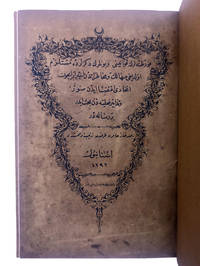
Very Good French Contemporary 1/4 leather bdg. with marbled boards. Small 4to. (27 x 19 cm). 23 p. (11 p. in Ottoman script (Old Turkish with Arabic letters; 12 p. in French), with rare 4 folded maps. A very good copy. First and only edition of this extremely rare bilingual book in French and Ottoman Turkish, including the first records on the formation and characteristics of storms to explain how storms and hurricanes occurred, which route they followed, and how they were conveyed to the regions that need to be warned by telegraph, for the vessels sailing in the seas, by French expert Coumbary who was founded the Rasathâne-i Âmîre [i.e. Ottoman Imperial Observatory]. Both the original French and Turkish translations of the work were published together in one volume. The work also included four maps which were drawn for this work only. The first map shows the movement of a storm that occurred on March 8, 1865, the second one shows the occurrence between the Tropic Cancer and Capricorn whirlwinds, storms in the Atlas and Indian oceans, the movements in the Bay of Bengal, the storms in different directions in the China Sea, the Gulfstream, Grönland, and Azores. The second observatory in the Ottoman era was established for meteorology. Before this center was established, beginning from the Reformation (1839), many meteorological observatories were built by foreigners in various cities such as Istanbul, Smyrna, Trebizond, Tekirdag, and Merzifon both as private and public establishments. The very first known temperature readings are the meteorological observations made by the Priest Dalmas at the St. Benôit monastery between 1839-1847. Later William Lane, an Englishman who came to Istanbul during the Crimean War, made observations at the British Cemetery at Haydarpasa. W. Noe, director of the Mekteb-i Fünûn-u Sahane made observations at the house in Kalyoncukulluk where he lived until the Beyoglu Fire in 1848; and finally, it is known that French engineer Ritter, who was invited by the government for waterworks in Kuruçesme (1856-1860) also conducted meteorological observations. Observations on precipitation and humidity conducted between 1875-1892 by an amateur observer on the Thomson Farm in Erenköy are invaluable on the subject of Istanbul's climate. These observations have been published in Budapest in 1928. Excellent observations on heat, pressure, and humidity, made in the summer residence of the Russian ambassador on Büyükada have also been published, in Annales St. Petersburg. In 1858, the French government established the first observatory communicating data over the telegraph, and in 1863, by compiling meteorological data in France, the French National Meteorological Network started operations. In 1868, upon the recommendation of the French government, the Rasathane-i Âmire was founded to convey meteorological forecasts to certain centers by telegraph. Instruments were purchased from leading European factories, and operations started on top of a hill 74 meters high on Pera. The first director was Mr. Aristide Coumbray, who came to Istanbul to renovate the telegraph network. (Instruments commissioned from France were set up at Mr. Coumbary's home, which stood at the garden of the Swedish Embassy. The observatory was later moved after its offices were prepared.) Coumbary represented Turkey in the first international meteorology congress, convened in Wien five years later in 1873. Rasathane-i Âmire worked by the same system as the National Meteorology Center in France. In the observation books of 1868 (August-November), names of affiliated stations are given to us Soulina, Köstence (Constantia), Varna, Burgaz, Valona, Elbasan, Durazzo, and Beirut. Later, stations in Izmir, Diyarbakir, Baghdad, and Fao were also added. The observatory founded by Aristide Coumbary in 1868 in Istanbul, operated until the end of the First World War. Özege 5735.; TBTK 7688, 10862.; Not in OCLC.
New English Paperback. Folio. (33 x 24 cm). In English and Turkish. 100 p., color ills. Kumkapi rugs from the Arkas Collection.= Kumkapi halilari: Arkas Koleksiyonu'ndan.
Fine Turkish Original bdg. HC. 4to. (29 x 20 cm). In Kabardian (Circassian) in Cyrillic, Russian, and Turkish. 480 p. Çerkes yemekleri.= Adige skhinig'uekher: Blyuda Adigskom (Cherkesskoi) kuzin. Recipes of Circassian cuisine.
Very Good German Original color map on cloth. A little foxing on cloth. Very good. Folded. Folio. (57 x 46 cm). In German with Turkish place names in Latin script. 40-42 Egri Palanka (Kriva Palanka): Serbien, Bulgarien, Türkei. Serbian, Bulgarian and Turkish borders. Map shows from south to the north: Tikves, Vardar River (Axios), Radovista, Stip (Istib), Ezevopolje, Plackovica, Bereketli, Mustafa Ovasi (Mustafa Plain), Kliseli, Kocana, Vinica, Egri (Kriva) Palanka, Kozjak, Sveli Ilija, Kjustendil (Köstendil), et alli. 39'30' östlich v. Ferro. (Longitude given from Ferro- El Hierro island).
Very Good German Original color map on cloth. A little foxing on cloth. Very good. Folded. Folio. (51 x 46 cm). In German with Greek place names in Latin script. [MAP of TURKISH BALKANS] Phthiotis, Canal Atalanti, I. Euboea (Evvia, Evripos, Negroponte, Golf v. Volo (Pagasetikos), Skiathos, Skopelos (Peparethos), Chiliodromia (Ikos), Magnesia, Cholkis. (Longitude given from Paris). Scarce.
New New Turkish Original bdg. Dust wrapper. 4to. (34 x 24 cm). In Turkish. 177 p., color and b/w ills. Susamli halkanin tilsimi. Istanbul'da kara firindan simit saraylarina simit, peynir ve çayin türküsü. Photos by Orhan Cem Çetin.
1735PHO-674Paris, Charles J.-B. Delespine fils, 1735.T1(4), xvi, (2), 470 pp., ( 22) .T2(3), 521 pp., (14) .T3(6), 558 pp., (17).T4(6), 572 pp., (16).T5 (5), 613 pp., (15). T6 (4) 615 pp., (17) 6 volumes in-12, veau moucheté, dos à nerfs orné avec pièce de titre et tomaison, tranches marbrées (Reliure de l'époque), défauts d’usage, manque au dos , charnières fendues , coiffes arasées .
New English Original cloth bdg. Mint. 4to. (29 x 23 cm). In Turkish. 139 p. Color and b/w ills. History of Istanbul Divan Hotel. Divan.
Fine English Paperback. Roy. 8vo. (24 x 17 cm). In Turkish. 125 p., b/w ills. First Edition. Geçen asri aydinlatan kiymetli vesikalardan bir eser: Hatiralar. TASAVVUF Islamic and Turkish mysticism Mevlevi Order Mevlevism Memoirs Istanbul Constantinople Yenikapi Homosexuality Ottoman society Sufism Dervish Lodge.
New English Paperback. 8vo. In English and Turkish. 352 p., ills. A city that remembers: Space and memory from Taksim to Sultanahmet.= Hatirlayan Sehir: Taksim'den Sultanahmet'e mekân ve hafiza. "The publication offers its readers an opportunity to get acquainted with Istanbul - whether they be its resident or a tourist, as it presents the suppressed histories of the Ottoman era and Republican Turkey by looking at Istanbul from the lens of a tour guide. The places we pass by or visit on a daily basis are, inevitably, places with certain histories. These are mostly histories of appropriation and violation, injustice and power, but at times also histories of struggle. A City That Remembers sheds light on this rather 'unofficial' version of Istanbul's history through a total of 17 spaces, squares and buildings.".
History textbook on Byzantium for grade 5 Greek students 251p. illus.col. Book
Very Good Turkish, Ottoman (1500-1928) Original b/w map on cloth. Very good. Folded. Oblong atlas folio. (54 x 71 cm). In Ottoman script. Scale: 1/2.000.000. [MILITARY MAP of OTTOMAN CAUCASUS] Kafkasya Darü'l-Harekâti. (Fasil: 3 - Numero: 3). Tiflis ve civari, Bahr-i Siyah, Don Kazaklari, Kalmuk, Kirgiz, Bahr-i Hazer-i Kuzgun Denizi (Derya-i Hazar), Kuban Kazaklari, Çerkezistan, Nogay, Termerek Kazalari etc. Military map of Ottoman Caucasus. Shows Tbilisi and around, Khazar Sea, Kuban Cosacks, Don Cosacks, Kalmuks, Kyrgyzstan, Circassia, Nogai, Termerek Cosacks, Maveraünnehir, etc.