2 100 résultats
Fine English Paperback. Pbo. 4to. (28 x 20 cm). In Turkish. 139, [3] p., 36 p. b/w plates. First Edition. Kandilli'de tarih.
Very Good Turkish Paperback. Small 4to. (26 x 19 cm). In Turkish. 47-128 pp., many color ills. Printed on special paper. Fatih ilçesinin Osmanli dönemi eserleri. [Separatum 'Fotograflarla Fatih Anitlari']. Ottoman architectural works in Fatih district of Istanbul. A very comprehensive inventory. Signed and inscribed by Tanman as 'Muhterem Orhan Tükel Beyefendiye...".
New English Paperback. Pbo. 4to. (30 x 24 cm). In Turkish. 455, [1] p., color and b/w ills. 1000 copies were printed. Nurhan Atasoy'a armagan. [Fetschrift Nurhan Atasoy].
Very Good French Modern 1/3 red leather bdg. with five compartments on spine. Demy 8vo. (21 x 14 cm). In French. [xi], 480 p. La Turquie en 1864. Bertrand Camille Collas, born in Bordeaux in 1819 (died 1898), was a sailor for 15 years before devoting himself to politics. His first stay in Turkey dates from 1841-1842 and the second from 1860. Thanks to his good knowledge of the country and its important characters, he was able to follow the progress of political, diplomatic and commercial developments since the accession of Sultan Abdulaziz. This study takes stock this evolution whose aim was to transform the Ottoman Empire into a modern state taking the example of the European model.
Very Good English Paperback. Pbo. Roy. 8vo. (23 x 16 cm). In Turkish. 47, [7] p., b/w and color plates. Life of saints Sünbül and Merkez Efendis. Sünbül Efendi ve Merkez Efendi'nin resimli hayati ve hüviyetleri.
1894025738Paris 1894 Alphonse Picard et Fils Full-Leather
Very Good Turkish Original typescript document with manuscript autograph writings and signature by Lütfi Kirdar (as Governor of Istanbul Lütfi Kirdar). 27,5x17,5 cm. Sent to Mustafa Kunur, who was 'Nahiye Müdür' of Kemerburgaz (district of Istanbul). In Turkish (modern Turkish with Latin script). 1 p. Including a celebration on Kunur's logistics services for the army. Lütfi Kirdar was born in 1887 in Kirkuk. He comes from a rooted and a well-known family 'Kirdarzâdes' of Kirkuk. After completing his primary and secondary education in Kirkuk and high school education in Baghdad, he came to Istanbul in 1908 and entered the Faculty of Medicine. After the Balkan War, Kirdar joined the war voluntarily and after the war he graduated from the Faculty of Medicine of the Darülfünûn -i.e. IIstanbul Üniversitesi- (1917). With the outbreak of World War I, he joined the army. Kirdar who was participating in the National Struggle, received the Independence War Medal. After the War of Independence, in 1923, he specialized in eye diseases in Vienna and Munich. He returned to Turkey in 1924 and was appointed to the Directorate of Izmir Health. At his own request, he was appointed to the eye clinic of Izmir Memleket Hospital in 1933. In 1935 he became a member of parliament from Kütahya. In 1936, Manisa was appointed as mayor and after that in 1938, to Istanbul. He held this last post for 12 years. Istanbul Harbiye Sports and Exhibition Palace, Open-Air Theater, Inonu Stadium in Dolmabahce, Taksim Square, Taksim Excursion and Ataturk Boulevard were held during his period. In 1940, the Taksim Barracks was demolished. He was arrested on May 27th. He died of a heart attack on 17 February 1961 in Yassiada where he was tried. He was buried in Zincirlikuyu Cemetery after an funeral on 19 February 1961.
Very Good Turkish Original typescript document with manuscript autograph writings and signature by Lütfi Kirdar (as Minister of Health Lütfi Kirdar). 21x15 cm. Sent to Halide Nusret Zorlutuna. In Turkish (modern Turkish with Latin script). 1 p. Lütfi Kirdar was born in 1887 in Kirkuk. He comes from a rooted and well-known family 'Kirdarzâdes' of Kirkuk. After completing his primary and secondary education in Kirkuk and high school education in Baghdad, he came to Istanbul in 1908 and entered the Faculty of Medicine. After the Balkan War, Kirdar joined the war voluntarily and after the war he graduated from the Faculty of Medicine of the Darülfünûn -i.e. Istanbul Üniversitesi- (1917). With the outbreak of World War I, he joined the army. Kirdar who was participating in the National Struggle received the Independence War Medal. After the War of Independence, in 1923, he specialized in eye diseases in Vienna and Munich. He returned to Turkey in 1924 and was appointed to the Directorate of Izmir Health. At his own request, he was appointed to the eye clinic of Izmir Memleket Hospital in 1933. In 1935 he became a member of parliament from Kütahya. In 1936, Manisa was appointed as mayor and after that in 1938, to Istanbul. He held this last post for 12 years. Istanbul Harbiye Sports and Exhibition Palace, Open-Air Theater, Inonu Stadium in Dolmabahce, Taksim Square, Taksim Excursion, and Ataturk Boulevard were held during his period. In 1940, the Taksim Barracks was demolished. He was arrested on May 27th. He died of a heart attack on 17 February 1961 in Yassiada where he was tried. He was buried in Zincirlikuyu Cemetery after a funeral on 19 February 1961.
First edition, 8vo, viii, 268pp., half-title, photographic illustrations on endpapers, orig. cloth, uncut, d.w. The author sets out from Genoa; visits Capri and Paestum; enjoys a leisurely tour of Sicily; sees Tunis, Egypt, and then crosses to Constantinople and tours Greece before returning to Italy.
Fine English Paperback. Pbo. Roy. 8vo. (23 x 16 cm). In Turkish. 77, ills., [42] b/w and color plts. Polonezköyü. Translated to Turkish by Yesim Santepe.
19158Editions Amphora, 2006. Ouvrage broché au format 12.5 X 19.8 cm, 55 pages. Nombreuse reproductions photographiques en vignettes en noir ( Stambou, Constantinople, scènes de rue..) Rare exemplaire.
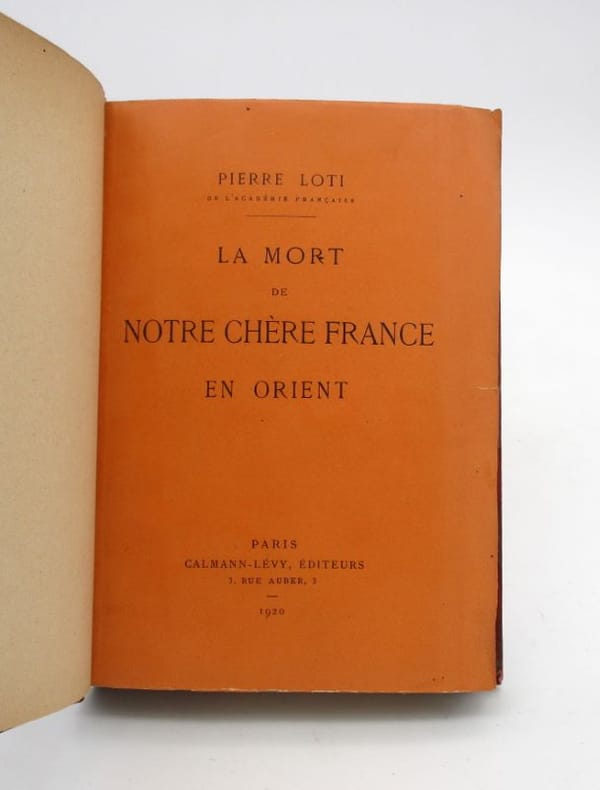
18342Paris, Calmann Lévy, 1920. In-12, 295 pp., demi-chagrin rouge, dos à nerfs, couverture conservée (dos insolé, petites épidermures, quelques minuscules déchirures, petits manques et taches à la couverture ).
1994100145185Routledge 1994 212 pages 14 4x2 2x21 6cm. 1994. Cartonné jaquette. 212 pages. Cet ouvrage examine le rôle central de la Vierge Marie dans la vie culturelle et religieuse de Constantinople durant l'Antiquité tardive. Il retrace sa transformation d'une humble jeune femme juive en une figure divine et protectrice surnaturelle de la ville dans le contexte plus large de la culture religieuse méditerranéenne et du christianisme impérial romain
Fine English Paperback. Pbo. Fine. Roy. 8vo. (24 x 17 cm). In French. 220 p. Quand l'innocence avait un sens. Chronique d'une famille juive d'Istanbul d'entre les deux-guerres. JUDAICA Jewish society in Istanbul Social history Memoirs Non-Muslim minority Constantinople.
New English Paperback. Pbo. Roy. 8vo. (24 x 17 cm). In French. 220 p. Quand l'innocence avait un sens. Chronique d'une famille juive d'Istanbul d'entre les deux-guerres. JUDAICA Jewish society in Istanbul Social history Memoirs Non-Muslim minority Constantinople Sephardi.
The Polis both in Orthodox and Ottoman times. 256p + 14 page of plates (B & w) tables.index.Name of previous owner, else fine Damaged DJ repaired, now in plastic sleeve Book
Hardcover in-4, 160 pages, bien complet de tous les chromos, cartonnage sous jaquette illustree. Tres bel exemplaire. [QU-3]
65839Coll. "Cités d'art", Bruxelles, éd. Artis historia, 1996, in-4 carré, cartonnage toilé éd. jaquette photo coul. éd., 160 pp., très nb. photos en noir et très nb. chromos coul. collés, Bibliographie, Table des matières, Superbe album de la ville d'Istanbul (Istamboul), l'ancienne Constantinople en Turquie. Bien complet de tous les chromos. RARE Très bon état
Fine Fine English Paperback. Pbo. Dust wrapper. Oblong large 8vo. (21 x 25 cm). In English and Turkish. [120] p., color ills. Istanbul and its organ.= Istanbul ve orglari.
New English Paperback. 4to. (27 x 23 cm). In Turkish. 48 p., color ills. Karanlik isler. Leyla Kara Minyatür Sergisi. [Exhibition catalogue]. Curated by Gözde Yildiz. Exhibition catalogue of Kara's Miniature Exhibition, June, 9-24, 2016.
Fine English Original typescript document & letter with autograph signature by Levon H. Melikian. 28x22 cm. In English. Letterhead bilinguual in Arabic and English. Script in English. Signed by Melikian as 'Asst. Professor of Psychology. Sent to Kösemihal. "My colleague Prof. E. Terry-Prothro has informed me about the XVth International Congress of Sociology. I am interested in attending the conference and am writing you this in the form of an application for the conference. I shall be greatly obliged if you will let me know by return of mail of the next step I have to follow. If possible would you please send me a membership card which I can present at the consulate here in Beirut. Awaiting your reply. Sincerely yours.". Dated August 2nd, 1952.
New French Paperback. Pbo. Roy. 8vo. (24 x 17 cm). In French. 382 p. Constantinople, le 4 août 1908 Constantinople, le 12 août 1908 Patriarcat arméno-catholique Constantinople, le 23 août 1908 Constantinople, le 8 septembre 1908 Douleurs du nouveau régime Constantinople, le 15 octobre 1908 La situation - un moment critique17 La communauté latine Constantinople, le 24 octobre 1908 La communauté latine en Turquie Constantinople, le 17 novembre 1908 Les élections25 Composition du Parlement La Chambredes députés Les défauts de la loi électorale. Les abus commis La composition probable de la Chambre Le Sénat Constantinople, le 21 décembre 1908 La journée historique du 17 décembre30 La nation en fête 30 L'installation du Parlement31 La cérémonie de l'ouverture Constantinople, le 27 janvier 1908 Nos députés à la besogne. La question bosniaque. La réforme du calendrier et de l'heure Constantinople, le 18 mars 1909 Prolongation de la session parlementaire. Le travail de la Chambre. Le budget. Le déficit et le fonctionnarisme. La mission de M. Laurent. La lutte des partis. La glorification du Comité Union et Progrès. Constantinople, le 31 mars 1909 Grecset latins. Les Grecs orthodoxes contre les écolescatholiques Constantinople, le 8 avril 1909 La crise du patriarcat ocuménique Constantinople, le 28 avril 1909 La fin d'un règne Les préparatifs pour l'avènement du nouveau sultan Le fetva du Cheik-ul-Islam49 Chez Abdul-Hamid La cérémonie de l'intronisation au Séraskérat Constantinople, le 14 juin 1909 Le départ de M. Constans. Son ambassade. Le protectorat français sur les catholiques en Turquie. La Porte et le Vatican. Le Khalife-Sultan et le Souverain Pontife. La grave question de l'uniformité de l'enseignement. Constantinople, le 23 juin 1909 Les Bulgares catholiques en Turquie55 Constantinople, le 17 août 1909 La question crétoise. La politique des puissances. Leurs vains efforts d'arriver encore à une solution provisoire. L'attitude décidée de la Porte. Sa cause et ses raisons. La position des Jeunes-Turcs Constantinople, le 30 septembre 1909 Les difficultés intérieures. Les conflits du gouvernement avec les patriarcats ocuménique et grégorien. La séparation de l'Eglise et de l'Etat et autres questions embarrassantes. La crise du patriarcat arméno-catholique. La communauté et le Vatican Constantinople, le 18 décembre 1909 La concession Lynch. A qui la Mésopotamie ? Antagonisme de l'Allemagne et de l'Angleterre. La situation du Cabinet Hilmi-pacha. L'enclume et le marteau. La question crétoise. L'alliance turco-grecque. Questions religieuses et politiques. La démission du patriarche grégorien. L'élection du patriarche arménien-catholique. L'aviation à Constantinople. Le baron de CatersetBlériot Constantinople, le 28 mars 1910 Visite de souverains à Constantinople. La Confédération balkanique. Un succès des Jeunes-Turcs. Les préparatifs militaires de la Turquie. Le service des non-musulmans. Un essai malheureux. Antagonisme des islamites et des chrétiens. Au patriarcat ocuménique. La nouvelle démission du patriarche arménien. Au patriarcat arménien catholique. Les incidents de Péramos. Le tsar Ferdinanddes Bulgares à Constantinople.70 Constantinople, le 29 avril 1910 L'insurrection en Albanie. L'optimisme du gouvernement. L'autonomie de l'Albanie. La visite du roi de Serbieà Constantinople. Roi et patriarche. Le socialisme à la Chambreottomane. Le budget de Djavidbey. Le Sénatcontre la Chambre. Le 39e pèlerinage en Terre Sainte. L'élection du patriarche arménien catholique Constantinople, le 27 juin 1910 L'Albanievaincue mais non pacifiée : L'incident de Durazzo. Crète : Le boycottage contre la Grèce. Le Parlement : Le ministère et la situation. Le patriarche arménien catholique. La liberté de conscience en Turquie : L'affaire de Peramos Constantinople, le 28 juillet 1910 La conjuration anti jeune-turque: L'« Isslahat »; Pour compromettre l'opposition parlementaire; Arrestation d'un député; La question crétoise et le boycottage; Grèceet Turqu
New English Paperback. Pbo. 4to. (29 x 21 cm). In English and Turkish. 208 p., color ills. "An Orientalist painter who lived almost half a century in Istanbul up to his death, Leonardo de Mango is described by the art commentator Thalasso as, a painter through whom the East spoke. De Mango was born on 19 February 1843, the eldest child of a large family in the town of Bisceglie near Bari in Italy, where he honed his native talent for drawing up to the age of nineteen. In 1862, under the patronage of an aristocratic family of Bari, he entered the Academy of Fine Arts of Naples and studied there for eight years under Filippo Palizzi and of Domenico Morelli. Morelli was also a painter who treated exotic orientalist themes. During this period de Mango also worked with Saverio Altamura, Bernardo Celentano, Raffaele d'Auria, Federico Maldarelli, Raffaele Postiglione and Giuseppe Mancinelli. In 1883 De Mango settled in Istanbul during the reign of Sultan Abdul Hamid II, where he is known to have set up, and taught for some time at, the oil painting department of the School of Fine Arts. Forced to leave Istanbul briefly in 1911 during the Tripolitanian War, the artist returned to the city following the Treaty of Ouchy on 15 October 1912. De Mango was among the artists who, at the initiative of Alexander Vallaury, a teacher in the architecture department of the School of Fine Arts, and Regis Delbeuf, manager of the Istanbul daily Le Stamboul, organized the first painting and sculpture exhibition at Beyoglu in 1901, dubbed the 'Pera Exhibitions in the Passage Oriental', an arcade owned by the French merchant Bourdon. With 27 works, De Mango was the most well represented artist in the exhibition, as he was again in the 1920 exhibition when he was one of 36 artists, participating with 33 of his own paintings. De Mango also had 16 paintings in the last of the Pera exhibitions, which was held in 1903. He painted in the open air and in his workshop at Beyoglu, reflecting the daily life of the different districts of Istanbul until his death in 1930.". Contents: Erol Makzume "The 75th anniversary of the death of an orientalist painter from Pera, Leonardo de Mango"; Roberta Ferrazza "Leonardo de Mango and the Italian community in Istanbul"; Bianca Consiglio "Portrait Painter Leonardo de Mango"; Piero Consiglio - Giacinto La Notte "Leonardo de Mango stages in a life divided between East and West"; Catalogue.
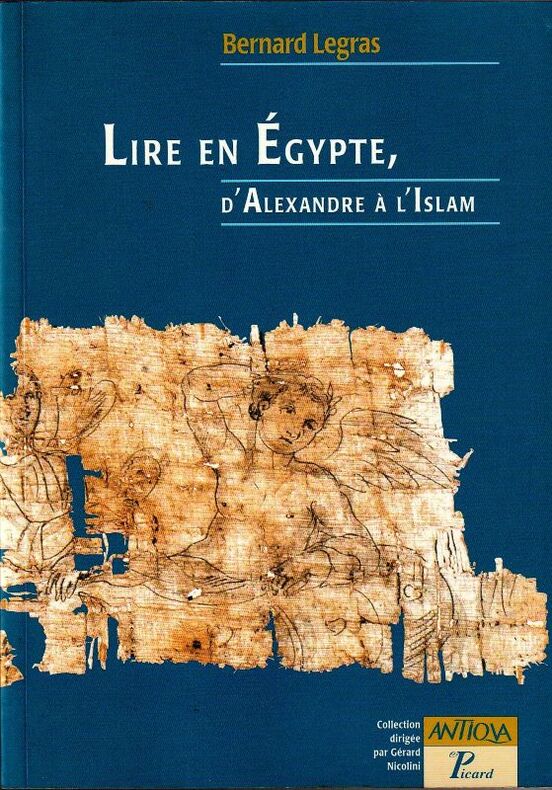
10533Éditions A & J Picard - Collection antiqua - 2002. In-8, broché, couverture souple glacée bleue ill (papyrus dessin),188 pages-XVII Planches en 25 pages glacées sur fond noir à part du texte et en début d'ouvrage, 90 figures par ailleurs dans le texte ainsi que, in fine 5 cartes à pp, un glossaire ainsi q'une importante bibliographie -très bel exemplaire sous tous rapports.
1800PHO-2259Paris, Dentu. An VIII (1800) 2 volumes en 1 tome in-8 (20x12,5cm), XII-168pp.-169-416 pp., plein veau marbré époque, dos lisse orné avec pièce de titre grenat, tranches marbrées, début de fente, frottements, les cartes sont absentes