2 100 résultats
82 pages. Features: Venice - The First Thousand Years (part 1); 1204 - a Norman Legacy?; Gerusalemme Liberata and Jihad - God's Will and Realpolitik; There's No Fool Like a Court Fool (Jester); The Welsh Castles of Edward I - in a weekend; The Blunted Arrowhead - The Defensive Role of the Great Medieval Fortresses of Albania; The 'Kingmaker' - a look at Richard Neville and his magnificent castle at Warwick; and more. Moderate wear. A sound copy. Book
New New English Original binding with original dust wrapper. 4to. (30 x 24 cm). Turkish Edition. 3 volumes set: ([xi], 1182 p. in total). 2400 postcards. Born in 1852 in Kalucz, a town on the eastern border of the Austro-Hungarian Empire, Max Fruchtermann came to Istanbul in 1867 and two years later opened a picture framing shop in the city. Having decided to have the first Ottoman Postcard Series printed at Breslau in 1895, he ensured through his cards, which number in the millions, that the name "Turkey and the multifarious images associated with it" spread throughout the entire world from Canada to New Zeland. In 1966 when Fruchtermann's daughter-in-law Anna, before closing down the establishment, sold her remaining stock (subsequently realized to number around 600,000) to a secondhand dealer for 2500 liras, she probably never imagined the importance of her father-in-law's postcards. They are not simply photographs of landscape panoramas monumental buildings and people of the time. They are individual documents that reflect in their human types and cross-sections of everyday life the noteworthy political incidents of the late 19th and early 20th centuries and the ethnic and cultural diversity embodied in the Ottoman identity. As such they have acquired significance far in excess of original expectations. It always comes as a pleasant surprise to collectors to see that ordinary objects left to us from the past, and usually assumed to be of mere functional value, in time acquire special significance. For us, however, far more than a pleasant surprise these postcards are a door opening up on our recent history. The places, incidents and types that Fruchtermann saw and appraised with his own eyes have been given new life and brought together as a whole thanks to this study and up-to-date treatment by Mert Sandalci.
Fine English Paperback. Pbo. Roy. 8vo. (24 x 17 cm). In English. 55 p. Contents: Introduction.; Byzantium and the Arabs: War and peace between two world civilisations, Edmund Boswirth.; Arab herbals and herbalists, Penelope Johnstone.; European influences in Islamic medicine, Haskell Isaacs.; The first English embassy in Istanbul: William Harborne's estimate of staff and expenses, (1522), Susan Skilliter.; The wandering dervishes, Colin Imber.; Lord Cromer and the emotional classes, Michel Louis.
Very Good English Paperback. Pbo. 4to. (32 x 22 cm). In Turkish. [ix], 166 p., b/w ills. Old and contemporary piers of Marmara Region. Marmara iskeleleri dokümani.
New English Paperback. Pbo. 4to. (28 x 24 cm). In English and Turkish. 112 p., color and b/w ills. Mario Prassinos. In pursuit of an artist: Istanbul - Paris - Istanbul.= Mario Prassinos. Bir sanatçinin izinde: Istanbul - Paris - Istanbul. Curated by Begüm Akkoyunlu Ersöz, Tania Bahar. The exhibition Mario Prassinos, In Pursuit of an Artist: Istanbul-Paris-Istanbul is centered on the art of Mario Prassinos, born into a Greek family of artists in Istanbul, whose artistic career began among the 20th-century Avant-Gardes in Paris. Curated by Seza Sinanlar Uslu with specialists Catherine Prassinos and Thierry Rye as consultants, the exhibition is accompanied by an exhaustive catalogue. Featuring a range of original and striking works by Mario Prassinos, including paintings, book illustrations, fabric samples, and engravings, the catalogue also contains articles written by the artist's daughter Catherine Prassinos, Enis Batur, and Seza Sinanlar Uslu. Catherine Prassinos focuses on her father's relationship with Istanbul and his memories of the city, whereas Enis Batur seeks, in the artist's works, the traces of the childhood he spent in Istanbul and the art milieu he was a part of during his years in France. Carefully examining the unique and outstanding personality of Prassinos, his style that extends from Surrealism to Realism, and his artistic stance against Fascism during World War II, Uslu particularly concentrates on the relationship the artist establishes with memory: "People do not recognize things (or other people), they remember them" says Prassinos, who reflects traces of the past from memory in his works. He presents to viewers the memories he recorded in memory, but could not access or recall exactly and clearly, as portraits that, in his words, could only be "created by a damaged memory.". This exhibition is centered on the art of Mario Prassinos, who was born in Istanbul into a Greek-Ottoman family and began his artistic career in Paris, among the 20th century avant-gardes. Bringing together a large selection of his works ranging from paintings and book illustrations to tapestries, portraits, and engravings, the exhibition reveals the striking and unique character of Prassinos and his distinctive style shifting from Surrealism to a more realistic approach. Curated by Seza Sinanlar Uslu, the exhibition welcomes back this original 20th-century artist to his birthplace to Pera, Istanbul, on the 100th anniversary of his birth. Mario Prassinos was born in Istanbul in 1916 to a Greek-Italian family that settled in Turkey many years before. In 1922, his family moved to France. He studied at the School of Oriental Languages and the Sorbonne. His first solo exhibition was held in 1938 at the Billiet-Vorms Gallery. Upon his return from the war in which he had fought as a volunteer, he broke away from surrealism and started a figurative period.
Fine English Paperback. Pbo. Demy 8vo. (22 x 15 cm). In French. 301, [4] p. Marie et Marie. Une saison a Constantinople, 1856-1858.
Fine English Paperback. Folio. (32 x 22 cm). In English and Turkish. 187, [2] p., color and b/w ills. Maps of Istanbul from the Middle Ages to the present day.= Istanbul haritalari: Ortaçagdan günümüze.
New English Paperback. Pbo. Large 8vo. (21 x 21 cm). In English and Turkish. 42 p. Color and b/w ills. Beyoglu - Pera (Constantinople) from incunabulum to present day. Maps of Beyoglu.= Beyoglu haritalari. [Exhibition catalogue]. 04-15 December 2012.
27456un feuillet ancien XVIIIe s.,2p.- 30x22 cm,- dessins PROFILS de la cote
Very Good Turkish, Ottoman (1500-1928) Original manuscript document on waqf and execution of a Greek citizen of the Ottoman Empire in Pera, Beyoglu, 1901. 33x21 cm. In Ottoman script. 1 p. Four lines and seal. Seal is bilingual in Ottoman script and French: "Chancellerie de la Legatiux Hellenique a Constantinople.". Gramatouplou was wife of Istepan Istepanou according to the document.
New English Original bdg. HC. 4to. (33 x 24 cm). In German and Turkish. B/w photos. 123 p. Mannheim sieht Beyoglu, Beyoglu sieht Mannheim.= Mannheim gözüyle Beyoglu, Beyoglu gözüyle Mannheim. [Exhibition catalogue]. PHOTOGRAPHY Istanbul Beyoglu Pera German relations.
Corner of front wrap is creased with light creasing to upper edge of front wrap near spine. Light wear to lower rear corner. ; 19 papers; xx, 358 p. , 3 p. Of plates. CONTENTS: Ian Martin: The Publications of Robert Browning; Trevor J. Saunders: The Controversy About Slavery Reported by Aristotle, Politics, I vi, 1255a4 ff. ; A. A. Long: Greek Ethics After MacIntyre and the Stoic Community of Reason; E. J. Jory: The Early Pantomime Riots; P. J. Bicknell: The Dark Side of the Moon; Alanna Emmett: An Early-Fourth-Century Female Monastic Community in Egypt? J. H. W. G. Liebeschuetz: Friends and Enemies of John Chrysostom; Samuel N. C. Lieu: The Holy Men and Their Biographers in Early Byzantium and Medieval China: A Preliminary Comparative Study in Hagiography; John R. S. Mair: Reflections Upon the Theological Tractates of Boethius; J. D. C. Frendo: The Poetic Achievement of George of Pisidia: A Literary and Historical Study; J. D. Howard-Johnston: Thema; Lydia Carras: The Life of St Athanasias of Aegina: A Critical Edition with Introduction; Paul Magdalino: The Bath of Leo the Wise; M. J. Jeffreys: Iakovos Monachos, Letter 3; Athanassios Angelou: Matthaios Gabalos and his Kephalaia; M. C. Davies: An Emperor Without Clothes? Niccolo Niccoli Under Attack; A. A. M. Bryer: 'The Faithless Kabazitai and Scholarioi'; Margaret Carroll: Constantine XI Palaeologus: Some Problems of Image; Ann Moffatt: The After-life of the Letters of Theophylaktos Simokatta. ; Australian Association for Byzantine Studies. Byzantina Australiensia 5; 358 pages
Corner of front wrap is starting to curl. Light edgewear to lower rear corner. Top of spine is bumped with small closed tear. ; 19 papers; xx, 358 p. , 3 p. Of plates. CONTENTS: Ian Martin: The Publications of Robert Browning; Trevor J. Saunders: The Controversy About Slavery Reported by Aristotle, Politics, I vi, 1255a4 ff. ; A. A. Long: Greek Ethics After MacIntyre and the Stoic Community of Reason; E. J. Jory: The Early Pantomime Riots; P. J. Bicknell: The Dark Side of the Moon; Alanna Emmett: An Early-Fourth-Century Female Monastic Community in Egypt? J. H. W. G. Liebeschuetz: Friends and Enemies of John Chrysostom; Samuel N. C. Lieu: The Holy Men and Their Biographers in Early Byzantium and Medieval China: A Preliminary Comparative Study in Hagiography; John R. S. Mair: Reflections Upon the Theological Tractates of Boethius; J. D. C. Frendo: The Poetic Achievement of George of Pisidia: A Literary and Historical Study; J. D. Howard-Johnston: Thema; Lydia Carras: The Life of St Athanasias of Aegina: A Critical Edition with Introduction; Paul Magdalino: The Bath of Leo the Wise; M. J. Jeffreys: Iakovos Monachos, Letter 3; Athanassios Angelou: Matthaios Gabalos and his Kephalaia; M. C. Davies: An Emperor Without Clothes? Niccolo Niccoli Under Attack; A. A. M. Bryer: 'The Faithless Kabazitai and Scholarioi'; Margaret Carroll: Constantine XI Palaeologus: Some Problems of Image; Ann Moffatt: The After-life of the Letters of Theophylaktos Simokatta. ; Australian Association for Byzantine Studies. Byzantina Australiensia 5; 358 pages
1865ABE-14808519159488 PAGES-18,5 CM X 29 CM-GRAVURE "UNE RUE DE BRUGES-DESSIN DE STROOBANT" (2/3 PAGE), TEXTE-CAUSERIES HYGIENIQUES LE SEVRAGE, SUR 2P, DONNE, TROUSSEAU-UNE LECON DE DESSIN DONNEE PAR FREMINET A LOUIS XIII ENFANT, SUR 4P, 7 DESSINS (OISEAUX, PROFILS, GUERRIER ANTIQUE, MARQUISE DE MENCLAY)-LE MONUMENT DE PLATEE A DELPHES ET A CONSTANTINOPLE, 2P, 3 FIGURES
1851ABE-164229201328 PAGES FORMAT 20 CM X 31 CM-EN COUVERTURE LE CASOAR DE LA NOUVELLE HOLLANDE, DESSIN DE FREEMAN PLEINE PAGE, 1P-LES BATELIERS A CONSTANTI?OPLE, PAR UBICINI-SUR LES CARILLONS, 2 GRAVURES-LA PATIENCE D'UN PAUVRE AUTEUR, DAVY, EXETER
1833ABE-44782667708 PAGES-GRAVURE/VUE DE CONSTANTINOPLE-LE TABAC/1P/GRAVURE-LAMPE DE SURETE POUR LES MINEURS/LAMPE DE DAVY/GRAVURE
New English Paperback. Pbo. Demy 8vo. (21 x 14 cm). In English, Judeo - Spanish and Turkish. Color ills. 360 p. Mint. Including 4 CD, 1 DVD. The Maftirim repertoire, born in Edirne, the ancient capital of the Ottoman Empire is an example of Jewish mystic music. This music came to our days by being orally transmitted from master to student. However, with this form of transmission the number of these liturgical songs that arrived to our days has dropped from the thousands to very few indeed. The last three masters of this music in Turkey, David Behar, Hazzan Isak Maçoro and Hazzan David Sevi, who recorded the present work are maybe the last remnants of this old tradition. The present collection which is the result of five years of intensive work is the struggle to document and transmit whatever we have left of this kind of Turkish Sephardic liturgical music to the next generations. This unique collection should be of tremendous interest to everyone interested in Turkish Classical Music, Turkish Sephardic Music, Jewish Liturgical Music and any other kind of liturgical music. What will you find in the book that accompanies the album? A detailed introductory study on the Maftirim by Prof. Edwin Seroussi from the Hebrew University of Jerusalem; A repertoire of piyyutim by poets stretching from Rabbi Israel Najjara (ca. 1550-1625) to Isaac Eliyahu Navon (d. 1952) printed in the collection Shirei Israel be-Eretz ha-Qedem (Istanbul 1925/6) and performed by the Maftirim until the last generations; Square Hebrew text researched revised and formalized by Prof. Tova Be'eri from Tel Aviv University; Square Hebrew text typed of the piyyutim, vocalized and annotated by Prof. Isaac Jerusalmi (Hebrew Union College, Cincinnati) with romanized transliteration and Ladino, Turkish and English translations; Musical scores digitalized by Karen Gerson Sarhon and edited by Udî Mahmut Özbay, who also included the "usûls" and metronome values; Lavish pictures of the present-day synagogues of Turkey taken by the famous photographer Izzet Keribar. What will you find in the album? The recordings of the repertoire kept in the memory of three Maftirim masters of the last and present generation, David Behar, the late Hazzan Isak Maçoro and Hazzan David Sevi in 4 CDs (audio) and 1 DVD (visual). A total of nearly 6 hours of audio and visual recordings.
Very Good German Original color map on cloth. Chipped on folded places. It needs repair. Oblong atlas folio. (46 x 52 cm). Toponyms in German. Shows Kastoria area in Greece. A sheet of the collection of 'The general map of Central Europe'. appeared in the years between 1873-1876 with the work of Joseph Ritter von Scheda, (1815-1888) who was a general, geographer and cartographer.
18512262PARIS. LIBRAIRIE ARCHEOLOGIQUE DE VICTOR DIDRON. 1851. IN-4 (25 X 28,5 X 4 CENTIMETRES ENVIRON) DE 316 PAGES, ENTIEREMENT MONTE SUR ONGLET, RELIURE D'EPOQUE 1/2 CHAGRIN NOIR, DOS LISSE ORNE DE FILETS ET DE CAISSONS DORES, TITRE DORE. ILLUSTRE DE 20 PLANCHES HORS TEXTE SOUS SERPENTE. EDITION ORIGINALE. PETITS DEFAUTS EXTERIEURS SANS GRAVITE, SINON BON EXEMPLAIRE.
New New English Original bdg. Dust wrapper. 4to. (32 x 22 cm). In Turkish. 275 p., color and b/w ills. A study on 'tulip in history of art and history. Lâle: Dogada, tarihte, sanatta. TURKISH AND ISLAMIC ART History of art Tulip Ottoman art Traditional arts Flower painting Tile Miniature Illumination Weaving Ottoman culture Gardening.
100353René Georges / Stéphane Bachès, Publications de l'Université de Saint-Etienne, 2002, 294 p., cartonnage éditeur, environ 32x24cm, de petites fentes sur les bords inférieurs des plats, bon état pour le reste.
New New English Original bdg. Dust wrapper. In French and Turkish. [xvii], [3], 369 p., 8 folding plts. Color and b/w ills. TABLE DES MATIERES REMERCIEMENTS.; PRÉFACE.; LISTE DES ABRÉVIATIONS., INTRODUCTION.; I - MARIAGE DE RAISON; ESQUISSE DES RELATIONS FRANCO-TURQUES SOUS LOUIS XIV: DOUTES ET HESITATIONS; LA CONCURRENCE FRANCO-TURQUE EN MEDITERRANÉE; 1- Mazarin et l'union chrétienne contre les Turcs; 2- Les relations franco-turques lors de la conquête définitive de la Crête par l'Empire ottoman.; LES RELATIONS FRANCO-TURQUES EN EUROPE CENTRALE; NOTES DE LA PARTIE I; II - REVES D'EMPIRE D'ORIENT; LES AMBITIONS IMPÉRIALES DES ROIS DE FRANCE; LA COURONNE D'ISTANBUL: LOT DE CONSOLATION; PARTAGER UN EMPIRE AU XVIIe SIECLE.; 1- L'exil ou la conversion des Turcs: Au christianisme l'Union européenne de Sully; 2- Le Père Joseph et Charles de Nevers: la croisade du "Bien contre le Mal"; 3- Le projet d'un diplomate : Savary de Brèves; 4- L'Egypte : conquérir la mère nourricière d'Istanbul, Leibniz: une nouvelle carte mondiale, Historique du projet de Leibniz, Contenu et moyens de réalisation du projet, Jean Coppin : ancien militaire et diplomate, nouveau prêtre, Moment décisif de l'histoire, Conquête de l'Egypte avant Istanbul; 5 - De La Croix : Brûler Istanbul!; NOTES DE LA PARTIE II; III-LOUIS XIV ET LE PROJET DE CONQUÊTE D'ISTANBUL; TENTATIONS FRANÇAISES APRES L'ECHEC TURC DEVANT VIENNE; MISSION D'EXPLORATION POUR UNE ACTION SPECTACULAIRE; LA DOUBLE MISSION DE GRAVIER D'ORTIÈRES: INSPECTER ET ESPIONNER; 1 - Un fidèle commis de l'Etat; 2 - La mission commerciale de Gravier d'Ortières dans l'Empire ottoman; 3 - Tester et forcer la défense de l'Empire ottoman; Maître mot: secret; Une documentation exceptionnelle à défaut de conquête; LE VERROU D'ISTANBUL : LE DETROIT DES DARDANELLES; 1- Kumkale (La forteresse neuve en Asie); 2- Sedd'ül-Bahir (Le château neuf du côté européen); 3- Çanak-Kalesi (Le château vieux en Asie ou Bidos); 4- Kilid'ül-Bahir (Sestos ou Dardanelles); NOTES DE LA PARTIE III; IV - L'APOCALYPSE POUR LES TURCS; L'EMPIRE D'ORIENT DE GRAVIER D'ORTIÈRES; DESCRIPTION D'ISTANBUL ET L'INFLUENCE DE GRELOT: LA FASCINATION POUR LA "CAPITALE DE LA TERRE"; ELÉMENTS POLITIQUES ET MILITAIRES : "IL LES FUADROIT TOUS TAILLER EN PIÈCE"; QUELQUES PRINCIPES DE PUBLICATION DU TEXTE ET DES CARTES DE; GRAVIER D'ORTIÈRES; L'EMPIRE OTTOMAN ET SA PARTITION; LA VILLE DE CONSTANTINOPLE: 1 - Beauté et avantages de la situation de cette ville; 2 - Fortifications de la ville; 3 - Le palais du sultan et ses fortifications; 4 - Le château de Sept-Tours; 5 - Descente et attaque de la ville, 6 - Description de la ville intra-muros; 7 - Colonne Blanche; 8 - Colonne brûlée; 9 - Obélisques sur la place de l'hypodrome, L'obélisque dit Théodose, La pyramide de Constantin, La colome Serpentine.; 10-Bazars, marchés et caravansérails, Le grand bazar, Le marché aux esclaves, Les bains.; 11 - Des mosquées.; Sainte-Sophie, Ouvrages faits par les Turcs à Sainte-Sophie, Comparaison de Sainte-Sophie avec Saint-Pierre, La mosquée Süleymaniye, La mosquée Sultan Ahmed, La mosquée de la Sultane Validé.; 12- Le port et l'arsenal de Constantinople.; 13 - Faubourgs de Constantinople; Kasimpasa et Séraïl des Miroirs; Galata; Péra; Tophane; Findikli; Tour de Leandre (Kizkulesi), Üsküdar, Canal de la mer Noire (le Bosphore); Aqueduc de Belgrade; FORCES MARITIMES DU SULTAN ET DÉFAUTS DE CONSTRUCTION DES VAISSEAUX ET DES GALÉRES OTTOMANS; LA POLITIQUE OTTOMANE ET SES MAXIMES; DES FORCES NÉCESSAIRES POUR BRUSLER CONSTANTINOPLE, SUIVANT LES INSTRUCTIONS DE SA MAJESTÉ; DES MOYENS DE RETIRER L'AMBASSADEUR ET LES AUTRES FRANÇAIS EN CAS DE GUERRE; PROJET DE PAIX AVEC LA PORTE APRÈS L'EXPÉDITION DE CONSTANTINOPLE; RÉTABLIR L'EMPIRE FRANÇAIS D'ORIENT À ISTANBUL; NOTES DE LA PARTIE IV; CONCLUSION; SOURCES ET BIBLIOGRAPHIE; TABLE DES ILLUSTRATIONS; CRÉDITS PHOTOGRAPHIQUES, INDEX; ANNEXES.
"Since the Turks first shattered the glory of the French crusaders in 1396, the Ottoman Empire has exerted a long, strong pull on Western minds. For six hundred years, the Empire swelled and declined. Islamic, martial, civilized, and tolerant, in three centuries it advanced from the dusty foothills of Anatolia to rule on the Danube and the Nile; at the Empire's height, Indian rajahs and the kings of France beseeched its aid. For the next three hundred years the Empire seemed ready to collapse, a prodigy of survival and decay. Early in the twentieth century it fell. In this dazzling evocation of its power, Jason Goodwin explores how the Ottomans rose and how, against all odds, they lingered on. In the process he unfolds a sequence of mysteries, triumphs, treasures, and terrors unknown to most American readers. This was a place where pillows spoke and birds were fed in the snow; where time itself unfolded at a different rate and clocks were banned; where sounds were different, and even the hyacinths too strong to sniff. Dramatic and passionate, comic and gruesome, Lords of the Horizons is a history, a travel book, and a vision of a lost world all in one."352p.illus bibliography.index Book
New English Paperback. Large 8vo. (23 x 23 cm). In English and Turkish. 113 p., color and b/w ills., 2 folding plates, (400 x 20 cm. and 174 x 20 cm.). Long stories: Istanbul in the panoramas of Melling and Dunn.= Uzun öyküler: Melling ve Dunn'in panoramalarinda Istanbul. [In special case]. Long stories opened a visual window to the city of emperors and sultans, a micro-level study of history that focused on the historical topography of the city. The exhibition was curated by Ekrem Isin with M. Baha Tanman acting as project consultant. ??Panoramas constitute the visual narratives of a city. Emperors and sultans cast their shadows in the images stretching before our eyes; the symbols of power piercing the sky are surrounded by the cultural texture of daily life, as well as the city's architectural composition and nature. The raison d'être of a panorama is to bear witness to the urban image that appears as a protagonist on the stage of history, set against the civilizational décor that the eye perceives at first sight. Long Stories: Istanbul in the Panoramas of Melling and Dunn was not only a visual feast, but also a historical survey, which compelled viewers to reconsider the identity of a city that left its mark on the art of panoramic engraving.
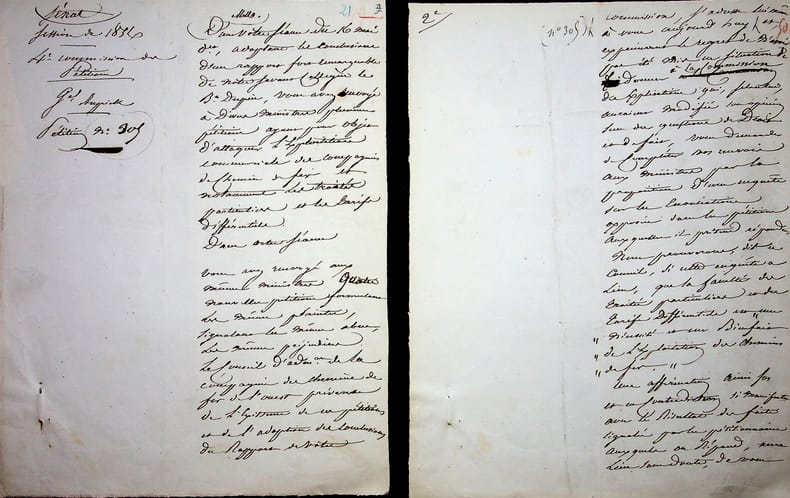
018365Jacques Aupick (1789-1857), général, homme politique, beau-père de Baudelaire, ministre plénipotentiaire à Constantinople. Manuscrit autographe signé, juin 1856, 7p in-4. Texte vraisemblablement lu au Sénat quand il était sénateur à propos de l'exploitation commerciale des chemins de fer. [426]