BAYET (C)Livre Rare Book

1 659 résultats
WOC-2713Orné de 105 figures dans le texte et hors-texte. Paris, A. Quantin, Imprimeur-Éditeur, sans date. In-8 (21,5x2x14cm) relié demi chagrin rouge, dos à 5 nerfs avec nom et titre dorés, tête dorée. 288pp.
142pp., 24cm., dans la série "Bibliothèque des écoles françaises d'Athènes et de Rome" fasc.10, brochure originale (quelques petites manques), qqs.rousseurs, bon état, S59048
142pp., 24cm., Thèse présentée à la Faculté des lettres de Paris, brochure originale (dos renforcé), qqs.rousseurs, exemplaire de la collection du byzantiniste et helleniste belge prof. Justin Mossay (avec ex-libris et cachet), S103550
1879S59048Paris, Ernest Thorin 1879 142pp., 24cm., dans la série "Bibliothèque des écoles françaises d'Athènes et de Rome" fasc.10, brochure originale (quelques petites manques), qqs.rousseurs, bon état, S59048
1879S103550Paris, Ernest Thorin 1879 142pp., Thèse présentée à la Faculté des lettres de Paris, brochure originale (dos peu retaurée, bien protégée d'une couverture supplémentaire de papier cristal transparent), 24cm., qqs. rousseurs, exemplaire de la collection du byzantiniste et helleniste belge prof. Justin Mossay (avec ex-libris et cachet), S103550
Collection of papers by different scholars on various aspects of Byzantine history.Reprinted with corrections. Illustrated with 48 plates and 3 foldout maps. Introduction, bibliographical appendix, list of East Roman Emperors 436p. + 48 plates. bibliography.index. Neat and complete except for front hinge starting. Book
95744Oxf., Clarendon Press, 1948.
1959X117016München, C.H. Beck 1959 xvi + 835pp., 26cm., in the series "Byzantinisches Handbuch" Teil II Band I, softcover, few foxing on edges, text is clean and bright, good condition, weight: 1.4kg., X117016
1952X116985München, C.H. Beck 1952 vii + 149pp., 25cm., softcover, good condition, X116985
158532München, DTV, (1982).
153061München, Verlag C.H. Beck, (1978).
Fine French Paperback. Roy. 8vo. (23 x 16 cm). In French. 197, [3] p. Istanbul et la civilisation Ottomane.
593pp., 30cm., in the series "Veroffentlichungen der Kommission für Byzanistik" Band I/Reg, publisher's hardcover (bit sunfaded), copy from the collection of the Belgian byzantinist prof. Justin Mossay (with 3 ex-libris stamps), good condition, text and interior clean and bright and in very good condition, weight: 1.7kg., X103462
1996X103462Wien, Verlag der österreichisches Akademie der Wissenschaften 1996 593pp., 30cm., in the series "Veroffentlichungen der Kommission für Byzanistik" Band I/Reg, publisher's hardcover (bit sunfaded), copy from the collection of the Belgian byzantinist prof. Justin Mossay (with 3 ex-libris stamps), good condition, text and interior clean and bright and in very good condition, weight: 1.7kg., X103462
Glossy illustrated periodical publication. This issue (Spring 1996) was dedicated to the Habitat II Conference. Contains items such as "From Byzantium to Istanbul : The Growth of a City" by Dogun Kuban, and "Istanbul in the 1990's : A Statistical Survey " by Mustafa Sonmez" as well as number of other interesting articles . 122p. illus. [NO copies found in WorldCat] Magazine
The Double Headed Eagle, the symbol of the Late Byzantine Empire, speaks eloquently to the worldview of the Byzantines, whose Empire looked both to the East and to the West, but never was-or is-really part of either. At its apogee, the Byzantine Empire was the highest civilization in Europe-the Center. This Double Headed Eagle is cherished by the Balkan Orthodox successors to Byzantium, and versions of it grace the national flags of Serbia, Montenegro, and even Albania. Encroached upon by both the Muslim East and the Catholic West, the Byzantine Eagle succumbed, only to emerge, in a state of arrested development, after several hundred years of Turkish or Western Catholic rule. This stunted progression emerges time and again in the civic culture, architecture, economics, and politics of the region, and has direct relevance on political and economic issues today, including Greece's present financial malaise, and the breakup of Yugoslavia in the 1990s. Traveling through this Ex-Byzantine zone, Billinis offers history, architecture, personal experiences, and numerous anecdotes to expound on key central themes. First, that the Balkan Orthodox nations form a common culture and virtual commonwealth, while still maintaining ethnic, geographical, and linguistic diversity. Without understanding this common Byzantine base, it is impossible to appreciate and to understand the region. Second, the common experience of Turkish rule, while preserving Byzantine culture and insulating the Orthodox religion from Catholic encroachment, did so by cutting off Byzantine Europe from economic, political, cultural, and civic development in progress in Western Europe. The states that emerged from this condition were-and are-ill prepared to contribute and to compete in modern Europe, and in a globalized world Print on Demand
85702Groningen, Forsten, (1996). XXX,251
1966X117012Paris, Institut français d'études byzantines 1966 292pp., 25cm., brochure originale, dans la série "Archives de l'Orient chrétien" volume 9, pages toujours non coupées, bon état, X117012
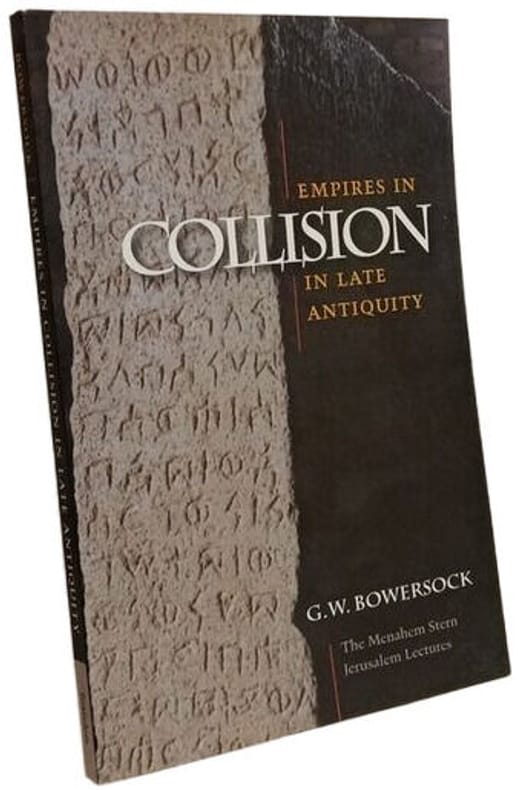
2012100145070Brandeis University Press 2012 119 pages 14x21 7x1 1cm. 2012. Broché. 119 pages. Ce livre basé sur trois conférences prononcées en 2011 examine les développements politiques et militaires dans la péninsule arabique à la veille de l'émergence de l'islam. Il se concentre sur la collision entre les empires byzantin et perse sassanide et explore des sujets comme la croissance de l'Éthiopie chrétienne les conflits avec l'Arabie juive et la capture de Jérusalem par les Perses
New English Paperback. Pbo. Cr. 8vo. (20 x 14 cm). In English. 253 p. The other Turks' quest for identity & image. The book traces the long history of the Turks,from their origins in the Central Asiatic steppes,to their conversation to Islam and migration to Byzantine Asia Minor,Their lives under the Ottoman Empire and subsequent secular republican regime and finally the current accession of Turkey to the European Union.
Novel of Theodora & Justinian - In sixth century Constantinople, when John, son of Diodoros of Bostra, wins the patronage of the Empress Theodora Book
"In the Fourth Century A.D., independent and determined young Charis is forbidden to become a doctor because she is a woman. Disguising herself as a eunuch she flees Ephesus for Alexandria, then the center of learning. There she apprentices to a Jewish doctor but eventually becomes drawn into Church politics and is forced once again to flee. She serves as an army doctor at a Roman outpost in Thrace until, kidnapped by barbarian Visigoths, she finds her destiny to heal and also to be a woman and a wife.". This novel is full of interesting characters set the early Christian world, 371-378 AD. 376p. Book
Dustjacket has rubbing to bottom front corner of spine with colour loss and pinhole tear. DJ back panel is lightly browned. Light browning to textblock. ; 406 pages; From 1081 to 1180-- under the three Comneni emperors, Alexius I, John II, and Manuel I- the Byzantine Empire had been a power of major importance, wielding arms and influence in the Holy Land and the Italian penisula. This volume is an examination of the turbulent twenty-four years in which Constantinople, once splendid and celebrated, gradually disintegrated under its last rulers, who had inherited all the problems of an aging social system and possessed few of the talents needed to resolve them. The confrontations between Byzantium and the Western powers became increasingly important and form the major theme of Mr. Brand's study.